This post contains affiliate links. We may earn a small commission when you buy through our links — at no extra cost to you.
Most electric pressure cookers boast 10+ functions, but beginners typically only need pressure cook, slow cook, and sauté. The real challenge isn’t remembering which button to press—it’s understanding pressure release methods and how they affect texture.
The biggest decision you’ll face is choosing between a model with a decade of proven reliability and a cheaper newcomer with higher user ratings. Each serves a different priority: long-term community support versus immediate value.
This guide focuses on the few models that get the basics right—safe operation, durable construction, and straightforward controls—so you can cook confidently from day one.



Best for Beginners & Families
Instant Pot Duo 6-qt
Key Features
- Capacity: 6 qt
- Cooking Functions: 7-in-1
- Inner Pot Material: Stainless steel
- Control Type: Button panel
- Price: $$
The Instant Pot Duo handles seven cooking functions – pressure cook, slow cook, sauté, steam, rice, yogurt, and warm – with consistent outcomes across recipes. Controls are straightforward: choose a preset, set the time, and let it run. Meals finish noticeably faster than conventional stovetop methods, which is a real time-saver on busy evenings.
The 6-quart stainless steel inner pot heats evenly and cleans up easily in the dishwasher. The lid locks automatically during pressurization, and overheat protection adds an extra layer of safety. These features make it especially approachable for those new to pressure cooking.
This model is best suited for absolute beginners who want a no-fuss entry into electric pressure cooking. It lacks the WiFi connectivity and smart features of pricier models, but that omission won’t matter for anyone who prefers hands-on control. Families and budget-conscious cooks will appreciate the durable build and the extensive online recipe library.
The large user base means troubleshooting tips, recipe adaptations, and replacement parts are easy to find. Instant Pot’s ecosystem of accessories and support extends the product’s useful life, making it a long-term investment for those who cook regularly.
Pros
- Handles pressure cook, slow cook, sauté, and more with consistent results across a wide range of recipes.
- Intuitive controls and a dishwasher-safe stainless steel pot make operation and cleanup simple.
- Reduces cooking time significantly compared to traditional stovetop or oven methods.
- Multiple safety mechanisms – lid lock, overheat protection, and pressure regulation – provide peace of mind for first-time users.
Cons
- No WiFi or app-based control – a non-issue for those who prefer manual operation.
For first-time buyers who want a capable, well-documented electric pressure cooker at a reasonable price, the Instant Pot Duo is the default recommendation.
Best for Budget Beginners
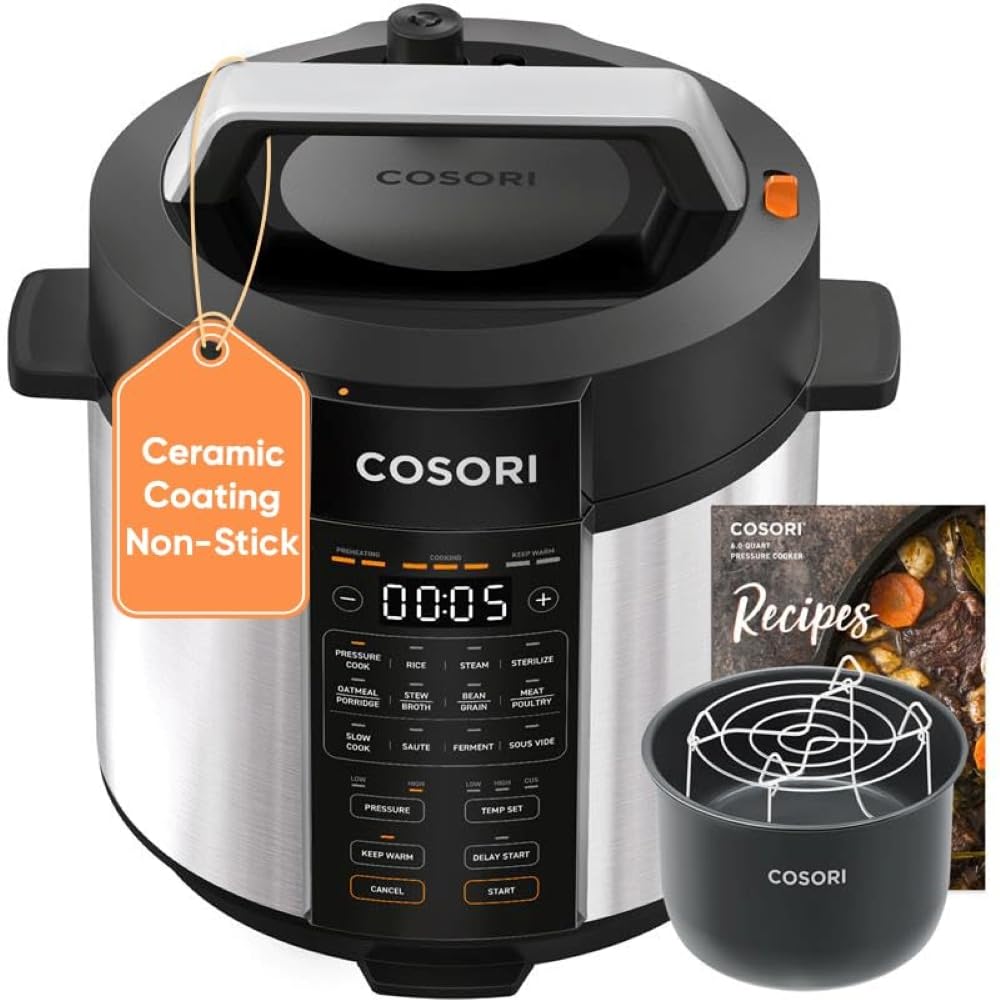
Cosori 6-qt
Key Features
- Capacity: 6 qt
- Cooking Functions: 9-in-1
- Inner Pot Material: Ceramic non-stick
- Control Type: Touch buttons
- Price: $
The Cosori 6-qt Pressure Cooker earns a 4.8-star rating from nearly 7,000 buyers – higher than the Instant Pot Duo – while costing less. Its control panel uses large, responsive buttons that make selecting pressure, slow cook, or sauté straightforward for someone who has never used an electric pressure cooker before. Cooking times are consistently fast, and results come out evenly across batches.
Where this cooker diverges from the top pick is its inner pot. The ceramic non-stick surface (PFAS-free) releases food easily and cleans up with a quick wipe, which is a real convenience for daily cooking. However, that coating will wear faster than stainless steel over years of heavy use, and the pot cannot be moved to a stovetop for searing or reducing sauces. If you plan to use the cooker a few times a week and prefer non-stick handling over long-term metal durability, this tradeoff is easy to live with.
Pros
- Control panel with clearly labeled buttons that respond to light touches
- Build quality and performance consistently preferred over the Instant Pot Duo in side-by-side comparisons
- Cooks under pressure quickly with even heat distribution across the pot
- Ceramic inner pot resists sticking and is free of PFAS chemicals
Cons
- Ceramic non-stick coating may show wear sooner than a stainless steel pot, especially with frequent high-pressure cooking
- Inner pot cannot be used on a stovetop for browning or simmering – all cooking must happen inside the unit
For a first-time buyer who prioritizes a responsive interface and easy cleanup over a pot that can go from pressure cooker to stovetop, this Cosori delivers a confident experience at a budget-friendly price.
Best for Entry-Level Users
COMFEE’ 6-qt
Key Features
- Capacity: 6 qt
- Cooking Functions: 12-in-1
- Inner Pot Material: Aluminum non-stick
- Control Type: Button panel
- Price: $
Unlike the classic Instant Pot Duo, built around an enormous recipe ecosystem, the COMFEE’ focuses on giving you the core cooking modes — pressure cook, slow cook, sauté, rice, and more — in a compact 6-quart package. The build quality feels solid for the price, and the control panel is simple enough that a first-time user can get started without a manual.
The 1000-watt heater brings the pot up to pressure dependably, while ten built-in safety features — including lid lock and overheat protection — provide a comfortable buffer for those still learning the ropes. The compact footprint takes up minimal counter space, and the lightweight non-stick pot makes cleanup quick.
This cooker is best suited for light to moderate use: perfect for someone trying pressure cooking for the first time or for small households. The aluminum non-stick inner pot is the main tradeoff — it scratches more easily than stainless steel and can cause food to burn on the bottom if liquid is too low or heat is too high. For heavy daily meal prep, a stainless steel pot would be a better long-term investment, but for occasional use this compromise is easy to live with.
Pros
- Multiple cooking modes (12 presets) cover most meal types without the premium price tag.
- Sturdy construction and secure lid mechanism inspire confidence during use.
- Straightforward control panel and compact 6-quart size fit well on any counter.
Cons
- In recipes with minimal liquid or high sauté heat, the aluminum non-stick pot can cause food to stick or burn — a tradeoff that doesn’t affect most pressure cooking tasks.
For cost-conscious beginners who want full pressure cooker functionality at the lowest possible price and can accept a non-stick pot that may wear sooner than stainless steel, the COMFEE’ delivers reliable performance without straining the budget.
Best for Families & Meal Preppers
Midea 8-qt
Key Features
- Capacity: 8 qt
- Cooking Functions: 12-in-1
- Inner Pot Material: Stainless steel
- Control Type: Button panel
- Price: $
The Midea 8-quart stainless steel cooker brings 12 presets and a budget-friendly price to the meal prepper’s kitchen. While the Instant Pot Duo remains the category benchmark for reliability, the Midea undercuts it by a significant margin without sacrificing stainless steel construction or program variety.
This cooker suits anyone cooking for three or more—batch soups, stews, and roasts fit comfortably in the 8-quart pot. Beginners who want the durability of stainless steel without spending twice as much will appreciate the straightforward control panel. The larger footprint means it occupies significant counterspace, so small kitchens may prefer a 6-quart model. Some units have reported venting cap malfunctions, and customer service can be slow to respond—a consideration for those who want zero-touch reliability from day one.
The REALSAFE system includes nine protections—overheat, pressure, and lid lock safeguards—that cover the basics for first-time users. The control dial and preset labels make selecting functions simple, and the stainless steel inner pot is dishwasher safe for easy cleanup. For a budget-priced stainless steel cooker, the build quality holds up to regular weekly use.
Pros
- Solid stainless steel build that holds up to regular cooking
- 8-quart capacity handles large batches for meal prep and family dinners
- Easy-to-use dial and preset layout make first-time operation simple
Cons
- 8-quart size takes up more counter space than typical 6-quart models
- Venting cap can malfunction in some units, and customer service may be slow to respond
The Midea 8-quart is a strong value for meal preppers on a budget who can accept the possibility of a venting cap adjustment. For beginners prioritizing proven reliability, the Instant Pot Duo remains the safer bet.
Best for Tech-Savvy Cooks
Instant Pot Pro Max 6-qt
Key Features
- Capacity: 6 qt
- Cooking Functions: 10-in-1
- Inner Pot Material: Stainless steel
- Control Type: Touchscreen
- Price: $$$
The Instant Pot Pro Max takes the familiar pressure-cooking formula and adds WiFi app control, NutriBoost technology, and a steam release that’s noticeably quieter than the Duo. For those who regularly use their phone to monitor dinner, the app works smoothly for remote status checks and time adjustments. It builds pressure quickly and the interface is straightforward for anyone comfortable with smartphone pairing.
Over regular use, the quiet steam release stands out – no loud hissing that startles everyone in the kitchen. The stainless steel inner pot with thick aluminum core feels substantial, and the 1200W power handles batch cooking well. That said, some units have shown rust around the inner pot edge or sensor-related glitches after roughly two years of use. This doesn’t affect every unit, but if you plan to keep a cooker for the long haul, it’s worth checking the condition periodically.
This model suits Instant Pot users who already have experience and want WiFi convenience, quiet operation, and the latest features. Beginners will find the Duo a more straightforward and cost-effective entry point. The Pro Max’s premium price and app dependency add layers that first-time buyers don’t need. If you’re comfortable with app-connected appliances and value a quieter kitchen, this delivers – just be aware that long-term durability has shown variability in some cases.
Pros
- Solid build with powerful 1200W heating
- Quiet steam release and simple interface
- WiFi enables remote monitoring and cooking adjustments
Cons
- Some units develop rust or sensor issues after extended use
For Instant Pot fans who want WiFi and a quieter kitchen companion – just keep an eye on long-term durability.
Best for Tech Enthusiasts
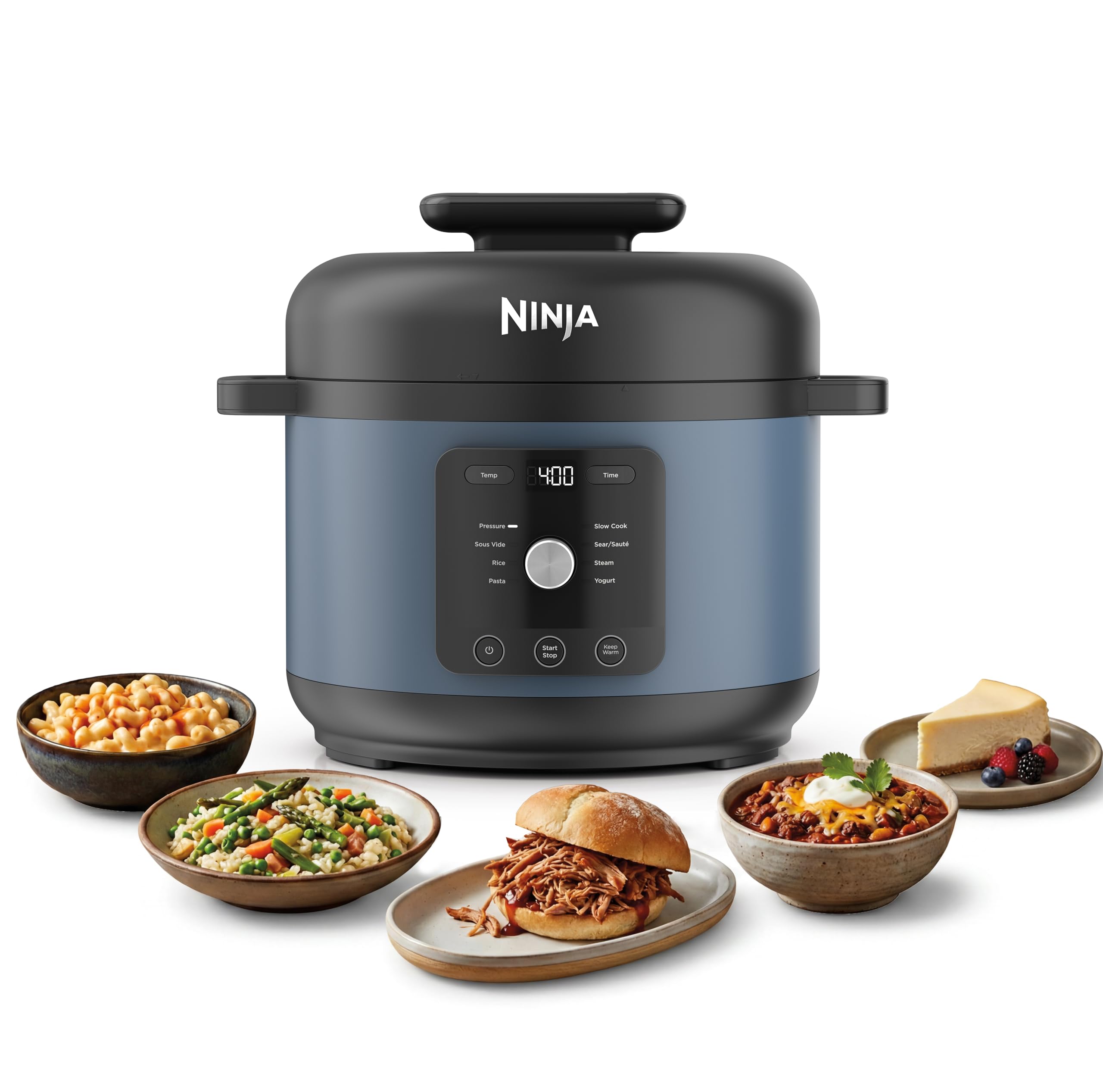
Ninja HyperHeat 6.5-qt
Key Features
- Capacity: 6.5 qt
- Cooking Functions: 9-in-1
- Inner Pot Material: Ceramic non-stick
- Price: $$
The Ninja HyperHeat builds pressure faster than typical electric pressure cookers, cutting cooking time noticeably on beans, stews, and braised meats. Its ceramic non-stick pot is PFAS-free, and the build quality feels substantial. However, because this model has been available for a shorter period than category staples like the Instant Pot Duo, its long-term behavior under regular use is not yet known. The price also sits above some competitors offering similar function sets. For a first-time buyer who values speed above all else and accepts that track record is still being established, the HyperHeat delivers on its core promise.
Pros
- HyperHeat technology reduces pressure buildup time for noticeably faster cooking.
- Solid construction with a sleek, modern aesthetic.
Cons
- Price sits above several mid-range models with similar cooking capabilities.
- Long-term durability under frequent use has not yet been documented.
Best for the speed-focused cook who wants the latest heating tech and is comfortable with a newer model that lacks a multi-year track record.
Best for Stovetop Users
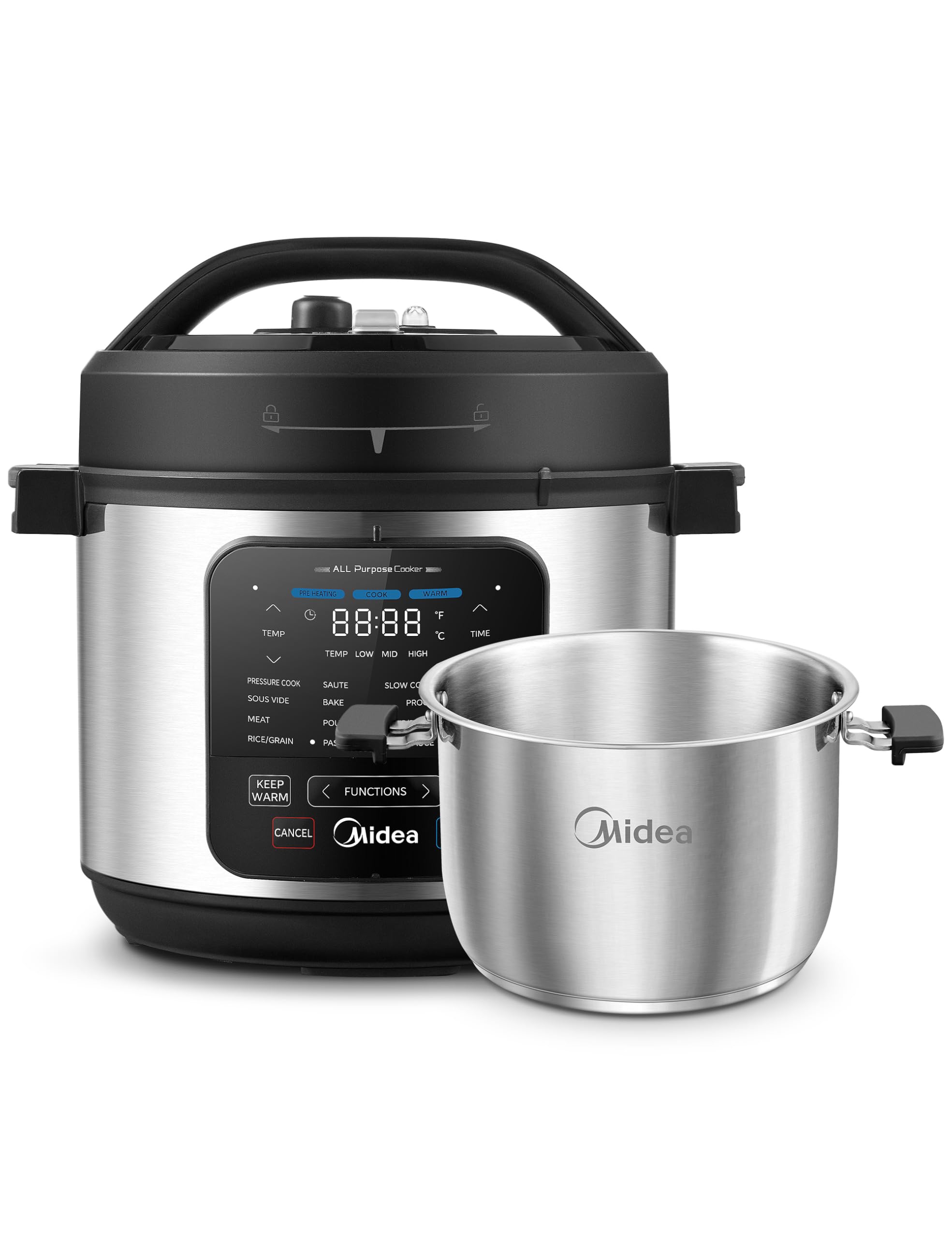
Midea 6-qt (Stovetop Safe)
Key Features
- Capacity: 6 qt
- Cooking Functions: 10-in-1
- Inner Pot Material: Stainless steel
- Price: $$
This Midea model stands out because its stainless steel pot transfers directly from stovetop searing to oven finishing, a flexibility rare in electric pressure cookers. The 10-in-1 functionality covers essential modes like pressure cook, slow cook, and sauté. However, its relatively short time on the market means long-term durability is not yet confirmed. For cooks who want to experiment with stovetop-to-oven recipes and are comfortable with a newer brand, the Midea offers a capable tool at a mid-range price.
Pros
- Stainless steel inner pot is dishwasher safe and oven safe up to 500°F, simplifying cleanup and expanding cooking techniques.
- Unique ability to sear on the stovetop and finish in the oven combines pressure cooking with browning and roasting.
Cons
- Unknown long-term reliability under heavy use, as this model has limited market exposure.
This Midea is a reasonable option if you need stovetop-to-oven capability and are willing to accept a shorter track record; for a more established choice, consider the top pick.
Best for Rice Lovers
CUCKOO 6-qt

Key Features
- Capacity: 6 qt
- Cooking Functions: 10-in-1
- Inner Pot Material: Stainless steel
- Price: $$
The CUCKOO 6-quart brings 1500W power for notably fast heating and an auto-clean cycle that simplifies post-cooking cleanup — a combination not common at this price. Its stainless steel inner pot is a plus for durability and even heat distribution. With limited user feedback, performance consistency is harder to gauge compared to models with a longer track record. For first-time users who want a proven, well-documented experience, the top pick offers more community support and consistent performance. This CUCKOO suits those who prioritize quick heating and automated maintenance over a large ecosystem of recipes and troubleshooting guides.
Pros
- High wattage (1500W) delivers noticeably faster heating than typical 1000W models.
- Auto-clean cycle reduces manual scrubbing by circulating hot water and steam.
- Stainless steel (304) inner pot resists scratches and distributes heat evenly.
Cons
- Limited online community reduces the number of third-party recipes and troubleshooting resources available.
Best for cooks who value fast heating and automated cleanup and are comfortable with a less documented cooking experience.
How to Choose
The best electric pressure cooker for beginners focuses on core cooking functions and safety, not gimmicks – and mastering pressure release is more important than any feature count.
Capacity – 6 Quarts Is the Sweet Spot
A 6-quart cooker handles meals for 2–4 people without taking forever to pressurize. Larger models (8 quarts) need more liquid and take longer to build pressure, which can overcook small batches. For singles or couples, a 6-quart hits the balance between versatility and speed.
Cooking Functions – Fewer Is Often Better
Manufacturers pack in 10+ presets, but most beginners only use pressure cook, slow cook, and sauté. Extra functions like yogurt or cake makers often remain unused. Focus on a model that does the basics well rather than paying for features you’ll never touch.
Inner Pot Material – Stainless Steel Over Non-Stick
Stainless steel pots distribute heat evenly, are dishwasher-safe, and last for years without flaking. Non-stick coatings (aluminum or ceramic) are lighter and easier to clean but can scratch or chip over time. If you plan to use the sauté function often, stainless steel is the more durable choice.
Safety Features – Look for Lid Lock and Overheat Protection
All electric pressure cookers have basic safety mechanisms, but models with a lid lock that prevents opening under pressure and automatic overheat shut-off add extra peace of mind. More safety layers (10+) is better, but even the entry-level options meet core safety standards.
Ease of Use – Intuitive Controls Matter
A clear button panel with straightforward labeling reduces the learning curve. Touchscreens look modern but can be less responsive with wet hands. For a beginner, physical buttons that are easy to press and labeled clearly are the most forgiving choice.
FAQ
Why does my electric pressure cooker take so long to come to pressure?
It takes time for the inner pot to heat and build steam pressure. Common causes include a loose sealing ring, too little liquid, or an overloaded pot. Always ensure the silicone ring is seated properly and use at least 1 cup of liquid. Expect 10–15 minutes for a 6-quart cooker on average.
Is it safe to leave an electric pressure cooker unattended?
Yes – modern electric pressure cookers have automatic shut-off, overheat protection, and lid locks that prevent opening under pressure. Leaving it unattended during the cooking cycle is safe, but you should be nearby for the pressure release step to avoid burns from steam.
Can I cook rice in an electric pressure cooker without it burning?
Yes, but you need to use the correct water-to-rice ratio and press the specific rice preset if available. For white rice, a 1:1 ratio of rice to water works well. Avoid stirring once cooking begins, and do a natural release for 10 minutes to prevent sticking.
How do I clean the sealing ring to remove odors?
Remove the silicone ring and wash it with warm, soapy water. For stubborn smells, soak it in a mixture of white vinegar and water for 15 minutes. Some users also steam a lemon slice in the cooker to freshen the ring. Replace the ring every 12–18 months if odors persist.