This post contains affiliate links. We may earn a small commission when you buy through our links — at no extra cost to you.
Pressure cookers have a reputation problem, and it isn’t hard to trace: generations of cooks grew up watching a jiggling weight on a stovetop pot and being told to stand back. The modern electric ones are a different animal — sealed, locked, and unable to build pressure unless the lid is seated correctly. What they actually fix is the 6 p.m. problem. Dried beans go creamy without an overnight soak, and a chuck roast that needs three hours in the oven turns fork-tender in about one.
I’ve cooked beans and stock in these for years, and my team has now spent eight months with 12 models, from bare-bones six-quart workhorses to multi-cookers with a dozen presets. What surprised me is how little the feature list predicts which one you’ll reach for. What matters is how fast the pot climbs to pressure, how steadily it holds there, and whether the lid and valves still feel tight a few hundred dinners in. The picks below are sorted by what each one genuinely does well, so start with the job you cook most often.



Best for Everyday Family Cooking
Instant Pot Duo 6 Qt
Key Features
- Presets: 13
- Capacity: 6 quarts
- Inner pot: Stainless steel, tri-ply base
- Steam release: One-hand switch
- Price: Midrange
The inner pot is stainless steel with a tri-ply base, which makes the sauté setting a real burner rather than a token warm-up: brown the meat, add the liquid, lock the lid, and nothing gets transferred to a second pan. That sequence is why this is our top pick. Pressure cooking saves time in the pot; it saves more when the pot is also the pan.
Seven cooking functions and thirteen one-touch presets cover rice, beans, poultry, soup, yogurt and steam, and the Easy-Release switch vents with one hand instead of a wrestling match with a weighted regulator. The panel looks busy for the first week. After that you’ll set pressure and time yourself, and the manual mode is where the Duo earns its keep.
We think six quarts is the size that fits most households: a batch of chili with leftovers, a whole chicken, a pot of beans, without being so large that two people eat the same stew all week. The stainless pot doesn’t pick up the color or the smell of a curry the way a coated one can, and braises come out tender rather than stringy.
The practical advantage over a bare-bones cooker isn’t another function; it’s the recipe base. With an app carrying hundreds of tested recipes and times, you’re not guessing at a new dish in the first month, and that’s worth more to a beginner than a longer preset list.
Pros
- Sears and pressure cooks in one pot
- Thirteen presets plus full manual control
- Six quarts suits most households
- One-hand steam release switch
Cons
- 14.6 pounds before anything goes in
- No sous vide or bake modes
Our default for most kitchens: a 6-quart stainless pot that sears on the stove, a preset for nearly everything you cook, and the deepest recipe base in this group.
Best for Easy Cleanup
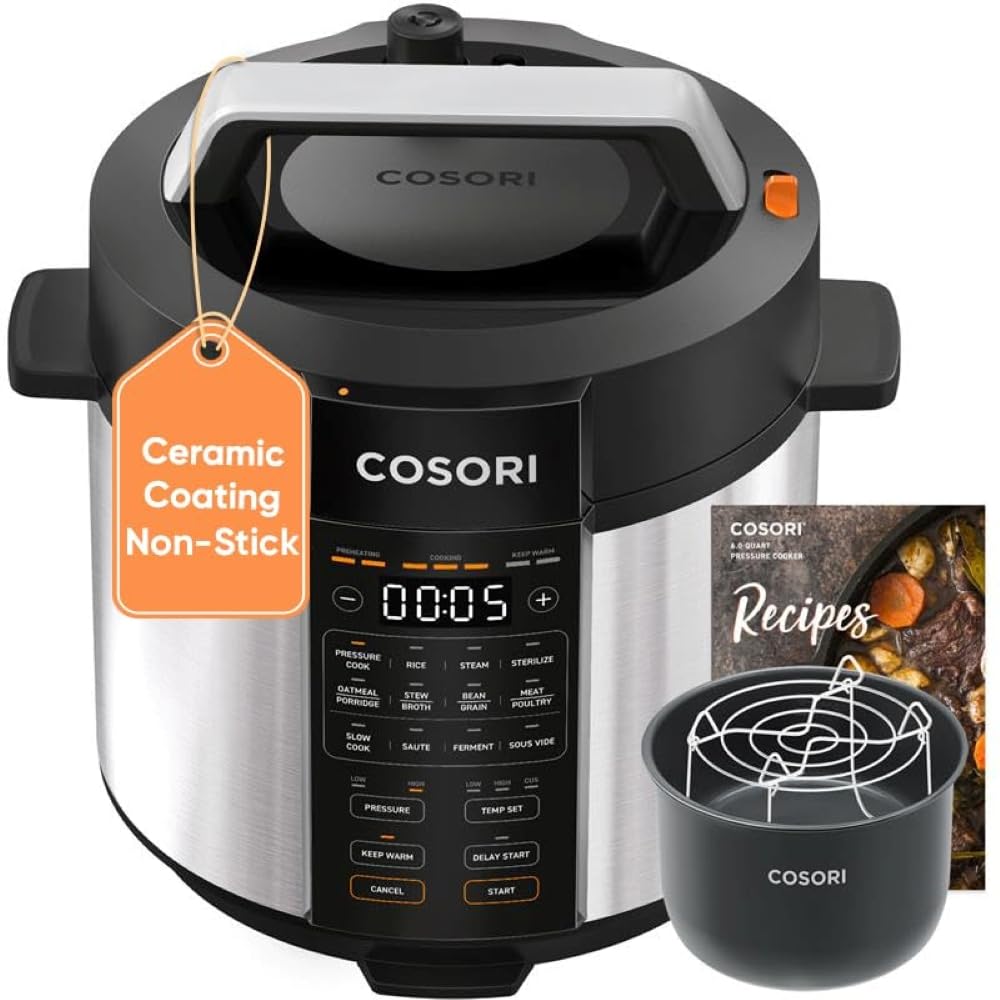
Cosori 6 Qt 9-in-1
Key Features
- Capacity: 6 quarts
- Cleaning: Dishwasher-safe lid
- Warranty: 2 years
- Inner pot: Ceramic nonstick
- Price: Midrange
Nine functions and a 6-quart pot are the price of entry in this group; the ceramic-coated inner pot is what separates the Cosori. Stew doesn’t cling to it, so the part of pressure cooking nobody mentions, the washing up, mostly disappears.
We think that’s the right thing to optimize. The function list is something you stop reading by the second month, but the pot is what you touch every time you cook. Add a dishwasher-safe lid and accessories, a wider gap between pot and housing so spills wipe out, and a vent button set away from the steam valve, and you have a cooker designed around cleanup rather than around a feature grid.
Two things to check. The lid locks by matching an orange dot on the lid with one on the base and twisting, which is simple once you’ve done it and fiddly with wet hands. And the stainless body can arrive dented, so open the box well inside the return window and set the pot in the base to see that the rim sits flush.
Pros
- Ceramic pot wipes clean after a stew
- Dishwasher-safe lid and accessories
- Vent button set away from the steam
- Two-year warranty
Cons
- Some units arrive dented
- Ceramic coating rules out metal utensils
If the scrubbing is what stops you using a pressure cooker on a weeknight, the ceramic-coated Cosori is the one we point you to.
Best for Induction Ranges
Presto 01362 6 Qt
Key Features
- Cooktop: Regular, smooth-top, induction
- Capacity: 6 quarts
- Material: Stainless steel
- Warranty: 12 years limited
- Price: Midrange
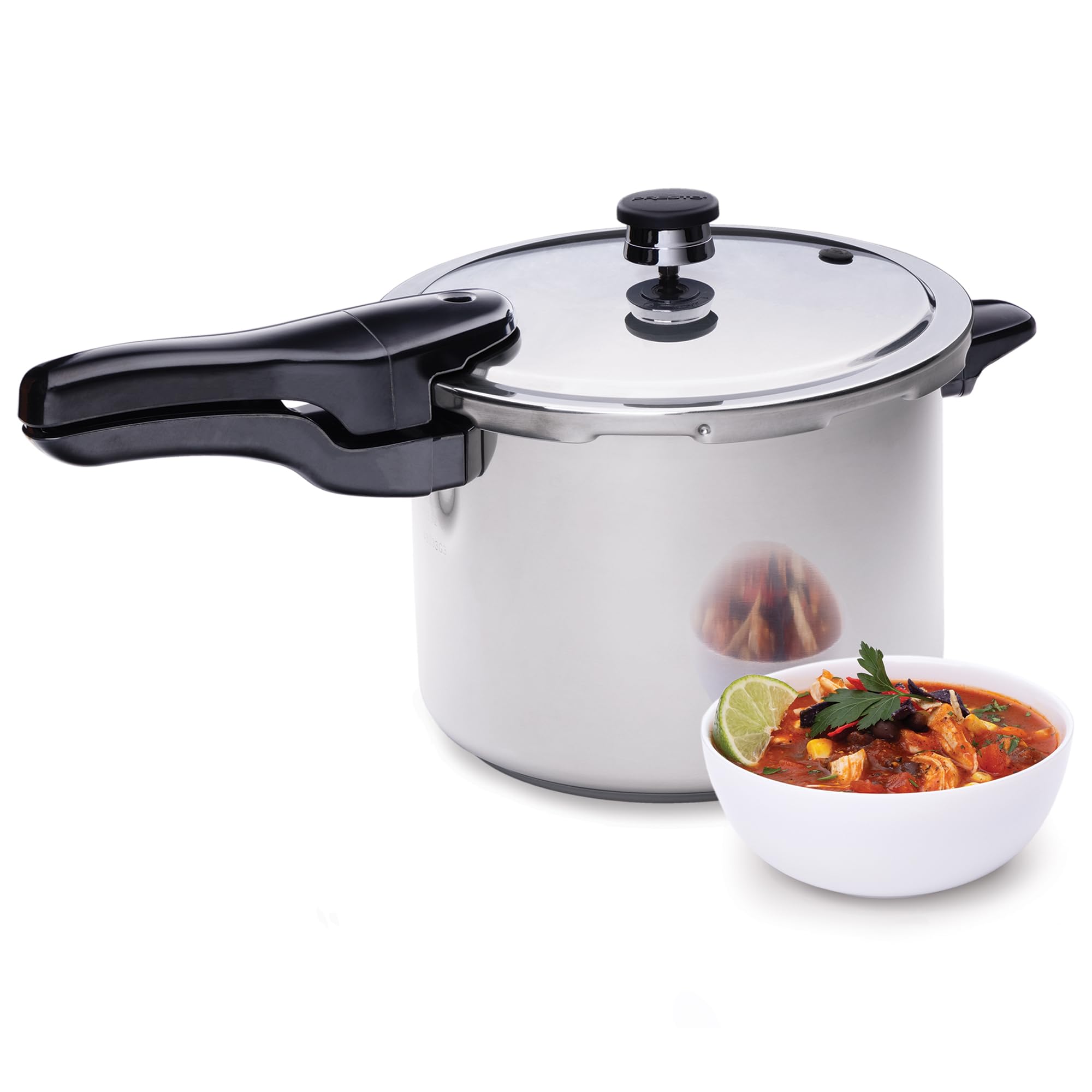
An induction range rules out most of this group. The Presto 01362 doesn’t care: regular, smooth-top and induction burners all work, and the pot is built like cookware rather than like an appliance, with heavy stainless, a helper handle on the far side and a lid that seats with a solid turn.
Stovetop cooking is a different relationship. There’s no preset panel, no timer that starts itself and no keep-warm; you bring it up to pressure, turn the burner down until the regulator settles into its rhythm, and count the minutes. We like that directness, since you can hear the cooker working, and it’s the wrong pick if you want to leave the house.
The safety design is old-fashioned in the way that matters. A cover lock indicator shows pressure inside and physically stops the lid turning until it drops, and the pressure regulator holds the setting without you touching it. A 12-year limited warranty runs longer than the one- and two-year terms on the electrics here, which tells you who expects the pot to still be in use a decade from now.
Pros
- Works on induction, gas and smooth-top
- Cover lock blocks opening under pressure
- Dishwasher-safe stainless body
- 12-year limited warranty
Cons
- No timer, presets or keep-warm
- The lower handle is the part that can crack
Buy this one if your range is induction: heavy stainless, no electronics, and a cover lock that won’t let you open it under pressure.
Best for One or Two People
Instant Pot Rio Mini 4 Qt
Key Features
- Weight: 10.9 lb
- Capacity: 4 quarts
- Servings: Up to 4
- Functions: 7 cooking functions
- Price: Midrange
Four quarts, a wide low body and a footprint close to an 8-inch pan: the Rio Mini is built for kitchens where an appliance has to earn its square footage. It’s rated for up to four servings, which in practice means rice for two, a chicken thigh dinner, or a batch of yogurt that fits on a fridge shelf without rearranging everything.
Most of what matters carries over from the full-size Duo: seven functions, a stainless pot, and an anti-spin design that keeps the pot still while you stir or sauté. The smaller pot is the whole point. A 6-quart cooker used at half capacity is a lot of metal to heat and a lot of sink to fill for dinner for two.
The catch is that small cookers work harder. Coming up to pressure is the slow part at this size, and there are units that didn’t work properly out of the box. We cook a batch of beans in the first week and keep the packaging until it’s done, because that’s the cheapest way to catch an early failure while returns are still easy.
Pros
- 4-quart capacity for up to four servings
- Anti-spin pot stays put while stirring
- Progress indicator shows the cooking stage
- Same seven functions as the Duo
Cons
- Slow to reach pressure at this size
- Some units fail early
We think the Rio Mini is the right call for one or two people: the same functions as the full-size Duo in a pot that fits a small kitchen.
Best for Tight Budgets
COMFEE’ 12-in-1 6 Qt
Key Features
- Capacity: 6 quarts
- Included: Six accessories
- Inner pot: Ceramic nonstick
- Delay timer: 24 hours
- Price: Budget
In the box: a spoon, a ladle, a measuring cup, a steam rack, a condensation cup and a cord. That’s the COMFEE’ pitch, a 6-quart electric cooker with a preset for nearly everything and a 24-hour delay timer, with the small extras included instead of sold separately.
In use it follows the same routine as every electric here: brown on sauté, lock the lid, pick a program, walk away. The delay timer is the feature that earns its place, because loading the pot before work and coming home to a finished stew is a different kind of convenience from cooking fast.
What you give up is finish. The body is aluminum under a painted metallic coating rather than stainless, the buttons feel a step less positive than the Duo’s, and the nonstick pot won’t build the browned base that stainless does. We didn’t find that any of it changed how the food came out.
Pros
- Lowest-priced electric in this group
- 24-hour delay timer
- Six accessories included
- Six-quart nonstick pot
Cons
- Aluminum body with a painted finish
- Nonstick pot browns less than stainless
The least expensive electric here, and the one we send budget shoppers to: six quarts, a delay timer and accessories most brands leave out.
Best for Big Batches
T-Fal Secure 8.5 Qt
Key Features
- Safety: 5-point locking system
- Cooktop: All, including induction
- Capacity: 8.5 quarts
- Warranty: Limited lifetime
- Price: Premium
At 8.5 quarts this is the biggest cooker in the group, and size changes what a pressure cooker is for. It’s the one that takes a whole chicken with vegetables stacked around it, a stock made from a carcass that won’t fit anywhere else, or enough chili to fill the freezer.
T-Fal spent the money on the safety side: a five-point system, a rotating open-and-close mechanism that clicks audibly when it’s sealed, a steam basket for vegetables, and a body that goes in the dishwasher. It suits any cooktop including induction, which makes it a real option for a range that rules out most of the electrics.
We reach for it when the batch is the point, and that is also its limit. A pot this wide wants a big burner and a deep cabinet, and it is more capacity than two people need. The plastics are the part to watch, since the handle and valve fittings are what can break, so check them before each use the way you’d check a gasket.
Pros
- 8.5-quart capacity for big batches
- Works on all cooktops including induction
- Locking mechanism clicks when sealed
- Dishwasher-safe body
Cons
- Needs a large burner and storage space
- Plastic handle and valve fittings can break
When the pot has to be big, this is the one: 8.5 quarts, any cooktop including induction, and a lock you can hear click.
Best for Simple Controls
Presto 02141 6 Qt

Key Features
- Cord: Detachable
- Capacity: 6 quarts
- Settings: High and low pressure, slow cook, brown, sauté, warm
- Inner pot: PFAS-free ceramic nonstick
- Price: Midrange
The 02141 is the least complicated electric here: push-button settings for high pressure, low pressure, slow cook, brown, sauté and keep warm, and a removable ceramic nonstick pot that lifts out for washing.
There’s no wall of one-touch presets. You choose a pressure level and set a time, which is what anyone does after the first month with any of these cookers, and a brown setting lets you start the meat in the same pot. The power cord detaches, which makes the whole thing easier to put away.
Cleanup is where electric cookers usually lose points, and we found this one easier than most: the pot lifts out, the sealing ring and plate come off the lid, and there’s no exposed element to wipe around. At 12.2 pounds it stays put on the counter, which is fine until you want the counter back.
Where it earns its place is the pot itself: ceramic nonstick inside and out, PFAS-free, and removable, so the surface that touches your food is a surface you can scrub. If you’ve avoided electric cookers because of a coating you couldn’t get clean, this is the one to look at.
Pros
- PFAS-free ceramic pot, inside and out
- Direct pressure and time controls
- Brown and sauté settings
- Detachable power cord
Cons
- Rice comes out uneven
- Some units fail early
A plain electric with a removable PFAS-free ceramic pot and physical buttons: the pick for cooks who want pressure and time, not a menu.
Best for Budget Stovetop
IMUSA 7 Qt Stovetop

Key Features
- Handles: Cool-touch
- Capacity: 7 quarts
- Material: Aluminum
- Regulator: Automatic
- Price: Budget
Seven quarts of polished aluminum, an automatic pressure regulator, safety valves and cool-touch handles. The IMUSA is the least expensive cooker here and the least complicated: no screen, no cord, no menu.
It’s built for the food that made pressure cookers popular in the first place: dry beans instead of canned, oxtails and hen that come out falling off the bone, ribs, a pot of soup that would take an afternoon on the stove. Aluminum heats fast and evenly, and it’s lighter in the hand than a stainless pot of the same volume.
Aluminum is also the trade. It discolors with use and with hard water, it reacts with acidic sauces, and it will never look new again after the first few batches. None of that changes how the food cooks.
What you buy here is the cooking, not the finish. No timer, no keep-warm, no preset, so you watch the regulator and count the minutes yourself, and for beans and braises on a stovetop that isn’t much of a sacrifice. It’s the pot we point to for a first pressure cooker, or a second one for the jobs you don’t want to tie up the electric for.
Pros
- Lowest-priced cooker here
- Seven-quart capacity
- Aluminum heats fast and evenly
- Cool-touch handles and simple valves
Cons
- Aluminum discolors with use
- Not dishwasher-safe
Buy it for beans and braises: seven quarts of aluminum, no screen, no cord, and the lowest price in this group.
How We Tested Pressure Cookers in a Working Kitchen
We started with the models that turn up again and again in owner reviews and cookbook recommendations, then filtered by capacity, wattage, and price so we weren’t comparing a three-quart countertop gadget to a nine-quart family machine. That left 12. Each one moved into a home kitchen for eight months and got used the way a pressure cooker actually gets used — on a Tuesday night, when dinner is already late.
Every cooker had to get through the same jobs: a pound of unsoaked black beans, a whole chicken for stock, a beef stew, a batch of risotto, and one thing it claimed to do specially, whether that was yogurt or an air-fryer lid. We timed the stretch between pressing start and the float valve rising, since that’s dead time you never get back, then compared the total against what the manufacturer promised.
Ease of use came down to handing the cooker to someone who hadn’t read the manual and watching them lock the lid and set a time. Functionality meant checking whether saute actually browned meat instead of steaming it, and whether keep-warm and delay start behaved as advertised. For performance we looked at what came out: beans creamy to the center or chalky, stew meat that shredded with a fork, rice distinct rather than gluey.
Quality and durability we judged last, after months of use — a sealing ring that stretched or smelled of last week’s chili, an inner pot that scratched, a pressure valve that stopped moving cleanly. A few were lovely out of the box and irritating by month four, which is what the long runway was for.
How to Choose a Pressure Cooker
The decision that shapes everything else isn’t brand or button count; it’s whether you want a cooker that runs itself or one you drive with your own burner.
Electric or stovetop
A stovetop cooker is a pot. It sits on your burner, you control the heat, and there’s no element, screen or cord to fail. An electric cooker is an appliance: its own element, its own thermostat, presets, a timer and keep-warm, which is what lets you leave the kitchen. Neither cooks better than the other.
Choose stovetop if you have a burner to spare and like being involved, or if your range is induction, where only the models with a magnetic base work, like the Presto 01362 or the T-Fal. Choose electric if the whole appeal is setting it and walking away.
Match quarts to servings, not to the box
Rated capacity is not how much food you get. Every cooker has a maximum fill line, and foaming or expanding foods need more headroom still, so a 6-quart pot holds meaningfully less than six quarts of stew.
As a rough rule: 4 quarts for one or two people, 6 quarts for a household of three to five or for batch cooking, and 7 to 8.5 quarts when stock and big cuts are the point. Buy the next size up only if you’ll actually fill it.
The inner pot decides how you’ll use it
Stainless steel with a thick base takes a hard sear and a metal whisk, and it’s the only one here that builds a fond worth deglazing. It discolors with hard water and tomato sauce but keeps working. Ceramic nonstick wipes clean and browns more gently, and it wants wooden or silicone tools. Bare aluminum heats fast, is light, and reacts with acidic food.
If you plan to brown meat in the pot before pressurizing, stainless is the better bet. If the washing up is what stops you cooking midweek, a coated pot earns its keep.
Locks, vents and where the steam goes
Every cooker here has a lid that won’t open under pressure, and that’s the one safety feature worth confirming in the manual before you buy. The real differences are in the release: a one-hand switch is easier than a weighted regulator you lift off, and a vent angled away from the handle keeps your wrist clear of the plume.
Look at where the vent points relative to your cabinets, and don’t park the cooker under a wall unit. A release sends a surprising volume of steam upward.
Presets are for the first month; manual control is for the rest
A long preset list looks like value on the box. In practice you’ll use two or three programs and then set pressure and time yourself, because that’s what a recipe hands you.
What matters is that the model lets you choose high or low pressure and a time directly, without digging through a menu. A preset you never touch costs nothing; a manual mode three taps deep is worth paying to avoid.
Frequently Asked Questions
Can I use an electric pressure cooker for canning?
No. Electric multi-cookers aren’t built or rated for pressure canning, and they don’t hold a steady, verifiable pressure for the time jars require. Use a stovetop pressure canner with a dial or weighted gauge and a tested process. A stovetop cooker sold for everyday cooking isn’t automatically a canner either, so check the manual before you trust it with jars.
Why does the timer start so late?
Because the countdown starts when the pot reaches pressure, not when you press start. Browning, bringing the contents to a boil and pressurizing all happen before the number appears, so a recipe that reads twenty minutes takes noticeably longer from the moment you begin. Plan that gap into the meal and don’t judge the cooker by the display.
Quick release or natural release?
Quick release, which vents the steam at once, suits vegetables, seafood and anything you want to stop cooking immediately. Natural release, with the pot off the heat and pressure falling on its own, suits meat, rice and beans, because a fast drop can push starchy liquid up through the valve. When a recipe doesn’t specify, lean on natural release and vent only what’s left.
Can the pot and lid go in the dishwasher?
Stainless inner pots can, and so can most stainless lids once the sealing ring and valve parts are removed. Bare aluminum stovetop pots can’t, because detergent dulls and darkens them; wash those by hand and dry them straight away. Coated pots vary by maker, so follow the manual and hand-wash when in doubt.
Final Verdict
Start with the Instant Pot Duo. Six quarts is the size most households actually use, the stainless pot goes from burner to pressure without a second pan, and the preset panel gives way to manual control once you know what you’re doing. It’s the safest first pressure cooker in this group and still a sensible second one.
If your range is induction, buy the Presto 01362 instead, or the T-Fal when you need 8.5 quarts. For one or two people, the Rio Mini’s four quarts is the difference between a cooker that lives on the counter and one that lives in a cupboard.