This post contains affiliate links. We may earn a small commission when you buy through our links — at no extra cost to you.
Slow cookers are forgiving and pressure cookers are fast, which is why so many of us own one and wish it were the other. A good electric cooker closes that gap: it can simmer beans all afternoon or bring dinner to pressure before the hangries win. I spent eight months rotating 14 cookers through weeknight chilis, Sunday batch cooking, and rushed pasta sauces, and the keepers were the ones that made both modes feel easy.
What surprised me was how much ease of use lives in the details: a lid that locks without a wrestling match, a steam release you can nudge with a spoon, and controls that don’t demand the manual for a simple saute. Size matters more than the spec sheet suggests—a six-quart can overwhelm a two-person kitchen, while a three-quart leaves no room for leftovers. I also checked the unglamorous parts, like sealing rings, hinge pins, and insert glaze, because a cooker that saves an hour on Tuesday is no bargain if the pot chips by spring. The picks below are the ones that kept earning counter space.



Best for Everyday Home Cooking
Instant Pot Duo 6 Qt
Key Features
- Presets: 13 one-touch
- Capacity: 6 quarts
- Inner pot: 18/8 stainless steel
- Cooking functions: 7-in-1
- Price: Midrange
The Instant Pot Duo is the closest thing here to a one-appliance answer. It pressure cooks, slow cooks, sautés, steams, makes rice and yogurt, and keeps warm, and the 6-quart pot is sized for a household that wants leftovers. That range is why it is our default pick: it handles the everyday jobs without making us decide which machine to pull out.
The 18/8 stainless-steel inner pot with a tri-ply bottom is the part we appreciate most. It has enough heft for searing, and the flat base makes the sauté function useful for starting a stew rather than just warming ingredients. We also like that there is no nonstick coating to baby; the pot takes a scrubby sponge without drama.
The controls are familiar for a reason. Thirteen one-touch programs cover the common dishes, but the manual pressure and sauté settings are where the Duo makes sense for anyone who cooks from recipes. We found the display easy to read and the progress through preheat, cooking, and keep warm simple to follow.
The 6-quart capacity is the practical middle ground: enough for a chicken, a batch of chili, or several cups of rice, without the footprint of an 8-quart model. The yogurt setting is a quiet bonus, and the app’s recipe library is a useful starting point when we want a ratio rather than a full recipe. The stainless pot has no coating to wear through, and the electronics carry a one-year warranty.
Pros
- 7 functions cover pressure, slow cook, sauté, rice, yogurt
- 6-quart capacity suits most households
- Stainless tri-ply pot is sear-friendly and durable
- 13 one-touch programs plus manual control
Cons
- Heavy and wide for a cupboard
- Steam release is manual, not hands-free
The Duo is our default pick: its six-quart size, stainless pot, and seven core functions handle everyday pressure and slow cooking without fuss.
Best for Easy Cleanup
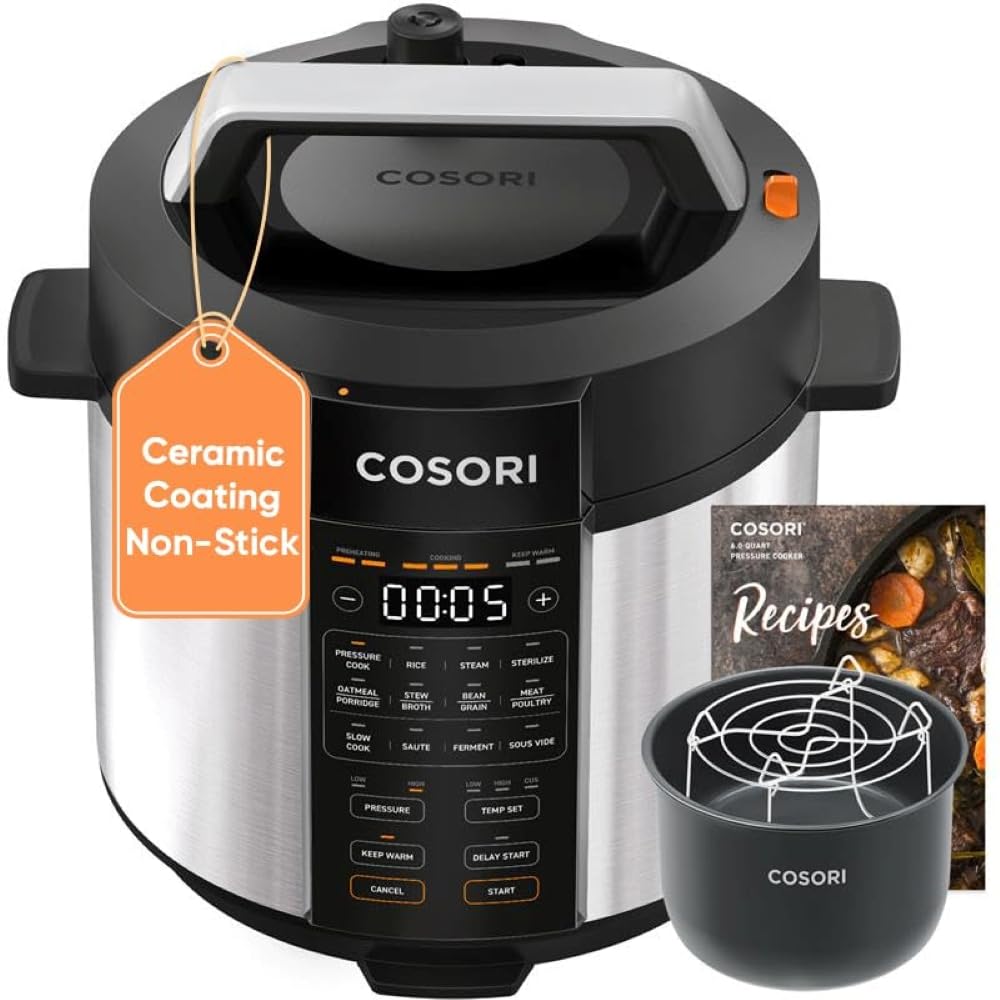
Cosori 9-in-1 6 Qt
Key Features
- Capacity: 6 quarts
- Inner pot: Ceramic-coated
- Safety features: 12
- Cooking functions: 9-in-1
- Price: Budget
A ceramic-coated pot changes cleanup more than it changes cooking. The Cosori’s pot releases rice, oatmeal, and saucy beans without the stuck-on ring a bare stainless pot can leave, and the lid and accessories are dishwasher-safe. The 0.5-inch gap around the pot is a small design choice we noticed when wiping the housing; it gives your cloth somewhere to go.
We think that difference is worth paying for if you cook grains often. The 9-in-1 function set covers pressure cooking, rice, steam, slow cook, sauté, ferment, sous vide, and keep warm. The vent button sits away from the steam valve, and the release is angled backward, so you are not reaching across the lid to vent it. Those details make the Cosori feel more considered than its simple exterior suggests.
The Cosori’s main advantage is that it makes the messy foods easy: rice, porridge, stews, and anything that tends to leave a film. It is a strong alternative to the Duo when cleanup is the deciding factor, and the two-year warranty is a meaningful cushion for a coated pot. The 6-quart pot is the same family size as the Duo, so the choice between them comes down to pot material and vent design rather than capacity.
Pros
- Ceramic pot releases rice and sauces easily
- Protected, angled steam vent
- Dishwasher-safe lid and accessories
- Two-year warranty
Cons
- Stainless body can arrive dented
- Ceramic coating needs gentle utensils
We reach for the Cosori when rice and saucy dishes are on the menu; its ceramic pot and tucked-away vent make cleanup the easy part.
Best for Budget Family Meals
COMFEE’ 12-in-1 6 Qt
Key Features
- Capacity: 6 quarts
- Inner pot: Nonstick
- Delay timer: 24 hours
- Cooking functions: 12-in-1
- Price: Budget
The Comfee is the budget cooker that does not feel like a compromise. It has a 6-quart pot, a 12-in-1 function set, a nonstick interior, and a 24-hour delay timer, and it comes with the accessories you actually use: a steamer rack, measuring cup, rice ladle, and spoon. We think it is the value pick of this group because it covers the basics without a flimsy feel.
The nonstick pot is the practical center of the design. Rice and beans release with a wipe, and the pot is light enough to lift out with one hand. The delay timer is the feature we missed on the more expensive cookers; set it before work and dinner is ready when you walk in.
The preset-first panel is less flexible than the Duo’s manual controls, but the labels are clear enough for everyday meals. We used the steam preset for dumplings and the slow-cook setting for a batch of chili, and both came out evenly cooked. The 6-quart capacity is right for a family of four with leftovers. The included rack sits above the pot for steaming, and the condensation cup catches drips before they reach the counter.
Pros
- 12-in-1 functions cover everyday cooking
- Nonstick pot wipes clean
- 24-hour delay timer
- Useful accessories included
Cons
- Nonstick pot is not for high-heat searing
For a tight budget, we point to the Comfee: it covers pressure, slow, rice, steam, and sauté with a nonstick pot and delay timer, without feeling stripped down.
Best for Small Households
Instant Pot Rio Mini 4 Qt
Key Features
- Wattage: 800 watts
- Capacity: 4 quarts
- Cooking surface: 8-inch pan equivalent
- Cooking functions: 7-in-1
- Price: Midrange
Four quarts is not a compromise if you cook for one or two. The Instant Pot Rio Mini has the same 8-inch cooking surface as a small skillet, which means a chicken breast, a cup of rice, or a few servings of soup fit without swimming in empty space. The anti-spin design keeps the pot steady when you stir or sauté.
The 7-in-1 function set is the same core set as the Duo, just scaled down: pressure cook, slow cook, sauté, steam, rice, yogurt, and keep warm. The progress indicator is a small thing we came to appreciate; it tells you where the cooker is in the preheat and cook cycle without making you open the lid.
We think the Rio Mini is the right choice for a small household that wants pressure-cooking speed without a giant pot to clean. The controls are simple enough for a first pressure cooker, and the rosewater finish is the rare appliance color we did not get tired of. The matte exterior is pleasant to touch and does not pick up smudges the way a glossy finish can. The pot is shorter than the 6-quart Duo, so it slides under more cabinets when you need the counter back.
Pros
- 4-quart size suits one or two people
- 7 core functions including slow cook and yogurt
- Progress indicator shows cooking stage
- Anti-spin pot stays put while stirring
Cons
- Too small for big-batch meal prep
- No sous vide or sterilize programs
The Rio Mini is the one we recommend for one or two people: four quarts, seven functions, and a smaller footprint than the six-quart cookers here.
Best for Guided Cooking
Chef iQ Smart 6 Qt

Key Features
- Capacity: 6 quarts
- Connectivity: WiFi and Bluetooth
- Built-in scale: Four smart sensors
- Cooking functions: 10-in-1
- Price: Premium
The built-in scale is the Chef iQ’s reason for being. Four sensors weigh ingredients in the pot, so you can add rice, water, and seasoning by weight without pulling out a measuring cup. The scale also feeds the guided recipes in the app, which sends times and pressure settings to the cooker.
We think that is genuinely useful for a cook who follows recipes closely or wants to learn pressure cooking without memorizing timings. The app includes hundreds of guided recipes and how-to videos, and the automatic pressure release takes the hand-off step out of the process. The 6-quart pot is the standard family size, and the cooker is lighter than the Duo at 10.4 pounds.
The automatic release is the feature that makes it easy to live with: at the end of pressure cooking, it vents steam on its own instead of asking you to flip a switch. The 10-in-1 function set covers the same everyday meals as the others, and the guided recipes are a strong starting point for anyone who wants a coach in the kitchen. The app videos are the closest thing here to a cooking class, and they pair well with the scale.
Pros
- Built-in scale weighs ingredients in the pot
- App-guided recipes send settings to cooker
- Automatic pressure release
- 6-quart family capacity
Cons
- Guided cooking depends on app and connectivity
- App-first controls are indirect for manual cooks
We recommend the Chef iQ for cooks who want guidance: its built-in scale, app, and automatic release take guesswork out of pressure cooking.
Best for Style-First Kitchens
Our Place Dream Cooker 6 Qt

Key Features
- Capacity: 6 quarts
- Inner pot: Ceramic nonstick, PFAS-free
- Cooking modes: 4-in-1
- Steam release: Automatic
- Price: Premium
The Dream Cooker is the multicooker we leave on the counter for looks alone. The Blue Salt finish and compact footprint make it look more like a small appliance from a design shop than a pressure cooker, and the touch panel is a single clean surface. It is 6 quarts, with four modes: pressure cook, slow cook, sauté, and keep warm.
The cooking is simpler than the looks suggest. The panel asks for time, temperature, and mode instead of making you decode a preset grid. The ceramic nonstick pot is made without PFAS, and food releases with a wipe. The automatic steam release is genuinely hands-free, which is the feature we appreciated most when we were doing three things at once.
We think the Dream Cooker is a good fit for a design-minded cook who wants pressure cooking without a wall of buttons. It is also one of the easier cookers here to clean, thanks to the coated pot and simple mode panel. The automatic release and stay-cool surfaces make it feel more approachable than a traditional pressure cooker. The 6-quart capacity matches the other family-size cookers here, so the decision comes down to controls, finish, and how much you value the automatic release.
Pros
- Four core modes cover pressure, slow, sauté, warm
- Ceramic nonstick pot wipes clean
- Hands-free automatic steam release
- Simple time and temperature controls
Cons
- Tall body needs cabinet clearance
- Touchscreen is the sole control point
For a cooker that earns its counter space on looks, the Dream Cooker pairs simple controls with hands-free release and an easy-clean ceramic pot.
How We Tested 14 Slow Cookers and Electric Pressure Cookers
We began with a running list of nearly 30 electric cookers, then narrowed it by capacity, available modes, replacement-part availability, and price, so the final group ranged from simple slow cookers to multi-function pressure models. Fourteen made the cut, and we used each one for eight months in the same kitchen, alongside our regular pots and pans. We cooked weeknight chilis and chicken thighs, Sunday batches of dried beans and braises, and quick pasta sauces on nights when dinner needed to happen before the kids melted down.
To judge cooking speed, we timed how long each model took to reach pressure and how long a no-soak batch of black beans needed before they were tender, then compared that with the same recipe in the slow-cook mode. Ease of use got tested with wet hands: locking and unlocking lids, programming a delay, switching to saute, and releasing steam the way the manual instructed. We noted whether the valve was stiff, whether steam escaped in a clean path or spat at the counter, and whether the display was readable from standing height.
Size was measured two ways: the footprint on the counter and the usable capacity below the max-fill line, which is often smaller than the sticker suggests. After each cook we washed inserts by hand and in the dishwasher when allowed, checking for crazing, warping, and pitting, and we inspected sealing rings and hinges for wear after repeated pressure cycles. At the end, we weighed what each cooker could actually do against what it cost and whether it replaced another appliance—that was our value test. Durability, not a long preset menu, is what separated the long-term keepers.
How to Choose a Slow Cooker or Pressure Cooker
The first decision is not brand or button count; it is whether you want speed or a long, hands-off simmer.
Decide between pressure speed and slow-cook simplicity
An electric pressure cooker and a slow cooker both make braises and beans, but they get there differently. Pressure cooking seals the pot and raises the boiling point, so a stew that takes hours on the stove can finish in a fraction of that time. A slow cooker is gentler and simpler: you brown on the stove, add the ingredients, and leave it. We look for a multicooker with a true slow-cook mode when one appliance has to do both, but we treat that mode as a convenience rather than a perfect stand-in for a ceramic crock.
Choose pressure if weeknight speed is the priority. Choose a slow cooker if you want set-and-forget cooking and do not need pressure. The multicookers here cover both, so they are the easier first purchase for most kitchens.
Size the pot to the way you eat
Capacity changes both the amount you can cook and how much space the appliance takes. A 4-quart cooker is right for one or two people and up to four servings; a 6-quart model is the everyday size for a family with leftovers; an 8-quart pot is for big batches and crowds. Remember the maximum-fill line: a full pot of stew needs headroom, so a 6-quart cooker does not give you 6 quarts of soup.
We recommend starting with 6 quarts unless your kitchen is tight or your household is small. The Rio Mini is the clear small-household choice; the Duo is the middle ground.
Choose the inner pot around your cooking
Stainless steel is the durable, sear-friendly choice. It can take high heat and metal utensils, and it has no coating to scratch, but rice and sticky sauces need more soaking. Ceramic or nonstick coatings release food easily and make cleanup quicker, especially with grains, but they demand gentler utensils and lower sear temperatures.
If you sauté often, we lean stainless; if rice and porridge are regulars, the Cosori’s ceramic pot is the more pleasant daily tool. The Duo’s stainless pot is the one we choose for browning.
Look past the preset count
Presets are shortcuts, not a measure of how well a cooker cooks. A long list helps a beginner, but the useful question is whether you can set pressure, time, and temperature yourself when a recipe does not match a button. We prefer a clear manual path, then treat the presets as bonuses.
If you like guided cooking, the Chef iQ’s app and built-in scale are a different approach: they reduce guesswork but add a phone step. Match the controls to how you cook, not to the number on the box.
Check the lid, vent, and footprint
A pressure cooker is only as good as its seal. Look for a lid that locks with an obvious alignment mark, a sealing ring that is easy to remove and reseat, and a steam release you can operate without reaching over the vent. Automatic release is a real convenience, especially for beginners; manual release is fine if you are comfortable with the sequence.
These appliances are also heavy and wide, so measure the counter and the space under your cabinets before you choose a permanent home. The Dream Cooker and Chef iQ both release steam automatically; the Duo’s manual switch is simpler but requires your attention.
Frequently Asked Questions
Is it safe to leave an electric pressure cooker unattended while it cooks?
Yes for the pressurized part of cooking on a modern model with a locking lid and overheat protection. Stay within earshot until it reaches pressure, and do not leave during a manual steam release. Keep the vent pointed away from cabinets and never override the lid lock.
Why does my pressure cooker take so long to come up to pressure?
The countdown starts only after the pot reaches pressure, and cold liquid, a large roast, or a crowded pot adds time before that happens. Use hot liquid when a recipe allows, cut large pieces smaller, and leave the pot below its maximum-fill line. The extra minutes are normal, not a sign that the cooker is failing.
What is the difference between quick release and natural release?
Quick release opens the valve and drops pressure fast; natural release turns off the heat and lets pressure fall on its own. Use natural release for large cuts of meat, beans, and rice so they finish gently, and quick release for vegetables or when a recipe calls for it. If the valve sputters or spits starch, close it and wait a few minutes.
Final Verdict
The Instant Pot Duo remains the cooker we recommend first because it balances capacity, stainless-steel durability, and a genuinely useful set of functions. It is not the lightest or the most automatic, but it handles the widest range of everyday meals in this group. Choose the Cosori if easier cleaning matters more, or the Rio Mini if you cook for one or two and want a smaller pot. Those are the decisions that matter; the rest is preference.