This post contains affiliate links. We may earn a small commission when you buy through our links — at no extra cost to you.
The first time you twist a pressure cooker lid shut, every instinct says stand back. That hiss, the pin that pops up, a pot that refuses to open until it decides it’s ready — it’s a lot of theater for a Tuesday dinner. Underneath it is the most useful appliance in my kitchen: dry beans in under an hour, frozen chicken that shreds for tacos, chili that tastes like it simmered all afternoon. A beginner-friendly model doesn’t change what the pot does; it just makes the whole standoff feel like cooking again.
Over the past eight months, my team and I have cooked through 12 of them — beans, rice, stews, even cheesecake — and the gap between a good one and a frustrating one comes down to two things: whether the controls explain themselves, and whether the pot still seals tight after months of steady use. A pressure cooker you don’t quite trust is one you stop reaching for, and that trust gets earned in the first week. The picks below are the ones we kept plugging back in.



Best for Everyday Beginner Cooking
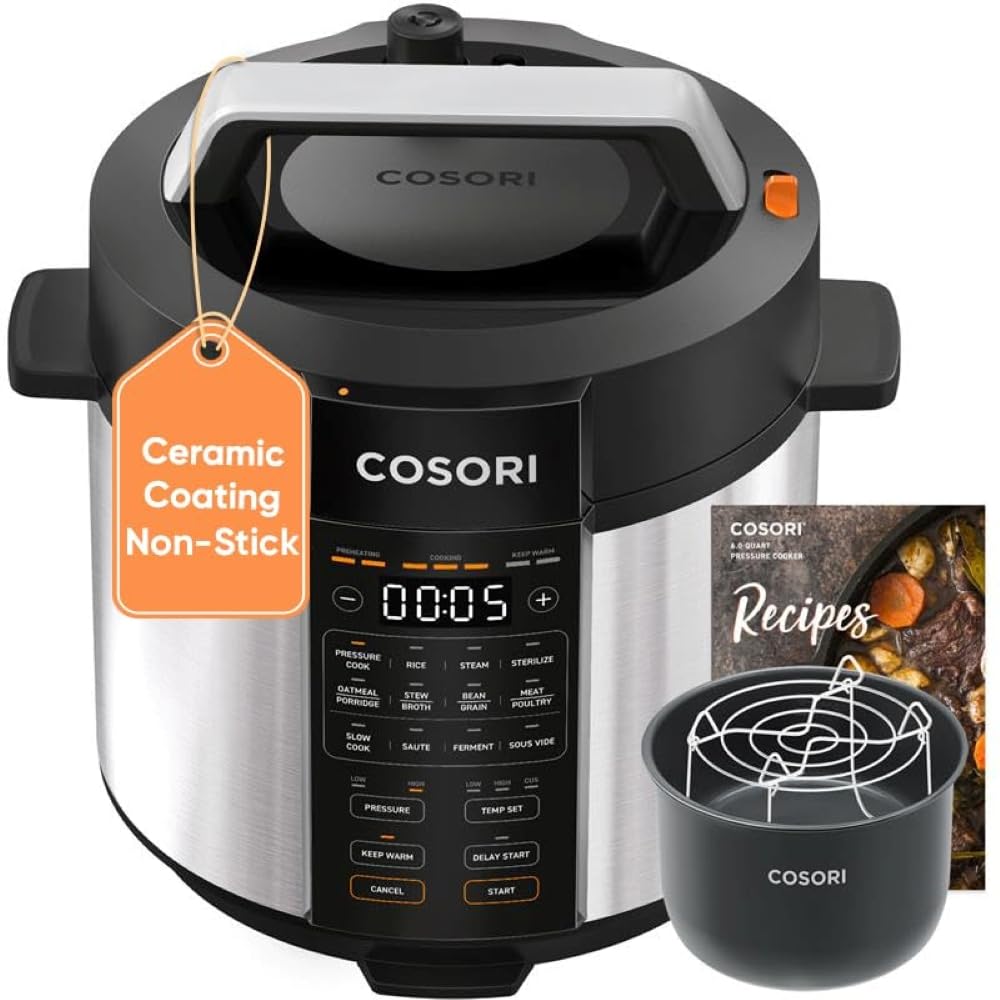
Cosori 6-Quart 9-in-1
Key Features
- Weight: 11.9 lb
- Capacity: 6 quarts
- Inner pot: Ceramic-coated
- Safety features: 12
- Price: Midrange
The orange dots on the lid and base are the detail that makes the Cosori feel like a beginner’s cooker. Line them up, twist, and the lid is locked; there is no guessing about whether it has engaged. The steam release is angled backward, and the seal and vent control sit away from the vent, so your hand is not reaching across the steam path. Cosori lists 12 safety features, including overheat protection and a double-layer anti-scald lid.
That combination is why we recommend it first. The 6-quart pot is the practical middle for most beginners: big enough for a batch of chili or a whole chicken, small enough for a couple of people, and not so tall that it takes over the counter. The preset list covers rice, beans, stew, yogurt, sauté, sous vide, and more, while the ceramic-coated pot releases food easily and the lid and accessories are dishwasher-safe. What we kept coming back to was the lack of drama in the basics—clear locking, a vent you can operate without leaning over it, and a pot that wipes clean.
The two-year warranty is a useful cushion for a first appliance, and the dishwasher-safe lid and accessories make cleanup less of a chore. We also like the widened pot gap, which gives your hand more room to reach into the pot for cleaning.
Pros
- Safer steam vent and clear lid alignment
- 6-quart size suits most beginners
- Ceramic pot releases food and cleans easily
- 13 presets cover staples and projects
Cons
- Dented units can arrive
We recommend the Cosori as the best first pressure cooker for most people: its 6-quart pot, clear lid alignment, and safer venting make the basics easier.
Best for Small Kitchens
Instant Pot Duo Mini 3-Quart
Key Features
- Weight: 8.2 lb
- Capacity: 3 quarts
- Programs: 11 one-touch
- Inner pot: Stainless steel
- Price: Midrange
Seven functions is a refreshingly short list for a first pressure cooker. The Instant Pot Duo Mini keeps to pressure cook, slow cook, sauté, steam, rice, yogurt, and keep warm, with 11 one-touch programs underneath. We recommend it for one- or two-person kitchens where a full-size multicooker is more appliance than the cooking justifies. At 3 quarts and 8.2 pounds, it is easy to park on a shelf and lift onto the counter.
The stainless-steel inner pot has a tri-ply bottom, so you can sauté aromatics in the same pot before switching to pressure. That is a small thing that saves a pan and makes a first cooker feel more useful than a single-job appliance. The lid and inner pot are dishwasher-safe, and the control panel is the familiar push-button layout rather than a touchscreen with layers of menus.
Capacity is the boundary. A 3-quart pot is not the one for a family that wants leftovers or a whole chicken; it is the right choice when a 6-quart cooker means too much food and too much counter space. If you regularly cook for four, step up to a 6-quart model.
Pros
- Compact 3-quart footprint
- Tri-ply stainless pot can sauté
- Simple seven-function panel
Cons
- 12-month warranty is short
We recommend the Duo Mini for one- or two-person kitchens where a 3-quart pot and a simple seven-function panel make more sense than a full-size multicooker.
Best for Fast Family Meals
Ninja HyperHeat 9-in-1
Key Features
- Weight: 15.9 lb
- Wattage: 1200 watts
- Capacity: 6 quarts
- Functions: 9-in-1
- Price: Premium
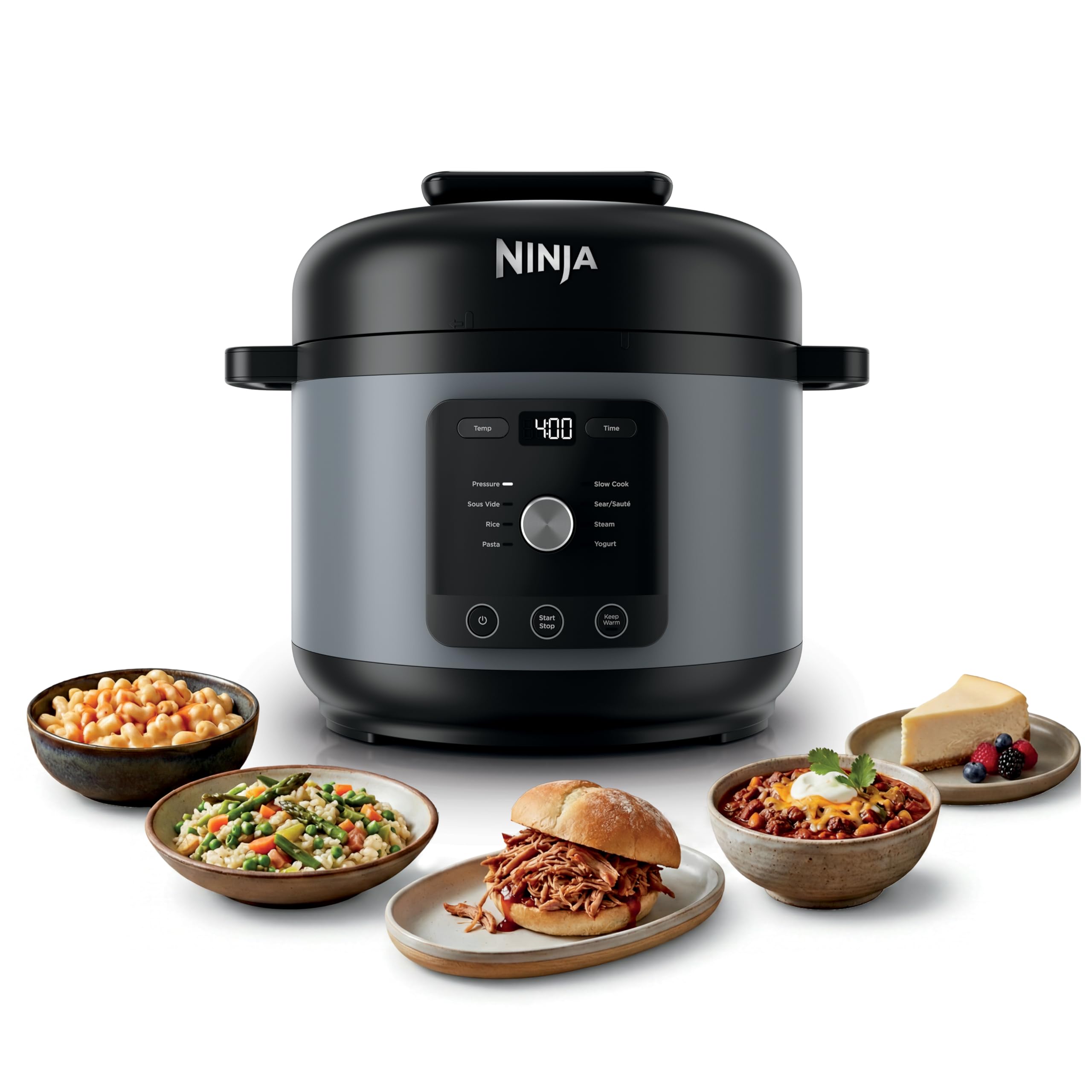
Searing meat before pressure cooking is the step beginners skip when a recipe asks for a separate skillet. The Ninja HyperHeat lets you do it in the same pot: the cooking surface is wide enough for a real sear, and the removable SimpliServe pot goes from the cooker to the table. That is one less pan and one less transfer, which matters more on a weeknight than another preset.
Speed is the other reason it sits near the top of this group. HyperHeat is Ninja’s name for the fast pressure build, and the 1200-watt element is the most powerful here. The 9-in-1 functions cover pressure cook, slow cook, rice, sous vide, steam, sear and sauté, yogurt, and keep warm. The pot is PFAS-free and sized for a four-pound chicken or a five-pound roast, so it can handle a family dinner.
We recommend it for cooks who want one pot to sear, sauté, and pressure cook, and who are willing to pay for speed. It is not the lightest choice: at 15.9 pounds, it is a stay-put appliance rather than one you tuck into a cupboard every night. The wider body also takes more counter space than the 6-quart Cosori.
What you get for the weight is a faster, more versatile cooking surface. If you already know you will use the sauté and sear functions often, that trade is easy to justify.
Pros
- Sear and sauté in the same pot
- 1200-watt HyperHeat builds pressure fast
- Removable pot goes to the table
- Family-size capacity
Cons
- Premium price for a first cooker
We recommend the HyperHeat for cooks who want searing, sautéing, and fast pressure cooking in one pot and do not mind a heavier machine.
Best for Guided Cooking
CHEF iQ Smart 6-Quart
Key Features
- Weight: 10.4 lb
- Capacity: 6 quarts
- Built-in scale: Four sensors
- Guided recipes: 500+
- Price: Premium
The built-in scale is the first thing we look at on the CHEF iQ, because it changes how a beginner follows a recipe. Put the pot on the cooker, add ingredients by weight, and the cooker can send the right time and pressure settings to the pot. That is a different kind of help from a preset button: it removes measuring cups and some of the guesswork.
The guided recipes live in the CHEF iQ app, which connects over Wi-Fi or Bluetooth and includes hundreds of step-by-step recipes with video. The cooker also has presets on the unit, and the 10-in-1 functions cover pressure cook, rice, slow cook, steam, sauté, yogurt, and more. The 6-quart pot and 10.4-pound body are ordinary for the size.
Auto pressure release is a genuinely useful beginner feature. You can choose quick, pulse, or natural release, and the cooker can release steam at the end without you standing over it. That is the kind of detail that makes a first pressure cooker less intimidating, especially if you are nervous about the vent.
We recommend the CHEF iQ for the beginner who wants the cooker to walk them through dinner, especially if measuring by weight appeals. It is the most guided experience in this group, and the built-in scale is the feature that makes it worth considering over a preset-only cooker.
Pros
- Built-in scale measures by weight
- 500+ guided recipes with video
- Automatic pressure release
- 6-quart family size
Cons
- Guided recipes depend on the app
- Premium price
We recommend the CHEF iQ for beginners who want guided recipes, a built-in scale, and automatic pressure release rather than a purely manual cooker.
Best for Large Families
KINGBULL 8-Quart 12-in-1
Key Features
- Weight: 14.3 lb
- Capacity: 8 quarts
- Programs: 12 one-touch
- Inner pot: Nonstick
- Price: Midrange
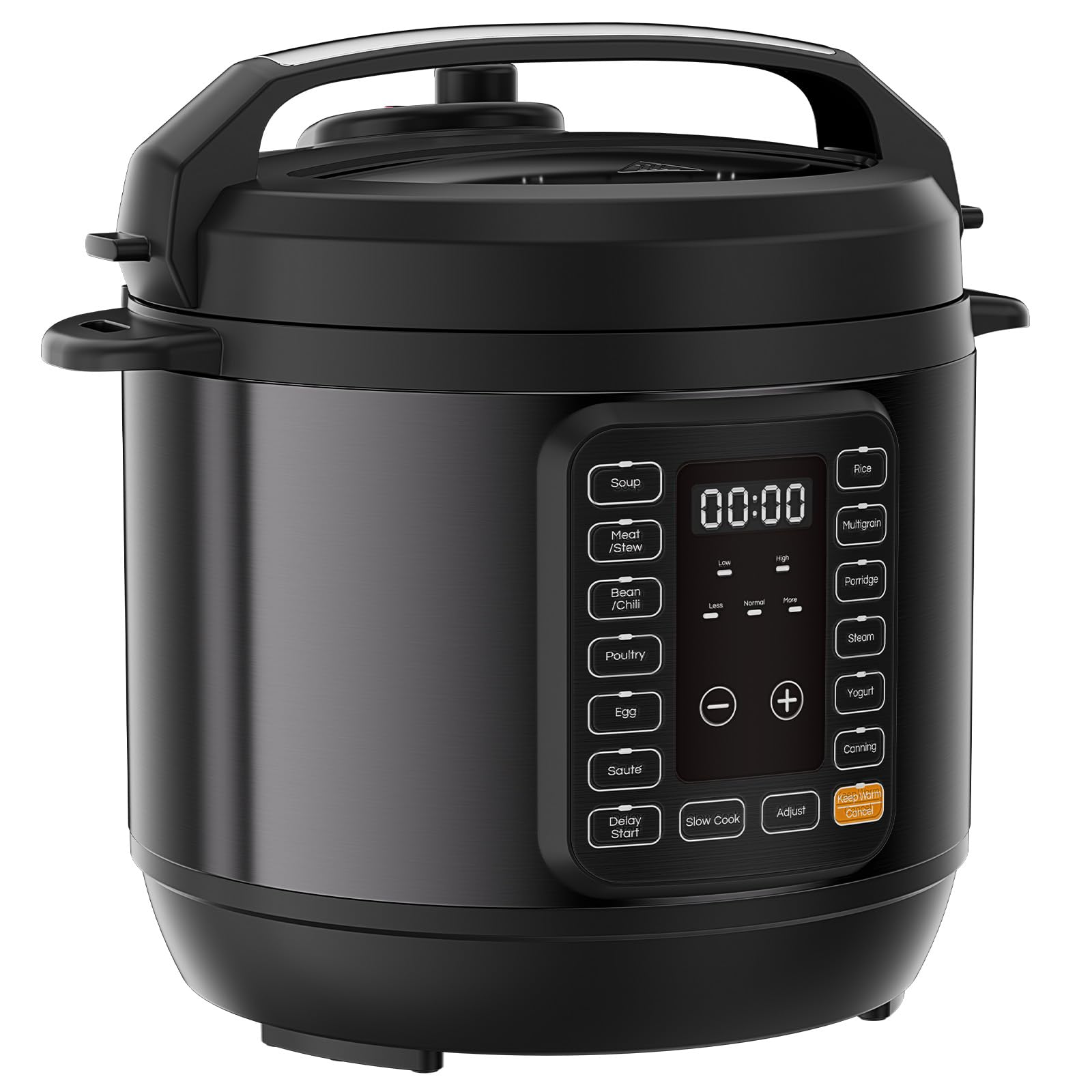
Feeding eight people is the brief the KINGBULL answers. The 8-quart pot is the largest here, and it is built for batch cooking: a big pot of chili, a pork shoulder, or several cups of beans. The 12-in-1 functions and 12 one-touch programs cover soup, meat and stew, bean and chili, poultry, slow cook, sauté, rice, multigrain, porridge, steam, and yogurt.
We recommend it for large families, meal preppers, and anyone who regularly cooks once to eat for days. The 1200-watt element and 8-quart capacity make it a better fit for a crowd than the 6-quart models, and the LED display keeps the current program visible. It is not the first cooker we point a single person toward; the size is the whole reason to buy it.
If you usually cook for two, a 6-quart model is easier to live with. The KINGBULL earns its place when you regularly fill a big pot; otherwise the capacity is more appliance than you need. The 12 one-touch programs are straightforward, and the nonstick inner pot is a help with starchy beans and rice.
Pros
- 8-quart capacity for big batches
- 12 one-touch programs
- 1200 watts for family meals
- Nonstick pot helps with beans and rice
Cons
- Large 8-quart footprint
- Heavy at 14.3 pounds
We recommend the KINGBULL for large families and batch cooks who need an 8-quart pot and can give it the counter space.
Best for Budget 6-Quart
Sweetcrispy 6-Quart 16-in-1
Key Features
- Weight: 11.9 lb
- Capacity: 6.34 quarts
- Programs: 12 presets
- Inner pot: Ceramic
- Price: Budget
The 12-preset control panel is the useful part of the Sweetcrispy’s 16-in-1 claim. Pressure cook, rice, steam, sauté, slow cook, yogurt, and the rest are one touch, and the 6.34-quart ceramic pot is the same practical size as the Cosori. We recommend it as the budget 6-quart pick when you want those presets and a ceramic pot without paying for the top choice.
The ceramic coating releases rice and stews easily, and the lid and sealing ring come apart for cleaning. The 1000-watt element is a step below the Ninja but normal for this size, and the delay start and keep-warm settings are useful if dinner lands at different times. The cooker comes with a measuring cup, rice scoop, and recipe guide.
It is a good fit for a small family or a couple who wants a second pot for rice and beans. The ceramic pot is easy to clean, and the presets are enough for everyday meals. If you want the clearest possible first-time experience, the Cosori remains the safer default.
Pros
- 12 presets cover everyday meals
- 6.34-quart ceramic pot
- Delay start and keep warm
Cons
- Controls can confuse beginners
We recommend the Sweetcrispy as the budget 6-quart pick when preset cooking and a ceramic pot matter more than polished controls.
Best for Tiny Kitchens
NEWBULIG 3-Quart 10-in-1

Key Features
- Weight: 7.9 lb
- Capacity: 3 quarts
- Programs: 10 presets
- Inner pot: Ceramic
- Price: Budget
The compact body is the whole point of the NEWBULIG. At 3 quarts and 7.9 pounds, it fits on a small counter and is easy to lift, and the 10-in-1 panel covers rice, meat, stew, yogurt, steam, and more. The 24-hour delay start and keep-warm mode are features we did not expect at this size.
The ceramic inner pot releases food cleanly, and the triple safety protection includes pressure release valves and heat sensors. The 700-watt element is modest, but the pot is small, so it heats at a reasonable pace for rice, beans, and stews. It is the kind of appliance that makes sense in a studio apartment or a kitchen where a 6-quart cooker has to live on the floor.
We recommend it for one or two people, or as a second cooker for sides and yogurt. It is the small, low-cost pressure cooker that earns its place when modest portions are the norm. If you regularly cook for four or want leftovers for the week, choose a 6-quart model instead.
Pros
- Compact 3-quart, 7.9-pound body
- 24-hour delay start
- Ceramic pot and triple safety protection
- Low-cost entry point
Cons
- 3-quart capacity limits batch cooking
We recommend the NEWBULIG for one- or two-person kitchens that need a compact, low-cost pressure cooker and do not need big batches.
How We Chose and Tested 12 Electric Pressure Cookers
We started with the models a first-time buyer will actually run into — the ones on the shelf at big-box stores and the ones friends keep recommending — then filtered by capacity, price, and how much manual reading a pot demands before you can press start. That left 12 cookers, ranging from three-button basics to programmable multi-cookers, and we cooked with each of them for eight months rather than a single afternoon.
Every cooker went through the same week of real dinners: unsoaked black beans on a Monday, chicken thighs still frozen on a Wednesday, rice, a batch of yogurt, and chili for a crowd. We browned onions on sauté to see which pots scorched, timed how long each took to come up to pressure and to release naturally, and watched whether the steam valve behaved or spat all over the backsplash. Speed was measured against my stovetop, not against the other cookers, so a slow pot had nowhere to hide.
For controls, I handed each cooker to someone who had never used a pressure cooker and timed how long it took to get from plugged in to pressurized without opening the manual. We noted whether the presets were labeled in plain words or in codes only the manufacturer understands, whether the lid locked with an audible click, and whether the display told you which stage you were in or left you guessing.
After each cook we hand-washed the gasket and inner lid and checked for stretching, staining, and that lingering bean smell that never quite leaves a cheap seal. Over eight months we watched for scratched nonstick, stiff hinges, and lids that stopped sealing as cleanly as they did in week one. Value showed up in odd places — a modest pot with a good seal beat a pricier one with twelve presets nobody touched.
How to Choose a Beginner-Friendly Electric Pressure Cooker
The right first pressure cooker is less about the longest preset list and more about sealing cleanly, releasing steam safely, and fitting the way you actually cook.
Match Capacity to the Way You Cook
Capacity is the first decision because it drives everything else: how much food you can make, how much counter space the cooker takes, and how heavy it is to move. A 3-quart model such as the Instant Pot Duo Mini or NEWBULIG is right for one or two people, rice, beans, and small batches. A 6-quart cooker is the practical default for most households: it handles a whole chicken, a batch of chili, and enough leftovers for lunch. An 8-quart model like the KINGBULL is for families, meal prep, and big cuts of meat.
Measure the spot before you buy. These are countertop appliances, not tucked-away small appliances: the 6-quart Cosori is 12.6 by 13.4 by 12.5 inches, and the 8-quart KINGBULL is 13.16 by 14.56 by 13.77 inches. Check both the counter and the cupboard you plan to store it in, and think about whether you will lift it often.
Prioritize the Lid, Seal, and Steam Release
Most beginner mistakes happen at the lid and the vent, not in the recipe. A clear locking system—Cosori uses orange dots on the lid and base—makes it obvious when the lid is engaged. The sealing ring must sit properly, and the steam release should keep your hand away from the vent; Cosori angles its vent backward for that reason. Before every cook, check that the ring is seated and the vent is set to the right position.
Never force the lid open while the pressure indicator is raised. Wait for the pressure to drop, then open the lid away from your face. A cooker that makes those steps obvious is worth more to a beginner than one with extra presets.
Choose Presets You Will Use—and a Manual Override
Presets are useful training wheels: rice, beans, stew, yogurt, and steam are the programs most beginners reach for. But a preset is only a starting point. Recipes often call for a specific time or pressure, and a cooker that lets you adjust those settings is more useful once you move beyond the first few meals. The Cosori, Ninja, and KINGBULL all offer one-touch programs; the CHEF iQ goes further with guided recipes and a built-in scale.
Look for sauté as well. Searing aromatics or browning meat in the same pot adds flavor and saves a pan. If the panel is confusing in the store or in the photos, it will be confusing at home, so choose a layout you can read at a glance.
Inner Pot, Cleaning, and Weight
Ceramic-coated pots release rice and stews easily and are forgiving on cleanup; stainless-steel pots, like the Instant Pot Duo Mini’s tri-ply inner pot, are better if you want to sear and sauté directly in the pot. Both can work for a beginner. Check which parts are dishwasher-safe and how easy the sealing ring is to remove, because that ring is where odors and residue collect.
Weight matters if the cooker lives in a cupboard. The 3-quart NEWBULIG is 7.9 pounds; the 8-quart KINGBULL is 14.3 pounds; the Ninja HyperHeat is 15.9 pounds. A heavier cooker is fine if it stays on the counter, but it is a chore if you lift it every night.
Decide Whether You Want Guided Cooking
Guided cooking is the biggest dividing line in this group. The CHEF iQ uses an app, a built-in scale, and hundreds of video recipes to walk you through a dish; that is genuinely helpful if you want step-by-step instruction and do not mind using a phone in the kitchen. The other cookers rely on their on-unit presets and a manual.
If you want to learn the appliance itself, a standalone panel is simpler and less dependent on an app. If you want the cooker to tell you what to do, the guided model is worth the premium. Either way, start with a few familiar recipes—rice, beans, soup—before you try a new technique.
Frequently Asked Questions
Do I need a pressure cooker if I already have a slow cooker?
They do different jobs. A slow cooker is for all-day, set-and-forget cooking; an electric pressure cooker is for getting beans, stews, and tough cuts tender in a fraction of the time. Many multicookers here also have a slow-cook mode, so if you are short on space, one appliance can cover both. If you already rely on a slow cooker for morning-to-evening meals, a pressure cooker is an addition, not a replacement.
Can I cook frozen meat in an electric pressure cooker?
Yes, if the meat fits comfortably below the maximum-fill line and the pot can come to pressure. Large solid blocks can cook unevenly, so break them up or choose smaller pieces, and add enough liquid to get the cooker going. Check the manufacturer’s guidance for your model before you rely on it for a big frozen roast.
Can I use an electric pressure cooker for canning?
No, not as a pressure canner. Electric multicookers are not tested to the same standard as dedicated pressure canners, and low-acid foods such as vegetables and meats need a tested canner to be shelf-stable. Some models include a canning preset, but treat it as a cooking mode, not approval for pressure canning. Use a dedicated pressure canner and tested recipes.
Final Verdict
Start with the Cosori. It gives a beginner the three things that matter most: a 6-quart pot that fits most households, lid alignment and venting that are easy to see and operate, and a ceramic interior that cleans up without fuss. If your kitchen is tight, the Instant Pot Duo Mini is the better small-space choice; if you regularly cook for a crowd, the KINGBULL’s 8-quart capacity earns its footprint. The CHEF iQ is the one to choose when guided recipes and a built-in scale are worth having a phone in the kitchen.