This post contains affiliate links. We may earn a small commission when you buy through our links — at no extra cost to you.
Electric pressure cookers promise fast, hands-off meals, but many models fall short on reliability or core functions like slow cooking. Finding one that lasts and does what it claims requires looking beyond brand names and flashy features.
The market has shifted: while Instant Pot still dominates with a massive user base, competitors are delivering comparable or better performance at lower prices with fewer durability complaints. The key is knowing which trade-offs matter for your cooking habits.
This guide focuses on the models that actually hold up over time, cook consistently, and give you the functions you’ll use most—without the hype.



Best for First-Time Buyers
Instant Pot Duo 6qt
Key Features
- Capacity: 6 quarts
- Wattage: 1000W
- Inner Pot: Stainless steel tri-ply
- Cooking Functions: 7 functions
- Special Features: 13 one-touch programs
- Price: Mid-Range
The Instant Pot Duo handles seven cooking functions with a simplicity that has made it a staple in countless kitchens. The stainless steel inner pot heats evenly, and the 13 one-touch programs cover pressure cook, slow cook, sauté, steam, rice, yogurt, and warm – each delivering consistent results. The 1000W heating element brings the pot up to pressure quickly, and the ten safety mechanisms provide peace of mind during operation.
Meals that typically take hours – dried beans, tough cuts of meat, stocks – finish in a fraction of the time. The automatic pressure release and keep-warm function add convenience, while the dishwasher-safe pot and lid simplify cleanup. The button interface is clearly labeled, so even first-time pressure cooker users can dial in the right program without guesswork.
This multicooker suits households of two to six who want a daily workhorse for pressure cooking, rice, and slow cooking without needing sous vide or smart features. First-time buyers benefit from the straightforward controls and the included manual, which explains each program in plain language. If you cook for larger groups or need sous vide, an 8-quart model or a multicooker with more cooking modes would be a better fit.
The Duo also draws strength from an extensive online community – forums, blogs, and cookbooks dedicated to this specific model mean you’ll never run out of recipe ideas. The tradeoff is that the seven-function set feels basic next to newer ten-in-one competitors that add air frying or sous vide. For most everyday cooking – beans, rice, stews, yogurt, steaming vegetables – the seven functions cover the essentials capably.
Pros
- Consistent cooking results across pressure, slow, and rice functions
- Simple controls and clear instructions make it accessible for beginners
- Cooks meals in a fraction of traditional stovetop time
- Dishwasher-safe inner pot and lid reduce cleanup effort
Cons
- Does not include a sous vide function – that requires a separate appliance or a different multicooker
- Only seven cooking functions when some newer models offer ten, adding air frying or baking
For households that cook rice, beans, stews, and yogurt regularly, the Duo delivers consistent results with a large support network – and at a mid-range price that undercuts many feature-heavy alternatives.
Best for Value-Conscious
Cosori 6qt
Key Features
- Capacity: 6 quarts
- Wattage: 1100W
- Inner Pot: Ceramic non-stick
- Cooking Functions: 9 functions
- Special Features: 12 safety features
- Price: Budget
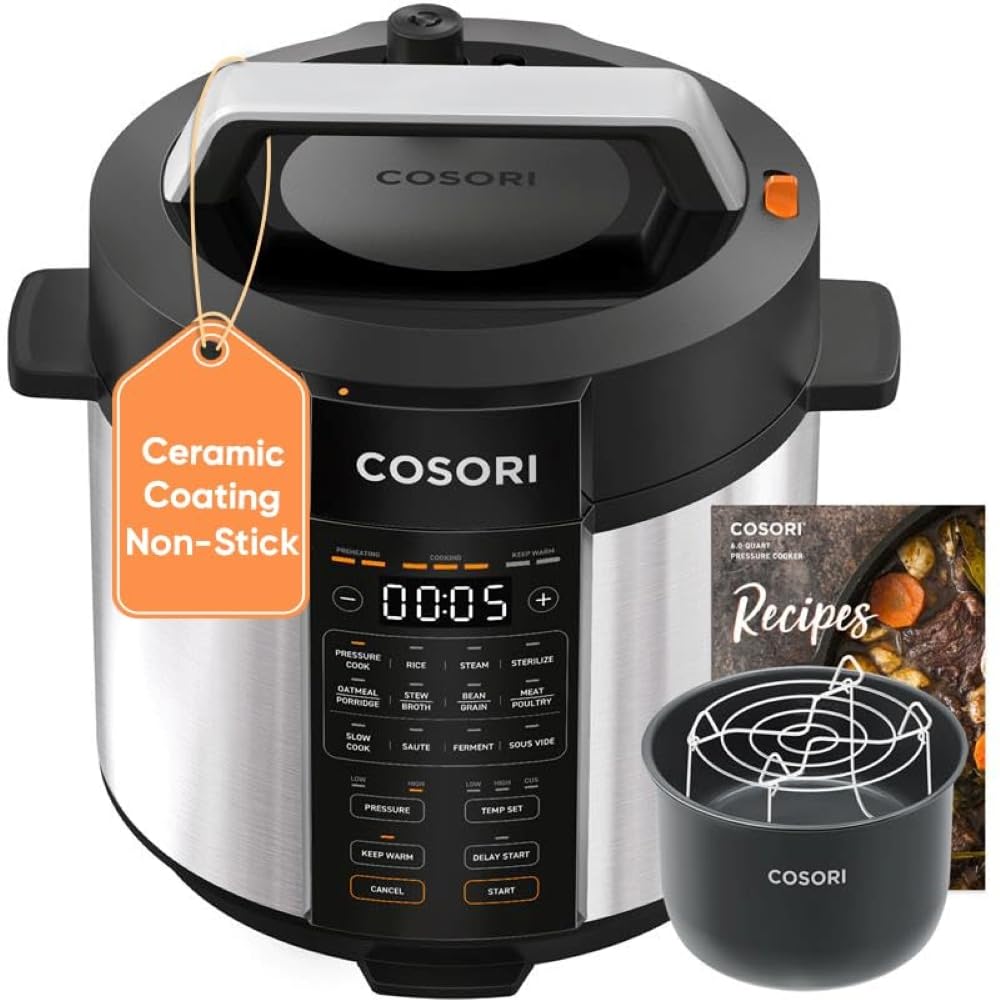
The Cosori Pressure Cooker combines a stainless steel body and ceramic non-stick inner pot with sous vide capability at a budget-friendly price — a combination the market-leading Duo doesn’t offer. While the Duo dominates with its vast community and proven track record, the Cosori matches its core pressure cooking performance while adding extra functions and a more refined build for less money.
This cooker is best suited for buyers who prioritize value and want sous vide without paying a premium, or for newcomers seeking an affordable yet capable entry point. The 6-quart capacity is a firm boundary: it comfortably handles meals for 4-5 people, but larger households or batch cooks will feel the squeeze. No larger Cosori model exists, so if 8 quarts is a must, this isn’t the one.
The intuitive control panel and clearly labeled presets make daily use straightforward — owners report consistent results across pressure cooking, rice, and slow cooking modes. The 30° backward-angled steam release directs steam away from the user, a thoughtful safety detail. The ceramic non-stick pot releases food easily and simplifies cleanup, though it requires gentle handling to avoid scratching the coating.
Pros
- Stainless steel body and 1100W heating deliver even, consistent pressure cooking.
- Intuitive panel with clear presets — minimal learning curve.
- Offers sous vide and multiple presets at a lower price than many comparable models.
- Nine functions cover most cooking needs from rice to yogurt to sous vide.
Cons
- At 6 quarts, capacity may be tight for households larger than 4-5 people; no larger size is available.
- The ceramic non-stick coating can scratch if used with metal utensils, and some owners note visible wear after extended use.
For shoppers who want sous vide and a ceramic pot without spending $120+, the Cosori delivers exceptional value — just verify that 6 quarts covers your household size.
Best for Large Families
Midea 8qt
Key Features
- Capacity: 8 quarts
- Wattage: 1200W
- Inner Pot: Stainless steel
- Cooking Functions: 12 functions
- Special Features: RealSafe system
- Price: Budget
The Midea 8-quart electric pressure cooker delivers a spacious stainless steel inner pot and 1200W of heating power at a price that typically buys a 6-quart model from legacy brands. While some 8-quot competitors use non-stick coatings or cut corners on build, this one uses solid stainless steel throughout, giving it a durability edge for heavy batch cooking.
Controls are straightforward with a clear set of presets covering rice, beans, soup, yogurt, and slow cooking. The build feels substantial for the price point. That said, a small number of units have shown venting cap sealing inconsistencies, which can cause steam leakage during pressurization. For most owners, cooking results are consistent and the interface requires no learning curve.
This model is best suited for large families or meal preppers who need maximum capacity without spending premium money. If sous vide or smart connectivity is essential, other options in the category offer those features at a higher price. The main tradeoff is the occasional venting cap issue — something to check before each use rather than a dealbreaker for the target buyer.
Pros
- Large 8-quart capacity at a cost-effective price
- Solid stainless steel inner pot with good build quality
- Straightforward controls with clear preset labels
Cons
- When pressure cooking, the venting cap can occasionally fail to seal, causing steam to escape
For anyone prioritizing 8-quart capacity and stainless steel build on a budget, the Midea delivers exceptional value for large-batch cooking — with the caveat that the venting cap deserves a quick check each time.
Best for Beginners
Yedi 6qt
Key Features
- Capacity: 6 quarts
- Wattage: 1000W
- Inner Pot: Stainless steel
- Cooking Functions: 9 functions
- Special Features: Includes glass lid, egg racks
- Price: Mid-Range
The Yedi 9-in-1 stands out by including a glass lid, egg racks, steaming basket, and cooking mitts right in the box — accessories the Instant Pot Duo sells separately. This makes it a turnkey solution for pressure cooking, slow cooking, sautéing, steaming, yogurt making, and more, all in a single 6-quart stainless steel unit.
This model appeals to buyers who want a single purchase that covers the full range of multicooker tasks without hunting for extra parts. The glass lid in particular is handy for slow cooking and sautéing when pressure isn’t needed. However, unit-to-unit durability is average — a portion of examples may require service within the first year. The 2-year warranty mitigates this, making it a low-risk choice for those who register promptly.
Cooking performance across the nine functions is solid: rice comes out fluffy, yogurt sets properly, and the stainless steel pot heats evenly for sautéing. The 1000W heating element is standard for the category, bringing most dishes to pressure in under ten minutes. Cleanup is simple thanks to the one-pot design and dishwasher-safe inner pot.
Pros
- Complete accessory kit includes glass lid, egg racks, steaming basket, and mitts – no extra purchases needed
- Simple interface and one-pot cleanup reduce daily friction
- Consistent results across pressure cooking, slow cooking, and yogurt making
Cons
- Some units may develop issues that require warranty service within the first year of use
For buyers who value a complete kit and a warranty that backs it up, the Yedi covers the basics without needing extra purchases — just be aware that durability isn’t uniform across all units.
Best for Air Fryer Combo
Instant Pot Duo Crisp 8qt
Key Features
- Capacity: 8 quarts
- Wattage: 1500W
- Inner Pot: Stainless steel tri-ply
- Cooking Functions: 11 functions
- Special Features: EvenCrisp technology
- Price: Premium
The Instant Pot Duo Crisp sets itself apart from the standard Duo by adding a dedicated air fryer lid that uses EvenCrisp technology for convection heating. This design lets you pressure cook a pot roast, then swap lids to air-fry vegetables without pulling out a separate machine. The stainless steel inner pot and tri-ply base handle pressure cooking tasks with the same steady temperature control as the top-rated Duo, while the second lid handles roasting, baking, and dehydrating up to 450°F.
This 8-quart model targets households that regularly cook for four or more and want to consolidate countertop appliances without sacrificing either pressure cooking or air frying capability. The large capacity handles batch meals, whole chickens, and side dishes. However, the non-stick coating on the air fry basket can chip under routine use, and the unit’s bulk and weight make it a permanent fixture rather than something you stash away after each meal. Buyers with limited storage or who plan to use the air fryer daily should factor in these tradeoffs.
Pros
- Delivers crisp air-fried results and consistent pressure cooking from one appliance.
- 8-quart capacity works well for family-sized meals and batch prepping.
- Eleven cooking functions replace multiple individual gadgets on the counter.
Cons
- If you use the air fryer basket daily, the non-stick coating can flake over time – hand-washing and soft tools are needed.
- In a small kitchen, the 8-quart unit’s size and weight make it hard to move or store between uses.
A functional two-in-one that fulfills its promise, but the coating durability and bulk mean it’s best suited for households that will use both pressure cooking and air frying regularly and have dedicated counter space.
Best for Budget Buyers
COMFEE’ 12-in-1 6qt

Key Features
- Capacity: 6 quarts
- Wattage: 1000W
- Inner Pot: Aluminum non-stick
- Cooking Functions: 9 functions
- Special Features: 14 presets, 10 safety
- Price: Budget
COMFEE’ delivers consistent cooking results across its 12 presets at the lowest price in this roundup. The non-stick aluminum pot makes cleanup simple and keeps the unit lightweight, but buyers should note that this material won’t match the longevity of stainless steel options. That tradeoff, along with a smaller 6-quart capacity, keeps it behind pricier models for those who cook for larger groups or expect decades of use.
Pros
- Consistent cooking across all presets with minimal learning curve.
- Budget-friendly price packs a full feature set including yogurt, cake, and slow cook.
- Simple controls and non-stick pot make cleanup fast.
Cons
- 6-quart capacity limits batch cooking for larger households.
- The aluminum non-stick pot may show signs of wear sooner than stainless steel under heavy daily use.
This model works well for budget-conscious singles or couples who prioritize easy cleanup and don’t need a larger capacity. If you plan to pressure cook daily for years and want a pot that lasts, consider stainless steel models.
Best for Early Adopters
Ninja HyperHeat 6.5qt

Key Features
- Capacity: 6.5 quarts
- Wattage: 1200W
- Inner Pot: Ceramic non-stick PFAS-free
- Cooking Functions: 9 functions
- Special Features: HyperHeat, 9.5" wide
- Price: Premium
This 9-in-1 multicooker delivers notably quicker preheat times, which translates to faster overall cooking for pressure cooker users. The 6.5-quart ceramic non-stick pot (PFAS-free) is easy to clean and the controls are straightforward. However, this model is very new with a limited track record – long-term durability under heavy use hasn’t been established yet. If you’re willing to trade the assurance of a well-established model like the Instant Pot Duo for faster preheating and modern features, the Ninja HyperHeat performs well in early use. Otherwise, waiting for more user feedback is a reasonable course.
Pros
- Fast preheat reduces cooking time
- Simple controls and non-stick pot make cleanup easy
- Sturdy build and consistent performance
Cons
Best suited for early adopters and Ninja fans who prioritize speed over a long user history; check back after more reviews if you prefer a proven track record.
Best for Tech-Savvy
CHEF iQ Smart 6qt

Key Features
- Capacity: 6 quarts
- Wattage: 1000W
- Inner Pot: Aluminum non-stick
- Cooking Functions: 10 functions
- Special Features: Built-in scale, WiFi
- Price: Mid-Range
The CHEF iQ stands out in the multicooker category by pairing a built-in scale with an app that walks you through over 500 video recipes. This approach works well for cooks who prefer guided instructions — the scale lets you add ingredients directly to the pot and the app adjusts timing and pressure automatically. The cooker itself feels solid, with a straightforward interface even when not using the app.
The catch is that the smart features come with tradeoffs. Pairing the cooker via WiFi or Bluetooth can take several tries, and some units may display a “pressure switch failure” error or stop mid-cycle without warning. These issues make the CHEF iQ a better fit for tech-savvy beginners willing to troubleshoot occasional hiccups than for anyone who needs a set-and-forget pressure cooker. The inner pot is also thinner than some alternatives, so careful handling is advised.
Pros
- Step-by-step video recipes through the app make pressure cooking approachable for beginners.
- Built-in scale simplifies ingredient measurement and reduces cleanup.
- Solid construction and easy-to-use physical controls complement the app.
Cons
- WiFi and Bluetooth pairing can be inconsistent, requiring multiple attempts to connect.
- Some units may experience pressure switch errors or stop mid-cycle unexpectedly.
Best for beginners who want guided cooking and are comfortable with potential app and reliability quirks — skip this if you need a dependable daily driver.
Best for Small Households
CUCKOO 5qt

Key Features
- Capacity: 5 quarts
- Wattage: 1150W
- Inner Pot: Stainless steel non-stick
- Cooking Functions: 8 functions
- Special Features: 26 PSI, voice guide
- Price: Premium
The CUCKOO 5qt delivers a higher pressure level (26 PSI) than most compact cookers, and its stainless steel construction gives it a quality feel. The 5-quart size suits one or two people but limits larger meals. Rice cooking can yield inconsistent results, and a few units have shown early durability concerns. Given its premium price per quart, this cooker fits best for those who prioritize design and high pressure over capacity and cost.
Pros
- Quality build and attractive design
- Versatile with many menu options
Cons
- Rice cooking results can vary – some owners report mushy texture
- Some units may develop performance issues within months
If you want a compact cooker with 26 PSI and don’t mind inconsistent rice and a higher per-quart cost, the CUCKOO 5qt is a deliberate, design-focused choice.
How to Choose
The most important factor in choosing an electric pressure cooker is build quality and reliability – no amount of features matters if the unit fails within a year.
Capacity (Quarts)
Capacity determines batch size and fit for your household. A 6-quart cooker handles meals for 2–6 people, while 8 quarts suits larger families or serious meal preppers. Smaller 5-quart models work for one or two but limit recipes.
The trade-off: larger pots take longer to come to pressure and occupy more counter space. If you cook in bulk, aim for 8 quarts; for daily meals, 6 quarts offers the best balance.
Wattage
Wattage influences preheat speed and cooking power. Standard models run 1000–1200W. Higher wattage (1200W) heats up faster, cutting 5–10 minutes off the time to pressure. This matters most when you’re in a hurry or cooking dense ingredients like frozen meat.
However, wattage differences are minimal for the actual cooking phase. A 1000W unit still cooks just as well once pressurised. Don’t pay a premium solely for higher wattage unless you value that extra speed.
Inner Pot Material
Stainless steel is the gold standard – durable, non-reactive, and dishwasher-safe. It distributes heat evenly and resists scratching. Non-stick coatings (ceramic or aluminum) simplify cleanup but can chip or wear over time, especially with metal utensils.
If you plan to sear meats directly in the pot, stainless steel’s browning performance is superior. Non-stick is fine for rice, yogurt, and gentle cooking, but expect to replace the pot sooner.
Number of Cooking Functions
More presets sound appealing, but most users only use pressure cook, slow cook, sauté, steam, and rice. Additional functions like sous vide, cake, or sterilize add cost without much daily value. A 7-in-1 covers the essentials, while 9-in-1 or 10-in-1 models include extras that are nice but not necessary.
The hidden trap: models with many presets often sacrifice quality on some functions. Slow cook mode is notoriously weak on most electric pressure cookers – it rarely reaches low simmer temperatures reliably.
Special Features
Special features differentiate models: sous vide, air frying, WiFi connectivity, noise-reduced steam release, or included accessories. Sous vide and air frying add genuine versatility if you value those cooking methods. Smart features (apps, remote control) are convenient but often introduce connectivity bugs and higher price tags.
Focus on features you will actually use weekly. Whisper-quiet steam release is a simple, widely appreciated upgrade that reduces noise and mess. Accessory kits (glass lids, egg racks) can save you money if you would buy them separately.
FAQ
Can I use an Instant Pot as a slow cooker?
Yes, but the slow cooker function on most electric pressure cookers does not match a dedicated slow cooker. Many models fail to reach a true low simmer, leaving food undercooked or stuck in preheat. If slow cooking is your primary need, buy a standalone slow cooker instead.
How often should I replace the sealing ring on my electric pressure cooker?
Replace the silicone sealing ring every 12–18 months, or sooner if it absorbs odors from previous cooks (especially garlic or curry). A worn ring can cause steam leakage and prevent the pot from reaching pressure. Aftermarket rings in various colors help separate sweet and savory uses.
Is the ceramic non-stick coating on pressure cookers safe?
Ceramic coatings are generally considered safe and free of PTFE/PFOA, but they are less durable than stainless steel. They can chip or peel under high heat or metal utensils, and once damaged, should be replaced. For longevity, stainless steel inner pots are the safer bet.
Why does my pressure cooker take so long to come to pressure?
The time to reach pressure depends on food volume, temperature of ingredients, and wattage. Large cuts of frozen meat or a full pot can add 10–20 minutes. Using hot liquids and cutting ingredients into smaller pieces speeds it up. Natural pressure release also adds time but improves tenderness for meats.