This post contains affiliate links. We may earn a small commission when you buy through our links — at no extra cost to you.
Vegetable choppers promise to turn onion tears into uniform dice in seconds. But after a few weeks, the blades dull, the hinge cracks, and cleaning becomes a puzzle of stuck onion bits. The reality is that most budget-friendly models share the same plastic weaknesses – and the number of blades in the box rarely matches what you’ll actually use.
Your choice comes down to how much you chop at once and how much effort you want to put into cleanup. An electric mini chopper delivers consistent results with minimal washing, but can be loud and limited in capacity. A manual chopper offers portability and control, but often hides frustration in tiny crevices.
We focused on the picks that sidestep these trade-offs, whether that means a durable electric motor or a manual design that actually comes apart for cleaning. The result is a shortlist that works with your kitchen rhythm, not against it.



Best for Small Households
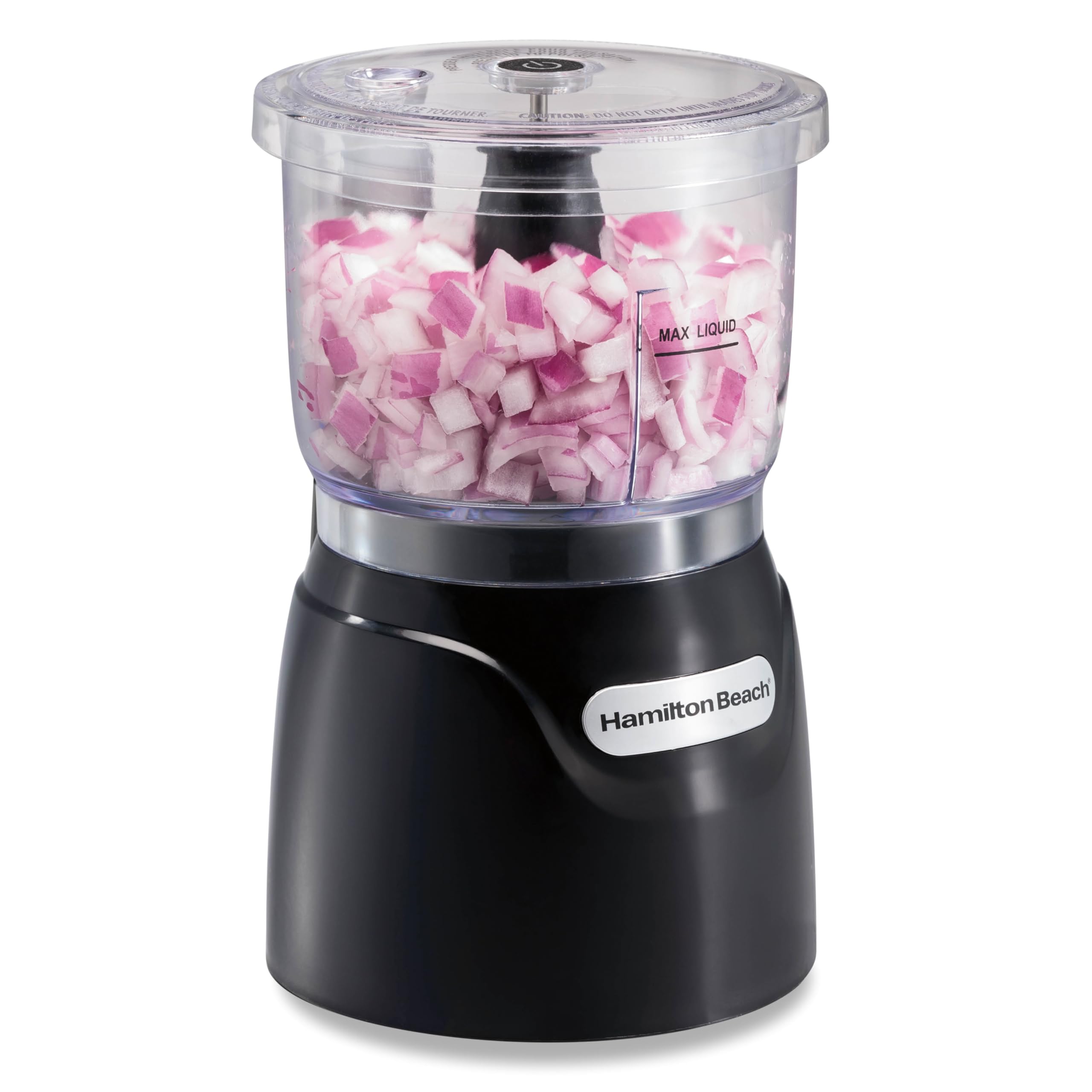
Hamilton Beach 3-Cup
Key Features
- Capacity: 3 cups
- Blades: 1 rotating
- Ease of Cleaning: Dishwasher safe
- Durability: Solid build
- Operation: Electric
- Price: $
The Hamilton Beach 3-Cup electric chopper minces onions, herbs, and soft vegetables with a press of the lid — no pulleys or manual cranking. The bowl, lid, and blade assembly separate for quick rinsing or dishwasher cleaning, so you won’t spend time scrubbing stuck-on bits. The 350-watt motor handles small jobs in seconds, producing uniform dice for salsas or dressings.
This is a tool for single servings and daily prep, not bulk cooking. The 3-cup bowl fits one onion or a bunch of parsley — for larger batches you’ll need to chop in rounds. The motor is audible, so in a quiet kitchen it’s not a stealth operation, but the speed keeps the noise brief. Best suited for cooks who value cleanup time over volume capacity.
Pros
- Three-piece design rinses clean in seconds — no hard-to-reach crevices.
- Simple press-to-operate mechanism with no complicated assembly.
- Chops onions and herbs consistently in under 10 seconds.
Cons
- Motor hum is noticeable in quiet environments — brief but present.
- 3-cup capacity requires multiple batches for large recipes.
A no-fuss electric chopper that handles everyday small-prep tasks and cleans up quickly — ideal for anyone tired of hand-chopping onions.
Best for Small Households
Kuhn Rikon Pull Chop
Key Features
- Capacity: 2 cups
- Blades: 2
- Ease of Cleaning: Hand wash lid, bowl OK
- Durability: Excellent build
- Operation: Manual – pull cord
- Price: $$
The Kuhn Rikon Pull Chop delivers premium build quality in a compact manual pull-cord design. Unlike electric models, it requires no power source and is cordless. The pull-cord mechanism chops efficiently with just a few pulls, and the bowl rinses clean quickly. Ideal for small households or occasional onion chopping, but its 2‑cup capacity limits batch prep—not suited for large recipes.
Pros
- Requires only a few pulls to chop most vegetables.
- Stainless steel blades hold up to regular use.
- Cleans quickly by hand or dishwasher (except lid).
Cons
- Blade sharpness may diminish after extended use in some cases.
- 2‑cup capacity is too small for preparing large quantities.
A durable, compact chopper for those who value build quality and easy cleanup over batch volume.
Best for Large Families
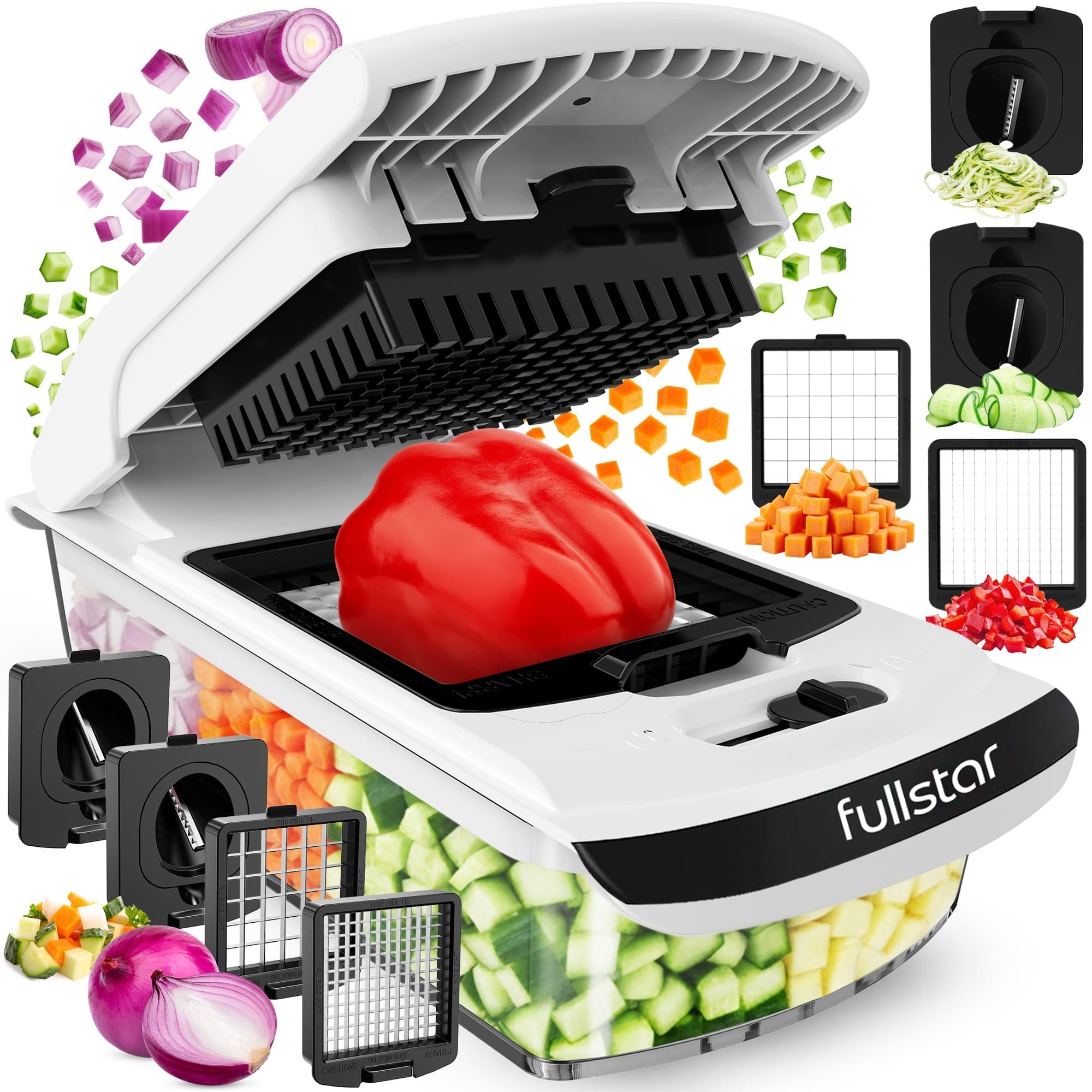
Fullstar Pro Chopper
Key Features
- Capacity: 5 cups
- Blades: 4
- Ease of Cleaning: Dishwasher safe
- Durability: Hinge may break
- Operation: Manual – pusher
- Price: $$
The Fullstar Pro Chopper offers a large 5-cup container and four interchangeable blades including a spiralizer, making it a capable option for batch prep and family meals. The push-down mechanism cuts onions and other vegetables quickly, and the build quality is solid for the price. However, cleaning takes more effort than electric alternatives—food can lodge between blades—and the hinge mechanism may show wear over months of regular use. This chopper suits cooks who prioritize volume and speed over quick cleanup.
Pros
- Large capacity handles whole onions and sizable batches
- Quick chopping action speeds up meal prep
- Solid construction at a mid-range price
Cons
- Cleaning requires extra effort as food can stick to blades
- Hinge durability can vary; some units develop looseness over time
Best for those who do high-volume vegetable prep and aren’t bothered by hand-washing the blades—a strong value if you accept the maintenance.
Best for Small Households
OXO Good Grips
Key Features
- Capacity: 1 cup
- Blades: 1 rotating
- Ease of Cleaning: Dishwasher safe
- Durability: Long-lasting
- Operation: Manual – pump
- Price: $
The OXO Good Grips Vegetable Chopper’s rotating blade assembly and simple pump action deliver consistent results for small chopping tasks, backed by a build quality that holds up over years. Unlike the Fullstar Pro, which offers larger capacity but hinge concerns, this manual chopper prioritizes longevity and thorough cleaning thanks to full disassembly. However, its 1-cup container limits batch sizes — chopping a whole onion requires multiple rounds, making it better suited for single servings or small households who value durability over volume.
Pros
- Durable rotating stainless steel blades withstand years of use.
- Disassembles completely for quick, thorough cleaning.
- Comfortable pump handle requires minimal effort for small amounts.
Cons
- 1-cup capacity limits batch chopping; need multiple rounds for larger onions.
- Blades may require extra pumps for finer chopping.
If you need a long-lasting manual chopper for small prep tasks and don’t mind extra rounds for larger onions, this OXO is a practical buy.
Best for High-Volume Prep
VEVOR Commercial
Key Features
- Blades: 4 + spares
- Ease of Cleaning: Disassembles for wash
- Durability: Sturdy
- Operation: Manual – lever
- Price: $$$
The VEVOR’s all-metal construction and manual lever action deliver consistent cuts through dense vegetables without stalling, making it a natural fit for high-volume kitchens. Unlike electric choppers aimed at occasional use, this unit earns its footprint with four blade sizes and a sturdy frame that won’t shift under pressure. The tradeoff: at 9 pounds and without a built-in container, it demands dedicated counter space and a separate catch bowl — fine for a restaurant line, less so for a home cook.
Pros
- Stainless steel and aluminum build holds up under daily commercial use.
- Lever mechanism powers through potatoes and firm vegetables with little effort.
- Four blade sizes plus a wedge slicer cover fries, dice, and wedges in one tool.
Cons
- At 9 lbs, the chopper is too heavy to move around easily — plan a permanent spot.
- No included catch bowl; you must supply your own container under the chute.
Best for kitchens that process 50+ pounds of vegetables weekly; the size and missing container become unnecessary friction for lower volumes.
Best for Budget-Conscious
Mueller 8-Blade

Key Features
- Capacity: 5 cups
- Blades: 8
- Ease of Cleaning: Dishwasher safe
- Durability: Plastic may crack
- Operation: Manual – pusher
- Price: $
Eight blades covering dice, slice, julienne, and grater at a budget-friendly price — this set offers many prep options for occasional use. However, the plastic frame may crack over time and blade sharpness can vary between units, so it suits light-duty chopping rather than daily prep.
Pros
- Many blade options for varied prep tasks
- Simple to use and disassembles easily for cleaning
Cons
- Plastic frame may crack over time under regular use
Best for home cooks who want a wide blade selection for infrequent chopping tasks and can accept potential frame wear.
Best for Home Cooks
Fullstar XL Mandoline

Key Features
- Capacity: 5 cups
- Blades: 6
- Ease of Cleaning: Dishwasher safe
- Durability: Hinge may break
- Operation: Manual – pusher
- Price: $$
This chopper brings six stainless steel blades including a julienne and grater, plus a large pull-out tray that holds five cups. It handles most vegetables cleanly and speeds up prep noticeably. The tradeoff appears in the hinge: some units may not hold up under regular use over several months, making this better suited for lighter, occasional prep rather than daily heavy chopping.
Pros
- Time-saving: cuts prep time significantly for slicing and grating
- Functionality: works well on all vegetables with multiple blade options
Cons
- Hinge may fail over time under regular chopping pressure
Best when you need a variety of slicing and grating blades occasionally, and can accept that the hinge may not endure heavy daily use.
Best for Daily Small Prep
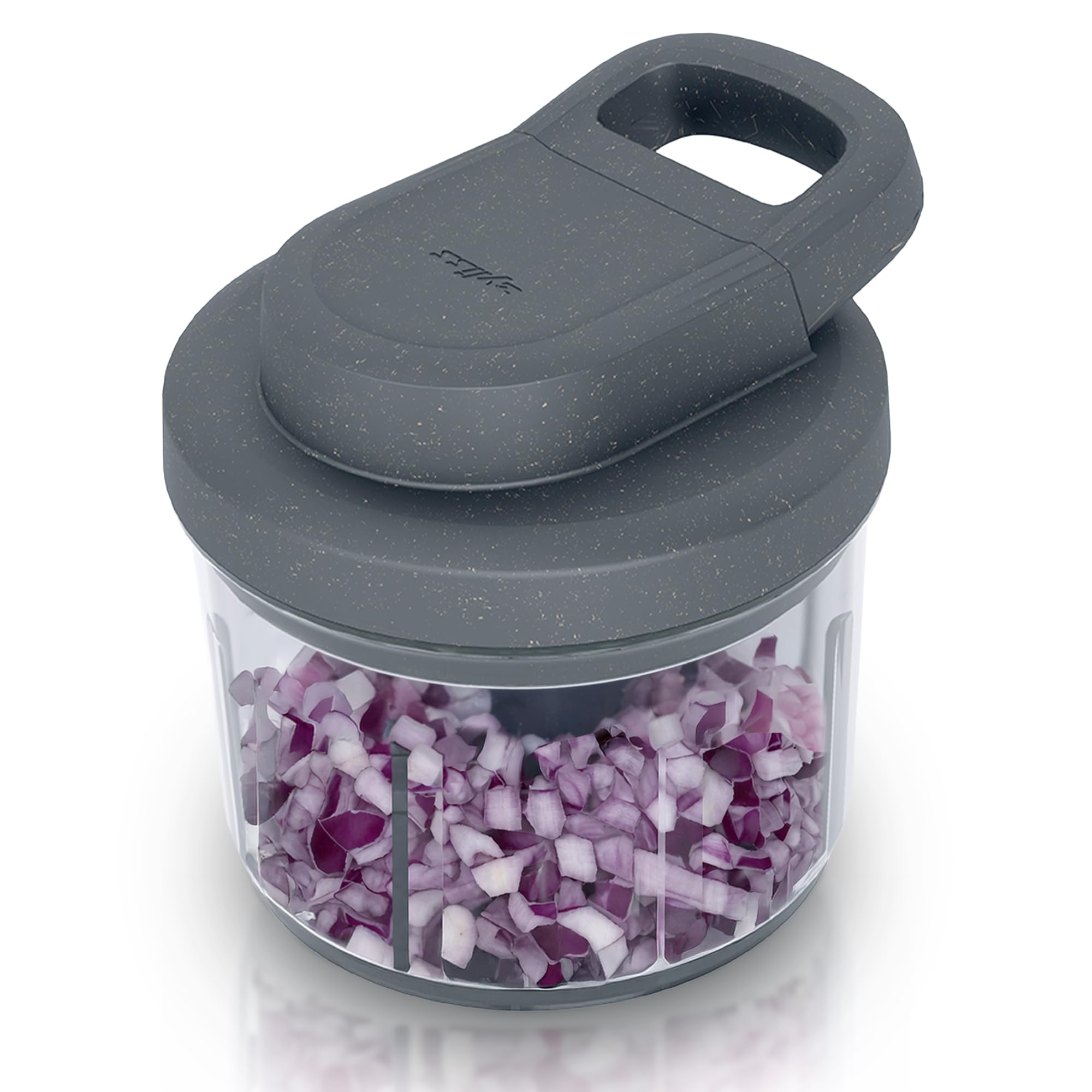
Zyliss Easy Pull
Key Features
- Capacity: 3.4 cups
- Blades: 1 serrated
- Ease of Cleaning: Hand wash lid, bowl OK
- Durability: Excellent build
- Operation: Manual – pull cord
- Price: $$
The Zyliss Easy Pull’s serrated stainless steel blade chops onions and herbs uniformly with a simple pull-cord action. The 800ml capacity handles daily small tasks but falls short for bulk prep, and the mid-range price reflects the build quality. The lid cannot be submerged—hand-wash only.
Pros
- Sharp serrated blade holds its edge for consistent mincing.
- Pull-cord operation is straightforward and requires no power outlet.
Cons
- Lid must be wiped clean; cannot be submerged in water.
Best for cooks who need a durable, sharp manual chopper for small daily tasks and are comfortable with hand-washing the lid.
Best for Home Cooks
Mueller 6-Blade

Key Features
- Capacity: 5 cups
- Blades: 6
- Ease of Cleaning: Dishwasher safe
- Durability: Well-built
- Operation: Manual – pusher
- Price: $
The Mueller 6-Blade offers an affordable way to dice, slice, and grate with six included blades and a generous 5-cup container. It’s easy to assemble and clean. However, blade sharpness can vary between units, so it’s best for cooks who don’t mind checking edges before use — not for those seeking precision cuts every time.
Pros
- Sturdy construction holds up to regular home use.
- Dishwasher-safe parts make cleanup quick.
Cons
- Blade sharpness may be inconsistent — some units cut less cleanly than others.
A solid entry-level option for occasional dicing and slicing when blade sharpness isn’t a dealbreaker.
Best for Budget Buyers
Ourokhome Pull Chopper

Key Features
- Capacity: 2 cups
- Blades: 3
- Ease of Cleaning: Dishwasher safe
- Durability: Fragile
- Operation: Manual – pull string
- Price: $
Under $10, this pull-string chopper chops onions and small vegetables in seconds. The plastic bowl may crack with regular use, so it suits occasional tasks or travel rather than daily prep.
Pros
- Simple pull-string operation – just pull and chop
- Chops onions into uniform pieces for small meals
Cons
- Plastic bowl can crack under regular use; best for light, infrequent jobs
For light, infrequent chopping of small portions, this chopper delivers at a very low cost.
Best for Occasional Use
Cambom Pull Chopper

Key Features
- Capacity: 2 cups
- Blades: 3
- Ease of Cleaning: Dishwasher safe
- Durability: Cracks easily
- Operation: Manual – pull string
- Price: $
The Cambom pull chopper handles small batches of onions and soft vegetables quickly — the pull-string mechanism is simple to operate and cleans up easily. At an entry-level price, it delivers decent chopping for occasional use. However, the plastic bowl may crack under normal handling, and the 500ml capacity limits batch prep. This makes it suitable as a backup or for emergency use where a full-featured chopper isn’t needed.
Pros
- Simple pull-string operation chops onions with minimal effort
- Easy to clean — dishwasher safe construction
Cons
- Plastic bowl can crack during routine use, reducing longevity
Pick this only for rare, light chopping tasks where you’re willing to replace it if the bowl gives out.
How to Choose
The number of blades a chopper claims matters less than the durability of its plastic frame and how easily it comes apart for cleaning.
Capacity
A larger container (5 cups) saves time when prepping multiple onions but often makes the device bulkier and harder to wash. Smaller capacities (1–2 cups) are easier to store and clean but require multiple batches for family meals.
Number and Type of Blades
Manufacturers often advertise 6, 8, or even 12 blades, but in practice you’ll use only 2–3: a fine dice, a medium dice, and a slicer. Extra blades for julienne or grating are useful only if you regularly make those cuts. More blades also mean more crevices for food to hide.
Ease of Cleaning
The best choppers disassemble into two or three flat pieces that you can scrub or run through the dishwasher. Models with many plastic nooks, spring-loaded hinges, or non-removable blades trap onion residue and require a brush or toothpick to dislodge.
Durability of Plastic Components
Plastic frames and hinge pins are the first to fail under repeated pressing or lever force. Look for choppers with metal reinforcement at stress points, or choose a design (like a pump or electric motor) that avoids pushing down on a plastic lid entirely.
Manual vs Electric Operation
Electric mini choppers deliver consistent results with one-touch pulsing and are easier to clean, but they require counter space and can be loud. Manual choppers are portable and affordable, but the trade-off is that most rely on plastic parts that may crack over time.
FAQ
How do I clean a vegetable chopper without cutting myself?
Disassemble the chopper completely and wash each piece individually with a brush or sponge. Many blades are removable; handle them by the plastic base or use a dish glove. Dishwasher-safe models reduce contact with sharp edges, but always place blades face-down in the rack.
Is a manual vegetable chopper better than an electric one for onions?
It depends on your volume and tolerance for noise. Electric choppers like the Hamilton Beach 3-Cup produce evenly minced onions in seconds with very little cleanup. Manual choppers give you more control over texture and don’t need a power outlet, but many require multiple passes and can be tiring for large batches.
Why does my vegetable chopper break after a few uses?
Most budget manual choppers use thin plastic hinges and clips that crack under repeated downward pressure. The failure usually starts at the hinge pin or the spring clasp. Choosing a chopper with metal reinforcement or an electric motor (which avoids pushing on the lid) prevents this weakness.
Can I use a vegetable chopper for nuts and cheese?
Yes, but only if the blades are stainless steel and sturdy enough for hard ingredients. Soft cheeses and nuts will chop cleanly in most models. Hard cheeses like Parmesan may dull blades faster; use the coarse shredding disc if available. Avoid using choppers on frozen items.