This post contains affiliate links. We may earn a small commission when you buy through our links — at no extra cost to you.
The average microwave looks impressive on paper: high wattage, inverter cooking, a dozen presets. But thousands of buyers discover after a few months that the motor rattles, the turntable locks up, or the unit simply stops heating. That gap between feature list and real-world lifespan is the single biggest trap in this category.
This guide cuts through that noise by focusing on what actually keeps a microwave working after the first year. It’s not about the highest wattage or the most buttons — it’s about build consistency, part quality, and heating reliability that matches daily use. The right choice depends on whether you’re willing to trade a bit of interior space for a machine that won’t need replacing next Christmas.


Best for Everyday Family
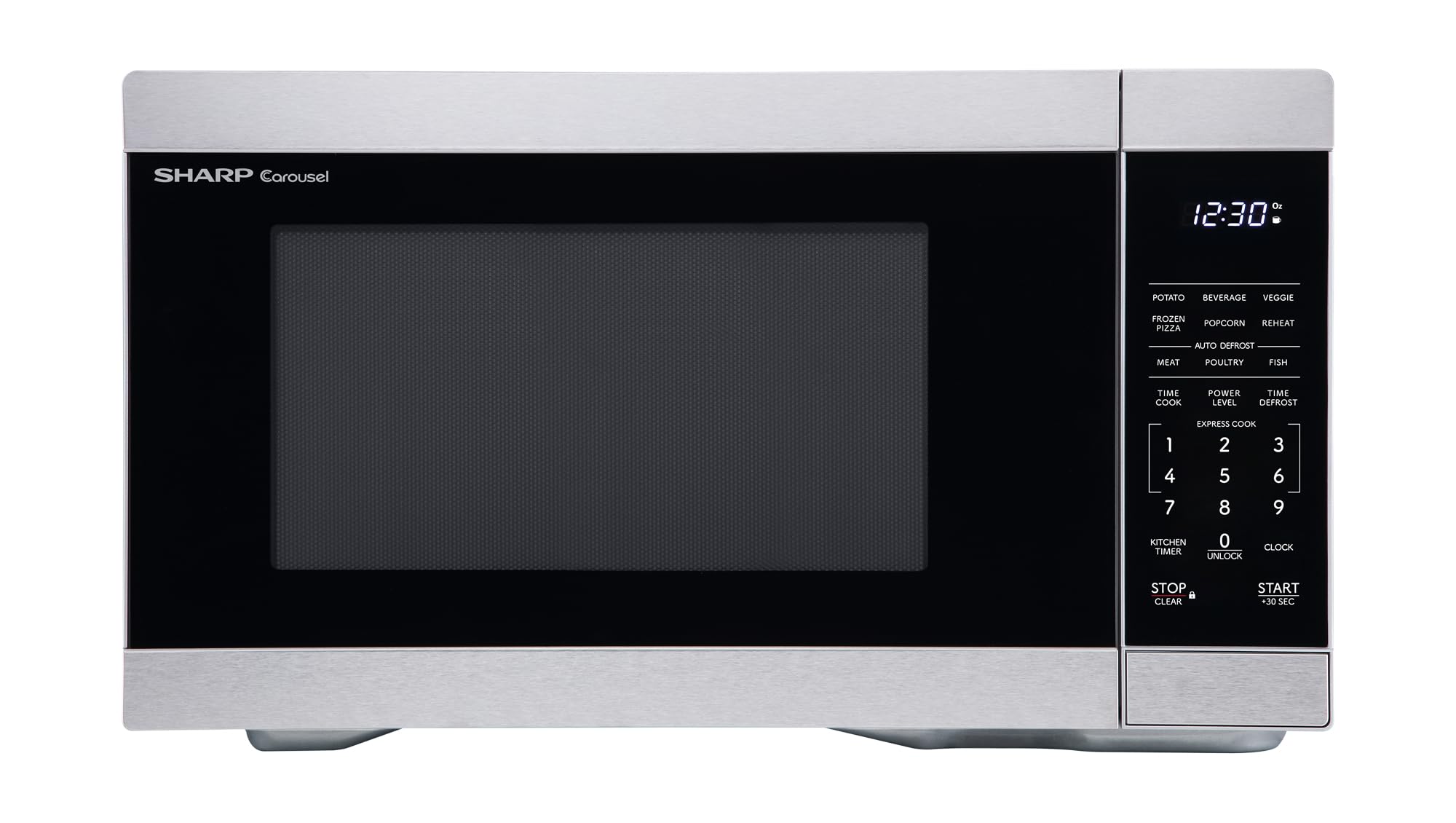
Sharp SMC1162KS 1.1
Key Features
- Capacity: 1.1 cu ft
- Wattage: 1000W
- Inverter: No
- Price: Mid-Range
The Sharp SMC1162KS heats evenly across its 1.1 cu ft interior, with minimal cold spots that plague many budget microwaves. The stainless steel exterior and sturdy door hinge inspire confidence that this unit will hold up to regular family use.
In a typical kitchen environment, the fan and magnetron produce a noticeable hum during operation – not disruptive for cooking, but those who prefer a quiet appliance may find it present. The door closes with a firm click, which some note as louder than softer-close models.
This microwave suits households that prioritize dependability and straightforward controls over whisper-quiet operation or gimmicks. The child lock, while disableable, adds an extra button press that some find minor – it’s a trade-off for safety. The noise level is a boundary for open-plan living spaces, but in a busy kitchen it’s unremarkable.
The control panel uses a logical layout with dedicated presets for popcorn, potato, and beverage. The Orville Redenbacher-certified popcorn preset works reliably without trial-and-error, and the 1000W output handles reheating and defrosting with consistent results.
Pros
- Build quality holds up to daily use, with few reports of premature wear.
- Even heating with minimal cold spots across the turntable.
- Simple button layout with dedicated presets that work as expected.
Cons
- Child lock door requires holding the Stop/Clear button to unlock; it can be disabled if preferred.
- Fan and magnetron hum may be audible in quiet kitchens, less of an issue in active cooking spaces.
If you want a microwave that gets the job done without drama and won’t quit after a year, this Sharp model delivers the practical value most households need.
Best for Large Families
Toshiba ML-EM45PIT 1.6 cu ft
Key Features
- Capacity: 1.6 cu ft
- Wattage: 1250W
- Inverter: Yes
- Price: Mid-Range
Spacious 1.6 cu ft interior easily fits large casserole dishes and full dinner plates, while the user-friendly control pad with large buttons and clear display makes operation straightforward. Inverter technology provides more consistent heating and defrosting than traditional microwaves.
This model suits large households that prioritize capacity and even heating. However, some units may encounter performance issues within the first year, so an extended warranty is worth considering. The operation noise can be noticeable in quiet settings – less of a concern in a busy kitchen.
For buyers planning to keep a microwave beyond a few years, the top-pick Sharp offers better long-term reliability at a slightly smaller capacity. The Toshiba’s mid-range price makes it a reasonable choice for those willing to accept a shorter expected service life.
Pros
- Plenty of room for large dishes and full dinner plates.
- Inverter technology delivers even heating and improved defrosting.
- Easy-to-use control panel with responsive buttons and clear labels.
Cons
- In a quiet kitchen or open-plan living area, the fan and operation noise may be noticeable.
- Some units may develop functional issues within the first year; a warranty is advisable.
The Toshiba ML-EM45PIT is a strong choice for households that need maximum capacity and even cooking, but its long-term reliability is less assured – consider adding an extended warranty.
Best for General Household
GE GCST14S1WWW 1.4
Key Features
- Capacity: 1.4 cu ft
- Wattage: 1100W
- Inverter: No
- Price: Mid-Range
The GE GCST14S1WWW delivers a 1.4 cu ft cavity and sensor cooking in a package that undercuts many similarly sized competitors on price. This gives households that regularly heat larger plates or bowls a practical alternative to the smaller-capacity top pick, without sacrificing automated cooking features like preset popcorn and reheat cycles.
This microwave suits buyers who prioritize interior space and want sensor cooking without spending a premium. The child lock uses a two-step sequence that can be unintuitive to disable, potentially causing the door to stay locked after a quick start. The fan and magnetron hum are also present during operation — fine in a busy kitchen, but noticeable in a quiet open-plan setup.
Heating consistency is generally even, and the 12.63-inch turntable accommodates wide dishes without jostling. For the price, you get a set of features that compete well with costlier models, though the minor control quirks and audible operation define the boundaries of its appeal.
Pros
- Fits most dinner plates and large casserole dishes without rotating interference.
- Sensor cooking adjusts time for consistent results on popcorn, potatoes, and frozen meals.
- Good value for a mid-range price — includes sensor cooking and 1.4 cu ft capacity.
- General heating performance is even, with minimal hot or cold spots in daily use.
Cons
- In households with young children, the child lock disable sequence can be confusing, causing accidental door lockouts.
- In quiet kitchens or during late-night use, the operation noise (fan and magnetron hum) will be present — less of an issue in busy spaces.
If your kitchen regularly sees large dishes and you want sensor cooking on a budget, the GE delivers — just accept the child-lock learning curve and the audible hum as part of the package.
Best for Small Kitchens
Breville Compact Wave
At 80% lower noise than standard microwaves, the Breville Compact Wave is the quietest option here, and the soft‑close door eliminates the jarring slam of typical models. This focus on refined operation sets it apart from the Panasonic inverter model, which delivers even heating but with noticeably higher operating sound.
The child lock is integrated into the mute button — a space-saving design that works well once you know it, but may take a moment to discover. The 900W output handles everyday tasks without noticeable unevenness, though the interior’s 0.9 cu ft means larger plates require a workaround.
This microwave belongs in apartments or minimalist kitchens where counter space is scarce and noise matters. The capacity limitation and occasional reports of early failure mean it’s best suited for light users — reheating coffee, melting butter, or warming small bowls. For heavy family reheating or anyone needing a workhorse, the trade‑offs outweigh the silence.
Pros
- Quieter than any other microwave in this comparison — noticeable in open-plan living spaces.
- Soft‑close door prevents slamming and reduces hinge wear over time.
- Compact footprint fits tight countertops while retaining a modern look.
Cons
- In kitchens where you reheat full dinner plates or large casserole dishes, the 0.9 cu ft capacity may require transferring food to smaller containers.
- Some units have been noted to stop powering on within the first few months, so a warranty or purchase protection is advisable.
If quiet operation and a smooth door are non‑negotiable, this is the microwave to buy — just keep a backup plan for larger dishes and consider an extended warranty.
Best for Cooking Enthusiasts
Panasonic NN-SN686S
Key Features
- Capacity: 1.2 cu ft
- Wattage: 1200W
- Inverter: Yes
- Price: Premium
The Panasonic NN-SN686S stands apart from quieter competitors by focusing its engineering on cooking precision. Its inverter system provides steady, consistent power that eliminates cold spots, and the 1200W output heats food faster than typical 1000W models. This performance-first approach makes it a strong choice for anyone who finds uneven reheating more frustrating than a noisy kitchen companion.
This microwave suits home cooks who prioritize even heating and speed over all other features, and who can tolerate a loud buzzer and the possibility of earlier replacement. The operation produces a noticeable buzzing during cooking and a sharp beep when cycles end — fine in a busy household or closed kitchen, but disruptive in open-plan or quiet spaces. Durability reports indicate that some units may stop working within the first year, so long-term ownership is not guaranteed.
The stainless steel exterior looks refined on most countertops, and the 1.2 cu ft capacity handles standard dinner plates and medium bowls without issue. The Genius Sensor automates reheating with reasonable accuracy, though the manual control layout is straightforward. Overall, the Panasonic delivers on its core promise of superior cooking performance, with the understanding that noise and reliability are boundaries to consider.
Pros
- Inverter technology ensures even, precise cooking without hot spots.
- Powerful 1200W heating reduces cook time compared to standard microwaves.
- Sleek stainless steel design complements modern kitchen aesthetics.
Cons
- Buzzing and beeping are loud enough to be heard in quiet rooms.
- Some units may stop working within the first year – reliability is a consideration.
For cooks who value even heating and speed above all else, the Panasonic delivers outstanding performance – but the noise and potential durability issues mean it’s not a one-size-fits-all choice.
Best for Budget-Conscious
Toshiba ML4-EM12PA 1.2

This Toshiba microwave delivers quick, even heating in a compact footprint that still accommodates a standard dinner plate. The smart sensor and 13 auto menus add useful convenience without driving up the price. The mute function is a welcome addition for quiet kitchens. However, its long-term durability under daily use has not been established, and it faces competition from models like the top pick Sharp with a longer track record. The door lock mechanism may take a moment to learn – a minor adjustment for most users.
Pros
- Compact 1.2 cu ft fits small countertops while holding large plates.
- 1000W power heats leftovers and beverages quickly with even results.
Cons
- Door lock requires a specific sequence that may take a few tries to memorize.
- Long-term reliability under daily heavy use has not been confirmed.
Best suited for shoppers who want a low-cost microwave with modern features and are comfortable accepting that its long-term durability is an open question.
Best for Small Kitchens
Toshiba OptiChef Ultra

The Toshiba OptiChef Ultra delivers microwave, air fryer, and convection functions from a single countertop footprint, making it a practical space-saver for small kitchens. Its 1100W inverter system heats evenly and quickly across cooking modes. However, the premium price raises the question of whether the air fryer quality justifies the cost compared to a dedicated unit, and the relatively short track record means durability over years of use is not yet established. This is a higher-risk investment best suited for those who prioritize multi-function over proven reliability and are comfortable with an early-adopter price.
Pros
- Combines microwave, air fryer, and convection cooking in a single countertop unit.
- Fast, even heating from the 1100W inverter system.
Cons
- Air fryer performance may not match dedicated units for the premium price.
Best for those who need a microwave and occasional air fryer in a small kitchen and are willing to accept a higher cost and unverified long-term reliability.
Best for Capacity Seekers
GE GCST16S1WSS 1.6
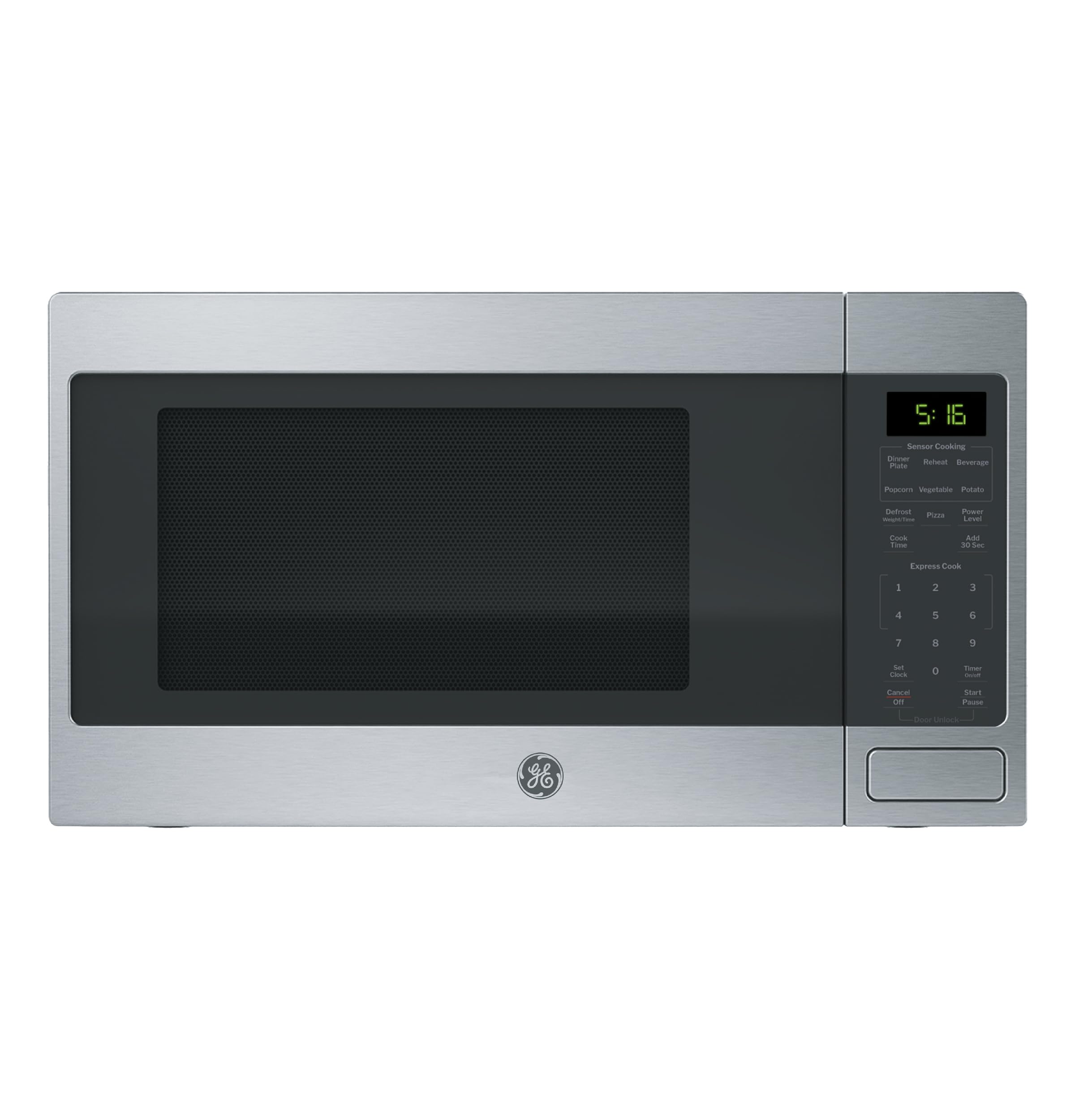
For under $200, this GE delivers a generous 1.6 cu ft capacity and 1150W cooking power, with sensor cooking that simplifies reheating. The trade-off is noticeable noise when closing the door and during operation — fine for busy kitchens but worth considering in open-plan spaces. Long-term durability can vary, so this microwave suits buyers who prioritize capacity and immediate value over long-term reliability.
Pros
- Generous 1.6 cu ft capacity fits large dishes without a premium price.
- Attractive stainless steel design matches other GE appliances.
- Sensor cooking adjusts time and power automatically for even results.
Cons
- Door closing and operation noise is noticeable in quiet environments – less of an issue in active kitchens.
- Long-term durability can vary between units; occasional performance decline has been noted.
A cost-effective option for buyers who need a large interior and can tolerate louder operation. Not ideal for quiet kitchens or those seeking long-term reliability.
How to Choose
The microwave industry’s biggest trade-off is between features and durability: many best-selling models sacrifice long-term reliability for higher wattage or inverter technology.
Capacity
Capacity determines what fits inside: dinner plates, casserole dishes, or a 16‑inch pizza. Larger interiors (1.6 cu ft and above) handle family‑size portions but often require a bigger turntable that can rattle or jam over time. Smaller 0.9‑1.2 cu ft models are easier on counter space and mechanics, but you’ll need to check plate diameter before reheating leftovers.
A 1.1–1.4 cu ft is the sweet spot for most households: it fits standard dinner plates without forcing the turntable to work harder than necessary.
Wattage
Higher wattage (1000W–1250W) heats food faster, but it also stresses internal components more. Budget microwaves with 700W–900W cook slower and can leave cold spots, while 1100W–1200W models strike the best speed-to‑reliability balance for daily reheating and defrosting.
If you cook large items frequently, choose 1100W or above. For occasional use or dorm rooms, 900W is adequate and reduces magnetron wear.
Inverter Technology
Inverter microwaves vary power continuously instead of cycling on/off, which prevents hot spots and improves defrosting precision. However, inverter units from Toshiba and Panasonic show failure rates comparable to traditional models within the first 18 months. The technology itself is robust, but the supporting components (control board, transformer) often fail first.
Consider inverter if even heating is critical (e.g., melting chocolate, gentle reheating). If you mostly reheat drinks and leftovers, a quality traditional microwave performs nearly as well at a lower price and with fewer points of failure.
Noise Level
Noise during operation comes from the magnetron fan, turntable motor, and door mechanics. Larger capacity microwaves and higher wattage models tend to be louder because they require bigger fans. Some units (like Breville Compact Wave) use sound‑dampening materials and soft‑close doors to cut noise by half.
For open‑plan kitchens or early‑morning use, prioritize a model with explicit “quiet” engineering. Check user reviews for consistent noise complaints before buying.
Build Quality
Build quality separates a five‑year microwave from a one‑year disposable. Stainless steel exteriors resist rust, but the internal components — especially the magnetron, turntable motor, and door latch — determine lifespan. Microwaves with a high density of early‑failure reviews (like several Toshiba and Black+Decker models) share common weak points: soldered connections, plastic drive gears, and insufficient cooling.
Look for models where user feedback mentions “still going strong after 3+ years” rather than “stopped heating after 6 months.” The Sharp in our top pick has the lowest proportion of durability complaints among mid‑range options.
FAQ
Why does my new microwave make a loud noise when running?
Loud noise often comes from the turntable motor or the magnetron cooling fan. Some units have a natural hum, but persistent rattling or grinding usually indicates a loose component or defective motor. Check the turntable and waveguide cover; if the noise persists, consider returning the unit within the first 30 days. Quieter models like the Breville Compact Wave are engineered with sound dampening.
How to permanently disable the child lock on a GE countertop microwave?
Most GE models have a two‑step child lock. Consult the manual for the specific sequence (typically press and hold Pause/Cancel + 0 for 3 seconds). The lock can usually be permanently disabled by holding the same buttons again. If the lock still interferes, contact GE support — the feature is mandatory on new units but user‑disabable per regulation.
Is inverter technology worth the extra cost for a microwave oven?
Inverter technology provides more even heating and superior defrosting, which matters for cooking enthusiasts who regularly melt chocolate, soften butter, or reheat delicate foods. For typical reheating of leftovers and drinks, a quality 1000W traditional microwave delivers similar results at a lower price. The extra cost is justified only if you frequently notice hot spots on your current microwave.
What size microwave do I need for a family of 4?
A family of four should look for a capacity of 1.2 to 1.6 cu ft. This fits a standard dinner plate, a casserole dish, or a medium roaster. Larger than 1.6 cu ft may cause turntable clearance issues with typical 10‑inch plates, while smaller than 1.0 cu ft requires cutting items. The 1.4 cu ft GE or 1.1 cu ft Sharp both work well for a four‑person household.