This post contains affiliate links. We may earn a small commission when you buy through our links — at no extra cost to you.
Meal prep containers come in two materials: plastic for portability and glass for oven-to-table convenience. Both have their own durability quirks—plastic can crack over time, while glass may chip.
The real difference shows up in daily use. A leak-proof seal matters more for commuting lunches, while oven-safe glass is essential for batch cooking. The right choice depends on whether you prioritize lightness or versatility.
This guide walks through the trade-offs so you can match containers to your meal prep routine—without overpaying for features you won’t use.


Best for Daily Lunch Prep
Rubbermaid Brilliance 5-Pack
Key Features
- Seal Mechanism: Airtight snap-lock
- Build Material: Tritan plastic
- Capacity Options: 3.2 cups each
- Dishwasher Safe: Yes
- Price: $$
The Rubbermaid Brilliance containers lock airtight with a snap-lid seal that keeps soups, stews, and dressings from escaping during commutes or lunch bags. The Tritan plastic stays clear and resists tomato-based stains after repeated dishwashing, so the set still looks fresh after a year of weekly rotation. Built-in vents release steam during microwave reheating without requiring a cracked-open lid — a detail that prevents splatters in the office microwave.
This 5-pack fits the daily meal-prep routine: uniform 3.2-cup portions stack neatly in the fridge and slide into most lunch bags. The plastic is lighter than glass and won’t shatter if dropped, which makes it practical for travel and commuter use. Over time the material can develop hairline cracks around the lid latches — a trade-off mainly for buyers who load containers into a dishwasher daily or crank the latches with force. That limitation matters less for manual washing or gentler handling, and the seal performance is consistent across the set.
Pros
- Leak-proof seal that holds liquids upright without gasket failure.
- Clear Tritan plastic resists staining from tomato and curry sauces.
- Nestable design and dishwasher-safe for convenient daily cleaning.
Cons
- Lid can be difficult to pry open when the seal is fully engaged.
- Plastic may develop cracks around lid latches after several months of use.
For anyone packing wet lunches or saucy leftovers daily and willing to handle plastic with care, this is the most trustworthy seal you’ll find without moving to glass.
Best for Oven-To-Table Prep
PrepNaturals Glass 5-Pack
Key Features
- Seal Mechanism: Silicone gasket seal
- Build Material: Borosilicate glass
- Capacity Options: 30 oz each
- Dishwasher Safe: Yes
- Price: $$
Prep Naturals delivers the performance of oven-safe glass without the premium price tag. The 30-ounce containers handle direct oven use, microwave reheating, freezer storage, and dishwasher cleaning without warping or staining.
This set suits home meal preppers who want to bake, reheat, and serve from the same dish without worrying about plastic. The silicone lid seals can loosen over time with regular dishwasher use, so check them before transporting soups or sauces.
Pros
- Oven-safe to 840°F for cooking, reheating, and baking.
- Glass resists staining and odors even after repeated use.
Cons
- Silicone gasket in the lid may loosen or detach with frequent dishwasher use.
- Glass edges can chip if dropped onto hard surfaces.
For home cooks who value oven-to-table convenience and are willing to monitor lid seals, this glass set offers the best value in its class.
Best for Budget Freezer Prep
Freshware 60-Pack Deli
Key Features
- Seal Mechanism: Press-on lid
- Build Material: Polypropylene (thin)
- Capacity Options: 8, 16, 32 oz
- Dishwasher Safe: Yes
- Price: $
Three capacity options let you portion everything from single snacks to family-sized soups. Unlike single-size packs, this set offers graduated sizes for flexible meal prep. Best for budget-conscious meal preppers who prioritize freezer storage over long-term durability — the thin plastic and lid cracking are tradeoffs to expect with repeated use.
Pros
- Budget-friendly for bulk meal prep with 60 containers.
- Size variety covers 8, 16, and 32 oz for different portions.
Cons
- Plastic feels thinner than premium sets, which may affect perceived build quality.
For large-scale freezer meal prep on a tight budget, this set delivers unmatched value — just accept the plastic’s limits.
Best for Kids Lunches Snacks
Bentgo Easyboxes 4-Pack
Key Features
- Seal Mechanism: Tab lid with tabs
- Build Material: Polypropylene
- Capacity Options: 11.2 oz each
- Dishwasher Safe: Yes
- Price: $
The Bentgo Easyboxes feature easy-open tabs that small hands can work independently, and the four compartments keep snacks separate without mixing. This set suits parents portioning snacks or creating DIY lunchables for school lunches, but the lid tabs may wear out over time and the seals are not liquid-tight, so it works best for dry foods like crackers, cheese, and fruit rather than soups or saucy dishes.
Pros
- Controlled portions for kids and snacks with separate compartments
- Good build quality for a budget-friendly price
- Easy to clean – dishwasher safe
Cons
- Lid tabs may wear out after repeated opening and closing
- Seals between compartments can allow liquids to mix, not suitable for wet foods
A practical snack-station set for dry foods and kids’ lunches, though the lid durability and lack of liquid seals mean it’s not a replacement for standard meal prep containers.
Best for Large Portion Prep
Kitch’nMore 30-Pack
Key Features
- Seal Mechanism: Snap lid
- Build Material: Polypropylene (thick)
- Capacity Options: 38 oz each
- Dishwasher Safe: Yes
- Price: $
The Kitch’nMore 30-pack stands out with thick polypropylene walls that resist cracking under heavy use – a step up from flimsier disposable options. Each 38 oz container holds generous portions ideal for large appetites or family-size freezer batches. The value is clear: 30 containers at this durability level cost less per unit than most competing sets. That said, the set offers only one size, so it won’t suit those who need small sides or varied portions. And the lids seal tight enough that some users find them hard to pry open when fresh from the freezer.
Pros
- Thick plastic resists cracking during repeated use and freezing
- 38 oz capacity handles large meals and freezer storage without warping
- 30-pack delivers strong per-container value for budget-conscious buyers
Cons
- Only one size – no option for small portions or variety
- Lids can be difficult to remove when sealed tightly after cooling
If you need a stack of uniformly large, durable containers for meal prep or freezing, this set delivers dependable performance and strong value – just plan around the single size and snug lids.
Best for Oven-To-Table Meals
Rubbermaid Glass 4-Pack
Key Features
- Seal Mechanism: Airtight snap-lock
- Build Material: Glass + plastic lid
- Capacity Options: 3.2 cups each
- Dishwasher Safe: Yes
- Price: $$$
The Rubbermaid Brilliance Glass set brings oven-safe glass up to 450°F with lids that work across all sizes — a convenience the plastic top pick can’t match. Glass resists stains and odors, and the seal stays airtight. This set suits small-batch meal prep and oven-to-table cooking, but the price per container is higher than comparable glass sets, and the plastic lids may crack under repeated heavy use.
Pros
- Airtight seal keeps contents fresh and prevents leaks
- Oven-safe glass base allows cooking and reheating up to 450°F
- Universal lids fit multiple container sizes in the Brilliance line
Cons
- Plastic lids can crack over time, particularly the locking mechanism
- Tight seal may require significant effort to open
A premium glass option for buyers who value oven-safe cooking and airtight storage, provided the lid durability tradeoff fits their usage.
Best for Budget Meal Prep
Bentgo Prep 1-Comp
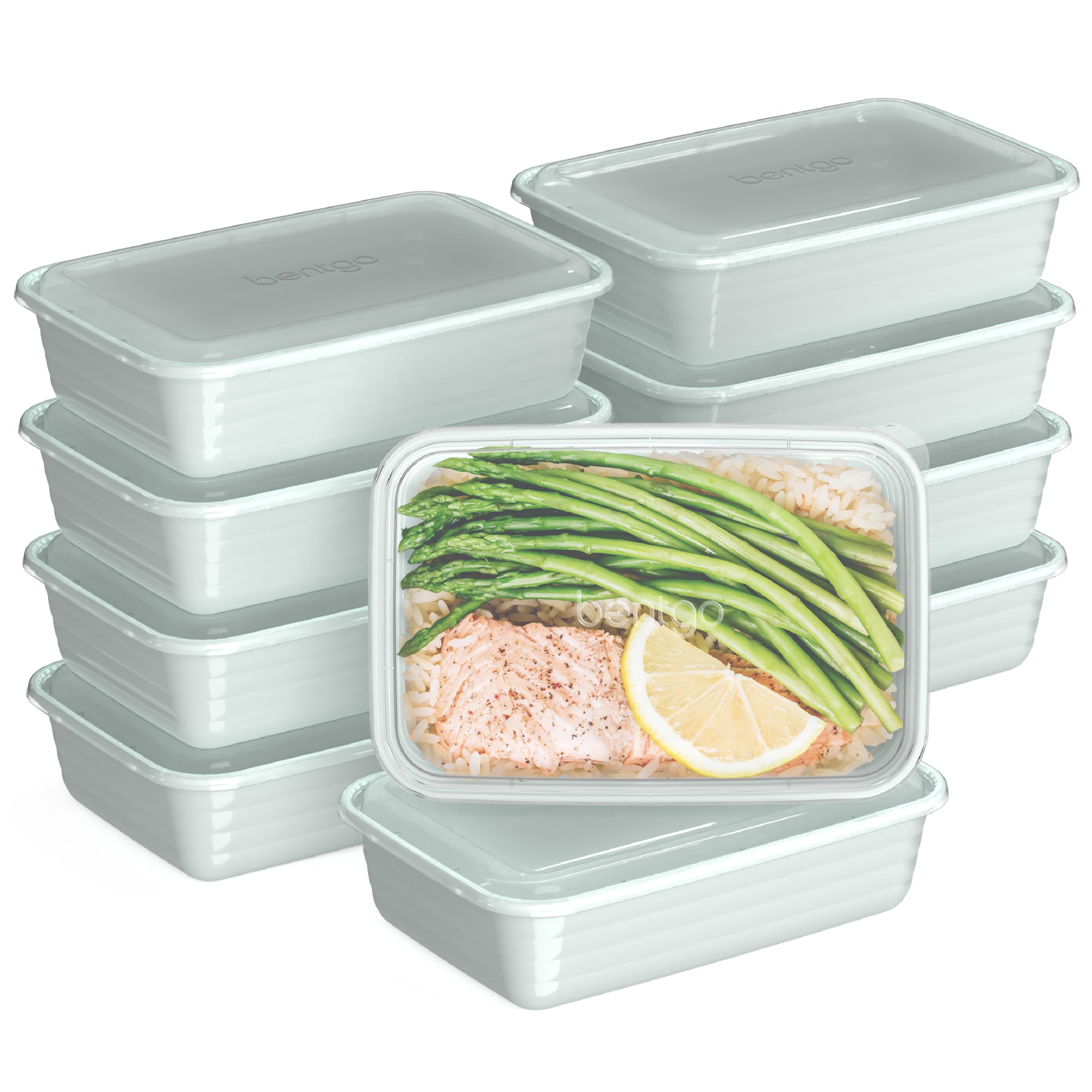
Key Features
- Seal Mechanism: Snap lid
- Build Material: Food-safe plastic
- Capacity Options: 4 cups
- Dishwasher Safe: Yes
- Price: $
These Bentgo Prep containers offer a budget-friendly way to portion out lunches with a simple single-compartment design. They’re easy to clean and microwave-safe. However, the plastic is thin enough that cracking can occur under repeated use, and the lid seals may not hold up to wetter foods. This set suits light meal prep where containers are cycled through quickly — not for everyday heavy lifting.
Pros
- Budget-friendly price for a 20-piece set of meal prep containers.
- Single-compartment design works well for portioning lunches and leftovers.
Cons
- Containers can crack over time and lids may loosen after repeated use.
Best for budget meal prep where containers are replaced regularly or used for dry, short-term storage.
Best for Aesthetics Focus
C CREST Glass 10-Pack

Key Features
- Seal Mechanism: Snap-lock with gasket
- Build Material: Borosilicate glass
- Capacity Options: 34 oz each
- Dishwasher Safe: Yes
- Price: $$
These containers offer an attractive look with colored lids and borosilicate glass that cleans easily. Initial leak resistance is decent. However, lid cracking after dishwasher use and potential glass chipping mean this set suits occasional meal prep for those who value appearance over prolonged reliability.
Pros
- Colorful lids add visual appeal to meal prep.
- Glass base resists staining and cleans without residue.
Cons
- Lid cracking after repeated dishwasher use has been noted; glass chipping is possible under thermal stress.
Fits buyers who want stylish glass containers for light, infrequent use and are comfortable replacing lids over time.
Best for Varied Portion Sizes
MCIRCO Glass 10-Pack

Key Features
- Seal Mechanism: Snap-lock lid
- Build Material: Borosilicate glass
- Capacity Options: 34 & 13 oz
- Dishwasher Safe: Yes
- Price: $$
The borosilicate glass cleans easily and the two sizes (34 oz and 13 oz) accommodate different meal portions. Lid clamps may crack after repeated use, and glass can chip under heavy stacking — better suited for home meal prep than daily transport.
Pros
- Glass resists stains and odors, cleaning up quickly.
- Two sizes cover both small sides and full entree portions.
Cons
- Lid clamps may crack over time, reducing seal integrity.
A good pick for home meal preppers who want glass with two sizes and can accept occasional lid replacement.
Best for High-Volume Prep
PROMOZE 50-Pack

Key Features
- Seal Mechanism: Press-on lid
- Build Material: Polypropylene
- Capacity Options: 28 oz each
- Dishwasher Safe: Yes
- Price: $
This bulk 50-pack delivers the cheapest per-container price for standard 28 oz portions, making it suitable for catering, freezer storage, or weekly prep where containers are cycled out after a few uses. The plastic is dishwasher-safe and holds up to typical microwave reheating. However, the lids can crack under normal handling and the seal is not reliably leak-proof, so these are less ideal for transporting soups or sauces. The tradeoff is acceptable if you value cost over long-term reuse and don’t need airtight transport.
Pros
- Budget-friendly option for 50 containers at a low per-unit cost.
- 28 oz capacity works well for standard single-serving meals.
Cons
- Lids can crack during normal use, reducing reusability.
Works for high-volume prep where containers are treated as semi-disposable — skip it if you need leak-proof transport or long-term durability.
Best for Bulk Freezer Prep
Freshware 50-Pack 1-Comp

Key Features
- Seal Mechanism: Press-on lid
- Build Material: Polypropylene
- Capacity Options: 24 oz each
- Dishwasher Safe: Yes
- Price: $
This 50-pack delivers uniform 24 oz containers at a low per-unit cost, ideal for batch meal prep. The size fits standard portions well. Lid sealing is inconsistent—some lids may not close fully, making it a better fit for freezer storage than for carrying soups or sauces. The 60-pack with three sizes offers more flexibility for similar cost.
Pros
- Great value for bulk meal prep
- Easy to clean
Cons
- Containers can crack under normal use
Best for freezer-based meal prep or catering where seal reliability is secondary; if you need daily leak-proof containers, choose a set with gasket lids.
How to Choose
The most important decision is whether plastic’s lightweight convenience outweighs glass’s oven-safe versatility for your routine.
Plastic vs Glass
Plastic containers are lighter and won’t shatter if dropped, but they can stain from tomato sauces and warp in the dishwasher over time. Glass resists odors and stains, plus it can go from oven to table, but adds weight to your bag and risks chipping when stacked.
Seal Reliability
The seal’s longevity depends on the lid design. Integrated gaskets molded into the lid last longer than removable silicone rings that can fall out. Snap-lock closures provide a tighter seal than simple press-on lids, but may be harder to open.
Durability and Build
Thicker polypropylene plastic (like in Kitch’nMore) resists cracking better than thin-walled containers. Glass containers are naturally strong but can chip at edges, especially in the dishwasher. Lid hinges and latches are the most common failure point across all materials.
Capacity and Sizes
Consider how much food you prep per meal. Standard single-serving sizes are 3-4 cups (24-32 oz). For families or large salads, 38 oz containers are better. Multi-size packs let you store sides and mains in one set.
Dishwasher & Microwave Safety
Most containers are labeled dishwasher-safe, but high heat can warp thin plastic lids. Glass is oven-safe up to varying temperatures—check the specs if you plan to reheat in the oven. Microwaving with lids vented (Rubbermaid) reduces splatter.
FAQ
Are glass meal prep containers better than plastic?
It depends on your routine. Glass is better for oven-to-table meals and doesn’t stain, but it’s heavier and can chip. Plastic is lighter and leak-proof for commutes, but may crack after months of use. Choose glass if you reheat in the oven; choose plastic for daily portability.
Why do my meal prep container lids keep cracking?
Lids crack most often because of repeated dishwasher heat cycles or overtightening snap closures. Thin plastic lids on budget containers are especially prone. Hand-washing lids and avoiding microwave use can extend their life.
Can glass meal prep containers go in the oven?
Only if labeled oven-safe. Borosilicate glass (like PrepNaturals and MCIRCO) typically handles up to 700-840°F, but the plastic lids must be removed first. Always check the manufacturer’s temperature limit.
How many meal prep containers do I need for a week?
For a single person prepping 5 lunches, 5-7 containers of 24-32 oz each is enough. Add smaller ones for snacks. For families, 10-15 containers in varied sizes covers the week.