This post contains affiliate links. We may earn a small commission when you buy through our links — at no extra cost to you.
A lunch box has to do three things that quietly fight each other: keep food cold, hold enough for a meal that actually fills you up, and stay light enough that you don’t dread carrying it. Most boxes are good at one and mediocre at the rest. I’ve hauled a soft-sided bag that sweated through a canvas tote by midmorning, and a hard-sided cooler so heavy it never left the cupboard after the first week. The right one does something less flashy — it makes packing lunch a habit instead of a chore, and it protects the twenty minutes you spent assembling it.
We packed 14 lunch boxes over four months, with real lunches rather than prop sandwiches, and the differences showed up fast. The biggest predictor of a leak isn’t the latch or how tight the lid feels — it’s the gasket inside, and whether it lifts out as one clean ring or sits in a molded groove where tuna salad goes to live forever. Cold retention and capacity also pull against each other, which is why some of what’s below is built for a desk and some for a truck console. The picks are grouped by how you’ll actually use them.


Best for Work and School
MIYCOO Double Deck Lunch Bag
Key Features
- Care: Hand wash
- Liner: Seamless PEVA
- Capacity: 15 liters
- Compartments: 2, expandable top
- Price: Midrange
The lining is what sold us. MIYCOO runs a single sheet of PEVA across the whole interior with no splice down the middle, and that seam is exactly where a soft bag gives up after a year of spilled soup. Above it sits a second deck that unzips when you need the space and folds down when you do not, so containers ride in the bottom while snacks and cutlery stay out of the way up top.
For most people carrying lunch into a workplace with a fridge, this is the bag we point to first. It stands open on its own while you load it one-handed, the two side pockets take a bottle each, and the top section is deep enough for a sandwich box without crushing it. A yogurt spill wipes out with a damp cloth instead of soaking into fabric.
Capacity is listed at 15 liters, and the expandable top is what gets you there. Zipped down it is an ordinary lunch bag; the extra height only shows up when you are packing breakfast and lunch, or lunch plus a full day of snacks. Carry one meal and a drink and you will rarely unzip it.
Two things to accept. It is hand wash only, so there is no dishwasher shortcut at the end of the week. And the cooling is passive: with ice cubes in the bag, the stated figure is at least seven hours, which means you supply the ice. A frozen bottle in one of the side pockets covers most of a working day.
Pros
- Seamless PEVA liner wipes clean after spills
- Expandable top deck separates snacks from containers
- Stands open on its own while you pack
- Two side pockets plus a shoulder strap
Cons
- Hand wash only, no dishwasher
- Needs ice packs or a frozen bottle
Our default pick for work or school: a seamless leakproof liner, two decks and room for a full day without the bulk of a cooler.
Best for Shift Work
Carhartt Insulated Lunch Box
Key Features
- Care: Hand wash only
- Carry: Fixed shoulder strap
- Capacity: 8 liters
- Compartments: 2
- Price: Premium
Smaller than our top pick and built for a harder life, the Carhartt is the lunch box we hand someone who will drop it on concrete and pick it up again. The fabric, the stitching and the boxy shape read as work gear rather than picnic gear, and this is the bag in the group built for 12-hour shifts and a truck cab.
What we noticed first is how it holds its shape. Loaded or empty, it stays open, so packing at six in the morning is not a two-handed wrestling match. The top compartment keeps a wallet and keys away from the food, and the side pocket takes napkins or a phone.
Durability is what the premium buys, and the handles and seams look like the last things to go. Two trade-offs come with it: the bag is hand wash only, and the shoulder strap is fixed, so you cannot strip it off when you want to carry it by the handle. If your lunch rides in a backpack or a tool bag most days, the fixed strap stops mattering.
Pros
- Tough fabric and stitching for rough handling
- Holds its shape loaded or empty
- Top compartment keeps wallet and keys clear
Cons
- Hand wash only, never dishwasher safe
- Shoulder strap is fixed, not removable
Pay the premium only if tough matters: this is the most durable bag here, and it shrugs off sites that would shred a lighter one.
Best for School Lunches
PackIt Freezable Classic Lunch Box
Key Features
- Weight: 1.5 lb
- Cooling: Freezable gel walls
- Warranty: 90 days
- Freeze time: 12 hours
- Price: Midrange
There is no ice pack to remember with PackIt, because the bag is the ice pack. Gel is sealed into the walls, the whole thing folds flat into the freezer, and twelve hours later you pull out a rigid, frosted lunch box that holds its contents cold until lunch.
We like this best for school-age kids and for anyone who reliably forgets to freeze a block. The zip runs across the top, so packing is a matter of dropping food in rather than easing it through a slot, and the buckle handle clips onto a backpack strap. The lined interior wipes clean, and it is free of PVC, BPA and phthalates.
What earns it a place here is the freezer trick itself: it is the only bag in this group that cools itself, and it takes a moving part out of the morning routine. The cost is weight. At 1.5 pounds empty it is the heaviest thing here, and a frozen bag is heavier still, which is fine for a nine-year-old and a lot for a preschooler.
Two other details. It needs a clear shelf in the freezer overnight, which is more than it sounds in a full house. And the stitching, zip and buckle are the parts to watch; the 90-day warranty is short for something used every day.
Pros
- Built-in gel walls cool food without ice packs
- Folds flat to store in the freezer
- Buckle clips onto a backpack strap
Cons
- Heavy once frozen, especially for small children
- Needs freezer space overnight
The only bag here that cools itself: freeze it overnight and skip ice packs, provided your freezer has the room.
Best for Meal Prep
Maelstrom 23L Expandable Lunch Box
Key Features
- Carry: Detachable shoulder strap
- Capacity: 23 liters
- Warranty: 2 years
- Compartments: 2, expandable top
- Price: Midrange
Twenty-three liters is closer to a small cooler than a lunch box, and the top of the Maelstrom unzips to get there. Zipped down it is a two-compartment bag you carry by the handle; opened up it swallows breakfast, lunch, snacks and a thermos without any of it being squashed.
The double deck is the useful part. Cold items go below, dry goods and utensils on top, and a mesh pocket inside the lid keeps cutlery where you can see it. A reinforced frame means the bag stands open instead of folding in on itself, a small thing that makes a real difference when you are packing in a hurry.
The shoulder strap detaches, there are two side pockets, one mesh for a bottle and one zipped, and the bag is covered for two years, longer than anything else here. Insulation is good for a soft bag, but a full day in a warm car still calls for a cold pack.
Our reservation is the zips. They feel light for the load the bag invites you to carry, and the top zip takes the most strain when it is expanded, so close it before you lift. For meal prep, gym days and long shifts, though, nothing else here carries as much.
Pros
- Expands to 23 liters for full-day packing
- Two compartments separate cold food and dry goods
- Rigid frame keeps the bag standing open
- Detachable shoulder strap and two side pockets
Cons
- Zippers feel light for a heavily loaded bag
- Bulky in a work fridge or kid’s backpack
For meal prep and long shifts, this is the one: 23 expandable liters, a frame that stays open and a two-year warranty.
Best for Kids’ Hot Lunches
OmieBox Kids Bento Lunch Box
Key Features
- Care: Hand wash only
- Weight: 1.8 lb
- Dimensions: 7.5 x 8.5 x 3 in
- Compartments: 3 plus food jar
- Price: Premium
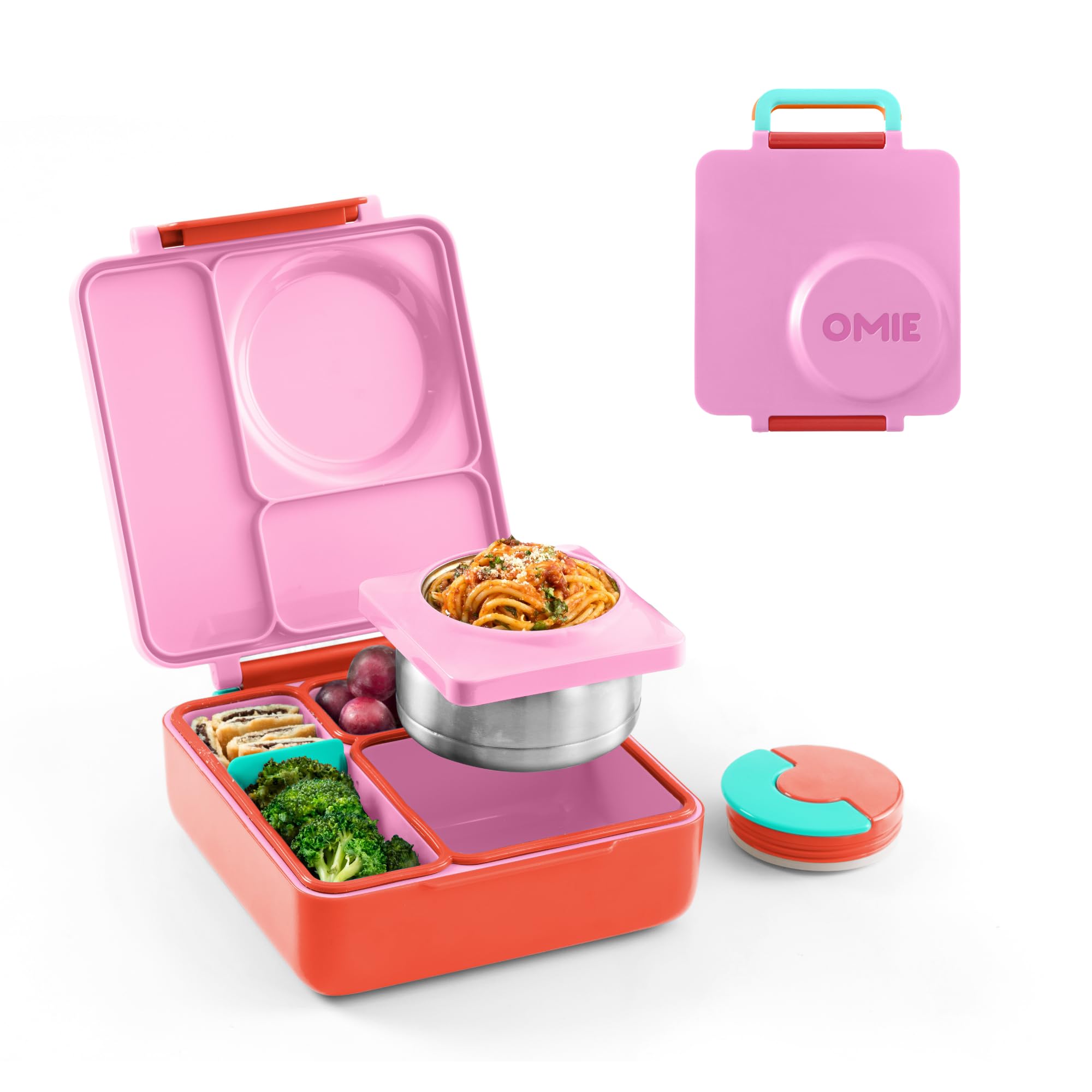
The OmieBox is for the child who will not eat a cold lunch. A stainless food jar drops into its own well in the tray and keeps soup or pasta warm while the two compartments beside it stay cold, two temperatures in one box, which nothing else here does.
For a picky eater, that is worth the price of entry. The box comes apart completely, lid, tray and seals, so a dropped lunch gets a proper wash rather than a wipe, and the silicone seals can be replaced when they wear out, which is unusual in a kids’ box. At 1.8 pounds it is heavy for its size, though it is carried by a handle rather than worn.
The lid needs a firm press to seat, and younger children will want an adult to check it is shut before it goes into a backpack. It is also hand wash only, with several parts to take apart. If your kid happily eats a cold sandwich, a simple bag is less fuss and less money; if lunch comes home untouched, this is the one that changes that.
Pros
- Food jar keeps one dish warm
- Tray and seals come apart for cleaning
- Replaceable seals extend the box’s life
Cons
- Younger children struggle to snap the lid shut
- Hand wash only, with several parts to remove
Worth it for a kid who wants warm food: hot and cold compartments in one box that comes apart to clean.
Best for Spare Bag
Lifewit 12-Can Lunch Bag

Key Features
- Weight: 10.6 oz
- Capacity: 8.5 liters
- Compartments: 1 plus front pocket
- Stated cooling: 4.5 hours
- Price: Budget
This is the cheapest bag in the group, and it is the one we hand to people who want a second bag: for the office drawer, the car, or a kid’s after-school snack run.
Ten inches by 6.7 by 8, one main compartment, a zipped front pocket and two side pockets. That is enough for a container, a sandwich, a couple of cans and a bottle in the mesh pocket, and the wide two-way zip lets you open the whole lid rather than fish through a slit. The PEVA lining wipes out cleanly after a spill, and the whole bag weighs next to nothing.
The trade is build. The walls are thin enough that the bag collapses flat when empty, and the straps and handles are the part to watch; a bag in this class is a year-or-two purchase rather than a decade one. Treated as a spare, a beach bag or a second bag for the office, it is hard to argue with.
Pros
- Roomy main compartment takes 12 cans
- Front zip pocket and two side pockets
- Lining wipes clean after a spill
Cons
- Straps and handles are the weak point
- Thin insulation relies on an ice pack
The bag to buy as a spare: roomy, light and cheap, as long as you do not expect years of daily commuting.
Best for Reheated Leftovers
shell and turtle Bento Box

Key Features
- Care: Microwave and dishwasher safe
- Capacity: 1200ml / 40oz
- Includes: Utensils, sauce jar, four liners
- Compartments: 4
- Price: Budget
This is not a bag. It is a 40-ounce lidded tray with four compartments, and that is the point: it is the one thing here that goes in the microwave and then into the dishwasher.
The layout suits leftovers. A large section for a main, two smaller ones for sides, one more for fruit, with silicone gaskets under the lid and four locking buckles around the edge. It ships with a fork, a spoon, a sauce jar and four silicone muffin liners, all in BPA-free polypropylene.
Where it falls short is everything a bag does for you. There is no insulation of its own, so it needs a bag and an ice pack around it, and the plastic hinges and side snaps are the first parts to break. Judged as a desk container for food you plan to reheat, it is the best value in this group.
Pros
- Microwave and dishwasher safe
- Four compartments keep foods separate
- Utensils, sauce jar and liners included
Cons
- No insulation; needs a bag and an ice pack
- Sauce jar and small compartments can leak
Buy it for leftovers you plan to reheat: four compartments, a microwave-safe tray and dishwasher cleanup, with a bag sold separately.
How We Tested the Best Lunch Boxes
We started by surveying the field — soft-sided bags, compartment-style bento boxes, and hard-sided coolers — and filtered out anything with a gasket we couldn’t remove, a capacity too small to hold a sandwich plus a side, or a price that put it far above the rest for no clear gain. That left 14 boxes, which we rotated through four months of weekday lunches.
Each one got the same two opening tests. We filled it with hot broth, sealed it, and turned it upside down over a sheet pan for 20 minutes, then repeated the exercise with a thin vinaigrette, which finds gaps that broth won’t. For cold retention, we packed a lunch with a frozen gel pack at 7 a.m., left the box in a backpack in a warm car, and took the internal temperature at noon with an instant-read thermometer.
After that we simply used them. Boxes rode in backpacks on commutes, sat in desk drawers and classroom cubbies, bounced around in a truck console, and got carried to park benches. We noted whether the lid gasket came out in one piece and went back in without a fight, whether the box fit on a dishwasher’s top rack and how long a full hand wash took, what each one weighed loaded with a sandwich, fruit, and a drink, and whether the compartments still looked like themselves after a week of tomato sauce.
Durability and value got the last word. We opened and closed every latch dozens of times a day for weeks, dropped each box from counter height onto tile, and checked hinges for wobble. We also compared price against usable capacity, since a box that claims to hold five cups but only fits three once the ice pack is in isn’t much of a bargain.
How to Choose a Lunch Box
The decision that shapes everything else is how long your food sits away from a fridge; size, closure and cleaning come after that.
Start with the hours, not the insulation
Insulation slows heat, it does not stop it. A thin bag with a cold pack beats a thick bag without one, and every stated cooling time assumes a full bag and a cold start. For a lunch that leaves the fridge at eight and gets eaten at noon, an ordinary insulated bag and a freezer block are enough. Past four or five hours, buy for ice capacity: either room for a proper pack or gel sealed into the walls, as on the PackIt.
A frozen water bottle does the same job and saves space inside the bag. Whatever you use, put it against the food that spoils first rather than loose in a pocket.
Size it to the day, not to the shelf
Eight to nine liters takes one person’s lunch: a container, a sandwich and a drink. Fifteen liters and up covers a full day, several bottles or meal prep, and the double-deck bags reach that volume by unzipping a top section. Liters make these bags sound alike; your actual containers do not. Check the internal width against the widest thing you own, because a nine-inch glass dish needs an opening to match.
The trap is footprint. A 23-liter bag takes up the shelf space of a small cooler in a shared office fridge, and a tall bottle-friendly bag often will not slide into a child’s backpack.
Soft bag or lidded container
These are different tools. A soft bag carries whatever containers you already own and adds insulation, but it gives no structure and nothing inside it can be reheated. A lidded tray like the shell and turtle portions food, survives the dishwasher and goes in the microwave, but it has no insulation of its own and needs a bag around it. If you pack sandwiches and a drink, buy the bag. If you pack leftovers you want hot at noon, buy the container first and the bag second.
Closures and straps fail first
The fabric on these bags rarely wears out; the zip, the strap stitching and the hinge do. A two-way zip with a substantial pull, a strap sewn with more than one line of stitching and a bag that holds its shape when empty are the details we check before anything else. On a rigid box, look at how the lid fastens: a snap that a small child has to force is one that comes home half-closed.
Frequently Asked Questions
Can I put my lunch bag in the washing machine?
No. These bags are hand wash or wipe clean only, and a machine cycle breaks down the seam sealing and the foam that does the insulating. Empty it, wipe the lining with warm soapy water, and leave it open and upside down until it is completely dry before the next use. On the container side, the shell and turtle tray is the one here that is dishwasher safe.
How do I stop a leaky container soaking the bag?
The bag’s lining usually is not the culprit; the container lid is. Press each gasket flat and check it is seated before you fill anything wet, carry the box level rather than on its side, and put the wettest food in the largest compartment where there is more headroom. If the bag has a zipped front pocket, that is the place for a sauce pot you do not trust.
Can I microwave my lunch box?
Only the parts labeled microwave safe. The shell and turtle tray is microwave and dishwasher safe; insulated bags, freezable gel walls and stainless food jars are not, and the OmieBox food jar should stay out of the microwave entirely. Decant hot food into a microwave-safe container, and never heat a sealed lid, because the pressure has to escape somewhere.
Final Verdict
The MIYCOO is the lunch box we recommend to most people, because it fixes the two things that actually ruin a packed lunch: a lining that lets liquid through a seam, and not enough room for a full day. It does that without the weight of a cooler.
Two alternatives are worth naming. If you want cold food without remembering ice packs, the PackIt freezes itself overnight. If your bag rides in a truck or a tool crate, the Carhartt outlasts everything here. Otherwise, start with the MIYCOO.