This post contains affiliate links. We may earn a small commission when you buy through our links — at no extra cost to you.
For years my cabinet held a leaning tower of washed-out takeout containers, and every one of them failed the same test: keeping soup where I put it. A good lunch container holds enough food to get you to dinner, seals tightly enough to survive a sideways commute, and comes back clean after a hundred dishwasher cycles. Over the past six months, my team and I have packed, shaken, dropped, and rinsed 14 of them.
Here’s the thing I didn’t expect: value has less to do with price than with lid fit. A cheap container that clicks down evenly on all four sides will outlast a pricey one whose seal starts weeping by February, and size matters in a way the packaging never explains — the container that fits your actual lunch is the one that gets used. The picks below earned a permanent spot in my cabinet.


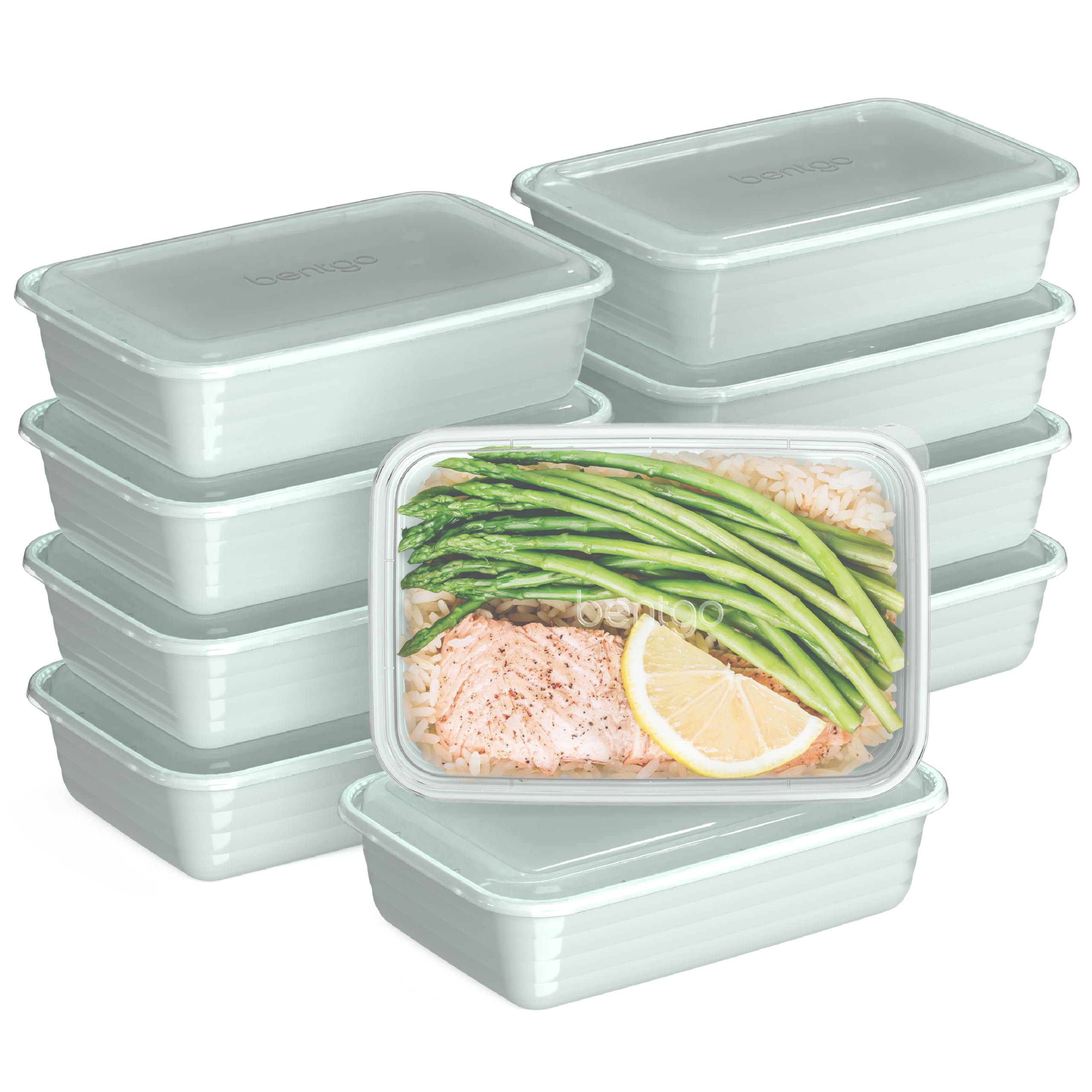

Best for Everyday Lunch Packing
Rubbermaid Brilliance 3.2-Cup Set
Key Features
- Seal: Airtight gasket with clip latches
- Set size: 5 containers, 10 pieces
- Microwave: Built-in vent, lid on
- Capacity each: 3.2 cups
- Price: Midrange
The lid is the reason this set is our top pick. A thick silicone gasket sits in a channel around the rim, two clip latches press it down hard, and the result is a box we trust with a bowl of chili in a bag that gets swung onto a train seat. There’s a vent in the lid as well: flip it open, leave the latches up, and the container reheats without spatter and without a plate balanced on top.
The Tritan body is properly clear, so leftovers are identifiable from the fridge shelf instead of by opening four lids in a row, and it shrugs off the staining that turns cheaper plastic orange after a tomato-sauce week. The rectangles stack, they ride in a lunch bag on their side, and the flat base sits still on a desk while you eat out of it.
Release the vent before you pull the latches. A full container grips the lid hard, and the vent breaks the vacuum — worth knowing if your hands are stiff, because the latches want a firm pull either way.
Five containers is a working week: cook on Sunday, eat through Friday, wash the lot in one go, and the lids go back on the bases they came off. It’s the set that quietly retires the drawer of mismatched tubs nobody can match to a lid.
Pros
- Gasket and latches hold liquids in a bag
- Built-in vent for lid-on microwaving
- Clear Tritan resists stains and odors
- Stacks in the fridge and the cupboard
Cons
- Plastic can crack after months of use
- 3.2-cup size is small for big appetites
Our top pick for anyone carrying lunch to work: the gasket and latches keep sauce in the box, and the vent makes reheating there painless.
Best for Entree Plus Side
Rubbermaid Brilliance 2-Compartment Set
Key Features
- Seal: Airtight gasket with clip latches
- Set size: 5 containers, 10 pieces
- Compartments: 2 per container
- Capacity each: 2.85 cups
- Price: Midrange
Rice on one side, chili on the other, and no orange tide line between them by noon. That’s what the divider in these Brilliance meal-prep boxes buys you, and it’s why we reach for them over a single-compartment container whenever the meal has a sauce in it.
You pay for the split in shape. The divider is molded in, so there’s no collapsing it to fit a whole sandwich, and each box holds less than our top pick. We think that’s a fair trade for a lunch built from two components — a generous portion of the main, the rest for rice, salad or roast vegetables — and the same gasketed, latched lid keeps every bit of it where you put it.
One detail that surprised us: the lids are sized to fit any Brilliance container of the same footprint, whatever the material, so a top doesn’t have to be matched to its base. Buy this one for structure; buy the single-compartment set when your lunch is one big thing.
Pros
- Two compartments keep sauces in their place
- Same airtight latched lid as our top pick
- Lids interchange across same-size Brilliance bases
- Clear bodies make leftovers obvious
Cons
- Fixed divider rules out one large space
- Less total capacity than our top pick
If your lunch is a main plus a side, the divider earns its keep; this is the set we hand to anyone tired of sauce-flavored rice.
Best for Oven-To-Table Lunches
C CREST 10-Pack Glass Set
Key Features
- Material: Borosilicate glass
- Set size: 10 containers, 10 lids
- Oven safe: Up to 700°F
- Capacities: 12 oz and 34 oz
- Price: Premium
Five 12-ounce boxes and five 34-ounce boxes, and that split is the most useful thing about this set. The big one takes a full dinner; the small one takes the yogurt, the cut fruit or the handful of nuts that would otherwise ride loose in the bag.
Borosilicate glass means freezer, microwave and oven with the lid off — the listing puts the oven ceiling at 700°F, enough for reheating and a bake, not for the broiler. What it gives back is a surface that doesn’t hold a curry smell and doesn’t stain orange after a week of tomato sauce, and a box you can serve from at the table without decanting.
The pairing is what we keep coming back to. A lunch that size in glass is a rare thing, and the small boxes mean the sides travel too, instead of being left in the fridge because there was no container for them. Ten boxes is roughly a week of lunches if you cook twice, and the nesting stack takes less cupboard space than the count suggests.
Pros
- Two sizes cover mains and sides
- Oven, microwave, freezer and dishwasher safe
- Glass doesn’t stain or hold odors
- Gaskets lift out for thorough cleaning
Cons
- Heavy to carry in a lunch bag
- Lid gaskets can lift out of their channel
The glass set we recommend: two sizes that cover a whole meal, and a surface that never keeps last night’s curry.
Best for Kids’ School Lunches
Bentgo Easyboxes 4-Pack
Key Features
- Care: Dishwasher, microwave, freezer
- Set size: 4 containers
- Compartments: 3 per container
- Capacity each: 5 cups
- Price: Budget
The lid is where a kids’ lunch box is won or lost. These have broad tabs that small hands can catch, and the top presses back on with a push rather than a wrestling match — the difference between a lunch a child eats and a lunch that comes home untouched.
Three compartments do the rest: a sandwich or a wrap across the wide section, two wells for fruit, crackers, cheese or vegetable sticks. The set of four covers a school week with a spare, the boxes fit standard soft lunch bags, and they come out of the dishwasher ready to pack again. They’re a good deal heavier than the take-and-toss trays they resemble, which is the point — these are meant to come home.
They are not sealed. Anything wet — applesauce, yogurt, a dressed salad — goes in a small lidded cup set down into one of the wells, and the rest travels fine. That caveat accepted, this is a lunch box a child can operate independently, which matters more on a Tuesday morning than any spec on the listing.
Pros
- Tabbed lids a child can open alone
- Three compartments keep foods apart
- Four boxes cover a school week
- Dishwasher, microwave and freezer safe
Cons
- No gasket, so wet foods migrate
- Lids can crack with heavy use
For school lunches, the tabs are what sell it: a lid a child can open alone, three sections, and four boxes for the week.
Best for Weekly Meal Prep
Bentgo Prep 20-Piece Set
Key Features
- Care: Top-rack dishwasher, microwave
- Set size: 10 trays, 10 lids
- Portioning: Embossed measurements
- Capacity each: 4 cups
- Price: Budget
Ten trays, ten lids, four cups each, with measurements embossed up the inside wall. Fill five on Sunday evening and the working week’s lunches are done; the other five stay stacked for the next round or go into the freezer loaded.
A four-cup tray is generous enough that a portion doesn’t look mean — a chicken thigh, rice and greens fit without piling above the rim — and the flat lids stack squarely, so ten of them fill a freezer drawer in a way round containers never do. They’re PFAS- and BPA-free, they reheat, and the trays come out of the top rack clean.
The lid is a thin snap-on top with nothing behind it, so it holds for the fridge, the microwave and a flat ride in a tote, but it isn’t the box for soup or a leaky coleslaw. Treat the tops gently and hand-wash them if you want them to last; the trays themselves will outlive several lids. For the money, that’s a compromise we can live with.
Pros
- Embossed measurements take the guesswork out
- Four-cup trays hold a real meal
- Ten trays cover a week of lunches
- Flat enough to stack ten deep
Cons
- Lids crack before the trays do
- One compartment, so foods mix
The cheapest route to a week of portioned lunches — carry it flat and don’t expect it to hold soup.
Best for Big Appetites
Kitch’nMore 38 oz 30-Pack
Key Features
- Material: BPA-free polypropylene
- Set size: 30 containers, 30 lids
- Compartments: 1
- Capacity each: 38 oz
- Price: Midrange
Thirty-eight ounces is not a lunch portion; it’s a dinner plate with a lid on it. We think that’s exactly what plenty of people need — one deep container that takes protein, starch and vegetables without stacking or squashing — and this set gives you thirty of them.
The seal surprised us. These are thin-walled polypropylene boxes with a snap lid, and the lid presses down hard enough that a container turned on its side in a bag stays put. They stack in the freezer, the whole thing goes through the dishwasher without the corners going white, and because the plastic is black it doesn’t advertise last week’s bolognese.
Where it fits against the rest of this group is straightforward: the Brilliance sets are better commuters, because a latch beats a snap when a bag gets thrown around, and these are better for the freezer, the batch cook and the person who genuinely eats 38 ounces at midday. If you have been splitting one dinner across two smaller boxes, stop.
Pros
- 38 ounces holds a full dinner
- Lids seal well enough for a bag
- Survives the dishwasher without cracking
- Black plastic hides stains
Cons
- One compartment, so foods mix
- Thirty containers need storage space
For big appetites and batch cooking, this is the one: 38 ounces, a lid that stays put, and thirty of them.
Best for Uniform Glass Portions
KOMUEE 30 oz Glass 10-Pack

Key Features
- Care: Oven, microwave, freezer safe
- Material: Borosilicate glass
- Set size: 10 containers, 10 lids
- Capacity each: 30 oz
- Price: Premium
One size, ten times over. Ten 30-ounce glass rectangles, one lid design, no hunting for the match at the end of a Sunday prep session — which sounds trivial until you’ve spent ten minutes pairing lids to bases across four different shapes.
The glass is borosilicate, so freezer, microwave, dishwasher and oven are all fine with the lid off, and it’s thick enough to feel solid without turning a tote into a gym weight. Clear sides mean you can see what’s in the fridge without lifting anything out, which is more of a convenience than it sounds when six of them look identical.
Closing one takes a sequence: press the corners in order rather than pushing the middle and hoping. Get it right and the seal holds through a commute; the snap locks are firm, and the four-sided press is what makes them airtight rather than merely closed.
Ten identical boxes is a specific pleasure — a fridge shelf of the same shape, a stack that doesn’t wobble, one lid that fits everything. If your lunches are a single portion of the same size most days, that uniformity is worth more than a set with four shapes and a lot of very small containers.
Pros
- Uniform 30-ounce portions stack neatly
- Oven-safe borosilicate glass
- Clear sides show contents at a glance
- Ten containers cover a full week
Cons
- Seal rings can lift out of the lid
- No small containers for sides
A uniform set of ten glass containers for anyone who wants one size, one lid, and a lunch that can go in the oven.
Best for Sharing and Bulk
PROMOZE 28 oz 50-Pack

Key Features
- Material: BPA-free polypropylene
- Set size: 50 containers, 50 lids
- Compartments: 1
- Capacity each: 28 oz
- Price: Budget
Fifty containers, one compartment each, 28 ounces. This isn’t the box you carry to work every day; it’s the one you buy when food leaves the house — holiday leftovers going home with guests, a month of freezer meals, a pot of soup for the neighbor.
The size is the useful part. Twenty-eight ounces takes a full portion of stew, rice or roast chicken with room at the top, they stack in a freezer drawer, and they’re microwave, freezer and top-rack dishwasher safe, so a batch cook can go from stove to storage without washing anything by hand.
The seal is a press fit rather than a gasket, so a container that ends up on its side in a soft bag can weep. None of that matters for a box heading into a fridge or a freezer; it matters if you plan to commute with it, and that’s the line we’d draw — except we don’t draw lines we don’t need, so here it is plainly: keep these upright.
We keep a stack of these for the freezer and for food going out the door, and we keep a latched container for the bag. If you cook in batches and hate shopping for containers twice a year, fifty is a season’s supply, and losing one to a friend costs you nothing.
Pros
- Fifty containers cover a big batch cook
- 28 ounces fits a full portion
- Stacks in the fridge and freezer
- No loss when one doesn’t come home
Cons
- One compartment, so foods mix
- Thin lids crack at the corners
A bulk supply for leftovers that leave the house, not the container you carry to work every day.
How We Tested 14 Lunch Containers Over Six Months
We started by pulling together roughly 40 lunch containers from brands we’d used before and ones that kept surfacing in customer reviews, then narrowed by capacity, lid mechanism, material, and price — the final 14 ranged from small snack sizes to full entrée boxes. Anything with a pattern of lid-crack complaints in its review history got cut before testing. Each container went home with a tester and lived a normal week: Sunday meal prep, weekday commutes, office fridges, microwave reheats, and the dishwasher.
Leaks got the most attention, because that’s what ruins a bag. We filled each container with broth and thin curry, sealed it, turned it upside down in a tote for a full minute, then shook it and checked the rim for beading. Later we repeated the whole thing with a vinaigrette-heavy salad and cut watermelon, since thin liquid and juicy food fail differently. We also dropped each one from counter height onto concrete and refilled it to see whether the lid or its hinges had shifted.
For lids, we noted whether closing took two hands and a flat surface or snapped shut one-handed at a desk, whether the tabs lined up without hunting, and whether the lid still seated after 30 dishwasher cycles. Size and value came down to cost per use: we tracked which containers fit a real lunch and got grabbed every morning, and which ones sat in the cabinet because they were a quarter-inch too tall for a work bag.
How to Choose Lunch Containers
Buy for the worst thing you’ll put in the box — a curry, a dressed salad, a soup — because that one question about sealing sorts most of this category into yes and no.
Start with the seal, not the box
Two different things get called leak-proof. A lid with a silicone gasket pressed down by latches or four-sided snaps will hold liquid through a commute; a lid that simply presses on will hold a sandwich and not much else. The second question is whether the seal covers the compartments or just the outside. A three-section bento with one lid and no gasket between the wells keeps your apple away from your sandwich, not your dressing away from your rice. If soup or a dressed salad is ever in the bag, require a gasket.
Capacity and compartments: match the lunch you actually eat
Single-portion containers here run from about 2.85 to 3.2 cups, with the biggest single-compartment boxes up to 38 ounces. Dividers come out of that total rather than adding to it, so a three-compartment tray gives you a section per food, not three full portions. If your lunch is one big bowl of something, a single compartment wastes nothing; if it’s a main and a side, the split is worth the lost volume. Think about the plate you build at home, then buy its shape.
Plastic or glass
Glass buys an oven-safe box, a surface that doesn’t hold curry smell, and no staining. It costs weight and a little care: ten glass containers make a loaded tote, and the lids still need looking after. Plastic buys lightness, vents for reheating with the lid on, and in the better sets a genuinely tight seal; it costs longevity, because plastic is the thing that eventually cracks. If you commute on transit, plastic earns its place. If you drive to work and reheat properly at home, glass does.
The lid is the part that wears out
Nearly every long-term complaint in this category is about the lid, not the box: thin tops split at the corners, gaskets lift out of their channel, and a container that sealed in March weeps by September. Heat is the usual culprit, so read the dishwasher instruction — most of these lids are top-rack only, and several last considerably longer washed by hand. Run a finger around the gasket before a container goes into a bag; a ring that has lifted out of its groove is not sealing, however firmly the latches close.
How many containers do you need
Five covers a five-day week if you cook once. Ten lets you cook twice, keep a clean spare, or leave one at the office. Thirty is for batch cooking, freezer stock, or food that leaves the house and doesn’t come back. Count the days you actually pack before you buy — a fifty-pack is only a good deal if you have somewhere to put fifty containers.
Frequently Asked Questions
Is it worth buying lunch containers instead of reusing takeout boxes?
Yes, if you carry lunch more than once a week. Takeout boxes are thin, their lids are not gaskets, and they are designed for one trip. A reusable set with a latched lid survives hundreds of washes, doesn’t pick up a smell after two curries, and, most importantly, keeps sauce out of your bag.
Start with five containers that seal properly rather than a bulk pack of thin ones; add the cheap stack later, once you know how you pack.
Can I freeze soup or stew in lunch containers?
Yes, with about an inch of headspace. Liquid expands, and a container filled to the rim will bow, split, or push its lid off in the freezer.
Glass is fine for freezer storage but dislikes sudden temperature change, so thaw it in the fridge rather than moving it straight into a hot oven. Shallow containers freeze faster and stack better than deep ones.
How do I get curry stains and smells out of plastic containers?
Rinse before the sauce dries; that is most of the battle. For a stain that has set, a paste of baking soda and water left on for an hour and then washed as usual lifts most of it, and white vinegar does the same job for smells.
Dark and black containers hide staining better than clear ones, which is worth remembering if tomato and turmeric are regulars in your kitchen.
Final Verdict
The Rubbermaid Brilliance 3.2-cup set is what we point most people to. The latched gasket is the difference between a lunch you carry and a lunch you clean up, the vent means you reheat in the same box, and five of them map onto a working week.
Choose the C CREST glass set instead if you want to go from freezer to oven and never smell last night’s curry in a container again — it costs you weight and the occasional gasket reseat. If your appetite runs bigger than 3.2 cups, Kitch’nMore’s 38-ounce boxes are the ones.