This post contains affiliate links. We may earn a small commission when you buy through our links — at no extra cost to you.
Enameled cast iron promises the heat retention of raw iron without the seasoning hassle. But many buyers discover within weeks that the enamel chips on edges or food fuses to the surface, turning a promising pan into a frustration. That’s especially true for budget models that borrow premium looks without the same enamel thickness.
The real challenge isn’t finding an enameled skillet—it’s finding one that lasts through regular use and matches how you actually cook. A 10-inch pan may look generous on the shelf but often fits only a single chicken breast, while a 12-inch pan adds meaningful surface area at the cost of significant weight. And no matter the price tag, enameled cast iron is not nonstick; eggs and starches require generous fat or careful technique.
This guide cuts through the marketing to help you pick the skillet that fits your stovetop, your strength, and your tolerance for maintenance—so you get the heat without the headaches.



Best for Serious Cooks
Le Creuset 11.75" Skillet
Key Features
- Diameter: 11.75"
- Weight: 6.8 lbs
- Oven Temp: 500°F
- Induction: Yes
- Price: Luxury
Consistent heat distribution across the cooking surface makes this skillet a strong performer for searing, sautéing, and frying. The black satin enamel interior resists staining and cleans up easily, while the cast iron body holds heat steadily for even browning. Oven-safe up to 500°F, it transitions from stovetop to oven without issue.
This skillet is built for cooks who prioritize even heat and long-term durability over nonstick convenience. Food sticks notably to the surface, especially eggs and starches—proper oil and preheat technique helps, but it is not a nonstick pan. The premium price reflects the build quality and enamel longevity; budget-conscious buyers will find more affordable alternatives. Occasional enamel chipping has been reported, but the overall construction holds up well under regular use.
Pros
- Heats evenly and holds temperature well for consistent searing and sautéing.
- High-quality enamel resists staining and cleans up easily, maintaining appearance over time.
- Attractive design that remains visually appealing after years of use.
Cons
- Food sticks to the cooking surface, particularly eggs and starchy foods.
- Enamel chipping has occurred in some units, affecting appearance and potentially performance.
For cooks who want a lifetime skillet with precise heat control and are comfortable with a non-nonstick surface, this is a top-tier choice.
Best for Small-Space Cooks
Paris Hilton Heart Skillet
Key Features
- Diameter: 10"
- Weight: 4.84 lbs
- Oven Temp: 500°F
- Induction: Yes
- Price: Budget
The heart-shaped skillet delivers cute, functional cookware for small portions. Its 10-inch surface handles pancakes, eggs, and single-serving bakes with even heating and a sturdy feel. The 4.7 rating reflects broad satisfaction, but chipping along the heart’s edges can occur over time.
This skillet suits gift buyers seeking a budget-friendly novelty that works, and singles or couples who prioritize style over a large work surface. For anyone needing a daily driver for family meals, the limited size and chipping risk make the top pick a better investment.
Pros
- Heart shape adds a playful, aesthetic touch to kitchen and table.
- Sturdy cast iron construction feels substantial for the price.
- Suitable for baking, searing, and serving small dishes.
Cons
- The heart shape reduces usable cooking area, limiting portions to 1-2 servings.
- Enamel on the edges may chip over time, a tradeoff at this price point.
Best for buyers who value novelty and don’t need a high-use workhorse—this skillet delivers on charm and basic cooking, not long-term durability.
Best for One-Pot Meals
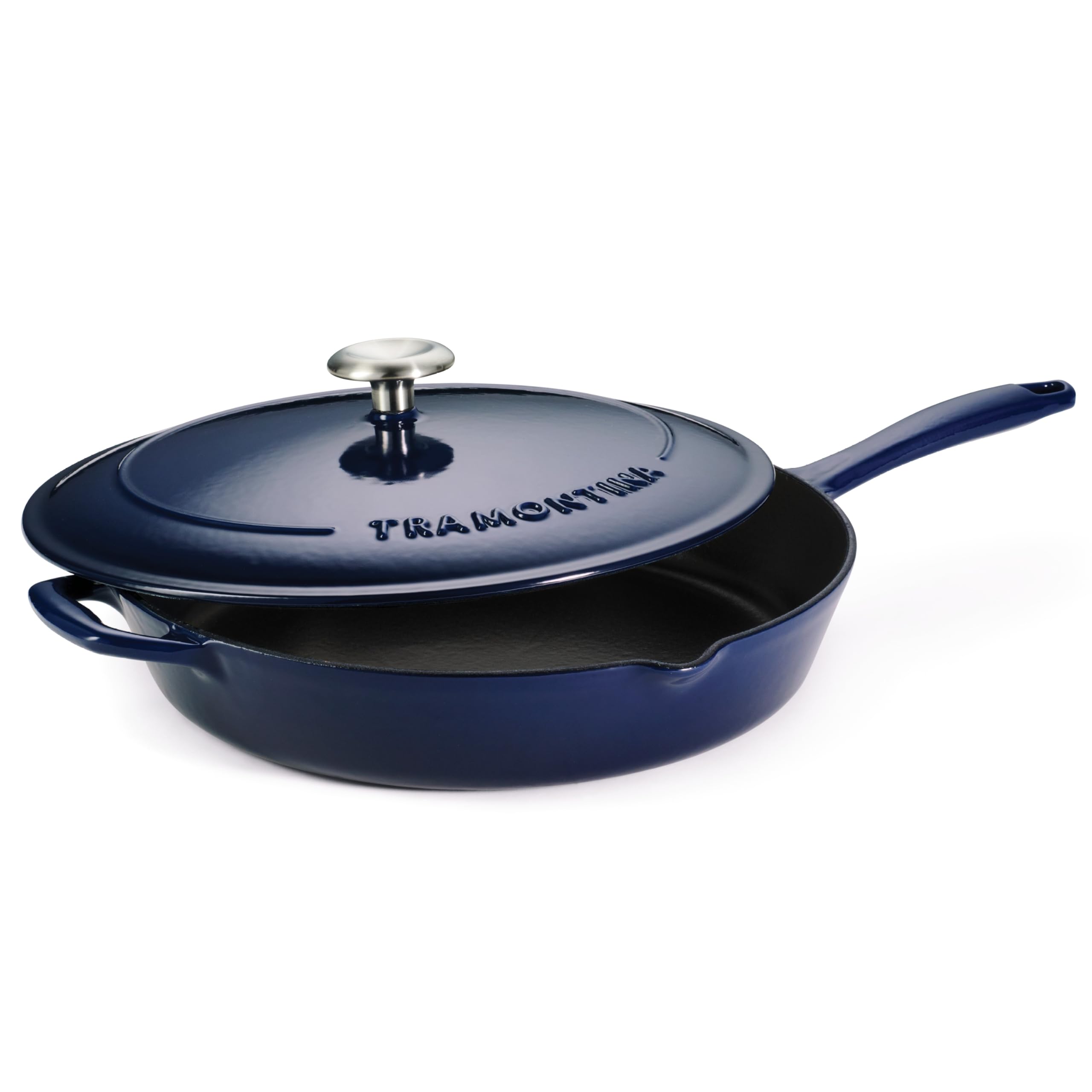
Tramontina 12" Skillet w/Lid
Key Features
- Diameter: 12"
- Weight: 12.57 lbs
- Oven Temp: 450°F
- Induction: Yes
- Price: Mid-Range
The Tramontina Bestow delivers a 12-inch cooking surface and a self-basting lid, giving home cooks a capable setup for braising, searing, and one-pot meals without spending Le Creuset money. Heat distribution is even, and the blue enamel finish looks good on any stovetop.
Ideal for cooks who want a full-size skillet with a lid for long simmering or oven finishing (up to 450°F) and don’t mind the heft. That weight—over 12.5 pounds—makes one-handed tilting or pouring a strain, and the enamel can chip under hard knocks or thermal shock. This pan suits steady stovetop use, not rushed handling.
Pros
- Even heating and strong searing performance across the entire surface.
- Included lid with self-basting ridges, useful for braising and reducing simmer time.
- Attractive enamel finish and solid build at a mid-range price.
Cons
- Enamel may chip over time, especially if knocked or heated empty.
- At over 12.5 pounds, lifting or pouring with one hand is difficult in daily use.
If you need a large skillet with a lid for braising and don’t mind the weight, this is a cost-effective alternative to premium brands—just handle it with care to protect the enamel.
Best for Budget Families
Crock-Pot 12" Skillet
Key Features
- Diameter: 12"
- Weight: 8.5 lbs
- Oven Temp: 500°F
- Induction: Yes
- Price: Budget
The Crock-Pot 12-inch skillet offers a generously sized cooking surface at a budget-friendly price, making it an accessible option for those wanting to try enameled cast iron without a big investment. Heat distribution is even for the price, and the pan looks good on the stovetop. However, food sticks without ample oil, and enamel chipping has been noted in some cases — this skillet suits occasional, well-oiled cooking rather than daily heavy use. At 8.5 pounds, it is heavier than many alternatives, but manageable for someone who doesn’t need to flip the pan often.
Pros
- Even heat distribution for the price point.
- Attractive design with multiple color options.
- Easy to clean with proper hand-washing care.
Cons
- Food sticks noticeably; this is not a nonstick surface and requires generous oil.
- Enamel chipping may occur with less careful handling or over time.
A large, affordable skillet for light, oil-friendly cooking — best suited for budget-conscious buyers who can handle gentle care and don’t mind adding extra fat.
Best for Brand Loyalists
Staub 10" Fry Pan

Key Features
- Diameter: 10"
- Weight: 6.17 lbs
- Oven Temp: 500°F
- Induction: Yes
- Price: Premium
Staub’s 10-inch fry pan delivers the brand’s signature build quality and a striking dark blue enamel finish that looks at home on any table. The textured interior excels at searing meat but can cause sticking with eggs or starches — a tradeoff for that searing performance. Long-term enamel durability is less documented than the competitor, making this a niche pick for design-focused buyers who already own Staub pieces.
Pros
- Premium craftsmanship and materials throughout.
- Stunning dark blue enamel finish that complements any kitchen.
Cons
- When cooking delicate items like eggs, the textured interior can cause sticking.
Best for Staub loyalists who value striking looks and superior searing over nonstick ease and the broader durability track record of competing pans.
Best for Budget Beginners
Crock-Pot 10" Skillet

Key Features
- Diameter: 10"
- Weight: 4 lbs
- Oven Temp: 500°F
- Induction: Yes
- Price: Budget
The Crock-Pot 10-inch skillet is the most affordable enameled cast iron pan available. It heats evenly and cleans up easily with proper care. However, food can stick noticeably to the surface, even with enamel, and occasional chipping along edges may occur. This works for light, oily cooking but falls short for daily nonstick needs or heavy use.
Pros
- Affordable price for an enameled cast iron skillet.
- Even heat distribution and good cooking performance for the cost.
Cons
- Food tends to stick to the enamel surface, requiring generous oil for nonstick cooking.
Best suited for occasional, oily cooking where the low price outweighs the need for nonstick performance.
Best for Budget Braisers
Amazon Basics Casserole

Key Features
- Diameter: 12.4"
- Weight: 12.24 lbs
- Oven Temp: 500°F
- Induction: Yes
- Price: Budget
This 3.3-quart covered round casserole delivers even heat retention for stews, roasts, and oven dishes at a price well under premium competitors. Its deep walls and 12.2-pound weight, however, make it impractical for shallow frying, sautéing, or any stovetop searing. Enamel chipping can occur over time, so gentle handling and hand-washing are recommended.
Pros
- Budget-friendly price with heat retention and appearance comparable to premium brands.
- Even heat distribution for slow cooking, roasting, and baking in the oven up to 500°F.
Cons
- Heavy and deep design limits use to casserole-style cooking; enamel chipping may occur with time or impact.
If you want an affordable covered casserole for braising and baking rather than a stovetop skillet, this is a solid choice.
Best for Deep Fryers
Cuisinart Chicken Fryer

Key Features
- Diameter: 12"
- Weight: 16.55 lbs
- Induction: Yes
- Price: Mid-Range
This deep cast iron pot delivers even heat for braising and one-pot meals, with a lid to trap moisture. The tradeoff: at over 16 pounds and with enamel that can chip, it’s not suited for everyday skillet frying – better for dedicated frying or braising.
Pros
- Even heat distribution for braising and deep frying with a self-basting lid.
- Attractive matte grey finish and solid construction.
Cons
- Enamel can chip after early uses, which may affect durability.
For home cooks who need a deep pot for braising or deep frying and can manage the weight, this is a cost-effective option.
How to Choose
The most important buying insight is that enameled cast iron skillets are not nonstick, and enamel durability varies significantly between budget and premium brands.
Enamel Quality and Durability
Enamel thickness and application quality determine how long the coating lasts before chipping. Budget brands often apply a thin layer that chips on edges after a few months of normal use, while premium makers like Le Creuset use a thicker, more evenly fired enamel that withstands years of high heat and scrubbing.
The difference becomes obvious around the rim and handle junctions—common chipping points. If you cook daily or plan to keep the pan for a decade, investing in a brand with a proven track record of enamel longevity saves money and frustration over time.
Size and Cooking Surface
A 10-inch skillet fits a single chicken breast or two eggs, but many buyers find it too small for two-person meals. A 12-inch adds nearly 40% more cooking area, enough for four servings or a full pound of bacon, but the trade-off is weight and storage space.
Consider your typical portion sizes and stovetop burner width. A 12-inch pan on a small burner will heat unevenly, wasting the extra surface. Match the pan diameter to your largest burner for consistent results.
Weight and Handling
Enameled cast iron is heavy by design—the material that holds heat also weighs on your wrist. A 6.8-pound skillet feels manageable for most adults, while a 12-pound pan becomes a strain when full of food. Lifting, pouring, and cleaning all become harder as weight increases.
If you have limited strength or cook frequently, prioritize a lighter pan (under 7 lbs) even if it means a smaller diameter. A pan you hesitate to use because of its weight is a poor investment regardless of performance.
Oven Safety
Most enameled cast iron skillets are oven-safe to 500°F, but some budget models cap at 450°F. This matters if you plan to sear on the stovetop and finish in the oven—a common technique for steaks and frittatas. A lower limit restricts your cooking methods.
Check the lid too if the skillet comes with one; lids often have a lower temperature rating due to the knob material. Replaceable metal knobs (common on premium brands) push the oven safety to match the pan.
Stovetop Compatibility
All the skillets in this guide are induction-compatible because cast iron is ferromagnetic. But the flatness of the base matters for induction performance. A warped or uneven bottom will buzz, wobble, and heat poorly. Quality control varies by brand—premium pans tend to have flatter, more stable bases.
On gas or electric, the same flat base ensures even contact. There’s no compatibility issue, but a very smooth enamel bottom may slide on glass-top stoves; look for a slightly textured base if that’s a concern.
FAQ
Why does my enameled cast iron skillet chip so easily?
Thin enamel application and poor edge coverage are the main culprits, especially on budget models. Even premium pans can chip if knocked against metal sinks or dropped. Hand washing and avoiding metal utensils help extend enamel life, but if chipping appears within weeks, it’s likely a manufacturing defect rather than user error.
Can I use metal utensils on enameled cast iron?
No—metal utensils will scratch and eventually chip the enamel surface. Use silicone, wood, or nylon utensils instead. The enamel is glass-like and hard but brittle; a sharp metal edge can cause small fractures that spread over time. One scratch won’t ruin the pan, but consistent use will accelerate wear.
Is a 10-inch skillet big enough for two people?
Barely, and only if you cook one portion at a time or shallow-fry small items like eggs and crepes. For two full servings of meat and vegetables, a 12-inch skillet provides the needed surface area. Many 10-inch buyers regret not sizing up, so measure your typical meal portion before buying.
What’s the best way to clean an enameled cast iron skillet without damaging it?
Let the pan cool completely, then hand wash with warm water, mild dish soap, and a non-abrasive sponge. Avoid steel wool or harsh scouring pads. For stuck-on food, boil a little water in the pan and scrape with a wooden spatula. Dishwasher detergents are too abrasive for enamel and will dull the finish over time.