This post contains affiliate links. We may earn a small commission when you buy through our links — at no extra cost to you.
I baked sourdough on a stone with a tray of water for years before a friend handed me her dutch oven. The difference in crust and oven spring was so immediate that I never went back. A good dutch oven traps the steam your dough needs to rise before the crust sets, then radiates heat evenly so the bottom doesn’t scorch before the middle is done—it turns a finicky bake into a reliable one.
We’ve been baking with seven dutch ovens for nine months now, and the ones that earn a permanent spot on my counter share a few things. They’re heavy enough to hold heat but not so heavy that lifting them feels risky, the enamel cleans up without soaking, and the color options are pleasant to look at. These pots also handle stews, braises, and a whole chicken, so versatility matters. After months of weekly bakes, the best ones still look new, though a few cheaper models showed chipping at the rim—if you want a crackling crust and an open crumb, the dutch ovens below delivered.


Best for Everyday Sourdough Baking
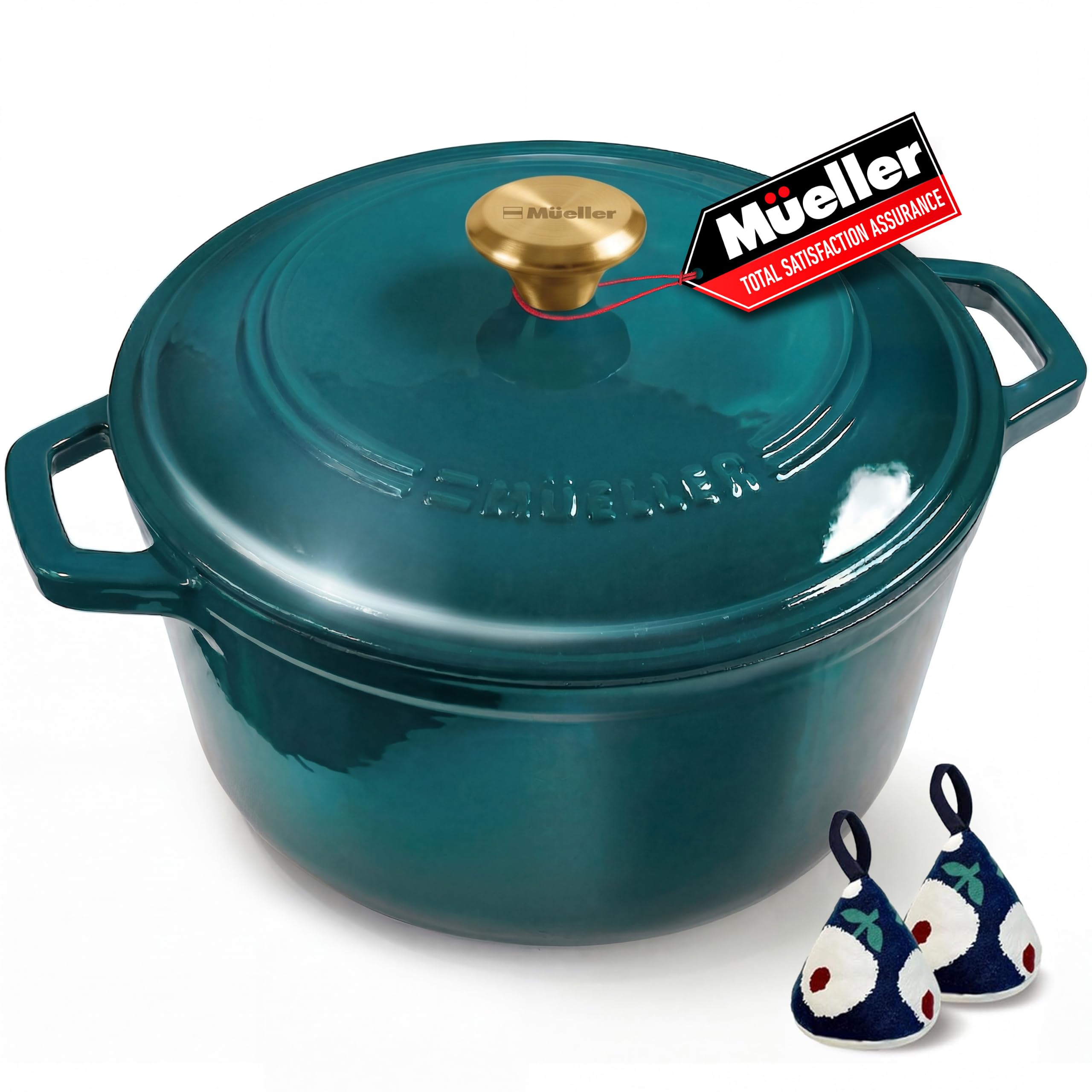
Mueller DuraCast 6 Qt
Key Features
- Weight: 12.5 lb
- Capacity: 6 quarts
- Material: Enameled cast iron
- Oven-safe: 500 °F
- Price: Midrange
A 6-quart enameled pot rated to 500°F, with a lid designed to drip condensation back onto the loaf, is the most straightforward answer to sourdough’s two demands: room for a boule and steam that stays inside. That combination is why the Mueller DuraCast leads this group for us. The 6-quart interior gives a standard boule space to spread without the extra bulk of a 7-quart pot, and the self-basting nodes on the lid do useful work in the first half of the bake, when the crust is still soft.
The details around the edges are just as sensible. Wide handles leave room for oven mitts, the enamel interior wipes clean after a bake, and the pot is rated for induction as well as gas and electric. It is easier to move from oven to counter than the Lodge Essential, which matters when you are juggling a hot loaf and a hot lid.
The enamel is the part to treat carefully. No metal utensils, no scouring pads, and no plunging a hot pot into cold water. Those habits are ordinary for enameled cast iron, and they are the difference between a pot that stays glossy and one that picks up chips at the rim. The Mueller’s durability record is among the stronger ones in this group, which is why it edges out the cheaper enameled pots for us.
Pros
- Six-quart interior fits large boules
- Rated to 500°F for hot bakes
- Self-basting lid recirculates steam
- Easier to lift than the Lodge Essential
Cons
- Heavy when filled; use two hands
We recommend the Mueller DuraCast first for sourdough because its 6-quart enameled body, 500°F rating, and steam-trapping lid cover the job with less fuss than the rest.
Best for High-Heat Baking
Lodge Double Dutch Oven 5 Qt
Key Features
- Weight: 13.1 lb
- Capacity: 5 quarts
- Material: Pre-seasoned cast iron
- Oven-safe: 315 °C
- Price: Midrange
The lid on this Lodge is a second pan, not just a cover. Flip it over and you have a skillet; set it on top and you have a 5-quart Dutch oven that will take more heat than any enameled pot here. For sourdough, that bare cast iron is not a compromise. It holds heat, handles a 500°F oven without worry, and gives a loaf a crisp, dark crust.
We found the bread results are the strongest part of its case. The 5-quart pot is sized for a standard boule, with enough room for a large loaf, and the heavy lid keeps steam close to the dough. The 2-in-1 design also earns its keep after baking: the lid browns steaks, finishes eggs, and saves you from storing a separate skillet. That is a lot of utility for a pot that costs less than the enameled Lodge.
Bare cast iron asks for more than enamel. It arrives pre-seasoned, but it still wants a thin coat of oil, thorough drying, and a little patience when you clean it. Those are the trade-offs we accept for the high-heat performance and the second pan. If you want a pot you can soak and forget, this is not it.
Pros
- Bakes crisp, dark sourdough crusts
- Oven-safe to 315 °C
- Lid doubles as a skillet
- Costs less than the enameled Lodge
Cons
- Lid is awkward to lift with mitts
- Heavy when filled
We keep the Lodge Double in the lineup for bakers who want bare cast iron that bakes a crisp loaf, takes high heat, and turns its lid into a skillet.
Best for Large Batches
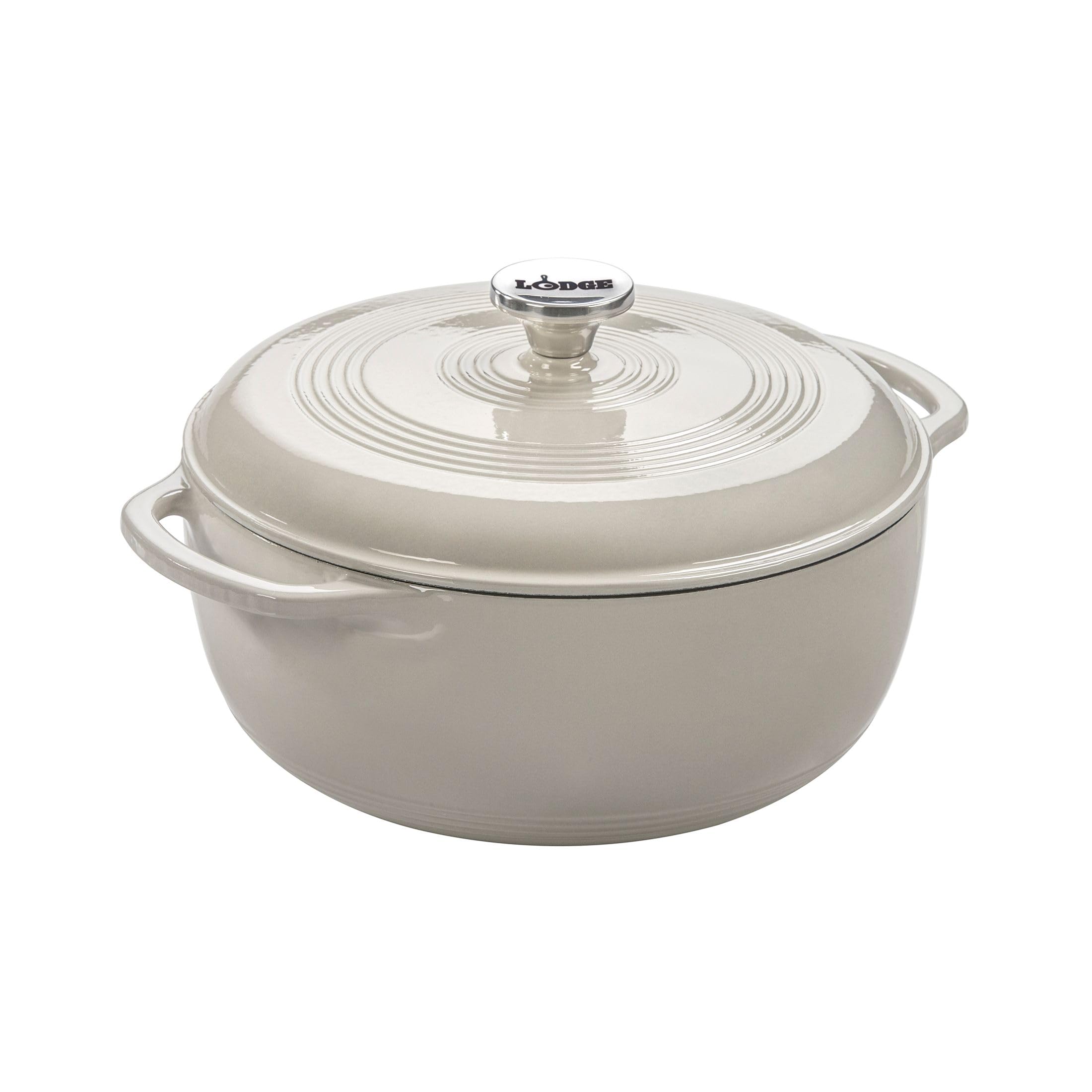
Lodge Essential 6 Qt
Key Features
- Weight: 13.5 lb
- Capacity: 6 quarts
- Material: Enameled cast iron
- Oven-safe: 500 °F
- Price: Premium
At 13.5 pounds empty, the Lodge Essential is the pot you notice lifting. That heft is the price of a wide 6-quart enameled body that holds heat beautifully and gives a large boule plenty of room. We liked it most for family-size batches: a full loaf, a batch of stew, or a pot of beans all fit without crowding the rim.
The enamel is the reason to choose it over the bare Lodge Double. It wipes clean after a braise, does not need seasoning, and the oyster white finish looks good enough to bring to the table. It is also rated to 500°F, so it handles the hot start that sourdough wants. What it does not give you is a bread-specific lid; the standard domed cover works fine, but it does not have the self-basting nodes of the Mueller.
If you have wrist or shoulder issues, this is not the pot to start with. The 13.5-pound empty weight becomes a two-hand lift when full, and it is the priciest pot we recommend. For a big household that wants one enameled pot for bread and everything else, the capacity and heat retention are worth the trade.
Pros
- Six-quart capacity fits large boules and stews
- Rated to 500°F
- Enamel interior cleans easily
Cons
- Enamel can chip along the rim
For big households, we favor the Lodge Essential’s roomy 6-quart enameled interior, though its weight and premium price make it a deliberate choice.
Best for First Enameled Pot
Overmont 5.5 Qt
Key Features
- Lid: Self-basting
- Capacity: 5.5 quarts
- Material: Enameled cast iron
- Oven-safe: 500 °F
- Price: Budget
Potholders, a silicone mat, and a small recipe book come in the box, which is a nice welcome. The useful part is the pot underneath: 5.5 quarts, a 500°F rating, and a self-basting lid with condensation bumps. For a first enameled Dutch oven, that is a sensible package.
We like the size for sourdough because it fits a standard boule without making the pot a permanent counter hog. The 5.5-quart capacity is also big enough for a chicken or a batch of stew, so it earns its storage space. The lid fits closely and the enamel interior releases dough and braises without a fight. The extras are pleasant, but none of them matters if the pot is the wrong shape or heat rating.
The catch is durability. This is a value pot, not a buy-it-for-decades pot, and the enamel is the part to watch. That is fine if you are testing whether sourdough baking sticks; it is less fine if you want one pot to hand down. The 5.5-quart size and 500°F rating still make it the best value enameled pick here.
Pros
- 5.5-quart size fits standard boules
- Rated to 500°F
- Self-basting lid recirculates steam
Cons
- Enamel chipping is the main risk
The Overmont is our value pick: a 5.5-quart enameled pot that reaches 500°F and traps steam, with durability as the trade-off.
Best for Budget Setup
Umite Chef 5 Qt

Key Features
- Capacity: 5 quarts
- Material: Enameled cast iron
- Oven-safe: 500 °F
- Price: Budget
Five quarts, a 500°F rating, and wide stainless handles are the basics here, and the Umite Chef delivers them for the least money in this group. That makes it the obvious place to start if you are equipping a first sourdough setup.
We like the 5-quart size for a standard boule, and the bread performance is the strongest part of its record. The enamel interior is easy to wipe out after a bake, and the pot comes with a pair of cotton mitts, which is a small convenience rather than a reason to buy.
We treat the enamel as the question mark. This is a budget pot, and it does not have the same durability record as the Mueller or the Lodge Essential. If you bake once a week and treat the pot gently, it is a lot of pot for the money. If you want a pot that will still look new after years of high-heat baking, spend more.
Pros
- Lowest relative price among enameled picks
- Rated to 500°F
- Strong bread performance
Cons
- Five quarts can crowd very large loaves
- Enamel chipping is a risk
We see the Umite Chef as a first-pot buy for budget-minded bakers who want 5 quarts, a 500°F rating, and easy enamel cleanup.
Best for Classic All-Rounder
Crock-Pot Artisan 5 Qt

Key Features
- Weight: 12.3 lb
- Capacity: 5 quarts
- Material: Enameled cast iron
- Oven-safe: 500 °F
- Price: Budget
Round, low-slung, and finished in a soft slate gray, the Crock-Pot Artisan looks like the Dutch oven most of us picture. It is a 5-quart enameled cast iron pot rated to 500°F, with the kind of wide handles you want when the pot is full.
We used it as a bread pot and as a weeknight braiser, and it handled both without drama. The enamel interior is easy to clean, the lid seats well, and the 5-quart size is right for a standard boule or a chicken. It does not have a bread-specific lid or a second pan, but it does the basic job.
The drawbacks are ordinary but real. At 12.3 pounds, it is heavier than it looks, and the lid is a standard domed cover rather than a bread-specific one. The Crock-Pot also does not feel as purpose-built for bread as the Lodge Double or the Mueller. It is a good pot at a fair price, not the one we reach for first.
Pros
- Rated to 500°F
- Easy-clean enamel interior
- 5-quart size fits standard boules
Cons
- Enamel edges can chip
For a familiar 5-quart enameled pot at a lower price, we point to the Crock-Pot Artisan for bread and everyday cooking.
How We Tested the Best Dutch Ovens for Sourdough
We started by researching dutch ovens from brands known for enameled cast iron, then narrowed the list to seven models that fit a standard home oven. For nine months, I baked at least two sourdough loaves a week in each one, rotating them through my home oven and a friend’s gas oven to see how they handled different heat sources. Most bakes happened on Saturday mornings, but I also tested a few weeknight loaves to mimic a rushed schedule. I noted how the pot felt when lifting it out of a hot oven, whether the lid sealed tightly enough to trap steam, and how the bottom crust looked after 20 minutes with the lid on and 25 minutes off.
For weight, I weighed each pot empty and with a loaf inside, and noted whether I needed two hands or one. To test heat retention and even browning, I preheated each pot to 500°F, loaded a standard dough, and checked the bottom crust at the end—looking for deep amber, not scorched black. Ease of cleaning got its own test: after each bake, I let the pot cool, then wiped it with a damp sponge and noted whether any stuck dough needed soaking. I also tracked durability by inspecting the rim and interior enamel for chips or crazing after every 10 bakes, and I baked the same loaf in a light-colored and a dark-colored pot to compare crust color.
Versatility came into play on weekends: I used each pot for no-knead bread, chili, and a whole roast chicken, then checked how easily it cleaned up after those messier meals. The best performers shared a thick base that held heat without hot spots, a lid that sat flush, and an enamel finish that released baked-on bits with a short soak.
How to Choose a Dutch Oven for Sourdough Bread
The right pot for sourdough is big enough to hold a boule without crowding it, rated hot enough for your baking temperature, and shaped so steam stays in and the lid comes off safely.
Fit the Boule, Not Just the Quart
A 5.5- to 6-quart Dutch oven is the sweet spot for a standard home boule. It gives the dough room to spread and spring without turning the pot into a two-hand liability every time you move it. Four- and five-quart pots can work, but a large loaf will climb the sides and bake into a taller shape. Seven quarts is more room than most bakers need, and the extra width can leave a small loaf looking lost.
Capacity alone does not tell the whole story. A wide 5-quart pot can fit a boule better than a tall 6-quart one, so check the interior width and the lid height if you bake large loaves. We prefer a pot with a little headroom above the dough; it lets the loaf expand before the crust sets.
Check the Heat Rating and the Lid
Most sourdough recipes bake somewhere between 450°F and 500°F, so that is the range to check on the pot and the lid. Enameled cast iron is commonly rated to 500°F, while bare cast iron goes higher. The knob is the part buyers miss: a pot can be oven-safe while its knob is not. If the knob’s rating is lower than your baking temperature, remove it or replace it before the bake.
Lid shape matters almost as much as the seal. A domed or self-basting lid gives steam room to circulate and drip back onto the crust; a flat skillet lid works, but it sits closer to the loaf. We treat a tight-fitting lid as non-negotiable for sourdough, because the steam trapped in the first half of the bake is what keeps the crust from setting too early.
Enameled or Bare Cast Iron
Enameled cast iron is the easier everyday choice. It does not need seasoning, it wipes clean, and it moves from oven to table without fuss. The trade-off is the finish: enamel can chip if knocked or thermally shocked, and a chipped rim is annoying on a pot you plan to use for years. Bare cast iron is more forgiving of high heat and rough handling, but it needs seasoning and thorough drying to keep rust away.
For sourdough alone, both work. We lean enameled for a first pot because the maintenance is simpler, and bare cast iron for a baker who wants a skillet lid or plans to bake at the top of the oven’s range. Neither choice makes better bread by itself; the loaf cares about heat, steam, and room to rise.
Weight, Handles, and the Hot-Lid Lift
A 5- to 6-quart cast iron Dutch oven usually weighs 12 to 14 pounds empty, and a full pot is heavier still. That matters most at the moment you pull it from the oven, when the lid is hot and you are trying to set it down safely. Wide handles and a lid knob you can grip with mitts make more difference than a pretty shape.
If you have wrist or shoulder limitations, choose the smaller pot or the lighter model in the size you need. Also check the clearance above your oven rack: a domed lid needs room to lift, and a low shelf can turn a simple bake into a balancing act. We prioritize a secure grip over a few extra ounces of capacity.
Frequently Asked Questions
Can I put my Dutch oven in the dishwasher?
For enameled cast iron, hand washing is the safer habit: hot dishwasher cycles can dull the finish and trap water around the exposed rim. Bare cast iron should never go in the dishwasher. Dry the rim thoroughly and store the lid ajar so air can circulate.
Should I preheat the Dutch oven and lid before baking?
Preheat both with the oven so the dough gets immediate heat and steam when it goes in. Use parchment or a bread sling to lower the dough, and wear dry oven mitts when you lift the lid. If the knob is not rated for your baking temperature, take it off before preheating.
Why does my sourdough burn on the bottom in a Dutch oven?
A cast iron pot holds heat hard, so the base can darken before the center is done. Use parchment, set the rack in the lower-middle position, and check the loaf early. If the bottom is browning too fast, slide a baking sheet under the pot or lower the oven temperature after you remove the lid.
Final Verdict
We start with the Mueller DuraCast if you want one enameled pot that handles a boule, a braise, and the cleanup in between. It has the best balance of size, heat rating, steam control, and manageable weight in this group. If you bake hot and want bare cast iron, choose the Lodge Double for its skillet lid and high-heat tolerance. The Lodge Essential is the big-batch enameled alternative when six quarts and a classic finish matter more than weight and price.