This post contains affiliate links. We may earn a small commission when you buy through our links — at no extra cost to you.
Enamel chipping is the most frequent issue owners report with Dutch ovens on induction cooktops. Even some well-known brands are not immune, and cheap options often chip within weeks.
The key is knowing which pots actually deliver durable enamel at a fair price — and which ones are best left on the shelf. This guide focuses on real-world performance and material trade-offs to help you find a pot that will last through years of stews, bread, and braising.
Whether you prefer enameled convenience or bare cast iron, the right choice comes down to how you cook and how much you want to maintain it.



Best for Everyday Cooking
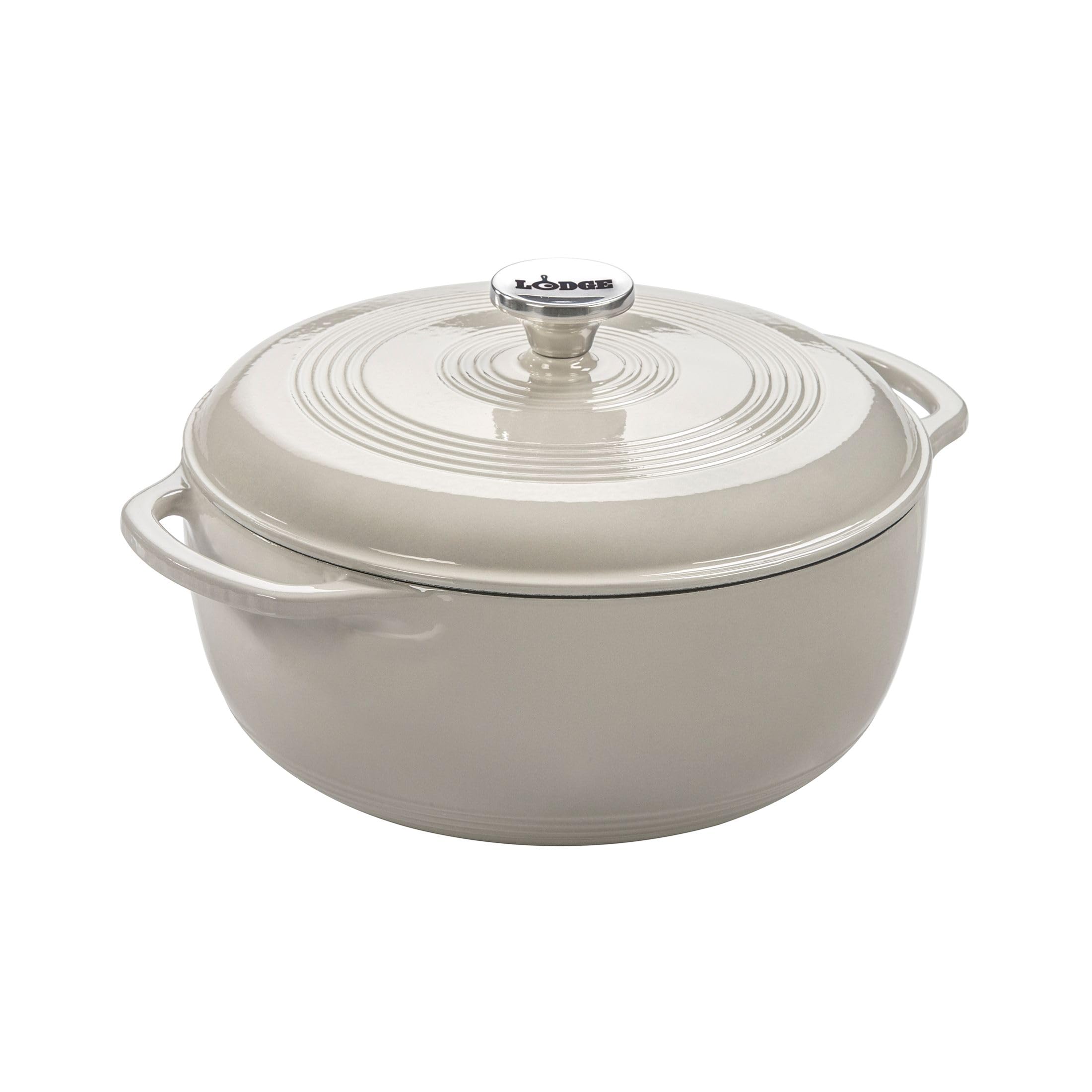
Lodge Essential 6QT
Key Features
- Material: Enameled Cast Iron
- Capacity: 6 Quarts
- Weight: 14.9 lbs
- Oven Safe: 500°F
- Price: $$
The Lodge Essential 6QT heats evenly and maintains steady temperature, ideal for long braises and sourdough baking. The enamel interior cleans up easily and the pot works on induction cooktops up to 500°F. Unlike bare cast iron, no seasoning is required — just wash and start cooking. The heavy construction holds heat so well that even after adding cold ingredients, the pot recovers temperature quickly.
At 6 quarts, this pot fits family meals for four to six people. The enamel can chip if dropped or exposed to thermal shock, so hand washing and careful handling are part of ownership. The 15-pound empty weight makes it a heavy lift when full — best for cooks comfortable with a substantial pot. Home cooks who want a reliable daily workhorse without paying luxury prices will find this a direct fit.
Pros
- Exceptional heat retention ensures even cooking for stews, braises, and bread.
- Mid-range price for a 6-quart enameled pot that competes with pricier options.
- Enamel surface cleans up quickly; hand washing keeps it looking new.
Cons
- For those with limited upper body strength, the 15-pound empty weight becomes a challenge when maneuvering.
- The enamel coating can chip if the pot is dropped or subjected to rapid temperature changes, requiring mindful use.
For cooks who value steady heat and don’t need the heirloom finish of a luxury brand, the Lodge Essential is a straightforward buy.
Best for Budget Buyer
CAROTE 5QT
Key Features
- Material: Enameled Cast Iron
- Capacity: 5 Quarts
- Weight: ~12 lbs
- Oven Safe: 500°F
- Price: $
At under $40, the CAROTE 5QT delivers solid enameled cast iron performance with fewer chipping reports than other budget rivals. The 5-quart capacity works well for sourdough, sides, and small batches, but won’t stretch to feed a family. This pot is best for first-time owners or budget-focused cooks who want to try enameled cast iron without a big investment – just keep in mind that the enamel can chip with metal utensils or rapid temperature changes, and the size is limited for larger meals.
Pros
- Cheapest enameled Dutch oven with decent build quality and solid heat retention.
- Lower chipping rate than similarly priced options – a meaningful durability improvement.
- Compact 5-quart size is ideal for small-batch cooking, baking bread, and sides.
Cons
- Enamel can chip if exposed to metal utensils or thermal shock, requiring careful handling.
The best low-risk entry point for enameled cast iron – just pair it with careful handling and modest capacity expectations.
Best for Cast Iron Enthusiast
Lodge Double Dutch 5QT
Key Features
- Material: Bare Cast Iron
- Capacity: 5 Quarts
- Weight: 13.1 lbs
- Oven Safe: 600°F+ lid off
- Price: $
This double Dutch oven pairs a 5-quart pot with a skillet lid, both in bare cast iron that will outlast any enameled piece. The tradeoff is that it needs regular seasoning and thorough drying to prevent rust, and the lid skillet has no handle – you’ll grip it by the rim with a towel. That makes it a natural fit for campers, sourdough bakers, and anyone comfortable with traditional cast iron care, but a poor match for those who want low-maintenance, dishwasher-safe cookware.
Pros
- Lid doubles as a skillet for true two-in-one cookware.
- Bakes artisan sourdough with a crisp crust and handles long stews evenly.
- Built to last a lifetime with no enamel to chip, chip, or wear off.
Cons
- Bare cast iron must be seasoned and dried carefully to avoid rust.
- Lid skillet lacks a handle, making it awkward to grip when hot.
Best for outdoor cooks and bread bakers who enjoy maintaining cast iron – not the pick if you want a set-and-forget Dutch oven.
Best for Luxury Seeker
Le Creuset 7.25QT
Key Features
- Material: Enameled Cast Iron
- Capacity: 7.25 Quarts
- Weight: 11 lbs
- Oven Safe: 500°F
- Price: $$$$
Le Creuset’s flame-colored 7.25-quart Dutch oven sets the standard for enameled cast iron fit and finish — the glass-smooth interior, perfectly fitted lid, and glossy exterior are a cut above any other brand. Heat distribution and retention are excellent, producing steady simmering for braises and crusty loaves alike. The premium comes with a steep price: about 4–5 times more than the top-pick Lodge Essential.
This pot is for enthusiasts who value heritage, aesthetics, and a piece meant to last generations. The enamel can chip if mishandled, though the lifetime warranty covers defects. The stainless steel knob and handles get hot — mitts are required. If you can afford the luxury and want a showpiece that also cooks well, this is a worthy indulgence.
Pros
- Superior craftsmanship with flawless enamel finish and tight-fitting lid
- Exceptional heat retention and even distribution for braising and baking
- Light enamel interior resists staining and wipes clean easily
Cons
- Very expensive – 4–5 times the price of comparable performers
- Enamel can chip if dropped or banged; some units arrive with cosmetic flaws
Best for those who prioritize brand prestige and flawless aesthetics – the top pick Lodge Essential delivers comparable cooking results at a fraction of the cost.
Best for Value Seeker
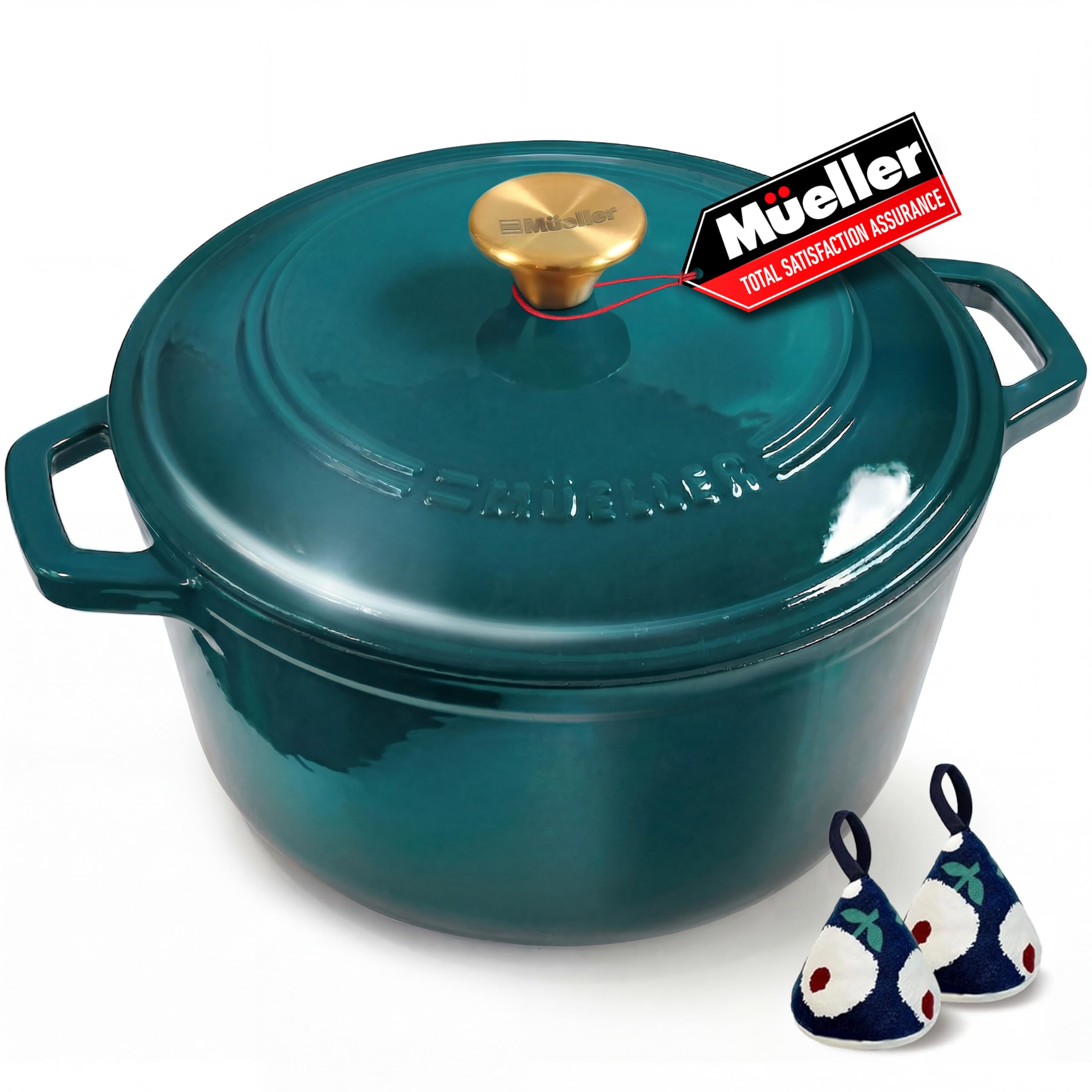
Mueller DuraCast 6QT
Key Features
- Material: Enameled Cast Iron
- Capacity: 6 Quarts
- Weight: 12.5 lbs
- Oven Safe: 500°F
- Price: $$
The Mueller DuraCast brings consistent heating and good enamel durability that places it ahead of most budget options, though it doesn’t match the top pick’s near-zero chipping track record. For value-focused home cooks who want reliable performance for bread, stews, and braises without the premium price tag, this is a strong contender. Some chipping can occur if the pot is subjected to thermal shock or impacts, but the risk is lower than with cheaper competitors.
Pros
- Even heating praised for bread and slow-cooked dishes.
- Better enamel durability than budget rivals – fewer chipping complaints.
- Self-basting lid improves moisture retention during long braises.
Cons
- Enamel can chip if dropped or heated empty on high heat.
Best suited for cooks who want a mid-range Dutch oven with reliable heat performance and can accept occasional enamel care, rather than a near-bulletproof bare cast iron piece.
Best for Lightweight Lover
HexClad Hybrid 5QT
Key Features
- Material: Tri-ply SS/AL with ceramic nonstick
- Capacity: 5 Quarts
- Weight: 3 lbs
- Oven Safe: 900°F
- Price: $$$
Ditching cast iron’s heft, this 5-quart pot weighs only 3 pounds and heats rapidly thanks to its tri-ply construction. The nonstick surface makes cleanup effortless – ideal for cooks with joint issues or those who want dishwasher-safe convenience. However, the coating may wear with high heat or metal utensils, and the pot doesn’t retain heat well for slow braising, making it better suited for quick stews and soups than overnight simmering.
Pros
- Weighs about 3 pounds – reduces strain when lifting, pouring, and moving from stovetop to sink.
- Food slides off the nonstick surface; a quick rinse or dishwasher cycle handles cleanup.
Cons
- Premium price for a pot that doesn’t hold heat as well as cast iron for long braises.
- Nonstick coating can degrade over time if exposed to high heat or metal utensils.
For cooks who want a lightweight, easy-clean alternative to heavy cast iron, this pot delivers convenience – as long as you’re not planning all-day braises.
Best for Occasional Use
Overmont 7QT

Key Features
- Material: Enameled Cast Iron
- Capacity: 7 Quarts
- Weight: 15.2 lbs
- Oven Safe: 500°F
- Price: $
The Overmont 7QT is the most affordable large enameled Dutch oven, coming with a cookbook and potholders. It handles bread and stews well straight away. For occasional use, the low price offsets the durability tradeoff, but daily heavy cooking is not its strength.
Pros
- Large 7-quart capacity at a budget-friendly price
- Includes cookbook and potholders for added value
Cons
- Enamel may chip after several uses – best suited for occasional use
A low-risk entry point for budget buyers who need a large pot for occasional stews and bread, but not for daily cooking.
Best for Roast Lover
Velaze Oval 7.5QT

Key Features
- Material: Enameled Cast Iron
- Capacity: 7.5 Quarts
- Weight: 16.5 lbs
- Oven Safe: 500°F
- Price: $$
This 7.5-quart enameled cast iron Dutch oven uses an oval shape that accommodates whole chickens and large cuts more naturally than round alternatives. It’s induction-ready and oven-safe to 500°F, so it handles braising and slow cooking when the burner element matches its footprint. Enamel chipping can occur over time, and the oval may not heat evenly on small induction burners — those primarily roasting large meals on standard-size stoves will get the most from this pot.
Pros
- Oval shape excels at fitting whole chickens and large roasts
- Large 7.5-quart capacity for family meals and entertaining
Cons
- Enamel can chip over time, especially with heavy use
Consider this if you specifically need an oval pot for roasting large cuts and have a standard-size induction burner or gas stove to avoid hot spots.
Best for Budget Large
Nuovva 6.4QT

Key Features
- Material: Enameled Cast Iron
- Capacity: 6.4 Quarts
- Weight: 14.2 lbs
- Oven Safe: 500°F
- Price: $
The Nuovva 6.4QT is the cheapest per-quart enameled cast iron Dutch oven around, with an attractive dark blue finish that looks good on the stove. It heats evenly and cleans up easily for the price. However, enamel chipping has been noted, making this best suited for occasional cooking rather than daily use.
Pros
- Affordable large capacity with an appealing dark blue finish.
- Even heating and easy cleanup for the price.
Cons
- Enamel chipping can occur early in use.
Consider this Dutch oven if you need a large pot for occasional use and can accept the possibility of chipping.
Best for Colorful Budget
Crock-Pot 7QT

Key Features
- Material: Enameled Cast Iron
- Capacity: 7 Quarts
- Weight: ~15 lbs
- Oven Safe: 500°F
- Price: $
The Crock-Pot Artisan’s vibrant sapphire blue color and low price make it an attractive entry point for a large enameled cast iron pot. However, enamel chipping has been noted over time, so this pot is best reserved for occasional bread baking or stews rather than daily cooking — a trade-off that leaves more durable options like the Lodge Essential as better long-term investments.
Pros
- Striking sapphire blue finish adds a pop of color to any kitchen
- Large 7-quart capacity at a budget-friendly price for an enameled cast iron pot
Cons
- For regular heavy use, the enamel coating can chip — this pot works best as an occasional piece
Ideal for budget-minded shoppers who prioritize color and occasional use over long-term durability.
Best for Small Household
Staub 4QT

Key Features
- Material: Enameled Cast Iron (matte)
- Capacity: 4 Quarts
- Weight: 9 lbs
- Oven Safe: 500°F lid / 900°F pot
- Price: $$$$
The Staub 4-quart round cocotte brings a black matte enamel interior that excels at searing and self-basting, turning out deeply browned stews and braises. Its compact size fits small households, but the modest capacity and luxury price tag narrow its appeal — this pot is for those who value precision cooking over volume.
Pros
- Matte interior delivers outstanding browning and self-basting for richer flavor in smaller batches.
- Compact 4-quart size ideal for couples, side dishes, and sauces without taking up stove space.
Cons
- 4-quart capacity limits meal size — not suitable for large roasts or family portions.
For solo cooks or couples who prioritize browning performance and aesthetic detail, this compact Staub delivers — just be prepared for the premium price and modest capacity.
Best for Large Budget
Best Choice 7.5QT

Key Features
- Material: Enameled Cast Iron
- Capacity: 7.5 Quarts
- Weight: 16 lbs
- Oven Safe: 480°F
- Price: $$
The cornflower blue finish is attractive, and the 7.5-quart capacity is generous for a mid-range price, but the enamel may chip and the 480°F oven limit is slightly below the typical 500°F. Accept its short lifespan for occasional use if you want a budget-friendly large pot.
Pros
- Large 7.5-quart capacity at a budget-friendly price
- Beautiful cornflower blue color that brightens kitchen decor
Cons
- Enamel chipping may occur, reducing lifespan for frequent use
Best for occasional use where a large pot at low cost matters and you can accept a shorter lifespan.
Best for Lightweight Budget
Edging Casting 5.5QT

Key Features
- Material: Enameled Cast Iron
- Capacity: 5.5 Quarts
- Weight: 8.3 lbs
- Oven Safe: 500°F
- Price: $
At 8.3 pounds, this Dutch oven is noticeably lighter than standard cast iron, making it easier to lift and maneuver. The affordable price and pistachio green finish add appeal for budget-conscious cooks. However, enamel chipping can occur, which limits this pot to occasional use rather than a daily workhorse. Best suited for someone who needs a lightweight pot for bread or small-batch stews and doesn’t mind a shorter lifespan.
Pros
- Lightweight construction (8.3 lbs) makes it easier to handle than typical cast iron.
- Good size for 2–3 people, works well for bread making.
Cons
- Enamel chipping can occur, making this a better fit for occasional cooking than daily use.
This Dutch oven works for someone who wants a lightweight, budget-friendly pot for occasional bread or stews and accepts that the enamel may chip over time.
Best for Beginner
Umite Chef 5QT

Key Features
- Material: Enameled Cast Iron
- Capacity: 5 Quarts
- Weight: ~12 lbs
- Oven Safe: 500°F
- Price: $
Affordable and includes useful mitts, making it a low-cost entry to enameled cast iron. However, the enamel may chip over time, so it’s best for occasional use rather than daily heavy cooking.
Pros
- Very affordable bundle with potholders included
- Compact 5-quart size suits small spaces and bread baking
Cons
- Enamel may chip over time, especially on the lid edge
Best for beginners who want to try enameled cast iron at low cost and occasional use, not for daily cooking.
How to Choose
The biggest decision is whether to choose enameled or bare cast iron, as enamel chipping varies wildly across brands.
Material: Enameled vs. Bare Cast Iron
Enameled cast iron offers low-maintenance cooking: no seasoning, dishwasher-safe (though hand wash is better), and a smooth surface that won’t react with acidic foods. Bare cast iron requires regular seasoning to prevent rust and can flavor first few uses, but it’s practically indestructible and often cheaper.
The trade-off is durability: enamel can chip if knocked or thermally shocked, while bare cast iron just needs oil and heat to stay functional. Choose enameled for convenience and bare for longevity and camping.
Capacity: 5 to 7.5 Quarts
A 5- to 6-quart pot fits most bread recipes and meals for 2-4 people. Larger 7- to 7.5-quart pots handle whole chickens and family batches but become very heavy when full. Consider your typical batch size and storage space.
For occasional large roasts, an oval shape fits poultry better than round, but may not heat evenly on small induction burners.
Weight: Heavier Retains Heat Better
Most enameled Dutch ovens weigh 12-17 pounds empty. Add food and liquid, and a full 7-quart pot can exceed 30 pounds. Heavier walls store more heat for even braising and browning, but lifting and pouring can be challenging for those with limited strength.
Lightweight alternatives like HexClad (3 lbs) sacrifice heat retention for easy handling. If you braise frequently, accept the weight; if wrist strain is an issue, consider a lighter hybrid.
Oven Safety: 500°F Minimum
Most enameled Dutch ovens are safe to 500°F, which is essential for sourdough bread baking. Some pots have knobs rated only to 400°F, so check the spec. Bare cast iron can go higher (600°F+) with metal lids.
If you bake bread at high temperatures, confirm the lid knob is oven-safe or replaceable. A few budget models cap at 480°F, which still works for bread but limits some recipes.
Warranty: Indicator of Enamel Quality
Longer warranties often correlate with better enamel durability. Premium brands like Le Creuset offer limited lifetime warranties, while budget options typically cover 1-2 years or none. A generous warranty suggests the manufacturer trusts their enamel to last.
If chipping is your main concern, consider a brand with a strong warranty or switch to bare cast iron which never chips.
FAQ
Does enameled cast iron chip easily on induction cooktops?
Induction cooktops themselves don’t cause chipping. Chipping happens due to thermal shock (heating an empty pot on high, or plunging a hot pot into cold water) or physical impacts. Use medium heat, never thermal shock, and hand wash to minimize risk.
Can I use metal utensils on an enameled Dutch oven?
Metal utensils can scratch and eventually chip the enamel surface. Stick to silicone, wood, or plastic utensils to preserve the finish. Even light scratches weaken the enamel over time.
How heavy is a 7-quart cast iron Dutch oven when full of food?
An empty 7-quart pot weighs 15-17 pounds. Filled with stew or bread dough, it can exceed 30 pounds. Consider your lifting ability before buying a large size.
Is bare cast iron better than enameled for a glass-top induction stove?
Bare cast iron can scratch glass cooktops if slid across the surface. Enameled has a smooth bottom that glides safely. If you have a glass-top induction stove, enameled is the safer choice unless you are very careful with bare cast iron.