This post contains affiliate links. We may earn a small commission when you buy through our links — at no extra cost to you.
Most chef knives are built for average to large hands. A standard 8-inch blade forces small-handed cooks to choke up on the handle, sacrificing control and adding wrist strain. Even 6-inch knives can feel unwieldy when the handle is too thick or the blade too heavy.
The real issue isn’t just length—it’s how the knife balances in a smaller grip. A handle that’s too wide or slippery makes precise cuts harder, not easier. That’s why this guide focuses on shorter blades (5 to 6 inches) with ergonomic handles that match smaller hands, not just marketing claims.
A 5-inch blade often provides noticeably better maneuverability than a 6-inch when dicing or mincing. Combined with a lightweight, non-slip handle, it turns a frustrating prep session into a comfortable one.


Best for Small-Handed Cooks
imarku 5" Santoku
Key Features
- Blade Length: 5 in
- Handle Material: Pakkawood
- Weight: 6.6 oz
- Blade Material: High Carbon Stainless
- Dishwasher Safe: No (hand wash)
- Price: Budget
The imarku 5" Santoku arrives laser-sharp, with a high-carbon stainless steel edge that holds up through weeks of daily prep. At just over 6 ounces, the blade feels nearly weightless in the hand, and the Pakkawood handle contours naturally to smaller palms — feedback from home cooks with arthritis or wrist strain is consistently positive about the reduced fatigue compared to heavier knives.
That lightweight design translates to easy maneuverability for mincing herbs, slicing vegetables, and controlled cuts on boneless proteins. The 5-inch blade is short enough to avoid bumping knuckles on the cutting board, yet long enough to handle most prep tasks. Some users with larger hands note the handle feels petite, but for the target audience — cooks with small hands — it hits a sweet spot.
This knife is best for home cooks who find standard 8-inch chef knives unwieldy or fatiguing, especially those with smaller hands or joint discomfort. The tradeoff: the Pakkawood handle absorbs moisture, so hand washing and thorough drying are required after each use to prevent swelling or cracking. Also, the blade comes without a guard or sheath — a concern given how sharp it is out of the box, so plan for a magnetic strip or blade cover.
Pros
- Exceptionally sharp factory edge with lasting performance
- Lightweight 6.6-ounce build reduces hand fatigue during extended prep
- Ergonomic Pakkawood handle praised by cooks with small or arthritic hands
- Cost-effective performance that rivals pricier Japanese-style Santokus
Cons
- No blade guard or sheath included — the sharp edge requires careful storage
- Pakkawood handle can swell or crack if left wet or run through a dishwasher
If small hands or wrist fatigue have made standard chef knives a chore, this 5-inch Santoku delivers uncommon sharpness and comfort at a budget-friendly price — just accept the hand-wash and storage responsibilities.
Best for Dishwasher-Safe Grip
Victorinox Fibrox 6"
Key Features
- Blade Length: 6 in
- Handle Material: Thermoplastic Rubber
- Weight: 3.2 oz
- Blade Material: Stainless Steel
- Dishwasher Safe: Yes
- Price: Mid-Range
The Fibrox handle is the standout feature here: a textured thermoplastic rubber that refuses to slip even when your hands are wet or oily. Unlike the top pick’s Pakkawood handle, this one is NSF-approved and safe to toss in the dishwasher, making cleanup as simple as running a cycle. The 6-inch stamped blade is lightweight at 3.2 ounces, which keeps fatigue low during longer prep sessions.
This knife suits home cooks who prioritize convenience and a secure grip over heft. The stamped blade lacks the substantial feel of a forged knife — a tradeoff that won’t bother anyone who values easy handling and quick rinsing. In isolated cases, blade breakage has been reported during normal use, so those who rely on a single knife for heavy-duty tasks may want to inspect periodically. For small-handed users seeking a no-fuss workhorse that fits in the dishwasher, this is a strong pick.
Pros
- Non-slip Fibrox handle stays grippy even when wet, ideal for small hands
- Lightweight 3.2 oz design reduces fatigue during extended prep work
- Dishwasher safe and NSF approved for effortless cleanup
Cons
- Stamped blade feels noticeably lighter and less substantial than forged knives
- Blade breakage has been reported in isolated units during normal use
Best for small-handed cooks who want a dishwasher-safe knife with a grip that won’t quit, and are willing to accept a lighter stamped blade instead of forged heft.
Best for Forged Lightweight
Mercer Renaissance 6"
Key Features
- Blade Length: 6 in
- Handle Material: Delrin/santoprene
- Weight: 4 oz
- Blade Material: High Carbon German Steel
- Dishwasher Safe: No (hand wash)
- Price: Mid-Range
The Mercer Renaissance brings forged construction and a slim, rounded handle to cooks who want a 6-inch blade in a very light package. Weighing just 4 ounces, it moves fast for small-handed users who need precision without arm fatigue. The Delrin/santoprene handle provides a secure grip, though a few users note it can become slick when wet — a tradeoff for the comfortable, non-bulky shape.
This knife suits home cooks who want forged quality without paying for a full-bolstered German brand. The 6-inch blade offers more edge length than the top pick’s 5-inch, which helps when slicing medium-sized vegetables or trimming proteins. Some units arrive with an edge that isn’t as sharp as expected out of box — a quick hone resolves it, but it’s worth checking before heavy use.
Pros
- Sharp edge out of the box that holds up well for a mid-range forged knife
- Ergonomic handle with rounded spine fits small hands comfortably for long sessions
- Forged build and German steel at a price that often competes with stamped alternatives
Cons
- Some units arrive with a less-than-perfect edge that requires immediate honing
- Handle can feel slick when wet, though overall grip feedback is positive
A lightweight forged option for small-handed cooks who want a 6-inch blade — just be prepared to check the edge on arrival.
Best for Heirloom Quality
Wüsthof Classic 6"
Key Features
- Blade Length: 6 in
- Handle Material: Synthetic
- Weight: 6.4 oz
- Blade Material: High Carbon Stainless (X50CrMoV15)
- Dishwasher Safe: No (hand wash)
- Price: Premium
The Wüsthof Classic 6" Chef’s Knife is forged from a single piece of steel, giving it a dense, balanced feel that distinguishes it from lighter, stamped alternatives. The high-carbon stainless steel blade holds its edge exceptionally well through repeated use, reducing how often sharpening is needed. However, the full bolster—a traditional design feature—prevents using the entire blade length and makes home sharpening more labor-intensive.
This knife is built for the home cook who values longevity and craftsmanship over a low price. The 6-inch blade and moderately heavy 6.4-ounce weight provide control for smaller hands that prefer a solid, reassuring grip. Expect to hand-wash and sharpen manually; this is not a dishwasher-friendly or low-maintenance tool. The premium price is justified by the build quality, but the bolster is a genuine usability tradeoff.
Pros
- Forged construction delivers a solid, well-balanced feel for controlled cutting.
- Long-lasting sharpness reduces the need for frequent honing.
- Synthetic handle is shaped for a comfortable grip, especially for smaller hands.
Cons
- Premium pricing may be a barrier for budget-conscious shoppers.
- Full bolster blocks access to the heel and complicates home sharpening.
For cooks who value build quality and a solid feel, this knife delivers consistent performance over time, despite the bolster’s limitations.
Best for Lightweight Precision
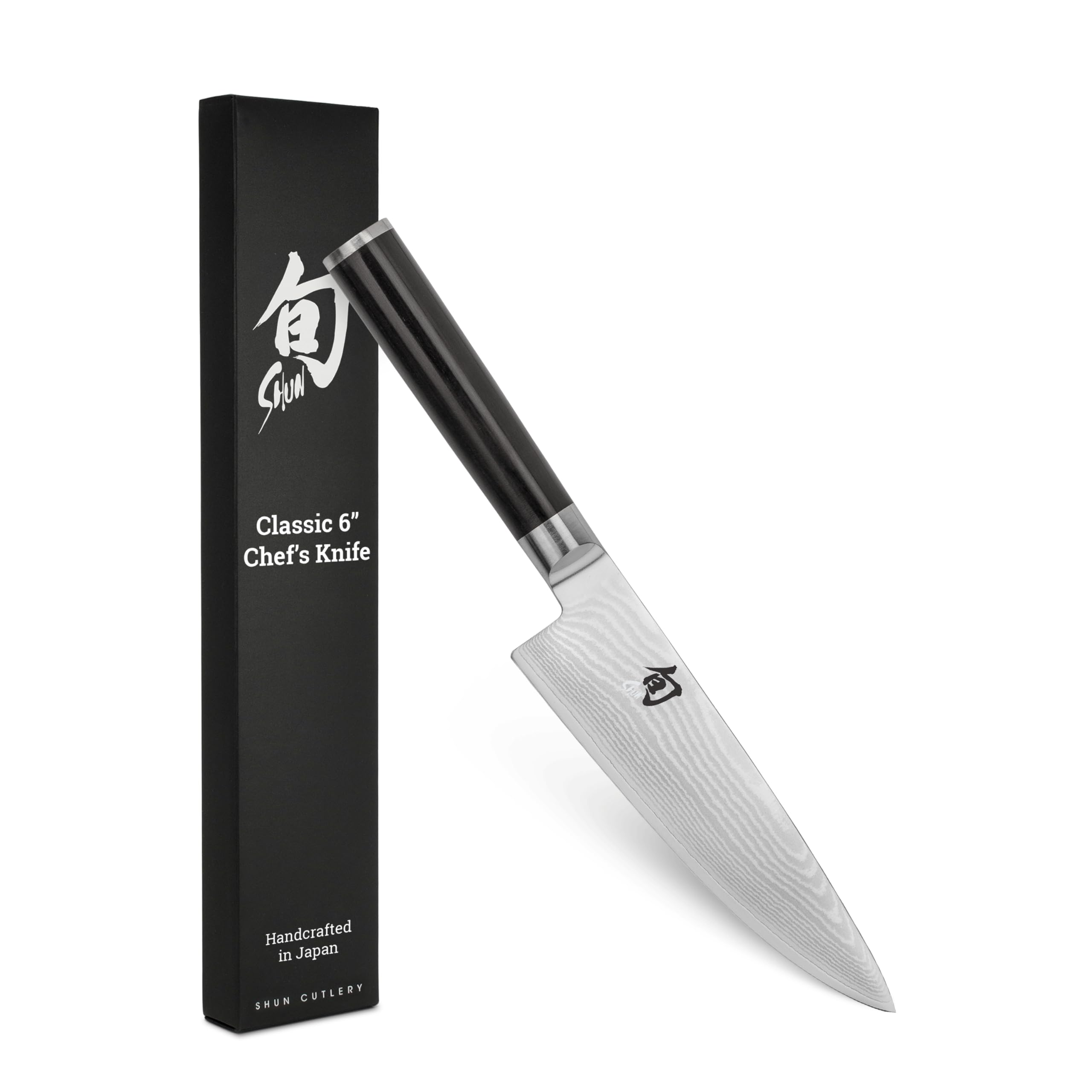
Shun Classic 6"
Key Features
- Blade Length: 6 in
- Handle Material: Pakkawood (D-shaped)
- Weight: 4.6 oz
- Blade Material: VG-MAX Damascus
- Dishwasher Safe: No (hand wash)
- Price: Luxury
The Shun Classic 6” stands apart from the top pick with a longer blade and a noticeably sharper 16-degree edge. Where the leading budget-friendly option tops out at 5 inches, this knife gives small-handed cooks a bit more length for slicing without sacrificing nimbleness. The D-shaped Pakkawood handle contours to a smaller grip, making precise cuts feel effortless.
This is a knife for those who value razor-sharp performance and are willing to treat it with kid gloves. The high-hardness VG-MAX steel holds an edge exceptionally well, but that same hardness makes the blade brittle — contact with bones, hard squash, or frozen items can cause chipping. It’s best suited for vegetables, boneless proteins, and gentle prep work, not heavy chopping or hacking.
Pros
- 16-degree edge retains sharpness longer than typical Western knives.
- Lightweight and well-balanced, ideal for extended prep sessions with small hands.
- Damascus cladding adds visual appeal without compromising function.
Cons
- Premium pricing may feel steep compared to other 6-inch options.
- Blade may chip when used on hard foods or bones — requires careful handling.
A precise, ultra-sharp knife for the cook who values edge performance over toughness and has small hands to match.
Best for Heavier Chopping
HOSHANHO 5" Santoku

Key Features
- Blade Length: 5 in
- Handle Material: Pakkawood (African)
- Weight: 9.6 oz
- Blade Material: 10Cr15CoMoV (62 HRC)
- Price: Mid-Range
The HOSHANHO 5-inch Santoku offers high hardness steel (62 HRC) that cuts exceptionally sharp out of the box, with a visually striking Pakkawood handle that feels comfortable for small hands. However, its 9.6-ounce weight is heavier than most 5-inch knives, which can lead to hand fatigue during longer prep sessions. Additionally, edge retention has been variable – some users find it dulls sooner than expected after a couple of weeks of regular use.
Pros
- Ultra-sharp 62 HRC steel holds an edge well for most tasks.
- Ergonomic Pakkawood handle designed for small hands – comfortable grip.
Cons
- Relatively heavy for its size (9.6 oz) – can cause hand fatigue during extended chopping sessions.
- Edge may dull faster than expected – reports of dulling after two weeks of use.
This knife suits cooks who want a premium-looking, heavy Santoku for shorter tasks, but may frustrate those needing sustained sharpness or a lighter feel.
Best for Unique Design
Matsato 6.3" Chef

Key Features
- Blade Length: 6.3 in
- Handle Material: Wood
- Weight: 6.2 oz
- Blade Material: 1.4116 Japanese Stainless
- Price: Budget
The Matsato’s wooden handle and lightweight build (176g) make it easy to maneuver for smaller hands. Its 6.3-inch blade arrives sharp, and the finger hole offers a novel grip option. However, edge retention can be inconsistent—some blades may need frequent stropping—and the finger hole may feel awkward depending on your grip style. This knife suits home cooks who enjoy a distinctive design and don’t mind occasional sharpening maintenance.
Pros
- Lightweight 176g design reduces hand fatigue during extended prep work.
- Comfortable wooden handle with an ergonomic shape suits smaller hands well.
Cons
- Finger hole design may not accommodate all grip preferences and can feel cumbersome.
- Edge retention may vary; the blade can lose sharpness within weeks and requires regular stropping.
Best for home cooks who prioritize a unique design and lightweight feel over long-lasting sharpness, and who are willing to maintain the edge with regular stropping.
Best for Compact Light Prep
Henckels Solution 4"

Key Features
- Blade Length: 4 in
- Handle Material: Stainless Steel
- Weight: 3 oz
- Blade Material: Stainless Steel
- Dishwasher Safe: Yes
- Price: Budget
The HENCKELS Solution 4-inch is surprisingly sharp for a budget knife, with a blade that handles fruits and small vegetables with precision. Its compact size is a natural fit for very small hands. The tradeoff: the lightweight construction can feel flimsy to those wanting more heft, and the handle may show discoloration over time if dishwashed. This is best as a light-duty utility knife, not a full chef knife, and users wanting a 5-inch blade should look at the imarku Santoku.
Pros
- Outstanding sharpness for the price, with decent edge retention.
- Compact 4-inch blade provides excellent control for small-handed users and precision tasks.
Cons
- Lightweight build may feel insubstantial to cooks accustomed to heavier knives.
- Handle can discolor over time if washed in the dishwasher despite being labeled safe.
Best suited for very small hands needing a sharp, compact knife for light fruit and vegetable work, but not for heavy-duty chopping or those preferring a substantial knife.
Best for Medium-Large Hands
DDF iohEF 7" Santoku

Key Features
- Blade Length: 7 in
- Handle Material: Stainless Steel (full tang)
- Weight: 8 oz
- Blade Material: 5Cr15MoV Stainless
- Price: Budget
The DDF iohEF 7-inch Santoku delivers impressive cut performance straight from the box, with a forged stainless steel blade that holds an edge well for the price. The full tang and moderate 8-ounce weight give it a solid, balanced feel during chopping and slicing. However, the 7-inch blade length and stainless steel handle – which can get slippery when wet – make it less suitable for cooks with small hands who need a shorter, more controlled blade and a grippier surface. For those with medium to larger hands who prioritize value and don’t mind a slightly longer blade for general prep, this knife is a capable workhorse.
Pros
- Sharp out of the box with good edge retention for the price
- Well-balanced full tang handle provides control during heavier cutting tasks
Cons
- 7-inch blade may feel unwieldy for users with very small hands who prefer a 5–6 inch length
A solid budget option for cooks with medium to large hands who want a full-tang Santoku at a low price – but small-handed users should look at shorter alternatives.
Best for Ultra-Compact Utility
Henckels Statement 3"

Key Features
- Blade Length: 3 in
- Handle Material: ABS plastic
- Weight: 3.9 oz
- Blade Material: Stainless Steel
- Price: Budget
The HENCKELS Statement’s 3-inch blade is exceptionally sharp out of the box and suits precise trimming, peeling, and detail work – especially for cooks with very small hands who struggle with full-size knives. However, the blade is too short and flexible for typical chef tasks like chopping dense vegetables or dicing, and the thin stamped steel may bend under heavy use. For a budget backup or travel knife, it delivers outstanding value; for a primary chef knife, it is best considered a specialized paring/utility tool.
Pros
- Razor-sharp edge holds up well for a budget-priced knife
- Compact 3-inch blade gives small-handed users precise control for detailed tasks
Cons
- Too small for general chopping, dicing, or mincing – functions as a paring knife
- Thin, flexible blade can bend under heavy pressure on dense ingredients
For cooks who only need a precision trimming knife for very small hands, this is an affordable option; for general chef work, a 5- or 6-inch design is better suited.
Best for Collector Artistry
Shun Premier Blonde 6"

Key Features
- Blade Length: 6 in
- Handle Material: Pakkawood (blonde)
- Blade Material: VG-MAX 68-layer Damascus
- Dishwasher Safe: No (hand wash)
- Price: Luxury
The hammered tsuchime finish on this 6-inch blade reduces food sticking while looking gorgeous. It arrives razor sharp and holds its edge exceptionally well. However, the blade is brittle—chipping can occur on hard foods or bones. The premium pricing reflects artistry, not practicality for everyday cooking. Best suited for collectors or enthusiasts who handle knives with extreme care.
Pros
- Razor sharp out of the box with impressive edge retention
- Hammered finish reduces sticking and adds striking visual appeal
Cons
- Chipping and tip breakage can occur when cutting hard or dense foods
- Premium pricing offers limited practical advantage over mid-range options
This knife fits best in a collection or for light, careful use where its beauty is appreciated—not as a daily workhorse.
How to Choose
A 5-inch blade provides noticeably better maneuverability than a 6-inch for small hands, making it the starting point for any small-handed buyer.
Blade Length
The ideal blade length for small hands is 5 to 6 inches. Shorter blades give you more control when dicing or mincing, especially if your hand span is under 7 inches from palm to fingertip. A 5-inch blade often feels like an extension of your arm, while a 7-inch blade requires extra wrist movement that can fatigue smaller hands quickly.
That said, a 6-inch blade can still work if the handle is slim and the weight is low. The trade-off is reach: longer slices require more arm motion. For tasks like chopping onions or slicing chicken, a 5-inch blade is typically more efficient for small hands.
Handle Material and Shape
Handle shape matters more than material for small hands. A rounded, slightly tapered handle lets you grip naturally without overextending your fingers. Avoid handles that are bulky or square-edged—they force your hand into an awkward pinch grip that reduces control.
Material affects grip when wet. Rubberized or textured synthetics (like Fibrox) provide consistent grip even with oily fingers. Smooth Pakkawood looks premium but can become slippery; it also requires hand washing. For arthritis or wrist strain, a larger-diameter handle (around 1 inch) reduces gripping force, but only if the handle isn’t too long.
Knife Weight
A lighter knife (under 6 ounces) is easier to control for small hands, especially during long prep sessions. Heavier knives above 8 ounces require more wrist strength and can cause fatigue after 20 minutes of continuous cutting. However, some cooks prefer a bit of heft for chopping through dense vegetables like squash—that’s a personal trade-off.
The hidden trade-off is that very light knives (under 4 ounces) can feel flimsy and lack the momentum to cut through hard ingredients cleanly. A weight between 4 and 6 ounces offers the best balance of control and power for most small-handed users.
Edge Retention
Edge retention depends on steel hardness. Harder steels (58-62 HRC) stay sharp longer but are more brittle and prone to chipping. Softer steels (52-56 HRC) are tougher and easier to sharpen but dull faster. For small hands where precision cutting is common, a harder steel (60-62 HRC) works well for soft vegetables and boneless proteins, but avoid using it on bones or frozen food.
The practical consequence is that you’ll need to sharpen a soft-steel knife every few weeks, while a hard-steel knife may only need honing monthly. The trade-off is that if you chip a hard-steel blade, it’s harder to repair. Choose based on your cutting habits—light prep users benefit from hard steel; heavy choppers need toughness.
Dishwasher Safe vs Hand Wash
Dishwasher-safe knives (like those with thermoplastic handles) offer convenience—just toss them in the top rack after use. But high-carbon steel blades and wooden handles are not dishwasher safe. Heat and moisture cause Pakkawood to swell, crack, or discolor, and the edge can be damaged by banging against other utensils.
If you hate hand washing, choose a stamped stainless steel knife with a synthetic handle. If you want a forged knife or a beautiful wooden handle, commit to hand washing and drying immediately. There’s no middle ground—dishwasher use will shorten the life of any wood-handled or high-carbon blade.
FAQ
Is a 7-inch chef knife too big for small hands?
Generally yes. A 7-inch blade requires more wrist rotation and arm movement, which can lead to fatigue during longer prep sessions. For hands smaller than 7 inches from palm to fingertip, a 5- or 6-inch blade offers much better control. Some users with medium-sized hands can manage a 7-inch if the handle is slim and the knife is lightweight, but it’s not ideal for small hands.
What handle material is best for people with arthritis in their hands?
A slightly larger-diameter handle (around 1 inch) with a non-slip rubberized material reduces the grip force needed. Fibrox, Delrin, or santoprene are excellent choices. Avoid smooth metal or hard wood handles—they require a tighter grip that can aggravate arthritis. Rounded, tapered shapes also help distribute pressure evenly.
Do Santoku knives work better for small hands than traditional chef knives?
The Santoku’s shorter, flatter blade profile makes it a natural fit for small hands. Its typical 5- to 6-inch length matches the ideal range, and the sheepsfoot tip reduces the risk of accidental pokes. For most small-handed cooks, a Santoku is more comfortable than a 6-inch Western chef knife. However, the handle shape and weight still matter—choose a Santoku with a slim, rounded handle under 6 ounces.
How do I know if a chef knife is balanced for a small hand?
A well-balanced knife for small hands should feel neutral when you hold it at the pinch grip (thumb and forefinger on the blade just above the handle). If the blade tips forward or the handle pulls backward, it will feel heavy or awkward. Look for a knife where the balance point is at the handle’s bolster or slightly forward. Most lightweight Japanese knives achieve this, while heavier German knives may feel blade-heavy.