This post contains affiliate links. We may earn a small commission when you buy through our links — at no extra cost to you.
A beginner chef knife should be your most-used kitchen tool, but the sub-$50 market is littered with knives that look the part yet dull quickly or develop cracks. The difference between a frustrating prep session and a smooth one often comes down to blade construction, handle material, and realistic expectations for edge retention.
This guide cuts through the noise by focusing on the knives that have proven themselves over thousands of meals. Whether you’re on a tight budget or ready to invest a bit more, the picks here balance sharpness, comfort, and durability so you can cook with confidence from day one.

Best for Beginner All-Rounder
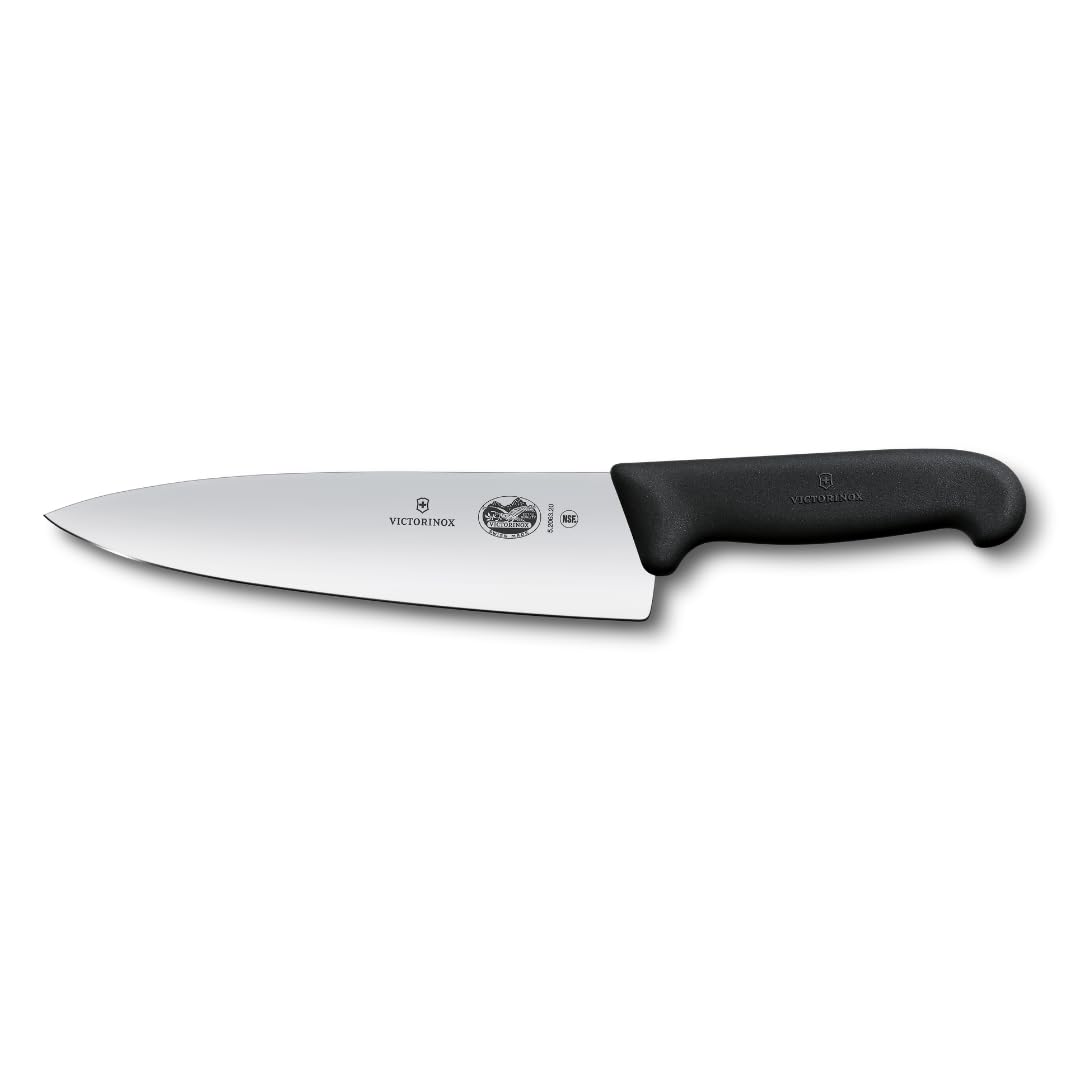
Victorinox Fibrox Pro 8"
Key Features
- Blade Length: 8 in
- Blade Material: High-carbon stainless
- Handle Material: Fibrox (TPE)
- Weight: 0.05 lbs
- Construction: Stamped
- Price: $
This knife arrives sharp enough to slice through a tomato with minimal pressure, and the edge holds up well with routine honing. The Fibrox handle remains grippy even when wet, a detail that matters during long prep sessions. At 0.05 lbs, the stamped blade is lightweight — not hefty like forged options, but easier to control for extended cutting tasks.
This is the knife for anyone buying their first chef’s knife or working with a limited budget. The thin blade may feel insubstantial if you’re used to a full tang and bolster; if you prefer a heavier knife, this won’t feel substantial. For most home cooks, the lighter weight reduces fatigue. Regular honing every few uses keeps the edge at its best.
Pros
- Sharp enough for precise slicing and dicing right from the box, without any need for initial sharpening.
- Handle stays secure even with wet or greasy hands, improving control during prep.
- Test-kitchen favorite that performs well above its price point, making it a budget-friendly workhorse.
Cons
- The lightweight blade can feel flimsy to cooks accustomed to heavier forged knives.
For home cooks and beginners who value sharpness and comfortable handling over knife weight, this is the most practical starting point in its price class.
Best for Budget Beginner
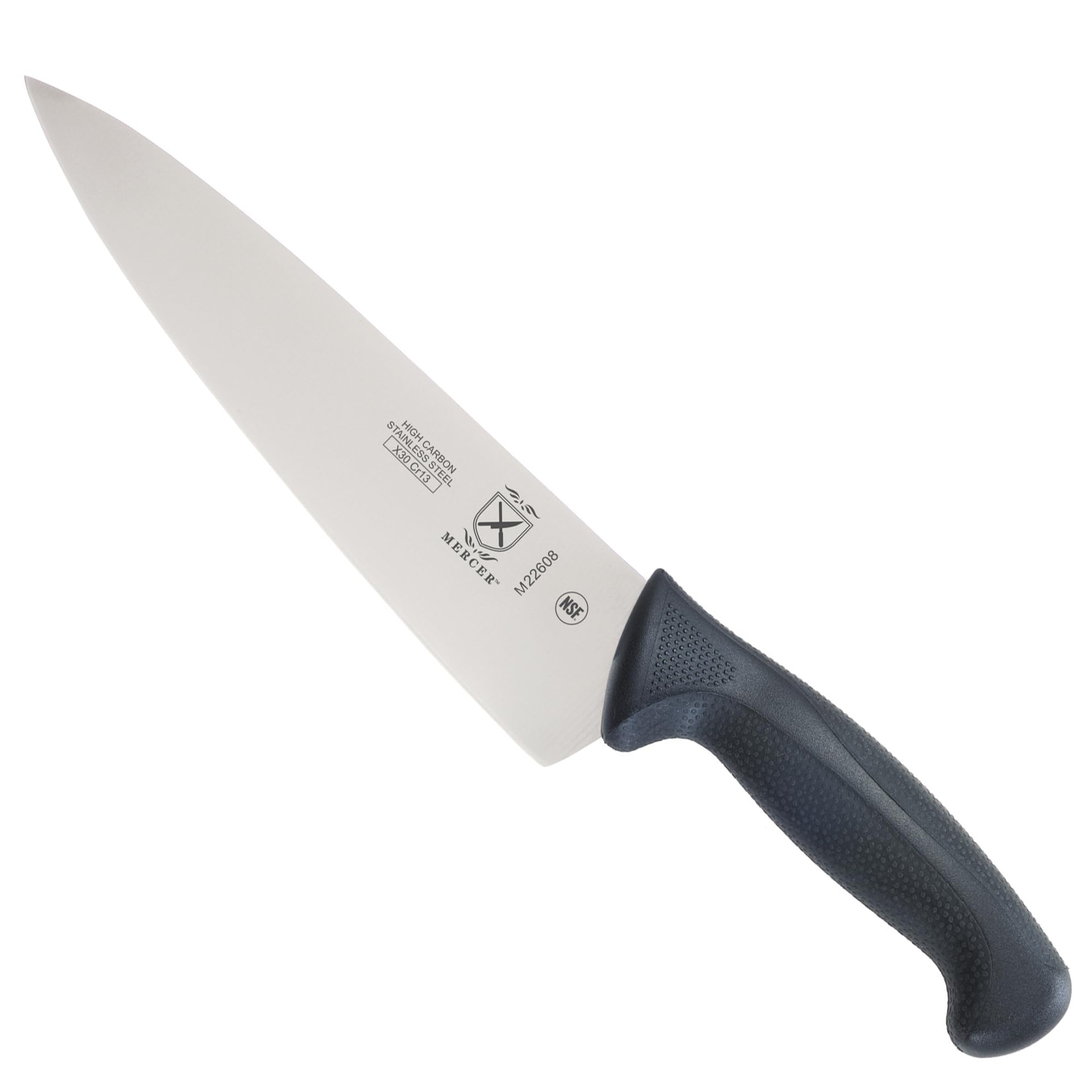
Mercer Millennia 8"
Key Features
- Blade Length: 8 in
- Blade Material: High-carbon Japanese steel
- Handle Material: Santoprene
- Weight: 6.7 oz
- Construction: Stamped
- Price: $
The Millennia’s stamped blade offers sharpness that rivals pricier options, cutting through vegetables and boneless meat with ease. The thin blade flexes under heavy pressure, so it’s not suited for chopping bones or hard squash. For culinary students and home cooks seeking an affordable daily driver, this knife provides strong performance with regular honing. The non-slip handle reduces fatigue during long prep sessions.
Pros
- Delivers sharpness comparable to higher-priced knives right out of the box.
- Non-slip handle design reduces hand fatigue during extended use.
- Outstanding value – one of the most affordable knives with professional-grade performance.
Cons
- Thin blade may feel flimsy to users accustomed to heavier knives.
- Edge can chip when used on hard surfaces like bones or frozen food.
A smart pick for beginners who want a sharp, budget-friendly knife for everyday prep — avoid bones and heavy chopping, and keep a honing rod handy.
Best for Compact Santoku
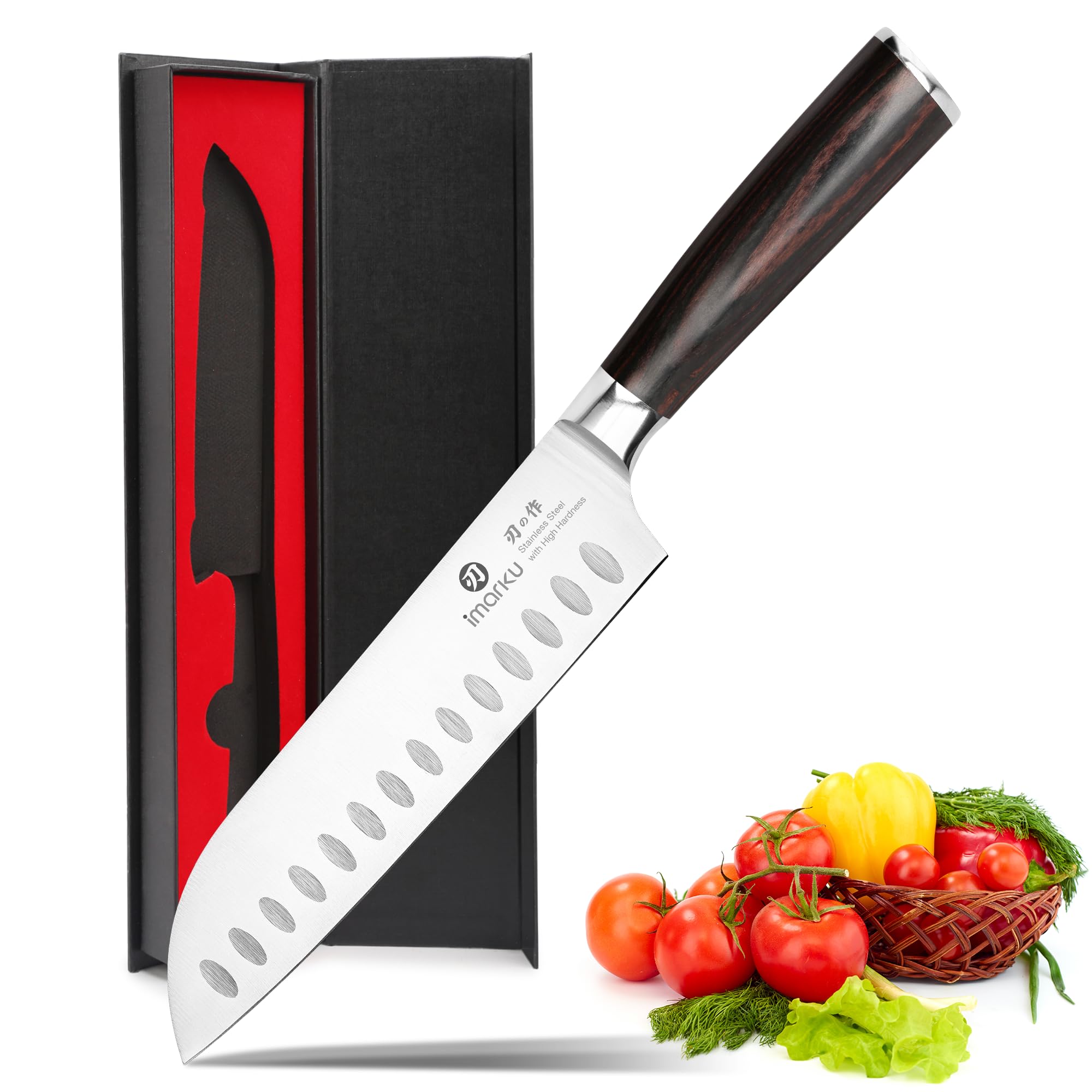
imarku Santoku 7"
Key Features
- Blade Length: 7 in
- Blade Material: High-carbon stainless
- Handle Material: Pakkawood
- Weight: 6.88 oz
- Construction: Forged
- Price: $
The 7-inch blade and rounded Pakkawood handle deliver a balanced, nimble feel that suits detailed slicing and vegetable prep. Out of the box sharpness is impressive for the price, and the comfortable grip stays secure even during longer sessions.
Best for home cooks with smaller hands who want a visually appealing lightweight knife for moderate vegetable work. Durability is a variable – some units have shown blade or handle cracking after several months, so this works best as a secondary or specialty knife rather than a daily workhorse.
Pros
- Razor sharp out of the box with good edge retention for the price
- Beautiful Pakkawood handle that feels comfortable and secure
- Excellent value – often described as feeling like a $200 knife
Cons
- Blade or handle may crack after months of use – best as a secondary knife
- Edge sharpness can drop faster than higher-end knives without regular honing
A stylish, compact santoku that delivers impressive sharpness and value for beginners with smaller hands, but its variable durability makes it a better secondary knife than a daily driver.
Best for Trusted German
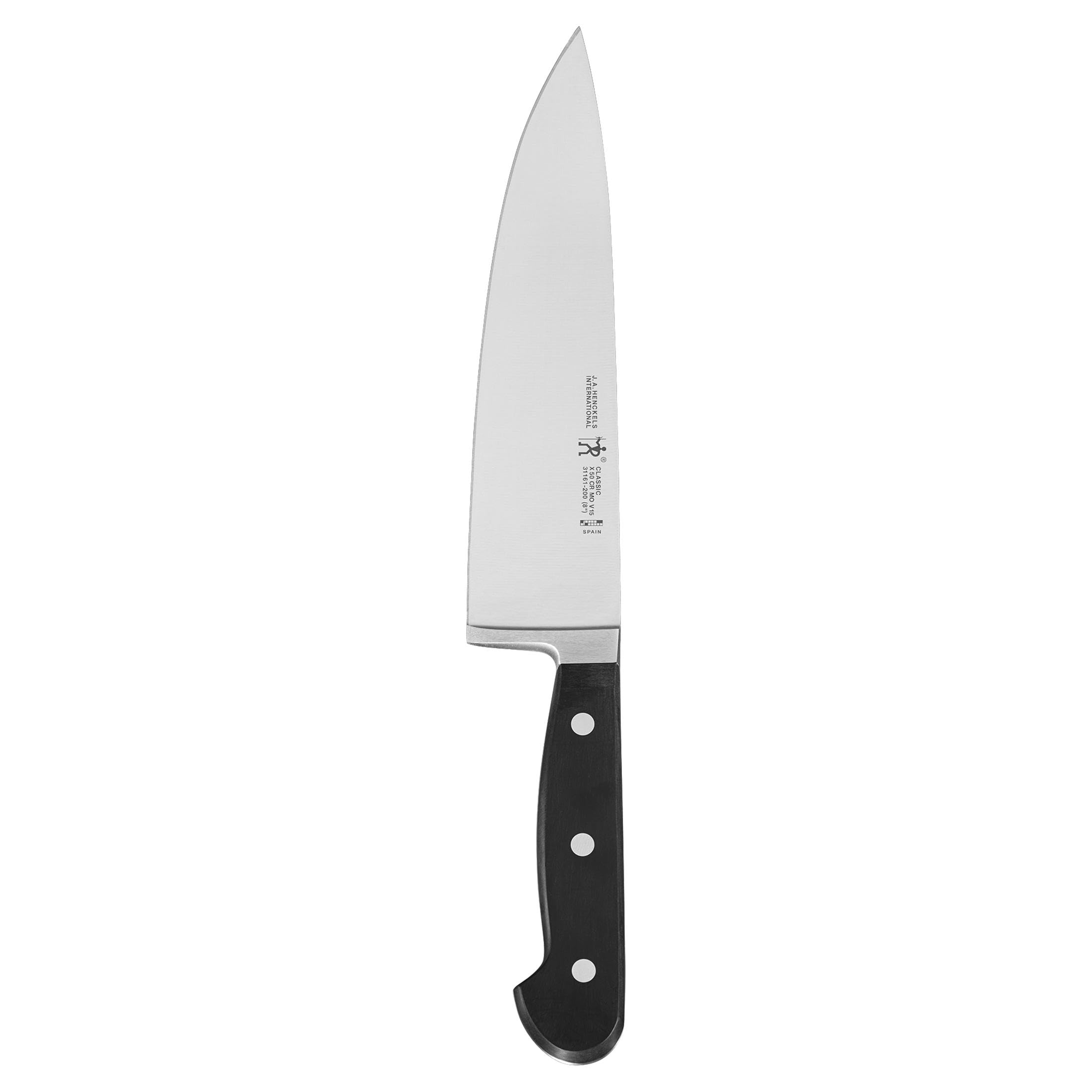
HENCKELS Classic 8"
Key Features
- Blade Length: 8 in
- Blade Material: Stainless steel
- Handle Material: Composite
- Weight: 4.48 oz
- Construction: Forged
- Price: $$
The HENCKELS Classic 8-inch Chef Knife is built from forged stainless steel, offering a heftier feel and better balance than the stamped top pick. Its composite handle provides a secure grip, and the blade resists stains while being dishwasher-safe for easy clean-up.
This knife suits beginners who want a forged blade and low-maintenance cleaning over instant out-of-box sharpness. The edge can arrive needing a hone, and the sharp spine requires careful handling – but those willing to accommodate these points get a well-made, balanced tool.
Pros
- Forged stainless steel blade with a well-balanced composite handle.
- Edge holds up well over time compared to other mid-range knives.
- Dishwasher-safe design simplifies cleaning – stains are unlikely.
Cons
A capable forged option for beginners who prioritize build and convenience – just be ready for a quick edge touch-up and mindful grip.
Best for Forged Budget
Mercer Renaissance 8"
Key Features
- Blade Length: 8 in
- Blade Material: High-carbon steel
- Handle Material: Delrin
- Weight: 8.8 oz
- Construction: Forged
- Price: $$
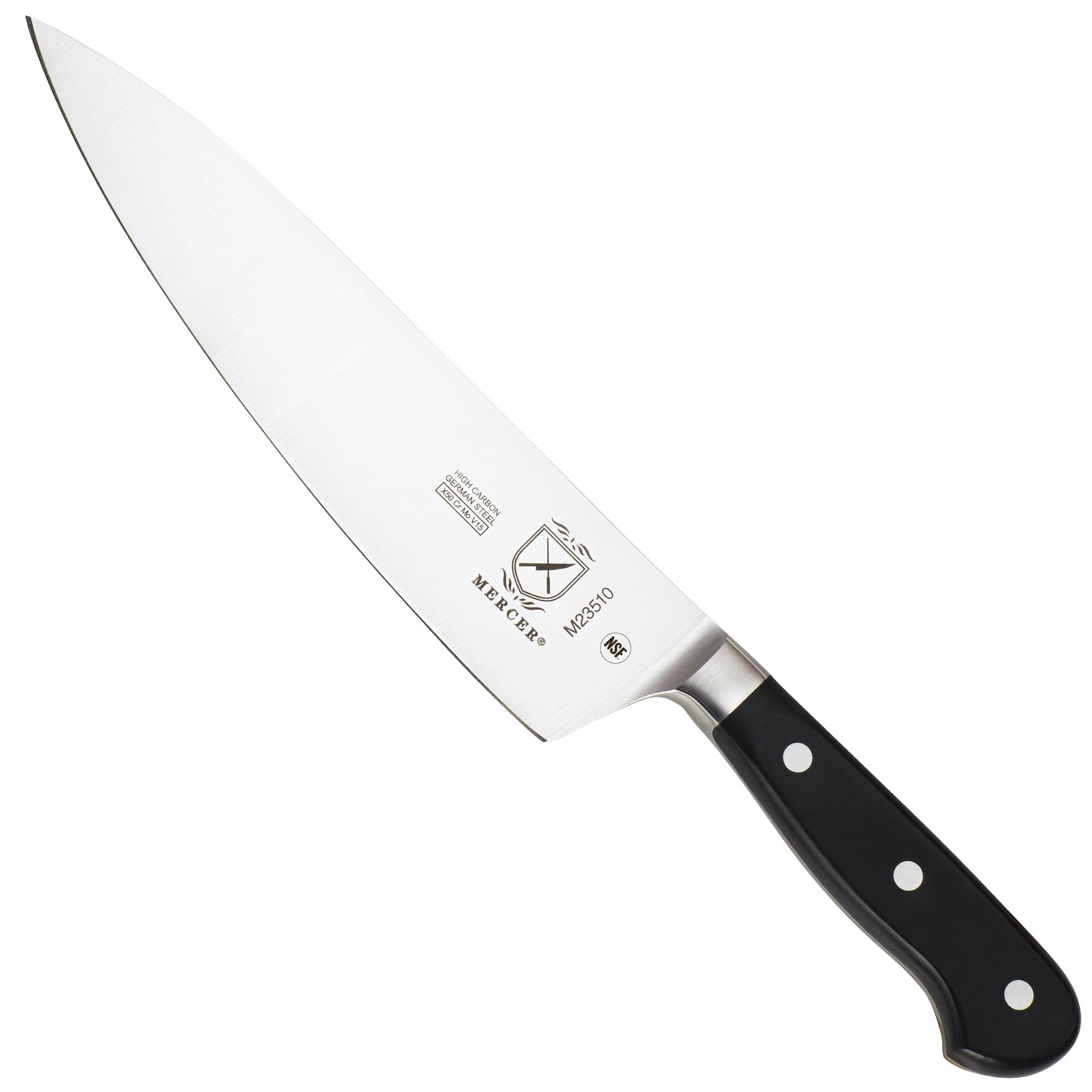
The Mercer Renaissance brings forged construction, a shortened bolster for quick sharpening, and a well-balanced feel to the sub-$50 bracket. The handle may be thick for smaller hands, and the edge doesn’t hold as long as pricier forged knives – but for culinary students or home cooks wanting a substantial blade without the premium price, it’s a strong alternative to the top pick’s stamped design.
Pros
- Forged blade with a rounded spine reduces hand fatigue during extended prep work.
- Arrives sharp and the shortened bolster makes it easier to sharpen over time.
Cons
- For users with smaller hands, the handle grip may feel too thick for comfortable control.
- The edge may require more frequent honing compared to higher-end forged knives.
A forged knife with real upgrades over budget stamped blades – worth considering if handle thickness isn’t a concern.
Best for Cheapest Entry
Amazon Basics 8" Chef
Key Features
- Blade Length: 8 in
- Blade Material: High-carbon stainless
- Handle Material: Stainless steel
- Weight: 0.23 kg
- Construction: Forged
- Price: $
The Amazon Basics Classic 8-inch Chef’s Knife delivers full-tang forged construction and impressively good balance at a price that undercuts nearly every sub-$20 option. Out of the box, it’s sharp enough for routine vegetable prep and light protein work.
This knife is best suited for absolute beginners, infrequent cooks, or as a backup in a rental kitchen – not for daily heavy use. The edge can lose its bite after a few weeks of regular cooking, so occasional sharpening is part of the ownership experience. For the same ultra-low price, the similarly positioned Mercer Millennia offers slightly better edge retention, but this Amazon Basics knife wins on forged feel and balance.
Pros
- Full-tang forged build with balanced feel that punches above its price
- Surprisingly sharp out of the box for the cost
- Perfect as a low-commitment starter or backup knife
Cons
- Edge can dull after a few weeks of regular use – occasional sharpening is expected
A no-brainer for extreme budget buyers needing a temporary or backup knife – just plan for more frequent sharpening if used regularly.
Best for Stylish Budget
PAUDIN 8" Chef Knife

Key Features
- Blade Length: 8 in
- Blade Material: 5Cr15MoV
- Handle Material: Wood
- Weight: 0.43 lbs
- Construction: Stamped
- Price: $
Sharp out of the box with a striking laser-etched pattern that appeals to those who want the look of Damascus without the cost. The wood handle is comfortable and balanced for light-to-moderate kitchen tasks. However, edge retention can be inconsistent – some units may dull after a few months of regular use, and the pattern is not true Damascus, making this a better fit for occasional use or as a secondary knife rather than a daily workhorse.
Pros
- Extremely sharp out of the box with a decorative etched blade pattern
- Strong value for the price – multiple users call it a steal
Cons
- Edge may lose sharpness after a few months of regular use
A good-looking starter knife for occasional chopping, but its edge retention makes it less suited for daily heavy use.
Best for Budget Gyutou
imarku 8" Chef Knife

Key Features
- Blade Length: 8 in
- Blade Material: High-carbon stainless
- Handle Material: Pakkawood
- Construction: Forged
- Price: $
The imarku 8-inch chef knife delivers impressive sharpness and a comfortable Pakkawood handle at a budget-friendly price. However, reports of handle cracking, blade snapping, and rust indicate that long-term durability falls short of alternatives like the Victorinox Fibrox Pro. This knife suits occasional use or as a backup, not daily heavy chopping.
Pros
- Sharp edge that holds well during typical prep tasks
- Comfortable Pakkawood handle with good ergonomics
Cons
- Handle may develop cracks or loosen over time with regular use
Best as a secondary knife or for light-duty tasks where initial sharpness matters more than long-term durability.
Best for Japanese Steel
HOSHANHO 8" Chef

Key Features
- Blade Length: 8 in
- Blade Material: 10Cr15CoMoV
- Handle Material: Pakkawood
- Construction: Forged
- Price: $$
This 8-inch chef knife delivers outstanding out-of-box sharpness with a thin 13° edge and comfortable Pakkawood handle, offering impressive value for a Japanese-style blade. However, the high hardness (60 HRC) makes it vulnerable to chipping on bones or frozen foods, and no blade guard is included. It suits beginners ready to handle a more delicate edge, but those needing a hard-use workhorse should consider the Victorinox Fibrox instead.
Pros
- Very sharp out of the box with a thin cutting angle for precise cuts
- Great value compared to similarly spec’d Japanese knives
Cons
- Edge may chip when used on hard items like bones or frozen foods due to high hardness
Best for beginners ready to adopt a delicate Japanese knife and avoid hard foods; those needing a tough all-rounder should look at the Victorinox Fibrox.
Best for Ultra-Budget Santoku
DDF iohEF Santoku 7"

Key Features
- Blade Length: 7 in
- Blade Material: 5Cr15MoV
- Handle Material: Stainless steel
- Weight: 8 oz
- Construction: Forged
- Price: $
This 7-inch santoku offers forged full-tang construction and surprising sharpness for its entry-level price. The blade feels well-balanced for smaller hands. However, the stainless finish may develop stains or tarnish, and the thin blade can flex under heavy chopping. It’s a reasonable starter knife for light-duty prep, but not a daily workhorse.
Pros
- Extremely sharp for the price
- Solid, well-balanced feel; good for small hands
Cons
- Finish may stain or tarnish over time, not as rust-resistant as claimed
Best suited as an inexpensive backup or for cooks who don’t mind occasional staining and prefer light slicing tasks.
Best for Lightweight Precision
Global G-2 8"

Key Features
- Blade Length: 8 in
- Blade Material: Molybdenum/vanadium stainless
- Handle Material: Stainless steel
- Weight: 7.84 oz
- Construction: Stamped
- Price: $$$
The Global G-2 delivers a razor-sharp edge and featherlight balance that many professional chefs appreciate, but its premium price and all-metal handle (slippery when wet, cold to the touch, and thin for larger hands) make it a niche pick for beginners – it’s better suited for experienced cooks who prioritize nimble precision over comfort and affordability.
Pros
- Razor-sharp edge out of the box that maintains its performance through extended use.
- Lightweight and balanced design reduces hand fatigue during long prep sessions.
Cons
- Handle becomes slippery when wet and the metal feels uncomfortably cold, which may affect grip security for some users.
Best suited for cooks who want a lightweight, high-performing blade and are willing to work around the polarizing handle – not the most beginner-friendly choice given the price and grip concerns.
Best for Premium Heirloom
WÜSTHOF Classic 8"

Key Features
- Blade Length: 8 in
- Blade Material: High-carbon stainless
- Handle Material: Synthetic
- Construction: Forged
- Price: $$$$
The WÜSTHOF Classic 8" delivers forged construction, sharp edge retention, and decades of reported use – a clear step up from entry-level options. However, the premium price and occasional handle or blade defects make it a risky first knife. Beginners unsure of their preferences are better served by a lower-cost alternative like the Victorinox Fibrox Pro.
Pros
- Forged blade with balanced weight reduces fatigue during long prep sessions.
- Edge stays sharp between sharpenings, minimizing the need for frequent honing.
Cons
- Upfront cost is a barrier for those on a tight budget – better reserved for cooks ready for a long-term investment.
Best suited for committed home cooks who want a knife to last decades, not for beginners still exploring their preferences.
Best for Unique Design
Matsato 6.3" Chef

Key Features
- Blade Length: 6.3 in
- Blade Material: 1.4116 Japanese stainless
- Handle Material: Wood
- Weight: 176 g
- Construction: Forged
- Price: $
The Matsato’s attractive design and ergonomic handle with finger hole offer good comfort and control. However, the knife can arrive less than sharp and the edge may lose sharpness quickly, and some users report the handle loosening over time – a mismatch for beginners seeking consistent out-of-box performance.
Pros
- Unique finger hole improves control and safety during use.
- Ergonomic wooden handle fits a range of hand sizes comfortably.
Cons
- For a beginner needing immediate sharpness, the knife may arrive dull and the edge may not hold long.
Suitable as a secondary knife for users who value aesthetics and are comfortable sharpening immediately, but not for those who need consistent cutting performance out of the box.
How to Choose
A sharp knife is safer than a dull one, but regular honing is the habit most beginners overlook.
Blade Length
An 8-inch blade suits most home cooks, offering a balance between slicing large vegetables and detailed work. A 6–7 inch santoku provides more control for smaller hands or those who prefer a lighter feel.
Shorter blades require more strokes for big carrots or squash, while longer blades can feel unwieldy for trimming. Choose based on your comfort and the size of your cutting board.
Blade Material
High-carbon stainless steel is the standard – it holds an edge well and resists corrosion if dried after washing. Some budget knives use softer steel that dulls faster, while harder Japanese steels (60+ HRC) stay sharp longer but can chip on bones or frozen food.
For a beginner, a mid-hardness steel (56–58 HRC) offers the best mix of edge retention and forgiving toughness. Avoid exaggerated hardness claims from unknown brands; real performance depends on heat treatment, not just numbers.
Handle Material
Synthetic handles like Fibrox, Santoprene, or Delrin provide a secure grip even when wet and are low-maintenance. Wood handles (Pakkawood, walnut) look premium but can crack or loosen if not dried promptly or exposed to dishwasher heat.
A comfortable, non-slip handle reduces hand fatigue and improves control. If you have smaller hands, look for a handle that isn’t too thick; if you have large hands, avoid thin metal handles that offer little grip.
Weight and Balance
Heavier knives (8–10 oz) help power through dense vegetables with less effort from your arm. Lighter knives (6–7 oz) reduce fatigue during long prep sessions but require more wrist force for hard ingredients.
Balance is key: a blade-heavy knife feels sluggish to maneuver, while a handle-heavy knife makes precise cuts harder. Hold the knife at the handle – if it tips forward naturally, it’s blade-forward, ideal for rocking cuts.
Construction: Stamped vs. Forged
Stamped knives are cut from a sheet of steel, heat-treated, and then sharpened. They are lighter, less expensive, and often thinner – great for beginners who value maneuverability and budget. Forged knives are shaped from a heated billet, usually heavier and more durable, with a full tang for better balance.
The common belief that forged is always better is misleading. Many stamped knives (like the Victorinox Fibrox) outperform cheap forged knives in sharpness and edge retention. For a beginner, a quality stamped knife is a smarter buy than a budget forged one.
FAQ
How often should I hone and sharpen a beginner chef’s knife?
Hone the blade with a steel rod before each use to realign the edge – this takes 30 seconds. Sharpen (grind metal) only when honing stops restoring sharpness, typically every 2–3 months for a home cook. A dull knife is more dangerous than a sharp one because it requires extra force.
Is a stamped or forged chef’s knife better for a home cook?
For most home cooks, a quality stamped knife like the Victorinox Fibrox Pro offers better value than a cheap forged knife. Forged knives can be heavier and more durable, but the best beginner choice is a well-made stamped blade that is sharp, light, and easy to maintain.
Can I put my chef’s knife in the dishwasher if the label says it’s safe?
Even if labeled dishwasher-safe, hand washing is strongly recommended. Dishwasher detergents and high heat can damage wood handles, dull the edge faster, and cause corrosion on some stainless steels. A quick hand wash and dry adds 30 seconds and extends the knife’s life significantly.
What’s the best chef knife for someone with small hands?
A 7-inch santoku or a lightweight 8-inch knife with a slim handle works best. The imarku 7" Santoku has a compact blade and comfortable Pakkawood handle that fits smaller grips. Avoid heavy, thick-handled forged knives that can feel clumsy and fatiguing.