This post contains affiliate links. We may earn a small commission when you buy through our links — at no extra cost to you.
A carving knife that arrives dull or rusts after a few uses is a fast track to a frustrating holiday meal. Many budget-friendly options promise stainless steel and lasting sharpness, but the reality often falls short: uneven edges, slippery handles, and blades that need immediate honing.
The good news is that the gap between budget and premium has narrowed considerably. Knives in the $30–$50 range now offer forged construction, comfortable handles, and edge retention that holds up through a whole brisket. The trick is knowing which specs actually matter—blade length, steel type, and handle material—and ignoring the marketing fluff.
This guide cuts through that noise by focusing on performance and real-world trade-offs. Whether you slice a turkey twice a year or smoke briskets every weekend, the right carving knife saves you time and frustration without demanding a three-figure price tag.


Best for Home Bbq Enthusiasts
Cutluxe 12" Carving Knife
Key Features
- Blade Length: 12 in
- Steel & Hardness: German 1.4116, 56+ HRC
- Handle Material: Pakkawood
- Edge Type: Hollow (Granton)
- Construction: Forged
- Price: $
This 12-inch carving knife arrives sharp enough to slice parchment-thin brisket without tearing the grain. The hollow (granton) edge reduces friction, letting the blade glide through smoked meats and large roasts with minimal effort. Edge retention is solid for a budget steel – stays sharp through multiple holiday meals before needing a touch-up.
Designed for home BBQ enthusiasts who smoke briskets, this knife pairs a full-tang Pakkawood handle with a forged German steel blade that feels substantial in hand. The included sheath simplifies storage and protects the edge. Some units show minor gaps where the wood meets the tang – not a performance issue, but the fit-and-finish inconsistencies may trouble buyers who expect flawless craftsmanship. That tradeoff is easy to accept at this price point.
Pros
- Razor sharp out of the box with good edge retention for a budget knife.
- Glides through large roasts and briskets without sticking.
- Comfortable, well-balanced handle with full tang for control.
Cons
- Minor gaps where the Pakkawood meets the tang have been noted on some units – doesn’t affect cutting, but the fit feels less premium.
For home cooks who want a sharp, capable brisket slicer without spending over $50, this knife delivers the performance and included sheath that pricier competitors often omit.
Best for Home Cooks & Pros
Victorinox Fibrox 12"
Key Features
- Blade Length: 12 in
- Steel & Hardness: High Carbon Stainless, —
- Handle Material: Fibrox (thermoplastic)
- Edge Type: Granton (plain)
- Construction: Stamped
- Price: $$
The Fibrox Pro delivers thin, granton-edge slicing that professional kitchens rely on – clean cuts through roast turkey or brisket with minimal drag. It arrives without a sheath or blade guard, so you’ll need to buy or make your own storage. This suits home cooks who already own a blade guard or prefer a knife block, and who value a thin blade for ultra-thin slices over a thicker, stiffer feel.
Pros
- Granton edge glides through cooked meats with minimal resistance
- High-carbon stainless steel holds its sharp edge across many uses
- Fibrox handle stays grippy even with wet or greasy hands
Cons
- No blade guard or sheath included – requires separate purchase for safe storage
This knife delivers consistent commercial-level slicing for cooks who don’t mind sourcing their own blade guard – if that fits your setup, the edge performance is tough to match at this price.
Best for Bbq Enthusiasts
TUO 12" Carving
Key Features
- Blade Length: 12 in
- Steel & Hardness: German stainless, —
- Handle Material: Pakkawood (round)
- Edge Type: Hollow (Granton)
- Construction: Forged
- Price: $
The TUO 12-inch carving knife offers a hand-sharpened hollow edge and a comfortable Pakkawood handle at a budget-friendly price. While the top pick includes a sheath and forged German steel, the TUO’s rounder handle profile suits many cooks, though it comes without a sheath. The blade can develop rust spots if not dried promptly – a simple habit to adopt. This knife works well for home cooks and BBQ fans who want a sharp slicer without spending much, as long as they have average-sized hands and are willing to dry the blade after washing.
Pros
- Razor-sharp hollow edge that holds its cutting performance well.
- Comfortable Pakkawood handle with balanced weight for extended slicing.
- Cost-effective option with solid craftsmanship for the price.
Cons
- Handle may feel narrow for users with larger hands.
For buyers who don’t need a sheath and can manage blade drying, this is a sharp, well-balanced carving knife at a low price.
Best for Gift Buyers
KESSAKU 12" Carver
Key Features
- Blade Length: 12 in
- Steel & Hardness: 7Cr17MoV, 58 HRC
- Handle Material: Pakkawood
- Edge Type: Hollow (Granton)
- Construction: Forged
- Price: $$
The KESSAKU 12-inch carver arrives in a magnetic gift box with a blade guard and polishing cloth – a presentation that sets it apart from other mid-range options. The hollow granton edge is razor-sharp out of the box and glides through roasts and turkey with minimal effort. Unlike the more affordable forged Japanese steel knife in this test, the KESSAKU prioritizes a complete, gift-ready experience over raw value.
This knife suits home cooks who want a sharp carving knife that also looks impressive on the counter or as a gift. It’s not a professional workhorse – for heavy commercial use, a Victorinox style knife would be more appropriate. But for holiday dinners and weekend roasts, the KESSAKU delivers without compromise.
Pros
- Flawless finish and premium look – feels like a much more expensive knife.
- Razor-sharp out of the box – slices through cooked meats effortlessly.
- Complete package includes blade guard, polishing cloth, and magnetic box – no extra purchase needed.
Cons
- Not suited for heavy commercial use; the handle and blade are designed for home kitchen volumes.
For home cooks who value presentation as much as performance, the KESSAKU is the most complete carving knife package you can buy at this price.
Best for Japanese Steel Fans
HOSHANHO 12" Carver
Key Features
- Blade Length: 11.6 in
- Steel & Hardness: 10Cr15CoMoV, 60+ HRC
- Handle Material: Pakkawood
- Edge Type: Plain
- Construction: Forged
- Price: $$
The HOSHANHO 12" carving knife uses Japanese 10Cr15CoMoV steel, which holds a keen edge noticeably longer than standard German stainless at this price point. Its Pakkawood handle is well-balanced and comfortable for smaller hands, but cooks with average or large hands will find the grip too short. No sheath is included, so you’ll need a knife block or edge guard for safe storage. This knife suits home cooks who prioritize edge retention over fit and already have storage solutions.
Pros
- Edge stays razor-sharp through heavy slicing tasks.
- Well-balanced Pakkawood handle offers a secure, comfortable grip.
- Premium fit and finish with a beautiful high-carbon steel blade.
Cons
- Handle may be too small for cooks with larger hands.
- No protective sheath included for safe storage.
A strong choice if you have smaller hands and already own a knife block; otherwise, the Cutluxe top pick offers a more universal fit and sheath for less.
Best for Budget Gift Givers
imarku 12" Carver
Key Features
- Blade Length: 11.6 in
- Steel & Hardness: Japanese high-carbon, 56-58 HRC
- Handle Material: Pakkawood
- Edge Type: Plain
- Construction: Forged
- Price: $
The imarku 12-inch carving knife delivers a premium aesthetic at a fraction of the cost of similarly styled knives. The forged Japanese high-carbon stainless steel blade and warm Pakkawood handle feel substantial, and most units arrive with a sharp edge that glides through roasted meats and bread with little effort.
This is the right pick for cooks who prioritize visual appeal and comfortable handling over guaranteed out-of-box sharpness. A small number of blades require initial honing, and the blade may develop rust spots if left wet – but for home kitchens in average humidity, it holds up well and outperforms its price point.
Pros
- Premium look and comfortable pakkawood handle
- Cuts through meat and bread with light effort
- Feels like a much more expensive knife for a budget price
Cons
- Sharpness can vary between units – some need honing before first use
- Blade may develop rust spots if not dried promptly after use
A stunning carving knife for gift-giving or budget-conscious cooks who can accept a small chance of needing to hone the edge – the best-looking slicer under $40.
Best for Budget Occasional Use
MAIRICO 11" Slicer

Key Features
- Blade Length: 11 in
- Steel & Hardness: Stainless, —
- Handle Material: Stainless steel
- Edge Type: Hollow (Granton)
- Construction: Stamped
- Price: $
This 11-inch slicer comes in at the lowest price of all knives tested. The blade is sharp enough for most carving tasks right out of the box, and the lightweight build makes it easy to handle for a full turkey or brisket. That said, sharpness varies between units — some arrive dull and need immediate honing. The smooth stainless handle also becomes slippery when your hands are wet, which limits its use to dry conditions and indoor kitchens. It’s a disposable tool suited for very occasional use, not a daily driver for frequent BBQ cooks.
Pros
- Sharp edge out of box – cuts through brisket and turkey with ease.
- Lightweight and easy to maneuver for extended slicing sessions.
Cons
- Smooth stainless handle becomes slippery when wet – requires a dry grip.
This knife works for the occasional holiday roast at home, but expect to sharpen it first and keep your hands dry.
Best for Damascus Pattern Fans
SYOKAMI 12" Damascus

Key Features
- Blade Length: 12 in
- Steel & Hardness: High-carbon, 56+ HRC
- Handle Material: Wood (FSC)
- Edge Type: Hollow (Granton)
- Construction: Forged
- Price: $
The SYOKAMI 12-inch brisket knife offers an eye-catching Damascus pattern and sharp edge out of the box, making quick work of holiday roasts or brisket. However, the edge tends to dull faster than higher-end slicers, and no sheath is included for safe storage. This knife suits the cook who values looks and occasional carving over daily professional use.
Pros
- Visually impressive Damascus pattern adds character to the knife block.
- Sharp out of the box, cuts through turkey and roast beef effortlessly.
Cons
- For frequent slicing sessions, edge may lose sharpness faster than premium alternatives.
A budget option for those who prioritize looks and initial sharpness over long-term edge retention; ideal for occasional carving where a quick hone is acceptable.
Best for Home Butchers
Dalstrong Gladiator 10"

Key Features
- Blade Length: 10 in
- Steel & Hardness: German high-carbon, 56+ HRC
- Handle Material: G10
- Edge Type: Plain
- Construction: Forged
- Price: $$$
The Dalstrong Gladiator 10” is a well-constructed butcher knife with a sharp, durable high-carbon steel blade that handles primal breakdowns with control. Its shorter length suits tighter spaces, but the smooth G10 handle becomes slippery when greasy, making it less suited for slicing cooked roasts where fat and juices are present. A solid pick for home butchers who value edge retention over slip resistance.
Pros
- Holds a sharp edge through repeated use on large cuts.
- NSF-certified construction holds up to regular commercial tasks.
Cons
- G10 handle can become slippery when greasy, increasing the chance of losing grip.
Best for home butchers who break down primals and don’t mind wiping the handle dry; less ideal for slicing cooked turkey or roasts.
Best for Luxury Collectors
Dalstrong Shogun 12"
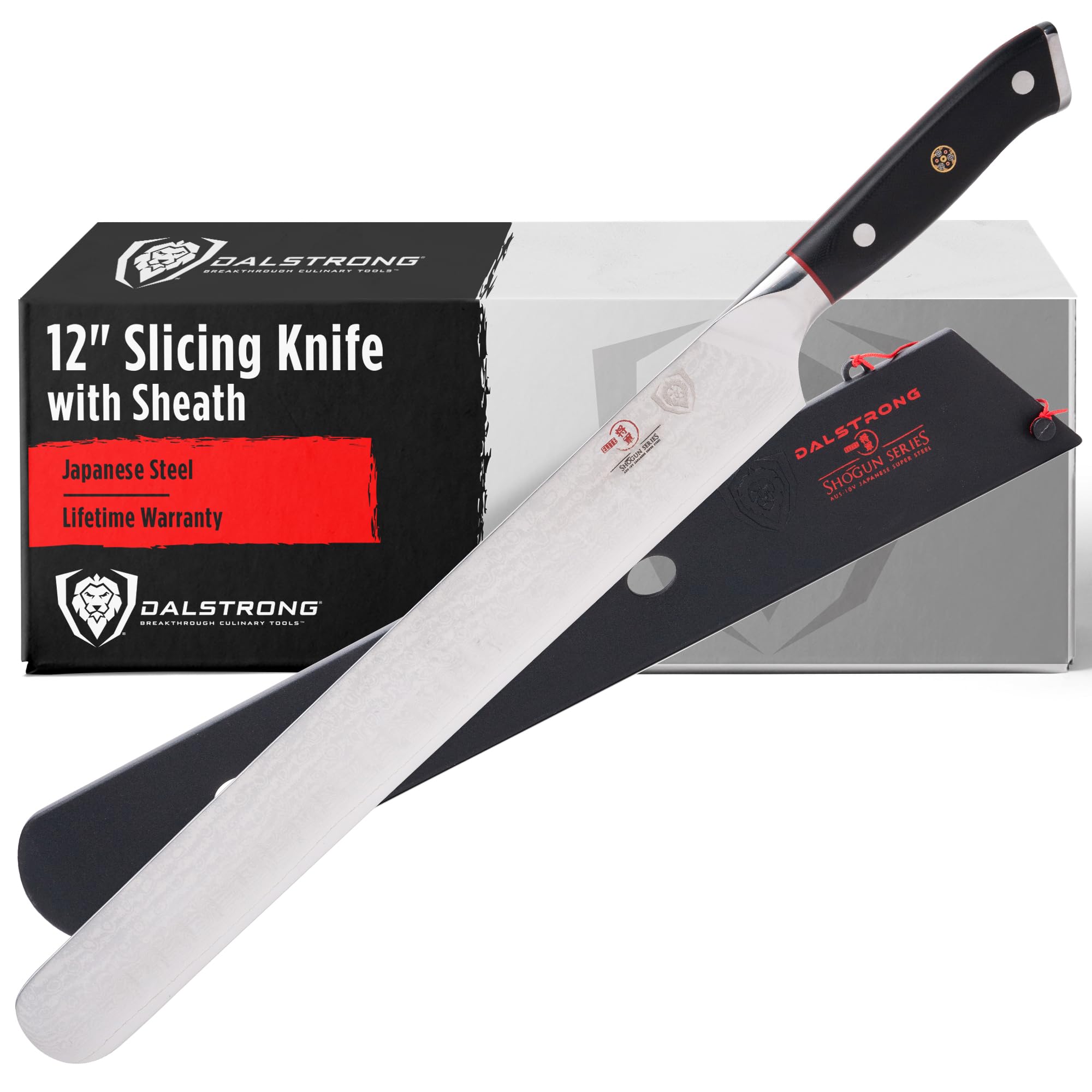
Key Features
- Blade Length: 12 in
- Steel & Hardness: AUS-10V, 62+ HRC
- Handle Material: G10
- Edge Type: Granton (plain)
- Construction: Forged (Damascus)
- Price: $$$$
The Dalstrong Shogun 12-inch carving knife pairs AUS-10V super steel with a 67-layer Damascus finish for exceptional edge retention during heavy slicing. The balanced weight aids smooth cuts, but the G10 handle can become slippery when wet. Its high price and smooth grip make it a specialty tool for enthusiasts who value craftsmanship over budget.
Pros
- Razor-sharp AUS-10V steel holds its edge through multiple roasts before needing a touch-up.
- Stunning 67-layer Damascus pattern and premium fit and finish elevate the look of any kitchen.
Cons
- G10 handle can become slippery when wet, reducing control during extended carving sessions.
Best suited for cooks who want a showpiece slicer with top-tier steel and can accept a smooth handle and a premium investment.
Best for Hand-Forged Style
Huusk 11.5" Slicer

Key Features
- Blade Length: 11.5 in
- Steel & Hardness: ATS-34, 58-60 HRC
- Handle Material: Wood (3 rivets)
- Edge Type: Plain
- Construction: Forged (hand)
- Price: $
The Huusk slicing knife delivers a hand-forged look and sharp edge at a budget-friendly price, making it appealing for occasional use where appearance matters. However, black ink can transfer from the blade to food initially, and the high-carbon steel requires immediate drying to avoid rust.
Pros
- Good sharpness – cuts meat like butter
- Attractive hand-forged appearance with hammer marks
Cons
- Ink from the blade can transfer to hands and food
Suits those who want a forged look on a tight budget and are willing to manage ink transfer and careful drying.
Best for Very Occasional Use
Bright Hobby 12" Slicer

Key Features
- Blade Length: 11.7 in
- Steel & Hardness: German high-carbon, 56+ HRC
- Handle Material: ABS plastic
- Edge Type: Hollow (Granton)
- Construction: Forged
- Price: $
The Bright Hobby 12” Slicer is very sharp and inexpensive. But handle breakage has been noted during use, a safety concern. This knife is for very occasional use only, when cost is the deciding factor and you accept the risk of a snapping handle.
Pros
- Very sharp out of the box
- Good value for the low price
Cons
- Handle may snap during use – a safety hazard that restricts use to very occasional tasks
Only worth considering if you need a cheap knife for rare use and are prepared for the handle to possibly break.
How to Choose
The sweet spot for a carving knife that performs without overpaying is between $30 and $50, where forged construction and quality handle materials become standard.
Blade Length
Carving knives typically range from 10 to 12 inches. A 12-inch blade offers the long, sweeping strokes ideal for large roasts and briskets, allowing clean slices without sawing back and forth.
Shorter blades (10–11 inches) are easier to control on smaller cuts like chicken or pork loin, and they fit better on crowded countertops. Choose based on what you carve most often.
Steel & Hardness
German steel (e.g., 1.4116) is tough and easy to sharpen, making it forgiving for home cooks. Japanese high-carbon steels (e.g., AUS-10V) hold a finer edge longer but are harder and more brittle—prone to chipping if misused.
Hardness ratings of 56–58 HRC offer a good balance of edge retention and durability. Above 60 HRC delivers superior slicing performance but requires careful handling and a good honing rod.
Handle Material
Pakkawood (resin-impregnated wood) provides a warm, comfortable grip that becomes tacky when wet—ideal for long slicing sessions. Synthetic handles like Fibrox or G10 are durable and slip-resistant when dry but can become slippery with grease.
Full stainless steel handles look sleek but offer no grip when wet, making them a poor choice for juicy roasts. A textured or contoured shape reduces fatigue during heavy use.
Edge Type
Hollow or Granton edges have scalloped indentations that create air pockets, reducing friction and preventing thin slices from sticking to the blade. This is the standard for brisket and roast slicing.
Plain edges produce cleaner cuts and are easier to sharpen at home, but they lack the anti-stick benefit. For very thin slices of cooked meat, the Granton edge is a clear advantage.
Construction
Forged knives are cut from a single piece of heated steel and hammered into shape, resulting in a thicker spine and better balance. They are heavier and more expensive but offer superior durability.
Stamped knives are cut from a sheet of steel, making them lighter and cheaper. Modern stamping processes have improved quality, but they lack the heft that helps power through dense roasts.
FAQ
Why does my new carving knife rust even though it says stainless steel?
Stainless steel is stain-resistant, not stain-proof. High-carbon stainless steels (common in carving knives) contain chromium but can still rust if left wet or stored in a humid drawer. Always hand dry the blade immediately after washing, and avoid the dishwasher.
How should I store a 12-inch carving knife without a sheath?
Use a universal blade guard, a magnetic strip, or a knife block with a wide slot. Loose storage in a drawer wears down the edge and risks cuts. If you bought a knife without a sheath, a $5–10 edge guard solves the problem.
Is a 12-inch carving knife too long for home kitchen use?
For large roasts and brisket, 12 inches is ideal. If you mostly carve chicken or smaller roasts, an 11-inch blade offers more control. 12 inches can feel unwieldy on narrow countertops, but the extra length reduces the number of strokes needed.
What is the best carving knife for brisket – hollow edge or plain edge?
A hollow (Granton) edge is the standard choice for brisket because the scallops prevent thin slices from sticking to the blade. Plain edges cut cleanly but require more effort to release each slice. For competition-style thin slices, go with a Granton edge.