This post contains affiliate links. We may earn a small commission when you buy through our links — at no extra cost to you.
Most shoppers assume a higher price means better performance in a boning knife. But this category flips that logic: $20 stamped blades routinely outperform $100 forged models in edge retention and ease of sharpening.
The real challenge isn’t budget — it’s blade flexibility. A stiff knife that works for trimming brisket will ruin a delicate fish fillet, and a flexible blade can’t power through pork shoulder joints. Many knives claim to be both “boning and fillet” but compromise on one end.
This guide cuts through the marketing to match you with the right stiffness, blade length, and handle for your primary task — whether you’re breaking down whole chickens every Sunday or processing deer after hunting season.



Best for All-Round Home Cooks
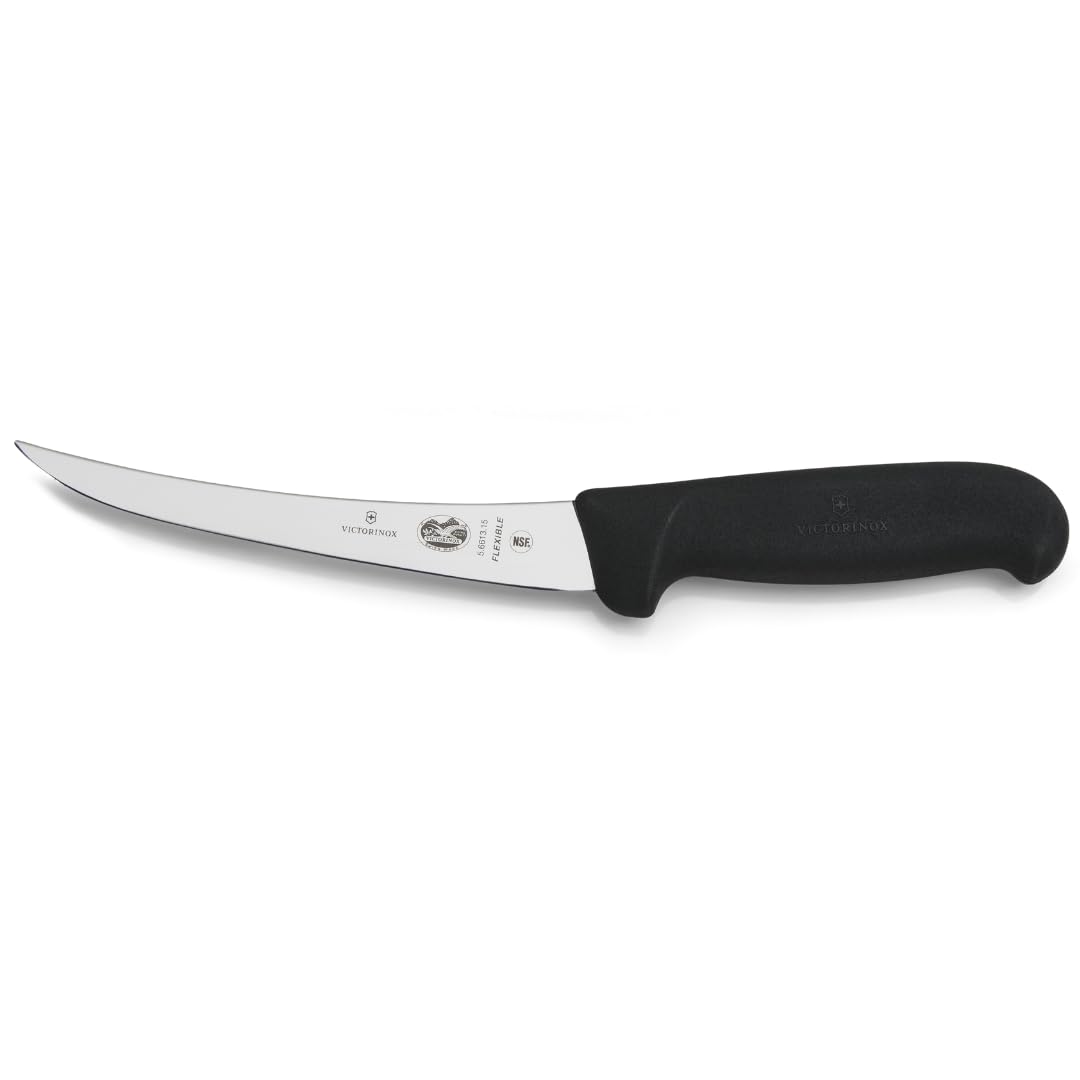
Victorinox Fibrox 6"
Key Features
- Blade Length: 6 in.
- Flexibility: Flexible
- Handle Material: Thermoplastic Rubber
- Blade Material: Stainless Steel
- Price: $
The factory edge on this Victorinox Fibrox arrives sharp enough to trim silverskin without dragging, and it stays that way through multiple sessions — something you’d expect from knives costing much more. The Fibrox handle offers a secure grip even with wet hands, and the blade’s flexibility suits poultry joints and fish fillets alike.
This knife is for home cooks, hunters, and pros who want a dependable boning tool without the forged-knife price tag. If you routinely break down heavy beef subprimals, a stiffer option like the semi-stiff Victorinox variant will give better leverage. The only tradeoff: no sheath is included, so factor in a blade guard for safe storage.
Pros
- Factory edge is razor-sharp and retains sharpness through extended use
- Costs a fraction of many competitors while matching their cutting performance
- Slip-resistant handle stays comfortable and secure when wet or greasy
Cons
- Sold without a protective sheath — an extra purchase for safe storage
For anyone needing a flexible boning knife that cuts well and lasts, this is the one to start with — just budget a few dollars for a blade guard.
Best for Budget-Minded Cooks
Mercer Ultimate White 6"
Key Features
- Blade Length: 6 in.
- Flexibility: Stiff
- Handle Material: Polypropylene
- Blade Material: High Carbon Steel
- Price: $
At under $12, the Mercer Culinary Ultimate White delivers a sharp out-of-box edge that can be maintained with a few strokes on a steel – no premium-price tag required. It’s a no-frills workhorse that prioritizes value over flexibility or long-term edge retention.
This knife is best for home cooks and beginners tackling beef or pork trimming. The stiff blade provides leverage for joint work, but it won’t flex for fish fillet removal. Edge retention is average, so casual use is fine, but all-day professional sessions may demand more frequent honing.
Pros
- Sharp factory edge ready for immediate use
- Simple to resharpen – not locked into professional sharpening services
- Secure polypropylene handle stays comfortable during long trimming sessions
Cons
- Edge dulls faster than premium steels; regular honing keeps it cutting
- Stiff blade limits use to heavy trimming – not suitable for flexible fish fillet work
If your budget tops out at $12 and you primarily break down chicken, pork, or beef, this knife does the job without complaint.
Best for Beef/pork Trimming
Victorinox Fibrox Semi-Stiff
Key Features
- Blade Length: 6 in.
- Flexibility: Semi-stiff
- Handle Material: Fibrox
- Blade Material: Stainless Steel
- Price: $
Same Fibrox handle and build as the popular flexible model, but with a stiffer blade that gives more control when breaking down beef and pork. The 6-inch curved semi-stiff design provides the rigidity needed for heavy trimming while still handling poultry joints without excessive force. This suits home cooks who primarily work with red meat and want less flex than the standard Fibrox offers. Not flexible enough for fish fillet work — keep a dedicated fillet knife for that task.
Pros
- Holds an edge well and sharpens easily with common stones or rods.
- Non-slip Fibrox handle stays secure even with wet or greasy hands.
- Semi-stiff blade handles both meat and poultry without excessive flex.
Cons
- For fish filleting, the blade stiffness prevents the close bone tracing needed – a dedicated fillet knife is required.
If beef and pork trimming is your primary use, this offers the same dependable Fibrox build with added control for heavy cuts.
Best for Heavy Meat Trimming
TUO 7" Boning Knife
Key Features
- Blade Length: 7 in.
- Flexibility: Stiff
- Handle Material: Pakkawood
- Blade Material: German 1.4116 Steel
- Price: $
The TUO’s 7-inch blade is notably stiffer than the Victorinox Fibrox, offering superior leverage when breaking down beef briskets or pork shoulders. The Pakkawood handle provides a secure grip even with wet hands. However, this stiffness makes it unsuitable for filleting fish or deboning poultry with delicate bones. Home cooks who primarily trim large cuts of red meat will find it effective, but immediate drying after washing is advised to avoid occasional rust spots.
Pros
- Factory edge outshines many knives at twice the price
- Full tang and solid Pakkawood handle offer balanced weight and secure grip
- Cost-effective build quality for heavy trimming tasks
Cons
- Rust can develop if blade is not dried promptly after washing
- Blade stiffness prevents fish fillet work and limits use on poultry
Best for BBQ enthusiasts or home cooks who need a stiff blade for pork and beef — not a filleting knife.
Best for Aesthetic-Driven Home Cooks
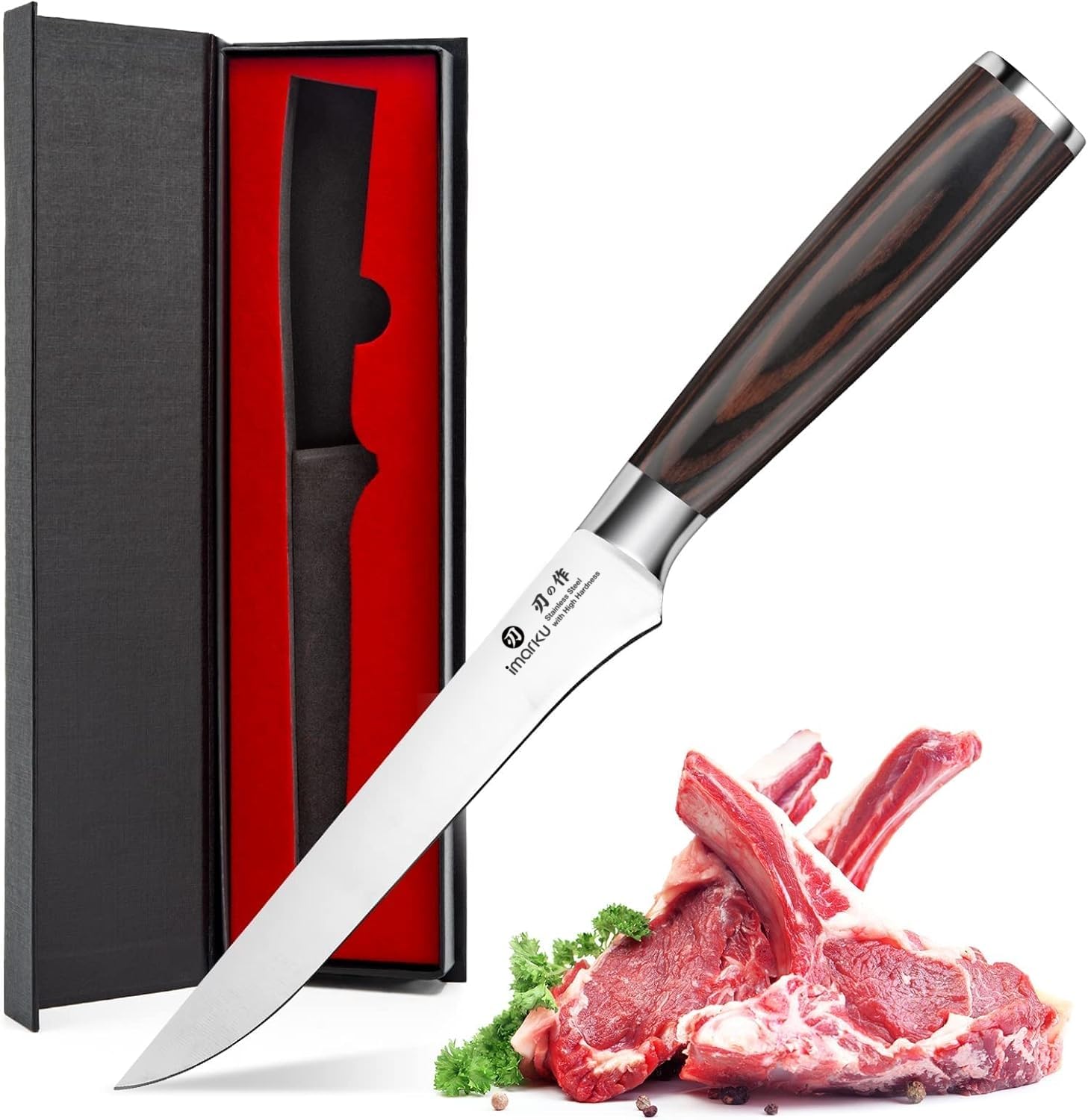
imarku 6" Pakkawood
Key Features
- Blade Length: 6.8 in.
- Flexibility: Semi-flexible
- Handle Material: Pakkawood
- Blade Material: High Carbon Stainless
- Price: $
The imarku 6-inch boning knife pairs a sharp high-carbon stainless steel blade with a Pakkawood handle that rivals knives costing several times more. Out of the box, it delivers impressive sharpness suitable for most home boning tasks. However, the blade is semi-flexible and has been noted to snap under extreme stress in rare cases — a safety concern that makes this knife unsuitable for heavy commercial use or prying motions. Home cooks who prioritize aesthetics and sharpness will find it a strong contender.
Pros
- Extremely sharp out of the box with long-lasting edge
- Beautiful Pakkawood handle that feels premium
- Comfortable ergonomics for extended use
Cons
- Blade is stiffer than typical fillet knives — less suited for delicate fish work
A sharp, good-looking knife at a budget price — suited for home cooks who want premium feel without the premium cost, provided they avoid extreme stress.
Best for Enthusiasts & Collectors
Shun Classic 6"
Key Features
- Blade Length: 6 in.
- Flexibility: Semi-flexible
- Handle Material: Pakkawood
- Blade Material: VG-MAX Damascus
- Price: $$$
The Shun Classic 6" uses a VG-MAX core wrapped in Damascus cladding to hold a razor edge far longer than any stamped blade in this roundup. The fit and finish are precise, and the semi-flexible design handles poultry and light boning with authority.
This knife suits serious home cooks and enthusiasts who appreciate fine craftsmanship and are willing to hand-wash and store it properly. The high-hardness steel can chip under abuse, and the semi-flex blade won’t match a dedicated fillet knife for fish work — but for those who prioritize edge retention and aesthetics, the tradeoffs are worth accepting.
Pros
- Exceptional out-of-box sharpness that lasts through extended use
- Beautiful damascus finish and premium balanced handle
Cons
- Premium price makes it a significant investment for a single knife
- Requires careful hand-washing and proper storage to avoid chipping
If you value sharpness and craftsmanship over budget flexibility, the Shun delivers — but only if you’re ready to maintain it.
Best for Stiff Blade Fans
HOSHANHO 7" Fillet

Key Features
- Blade Length: 7 in.
- Flexibility: Stiff
- Handle Material: Pakkawood
- Blade Material: 10Cr15CoMoV Steel
- Price: $$
This knife arrives sharp out of the box with an attractive Pakkawood handle and good balance. The stiff 7-inch blade handles beef and pork trimming well, but its lack of flexibility makes it a poor match for fish filleting. At a mid-range price, it costs more than the similarly stiff TUO and lacks the versatility of the Victorinox Fibrox.
Pros
- Very sharp edge with lasting sharpness between honings
- High-quality fit, finish, and attractive design
Cons
- Stiff blade is not suited for fish fillet work where flex is needed
If you need a stiff 7-inch blade for red meat and value aesthetics over price, this knife works. For fish or a better value, look at the Victorinox or TUO.
Best for Budget Wood-Handle
PAUDIN 6" Pakkawood

Key Features
- Blade Length: 6 in.
- Flexibility: Semi-flexible
- Handle Material: Pakkawood
- Blade Material: 5Cr15MoV Steel
- Price: $
The PAUDIN’s German steel blade and Pakkawood handle offer visual appeal and a sharp edge for the price, but out-of-box sharpness may need touching up and the metal handle cap can feel sharp in hand. These QC variations keep it from competing with more consistent budget options.
Pros
- Sharp blade with an attractive wood handle
- Good value at a budget price point
Cons
- Blade edge may need sharpening before first use
Best for home cooks who prioritize looks and low cost over guaranteed out-of-the-box sharpness.
Best for Usa-Made Workhorse
Dexter Russell 1483 6"

Key Features
- Blade Length: 6 in.
- Flexibility: Flexible
- Handle Material: Polypropylene
- Blade Material: High Carbon Stain-Free
- Price: $
Made in the USA and NSF certified, this knife arrives sharp with good edge retention and a comfortable non-slip handle. Some units may develop rust spots despite the stain-free steel. The blade is less flexible than the label suggests — better suited for red meat and poultry than fish fillet work.
Pros
- Sharp out of the box and holds edge through multiple uses.
- NSF-certified professional build for commercial-grade use.
Cons
- Blade is stiffer than expected for fish work — better for boning than filleting.
Best for professionals and hunters who want a durable American-made knife for heavy meat processing, provided you accept possible rust and limited flexibility for fish.
Best for Full-Tang Budget
Cutluxe 6" Boning

Key Features
- Blade Length: 6 in.
- Flexibility: Semi-flexible
- Handle Material: Pakkawood
- Blade Material: High Carbon German Steel
- Price: $
The Cutluxe offers a full-tang Pakkawood handle and sharp German steel at a low price, giving a premium feel. Edge retention is only average – it sharpens quickly but may need frequent touch-ups, making it best for home cooks who don’t mind periodic honing.
Pros
- Sharp and well-balanced with a comfortable full-tang handle
- Good quality for the price
Cons
- No sheath included – factor in a blade guard for safe storage
A good pick for budget-conscious home cooks who want full-tang construction and don’t mind a steel that requires frequent touch-ups.
Best for Color-Coded Kitchens
Mercer Millennia Blue 6"

Key Features
- Blade Length: 6 in.
- Flexibility: Stiff
- Handle Material: Santoprene
- Blade Material: High Carbon Steel
- Price: $
Blue handle color-coding helps commercial kitchens prevent cross-contamination, and the blade is sharp enough for routine meat trimming. Stiffness and edge wear that speeds up with use make it a poor match for fish fillet work, so its role is limited to tasks where flexibility doesn’t matter. This niche focus keeps it below more versatile options.
Pros
- Blue handle enables color-coded food safety in commercial kitchens.
- Sharp out of box and effective for meat trimming tasks.
Cons
- Stiff blade; not suitable for fish fillet work.
Choose this for a color-coded fish station where blade stiffness is acceptable and food safety protocols matter more than fillet versatility.
Best for Small Hands/precision
Dexter 5" Boning

Key Features
- Blade Length: 5 in.
- Flexibility: Flexible
- Handle Material: Polypropylene
- Blade Material: High Carbon Steel
- Price: $
The Dexter’s 5-inch flexible blade suits small game and poultry joints, and the high carbon steel sharpens readily. The polypropylene handle, however, lacks the secure grip of Victorinox Fibrox models. Out-of-box sharpness may require a quick touch-up. This knife works best for precision tasks where a shorter blade is an advantage.
Pros
- Short 5-inch blade fits tight joints and small game.
- Easy to sharpen with standard tools.
Cons
- Handle grip is less secure than Victorinox Fibrox, reducing feedback during use.
Choose this if you need a short knife for small deboning tasks and are comfortable touching up the edge after purchase.
Best for Entry Forged Knife
Henckels Premio 5.5"

Key Features
- Blade Length: 5.5 in.
- Flexibility: Semi-flexible
- Handle Material: Plastic + Steel
- Blade Material: German Stainless
- Price: $$
Forged German steel at a sub-$50 price — rare for home cooks. The blade arrives sharp and holds its edge through moderate tasks. However, the stiff, linear blade lacks the curve and flexibility needed for poultry or fish, and handle cracking may occur over time. Good for occasional beef trimming, but for regular boning, a Victorinox offers better value.
Pros
- Forged construction at an entry-level price — a rare find under $50.
- Sharp out of box with decent edge retention for home use.
Cons
- Linear blade lacks the curve and flexibility needed for poultry or fish.
A decent entry-level forged knife for occasional beef or pork trimming, but not the best choice for frequent work with poultry or fish.
How to Choose
A boning knife’s value comes from matching its flexibility and blade length to the protein you handle most, not from the price tag.
Blade Length
Blade length ranges from 5 to 7 inches. A 5-inch knife offers precise control for small game and chicken thighs but requires more passes on a beef roast. A 7-inch blade covers larger surfaces faster, making it the choice for brisket or whole deer.
Flexibility
Flexibility is the most misunderstood spec. A flexible blade bends to follow fish ribs and poultry joints, while a stiff blade provides the leverage needed to separate beef from bone without chatter.
Inexpensive knives often claim “flexible” but are stiff in practice. For true fish filleting, look for a blade that can bend 30 degrees without effort. For pork shoulders, a stiff blade (little to no bend) will drive through connective tissue more efficiently.
Handle Material
Handle material affects grip when wet and long-term durability. Fibrox (thermoplastic rubber) provides excellent slip resistance even with greasy hands — a favorite among butchers. Wood handles like Pakkawood look premium but become slick when wet, though they are more comfortable in dry conditions.
Polypropylene handles are cheap, durable, and easy to sanitize but can feel hard during extended use. Choose based on whether you often work with wet or dry hands.
Edge Retention
Edge retention varies more by heat treatment than by price. Several $20 knives (Victorinox, TUO) hold their edge as long as knives costing ten times more. A blade that dulls quickly requires frequent honing — factor in the cost of a good steel or whetstone.
Harder steels (e.g., VG-MAX, 10Cr15CoMoV) stay sharp longer but are more brittle and prone to chipping if abused. Softer stainless steels are easier to sharpen and more forgiving for daily use.
Blade Steel
Stamped blades (cut from a sheet and heat-treated) dominate this category because they deliver consistent sharpness at a fraction of the cost of forged knives. Forged blades are thicker and heavier but often require more effort to sharpen and re-profile.
Most budget knives use German 1.4116 or high-carbon stainless — adequate for home use. Premium options use VG-MAX or Damascus, which offer exceptional edge retention but demand careful maintenance and hand-washing.
FAQ
What is the difference between a boning knife and a fillet knife?
A boning knife typically has a rigid or semi-flexible blade, curved to follow bone contours, and is designed for removing meat from pork, beef, and poultry. A fillet knife has a much thinner, highly flexible blade meant for dragging along fish spines. Some knives claim both roles but usually lean one way — check the flexibility before buying.
Why does my new boning knife rust after the first use?
Most budget boning knives are high-carbon steel, which stains easily if left wet. Even “stain-free” steel can develop surface rust if not dried immediately after washing. To prevent rust, hand-wash and dry the blade right after use, and store it in a dry place. A thin coat of mineral oil can help protect the edge.
Is a flexible or stiff boning knife better for deboning chicken thighs?
A flexible blade is better for chicken thighs because it bends around the joint and lets you strip meat cleanly without cutting into the bone. A stiff blade fights the natural curve and increases the risk of tearing the meat. Stick with a flexible blade for poultry and a stiff blade for beef or pork.
Do I need to buy a sheath separately for my boning knife?
Most budget boning knives — including Victorinox, Mercer, and TUO — do not include a sheath. A blade guard or sheath is worth the $5–10 investment to protect the edge and prevent accidental cuts in a drawer. Many users store the knife in a blade guard or on a magnetic strip.