This post contains affiliate links. We may earn a small commission when you buy through our links — at no extra cost to you.
Vacuum sealers look like straightforward appliances, but the gap between launch-day performance and six-month reality is often wide. Many units that start strong lose suction or stop sealing altogether, turning what should be a long-term investment into a recurring expense.
That’s where this guide steps in. We’ve focused on the key specs—suction strength, seal type, and warranty—that separate machines built to last from those that quit early. The picks here prioritize consistent performance for meat storage, whether you’re a weekend meal prepper or a bulk buyer.
By zeroing in on double heat seals and pumps rated above 90kPa, you end up with a sealer that handles moisture better and maintains its seal over time. No more rebuying bags because the machine couldn’t hold the line.


Best for Frequent Meat Prep
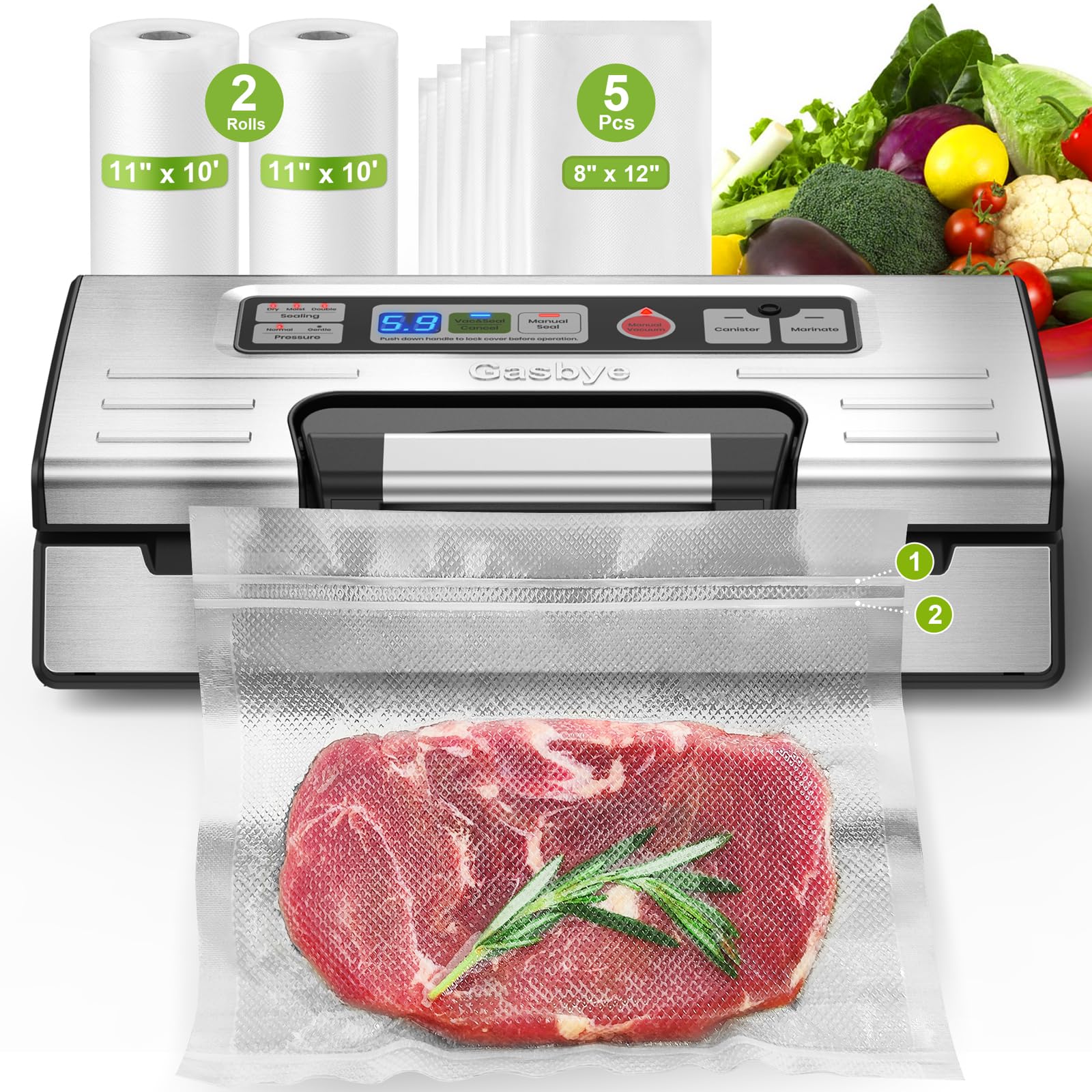
Gasbye VS5166
Key Features
- Seal Type: Double Heat Seal
- Bag Storage & Cutter: Yes
- Warranty: 5-Year
- Price: Mid-Range
The 95kPa dual-pump motor and double heat seal bar pull air rapidly from bags and create a secondary seal barrier that holds during freezer storage. The 130W motor handles repeated sealing sessions without overheating, and the stainless steel body dissipates heat effectively.
The machine’s stainless steel construction and easy-lock handle give it a sturdy feel on the counter. The built-in bag storage compartment and cutter keep rolls accessible, while the removable drip tray catches stray liquids during sealing. Controls are laid out with dedicated vacuum, seal, and pulse buttons, so no manual flipping is required.
The pulse mode adds practical control: it lets you stop suction manually when sealing moist items like raw poultry or marinated fish, preventing liquid from being drawn into the vacuum channel. This reduces the chance of a weak seal on damp bags without requiring extra steps like pre-freezing.
This vacuum sealer is best for home cooks who process meat in bulk, prepare meals for the week, or use sous vide techniques. It’s a mid-range machine built for regular use, backed by a 5-year warranty that adds peace of mind. Buyers who routinely seal very wet foods will want to use pulse mode or pat items dry, but for most sealing tasks—steaks, vegetables, dry ingredients—it works without adjustment.
Considering the build quality, suction strength, and included features, the Gasbye delivers performance that often costs more in this category. The double seal and pulse mode address real-world sealing challenges without pushing the price into premium territory.
Pros
- Strong suction pulls air out of bags quickly, preserving freshness.
- Double heat seal adds a second seal line, reducing the risk of air re-entering.
- Stainless steel body and easy-lock handle provide a durable build.
- Controls are straightforward with dedicated vacuum, seal, and pulse buttons.
- Offers strong performance and build at a mid-range price point.
Cons
- Suction may pull liquid from very wet foods, requiring pulse mode or patting dry to maintain seal quality.
For home cooks who seal meat and meal prep frequently, the VS5166 offers the right balance of suction, seal quality, and durability at a fair price.
Best for Bulk Meat Storage
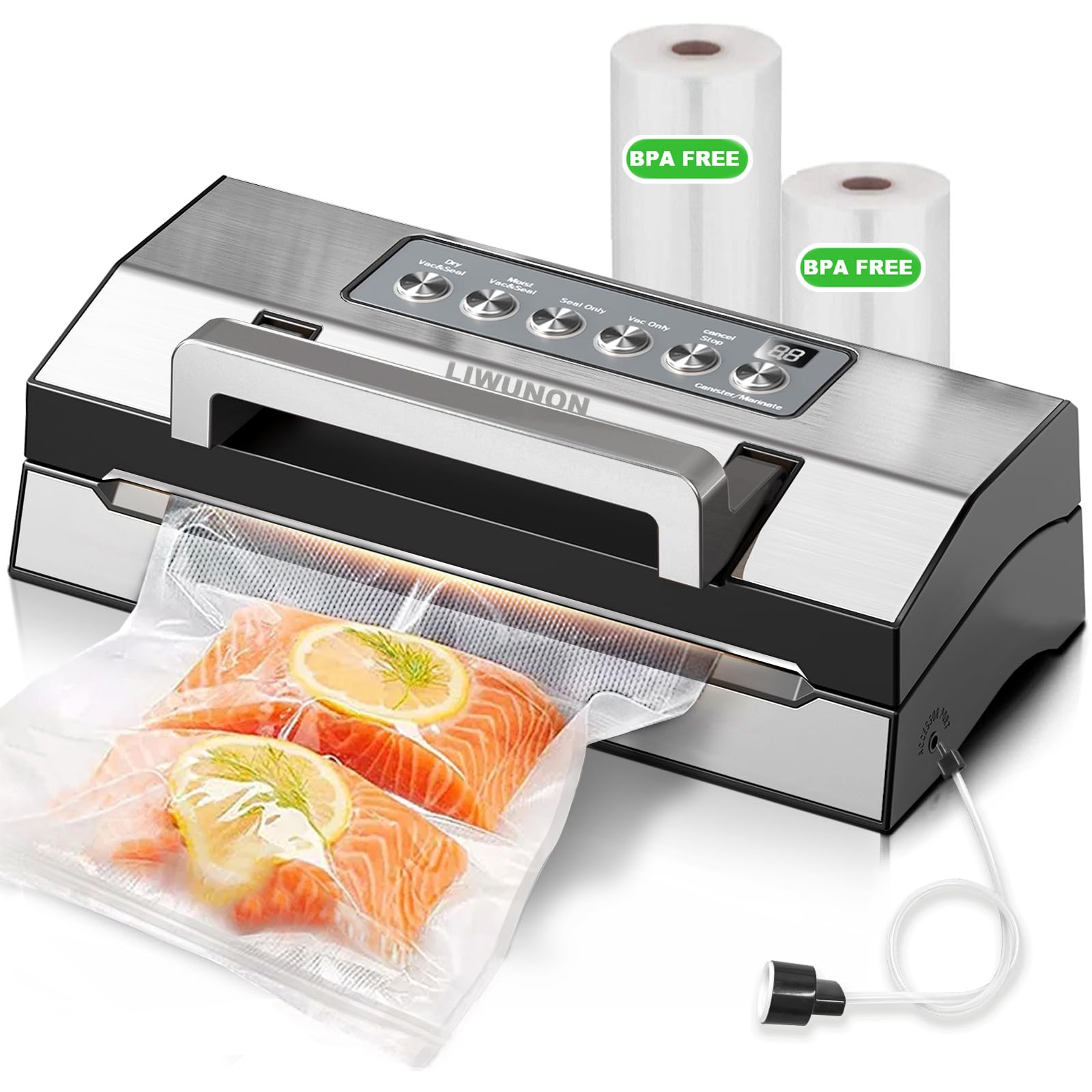
LIWUNON VS8002S
Key Features
- Seal Type: Double Heat Seal
- Bag Storage & Cutter: Yes
- Warranty: 5-Year
- Price: Premium
The LIWUNON VS8002S stands apart from typical home sealers with its stainless steel body and a pump rated for 100,000 cycles — a build that targets heavy, frequent sealing sessions. Unlike the lighter plastics of the top pick, this unit feels substantial and is designed for users who seal multiple bags each week or handle bulk meat storage.
This sealer suits home cooks who prioritize longevity over portability and are comfortable with a premium upfront investment. The occasional seal inconsistency reported in early units means careful attention to bag alignment is advisable, but for sous vide enthusiasts and those freezing large quantities of meat, the strong double seal and powerful suction deliver consistent results.
Operation is straightforward with a built-in cutter and bag storage, and the heating element uses four-layer wire for a robust seal. Cleaning is simple thanks to the stainless steel drip tray. The five-year warranty provides additional peace of mind for the investment.
Pros
- Powerful suction and double heat seal ensure airtight bags for meat and sous vide.
- Stainless steel build and sturdy construction inspire confidence for long-term use.
- Easy to operate and clean, with integrated cutter and bag storage.
Cons
- Premium price point may not suit those who seal only occasionally.
- Seal consistency can vary between units, with some first attempts requiring a second pass.
For home users who seal in volume and want a machine that feels built to last, the LIWUNON VS8002S delivers commercial-grade performance with a caveat for early seal variability.
Best for Budget-Conscious
Potane VS5736
Key Features
- Seal Type: Single (8mm)
- Bag Storage & Cutter: Yes
- Warranty: 5-Year
- Price: Mid-Range
The Potane brings a generous 8mm seal bar and a brushless motor to the mid-range category, giving it a wider sealing width than many similarly priced options. Built-in roll storage and a cutter add convenience, reducing countertop clutter. While it doesn’t match the dual-pump suction of the top pick, it handles standard home sealing tasks without complaint.
The seal bar produces clean seals on most bag types, though the seal can be less consistent when moisture is present near the edge. The brushless motor runs quietly, and the included bag rolls are a practical bonus. For moderate batches of meat and dry goods, the Potane delivers dependable performance in everyday use.
This sealer suits budget-conscious households that seal in moderate batches a few times a week. The tradeoff is that long-term performance can vary between units — some may experience reduced suction or seal strength over time. The 5-year warranty provides a safety net, but frequent heavy use may push its limits.
Pros
- Built-in bag roll storage and cutter keep the workspace tidy.
- Simple controls make sealing effortless, even for first-time users.
- Strong value for the price, with a long warranty included.
Cons
- Seal quality may occasionally falter on bags with moisture near the seal line.
- Some units may show performance decline within the first year of regular use.
The Potane offers a well-rounded feature set for moderate home use. If you’re comfortable with the possibility of variable longevity, the 5-year warranty adds peace of mind.
Best for Short-Term Storage
Chef Preserve CP.V1.1
Key Features
- Seal Type: Reusable Bag
- Bag Storage & Cutter: No
- Warranty: 2-Year
- Price: Budget
The Chef Preserve Compact Vacuum Sealer trades the bulk of a countertop machine for a handheld, rechargeable design that slips into a drawer or camp kit. With its reusable BPA-free bags and a claimed 1000 seals per charge, this unit targets quick meal prep, travel, and small kitchens where space is tight. The vacuum suction is easy to activate, and the bags can be washed and reused, cutting down on single-use plastic waste.
In use, the handheld format makes sealing a bag of lettuce or cheese for the fridge a 10-second task. The seal is not heat-sealed but relies on a zip-lock channel and suction, which holds well for short-term storage — a few days in the fridge or a week in the freezer. For longer freezer stays, especially with moist items like raw meat, the seal may lose airtightness over time, allowing freezer burn to develop. This isn’t a flaw for the intended use, but it sets a boundary that buyers focused on long-term bulk meat storage should note.
This sealer suits the cook who wants to prep weekday portions, reduce food waste, or take sealed snacks on a camping trip without dragging out a full-size machine. It is less suited for deep-freezing large cuts of meat for months — that task benefits from the permanent heat seal of a traditional countertop model. If your primary goal is occasional, convenient sealing with less plastic waste, this portable option fits well.
Pros
- Extremely easy to use — one-button operation with no learning curve.
- Compact and portable; fits in a drawer or camp bag.
- Reusable bags reduce single-use plastic waste over time.
Cons
- For long-term freezer storage of moist items, the seal is less airtight than a heat sealer and may lose vacuum over weeks.
- Reusable bags can show reduced sealing effectiveness after several wash and reuse cycles.
If your needs center on quick, portable sealing for short-term storage and reducing disposable bag waste, this handheld option delivers unusual convenience — just not for the long freezer haul that a heat-sealer handles.
Best for Smart App Users
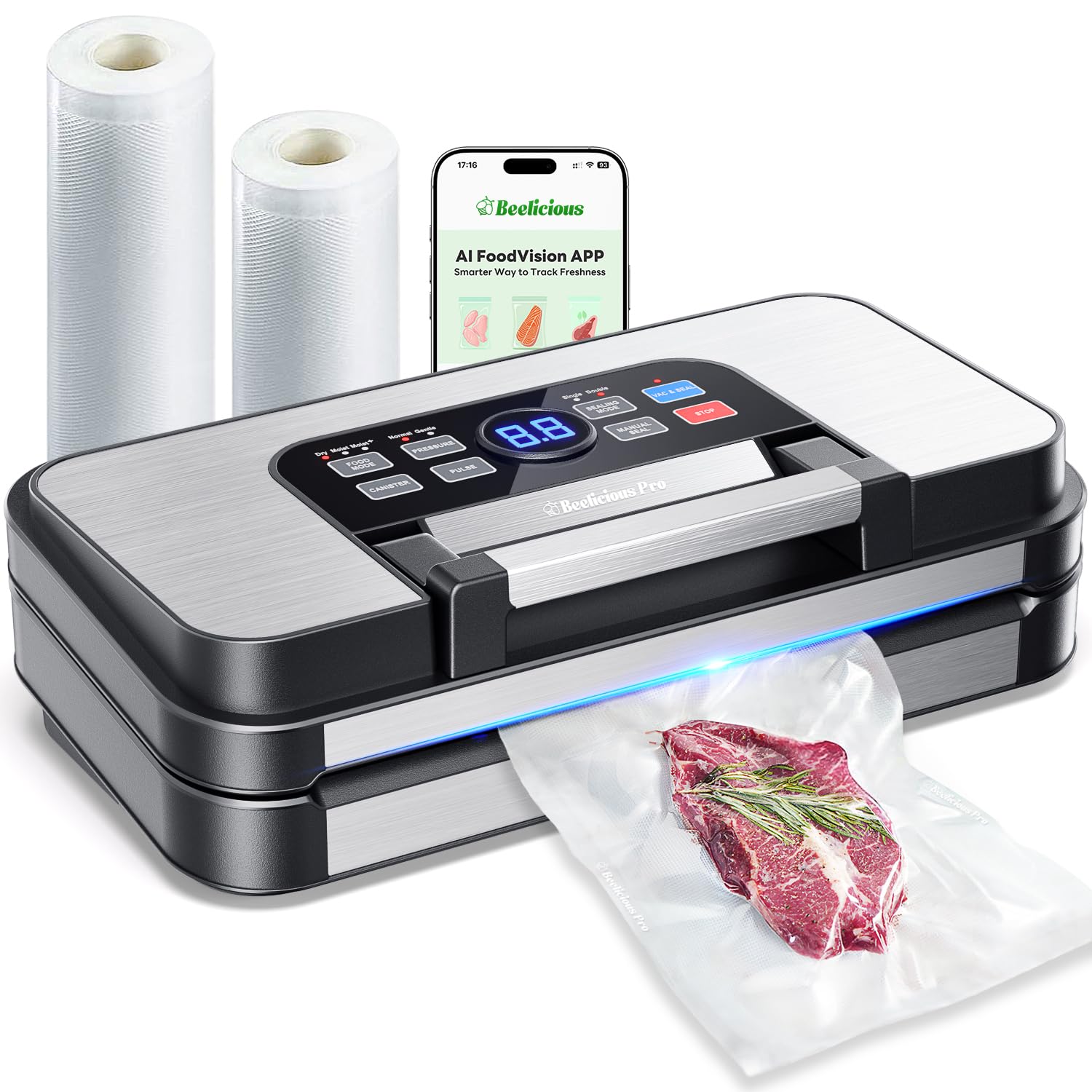
Beelicious Pro BP2
Key Features
- Seal Type: Double Heat Seal
- Bag Storage & Cutter: Yes
- Warranty: 2-Year
- Price: Mid-Range
The Beelicious Pro BP2 packs a 95kPa dual-pump and double heat seal into a mid-range package, with 10 sealing modes including dry, moist, and extra moist for various foods. The stainless steel build and built-in cutter add convenience. However, long-term durability under heavy use has not been established, and the product’s performance over time remains uncertain. This makes it a suitable option for early adopters who prioritize feature density and are comfortable with some unknown longevity, rather than buyers who need a track record of dependability.
Pros
- Delivers fast, strong seals for meat and moist foods
- Brings 10 sealing modes and a double heat seal at a cost-effective price
Cons
This unit suits early adopters who value specs and are willing to accept some unknown longevity.
Best for Occasional Use
Bonsenkitchen VS4100
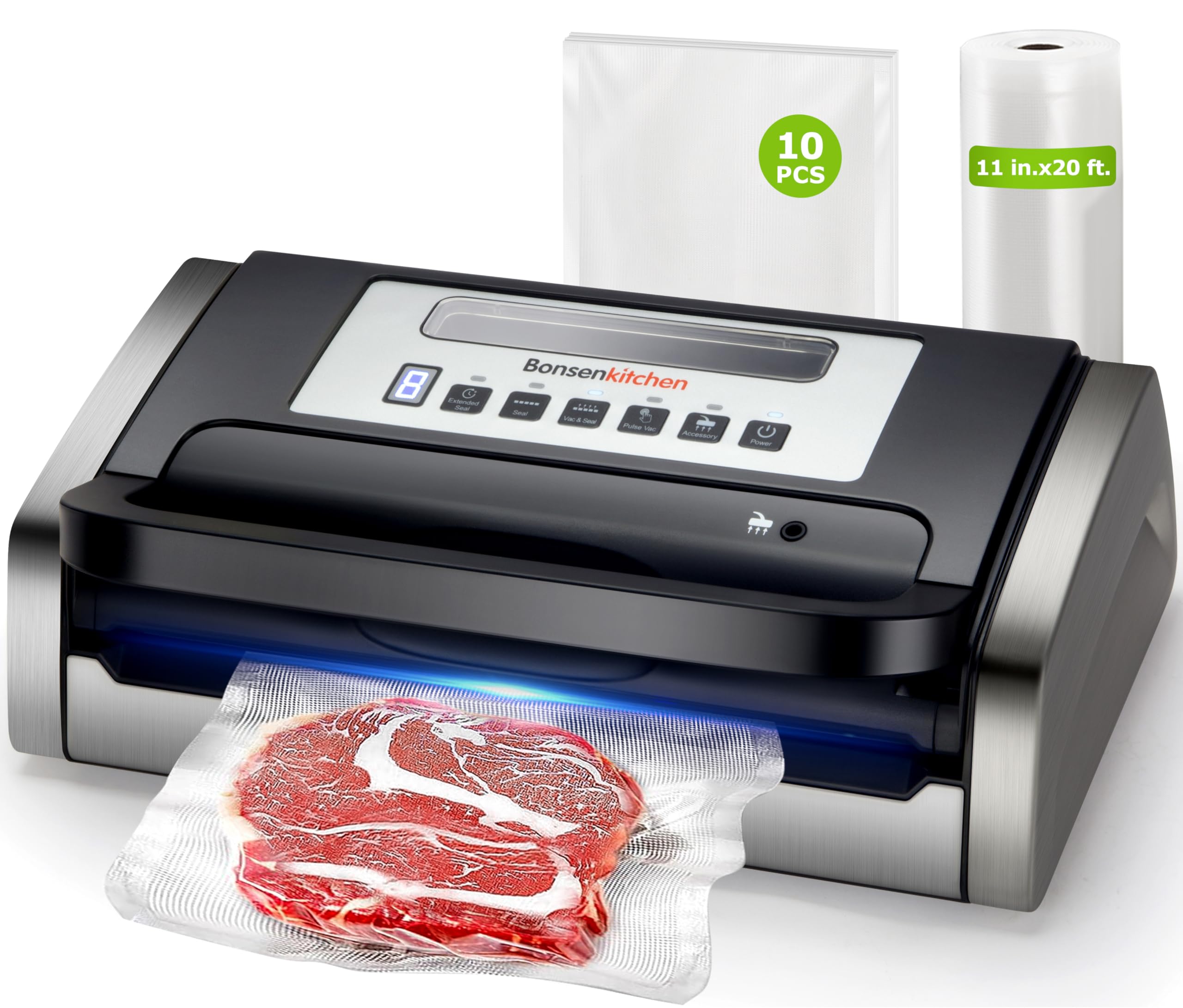
The Bonsenkitchen VS4100 delivers whisper-quiet operation and reliable seals for light-duty food storage. Its built-in cutter and bag storage add convenience, and the one-hand operation makes it easy to use. However, early durability concerns mean this is best suited for occasional use rather than regular heavy-duty meat sealing. Suction consistency can vary between bags, so checking each seal is wise for longer storage.
Pros
- Quiet enough for use in shared living spaces without disturbing others.
- Reliable seal for dry and semi-moist foods like grains, snacks, and cheese.
- One-hand operation with built-in cutter for quick bag preparation.
Cons
- In a household that seals meat weekly, the motor may wear out faster than expected — better suited for light use.
- On moist items, the vacuum may not always fully remove air, requiring a second cycle or manual adjustment.
A good choice for occasional sealing in a quiet kitchen, provided you accept that it may not hold up to heavy use.
Best for First-Time Buyers
MZROT 301E

The MZROT 301E brings a digital timer and 75kPa suction at a budget-friendly price, making it an easy way to test vacuum sealing without a big commitment. Its compact design and simple controls suit first-time users who want to seal dry foods or snacks. However, the single heat seal and moderate suction mean it is not suited for regular meat sealing, and long-term performance under frequent use remains uncertain — this is a low-cost trial for light duty, not a daily workhorse.
Pros
- Compact and simple to operate for first-time users.
- Very low entry price for those wanting to explore vacuum sealing.
- Digital timer and multiple modes (Dry, Moist, Seal, External Vac, Pulse) add flexibility for different foods.
Cons
- Single heat seal may not match the airtightness of double-seal models for long-term freezer storage of meats.
- Intended for occasional light use rather than regular meat sealing — lower suction limits performance with moist or dense foods.
A low-cost trial for curious beginners who just want to test vacuum sealing on dry goods and occasional snacks, provided they accept it is not a solution for regular meat storage.
How to Choose
The vacuum sealer that works great dry packaging snacks may struggle to keep raw chicken airtight for months – understanding the specs behind that difference is key.
Suction Power (kPa)
A higher kPa number means stronger air removal, which directly affects how well the seal pulls the bag tight against the meat. For typical home use, 90 kPa or more is the threshold for reliably extracting air from moist cuts without leaving pockets that lead to freezer burn.
Units below 75 kPa often leave residual air, especially around bone-in pieces or irregular shapes. If you freeze large batches of meat, prioritize a model that lists 90–95 kPa suction rather than relying on wattage as a proxy.
Seal Type: Single vs. Double Heat Seal
A double heat seal lays down two parallel sealing lines, creating a redundant barrier that resists air leakage over months in the freezer. Single seals can fail if the bag shifts during sealing or if moisture weakens the bond.
For meat storage, double seals are worth the added cost. The second line catches any tiny gaps in the first, and it’s especially helpful when sealing wet or marinated cuts where steam can momentarily lift the seal during the process.
Built-in Bag Storage and Cutter
A built-in roll holder and cutter let you create custom bag sizes on the fly without hunting for scissors or separate compartments. This convenience saves time during meal prep sessions and keeps the counter organized.
The trade-off: storage compartments add bulk to the machine, so they are less practical for small kitchens where counter space is tight. If you value a compact footprint, a separate roll cutter may be a better fit.
Wattage and Pump Quality
Higher wattage generally indicates a more powerful motor, but pump design matters more. Look for a brushless motor or dual-pump configuration, which handles continuous sealing sessions without overheating.
A 130W motor is standard for reliable home use, but the same wattage can behave differently depending on pump quality. Models that list a separate pump life rating (e.g., 100,000 cycles) give a concrete durability benchmark.
Warranty Length
A 5-year warranty signals manufacturer confidence in the machine’s longevity and covers defects like pump failure or seal bar wear. Shorter warranties (2–3 years) are common on budget models, which often correlate with higher early-failure rates.
Before buying, check whether the warranty includes return shipping or requires you to pay for repairs. A 5-year warranty is less valuable if the process is burdensome, so favor brands with straightforward claims policies.
FAQ
Why do vacuum sealers stop working after a few months?
Most early failures trace back to weak pump components or inadequate sealing bars. Budget models often use low-grade motors that overheat quickly, and single-seal designs can develop micro-gaps after a few dozen uses. The most reliable units pair a 95kPa dual pump with a double heat seal and carry a 5-year warranty, which together indicate better internal build quality.
Is a double heat seal necessary for vacuum sealing meat?
Yes, for long-term freezer storage. Single seals are more likely to leak over time, especially when sealing moist meat where steam can briefly lift the seal during the process. A double seal creates two barriers, giving a second chance to hold the vacuum if the first line has a tiny flaw.
Can a handheld vacuum sealer replace a traditional one for meat?
Not for bulk freezer storage. Handheld models like the Chef Preserve use reusable bags with a zip-lock style seal that is less airtight than a heat-sealed bar. They are fine for short-term fridge storage or meal prep, but meat destined for months in the freezer needs the stronger, permanent seal of a countertop heat sealer.
What is the best suction power (kPa) for sealing meat?
Aim for 90–95 kPa for reliable results with moist meats. Lower suction (75 kPa or below) often leaves residual air, which causes freezer burn over time. The 95 kPa dual pumps in the Gasbye and Beelicious Pro models extract air aggressively enough to handle bone-in cuts and marinades without leaving pockets.