This post contains affiliate links. We may earn a small commission when you buy through our links — at no extra cost to you.
Sous vide cooking hinges on a good seal, but most vacuum sealers struggle with moist ingredients. Liquids can ruin the vacuum, and many units stop working after a handful of uses. Finding one that actually handles wet foods without breaking down is harder than it should be.
The market is full of external sealers promising wet/dry modes, but real-world performance varies widely. Some sealers draw moisture into the machine, others lose suction over time. This guide cuts through the noise to highlight models that consistently seal wet ingredients and hold up to regular sous vide use.
Many sealers from big names have seen reliability drop, while lesser-known brands now offer better performance. The key is focusing on double seals, removable drip trays, and strong suction pressure. We prioritize machines that deliver consistent results batch after batch.


Best for Sous Vide
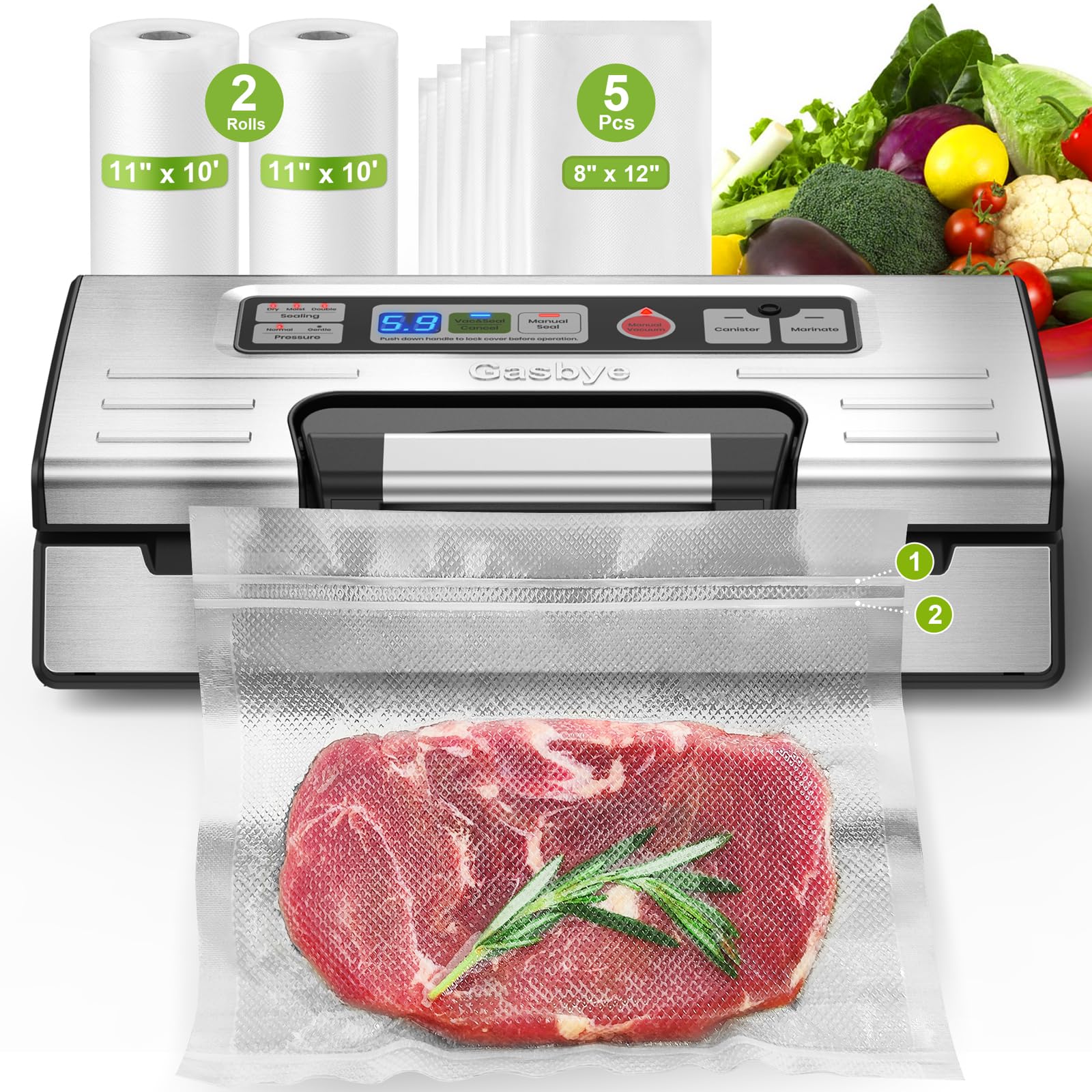
Gasbye VS5166
Key Features
- Modes: Dry/Moist/Pulse
- Seal Bar: Double heat seal
- Warranty: 5-year full refund
- Design: External
- Price: Mid-Range
The 95kPa suction motor pulls air quickly and thoroughly, while the double heat seal secures the bag edge. Dry foods seal cleanly; moist items benefit from the dedicated moist mode without the air leak common in single-seal machines. The built-in bag dispenser and cutter reduce waste and keep the counter organized.
Pulse mode gives manual control over suction for wet foods like marinated meats or soups. A short pause between pulses prevents liquid from reaching the machine — users who ignore this may find the drip tray catching overflow. The tray slides out for easy cleaning, and the machine handles the occasional moisture draw without damage.
This sealer suits anyone who regularly vacuum-bags for sous vide, meal prep, or bulk storage. The learning curve with pulse mode is minor for cooks who pay attention to what’s in the bag. If you’re on a strict budget under $100, lower-priced options exist, but they lack the suction and seal consistency needed for wet cooking methods.
Build construction uses metal-reinforced components rather than thin plastic, and the 5-year warranty backs the unit with full refund or replacement — a sign of confidence that matches the hands-on feedback from owners who have put hundreds of seals through it.
Pros
- Strong suction (95kPa) and double heat seal create leak-free bags on dry and moist foods.
- Dedicated moist and pulse modes handle liquids better than typical external sealers.
- Built-in bag roll storage and cutter make portioning fast and reduce waste.
- Responsive customer support and a 5-year full-replacement warranty reduce long-term risk.
Cons
- Pulse mode requires a short learning curve to prevent liquid from being drawn into the vacuum chamber.
For sous vide cooks who want chamber-level sealing without the chamber price, the Gasbye VS5166 delivers consistent performance and durable construction.
Best for Wet Foods
Avid Armor USV20
Key Features
- Seal Bar: 11.5 inches
- Warranty: US-based support
- Design: Chamber
- Price: Premium
The Avid Armor USV20 uses full chamber evacuation to seal liquids, marinades, and soups without any liquid being pulled into the machine. Unlike external sealers that choke on moisture, this unit produces clean, airtight seals on wet foods every time. The one-touch operation removes any guesswork – just place the bag in the chamber, close the lid, and press start.
This machine is built for dedicated sous vide cooks who regularly seal moist ingredients and want to avoid the frustration of failed seals or liquid damage. The chamber design handles wet foods as easily as dry ones. The tradeoff is bag size: the chamber measures 12.25×8.5×3 inches, limiting bags to about 11×12 inches. That means large roasts or whole turkeys won’t fit – but for individual portions, meal prep, and vacuum-marinating, the size is rarely a hindrance.
Build quality is solid, with a sturdy construction that feels like it can withstand repeated use. The 300W motor pulls a strong vacuum quietly, and the 11.5-inch seal bar handles standard bag widths cleanly. US-based support and warranty add peace of mind for home cooks who plan to use it regularly.
Pros
- Seals liquids and wet foods without any mess or machine damage
- Build quality and construction feel durable for regular use
- One-touch operation simplifies the sealing process
Cons
- Chamber size limits bag dimensions to roughly 11×12 inches – not enough for large roasts or whole poultry
If you’re a sous vide enthusiast who prioritizes perfect liquid seals over maximum bag size, the Avid Armor USV20 delivers repeatable, mess-free results that external sealers can’t match.
Best for Home Sous Vide
Potane VS5736
Key Features
- Modes: Auto/Manual/Dry/Moist
- Seal Bar: 8mm element, 3mm width
- Warranty: 5-year
- Design: External
- Price: Mid-Range
The Potane VS5736 brings dual-seal strength, a built-in bag cutter, and an integrated roll storage compartment to a mid-range vacuum sealer. Its 120W motor pulls strong suction on both auto and manual modes, while the dry/moist toggle gives added control when sealing foods that aren’t bone-dry. The included two bag rolls (11” and 8”) and five-year warranty add tangible value, making this a well-equipped option for home kitchens.
In practice, the sealer reliably handles dry goods like nuts, grains, and pre-frozen proteins. With semi-moist items such as cheese or marinated vegetables, the moist mode works well. The occasional sticking point comes with very wet foods — raw meat with loose marinade or soupy leftovers may not seal on the first try, requiring the user to pulse manually or pat the bag dry. Some units have also shown sealing element wear within the first several months, so periodic inspection of the heat strip is advised.
This sealer suits home sous vide enthusiasts who process mostly dry to moderately moist ingredients in bulk. It can handle wetter items with a little technique adjustment, but those who regularly seal very moist or liquid-heavy foods will find the Gasbye VS5166 (the top pick in this category) more forgiving. If you’re a bulk meal prepper who seals a mix of dry and semi-moist portions, the Potane delivers strong performance at a competitive price point.
Pros
- Suction pulls air quickly for tight seals on dry and semi-moist foods
- Built-in cutter and roll storage keep bag management tidy
- Five-year warranty provides coverage beyond typical ownership cycle
- Auto and manual modes plus dry/moist setting give useful flexibility
Cons
- Very moist foods may require a manual pulse or patting the bag dry to achieve a full seal
- Sealing element wear has been noted in some units within the first six months
A solid external sealer for home sous vide and meal prep when most of your food is dry to moderately moist — the 5-year warranty helps offset the occasional durability variance.
Best for Budget Buyers
Mesliese VS6601S
Key Features
- Modes: Dry/Moist/Soft
- Seal Bar: 12mm widened strip
- Warranty: 5-year
- Design: External
- Price: Budget
The Mesliese VS6601S delivers strong 90kPa suction and a widened 12mm sealing strip in a compact, wallet-friendly package. It comes with two bag rolls and five pre-cut bags, plus a built-in cutter, so you can start sealing immediately. For dry ingredients like nuts, coffee, and frozen produce, the machine pulls a tight vacuum and forms a reliable seal every time.
Where the Mesliese shows its budget roots is with moist foods. When sealing marinated meats or soups, liquid can be drawn into the vacuum port during suction, which may lead to a weaker seal or residue inside the machine. The pulse mode offers a workaround—manually stopping the vacuum before liquid reaches the seal bar—but it requires attention and a steady hand.
This sealer is a practical choice for buyers who primarily handle dry goods and only occasionally prep sous vide bags with drier ingredients. For regular wet sealing or heavy sous vide duty, the top pick’s removable drip tray and dedicated moist mode provide a more forgiving experience. The Mesliese’s moisture limitation is manageable with pulse mode, but it’s not a set-and-forget solution for juicy items.
Pros
- Pulls a strong vacuum quickly, producing reliable seals in seconds.
- Delivers performance comparable to higher-priced models at a fraction of the cost.
- Compact design and simple controls make everyday use hassle-free.
Cons
- Liquid from moist foods can be sucked into the machine, potentially weakening the seal.
For dry food sealing and modest sous vide projects, the Mesliese VS6601S offers strong performance at a budget price—just be ready to use pulse mode when moisture is involved.
Best for Casual Users
Nesco VS-12
Key Features
- Modes: Dry/Moist/Double seal
- Warranty: 1-year
- Design: External
- Price: Mid-Range
The Nesco VS-12 offers a double vacuum pump and dry/moist/double seal modes at a mid-range price, making it one of the more popular options in its class. Its user interface is straightforward, and the included starter bags add initial value. Compared to newer top-performing external sealers, the VS-12 trades long-term consistency for a lower upfront cost.
This sealer fits casual cooks who seal dry goods or the occasional sous vide bag and are comfortable with some uncertainty around longevity. Durability can vary between units; some owners encounter issues within the first year of use. If you plan to seal moist foods regularly for sous vide, a chamber sealer or higher-rated external model may be a better fit.
For dry foods like nuts, grains, and cheese, the double pump pulls a strong vacuum and the double seal option adds an extra layer of security. The transparent lid is useful for checking that the bag is fully evacuated. These qualities make the VS-12 suitable for meal prep and pantry storage.
Pros
- Easy to operate with an intuitive control panel for selecting modes.
- Dry, moist, and double seal modes allow adjustment for different food types.
- Double vacuum pump creates strong suction for most sealing tasks.
Cons
- Seal consistency can be uneven when handling very moist foods.
- Some units may show reduced sealing performance within the first year.
The Nesco VS-12 is a capable starter sealer for light, dry use, but if sous vide is a regular practice, consider a model with a stronger durability track record.
Best for Feature Seekers
FoodSaver V4400

Key Features
- Modes: Auto moisture detection
- Warranty: 5-year limited
- Design: External
- Price: Mid-Range
The V4400’s automatic moisture detection adjusts vacuum pressure for wet foods, reducing the guesswork when sealing marinades or sous vide bags. Its built-in cutter and drip tray keep countertops tidy — conveniences that save time during meal prep.
For occasional home use, the V4400 delivers good food-saving results and is easy to operate. However, some units may experience sealing inconsistencies or stop working within months, so this model is best suited to buyers who accept this risk and purchase an extended warranty.
Pros
- Automatic moisture detection handles wet foods without manual mode switching.
- Built-in cutter and drip tray reduce cleanup and bag waste.
- Good food preservation extends refrigerator and freezer storage.
Cons
- Durability can be inconsistent — some units may require service within the first year.
- Sealing on very moist foods may not be airtight; careful bag loading helps.
A suitable choice for feature-seekers who don’t mind the reliability gamble and will buy an extended warranty; look elsewhere if you need a sous vide sealer for weekly use.
Best for Budget Buyers
FRESKO V2

Key Features
- Modes: Auto/Dry/Moist/Pulse
- Seal Bar: 0.2 inch widened strip
- Design: External
- Price: Budget
The FRESKO brings a 95kPa double pump, 0.2-inch seal bar, and automatic bag detection to the entry-level price point — features usually reserved for pricier models. Sealing dry foods and general kitchen storage is handled well for the cost. The catch: suction performance varies unit to unit, and some machines may deliver no suction at all. Wet foods also pose a challenge, even with the moist mode. This makes the FRESKO a viable choice only if you’re willing to accept possible inconsistency and plan to use it for light, dry sealing tasks.
Pros
- Automatic bag detection and double seal simplify operation.
- Decent sealing performance at a budget-friendly price.
- 95kPa double pump provides strong suction potential on good units.
Cons
- Suction strength can vary between units; some may have no suction at all.
- Wet foods may cause sealing challenges even with the moist mode.
Best for light, dry sealing tasks on a tight budget where unit variance is acceptable.
Best for Early Adopters
Bonsenkitchen VS5100
Key Features
- Modes: Multiple
- Seal Bar: 3.3mm widened heating strip
- Warranty: 3-year
- Design: External
- Price: Mid-Range
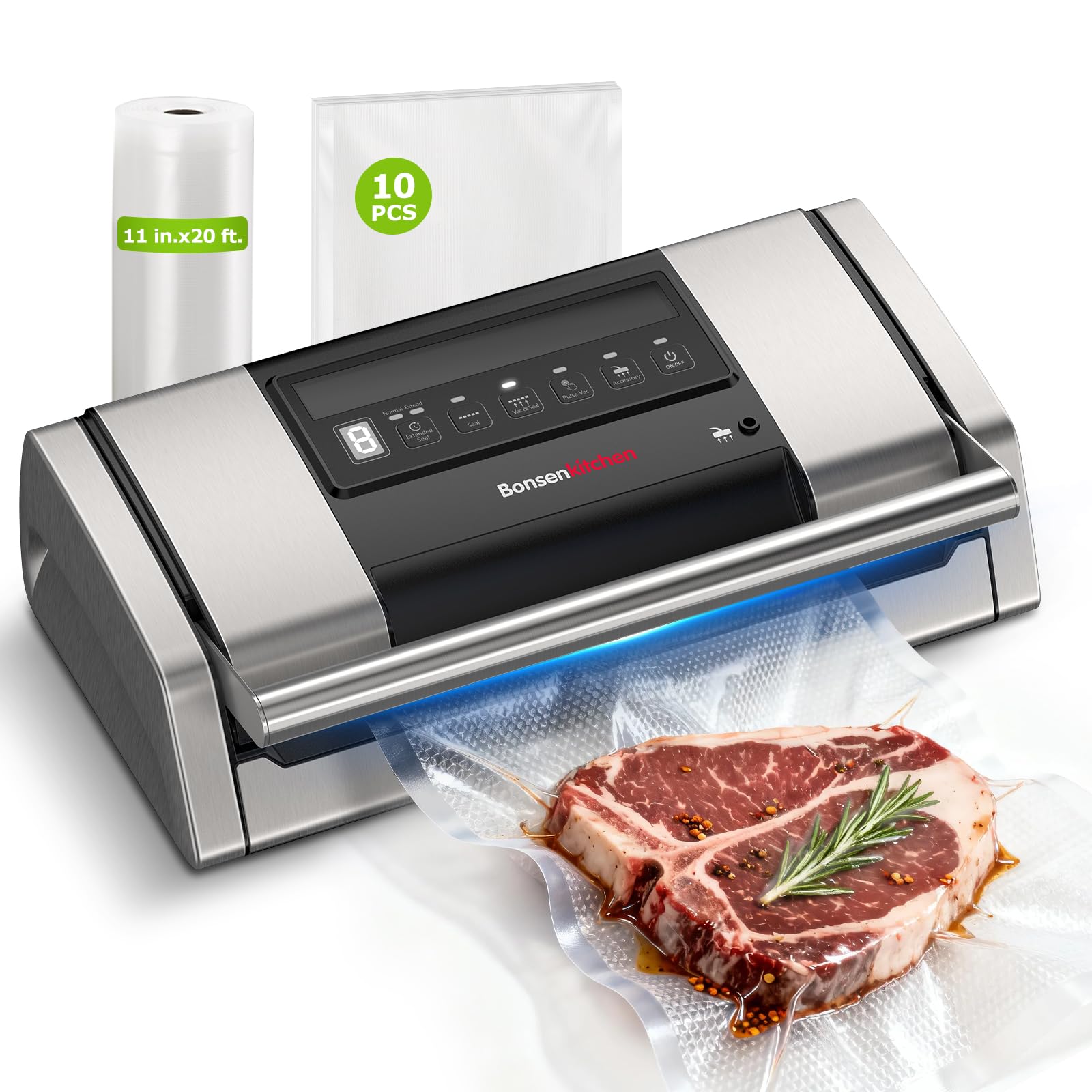
The Bonsenkitchen VS5100 delivers 135W of suction power through four upgraded pumps and a 3.3mm heating strip, producing strong, quiet seals suitable for sous vide preparation. The integrated bag clip and built-in cutter streamline bagging, while the included roll and pre-cut bags get you started immediately. However, long-term durability under frequent use remains unconfirmed, and occasional units may not achieve a full vacuum seal—a risk early adopters may accept given the competitive price.
Pros
- Quiet operation with strong 135W suction for tight seals.
- Built-in bag clip and cutter simplify bag preparation.
- Includes a starter roll bag and 10 pre-cut bags for immediate use.
Cons
- Long-term durability under regular sous vide use hasn’t been established.
- Vacuum performance can vary between units; some may not pull a full seal.
This sealer suits early adopters who prioritize strong initial performance and features over a long track record, provided they accept the possibility of quality variance.
Best for Budget Buyers
Potane VS2690

Key Features
- Modes: 8 presets, dry/moist
- Seal Bar: Enhanced heating wires
- Warranty: 5-year
- Design: External
- Price: Budget
The Potane VS2690 delivers eight presets including dedicated soft and delicate modes, making it easy to seal fish, berries, and other fragile items without crushing them. Its compact build and budget-friendly price further appeal to cost-conscious cooks. However, sealing consistency can vary, particularly with wet foods—a tradeoff that limits its usefulness for sous vide or frequent moist sealing tasks. The more consistent Potane VS5736 offers better sealing consistency for those applications, but at a higher cost.
Pros
- Easy-to-use presets for delicate foods like fish and berries – no guesswork needed.
- Compact design saves counter space at an entry-level price.
Cons
- Suction strength may be insufficient for thick marinades or very large bags.
Ideal for home cooks who want an affordable, space-saving sealer for dry and delicate items.
Best for Fridge Storage
ZWILLING Fresh & Save

The ZWILLING Fresh & Save is a handheld rechargeable vacuum system that uses reusable containers and bags to keep produce crisp in the fridge. It’s compact and straightforward to operate—good for organizing leftovers or prepping snacks. However, this system is not designed for sous vide: the bags may leak when submerged in a water bath, and the pump’s durability under regular sealing use has shown inconsistency. This is a dedicated fridge-storage tool, not a substitute for a full vacuum sealer for moist foods or water immersion.
Pros
- Keeps produce and leftovers fresh for days in the fridge
- Handheld, rechargeable design is easy to store and operate
Cons
- Bags can leak when used in a water bath, making it unsuitable for sous vide
- The pump may lose suction over time, and bag seals can become inconsistent
Useful for fridge organization and short-term storage, but skip this if you need a vacuum sealer for sous vide.
How to Choose
For sous vide, a double heat seal and a removable drip tray are the two features that separate reliable machines from frustrating ones.
Wet/Dry Modes
A wet/dry mode adjusts suction timing to prevent liquid from being pulled into the machine before the seal forms. On paper, most external sealers include this, but effectiveness varies. A true moist mode reduces vacuum speed or adds a pulse option so you can stop suction before moisture reaches the seal bar.
Without a working moist mode, juice from marinated meats or soup can flood the vacuum channel, causing seal failure and internal damage. Look for models with a dedicated pulse button or a ‘moist’ preset that actually pauses suction.
Double Seal Bar
A double seal bar melts two parallel lines of plastic, creating a backup seal if one fails. This redundancy matters for sous vide because a single pinhole leak can ruin a long cook. Seal width also matters: wider strips (3mm or more) bond better on textured bags and handle thicker plastic without gaps.
Single-seal machines are cheaper but risk seal failure under water pressure. If you plan to sous vide regularly, a double seal bar is worth the small premium.
Suction Pressure
Suction pressure, measured in kPa, determines how much air is removed before sealing. Higher pressure (90kPa or more) extracts more air from bags, which is critical for preventing buoyancy in the water bath. Lower-pressure units may leave air pockets that cause bags to float and cook unevenly.
The trade-off is that stronger suction can pull liquid into the machine faster if not managed with a pulse mode. A sealer with 90-95kPa and a removable drip tray strikes the best balance for sous vide.
Warranty Length
Warranty length is a strong signal of manufacturer confidence. Many external sealers fail within 12 months due to blown fuses or degraded seals, so a 5-year warranty (or full refund policy) protects against premature failure. Shorter warranties often correlate with higher failure rates in user reports.
A 1-year warranty on a mid-priced sealer is a red flag; 3-5 years is common among reliable models. Pay attention to whether the warranty covers replacement or just repair.
Chamber vs External
Chamber sealers place the entire bag inside a vacuum chamber, so air is removed equally inside and outside the bag. This prevents liquid from being drawn out, making them ideal for soups, marinades, and wet foods. External sealers are smaller and cheaper, but they rely on a drip tray and pulse control to handle moisture.
The hidden cost of a chamber sealer is size and price–most are heavy and cost over $300. If you only seal liquids occasionally, a good external model with a drip tray works. For frequent wet-food sealing, a chamber is the difference between frustration and effortless results.
FAQ
Can I use a vacuum sealer for sous vide if it doesn’t have a moist mode?
You can, but you’ll need to freeze liquid ingredients until they’re solid or rely on manual pulse control. Without a moist mode, the machine will try to vacuum full speed, pulling liquid into the seal and causing leaks. A dedicated moist mode or pulse button makes sous vide far more predictable.
Why does my vacuum sealer fail to seal wet foods?
Most external sealers struggle because moisture reaches the heating element before the seal fully bonds. The plastic can’t adhere to a wet surface, so the seal either fails or leaves gaps. A removable drip tray and a pulse mode that lets you stop suction early are the effective workarounds.
Is a chamber vacuum sealer better for sous vide than an external one?
Yes, for wet foods. Chamber sealers remove air from the entire chamber, so liquid stays in the bag. They never have moisture on the seal bar, eliminating the most common failure point. The downsides are higher cost and larger size. For occasional use, a good external sealer with pulse mode is sufficient.
How long do vacuum sealers typically last with regular sous vide use?
External sealers from legacy brands often fail within 12 months due to worn seals or electrical issues. More reliable models with 5-year warranties typically last 3-5 years with moderate use. Chamber sealers, built with industrial components, often last a decade or more.