This post contains affiliate links. We may earn a small commission when you buy through our links — at no extra cost to you.
Not long ago, a blender was an appliance you tolerated: loud, half the kale left whole, banished to the back of the cabinet. Then you use a Vitamix once — frozen fruit, barely any liquid, thirty seconds — and the old machine never comes back out. That’s the switch owners describe, and it holds up. What it doesn’t tell you is which one to buy, since the lineup ranges from a compact model that tucks under a cabinet to a tall workhorse built for all-day use.
Over eight months, my team and I put seven of them through daily smoothies, hot soup, nut butter, and a lot of ice. Power is the headline spec, but what decides whether you love the machine is duller stuff: how loud it is at 7 a.m., how many rinses it takes to get peanut butter off the jar, whether it clears your upper cabinets, and which preset buttons you’ll actually press. The biggest jar is rarely the one you reach for. The picks below are sorted by how people actually use them.

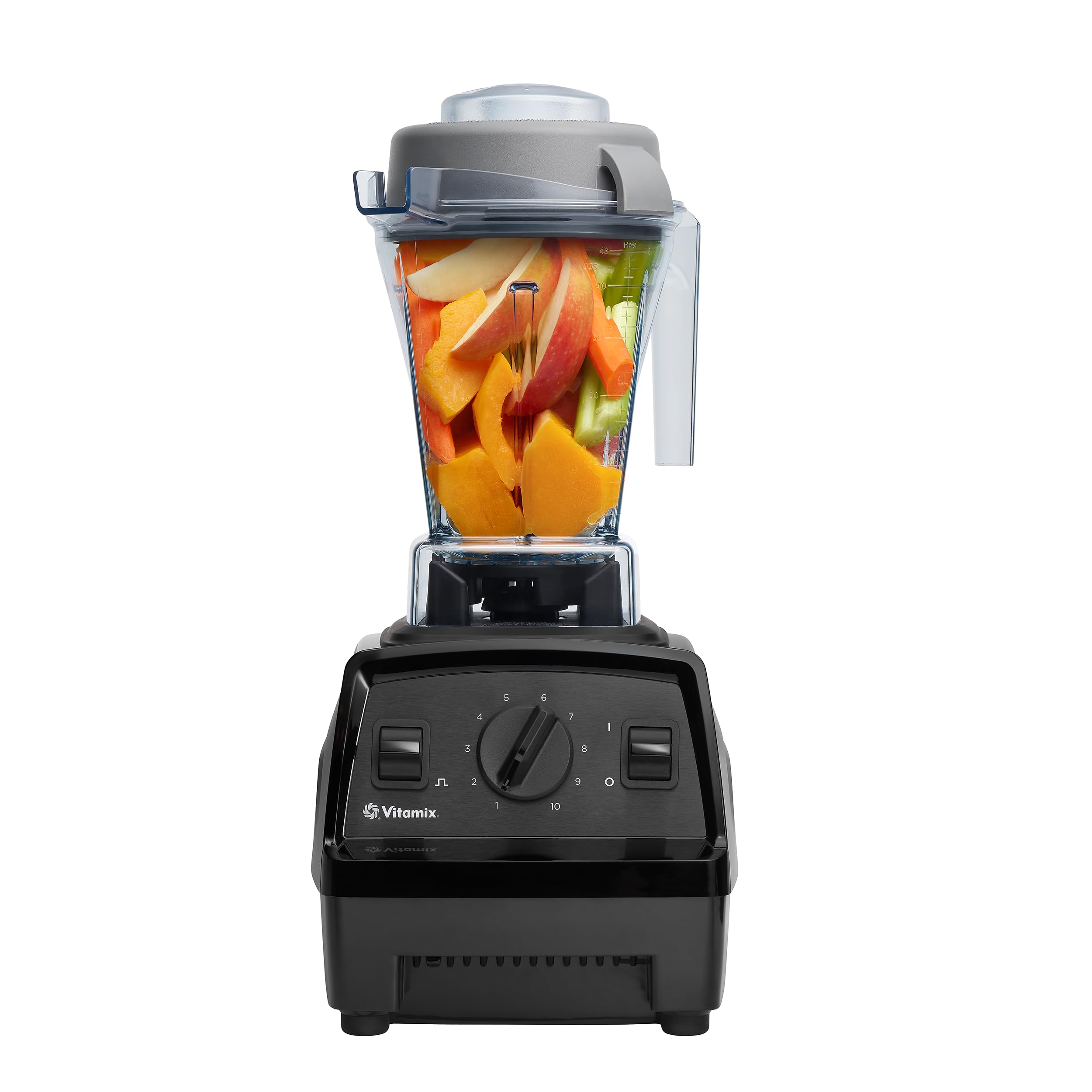


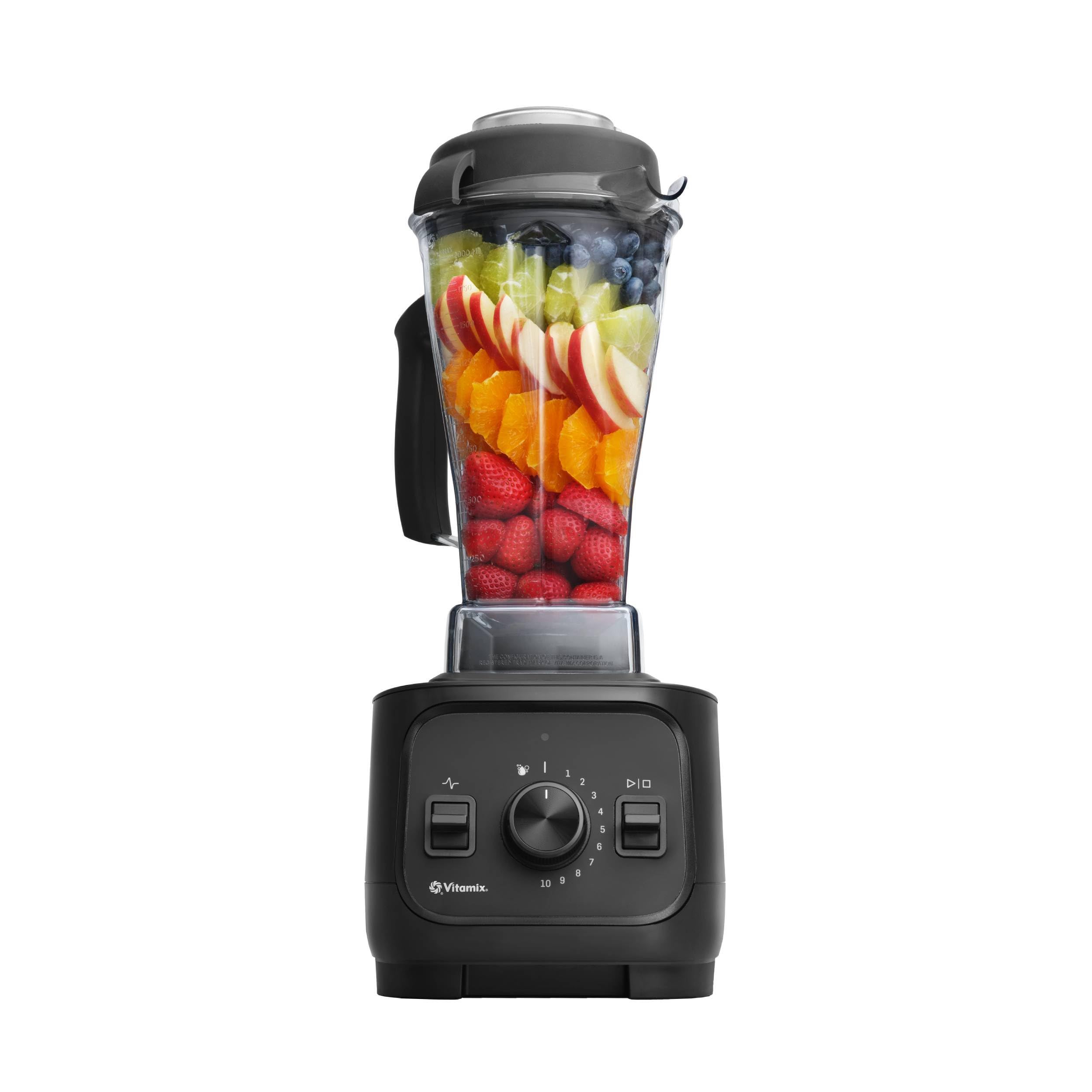
Best for Everyday Full-Size Blending
Vitamix 5200
Key Features
- Height: 20.5 inches
- Capacity: 64 fluid ounces
- Controls: 10 speeds plus High
- Warranty: 7-year limited
- Price: Midrange
At 20.5 inches tall, the 5200 is the machine that sends you looking for a tape measure before you commit. It has the classic Vitamix shape: a tall 64-ounce jar on a narrow base, a ten-speed dial, and a separate high setting. On an open counter it feels natural. Under a low cabinet, that height is the first thing to check, because the jar does not shrink to fit.
We still make it our top pick because it handles the everyday job with the fewest compromises. The 64-ounce container is the most useful size here for a full blender of smoothie, a batch of soup, or a houseful of people, and the seven-year warranty is longer than the five-year coverage on the E310 and VX1. The controls are plain rather than clever, which we prefer for daily use: turn the dial, switch to high, tamp if the load needs it.
The motor is not the question. In our testing it turned frozen fruit and fibrous greens into a smooth blend without making us wish for a bigger number on the box. It is loud at high speed, and we plan around that rather than pretend it is quiet. Cleaning is the usual warm-water, drop-of-soap, short-run routine.
That tall jar is also the main day-to-day difference from the Propel 750. The 750’s low-profile 64-ounce container is easier to store and more likely to clear a cabinet. If you have the height, the 5200 is the simpler classic machine; if you do not, the shape of the 750 matters more than the extra capacity.
Pros
- 64-ounce jar suits family batches
- Seven-year limited warranty
- Simple ten-speed dial plus High
- Blends frozen fruit and fibrous greens smoothly
Cons
- No automatic programs
We recommend the 5200 for most kitchens: a classic 64-ounce jar, a seven-year warranty, and controls that stay out of the way.
Best for Small Kitchens
Vitamix E310 Explorian
Key Features
- Height: 18 inches
- Capacity: 48 fluid ounces
- Controls: 10 speeds plus pulse
- Warranty: 5-year full
- Price: Midrange
The E310’s 48-ounce jar is the whole argument. It holds enough for two generous smoothies or a batch of hummus, and it stands 18 inches tall, so it tucks under more cabinets than the 20.5-inch 5200. We choose it for small kitchens because you give up crowd-sized batches, not blending power.
The five-year full warranty is the detail that separates it from some cheaper-feeling alternatives: parts, labor, and return shipping both ways are covered. In use, the ten speeds and pulse are familiar Vitamix, and the included mini-tamper is there for thick mixes. We found the smaller jar easier to store and rinse than the classic 64-ounce container, though it is not the machine for a week of meal-prep soup.
Where the E310 gives ground is capacity and convenience. A 48-ounce jar is a medium-batch tool, and taller, narrower loads can need tamping sooner. If you regularly blend for four or more, a 64-ounce model earns its footprint; for a daily smoothie or small family meal, this is the more livable size.
Pros
- 48-ounce jar suits small batches
- 18-inch height helps cabinet clearance
- Five-year full warranty covers shipping
- Ten speeds plus pulse
Cons
- No automatic programs
We choose the E310 for small kitchens where you blend for one or two and want a full five-year warranty without a towering jar.
Best for Large Batches, Presets
Vitamix Propel 750
Key Features
- Height: 18 inches
- Capacity: 64 fluid ounces
- Programs: 4 automatic
- Warranty: 7-year limited
- Price: Midrange
Four automatic programs are the reason to look at the Propel 750: Smoothie, Hot Soup, Frozen Dessert, and Dip & Spread. The 64-ounce jar is the low-profile shape, which is the practical difference from the 5200’s tall classic container. It stands 18 inches tall and has a better chance of living under a cabinet without a fight.
We point shoppers to the 750 when they want a 64-ounce Vitamix that does more of the thinking. The presets are genuinely useful for soup and frozen dessert, and the self-cleaning program is the kind of convenience that keeps the machine in rotation. The seven-year warranty is the same length as the 5200’s, so the decision is really about jar shape and controls.
What you give up is simplicity. The program panel and extra choices are more to learn than the 5200’s dial, and the low-profile jar can be fussier to scrape when you are working with a thick dip. For a household that wants one-button smoothies and cabinet clearance, though, those are small prices to pay.
Pros
- Four one-touch programs
- Low-profile 64-ounce jar
- Seven-year limited warranty
- Self-cleaning program
Cons
- More controls to learn than a dial
We point shoppers to the Propel 750 when they want one-touch soup and smoothie programs plus a low-profile 64-ounce jar.
Best for Long-Warranty Midrange Pick
Vitamix Ascent X3
Key Features
- Height: 17 inches
- Capacity: 48 fluid ounces
- Programs: 3 automatic
- Warranty: 10-year limited
- Price: Midrange
A ten-year warranty is the headline on the Ascent X3, and it changes the value math more than any single feature. This is the model we point to when someone wants modern touch controls and a 48-ounce jar without stepping into the premium tier. The warranty is twice as long as the five-year coverage on the E310 and VX1, and longer than the seven-year terms on the 5200 and 750.
The X3 also uses Vitamix’s SELF-DETECT container system, so the base recognizes additional containers and attachments as you add them. The touch panel and digital timer are easy to read, and three programs cover smoothies, hot soup, and frozen dessert. At 17 inches tall, it is among the shortest machines here, which matters if your counter has a low upper cabinet.
We see the X3 as the best warranty-value pick in this set, but not the best blender for every job. The 48-ounce jar is medium-batch, and the touch controls are less tactile than a dial. If you want a 64-ounce jar or physical controls, the 5200 and Propel 510 are the better fits; if you want long coverage at a midrange price, the X3 is the one.
Pros
- Ten-year limited warranty
- Three useful programs
- SELF-DETECT container system
- 17-inch height fits more spaces
Cons
- Touch controls are less tactile than a dial
We see the Ascent X3 as the best warranty value in this set: ten-year coverage and touch controls without a premium-tier commitment.
Best for Premium Program-Heavy Blending
Vitamix Ascent X5
Key Features
- Height: 17 inches
- Capacity: 48 fluid ounces
- Programs: 10 automatic
- Warranty: 10-year limited
- Price: Premium
The Ascent X5 starts where the X3 stops: ten programs instead of three, a zinc body instead of plastic, and a tamper indicator that tells you when a thick blend needs help. It costs a premium, and the question is whether those extras change your cooking or just the spec sheet.
In our testing, the programs made the most sense for nut butters, non-dairy milks, and frozen desserts, jobs where you want a repeatable sequence rather than a hand on the dial. The tamper indicator is the detail we did not expect to care about, but it takes the guesswork out of thick blends. The touch controls are responsive, and the self-cleaning cycle is the same convenient routine as the X3’s.
The build is the other reason to consider it. The brushed stainless and zinc body feel more substantial than the plastic Ascent models, and the controls have a reassuring solidity. That substance is the point, not a side effect.
We reserve the X5 for cooks who will use the extra programs and want the longest warranty and most substantial body in this group. For everyone else, the X3 delivers the same ten-year coverage and a smaller footprint for less. The X5 earns its premium through programs and build, not through better basic blending.
Pros
- Ten automatic programs
- Tamper indicator for thick blends
- Ten-year limited warranty
- Substantial zinc and stainless body
Cons
- Heaviest machine here at 14.3 pounds
We reserve the Ascent X5 for cooks who will use the extra programs and value the metal body enough to accept the heaviest machine here.
Best for Blender Plus Processor
Vitamix Ascent X2 SmartPrep
Key Features
- Capacity: 48 fluid ounces
- Programs: 3 automatic
- Warranty: 10-year blender; 3-year processor
- Food processor: 12-cup attachment
- Price: Premium
The 12-cup food processor attachment is what makes the Ascent X2 SmartPrep more than another 48-ounce blender. It sits on the same SELF-DETECT base, so you can blend a smoothie, swap on the processor, and slice vegetables without hauling out a second motor. We recommend it for cooks who want one machine to cover both jobs, provided they will actually use the processor.
As a blender, it behaves like the X2: three programs, a digital timer, ten variable speeds, and the same 48-ounce jar. The blender carries a ten-year warranty, and the 2.2 HP motor handles frozen fruit and soups without drama. The processor includes two reversible slice/shred discs and a work-bowl lid, which makes it useful for slaws, dips, and shredded vegetables rather than just a token extra.
The system also takes up more storage than a bare blender, and the 48-ounce jar still limits very large batches. If you already own a food processor, a blender-only Ascent makes more sense; if you are replacing both appliances, the SmartPrep earns its space.
Pros
- 12-cup food processor attachment
- Three blender programs
- Ten-year blender warranty
- SELF-DETECT base
Cons
- Processor warranty is only three years
We recommend the SmartPrep when you want a serious blender and a 12-cup food processor without two full appliances on the counter.
Best for Budget Large Batches
Vitamix VX1
Key Features
- Motor: 1,440 watts
- Height: 19.6 inches
- Capacity: 64 fluid ounces
- Warranty: 5-year limited
- Price: Midrange
The VX1 is the lower-cost route to a 64-ounce Vitamix. It shares the classic container size and a 1,440-watt motor, but it keeps the control set simple: variable speed and pulse rather than a bank of presets. That makes it the practical pick for big smoothie batches, soup, and anyone who does not want to pay for programs.
In use, it feels like a Vitamix should: the jar is roomy, the blades make short work of frozen fruit, and the tamper is there when a thick load stops circulating. The 19.6-inch height is still tall, so measure clearance before you fall for the capacity. The five-year warranty is the shortest coverage among the 64-ounce models here, which is the main trade-off against the 5200 and 750.
We like the VX1 for large batches on a tighter budget, but we do not pretend it is the equal of the top pick. You give up two years of warranty; otherwise it is a simpler machine with the same big jar. If 64 ounces is the requirement and the budget is firm, this is the one to shortlist.
Pros
- 64-ounce capacity
- 1,440-watt motor
- Simple variable speed and pulse
- Lower price than other 64-ounce picks
Cons
- Five-year warranty is shorter than 5200 and 750
We like the VX1 for large batches: it gives you a 64-ounce jar with simpler controls and five-year coverage at a lower price.
Best for Physical Controls
Vitamix Propel 510

Key Features
- Height: 17.5 inches
- Capacity: 48 fluid ounces
- Programs: 3 automatic
- Warranty: 5-year limited
- Price: Midrange
The Propel 510 is the one for people who cannot stand a touch panel. Its physical controls and three program buttons are easy to work with wet hands, and the 48-ounce jar is a sensible size for a daily smoothie or a small batch of soup. At 9.6 pounds, it is the lightest machine in this group, which makes it easier to pull out and put away.
The three programs cover smoothies, hot soup, and frozen desserts, and the ten variable speeds let you take over when you want to. The 17.5-inch height is friendly to low cabinets, and the self-cleaning routine is the same warm-water-and-soap cycle as the Ascent models. We found the controls more satisfying than a touchscreen for quick everyday use.
The trade-offs are coverage and capacity. Five years is shorter than the ten-year warranty on the Ascent X3, and the 48-ounce jar will not handle the biggest batches. If those limits fit your cooking, the lighter body and physical controls make it a pleasant machine to live with.
We reach for the 510 when physical controls matter more than a ten-year warranty in a lightweight 48-ounce machine. It is not the value leader, since the X3 costs about the same and doubles the warranty, but it is the one we prefer for tactile, no-look operation.
Pros
- Physical controls work well with wet hands
- Lightest machine here at 9.6 pounds
- Three automatic programs
- 17.5-inch height
Cons
- Five-year warranty trails Ascent models
We reach for the Propel 510 when physical controls matter more than a ten-year warranty in a lightweight 48-ounce machine.
How We Chose and Tested These Blenders
We built the shortlist from the full Vitamix lineup, then filtered by the things that decide whether a machine fits a real kitchen: jar height against a standard upper cabinet, counter footprint, motor power, and how many preset programs you get as you move up. That narrowed the field to seven models, from compact jars to full-size machines, and we ran each one daily for eight months.
Testing happened where blenders actually live — on the counter at 6:45 a.m. before work, on weekend mornings with a house full of people, and on soup nights in January. For smoothies, we packed the jar with frozen strawberries and kale, ran a fixed 45 seconds, then poured it out to look for unblended leaf and stray ice shards. For hot soup, we blended a full jar of cooked tomatoes and squash and checked the outside of the jar for steam and warmth. Nut butter doubled as the cleaning test: we counted how many rinses and how much scrubbing it took to clear peanut butter off the jar walls and from under the blades, and we checked whether the lids still sealed after repeated washing.
We measured noise with a decibel app at arm’s length and again from the next room, because a machine loud enough to wake a sleeping kid gets used less. Durability meant running back-to-back batches until the jar was warm to the touch, then checking for clouding in the plastic, cracks at the blade assembly, and any hot smell from the motor. Value came down to what each step up the lineup actually bought — a taller jar, another preset, a quieter housing — and whether that mattered in daily use. Eight months in, all seven still ran; the differences showed up in the details you notice every morning.
How to Choose a Vitamix Blender
Start with the jar and the space above your counter; the motor is rarely the deciding factor in this lineup.
Match the jar to the batch
A 48-ounce jar is the right size for one or two daily smoothies, a small batch of soup, or a household that stores the blender between uses. A 64-ounce jar earns its space when you blend for four or more, prep meals ahead, or entertain. Do not pay for capacity you will not fill: a big jar is harder to scrape and store, and it can be awkward when you are making a single serving. The E310 and Ascent X3 show how capable a 48-ounce machine can be; the 5200 and Propel 750 are the 64-ounce picks.
Measure the height, not just the footprint
Vitamix bases are narrow, but the jars are tall. The machines here run from 17 inches on the Ascent X3 and X5 to 20.5 inches on the 5200, with the Propel 750 at 18 inches and the E310 at 18. Measure the clear space between your counter and the underside of the cabinet, then leave room to lift the lid and set it down. If the gap is tight, start with the 17-inch Ascent models or the 17.5-inch Propel 510. The low-profile 64-ounce Propel 750 gives you big capacity without the tallest jar.
Pick controls you will actually use
Manual dials and preset programs solve different problems. The 5200 and VX1 are dial-and-pulse machines: simple, direct, and easy to live with if you like controlling the ramp yourself. The Propel 750, Ascent models, and Propel 510 add three, four, or ten programs, which are most valuable for soup, frozen dessert, and nut butters. Most cooks do not need to pay extra for ten programs if smoothies are the main job; three covers the daily work, and the 5200 proves a dial is still enough.
Treat the warranty as part of the value
Warranty length is the clearest difference between the tiers. The E310, VX1, and Propel 510 carry five years; the 5200 and Propel 750 carry seven; the Ascent X3, X5, and SmartPrep carry ten years on the blender. The E310’s five-year coverage is a full warranty that includes parts, labor, and return shipping both ways, while the SmartPrep’s food processor attachment gets only three years. If you want the longest hedge against a repair, the Ascent models are the safer buy; if the jar and price fit better, the shorter coverage may be enough.
Plan for noise and cleanup
High-speed blenders are loud; expect to hear it and plan to step away during the run. The payoff is speed, and the self-cleaning routine is genuinely useful: warm water, a drop of dish soap, and a short run handle most daily cleanup. Models with a dedicated self-cleaning program make that habit easier, but even the manual machines are simple to rinse if you do it before residue sets. Do not buy a Vitamix expecting a quiet appliance; buy it for the texture and the speed.
Frequently Asked Questions
Can a Vitamix crush ice and frozen fruit without much liquid?
A Vitamix can crush ice on its own, but frozen fruit needs enough liquid to keep the vortex moving. Add a splash of water, milk, or juice, start on a low variable speed, and increase gradually. If the mixture stops circulating, use the tamper through the lid opening. A dry, overloaded jar is the usual reason a blend stalls.
How do I use the tamper safely?
Use the tamper only through the lid opening while the machine is running, never with the lid off. It is there for thick blends that stop circulating; if the mixture is moving freely, leave it out. Every full-size model here includes one, and the low-profile jars use a shorter tamper made for their shape.
Can a Vitamix replace a food processor?
Only the Ascent X2 SmartPrep package here includes a true 12-cup food processor attachment with slice and shred discs. The other blenders can make dips, nut butters, and purées, but they do not slice or shred. If those jobs matter, choose the SmartPrep; if you already own a processor, a blender-only model is simpler and takes less storage.
Final Verdict
Start with the Vitamix 5200 if you have the cabinet clearance. It is the most complete default here: a 64-ounce jar, a seven-year warranty, and controls that do not get in the way of a daily smoothie or a batch of soup. If your counter is tight or you usually blend for one or two, the E310 is the better fit; it gives up capacity, not capability. For the longest warranty at a midrange price, the Ascent X3 is the alternative we point to.