This post contains affiliate links. We may earn a small commission when you buy through our links — at no extra cost to you.
A food dehydrator looks like the simplest appliance in the kitchen: a box, a fan, a heater, and a stack of trays. The trouble is that simple machines still find ways to annoy you—a tray that dries the edges of your apples to leather while the middle stays damp, a fan loud enough to drive you out of the room, or a thermostat that says 135°F and actually runs hotter. The right one quietly turns a glut of garden tomatoes, a batch of jerky, or a bag of discounted fruit into something you’ll actually eat, without demanding much attention or counter space.
Over the past eight months, my team and I have run 12 dehydrators through real batches of apple slices, sticky fruit leather, and marinated jerky. We listened for fan noise, checked whether the trays went back in without a fight, fiddled with the temperature controls, and scrubbed the racks after every sticky batch. The pattern was clear: the ones worth keeping were not always the most expensive, but they got the basics right—steady low heat, even airflow, and a cleanup that didn’t ruin the afternoon. Value mattered as much as performance, since a machine that dried unevenly or took all day was a false economy, and the picks below are the ones that earned a permanent spot on the counter.

Best for All-Round Home Batches
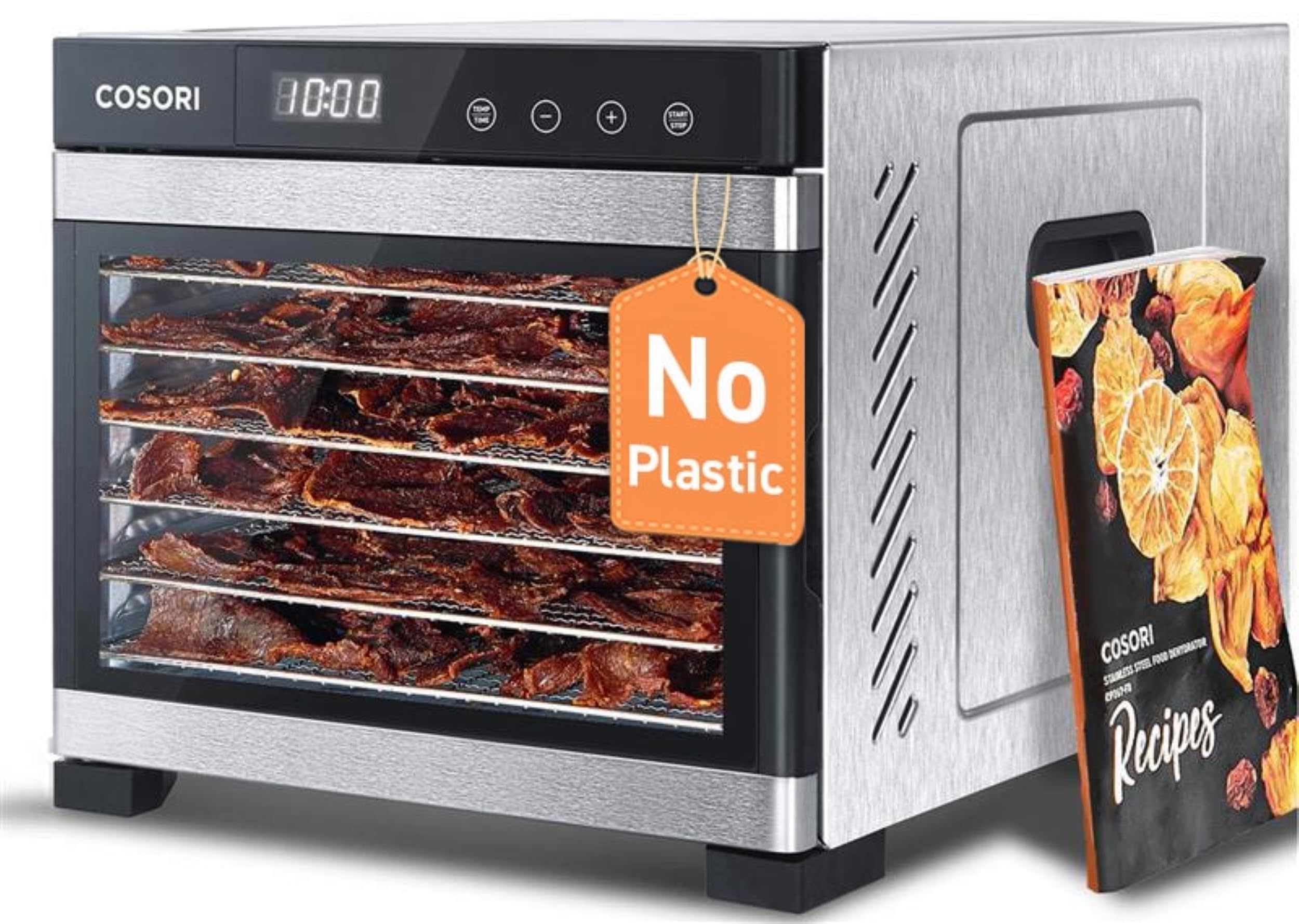
Cosori 6-Tray Stainless
Key Features
- Trays: 6 stainless steel
- Footprint: 17.8 × 13.4 × 12.4 in
- Drying area: 6.5 sq ft
- Temperature range: 95–165 °F
- Price: Midrange
Six trays is the number shoppers fix on, but the figure that matters is the 6.5 square feet those trays add up to. Loaded with jerky beef or a pile of apple rings, that is roughly five pounds of sliced meat or half a dozen apples before you start doubling anything up. Capacity is why this is the one we point most people to: it turns a week of snacks into a single load you set and forget.
Quiet matters more than it sounds, because most dehydration happens over hours you would rather spend asleep. Cosori rates this at under 48 dB, and that held up in our kitchen: the fan is audible standing next to it and irrelevant from the next room. With a 48-hour timer, you start a batch at night and have jerky by morning without getting up to switch anything off.
The controls are the plain, competent kind — 95 to 165 °F in one-degree steps, a timer you set once, and nothing to learn. The rear-mounted fan spreads heat evenly enough that we were not shuffling trays between shelves, and the stainless trays go straight into the dishwasher, which is the difference between a machine you use and one you avoid.
One caveat before you order: the long-term record is split. Plenty of these machines are still running after years of use, and some quit early in their life. The two-year warranty is what keeps us comfortable recommending it, so register the unit the day it arrives and keep the receipt somewhere you will find it again.
Pros
- 6.5 sq ft handles a week of snacks
- Under 48 dB, so overnight batches work
- Dishwasher-safe stainless trays
Cons
- 18.1 pounds and 17.8 inches deep
For most kitchens, this is the one we point to: six stainless trays, a motor quiet enough for overnight runs, and cleanup simple enough that weekly use actually happens.
Best for Jerky and Meat
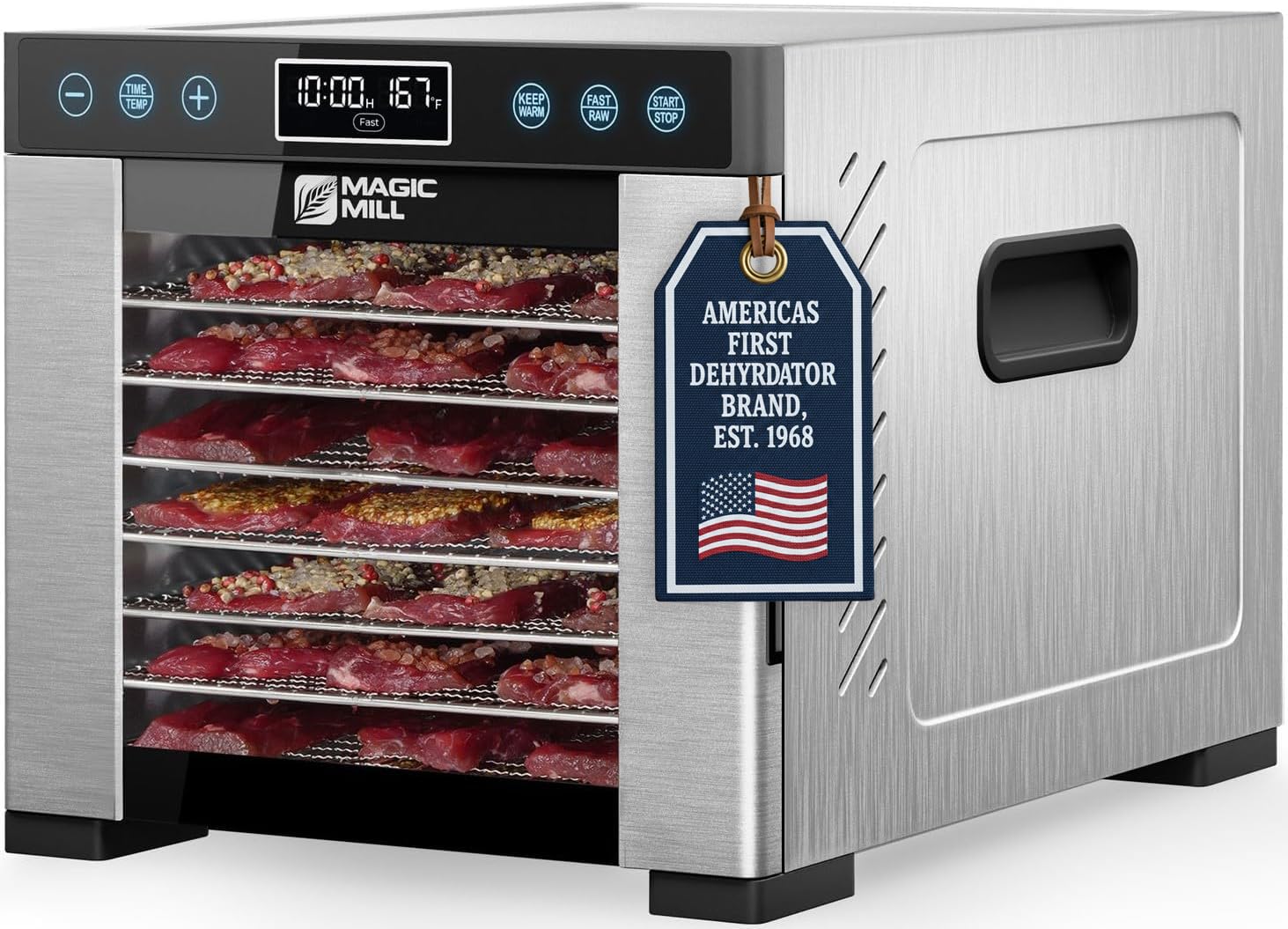
Magic Mill Pro 7-Tray
Key Features
- Build: Stainless interior and exterior
- Timer: 48 hours, 30-min steps
- Trays: 7 stainless steel
- Temperature range: 95–176 °F
- Price: Midrange
Look inside most dehydrators in this price range and you are looking at plastic — plastic trays, plastic interior walls, plastic wherever the food is not actually touching. Magic Mill builds this one differently: stainless exterior, stainless interior and seven full-size stainless trays. That matters more than the marketing suggests, because interior walls take the brunt of jerky marinade splatter, and stainless wipes down instead of staining.
The 176 °F ceiling is the other reason this is our pick for jerky-first buyers. Several machines here stop at 158 or 165 °F; 176 °F leaves headroom over the temperature meat needs, and the thermostat moves in one-degree steps rather than ten, which is what makes a repeatable recipe possible. Add a 48-hour timer with automatic shutoff and a keep-warm setting, and long runs stop being fiddly.
Seven trays at 15.5 by 11.3 inches hold a solid five pounds of food, and the rear fan and rear heat mean no bottom hot spot to work around. It is also listed to ETL standards with overheat protection, which we care about in a machine that runs while everyone is asleep. It even lands a little below our top pick on price, which makes the stainless build easier to justify.
Pros
- Stainless interior, not just stainless trays
- 176 °F ceiling with 1-degree control
- ETL listed with overheat protection
Cons
- Timer moves in 30-minute steps
If jerky is why you are shopping, buy this one: an all-stainless interior and a 176 °F ceiling are the combination we trust most in this group.
Best for Large Harvests
Ausegia 12-Tray Commercial
Key Features
- Power: 1200 W
- Timer: 30 min–24 hours
- Trays: 12 stainless steel
- Drying area: Up to 22.67 sq ft
- Price: Premium
At 21.4 inches deep, 17.2 wide and 18.5 tall, this is less a countertop appliance than a small cabinet that happens to plug in. Give it a permanent landing spot — a pantry shelf, a laundry counter, a basement table near an outlet — and the size stops being a problem and starts being the point.
What you get for the space is 12 stainless trays and up to 22.67 square feet of drying area, the most of any pick here by a wide margin. A 1200 W heater does the work, the glass front door lets you check a load without pulling trays, and the whole thing runs under 50 dB — close to silent in a room you are not sitting in. The timer covers 30 minutes to 24 hours in half-hour steps, with an automatic shutdown and a cool-down fan at the end of a cycle.
This is the pick for a garden glut rather than a snack habit. A dozen trays put up a whole harvest in one shift instead of three, and if you sell preserves or dog treats on the side, the capacity pays for itself in evenings saved. Evenness is worth watching: run one batch of same-thickness slices before you trust a full load, and swap the top and bottom trays if the upper ones lag.
What it is not is a first dehydrator. If you dry a few trays of apple rings a month, the capacity is wasted and you have given up a chunk of your kitchen to get it. Buy it when the batch is the whole point.
Pros
- 22.67 sq ft across 12 trays
- Quiet under 50 dB for its size
- Glass door and auto cool-down
Cons
- 24-hour timer caps long runs
- Needs a permanent, deep spot
For harvests measured in bushels rather than pounds, this is the pick: 22 square feet of trays, quiet running, and a cabinet built for volume.
Best for Small Kitchens
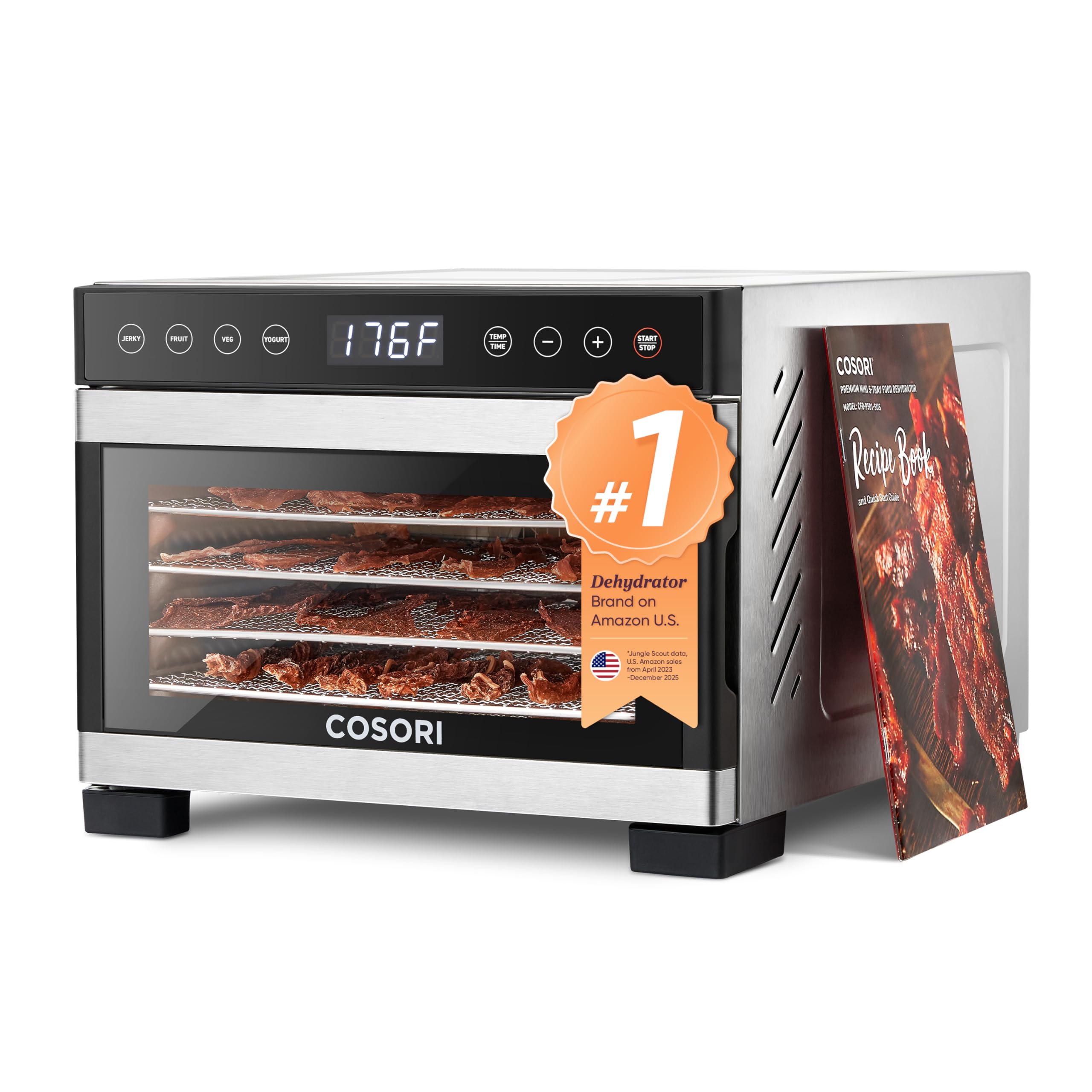
Cosori 5-Tray Stainless
Key Features
- Trays: 5 stainless steel
- Presets: Jerky, fruit, vegetables, yogurt
- Drying area: 3.1 sq ft
- Temperature range: 95–176 °F
- Price: Midrange
This machine measures 13.9 by 11.3 by 8.9 inches and weighs 10.8 pounds, so it sits on a counter the way a toaster does. We recommend it for exactly that: a two-person kitchen where the dehydrator lives out, gets used most weeks, and never turns into a storage problem. Nothing about it feels like a compromise until you load it.
What you do not give up is heat. The 176 °F ceiling matches the Magic Mill and beats our top pick, and the controls move in one-degree steps with four presets — jerky, fruit, vegetables, yogurt — that you can overwrite with your own numbers. The rear fan does the even-drying work, and the stainless version is a genuine step up from the plastic five-tray machines it resembles.
Drying is where it can disappoint. Some batches finish unevenly, with the outer edges of a tray ahead of the middle, and thick cuts can run past what the recipe book suggests. Slice thinner and rotate the trays once halfway and the results tighten up. Everything else about ownership is easy: the trays pull out, wash in the sink or the dishwasher, and slide back without a fight.
Pros
- 176 °F ceiling in a compact body
- Smaller than a microwave on the counter
- Four overwriteable presets
Cons
- 3.1 sq ft caps you at small batches
When counter space is the constraint, this is the compact one we trust: five stainless trays and a 176 °F ceiling in a body smaller than a microwave.
Best for First Dehydrator
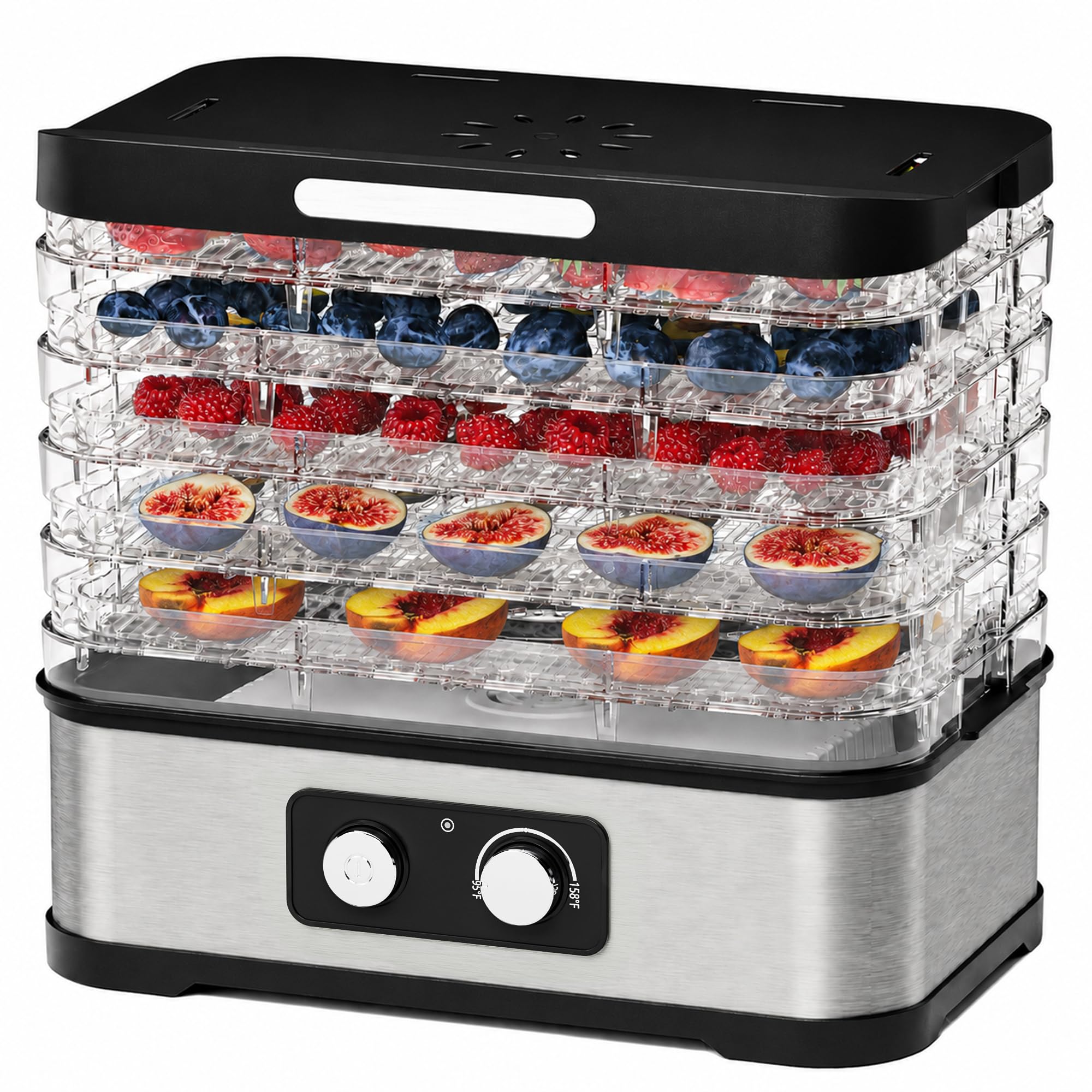
Konfintos Compact
Key Features
- Power: 250 W
- Timer: Up to 72 hours
- Trays: 5 BPA-free, height-adjustable
- Temperature range: 95–158 °F
- Price: Budget
Five clear trays, 3.9 pounds, and a footprint of 11.8 by 7.3 inches: this is the dehydrator for someone with one useful stretch of counter and no intention of surrendering it. The trays stack and adjust to two heights, the controls are a single knob each for time and temperature, and the whole thing disappears into a cupboard between batches.
For a first machine, that simplicity is the appeal — and we found the clear trays genuinely useful, because you can see how far a batch has come without lifting a lid and dumping the heat. The timer runs to 72 hours, which covers a long herb or dog-treat session. Set expectations on heat, though: 250 W is the lowest draw here, so a big load takes the time it takes. The trays also sit close enough together that thick slices and mushroom caps need the taller setting to dry evenly.
Pros
- Weighs 3.9 pounds and stows easily
- Clear trays let you watch progress
- Knob controls need no learning
Cons
- 158 °F ceiling rules out jerky
For a first dehydrator in a small kitchen, this is the one we hand people: light, quiet, and simple enough to run without the manual.
Best for Eight-Tray Home Batches
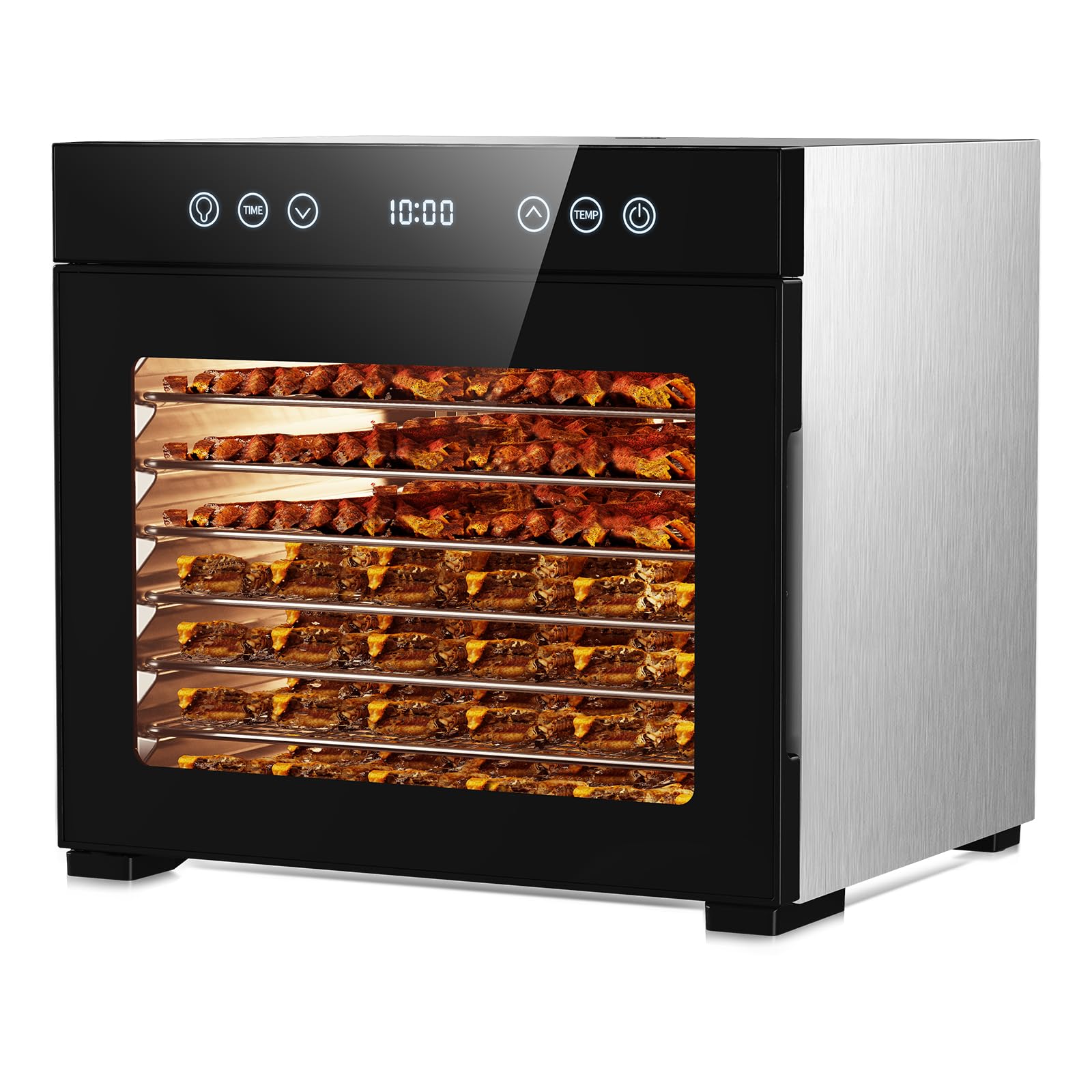
PSIIDAN 8-Tray
Key Features
- Power: 650 W
- Timer: Up to 48 hours
- Trays: 8 stainless steel
- Top temperature: 167 °F
- Price: Midrange
An interior light sounds like a gimmick until you have opened a hot dehydrator for the fourth time to check whether the mushroom chips are done. The light here lets you look instead, and it is the feature we ended up using most in a run.
Underneath the convenience is a sensible machine: eight stainless trays, 650 W, a top temperature of 167 °F and a 48-hour timer. Dual-layer insulation keeps the exterior cool enough to touch mid-cycle, there is an overheat cutoff, and the fan keeps running after the timer ends to bring the cabinet down. The box includes a mesh sheet for herbs and seeds, a drip tray and a recipe guide.
Evenness is the caveat. The shelves benefit from a halfway rotation, and a full eight-tray load of thick cuts will dry at different rates top and bottom. Make the rotate-and-check habit automatic and it stops costing you anything.
Where it fits: a household that wants eight trays of capacity in a unit that still looks like a countertop appliance, without paying commercial prices. Where it does not: anyone who wants the deepest service history behind the purchase — the Cosori and the Magic Mill have been out longer, and that is the honest difference between them.
Pros
- Interior light saves opening the door
- Dual-layer insulation keeps the outside cool
- Eight stainless trays at 650 W
Cons
- Shelves need a halfway rotation
Eight stainless trays, a light you can check through, and no commercial bulk — we think this suits anyone who wants capacity without giving up the counter.
Best for Premium Large Batches
Excalibur 10-Tray Performance

Key Features
- Timer: Up to 80 hours
- Trays: 10 stainless steel
- Drying area: 16 sq ft
- Temperature range: 85–165 °F
- Price: Premium
The glass door and the top-view window are the reason to look at this one twice. On a 10-tray cabinet, seeing the whole load without pulling a tray out is a real convenience, and the LED panel runs a progress bar so you know how much of the timer is left from across the room.
The bones are serious: 16 square feet across 10 stainless trays, 800 W, and a thermostat that runs from 85 to 165 °F. That 85 °F floor is the detail we appreciate most, because herbs and mushroom chips dry at temperatures the other machines here cannot hold. The timer goes to 80 hours — far beyond anything else in this group — and the warranty is the longest, at three years.
Excalibur’s claim is that the horizontal airflow means no tray rotation, and the design is built to back it up rather than leaving you to shuffle shelves mid-run. This is a machine for someone who dries a season’s worth of produce and wants a single cabinet to do it in.
Two things keep it off the top of this list. It costs more than every other pick here by a distance, and the body of experience behind it is thinner, so we cannot speak to long-term reliability the way we can for the Cosori. What we can say is that this is the most capable cabinet in the group for someone who wants a long timer, a low drying floor and a door they can see through.
Pros
- Glass door and top-view window
- 80-hour timer and 85 °F low end
- Three-year manufacturer warranty
Cons
- Costs more than any other pick here
- 165 °F ceiling leaves no jerky headroom
A cabinet for people who dry in volume, with a window, an 80-hour timer and a three-year warranty — we just cannot call it the value pick.
Best for Cheapest Way In
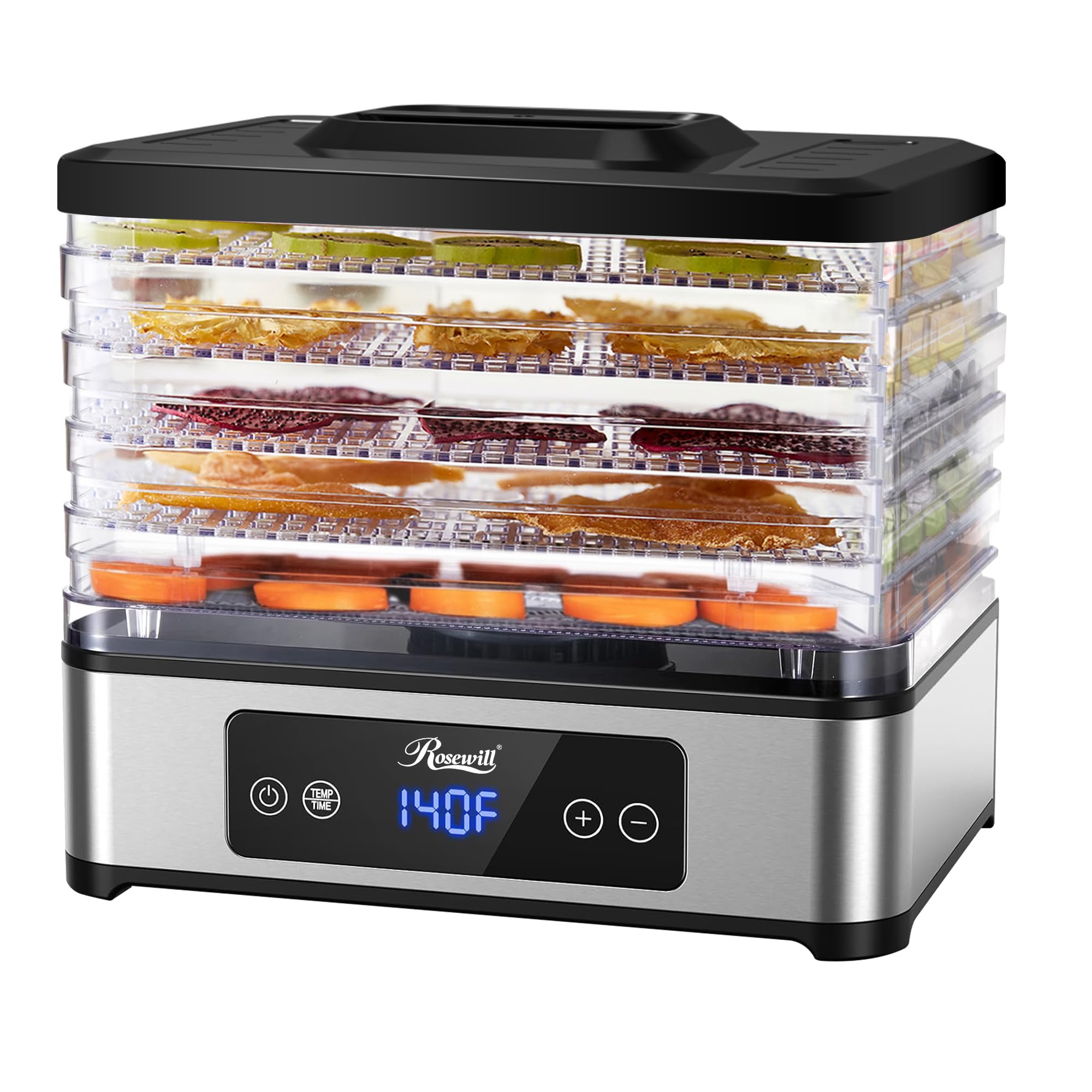
Rosewill Compact 5-Tray
Key Features
- Power: 400 W
- Timer: 0.5–48 hours
- Trays: 5 BPA-free, adjustable
- Footprint: 8.3 × 11.4 × 8.2 in
- Price: Budget
The first thing we noticed was the spread between shelves: the top trays dry slower than the bottom ones, which is what a bottom-up hot-air design does in a compact body. If you buy this, plan on swapping tray positions halfway through and checking the upper trays before the lower ones.
The rest is straightforward. Five BPA-free trays that adjust for height, 400 W, a 360-degree air path, and a timer that runs from 30 minutes to 48 hours on a readable digital panel. At 11.4 inches wide it fits where a lot of machines will not, which is the whole argument for a compact unit.
It is the least expensive way into dehydrating in this group, and for herbs, pepper flakes and a first batch of apple rings it earns its keep. The warranty is the shortest here at one year, which tells you what the maker expects. Buy it as a trial run for the hobby; if you already know you will stick with it, go straight to the Cosori instead.
Pros
- Cheapest entry point in this group
- 11.4 inches wide, easy to place
- 48-hour timer with adjustable trays
Cons
- Top trays dry slower than the bottom
- One-year warranty, shortest here
The cheapest way to find out whether dehydrating is for you, as long as you keep batches small and check the top trays first.
How We Chose and Tested Food Dehydrators
We started with a shortlist of more than 30 models, comparing tray counts, footprints, wattage, thermostat ranges, and replacement-part availability. Price and size narrowed that list to the 12 units we tested, with a mix of stackable and shelf-style designs so we were not comparing apples to oranges—or, more accurately, apple slices to apple slices.
For eight months, those 12 units lived on our kitchen counters and handled a late-summer tomato and apple glut, weekend batches of jerky, fruit leather on rainy afternoons, and herbs from the windowsill. We noted how long each batch took from start to fully dry, whether trays dried evenly from top to bottom, and whether we had to rotate or rearrange anything mid-cycle. We also timed how long it took to set the temperature and timer, and whether the controls made sense without the manual.
Quiet mattered more than expected: we stood beside each unit while it ran and noted whether we could hear it over the kitchen radio or from the next room. Cleaning was hands-on—we scrubbed sticky fruit-leather residue from trays and wiped crumbs out of the fan grille—and we rated how easily the parts came apart. Durability showed up in small ways over the eight months: trays that warped, latches that loosened, fans that developed a rattle. We weighed all of that against price to judge value, because a cheap dehydrator that dries unevenly or dies in a year is no bargain.
How to Choose a Food Dehydrator
The right dehydrator is the one whose batch size, temperature ceiling and footprint match what you actually dry — every other feature is convenience.
Compare drying area, not tray count
A six-tray machine can hold less than a five-tray one if the trays are smaller, so look at square feet rather than shelves. Our top pick spreads six trays over 6.5 square feet; the compact Cosori spreads five over 3.1. In practice that is the difference between drying a full load of sliced meat in one run and splitting it across two evenings.
A household doing a batch a week is well served by three to four square feet. Anyone processing a garden, a hunting season or a market order should be looking at 12 trays and 20-plus square feet — and should accept that a machine that size lives where it lands.
The temperature ceiling decides your menu
Jerky needs the whole run at 165 °F or above. A 158 °F ceiling, which several compact machines here have, quietly rules out meat before you have bought anything else. The 176 °F models — the Magic Mill Pro and the compact Cosori — give you headroom over that line, and the Ausegia goes higher still.
The low end matters too. Herbs and mushroom chips want 95 to 115 °F, and the Excalibur’s 85 °F floor is the lowest here. Check the top number first if meat is on your list, and the bottom number if herbs are.
Airflow, and whether you will be rotating trays
Rear-mounted fans push heat horizontally across every shelf, which is why the better machines here dry a full load without shuffling. Bottom-heat stackables are cheaper to build and you pay for it in uneven batches: the top trays lag and the middle finishes last.
If you buy one anyway, the habit that fixes it is swapping top and bottom trays halfway through. Before you trust any new machine with a full load, dry a single layer of apple slices and compare the corners of the top and bottom trays.
Footprint, weight and where it lives
Depths here run from a 7.3-inch Konfintos to a 21.4-inch Ausegia, and depth is the dimension that surprises people. Our top pick runs 17.8 inches front to back and weighs 18.1 pounds; the Excalibur is nearly 21 inches deep and close to 27 pounds.
Measure the counter and the cupboard before ordering, and think about the lift if the machine lives in storage between batches. A dehydrator that is awkward to set up is one you stop using.
Trays, cleaning and the warranty
Stainless trays are the easiest to live with: marinade does not stain them, they go in the dishwasher, and they do not flex under a heavy load. Plastic stackables are lighter and cheaper but take more scrubbing at the seams and hold on to strong smells.
The longer question is how long the machine lasts. Two-year warranties are the norm among our picks, Excalibur offers three years and Rosewill one. Register the unit and keep the receipt — where these machines fail, they tend to fail early, and the warranty is what turns that into an inconvenience.
Frequently Asked Questions
Do food dehydrators use a lot of electricity?
There is a wide spread. The compact Konfintos draws 250 W, our top pick 600 W and the 12-tray Ausegia 1200 W. A low draw is not automatically cheaper, because a slower machine runs for longer, so weigh wattage against expected run time.
For a household doing a batch a week, the 400–650 W range is the sensible middle: fast enough not to run all day, without the appetite of a commercial cabinet.
Can I dry different foods at the same time?
Yes, if you group by thickness rather than by type. Slices of the same thickness finish together, so keep apple rings and carrot coins on one tray and thick beet slices on another.
Give strong aromatics such as onion, garlic and chili their own run, and always place meat below produce so nothing drips onto food that will not be heated again afterwards.
How do I stop fruit from sticking to the trays?
Use the sheets that come with the machine rather than improvising: a fruit roll sheet for leathers and purees, a mesh screen for berries, herbs and anything small enough to fall through the grid.
For sticky slices, dry at the lower end of the temperature range and turn them once. Sticking usually means the heat was too high for the sugar in the fruit, not that the trays are at fault.
Can I leave a dehydrator running overnight?
Only with a countdown timer and automatic shutoff, which every pick here has — timers run from 24 hours on the Ausegia to 80 on the Excalibur. Clear the area around the vents, keep the unit off soft furnishings, and stay home for the first overnight run.
Quiet matters as much as safety if the machine is anywhere near a bedroom; the Cosori’s sub-48 dB motor is why it tops our list for unattended batches.
Final Verdict
Start with the Cosori six-tray. It has the drying area, the quiet motor and the dishwasher-safe trays that make weekly use realistic, and its two-year warranty covers the one thing no one can promise about a machine this size.
If jerky is the whole point, the Magic Mill Pro’s stainless interior and 176 °F ceiling are worth the swap. If you are putting up a garden, go straight to the Ausegia and give it a permanent home. For the batch most of us actually dry, the Cosori is the answer.