This post contains affiliate links. We may earn a small commission when you buy through our links — at no extra cost to you.
A blender that can’t handle a frozen strawberry is just a loud kitchen ornament. I’ve had machines turn a banana into silk and then shudder to a stop on ice, so I watch what happens under load: does the blade keep moving, does the motor smell hot, and does the smoothie come out even or leave chunks at the bottom? Over six months, my team and I put 14 blenders through morning smoothies, protein shakes, and weekend batches with frozen fruit and leafy greens. A good one turns that daily frozen-fruit habit into a thirty-second routine instead of a gamble.
The ones that earned counter space did more than power through: they were easy to clean without disassembling five parts, stayed reasonably quiet before the house woke up, and had controls that made sense before coffee. They felt solid enough to trust for daily use and worth their price, not just impressive in a single demo. That combination, not a flashy wattage number, separates a blender you keep from one you resent. Below are the ones that held up.


Best for Family Smoothies
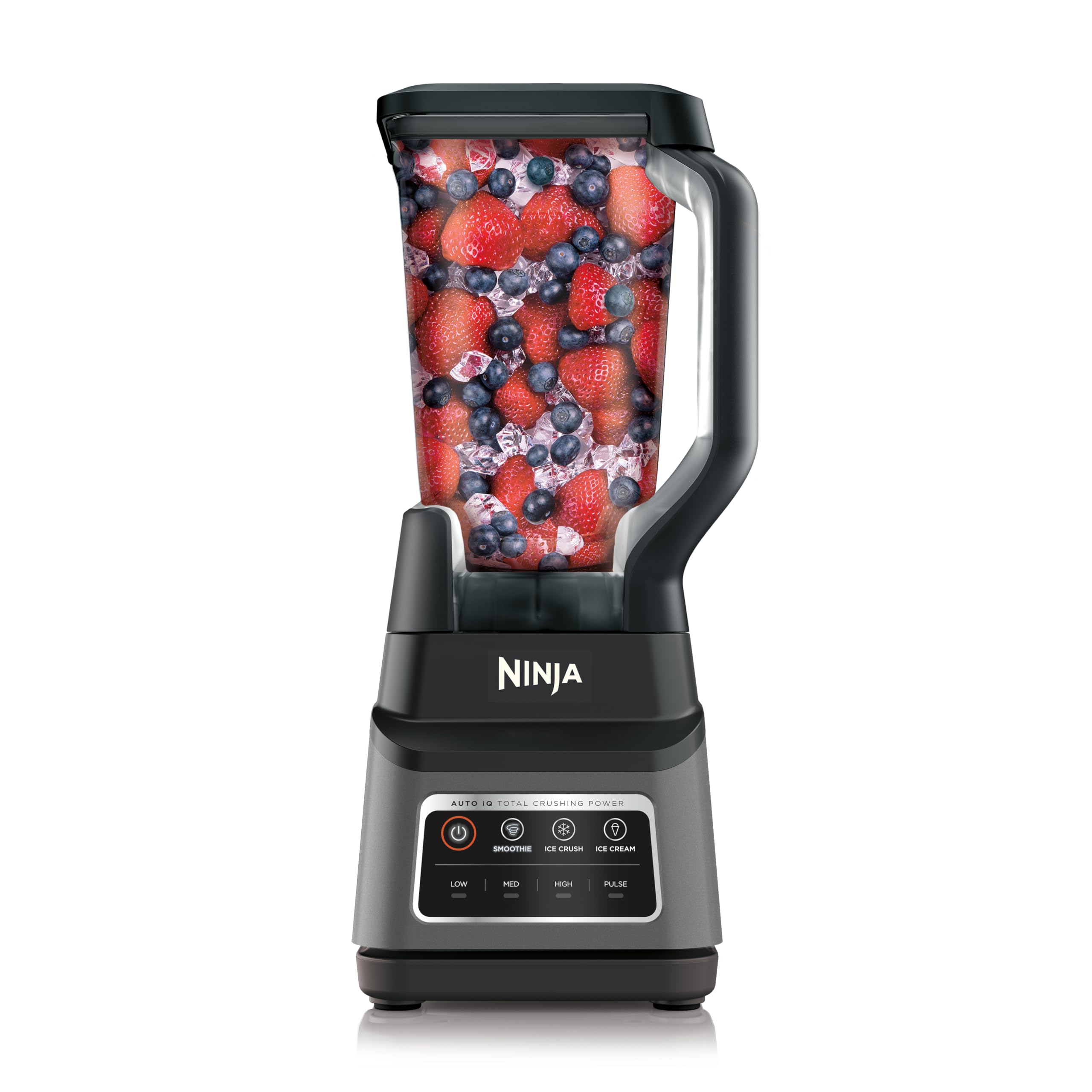
Ninja Professional Plus BN701
Key Features
- Motor: 1400 watts
- Weight: 8.1 lb
- Controls: 4 speeds with 3 Auto-iQ presets
- Pitcher capacity: 72 fluid ounces
- Price: Midrange
We started with the hardest job in the kitchen: a cup of frozen strawberries, a frozen banana, four ice cubes, and only enough milk to reach the blades. The Professional Plus came back with no strawberry halves and no ice shards, in a single run, and it repeated that the next morning. Frozen fruit is where most blenders ask for help; this one doesn’t.
We recommend it because it pairs that power with the least fiddling of anything here. The motor is rated at 1400 watts, the pitcher holds 72 ounces with a 64-ounce liquid line, and the three Auto-iQ programs run their own timed pulse-and-pause cycles — press Smoothie, walk away, come back to something drinkable. That matters more than it sounds when you’re doing it half asleep.
Cleaning is a two-minute job because the stacked blade assembly lifts out of the pitcher in one piece, with no grit trapped under a fixed blade. We hand-wash the pitcher even though it’s listed as dishwasher safe: hot cycles are hard on clear plastic, and a cracked pitcher is the one failure that takes a blender out of service for good. The lid and any cups are fine on the top rack.
It stands 17.5 inches tall, so check the gap under your upper cabinets before you give it a permanent home — there isn’t much air over the lid. Neither that nor the noise has sent us looking for a different blender.
Pros
- Crushes frozen fruit and ice in one pass
- 3 Auto-iQ presets remove the guesswork
- 72-ounce pitcher makes several servings at once
- Blade assembly lifts out for rinsing
Cons
- Loud at full speed
- Pitcher only, no blend-and-go cup
Our top pick for most kitchens: 1400 watts and a 72-ounce pitcher make short work of frozen fruit, with presets that do the pulsing for you.
Best for Single Servings
Ninja Nutri-Blender Pro BN401
Key Features
- Cups: Two 24-ounce cups
- Motor: 1000 watts
- Weight: 6.3 lb
- Presets: 2 Auto-iQ programs
- Price: Midrange
The cup is the whole idea. You load a 24-ounce cup, screw on the blade, flip it onto the base, and when it’s done you swap the blade for a spout lid and take it with you. Two cups come in the box, so one can be drying while the other is full. For a single smoothie we take this over the bigger Ninja every time — there’s no pitcher to wash and nothing to pour.
Power isn’t the compromise you might expect from something this size. The motor is rated at 1000 watts, the two Auto-iQ programs cover smoothies and ice crushing, and frozen berries went down cleanly. The cups and lids go on the top rack and the blade base rinses under the tap in seconds, which is most of what cleaning a blender actually means at seven in the morning.
It’s loud. We say something before pressing start, and a pre-dawn smoothie in an apartment takes a little nerve. In exchange you get the smallest useful footprint here and a routine simple enough to survive a rushed morning — twist, blend, cap, out the door.
Pros
- Blend, cap, and go in the same cup
- Two 24-ounce cups and two spout lids included
- Enough power for frozen berries and ice
Cons
- Very loud at full speed
Buy this one if you make a single smoothie at a time: you blend in the cup, cap it, and leave.
Best for Big Batches
Aeitto BLD02
Key Features
- Motor: 1800 watts peak
- Height: 16.53 inches
- Controls: 3 presets and 7 speeds
- Jar capacity: 68 fluid ounces
- Price: Premium
Sixty-eight ounces is hard to picture, so here it is: six cups of smoothie from one batch, or a full round of frozen drinks without stopping. The jar is wide enough to add ingredients without a funnel, and the lid seals flat, so serving is one pour rather than a production line.
The 1800-watt peak motor and seven speeds back that up, and the three presets cover smoothies, juice, and crushed ice. The plunger that ships in the box is the piece we didn’t expect to lean on: a thick mix of frozen mango and yogurt needs something to push it down, and a tamper beats stopping to scrape the sides with a spatula.
Here’s our hesitation. This is the most expensive blender in this group, and the jar is plastic. The money buys capacity and motor rather than materials, and if you make one smoothie a day you’re paying for a batch size you won’t use. For a household filling several glasses at once, the trade is right; for anyone else, it isn’t.
The self-clean cycle is genuinely useful on a jar this size — water, a drop of detergent, a short run, then the dishwasher — and the LED panel counts down the remaining time, which we found ourselves glancing at more than expected.
Pros
- 68-ounce jar handles six cups per batch
- 1800-watt peak motor with seven speeds
- Tamper included for thick frozen mixes
Cons
- Plastic jar at the highest price here
- No blend-and-go cup included
We recommend it when one batch has to fill several glasses: 68 ounces, 1800 watts of headroom, and a tamper for thick frozen mixes.
Best for One-Button Smoothies
nutribullet NBR-0601WM
Key Features
- Motor: 600 watts
- Speeds: 1
- Weight: 5.1 lb
- Cup capacity: 24 fluid ounces
- Price: Midrange
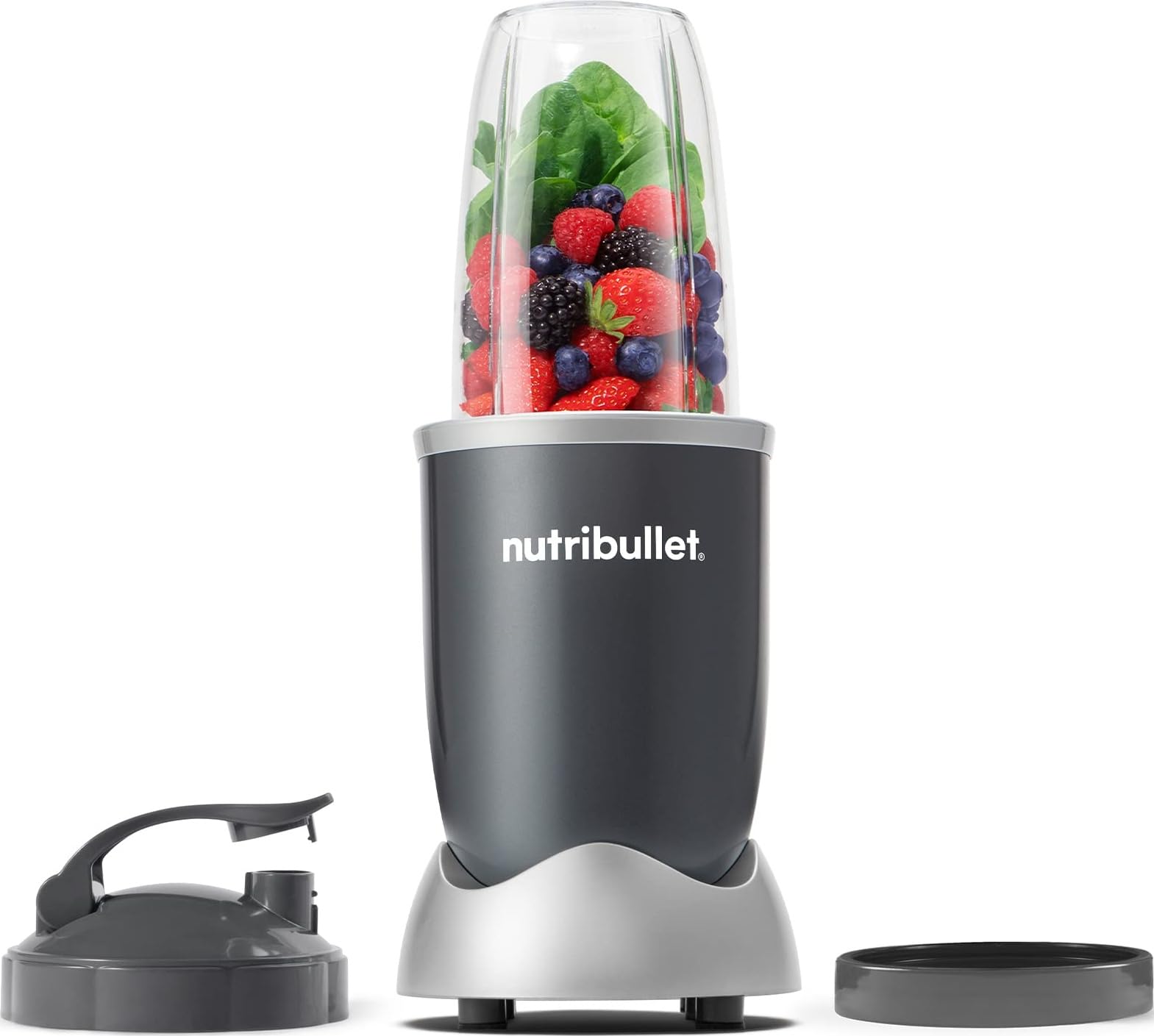
There’s one button, and it isn’t really a button — you press the cup down and the motor runs. No speed dial, no presets, no screen. We handed it to someone who had never used it and they made a smoothie without being told anything, which is the entire pitch.
We rate it as the best cheap route into real frozen-fruit blending, with a caveat that matters. The 600-watt motor will turn strawberries, a banana, and a spoon of peanut butter into something drinkable, but it wants liquid and headroom: pack the cup past the max line with frozen fruit and you’ll be stopping to shake it. Load it liquid first and frozen on top and it behaves.
The parts that wear are the cup threads and the gasket in the blade base, so screw the blade down firmly and rinse the ring instead of letting pulp dry into it; a badly seated gasket is how these start leaking. Everything else is as simple as it looks, which is why it stays on the counter.
Pros
- One-button operation, nothing to learn
- Handles frozen fruit in a single cup
- Cup, lid, and blade rinse in seconds
Cons
- Only one 24-ounce cup in the box
Nothing to learn: press the cup down and frozen fruit comes out drinkable — the one we hand to guests.
Best for Value Full-Size
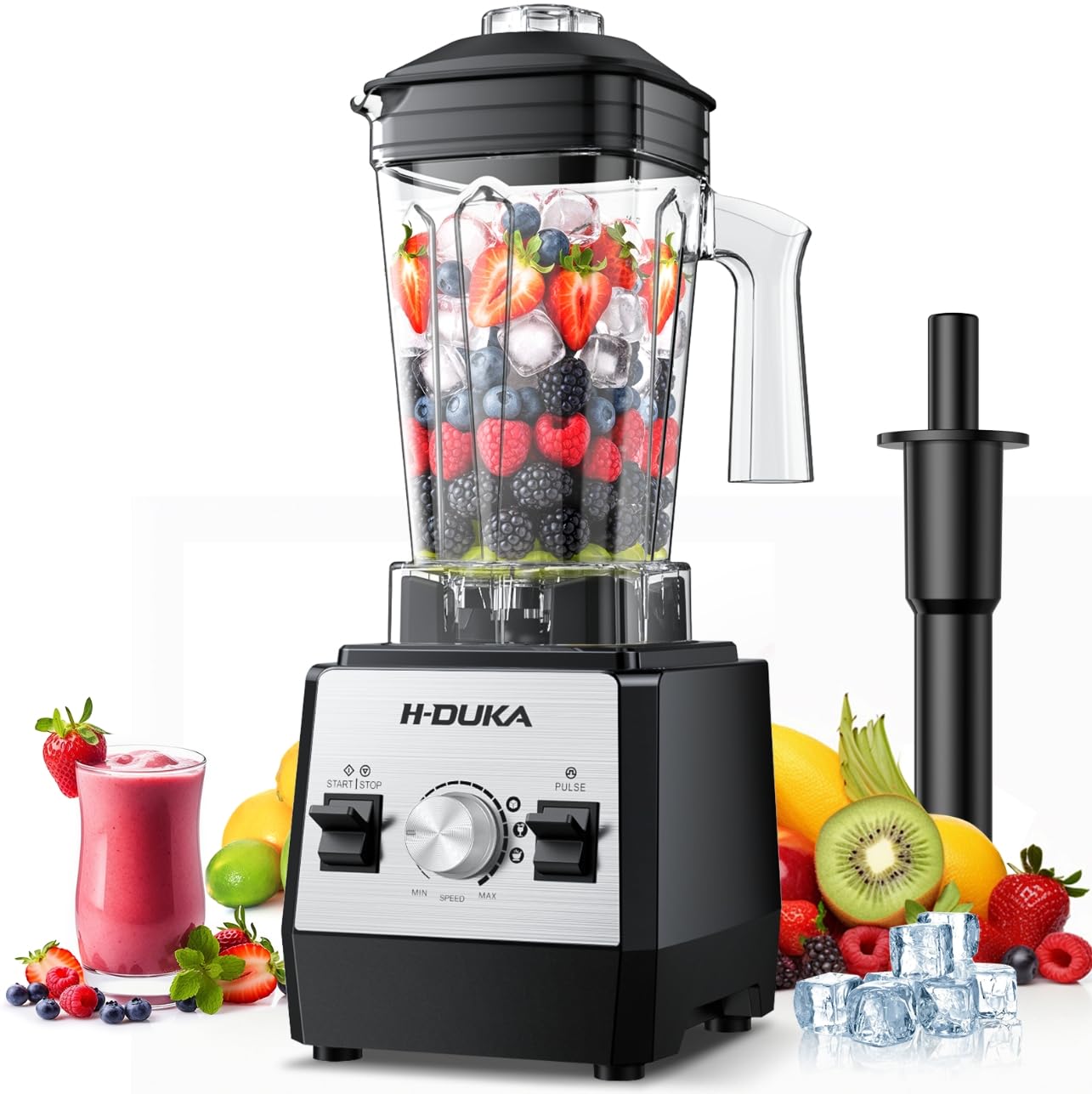
H-Duka HS-207
Key Features
- Motor: 1400 watts (1800 peak)
- Height: 17.5 inches
- Warranty: 1 year
- Jar capacity: 64 fluid ounces
- Price: Midrange
Put the H-Duka’s numbers next to our top pick’s and it looks like a steal: 1400 watts with an 1800-watt peak claim, a 64-ounce jar, and a price below the Ninja’s. That’s the kind of listing that deserves suspicion, so we watched where the money went.
Mostly into the motor and the jar. Frozen fruit and ice broke down without the stall-and-shake routine, the pitcher seats on the base without hunting for a notch, and the self-clean cycle plus dishwasher-safe parts keep cleanup ordinary. It’s also a stable machine — the base stays put instead of walking across the counter.
What you give up against the top pick is refinement. The controls are basic push buttons rather than programs worth trusting with your breakfast, the fit and finish is built to a price, and there’s a new-brand plainness to the whole thing. None of that showed up in the glass, and it costs meaningfully less.
Pros
- 1400 watts for less than the top pick
- 64-ounce jar seats without lining up a notch
- Self-clean cycle and dishwasher-safe parts
Cons
- Short track record so far
We think it’s the value play among full-size blenders: 1400 watts and a 64-ounce jar for less than the top pick, from a brand with less to go on.
Best for Glass over Plastic
Hamilton Beach Power Elite 58155J

Key Features
- Jar: 40-ounce glass
- Motor: 700 watts
- Warranty: 3 years
- Functions: 12
- Price: Budget
The jar is glass, and that’s the reason this one is here. Clear plastic pitchers cloud, craze, and crack, and a cracked pitcher ends a blender’s life more decisively than a tired motor. Glass doesn’t do any of that, doesn’t hold the smell of garlic or the stain of a beet, and goes in the dishwasher without a second thought.
The rest is sensible: 700 watts, a 40-ounce jar with a pour spout that genuinely doesn’t drip, 12 functions on the dial, and a three-year warranty that’s the longest in this group. The jar, lid, blades, and collar all come apart for washing, which isn’t true of every blender here.
Frozen fruit is where it stumbles, and frozen fruit is what this article is about. A jar packed with strawberries and ice will have you pulsing, adding liquid, and pulsing again, and you may still find a chunk. Load it with softer fruit, yogurt, and a handful of frozen berries rather than a wall of ice and it does a decent job.
So it suits a particular buyer: someone who wants glass and a long warranty, makes more green-and-yogurt smoothies than frappés, and doesn’t mind babysitting when the freezer is the main ingredient. Against the Ninja it gives up real power and gains a jar that won’t be the reason it dies.
Pros
- Glass jar resists stains, odors, and crazing
- Three-year warranty, the longest here
- Pour spout keeps the counter clean
Cons
- Very loud at high speed
We recommend it for the glass jar and the three-year warranty — and for softer smoothies, not a jar packed with ice.
Best for Smoothies Plus Grinding
Savorfuze BL3658

Key Features
- Cups: Two 24-ounce cups plus a 10-ounce grinder cup
- Motor: 900 watts peak
- Speed: 25,000 RPM
- Warranty: 1 year
- Price: Budget
Two blades, not one. Alongside the cross blade for the cups there’s a flat grinder blade and a small cup to go with it, which is how a personal blender ends up doing coffee beans, flaxseed, and spices as well as smoothies. That single extra blade is why this one is on the list instead of the half-dozen near-identical 900-watt bullets around it.
The rest is solid: 900 watts, a 25,000-rpm motor, two 24-ounce cups with to-go lids, and an auto-lock that only lets the motor run once the cup is fully seated. The suction feet hold it still on the counter, which matters more with a light base, and the cups and blade are dishwasher safe.
Where it asks for care is the seals. Two spare blade rings ship in the box, and you’ll want to keep track of them — a lost or twisted ring is how these cups start leaking into a bag. Otherwise it’s among the least fussy personal blenders here to live with.
Pros
- Second flat blade for grinding dry goods
- Two 24-ounce cups plus a grinder cup
- Auto-lock only runs when seated
Cons
- Grinder cup holds only 10 ounces
We like it best as the personal blender that also grinds: two blades, three cups, and enough power for frozen fruit.
How We Tested Smoothie Blenders for Frozen Fruit
We started with more than 30 blenders, then narrowed the field by jar capacity, the way each machine handled frozen fruit and ice according to its own settings, dishwasher-safe parts, control layout, and where each one sat in its price band. That left 14 models, and we used them for six months in the same kitchen, not a lab bench: rushed weekday-morning smoothies with frozen berries, spinach, yogurt, and ice; post-workout shakes; and larger weekend batches for two or three people.
Each blender had to earn its place. We packed the jar with frozen strawberries and ice and timed how long it took to reach a drinkable texture, noting whether we had to stop and shake the jar or use a tamper, whether the motor lugged or smelled hot, and whether the result was even or grainy. We tried every preset and manual speed rather than trusting the smoothie button, filled jars a little past the max line to see what leaked, and listened from the next room to judge noise during early uses. Back-to-back batches were part of the routine, because a machine that performs once and then needs a rest is not reliable for daily smoothies.
Cleaning and daily handling got equal attention. After each use we rinsed the jar, washed the lid and blade assembly by hand, and checked for fruit trapped under the blades or in the gasket; we also ran the self-clean cycle where there was one. We assembled and poured one-handed, judged how easy the controls were to read before coffee, and watched for loose blades, cracked jars, and worn seals over the months. Finally, we compared what each blender could do against what it cost, because power and extra functions only count as value if you will actually use them.
How to Choose a Blender for Smoothies and Frozen Fruit
Frozen fruit is the hardest everyday job a blender gets, so it should drive the decision; everything else here is convenience.
Start With the Motor, Not the Presets
Peak watts flatter a listing, so compare like with like. A 900-watt personal blender and a 1,400-watt full-size are different machines built for different loads, and the 250-watt bullet at the back of the cupboard is the one that stalls on a cup of frozen strawberries. We treat 900 watts as the entry point for frozen fruit and ice, and 1,400 as the point where you stop thinking about it.
Presets don’t rescue an underpowered motor; they just automate the stalling. Spend the budget on watts first and programs second, because a strong motor with one speed beats a weak one with twelve buttons.
Personal Cup or Full-Size Pitcher
Count the smoothies you actually make at once. One, and a personal blender saves you washing a pitcher; three or four, and a 64- or 72-ounce jar is the difference between one blend and three.
Two things trip people up. The marked liquid line is always well below the jar’s nominal size, and overfilling with frozen fruit is how smoothies end up on the counter. And look at what you drink from: a cup with a spout lid travels, while a 68-ounce jar does not.
Plastic, Glass, and What Actually Breaks
Clear plastic is where a lot of full-size blenders meet their end — it clouds, crazes, and eventually cracks, and hot dishwasher cycles hurry that along. Glass avoids all of it, doesn’t hold odors or stains, and is heavier and breakable in its own right.
We think plastic is fine for a blender that gets rinsed daily, as long as you hand-wash and air-dry the jar. If you want the thing to look new in three years, buy glass and accept the weight.
Controls, Noise, and Where It Lives
Presets earn their place in one specific case: you blend frozen fruit most mornings and don’t want to stand there pulsing. Timed pulse-pause programs do that work, and on a full-size machine they’re worth having. Manual speeds are fine if you like control.
Then there’s noise. More power means more sound, and a personal blender puts the motor right under your hand. If you blend before the house is up, treat noise as part of the decision rather than a surprise.
Frequently Asked Questions
Why does my smoothie come out chunky?
Loading order does most of the work: liquid first, then soft ingredients like yogurt or banana, then frozen fruit and ice on top. Leave the cup or jar no more than about two-thirds full of solids, and stop once to shake or scrape. Frozen fruit needs something to move in, and a mix with no liquid will stall even a 1,400-watt motor. If it’s still chunky with liquid and headroom, the blender is the problem.
Can the pitcher and cups go in the dishwasher?
Usually yes for the parts that touch food, and never the motor base. Cups, lids, and removable blade assemblies are typically top-rack safe. Clear pitchers are the exception: heat and long cycles cloud plastic and stress the blade seal. Rinse the blade under the tap right after you pour and most days you won’t need the machine at all.
Will a full-size blender fit under my kitchen cabinets?
Check the height with the lid on. The full-size models here run from about 14.7 to 17.5 inches tall, and upper cabinets typically leave around 18 inches of clearance above the counter. That fits, but with little room to lift the lid clear, so measure the gap and leave a couple of inches for loading.
Final Verdict
Frozen fruit is the test that separates these blenders, and the Ninja Professional Plus passes it most consistently. It has the motor, the pitcher size, and the presets to make a family’s worth of smoothies without you standing over it, and its trade-offs — the noise, a plastic pitcher you should hand-wash — are ones we can live with.
If you make one smoothie at a time, buy the Nutri-Blender Pro and drink it from the cup you blended in. If one batch has to fill six glasses, the Aeitto’s jar earns its premium.