This post contains affiliate links. We may earn a small commission when you buy through our links — at no extra cost to you.
Tamagoyaki pans all look similar online: rectangular, nonstick, sized for two eggs. But once you start cooking, the differences become clear. Some coatings peel within months; others stay slick for years. The real challenge is cutting through marketing claims like "stone" or "maifanite" to find a pan that actually holds up.
The trade-off often comes down to convenience versus longevity. A nonstick pan makes rolling omelets effortless, but rarely survives daily use beyond a year. Cast iron lasts decades but demands patience with seasoning. And then there’s the question of size — most are smaller than you expect, good for one or two servings at most.
This guide focuses on the pans that deliver consistent performance, backed by thousands of real-world experiences. You’ll find clear choices for your priority: budget, durability, or a complete kit with lid and accessories.



Best for Budget & Daily Use
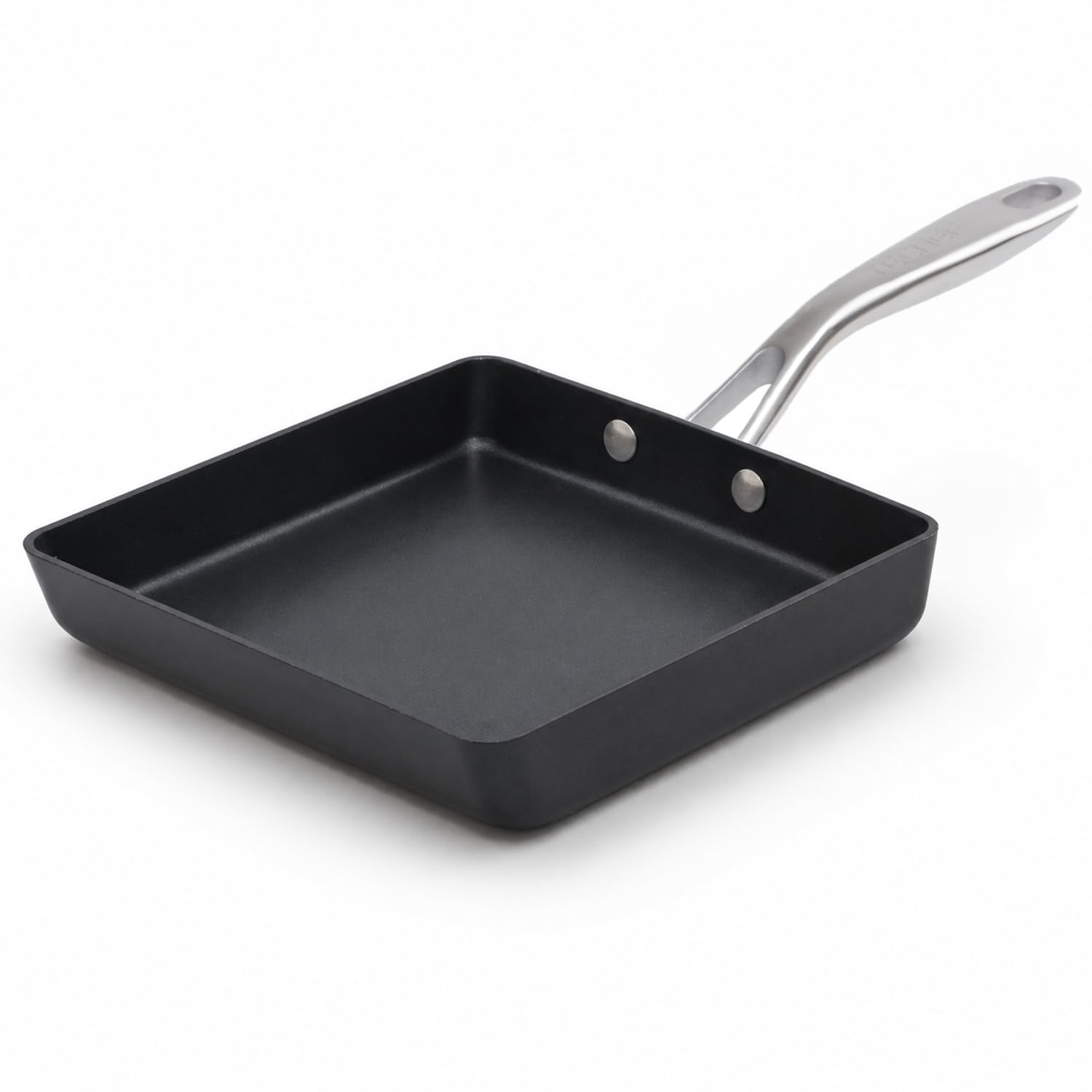
TECHEF Medium 7.5×5.5
Key Features
- Material & Coating: Forged aluminum, 3-layer Teflon
- Size: 7.5 x 5.5 inches
- Stovetop Compatibility: All including induction
- Price: $
The TECHEF medium tamagoyaki pan uses a three-layer nonstick coating that releases eggs without oil or butter cling. The forged aluminum body distributes heat evenly, so rolled omelets cook uniformly without hotspots. Cleanup is fast — either a quick hand wash or a run through the dishwasher.
At 7.5×5.5 inches, the pan is sized for single-serving omelets (1–2 eggs), not multi-egg batches. For everyday tamagoyaki for one or two people, it hits the sweet spot of function and cost. Buyers who need to cook for a larger group or prefer a heavier cast iron pan should look elsewhere.
Pros
- Nonstick coating releases eggs cleanly every time
- Forged aluminum build withstands regular use without warping
- Quick cleanup — dishwasher safe or hand wash in seconds
Cons
- At 7.5×5.5 inches, the pan fits 1-2 egg omelets; larger portions require a bigger pan
For anyone making single-serving tamagoyaki or small omelets on a budget, this pan delivers dependable nonstick at an entry-level price.
Best for Beginners Full Set
HAPPI STUDIO 7×6 with Lid
Key Features
- Material & Coating: Aluminum, Maifanite stone
- Size: 7 x 6 inches
- Included Accessories: Lid, spatula, chopsticks
- Stovetop Compatibility: All including induction
- Price: $$
The HAPPI STUDIO set adds a lid that helps with steaming and even cooking — a genuine benefit for making tamagoyaki or other dishes. The pan’s nonstick performance is solid, but buyers looking for the most trusted choice may prefer the TECHEF medium, which has a longer track record at a lower price. This set suits beginners who want a complete kit with utensils, and induction stove users will appreciate compatibility. However, the lid adds cost, and the pan offers similar performance to other mid-range options.
Pros
- Nonstick surface releases eggs with minimal oil
- Useful lid for even cooking and steaming
Cons
- Lid and accessories increase the price compared to a bare pan of similar quality
A complete package for those who want a lid and utensils from the start, but the pan itself doesn’t offer better nonstick or durability than the top pick at a lower price.
Best for Traditionalists
Iwachu Cast Iron
Key Features
- Material & Coating: Cast iron, pre-seasoned
- Size: 7 x 5.5 inches
- Stovetop Compatibility: Gas only
- Price: $$$
This Iwachu pan is cast iron craftsmanship that will last for decades — built to develop a natural nonstick surface with use. It requires seasoning and is not compatible with induction cooktops, so it’s best for those with gas stoves who enjoy traditional cookware maintenance. The premium price reflects heirloom quality rather than everyday convenience, making it a choice for serious tamagoyaki enthusiasts and collectors who value longevity and authenticity.
Pros
- Heirloom-quality construction that feels solid and balanced.
- Develops a glass-smooth nonstick surface after proper seasoning.
- Built to outlast any aluminum nonstick pan.
Cons
- Premium pricing for a pan that only fits 2-egg omelets.
For those with gas stoves who appreciate cast iron’s longevity and are willing to invest in seasoning, this pan rewards with decades of authentic tamagoyaki.
Best for Budget Beginners
Oleex 5×7 Set
Key Features
- Material & Coating: Aluminum, PFOA-free nonstick
- Size: 5 x 7 inches
- Included Accessories: Spatula, oil brush, chopsticks, musubi mold, plate
- Stovetop Compatibility: All including induction
- Price: $
The Oleex set gives you everything needed to start making Japanese rolled omelets and musubi right out of the box: a nonstick pan, spatula, oil brush, chopsticks, and a plate. The 5×7-inch surface releases eggs easily and cleans up in seconds. But that small size is the tradeoff – it comfortably handles only 1-2 eggs, so it suits solo breakfasts or kids’ portions rather than family meals.
Pros
- Complete kit with musubi mold and cooking tools at a budget price
- Nonstick coating releases eggs cleanly and wipes clean fast
- Works on all stovetops including induction
Cons
- 5×7-inch pan is limited to 1-2 egg portions – not for larger batches
Best for a single cook or kid who wants a low-cost entry into tamagoyaki plus musubi – the included extras make it a fun starter pack.
Best for Square Pan Lovers
TECHEF Onyx 8.5×8.5
Key Features
- Material & Coating: Forged aluminum, 3-layer Platinum
- Size: 8.5 x 8.5 inches
- Stovetop Compatibility: All including induction
- Price: $$
The TECHEF Onyx swaps the typical narrow rectangle for an 8.5-inch square surface, giving you room for bigger omelets or using it as a general-purpose skillet. It’s oven-safe up to 450°F and works on induction — two features the smaller, traditional-shaped top pick lacks. The tradeoff: its square shape won’t produce the classic long rolled tamagoyaki that purists expect, and some owners note the exterior coating can peel over extended use, making this better suited for occasional omelet-making rather than daily heavy use.
Pros
- Nonstick surface releases eggs cleanly and heats evenly across the square base.
- Forged aluminum body feels sturdy and shows no warping during use.
- Food residue wipes off easily after cooking.
Cons
- Exterior coating can peel after months of use, particularly around the bottom edges.
A capable square pan for those who want oven-safe flexibility and a larger cooking surface, but best for occasional tamagoyaki use rather than a daily workhorse.
Best for First-Time Makers
YumOmNom Rectangle
Key Features
- Material & Coating: Aluminum, 3-layer nonstick
- Size: 5 x 7 inches
- Included Accessories: Spatula, oil brush, chopsticks, plate
- Stovetop Compatibility: All including induction
- Price: $
The YumOmNom pan skips extras like a lid to hit a lower price point, but the nonstick coating holds up well — omelets slide out cleanly, and cleanup is a quick rinse or a trip through the dishwasher. It handles crepes, grilled cheese, and small egg rolls without sticking, making it a solid entry-level option for those just learning to roll tamagoyaki.
This pan suits first-time tamagoyaki makers who want a low-cost way to practice, and cooks who already own a lid and just need the pan. The plain packaging and basic accessories (spatula, oil brush, chopsticks, plate) keep things simple. If you need a lid for steaming or larger portions, this isn’t the right choice — but for small-batch omelets, it gets the job done.
Pros
- Food releases easily — no stubborn sticking.
- Works for more than just tamagoyaki: crepes, grilled cheese, and small pancakes.
- Quick to clean — dishwasher safe or just rinse.
Cons
- No lid included — limits steaming and even heating for some recipes.
A capable, no-nonsense pan for anyone who wants to try tamagoyaki without spending much. Skip it if you need a lid for steaming.
Best for Light Users
IBBM Mini 5.3×7.2

Key Features
- Material & Coating: Al-Mn alloy, Maifanite stone
- Size: 5.3 x 7.2 inches
- Stovetop Compatibility: All including induction
- Price: $$
This pan delivers consistent nonstick performance for light tamagoyaki sessions – easy to clean and works for omelets, crepes, and dumplings. The coating may scratch if metal utensils are used, so gentle hand washing is needed. It’s a solid option for occasional cooks, but the top pick offers better longevity for frequent use.
Pros
- Nonstick coating holds up well across many uses with proper care.
- Good for omelets, crepes, and dumplings without sticking.
Cons
- Coating can scratch if metal utensils are used – requires hand washing with soft tools.
Best for occasional tamagoyaki users who hand wash and avoid metal utensils; not ideal for heavy daily use.
Best for Budget Induction Users
MyLifeUNIT 7×5

Key Features
- Material & Coating: Al-Mn alloy, Maifanite stone
- Size: 7 x 5 inches
- Included Accessories: Silicone spatula
- Stovetop Compatibility: All including induction
- Price: $
This pan works on all stovetops including induction for under $25. Its nonstick coating releases eggs easily and cleanup is simple. However, when used on high heat, the pan may warp over time – it’s best suited for gentle cooking on low to medium heat.
Pros
- Nonstick performance with minimal oil needed
- Easy to roll omelets and quick to clean
Cons
- May warp over time when used on high heat – best for gentle cooking
A good choice for budget-conscious buyers who cook tamagoyaki on low to medium heat and want induction compatibility.
Best for Small Households
DXBVIEX 7×5 Set

Key Features
- Material & Coating: Aluminum alloy, nonstick
- Size: 7 x 5 inches
- Included Accessories: Lid, spatula, brush, chopsticks, fork, spoon, plate, bag
- Stovetop Compatibility: All including induction
- Price: $$
This set delivers solid nonstick performance and includes a lid, spatula, brush, chopsticks, and more — everything a new cook needs to start making tamagoyaki. The nonstick surface releases eggs cleanly and wipes down fast. But the pan measures only 7×5 inches, which works for a single egg or a very small omelet; anyone cooking for two or wanting a larger rolled egg will find it cramped. The price is mid-range for the category, and similar sets without the extras cost less.
Pros
- Generous accessory bundle includes lid and multiple utensils
- Nonstick coating releases eggs easily and simplifies cleanup
Cons
- Pan size suits only single servings; too small for a 2-egg omelet
Best for a solo cook or gift recipient who wants a one-stop starter kit and doesn’t need to feed more than one.
Best for Ceramic Coating Fans
LISOS Ceramic 5×7

Key Features
- Material & Coating: Aluminum alloy, ceramic nonstick
- Size: 5 x 7 inches
- Stovetop Compatibility: All including induction
- Price: $
The LISOS ceramic coating provides true nonstick release — eggs slide off with ease — and the pan heats evenly across its small surface. Cleaning requires just a quick hand wash. However, the ceramic coating can peel after several months, making this better suited for occasional tamagoyaki making than daily cooking.
Pros
- True nonstick ceramic coating releases food without sticking
- Easy to clean with a quick hand wash
Cons
- Ceramic coating may peel after several months of use
Best for occasional tamagoyaki use on a budget, but not for daily cooking.
Best for Everyday Omelet Makers
HooJay with Lid

Key Features
- Material & Coating: Aluminum, nonstick
- Size: Likely ~5×7
- Included Accessories: Lid, silicone spatula, brush
- Stovetop Compatibility: Gas and induction
- Price: $$
Good nonstick performance keeps eggs sliding off, and the included lid, silicone spatula, and brush add convenience for everyday omelet making. However, the product page does not list exact dimensions, so buyers needing precise fit should verify before purchase.
Pros
- Nonstick coating releases eggs cleanly
- Includes lid, silicone spatula, and brush for added value
Cons
- Exact pan dimensions are not listed on the product page
A good option for tamagoyaki makers who want a lid and don’t mind unknown dimensions – measure your stovetop if uncertain.
Best for Camping & Outdoor
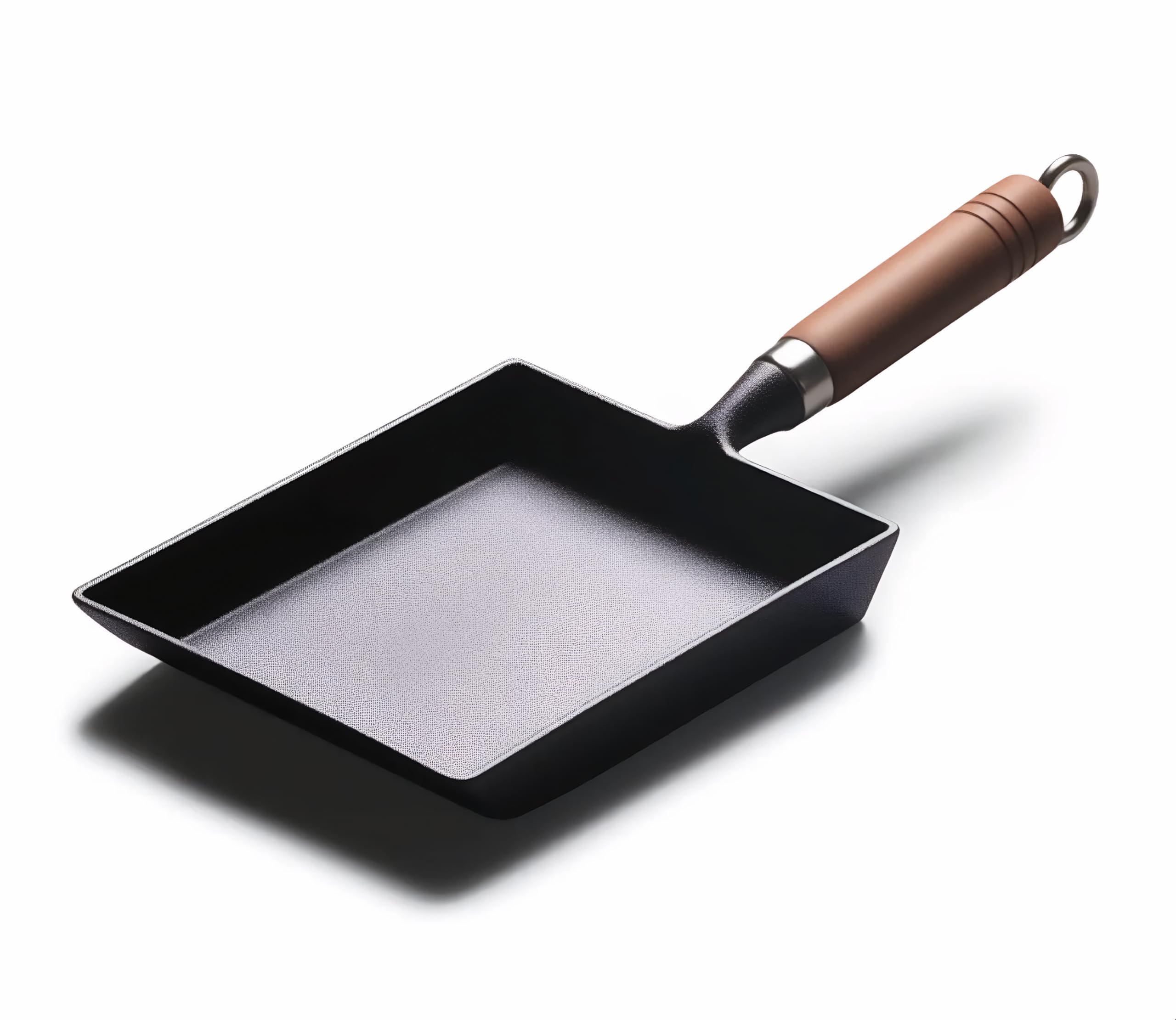
YYMIYU Cast Iron 9×7
Key Features
- Material & Coating: Cast iron, pre-seasoned
- Size: 9 x 7 inches
- Included Accessories: Detachable wood handle
- Stovetop Compatibility: All including induction
- Price: $$
This cast iron pan holds heat well and feels sturdy, making it a natural fit for outdoor cooking where durability matters. But the nonstick surface demands careful seasoning to avoid sticking, and the detachable handle can feel loose or poorly seated – a tradeoff that suits campers more than daily home cooks who want fuss-free omelets.
Pros
- Heavy cast iron construction with excellent heat retention for even cooking.
- Natural, chemical-free nonstick surface after proper seasoning.
Cons
- Detachable wood handle may not fit securely or can loosen over time.
Best for campers and outdoor enthusiasts who want a chemical-free nonstick pan and are comfortable with seasoning – not the pick for everyday kitchen convenience.
Best for Sushi Lovers
FUNGYAND 12-in-1 Set

Key Features
- Material & Coating: Aluminum, multi-layer nonstick
- Size: 5 x 7 inches
- Included Accessories: Spatula, bamboo mat, knife, sushi molds
- Stovetop Compatibility: All including induction
- Price: $
This FUNGYAND set packs 12 tools including a 5×7 inch nonstick pan, ideal for beginners assembling sushi and tamagoyaki from scratch. The nonstick surface works well for clean egg rolls. However, the small pan size limits batch cooking, and this kit has fewer customer reports compared to more established options, making it a less proven choice for frequent use.
Pros
- All-in-one kit includes pan, spatula, bamboo mat, knife, and sushi molds for a complete start.
- Nonstick coating releases eggs cleanly, making tamagoyaki rolling easier.
Cons
- Small 5×7 inch surface restricts omelet size to 1-2 eggs – not suitable for larger batches.
Best for first-time sushi and tamagoyaki cooks who want everything in one box and don’t mind a small pan size.
Best for Copper Enthusiasts
TIKUSAN Copper Square

Key Features
- Material & Coating: Copper with tin lining
- Size: 7.1 x 7.1 inches
- Included Accessories: Wooden lid
- Stovetop Compatibility: Gas only
- Price: $$$$
The TIKUSAN’s copper construction delivers fast, even heating that helps achieve delicate, fluffy omelets. However, the premium price, gas-only compatibility, and required hand-seasoning mean it best suits serious Japanese cooking enthusiasts who already own a gas stove and enjoy maintaining cookware.
Pros
- Excellent heat conductivity for fluffier omelets
- Beautiful craftsmanship, made in Japan
Cons
- Premium-priced for its size – nearly $100 for a single-use pan
For collectors of Japanese copper cookware or purists who value traditional materials over convenience, this pan offers unmatched authenticity.
Best for Lid Seekers
YumOmNom with Lid

Key Features
- Material & Coating: Aluminum, 3-layer nonstick
- Size: 5 x 7 inches
- Included Accessories: Glass lid
- Stovetop Compatibility: All including induction
- Price: $$
The glass lid allows for steaming and even cooking, and the nonstick surface releases eggs cleanly. It costs more than the same pan without the lid, making it a premium pick only if you’ll use that lid regularly.
Pros
- Lid adds versatility for steaming and even cooking.
- Nonstick coating works well for easy egg release.
Cons
Best for buyers who want a lid for steaming tamagoyaki and don’t mind paying extra for that feature.
How to Choose
Most tamagoyaki pans share the same rectangular shape but differ in materials, size, and extras that determine how long they’ll last and how well they perform.
Material & Coating
The coating is the first thing to fail on a nonstick tamagoyaki pan. Budget pans use thin Teflon or stone-derived layers that peel within months if used daily. Mid-range options like 3-layer Teflon or ceramic offer better durability but still degrade faster than cast iron.
Cast iron requires seasoning to build a natural nonstick surface, and it’s heavy, but it lasts decades. Copper pans heat more evenly but need careful maintenance and are not induction-compatible. Choose based on how much upkeep you’re willing to do.
Size
A standard tamagoyaki pan is about 5×7 inches — that fits two to three eggs at most. Larger pans around 7.5×5.5 or square 8.5×8.5 can handle three to four eggs, which matters if you’re cooking for more than one person. Photos online often make pans look bigger than they are.
Check the exact dimensions before buying. If you plan to make thick rolled omelets or feed a family, go for a larger pan. If it’s just for yourself and occasional use, the small size is fine and takes up less storage space.
Included Accessories
Many sets come with a lid, spatula, chopsticks, or even musubi molds. A lid is genuinely useful for steaming or preventing splatter, but the included utensils are often cheap and may not last. The pan itself should be the main factor in your decision.
If you already have a spatula and chopsticks, skip sets with extras. If you’re a beginner, a complete set saves a trip to the store, but don’t overpay for accessories you won’t use.
Stovetop Compatibility
Not all tamagoyaki pans work on induction cooktops. Aluminum pans need a magnetic base to heat on induction; most modern nonstick pans are marked as induction-ready. Cast iron is induction-compatible, but traditional Japanese cast iron pans (like Iwachu) are often not, so check the specifications.
If you have a gas or electric coil stove, almost any pan will work. For induction, look for explicit "induction-ready" or a magnetic stainless steel base to avoid disappointment.
FAQ
Why does my tamagoyaki pan stick even though it says nonstick?
Nonstick pans can still stick if the coating is damaged, if you use high heat, or if you don’t use enough oil. Many stone-coated pans lose their slickness over time. If your pan is new, try medium-low heat and a thin layer of oil. If it’s months old, the coating may be degrading.
Can I use a tamagoyaki pan on an induction cooktop?
Only if the pan is specifically marked as induction-compatible. Most aluminum nonstick pans have a magnetic base for induction, but traditional cast iron pans from Japan often are not. Check the product specs before buying if you have an induction stove.
How many eggs fit in a standard tamagoyaki pan?
A typical 5×7 inch pan holds 2 to 3 eggs. Larger pans like 7.5×5.5 or 8.5-inch squares fit 3 to 4 eggs. If you want to make a single serving, the small size is fine; for multiple people, go bigger.
Is cast iron or nonstick better for making tamagoyaki?
Nonstick is easier — eggs slide off without fuss and cleanup is quick. Cast iron requires seasoning and more oil, but it lasts much longer and can handle higher heat. Choose nonstick for convenience and cast iron if you want a pan that will last decades with proper care.