This post contains affiliate links. We may earn a small commission when you buy through our links — at no extra cost to you.
Cooking eggs on stainless steel often ends with a stuck-on mess. The common assumption is that you need a nonstick coating, but many stainless steel pans can release eggs cleanly with the right technique.
The real secret is preheating the pan properly – a quick water bead test confirms when it’s ready. Our picks focus on pans with even heat distribution that make this technique easier to master, regardless of budget.
From affordable tri-ply options that rival premium brands to high-end pans for serious cooks, the best choice depends on your cooking habits and willingness to learn the preheating ritual.



Best for Egg Cooking
CAROTE 10" Tri-Ply
Key Features
- Size: 10"
- Construction: Tri-ply aluminum core
- Handle Material: Stainless steel
- Oven Safe: 600°F
- Price: $
Even heating across the 10-inch surface makes this pan responsive for egg cooking. The tri-ply construction with aluminum core eliminates hot spots, so scrambled eggs cook evenly without burning, and it heats up quickly to reduce preheat time.
Non-stick performance depends on proper preheating—let the pan get hot before adding oil. For home cooks willing to learn that step, the CAROTE performs like pans costing three times as much. The 600°F oven-safe rating adds flexibility for finishing eggs under a broiler or baking frittatas. However, handle durability is a known risk; some units may develop looseness over time. This makes the pan best suited for regular home use rather than daily heavy commercial cooking. Its 10-inch size is ideal for 2-3 eggs, fitting the buyer looking for a dedicated egg pan.
Pros
- Even heat distribution prevents scorching on egg edges.
- Non-stick performance (with proper preheat) releases eggs cleanly.
- Cost-effective tri-ply construction undercuts most competitors.
Cons
- Handle may loosen or break after extended heavy use.
For the home cook who wants a stainless pan that handles eggs well without spending over $50, the CAROTE 10" is a sensible buy—just be mindful of handle longevity with daily use.
Best for Egg Cooking
Tramontina 10" Tri-Ply
Key Features
- Size: 10"
- Construction: Tri-ply clad
- Handle Material: Stainless steel
- Oven Safe: 500°F
- Price: $
The Tramontina 10-inch tri-ply delivers the heat distribution and build quality expected from a fully clad pan at a price that undercuts most alternatives. Its stainless steel handle stays cool during stovetop use, and the 18/10 cooking surface is non-reactive, making it suitable for eggs and acidic foods. While it handles sautés and sears without issue, two tradeoffs matter for egg-focused buyers: the pan requires a proper preheat to minimize sticking (a fact of stainless steel, not a flaw), and occasional warping has been noted on induction cooktops. This skillet works best for cooks on gas, electric, or ceramic ranges who are comfortable with basic stainless steel technique.
Pros
- Heats evenly and reaches temperature quickly across the cooking surface.
- Tri-ply clad construction feels solid and well-balanced in hand.
- Competitive price for a fully clad, NSF-certified pan.
Cons
- Can warp on induction cooktops in some cases, affecting even contact.
A solid everyday tri-ply pan for cooks who want performance without the premium markup — best paired with gas or electric ranges and a willingness to master preheat technique.
Best for Small Egg Pan
Misen 8" 5-Ply
Key Features
- Size: 8"
- Construction: 5-ply clad
- Handle Material: Stainless steel
- Oven Safe: 800°F
- Price: $$
The Misen 8-inch 5-ply pan delivers exceptional heat distribution and a 800°F oven ceiling that few pans in this size can match. The thick 3.0mm construction gives it a solid, responsive feel on gas, induction, or electric. For someone cooking one or two eggs at a time — especially if they finish under a broiler or sear at extreme temperatures — this pan is purpose-built.
This pan suits a solo cook or a couple who need a premium small egg pan and value extreme oven tolerance. The $98 price tag is steep for an 8-inch diameter, and while the build is robust, warping has been noted in some units. Batch cooking beyond a single serving is impractical — the top pick (CAROTE 10-inch) offers more usable area at half the cost.
Pros
- Even heating and strong heat retention across the cooking surface
- Withstands oven temperatures up to 800°F, rare for home cookware
- Solid 5-ply build with a stay-cool handle feels premium
Cons
- 8-inch diameter limits cooking to one or two servings at a time
- Premium-priced for an 8-inch pan, especially compared to larger tri-ply options
A purpose-built small egg pan for solo cooks who need extreme oven heat — but the small size and high price mean the top pick delivers more value for most buyers.
Best for Nonstick Eggs
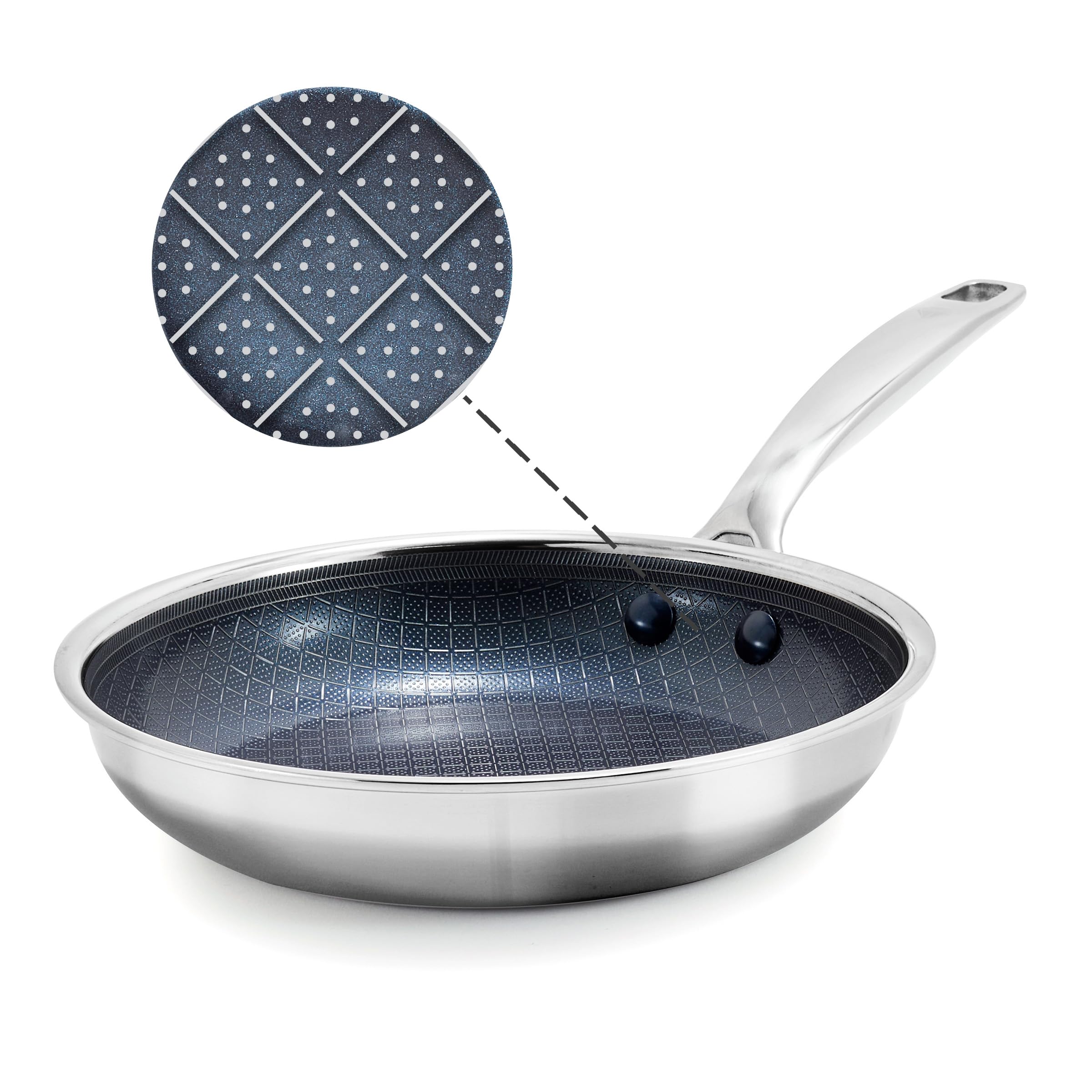
Blue Diamond 8" Hybrid
Key Features
- Size: 8"
- Construction: Hybrid body
- Handle Material: Stainless steel
- Oven Safe: 850°F
- Price: $
The Blue Diamond 8" Hybrid delivers reliable nonstick performance for eggs and omelets, thanks to its ceramic coating over a stainless steel base. Unlike the CAROTE tri-ply pan, this hybrid requires no preheating technique — just heat and cook. It suits cooks who prioritize nonstick convenience over the longevity of uncoated stainless. The coating may degrade over months of heavy use, and the 8-inch size limits batch cooking to 1–2 servings.
Pros
- Effortless nonstick release for eggs without PFAS chemicals
- Oven-safe up to 850°F for broiling or high-heat searing
- Budget-friendly price for a stainless-ceramic hybrid pan
Cons
- Ceramic coating can lose nonstick properties after extended use
- 8-inch diameter fits 1–2 eggs but not larger meals
A solid nonstick alternative for solo egg cooking, as long as you’re comfortable with the coating’s lifespan.
Best for Premium Style
KitchenAid 10" 5-Ply
Key Features
- Size: 10"
- Construction: 5-ply clad
- Handle Material: Stainless steel
- Oven Safe: 500°F
- Price: $$
The 5-ply clad construction distributes heat evenly across the 10-inch cooking surface, with black riveted handles that stay cooler during stovetop use. This pan suits home cooks who value both performance and aesthetics — its polished stainless steel and black handles stand out on any counter. However, the price is near that of All-Clad without the same brand weight, and some owners note that the surface can develop staining after cooking certain foods. It’s a good fit if you prioritize styling over absolute value and are prepared to occasionally clean or accept cosmetic marks; those looking for a budget-friendly workhorse will get more from the CAROTE or Tramontina tri-ply options.
Pros
- Even heating across the entire cooking surface thanks to 5-ply clad construction.
- Stylish design with black riveted handles that complement modern kitchens.
Cons
- Priced near premium competitors like All-Clad, making it less of a value pick for budget-minded cooks.
- The polished steel surface can show discoloration after cooking acidic or high-heat foods.
A premium-looking skillet that heats evenly — best for cooks who care about style and can live with occasional cosmetic marks.
Best for Budget Set
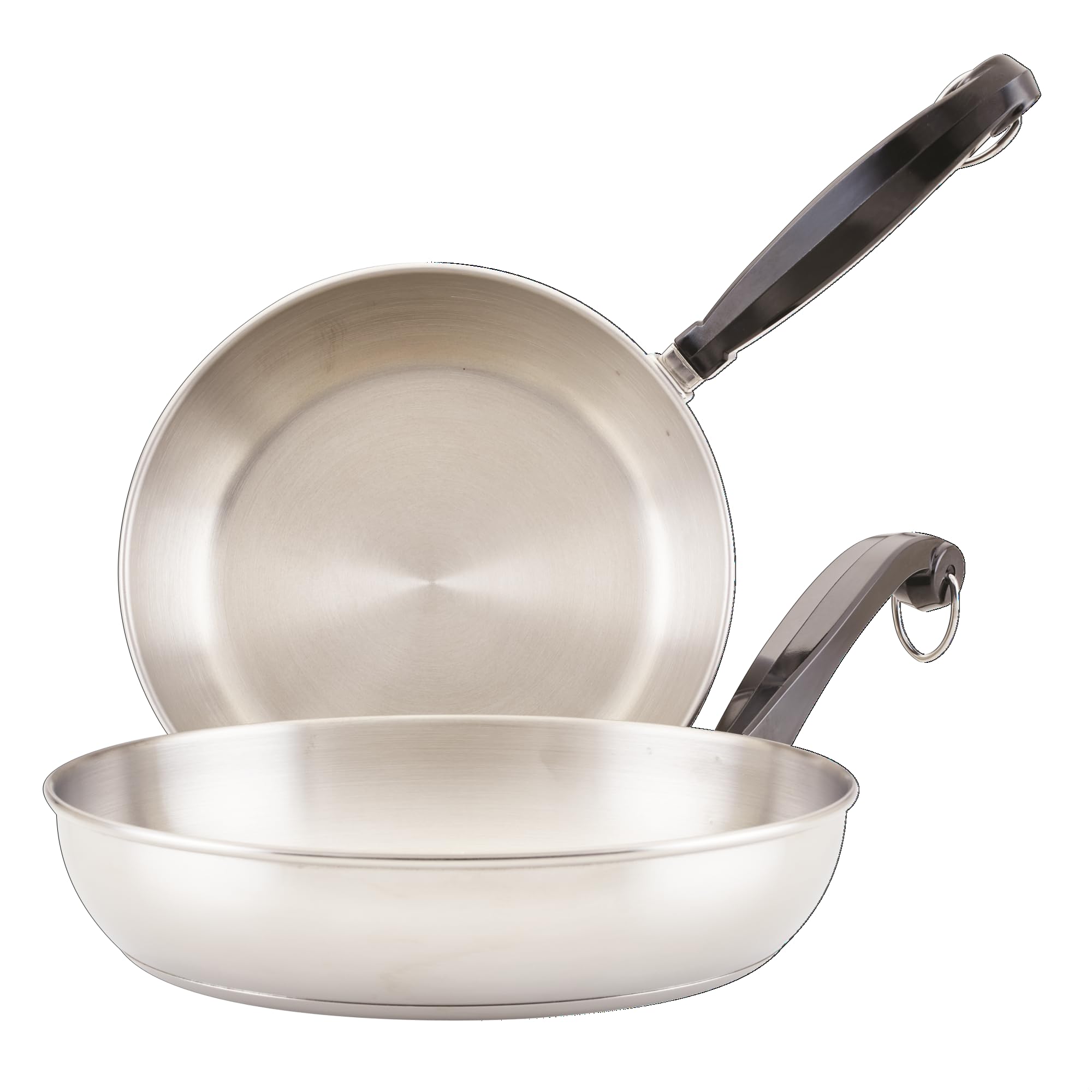
Farberware Classic Set 8.25" & 10"
Key Features
- Size: 8.25" & 10"
- Construction: Aluminum core
- Handle Material: Plastic
- Oven Safe: 350°F
- Price: $
The Farberware Classic set delivers even heating from its aluminum core and an affordable two-pan package. The plastic handles cap oven use at 350°F and may loosen over time, so this set suits stovetop duty at moderate heat. It works well for cooks learning stainless steel technique who want to practice egg cookery without a big investment, but does not match the heat distribution or oven tolerance of tri-ply competitors.
Pros
- Two skillets for a low entry cost, offering solid everyday performance.
- Aluminum core provides even heating for consistent egg cooking.
- Classic build holds up well for typical household use.
Cons
- Plastic handles restrict oven use to 350°F and can develop looseness over time.
- Lower heat ceiling than many competitors limits high-heat searing and oven finishing.
A cost-effective entry into stainless steel, but the plastic handles and 350°F limit make it best for stovetop cooking at moderate heat — not for high-heat searing or oven finishing.
Best for Budget Eggs
T-Fal Jamie Oliver 9.5"

Key Features
- Size: 9.5"
- Construction: Thermo-Fusion base
- Handle Material: Stainless steel
- Oven Safe: 500°F
- Price: $
At $40, this 9.5-inch pan heats evenly and cleans up easily in the dishwasher. It’s a capable entry-level stainless steel pan that handles eggs fine once you master the preheat, though sticking is typical for the material. Long-term durability under heavy use hasn’t been confirmed, and the shallower review history means it’s harder to gauge consistency compared to similarly priced tri-ply alternatives like the CAROTE 10-inch pan.
Pros
- Heats up quickly and distributes heat evenly across the cooking surface.
- Dishwasher safe and simple to clean after most meals.
Cons
- Food can stick without careful preheating – a typical stainless steel trait that some buyers find frustrating.
Worth considering if you cook eggs just a few times a week and want an affordable stainless pan that won’t crowd a small kitchen.
Best for Everyday Pan
Cuisinart 10" Open Skillet

Key Features
- Size: 10"
- Construction: Aluminum encapsulated base
- Handle Material: Stainless steel
- Oven Safe: 550°F
- Price: $$
This Cuisinart skillet heats evenly and has a sturdy build that holds up over time. However, food sticks more readily than in tri-ply pans, and some units may warp. For cooks who prioritize ease of egg release, a tri-ply alternative is a better fit.
Pros
- Heats evenly and quickly – suitable for general cooking.
- Sturdy stainless steel construction with a classic look.
Cons
- Sticking can occur even with proper preheating, especially for eggs.
Best for everyday cooking where a little sticking isn’t a problem, but egg-focused cooks should look to tri-ply options.
Best for Small Budget
DELARLO 8" Detachable Handle

Key Features
- Size: 8"
- Construction: Tri-ply clad
- Handle Material: Stainless steel
- Oven Safe: 500°F
- Price: $
This 8-inch tri-ply pan delivers even heating for small egg dishes at a budget-friendly price, and its detachable handle makes storage a breeze in tight cabinets. However, the handle can feel less secure than a fixed one during use, and like all stainless steel, food may stick without proper preheating. The cooking performance is comparable to pricier options but the handle tradeoff keeps it from being a universal recommendation — best for those who prioritize space savings over handle rigidity.
Pros
- Priced well below most tri-ply pans of this size.
- Heats evenly for small portions like a single egg or side.
Cons
- Detachable handle may feel less secure than a fixed handle during cooking.
Best for solo cooks or dorm dwellers who need a compact, easy-to-store pan for eggs and small sides.
Best for Beginner Set
Amazon Basics 2-Piece Set

Key Features
- Size: 8" & 10"
- Construction: Aluminum core bottom
- Handle Material: Stainless steel
- Oven Safe: 500°F
- Price: $
This entry-level set delivers two useful sizes (8 and 10 inches) with an aluminum core bottom that promotes even heating for the price. The pans are oven safe to 500°F and the riveted stainless steel handles feel secure. However, sticking and cleanup are more noticeable here than on other budget stainless steel options — particularly for delicate foods like eggs. The surface requires careful preheating and oiling, and some buyers find the cleaning effort higher than expected. If your main need is cooking eggs without frustration, a tri-ply pan (like the Farberware set for a little more) will serve you better. This set works best for occasional cooks who want two pans at the lowest possible outlay and are willing to adapt their technique.
Pros
- Budget-friendly two-pan set with even heating for the price
- Oven safe to 500°F, expanding cooking options
Cons
- Sticking can be noticeable, especially for delicate foods like eggs — technique helps but may not eliminate it
Best suited for beginners or occasional cooks who need a low-cost set and are willing to adjust their cooking technique to manage sticking.
Best for Large Versatile
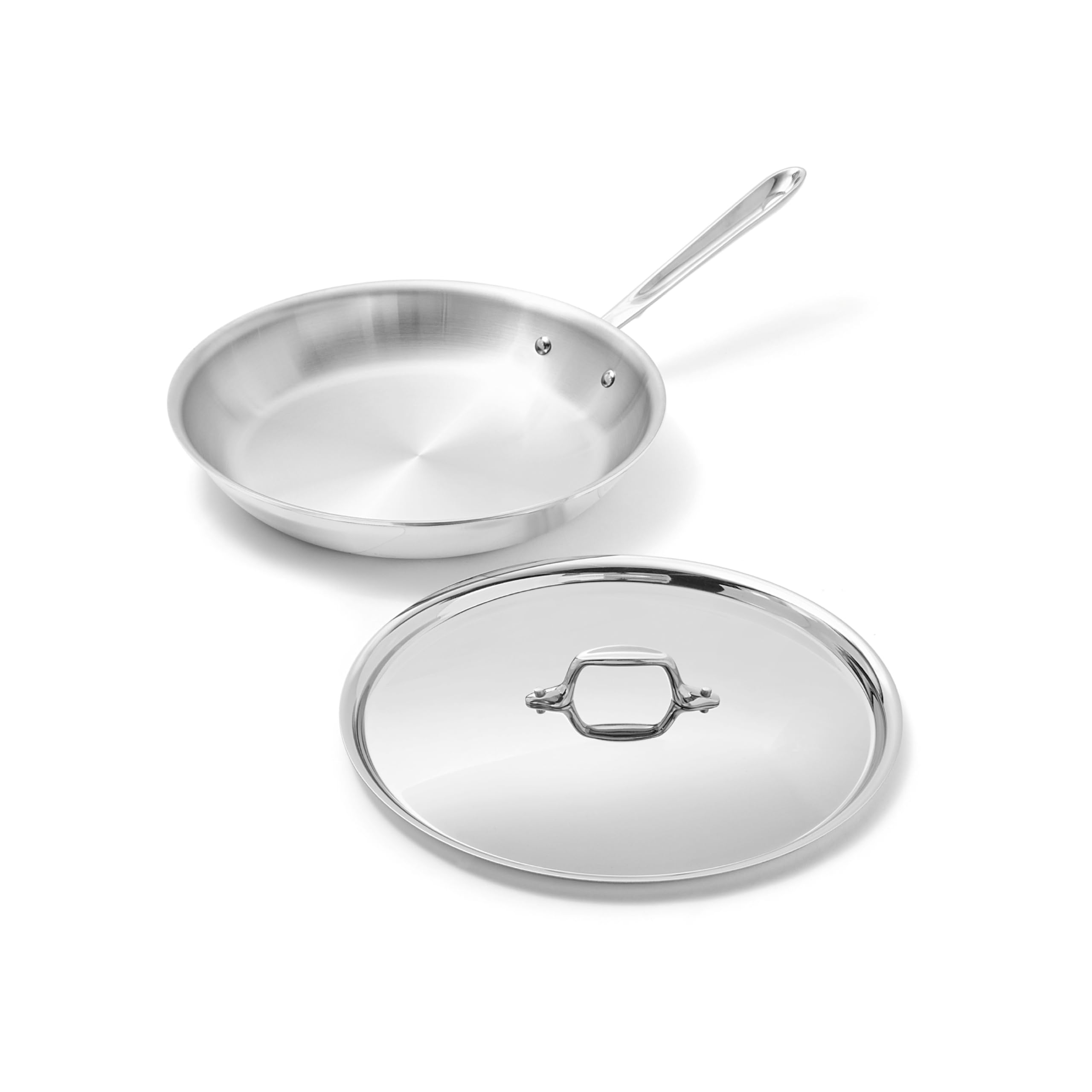
All-Clad D3 12" Fry Pan
Key Features
- Size: 12"
- Construction: Tri-ply bonded
- Handle Material: Stainless steel
- Oven Safe: 600°F
- Price: $$$
This All-Clad D3 delivers exceptional heat control and oven-safe capability up to 600°F. The 12-inch diameter, however, is oversized for egg-focused cooking — it’s better suited for searing steaks or batch-cooking. The premium price reflects long-term durability, but exceeds what an egg-centric buyer needs.
Pros
- Even heating across the entire pan surface for consistent results.
- Stainless steel construction built to handle high heat and daily use.
Cons
- 12-inch pan is too large for typical egg cooking (8-10 inches preferred).
A strong option for home cooks who also need a large, high-performance pan for searing, but not the primary choice for egg cooking.
Best for Multi-Purpose
Made In 12" 5-Ply

Key Features
- Size: 12"
- Construction: 5-ply clad
- Handle Material: Stainless steel
- Oven Safe: 800°F
- Price: $$$
Made In’s 12-inch pan brings 5-ply clad construction and a remarkable 800°F oven limit to the kitchen. Searing and sautéing benefit from even heat distribution, and the stainless steel handle stays cool during stovetop use. However, the large diameter (9.5-inch cooking surface) overshoots the ideal egg pan size, and some units have shown warping after a few months of use. This pan is better matched for cooks who need a versatile, high-heat workhorse for larger portions rather than a dedicated egg skillet.
Pros
- Even heating across the cooking surface for high-heat searing
- Withstands oven temperatures up to 800°F for roasting and finishing
Cons
- 12-inch diameter is oversized for egg-focused cooking, making it better suited for larger batches
Best for cooks who need a large pan for searing and oven finishing, not for those wanting a dedicated egg pan.
Best for Family Skillet
Cuisinart 12" Chef’s Classic

Key Features
- Size: 12"
- Construction: Aluminum encapsulated base
- Handle Material: Stainless steel
- Price: $$
This 12-inch skillet from Cuisinart provides even heating across its surface and includes a glass lid for convenient monitoring. However, the glass lid has been reported to shatter under thermal stress, and the oversized diameter makes it impractical for cooking eggs — better suited for batch cooking family meals where volume matters.
Pros
- Includes a glass lid for monitoring cooking without lifting the cover.
- Heats evenly across the surface and works on induction cooktops.
Cons
- Glass lid can shatter under sudden temperature changes, posing a safety hazard.
Best for families who need a large covered skillet for general cooking and are comfortable with the glass lid risk; not suitable for egg-focused cooks.
How to Choose
The key to nonstick eggs on stainless steel isn’t the pan’s coating—it’s preheating the pan until water droplets dance across the surface.
Size
An 8- to 10-inch pan is the sweet spot for 1–4 eggs. A larger pan spreads the eggs too thin, making them cook unevenly and stick more.
A 12-inch pan is better for batch cooking or searing, but for daily eggs, the extra surface area works against you: eggs spread out, moisture evaporates faster, and the pan’s heat distribution may not cover the entire surface evenly.
Ply Construction
Ply refers to the number of metal layers bonded together. Tri-ply (three layers) or 5-ply construction uses an aluminum core sandwiched between stainless steel, which spreads heat evenly across the pan.
Single-layer stainless steel or encapsulated-base pans (only a thick disc on the bottom) can develop hot spots, especially on the sides. For eggs, even heat is critical: hot spots cause one side to burn while the other remains undercooked.
Handle Material
Plastic handles stay cool on the stovetop but limit oven use (typically to 350°F) and can become loose over time as the plastic degrades. Stainless steel handles are more durable and allow oven temperatures above 500°F.
For egg cooking, you rarely need high oven heat, but if you like to finish eggs under the broiler or roast vegetables in the same pan, stainless steel handles give you that flexibility without the risk of melting.
Oven Safe Temperature
Higher oven-safe ratings (600°F and above) allow you to finish eggs in the oven or sear meats at high heat. For dedicated egg use, 400–500°F is sufficient.
The trade-off: pans with lower max temps (like 350°F) often have plastic components that restrict your cooking options. If you ever want to transfer a frittata from stovetop to oven, a 500°F+ rating is worth the extra few dollars.
Weight and Balance
Heavier pans retain heat better and feel more stable, but can be tiring to lift and toss. Lighter pans heat up faster but may warp under high heat.
For eggs, a medium-weight pan (around 2–3 pounds for a 10-inch) offers the best compromise: enough mass for steady heat without straining your wrist during flipping.
FAQ
Why do my eggs stick to stainless steel even with oil?
Oil alone isn’t enough. Stainless steel needs to reach the Leidenfrost point (around 350–400°F) before food releases. Without proper preheating, the oil burns and eggs bond to the metal. Test by flicking a drop of water onto the pan: if it beads up and skates across, the pan is ready.
Can I use a stainless steel frying pan for eggs without nonstick coating?
Yes, with the right technique. The same preheating ritual works for all stainless steel pans. Once the pan is hot, lower the heat to medium and add butter or oil. Eggs will release cleanly if you let them set before attempting to flip.
What size stainless steel pan is best for cooking eggs for two people?
A 10-inch pan is ideal for two eggs. It gives enough room for the whites to spread without thinning out, and the heat distribution is more even than in a larger pan. For one person, an 8-inch pan works fine.
How do I season a stainless steel pan to make it nonstick for eggs?
Stainless steel can’t be seasoned like cast iron—the surface is non-porous. Instead, focus on preheating and using enough fat. A thin layer of oil or butter, combined with the right pan temperature, mimics nonstick behavior.