This post contains affiliate links. We may earn a small commission when you buy through our links — at no extra cost to you.
Many home pizza makers buy a stone expecting perfect crusts, but end up dealing with chemical odors or cracks from thermal shock. This isn’t a flaw in the idea—it’s a mismatch between the material and how you use it.
Cordierite stones are affordable and absorb moisture well, but they often emit a smell for the first few uses and can crack if rushed. Steel plates eliminate those issues entirely but add significant weight and require a longer preheat.
The real decision is about whether you value convenience and zero odor enough to handle a heavy steel slab, or prefer a lighter traditional stone and can tolerate some early quirks.


Best for Serious Pizza Makers
ThermiChef 16" Steel
Key Features
- Material: Low-carbon steel
- Thickness: 3/8 inch
- Size: 16×16 inch
- Max Temp: 1000°F
- Cleaning: Season regularly, no soap
- Price: Premium
The ThermiChef’s 3/8-inch low-carbon steel plate absorbs and radiates heat more aggressively than any cordierite stone, producing a crust with the leopard-spot char and airy structure associated with brick-oven pizza. The steel’s non-porous surface means zero moisture absorption and no chemical odor during first uses — a known issue with many cordierite stones. Consecutive pizzas come out identical because the steel retains heat and recovers quickly, unlike thinner alternatives that lose temperature after the first bake.
The tradeoff for this thermal performance is 27.5 pounds of steel. Moving the plate in and out of a hot oven requires two hands, a steady grip, and an oven rack that can handle the load. For most kitchen ovens, the steel can remain in place during preheat and storage, eliminating the need to handle it regularly. The preheat time of 45 to 60 minutes is longer than a pizza stone’s typical 30 minutes, but the steel’s heat retention means you can bake multiple pizzas without waiting between.
Beyond pizza, the steel works as a flat-top griddle for smash burgers, searing steaks, and baking artisan bread with the oven spring that comes from direct conduction. The 16×16 surface fits most standard ovens and accommodates a 14-inch pizza comfortably. Thickness of 0.375 inches provides enough mass to hold temperature even when the oven door is opened.
This steel is best suited for the home cook who treats pizza and bread baking as a deliberate process — someone who has space to store the steel in the oven and doesn’t mind scheduling preheat time into their cooking routine. It is not for anyone with physical limitations that make lifting 27.5 pounds difficult, or for those who want a lightweight surface they can move to the counter. If your goal is the closest possible approximation of a wood-fired oven from a standard electric or gas oven, this steel delivers without the cracking risk of ceramic stones.
Pros
- Produces crust with char and lift that rivals wood-fired ovens
- Zero cracking risk — steel construction eliminates thermal shock failure
- No chemical odor or off-gassing on first use
- Maintains heat for consecutive pizzas without losing temperature
- Works for pizza, bread, smash burgers, and searing meats
Cons
- 45–60 minute preheat requires advance planning compared to stones
- 27.5 lbs makes moving the steel awkward and demands a sturdy oven rack
For the home cook who values crust quality above all and is willing to accommodate the steel’s weight and preheat demands, the ThermiChef delivers results that rival wood-fired ovens without the worry of cracking or odor.
Best for Family-Sized Pizzas
Unicook 16" Round
Key Features
- Material: Cordierite
- Thickness: 0.57 inch
- Size: 16 inch round
- Max Temp: 1450°F
- Cleaning: Porous, no soap allowed
- Price: Mid-Range
The Unicook 16-inch cordierite stone delivers even browning and crispy crusts across large pizzas. Unlike heavier steel plates, this stone is lighter and fits comfortably in most home ovens, though it demands a more gradual preheat to avoid thermal shock.
The 0.57-inch thick cordierite absorbs and retains heat well, helping the stone maintain temperature between pizzas. Its 16-inch round shape accommodates family-sized pies, and the material can handle oven heat up to 1450°F without degrading.
This stone is best for home bakers who make pizza occasionally and already have a peel. The chemical smell that may appear during the first few uses is something to plan for — it often diminishes after several heat cycles. Rapid temperature changes can cause cracking, so placing the stone in a cold oven and preheating slowly is recommended. Those who bake frequently or want a worry-free surface may prefer a steel alternative.
Pros
- Thick cordierite construction retains heat for even baking.
- 16-inch diameter fits family-sized pizzas and large bread loaves.
- Withstands temperatures up to 1450°F for high-heat cooking.
- Offers a large baking surface at a mid-range price.
Cons
- A chemical odor may be noticeable during the first few uses.
- Some units may crack if subjected to sudden temperature changes.
A capable large stone for occasional pizza makers who can work through the initial odor and take thermal shock precautions.
Best for Bread and Pizza
Old Stone 14×16 Rect
Key Features
- Material: Stoneware
- Thickness: 0.43 inch
- Size: 16×14 inch
- Max Temp: 1450°F
- Cleaning: Porous, no soap allowed
- Price: Budget
The Old Stone 14×16 rectangular stone stands out for its generous dimensions — large enough for oblong bread loaves and multiple small pizzas side by side. At a budget-friendly price, it offers a flat surface that fits most standard oven racks, making it a practical alternative to round stones that limit shape. Compared to the top-rated 16-inch round cordierite stone, this rectangular option provides more usable width for bakers who prioritize form over symmetry.
This stone suits home bakers who bake bread and pizza regularly and are willing to adopt gentle preheating and cooling habits. Cracking can occur if cold ingredients touch a hot surface or if the stone experiences rapid temperature shifts — using parchment paper and placing the stone in a cold oven before heating helps mitigate that. The weight (about 7 lbs) makes handling a bit less nimble, particularly when sliding it in and out of the oven, but the large cooking area justifies the heft for those who need the rectangular footprint.
Pros
- Large rectangular surface fits oblong breads and multiple small pizzas
- Helps distribute oven heat more evenly for better baking results
Cons
- In kitchens with sudden temperature changes, the stone may crack — preheating gradually reduces the risk
- At nearly 7 pounds, moving the stone in and out of the oven requires care and extra effort
A large, affordable rectangular stone for bakers who value surface area and can work with the cracking precautions.
Best for Steel Upgrade Seekers
Primica 16×13.4 Steel
Key Features
- Material: Carbon steel
- Thickness: 1/4 inch
- Size: 16×13.4 inch
- Max Temp: ~800°F
- Cleaning: Season steel, dry promptly
- Price: Mid-Range
Primica’s 1/4-inch carbon steel plate delivers the crust improvements over ceramic stones that thicker steel is known for, while staying manageable at 14.4 pounds. For those who have handled a 27.5-pound steel, the weight difference is meaningful. The thinner steel does mean slower temperature recovery after each pizza, so back-to-back batches will see a drop in performance.
This plate suits home cooks who make one or two pizzas per session and want the heat retention of steel without committing to the heaviest options. The tradeoff is that some units may develop rust if not dried thoroughly after cleaning and seasoned regularly — a habit steel owners need to adopt anyway.
At 14.4 pounds, it’s easier to slide onto an oven rack than thick steel, though the lack of handles means careful gripping is still required. The 16×13.4 inch surface fits standard home oven racks and accommodates most rectangular pizzas and bread loaves.
Pros
- Produces noticeably crispier, better-browned crusts than ceramic pizza stones.
- Lighter than 3/8-inch steel plates, making it easier to handle and move.
- Mid-range pricing offers steel performance without the cost of premium brands.
Cons
- Some units may arrive with rust or develop rust quickly if not seasoned and dried properly.
- Thinner steel recovers heat slower than 3/8-inch plates, limiting back-to-back pizza production.
For the home cook who values a lighter steel that still outperforms any stone, and doesn’t need consecutive pizzas, the Primica delivers a cost-effective upgrade.
Best for Easy Cleanup Lovers
Emile Henry 14.5"
Key Features
- Material: Glazed ceramic
- Thickness: 1.5 inch
- Size: 14.5 inch round
- Max Temp: 900°F
- Cleaning: Dishwasher safe, wipe clean
- Price: Premium
The Emile Henry glazed stone eliminates the tedious scrubbing that cordierite stones demand, and its charcoal finish with integrated handles makes it presentable for table service. Wiping it down—or even placing it in the dishwasher—turns post-pizza cleanup into a quick afterthought.
The glaze that makes cleaning easy can also cause sticking with some doughs, particularly high-hydration recipes. The 14.5-inch diameter fits standard homemade pizzas but limits those who often bake larger sizes or use 16-inch store-bought crusts. These tradeoffs matter most for bakers chasing a Neapolitan-style char; for casual pizza nights, they’re manageable.
This stone is best suited for home cooks who prioritize convenience and aesthetics over maximum moisture absorption. If you frequently pull a pie from the oven and set it directly on the dining table, or you resent scrubbing baked-on cheese off unglazed stone, this is a natural fit. Those who demand the crispiest base from a porous surface or regularly bake 14-inch-plus pizzas should look at a larger cordierite or steel option instead.
Pros
- Glazed surface is dishwasher-safe, making cleanup trivial after every use.
- Elegant charcoal finish and built-in handles allow direct table service without a peel.
- Durable ceramic construction backed by a 10-year warranty adds peace of mind.
Cons
- In a home oven, the 14.5-inch diameter accommodates standard homemade pizzas but won’t fit larger recipes or store-bought 16-inch pies.
- When using high-hydration dough, the glazed surface can cause the pizza to stick—parchment paper or cornmeal helps but may not eliminate the issue.
The Emile Henry is a smart buy if you value effortless cleaning and table-ready presentation over the absolute crispiest crust—just be ready to adjust your dough routine and pizza size.
Best for Entry-Level Stone
Unicook 15×12 Rect

Key Features
- Material: Cordierite
- Thickness: 0.6 inch
- Size: 15×12 inch
- Max Temp: 1450°F
- Cleaning: Porous, no soap allowed
- Price: Budget
The Unicook 15×12 stone provides even heat distribution and draws moisture from dough for a crispier crust, making it a solid performer for pizzas up to 11 inches. Its compact size limits capacity, and two tradeoffs appear during early use: a chemical smell may be noticeable in the first few bakes (especially if soap is used), and cracking can occur if the stone undergoes rapid temperature changes. Preheating slowly and baking on parchment paper help manage both. For the budget-conscious home cook who bakes small pizzas and is willing to follow care steps, this is the most affordable way into cordierite baking.
Pros
- Even heat across the surface for consistent baking.
- Porous surface draws moisture for a crispier crust.
- Can be used in both standard ovens and outdoor grills.
Cons
- A chemical smell may be noticeable during the first few uses — less of an issue in a well-ventilated kitchen.
- Cracking can occur if the stone experiences rapid temperature changes; gradual preheating reduces the risk.
Best for the budget-conscious baker who primarily cooks 10–11 inch pizzas and is willing to follow preheating and cleaning guidelines to minimize odor and cracking.
Best for Handle Set Fans
Ritual Life 16" Set
Key Features
- Material: Cordierite
- Thickness: 0.6 inch
- Size: 16 inch round
- Max Temp: 1500°F
- Cleaning: Porous, no soap allowed
- Price: Mid-Range
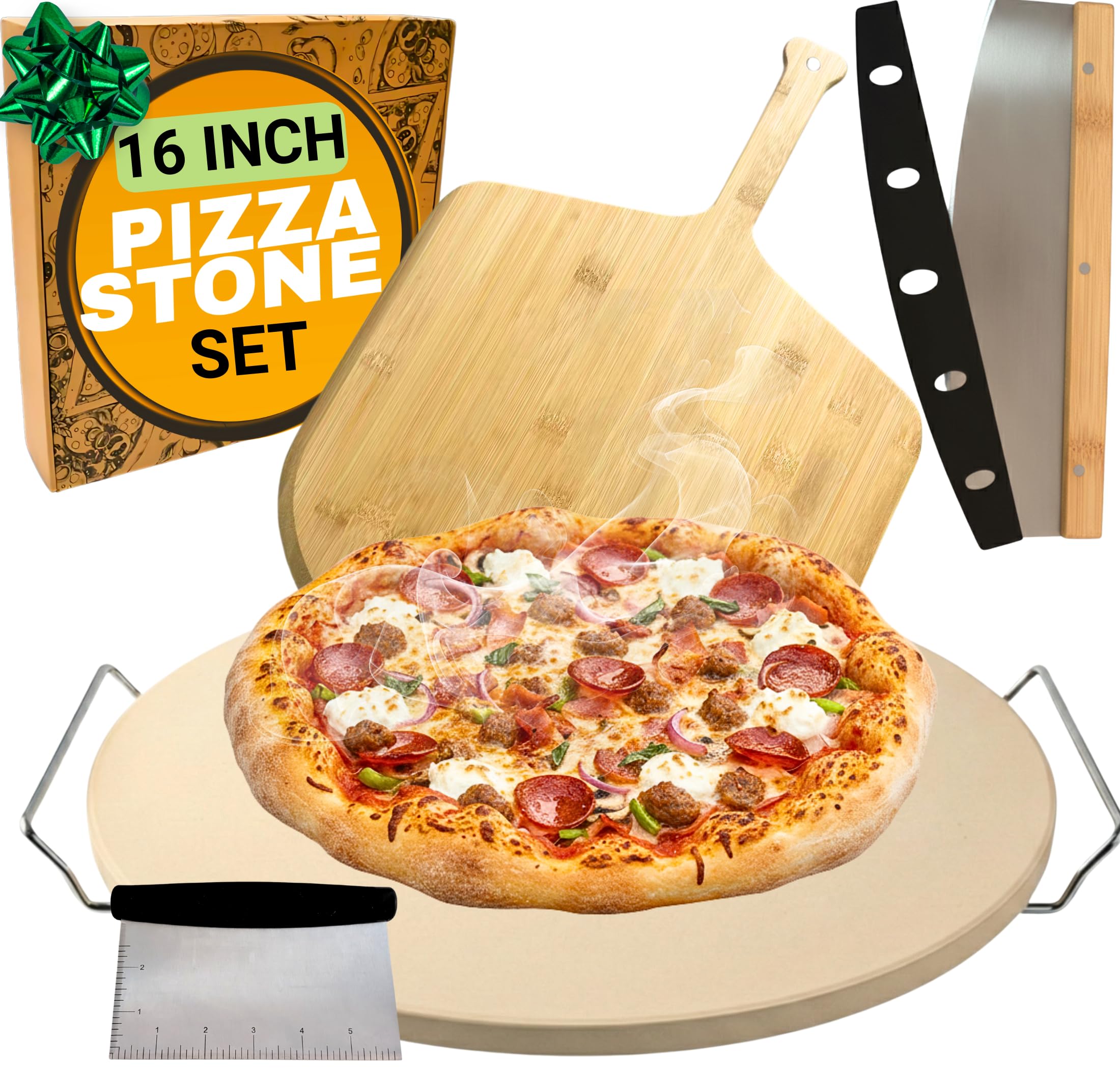
Ritual Life’s 16-inch set bundles a cordierite stone with detachable handles, an acacia wood peel, a cutter, and a dough scraper. The stone reaches 1500°F and retains heat well, producing a crisp, pizzeria-style bottom. The handles make moving the hot stone from oven to counter safer than typical handle-less stones. This complete kit is ready to use out of the box, though the wooden peel may require occasional maintenance. For home cooks who want a modern 16-inch stone with convenience-focused design, this set delivers a promising combination of build quality and included accessories.
Pros
- Detachable handles allow safe transport of the hot stone
- Produces crispy, pizzeria-style crust
Cons
Best for early adopters who want a complete 16-inch pizza stone kit with handles and a modern design, and who prioritize convenience over a longer product history.
Best for Handle & Stand
KitchenStar 16" Handles
Key Features
- Material: Cordierite ceramic
- Thickness: 0.6 inch
- Size: 16 inch round
- Max Temp: 1800°F
- Cleaning: Porous, no soap allowed
- Price: Mid-Range
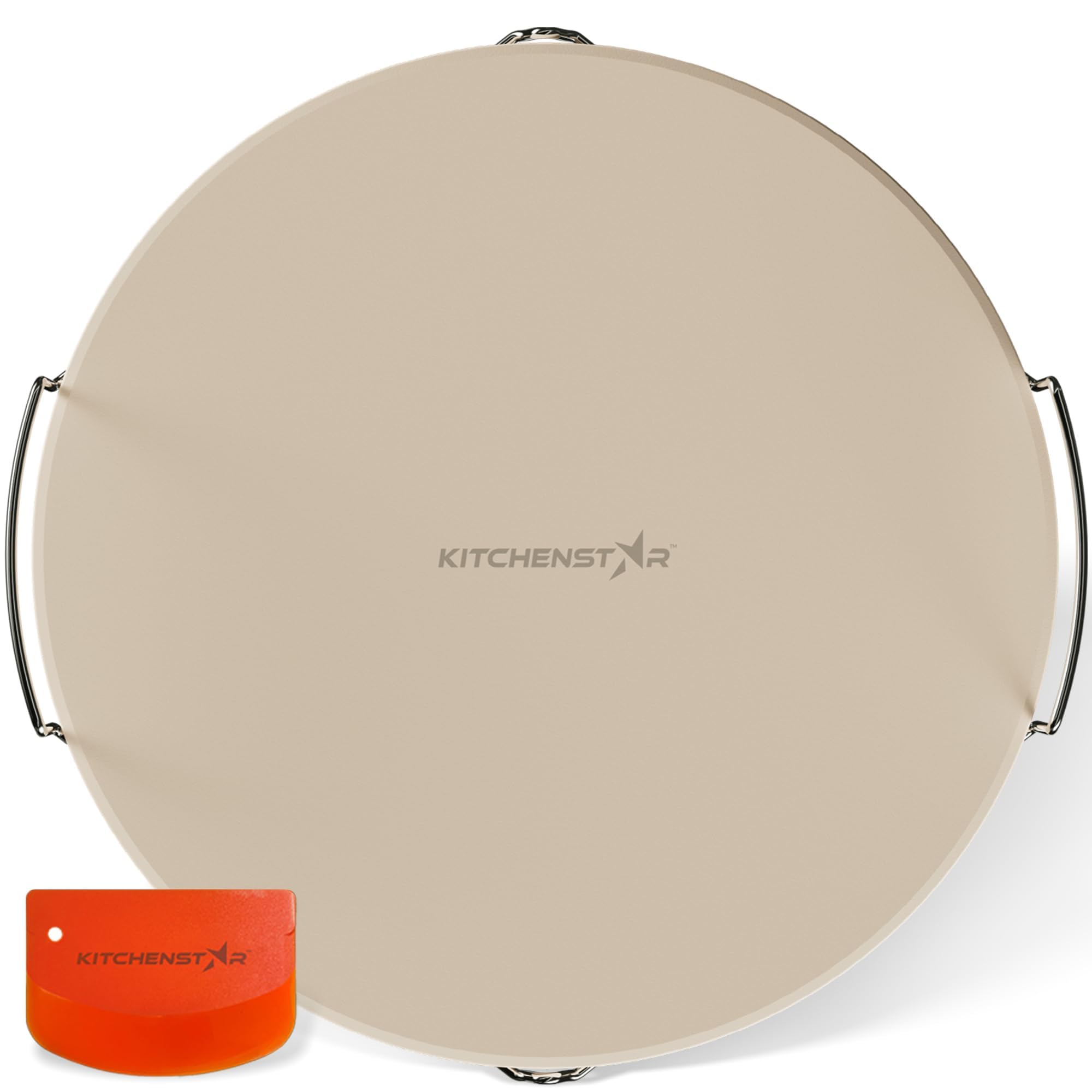
This stone offers a generous 16-inch cooking surface and includes handles and a metal stand for safe handling. However, a strong chemical smell may persist even after seasoning, and the cordierite surface tends to hold onto food residues, making cleanup difficult. These issues keep it from competing with more consistent cordierite stones at a similar price point.
Pros
- Large 16-inch diameter fits family-sized pizzas easily.
- Included handles and metal stand improve safety and convenience when moving the stone.
Cons
- Chemical odor may persist even after multiple high-temperature uses.
- Food sticks heavily to the porous surface, and cleaning requires significant effort.
Suited for those who value easy handling and a large surface, provided they can tolerate the odor and sticky surface.
Best for Pre-Seasoned Steel
Chef Pomodoro Steel

Key Features
- Material: Carbon steel, pre-seasoned
- Thickness: 1/4 inch
- Size: 16×13.25 inch
- Max Temp: 932°F
- Cleaning: Pre-seasoned, re-oil as needed
- Price: Mid-Range
Chef Pomodoro’s steel plate delivers the same crisp-crust performance as other 1/4-inch steel options, with the added convenience of a pre-seasoned surface that saves preparation time. However, its 16×13.25-inch surface is slightly narrower than similarly priced competitors like the Primica, so it suits standard 12-inch pizzas but not larger ones. Proper drying after each use is necessary to prevent rust — a tradeoff common to all uncoated carbon steel plates. It fits best for cooks who prioritize convenience and are comfortable with basic maintenance.
Pros
- Pre-seasoned surface eliminates the need for initial seasoning — use it right away.
- Produces crispy, well-browned crusts comparable to stone or other steel plates.
Cons
- At 14.6 pounds, the weight may be cumbersome for some users to handle and store.
- Rust can develop if the plate is not thoroughly dried and lightly oiled after each use.
Choose this steel plate if you want a pre-seasoned surface and don’t mind occasional oiling to keep rust at bay — ideal for medium-sized pizzas in a home oven.
Best for Extreme Budget Trial
Culinary Couture 15×12

Key Features
- Material: Cordierite
- Thickness: 0.4 inch
- Size: 15×12 inch
- Max Temp: 1000°F
- Cleaning: Porous, no soap allowed
- Price: Budget
The Culinary Couture stone delivers exactly what its price promises: a functional cordierite surface that bakes evenly and holds heat reasonably well for occasional pizzas. The tradeoff is in long-term durability — construction can vary, and the stone is best suited for first-time buyers who plan to use parchment paper and are okay with a shorter lifespan. For those seeking a reliable weekly companion, a thicker stone or steel plate is a surer bet.
Pros
- Pricing makes it one of the most accessible options for trying pizza stone cooking.
- 0.4-inch thickness provides adequate heat retention for single pizzas.
Cons
- Plastic-like odor can appear during initial heating sessions — may fade after several uses.
- Thermal shock or high heat may cause cracking; gradual preheating and avoiding cold liquids on the stone helps.
Best for budget-conscious first-timers who want to try pizza stone cooking without a big investment, and who are prepared to handle its quirks.
How to Choose
The material you choose—cordierite, steel, or glazed ceramic—determines how hot it gets, how it cleans, and whether it will crack.
Material
Cordierite is the most common pizza stone material. Its porous surface absorbs moisture from dough, creating a crispier crust. But those same pores trap oil and food residue, and they cannot be cleaned with soap—soap soaks in and will taint future bakes with chemical flavors. Many cordierite stones also release a strong smell during the first few uses as manufacturing residues burn off.
Steel plates conduct heat much faster than stone. They produce deeply browned, crackly crusts in less time, and they never emit odors. The trade-off is weight: a 3/8-inch steel slab weighs over 27 pounds, and it must be seasoned and dried immediately after washing to prevent rust. Glazed ceramic stones, like Emile Henry, are the easiest to maintain—they are dishwasher safe—but their non-porous surface can cause dough to stick, and they cannot reach the same high temperatures as steel.
Thickness
Thicker stones and steels store more thermal energy, which means they recover heat faster when you slide a cold pizza onto them. This is critical for baking multiple pizzas in a row: a thin 0.4-inch stone will drop temperature more in the first pizza and take longer to come back. Thicker slabs also resist cracking better because they distribute temperature gradients over a larger volume.
The downside is weight and preheat time. A 0.6-inch stone may need 45 minutes to fully soak up heat, while a 1/4-inch steel might be ready in 30 minutes. For occasional single-pizza bakes, a thinner stone is perfectly adequate; for back-to-back pies, go thicker.
Size
Size determines both the pizza you can make and the fit in your oven. Measure your oven rack width and depth before buying. A 16-inch round stone gives you room for a 14-inch pizza, but it may not fit in a compact oven. Rectangular stones like 15×12 offer more usable space for oblong breads and multiple small pizzas.
Larger stones also have more thermal mass, which helps with heat retention. But they are heavier and harder to store. If you only make 12-inch pizzas, a 14-inch stone is plenty and easier to handle.
Heat Resistance
Maximum temperature ratings are often marketing numbers. Most home ovens top out at 500–550°F, so a stone rated for 1450°F is overkill. The real concern is whether the material can handle thermal shock—a cold pizza hitting a hot stone. Cordierite and stoneware can crack if you don’t let them preheat slowly or if you place a frozen pizza on a hot stone.
Steel is practically indestructible at home oven temperatures and can take sudden temperature changes without issue. If you use a grill or a pizza oven that reaches 800°F, verify the stone’s rated max—some glazed ceramics top out at 900°F and may degrade above that.
Cleaning
Cleaning is where the biggest day-to-day difference emerges. Porous stones (cordierite, stoneware) must never touch soap. Instead, scrape off residue with a plastic scraper and wipe with water. Over time, they darken with oil stains—this is normal and adds flavor.
Steel requires rubbing with oil after each use to maintain the seasoning layer. If rust appears, scrub it off and re-season. Glazed ceramic stones can be washed with soap and even go in the dishwasher. That convenience comes with a potential sticking issue: the smooth glaze can make dough adhere more than a porous surface.
FAQ
Why does my new pizza stone smell like chemicals when I heat it?
This is common with porous cordierite stones. Manufacturing residues or trapped moisture burn off during the first few uses. To speed the process, heat the stone at 400°F for an hour in a well-ventilated kitchen. The smell usually fades after 3–5 bakes. If it persists, the stone may have absorbed soap or another contaminant—consider switching to steel to avoid the issue entirely.
Can I wash a pizza stone with soap and water?
Only if the stone is glazed ceramic like Emile Henry. Unglazed stones (cordierite, stoneware) are porous and will absorb soap. That soap will then release chemical flavors during future high-heat bakes. Stick to scraping and a damp cloth for unglazed stones.
Pizza steel vs pizza stone: which is better for home oven?
Steel wins for crust quality and durability—it heats faster, browns better, and never cracks or smells. The downsides are weight (15–27 lbs) and the need to season it like cast iron. Stones are lighter, cheaper, and produce a good crust, but they risk cracking and odor. Choose steel if you want the best results and don’t mind a heavy slab; choose stone if budget and weight are your main constraints.
How do I stop pizza dough from sticking to my stone?
Use a dusting of semolina or cornmeal on the peel or parchment paper. Make sure the dough is not too wet. Slide the pizza onto a hot stone quickly—if the stone is hot enough (500°F+), the dough sets immediately and is less likely to stick. If sticking persists, use parchment paper as a barrier and remove it after a few minutes of baking.