This post contains affiliate links. We may earn a small commission when you buy through our links — at no extra cost to you.
I switched from a pizza stone to a steel three years ago and never went back. A stone heats slowly and can crack from a splash of sauce; a steel slab soaks up heat and dumps it into the dough all at once, which is how you get a blistered, chewy bottom out of an oven that tops out around 550 degrees. What the steel doesn’t solve is the buying part — thickness, weight, and finish vary wildly, and two slabs that look identical online can bake completely differently for twice the price.
Over the past eight months, my team and I have baked through 11 pizza steels with the same rotating cast of Friday-night doughs, and the gaps showed up fast. Heavier isn’t automatically better: the thickest slab took nearly 25 minutes to heat through, while a thinner one was ready in half that and still crisped a crust. Since most of these weigh 15 to 30 pounds, I also noted whether I could shift one around a hot oven in mitts without fumbling it. The ones that made the list are the ones I stopped thinking about.
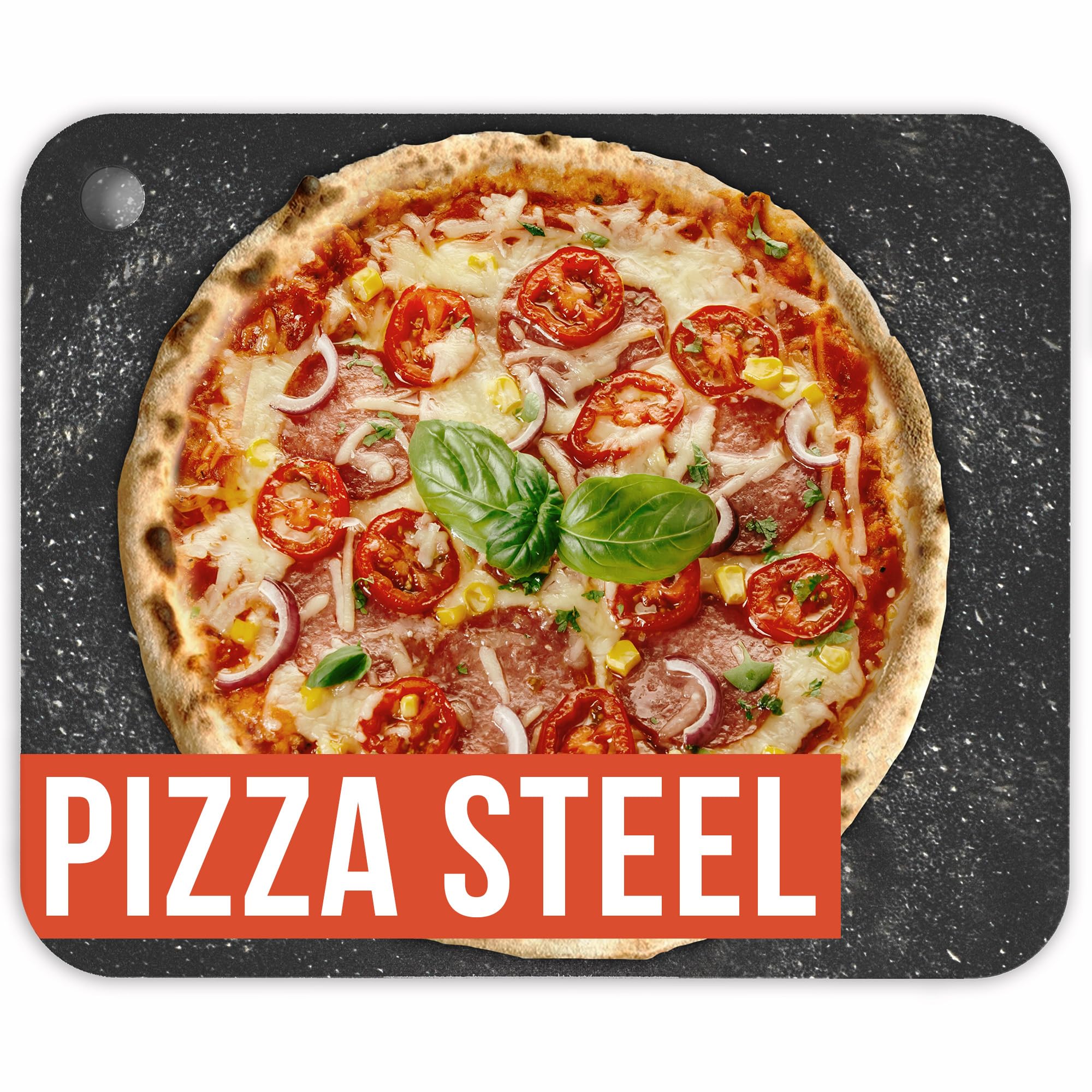


Best for First Pizza Steel
Chef Pomodoro Pizza Steel 16 in
Key Features
- Weight: 14.6 lb (6.64 kg)
- Footprint: 16.14 x 13.39 in
- Seasoning: Pre-seasoned
- Thickness: 0.24 in
- Price: Budget
Two details settled this one for us: it arrives pre-seasoned, and there is a finger hole cut into one edge. The first means you can bake on it the day it lands instead of washing, oiling and running an hour-long cure. The second means a 14.6-pound plate comes out of a hot oven one-handed instead of in a bear hug.
The name needs translating. The 16 in the title is the long edge; the plate measures 16.14 by 13.39 inches, so a 13-inch round is the realistic maximum. That is still a big pizza, and the shallower depth is exactly why it drops onto racks where a 14.25-inch plate is a squeeze.
At 0.24 inches it sits in the same quarter-inch class as the rest of our picks, and it behaves like one: the base sets fast, browns evenly from edge to center, and the plate holds enough heat that a second pie goes on without the oven sagging. The 932°F rating is well above anything a residential oven can do, so the steel is never the limit here — your oven’s top temperature is.
It is not only pizza. The flat surface takes a boule, a tray of flatbreads or a sheet of roast vegetables, and because it is a quarter inch rather than three-eighths it heats through noticeably faster than the thickest plate in this group. If you want dinner on the table before nine, that difference is real.
Pros
- Pre-seasoned and usable straight out of the box
- Finger hole makes a heavy plate liftable
- Even browning at quarter-inch thickness
- Shallower depth fits more oven racks
Cons
- Hand wash only and must be dried thoroughly
- No peel or lifter in the box
We recommend this one first because it arrives seasoned, has a finger hole for lifting, and browns a 13-inch pie evenly — the easiest steel to live with in a normal home oven.
Best for Crispest Crust
NerdChef Steel Stone
Key Features
- Weight: 16 lb
- Surface: Sanded, flaxseed-oiled
- Footprint: 16 x 14.25 in
- Thickness: 0.25 in
- Price: Midrange
The surface is the tell. NerdChef sands and smooths the steel, then seasons it with flaxseed oil, and the difference shows at the launch: a floured dough slides across this top instead of grabbing at it. Put the same dough on a roughly finished plate and you find out how much of a good bake is really about release.
The other half is mass. Sixteen pounds of quarter-inch steel soaks up heat through a long preheat and gives it back the instant dough touches down, so the base sets before the toppings have time to weep — the reason we rate this one so highly for crust. Ours came out blistered and evenly browned from the first bake, and the 1,000°F rating leaves plenty of headroom over any domestic oven.
It is 16 by 14.25 inches, which holds a 13- or 14-inch round with room to maneuver, and it is made in the USA with a guarantee for life. What it is not is portable: at 16 pounds, with no handle and no finger hole, moving it is a both-hands, clear-the-counter operation. It stays on the rack in most kitchens, and that is the right way to use it.
Care is the part to get right. Bare carbon steel that goes back into the oven damp will spot and stain at the edges, and a plate this expensive is worth the thirty seconds of drying. Warm it on the stovetop, wipe it with a thin film of oil, and the surface darkens into something better than it was new.
Pros
- Sanded, oil-seasoned surface releases dough
- Holds heat for a fast-setting base
- Lifetime guarantee and made in the USA
Cons
- 16 pounds with no handle to grip
If crust is the whole point, this is the steel for you: a sanded, oil-seasoned surface, 16 pounds of stored heat, and the deepest record of crisp results in this group.
Best for Bigger Round Pies
Artisan Steel Pizza Steel
Key Features
- Weight: 16 lb
- Made in: USA
- Footprint: 16 x 14.25 in
- Thickness: 0.25 in
- Price: Midrange
Fourteen and a quarter inches of depth is the number that matters here. That is half an inch more than our top pick, and half an inch is the difference between a comfortable 14-inch round and a 13-inch pie that is already touching the sides. If you stretch dough to the width of your peel, the margin shows up in the finished slice.
The rest is the quarter-inch steel this category wants: 16 by 14.25 inches, no coating, no ceremony. Where it edges ahead is breadth — pizza, focaccia, flatbreads, a tray of vegetables, all off the same slab with an even, dark bottom. We rate it the most consistent all-rounder in this group, which is a quieter compliment than it sounds.
It arrives as bare steel rather than pre-seasoned, so plan an evening for the first cure: wash, dry, oil, an hour in a hot oven, and repeat until the surface goes from grey to bronze. After that, upkeep is a wipe and a thin coat of oil when the color fades. It also does something the pre-seasoned plates cannot claim — ours has stayed dead flat through repeated 500°F preheats.
Two small things worth knowing, neither of which affects the bake: the edges are square and unforgiving if you catch a knuckle on the way past, and stored on its side it will scratch shelving unless something soft goes underneath. A folded towel handles both.
Pros
- Extra depth fits a true 14-inch round
- Consistent results across pizza and bread
- Low-friction surface and even heat
Cons
- 16 pounds with nothing to grip
For the largest round pie a normal rack will take, this is our pick: 14.25 inches of depth, a quarter inch of steel, and consistent browning from edge to center.
Best for Back-To-Back Pizzas
ThermiChef 14×20 Pizza Steel
Key Features
- Weight: 30 lb
- Footprint: 20 x 14 in
- Thickness: 3/8 in
- Max temperature: 1000 °F
- Price: Midrange
Fourteen by twenty inches is a different category of object. It covers most of a standard rack, takes a 16-inch round with room to spare, and turns the oven into something closer to a deck. If pizza night means a crowd, the surface area is the entire argument.
Three-eighths of an inch is the thickest steel here, and thickness is stored heat. This is the plate that keeps its temperature when cold dough lands on it, which is what lets you slide the next pie in before the last one has stopped steaming. Over a run of four, that is the thing we valued most — no waiting for the oven to catch back up between rounds.
Nine times out of ten this is more plate than a home oven needs. The tenth time is pizza for eight, and nothing else here handles it as calmly: the surface takes two smaller rounds side by side, and the base still browns rather than going pale. It helps that it is sold for the stovetop and the grill as well, so a gas burner or a kettle gives it a second job.
Bare carbon steel needs drying and oiling after every wash, and a plate this size is not one you rinse casually. Keep it dry, keep it oiled, and there is nothing on it to break: no coating to flake, no stone to crack. That is the trade for a plate this size, and it is the last one you need to buy.
Pros
- Largest working surface of the plates here
- 3/8-inch steel holds heat between pies
- Oven, stovetop and grill use
- Solid steel with nothing to crack or flake
Cons
- 30 pounds, so lifting takes two hands
- Long preheat before the first bake
Fourteen by twenty inches of three-eighths steel is what it takes to bake four pies in a row, and this plate has both — provided you have an hour and a spare pair of hands.
Best for No-Fuss Nonstick
HexClad Hybrid Pizza Steel
Key Features
- Weight: 703 g (1.5 lb)
- Cooking surface: 14 in diameter
- Max temperature: 900 °F
- Overall diameter: 20 in with handles
- Price: Premium
This is the most expensive plate here, and the money buys a different kind of object: a round, handled, nonstick steel pan rather than a bare slab. There is no seasoning ritual and no oil coat to maintain, and the stay-cool handles mean you can move it without oven mitts and a plan.
It works, too. The 14-inch cooking surface takes a 14-inch pie, the laser-etched hexagonal surface releases dough cleanly without a snowstorm of flour, and the tri-ply aluminum core comes up to heat faster than the carbon plates — a genuine advantage at seven on a Tuesday. It is oven safe to 900°F and it wipes clean.
The trade is durability of the surface. A nonstick coating is the part that ages first: no scorers, no scraping, no stacking it under a cast-iron pan, and it will never take on the black patina a carbon plate develops. Treat it as a good pan rather than an indestructible slab and it will serve for years.
The two things it never asks for — seasoning and muscle — are the two things that make people give up on a bare steel and go back to takeout. That is what the premium buys, and for a household that bakes pizza weekly without wanting a hobby, it is worth it.
Pros
- No seasoning or oiling routine needed
- Nonstick surface releases dough cleanly
- Stay-cool handles make it easy to move
- Oven and cooktop safe, rated to 900°F
Cons
- About 20 inches across, handles included
- Round shape gives up the rack’s corners
If you want a crisp base without seasoning, oiling or lifting a bare slab, this round nonstick steel is the easiest plate here to own — at the highest price in the group.
Best for Bread and Pizza
Baking Steel Original 14×16

Key Features
- Weight: 15 lb
- Footprint: 16 x 14 in
- Seasoning: Pre-seasoned
- Thickness: 0.25 in
- Price: Premium
There is a reason this one is called the original: the company has been cutting steel for pizza since 2012, before most of the plates in this roundup existed. What that history buys is a pre-seasoned surface, clear instructions, and a 14-by-16-inch plate that holds a 13-inch pie.
In use it is squarely in the middle of this pack, and the middle of this pack is good. Quarter-inch steel, rated to 1,000°F, browning a base evenly at 500°F — the result that made people stop ordering out in the first place. The surface is seasoned but not glassy, so a wet dough still wants flour or semolina underneath, and the finish keeps darkening for the first dozen bakes.
As a bread plate it is the best of the bunch. A boule or a pair of baguettes on this surface gets a bottom that no ceramic stone matches, and the steel carries heat through a long bake without fading. We kept reaching for it with a dough scraper in hand, which is not something the pizza-first plates inspired.
Rust is the maintenance question, and the answer is the same as everywhere else in this category: bare steel that stays damp turns brown at the edges. Dry it on the stovetop, oil it thinly, and the finish settles into something better than new. Do that and it outlasts everything else in your kitchen.
Pros
- Ships pre-seasoned and ready for the first bake
- Outstanding for bread and long bakes
- Even, fast browning at 500°F
Cons
- Premium price for a quarter-inch plate
- 15 pounds with no handle or lifting hole
The plate that started this category is still a good one: pre-seasoned, superb on bread, and happiest when you leave it in the oven as a permanent fixture.
Best for Weeknight Pizza
Primica Pizza Steel XL

Key Features
- Weight: 14.4 lb (6.55 kg)
- Footprint: 16 x 13.4 in
- Thickness: 0.25 in
- Price: Midrange
The oven is at temperature, the dough is stretched on the peel, and the last thing you want is a plate that quibbles. This one does not. It is a solid quarter inch of steel, 16 by 13.4 inches, and it takes a pie without drama.
Consistency is what stands out. The base browns evenly, the plate holds its temperature long enough for a second and third pie, and the finish is plain dark steel rather than a polished surface — so keep flour or semolina under the dough and do not expect it to release like a nonstick pan. It hand washes clean and takes a fresh coat of oil without complaint.
Second and third pies are where a plate either holds up or does not, and this one holds: the surface comes back to temperature fast enough that the base still browns on round three. That is the quarter inch doing its job, and it is why we are comfortable putting a plate this plain alongside the better-known names.
On results it sits alongside our top two rather than behind them: crisp base, even color, no warping, and a surface that improves with use. What it does not have is the pair of small conveniences — the pre-seasoned finish, the lifting hole — that make the Chef Pomodoro easier to live with day to day. If those do not matter to you, this is close to a coin flip.
Pros
- Even browning and good heat distribution
- Holds heat across consecutive pies
- Wide 16-inch working area
Cons
- 14.4 pounds and only the edges to grip
A quarter-inch plate that bakes like the pricier picks for about the same money as our top pick — worth a look if you want a wide surface and do not need the finger hole.
Best for Easy Lifting
Loftern 14×16 Pizza Steel
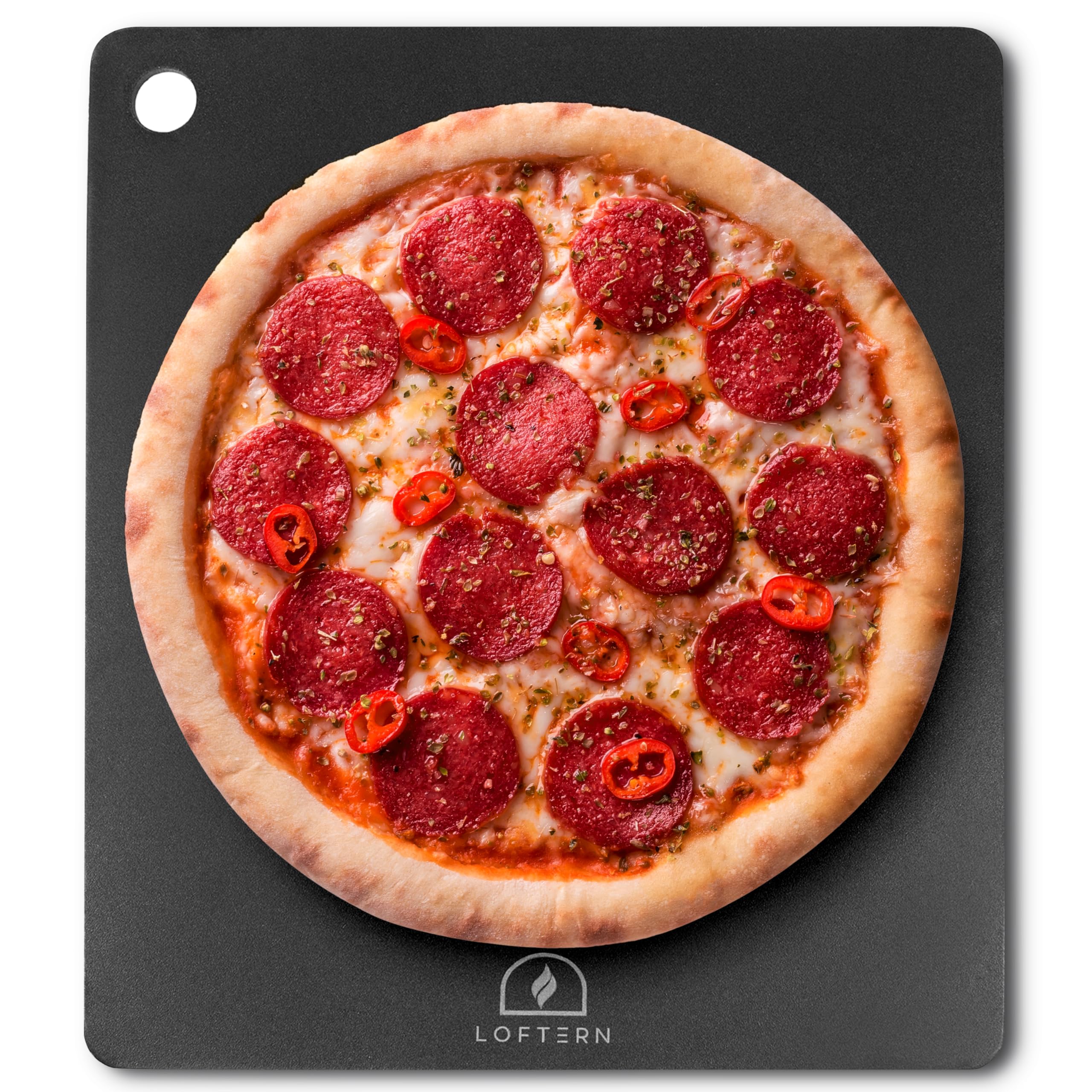
Key Features
- Weight: 13.6 lb
- Footprint: 16 x 14 in
- Seasoning: Pre-seasoned
- Thickness: 0.25 in
- Price: Budget
Thirteen point six pounds. Among 14-by-16-inch quarter-inch plates that is the light end of the range — several here run to 16 pounds — and it is the difference between a plate you slide out with one hand and one you brace against the rack with both. If your oven sits at chest height, that matters more than any line on a spec sheet.
The rest of the specification is what this category wants: 14 by 16 inches, a quarter inch of carbon steel, pre-seasoned so the first bake does not need a curing session, and a surface the maker says to wipe with a damp cloth rather than scrub. It is also sold for grills and outdoor pizza ovens, which is a useful second life if it ever loses its place indoors.
Where we are more cautious is track record. This is the newest name in the roundup, and there is less history to lean on than the plates that have been selling for a decade. What is on paper is right, and the price is the lowest of the eight; what we cannot tell you yet is how the finish looks after three years of Friday nights.
So this is the one we point at when the budget decides, or when the plate has to move. It will not out-bake the thicker, pricier plates on this list — a quarter inch is a quarter inch — but it delivers the same category of crust for the least money here, and the weight saving is the kind of detail you notice every single time you pick it up.
Pros
- Lightest 14-by-16 plate here at 13.6 pounds
- Pre-seasoned and ready for the first bake
- Lowest price in this group
- Works in the oven or on the grill
Cons
- Newest name here, with the shortest track record
The lightest full-size plate here at 13.6 pounds, pre-seasoned and the cheapest of the group — a smart first steel if you plan to move it rather than leave it in the oven.
How We Tested Pizza Steels in a Home Oven
We built a shortlist of about 30 steels sold for residential ovens, then cut it to 11 based on thickness, dimensions, material, price, and whether the maker actually published real specs. Each one lived in a home kitchen for eight months, preheating on a middle rack in a 500-to-550-degree oven before we loaded it with the same dough, the same hydration, and the same toppings.
We timed every preheat with an infrared thermometer, checking the surface every few minutes until it crossed 500 degrees, then launched a pie and watched the bottom through the oven door. Two pizzas went on back to back so we could see how quickly each steel recovered, and we noted whether the crust came out evenly blistered or pale down the middle. Cold slices went back on for reheating, and a few steels got a loaf of bread and a tray of roasted vegetables to see how they handled anything that wasn’t a pizza.
Weight went on a kitchen scale and then into the hand — could we get a peel under a pie and pull the steel out without it wobbling? We checked flatness against a straight edge and looked for warping after repeated runs at max heat. Every steel was scrubbed, dried, and left out, and a couple were deliberately left damp overnight to see how fast rust bloomed. For value, we weighed price against usable cooking surface and thickness, and whether handles, a peel, or a scraper came in the box.
How to Choose a Pizza Steel for a Home Oven
The decision that shapes everything else is how much steel you put between the dough and the heat, and the one right behind it is whether you can lift the thing.
Thickness Is a Heat Battery, Not a Badge
Steel works as stored heat. A quarter inch holds enough to set a base fast; three-eighths holds more, which is what keeps a second and third pie from going pale while the plate recovers. The cost of thickness is time rather than money — a thicker plate takes longer to come up to temperature and stays hot long after the oven is off.
For one or two pies at a time, a quarter inch is the sensible spot. Go thicker only if you bake in batches: the 3/8-inch plate in this group earns its keep on the fourth consecutive pie, not the first. What thickness never fixes is a cold oven, so give the plate the preheat it asks for and stop opening the door to look.
Measure the Rack, Not the Pizza
Rectangular plates run about 14 by 16 inches, and the difference between them is which measurement is which. Depth — front to back — is what limits your pie: a 13.4-inch-deep plate tops out around a 13-inch round, while 14.25 inches gives you room for 14. Watch the trap in the product names: a plate sold as a 16-inch steel is usually quoting its long edge, not the pizza it holds.
Round plates with handles are their own measurement problem, since the overall width includes what you grip. Put a tape across the oven’s internal width and depth before you order anything, and remember the plate has to sit on a rack that stays level under it.
Pre-Seasoned or Bare, and Why Dough Sticks
Bare carbon steel arrives grey and needs washing, oiling and an oven session before its first bake; pre-seasoned plates skip that evening. Neither is better in the long run — both darken into a slick, black patina — but pre-seasoned is the easier start, and it is the reason we hand a first steel to someone without instructions attached.
Sticking is usually a launch problem rather than a plate problem. Dust the peel with flour or semolina, build the pie on it, and give it a shake before you commit; a wet dough will grab at anything, seasoned or not.
Weight Decides How You Handle It
The plates here run from about 13.5 pounds to 30, and that number governs your routine rather than your crust. Under 15 pounds, most cooks are happy lifting the plate out to wash it. Past 20, a hot slab crossing a kitchen is a two-person job, and the sensible habit is a dry wipe-down in place with a full wash only when the surface wants re-oiling.
Decide now where it will live: a sheet-pan slot, a folded towel on the counter, and never on its edge against a shelf, where bare steel scratches and chips the paint behind it.
Frequently Asked Questions
Is a pizza steel worth it if I already have a stone?
Yes, if crispness is the thing your stone never quite delivers. Steel moves heat into dough far faster than ceramic — the makers here claim 18 to 20 times the conductivity — and that is what sets a base before the toppings overcook. A stone also cracks when it is dropped or shocked; a steel plate dents at worst. Keep the stone for bread if you like it, but the pizza improves.
Can I leave my pizza steel in the oven all the time?
Yes, and most people do. It adds thermal mass, which steadies oven temperature and gives you a hot surface for bread, flatbreads and roasting. Two conditions: it goes in bone dry and lightly oiled, or it will rust, and it adds a few minutes to preheat. Pull it out only when you need the full rack height or a spotless oven for delicate baking.
What temperature should I bake pizza on in a home oven?
As hot as the oven goes, which is 500 to 550°F for most home models, with the steel on a rack in the upper third and 45 to 60 minutes of preheat before the first pie. If your oven tops out at 500°F, the steel still works — the base simply takes a little longer. A minute under the broiler at the end browns the top without drying the crust.
Do I need a pizza peel to go with it?
You need something to launch with, because a steel is far too hot to shape a pie on. A wooden peel with a thin lip and a dusting of semolina is the cheapest reliable answer, and it doubles as a serving board. If a peel comes bundled with the steel, check its width: a peel narrower than the plate makes a 13-inch pie harder to place than it should be.
Final Verdict
Buy the Chef Pomodoro. It arrives seasoned, it has a finger hole to lift it by, and it browns a 13-inch round as evenly as plates that cost a good deal more — for most home ovens, that is the whole job.
Choose the NerdChef instead if the crust is the project and 16 pounds does not worry you, or the HexClad if you want a crisp base without ever seasoning a slab. Those are the decisions that actually change what comes out of your oven; the rest of this list is variation on them.