This post contains affiliate links. We may earn a small commission when you buy through our links — at no extra cost to you.
A pork butt goes on at midnight, and for the next sixteen hours your only job is holding 225°F while you try to sleep. That’s the deal a pellet smoker offers: fill the hopper, set a number, walk away. Get a bad one and you’ll spend the night watching the temperature swing, clearing a jammed auger, or re-pairing an app that dropped the moment you went inside.
The difference between frustrating and boringly reliable comes down to a few things: a controller that holds its set temperature, a hopper big enough to finish a long cook, a meat probe you can trust, and a build that won’t rust out by the second summer. My team and I spent the past eight months cooking on seven pellet smokers, from a compact tailgate unit to a full-size WiFi rig, assembling each one and cleaning out the ash after every cook. Nearly all of them advertise six or eight cooking modes; you’ll live in two, low-and-slow and a hot sear. The picks below are the ones that got both right.

Best for Crowd-Sized Cooks
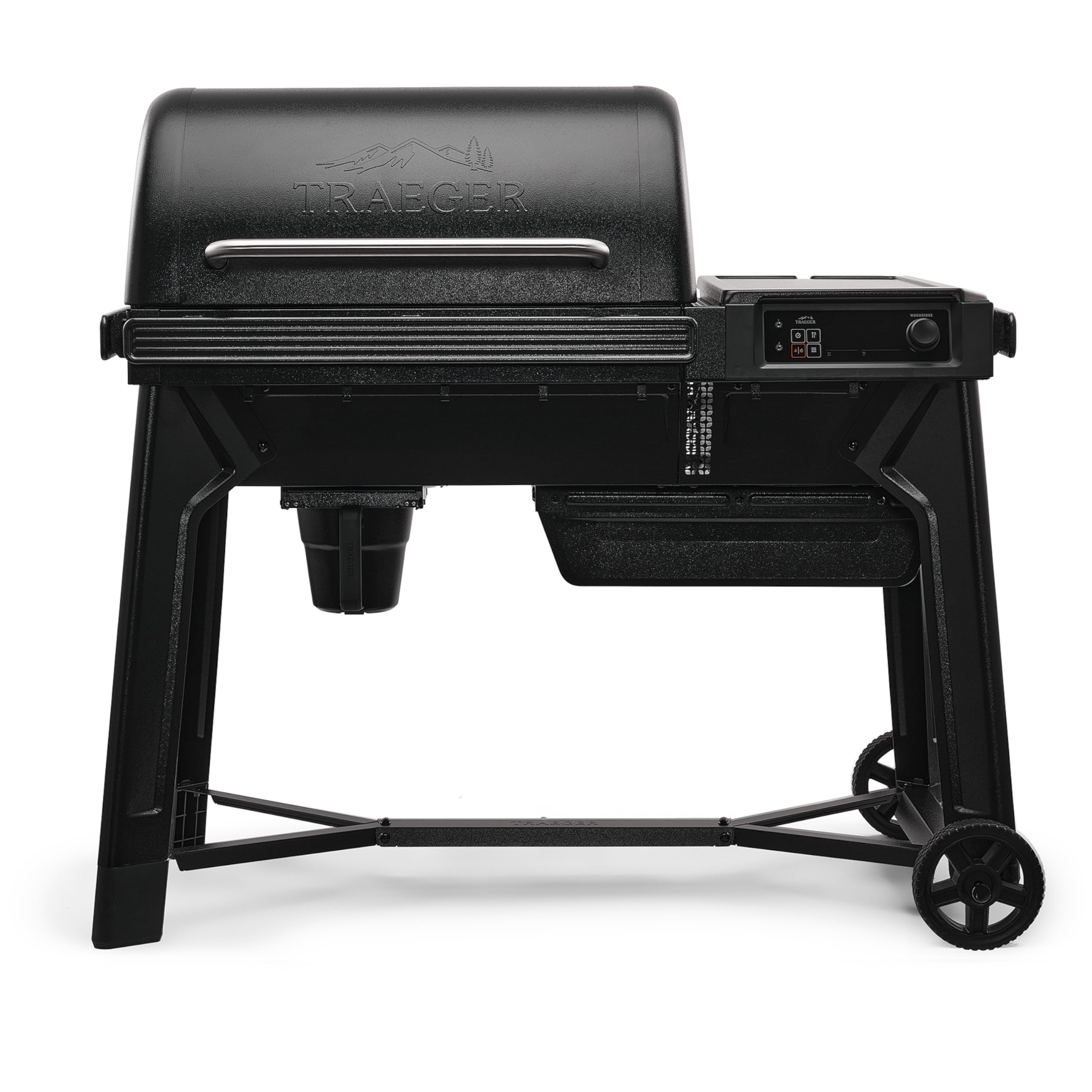
Traeger Woodridge
Key Features
- Control: WiFIRE app
- Warranty: 10-year limited
- Cooking space: 860 sq. in.
- Temperature range: 180°F to 500°F
- Price: Premium
Eight hundred sixty square inches is the number Traeger leads with, but 500°F is the one that changes how you cook. Several smokers here top out at 450°F, which is plenty for ribs and short of a steak with a real crust, so the Woodridge covers both ends of the range without a second appliance. It fits six pork butts, eight racks of ribs, or six whole chickens by Traeger’s count, which means a backyard party and a Tuesday chicken are the same machine on different settings.
What we watched for was whether it holds the number it is set to. It does: the controller and the WiFIRE app stay in agreement, the app lets you change temperature and watch the probe from inside the house, and the alerts mean an overnight brisket does not need a lawn chair next to the grill. That is the difference between a smoker you tend and one you check.
Cleanup is where this one quietly wins. The EZ-Clean grease and ash keg collects both in one container you pull out and dump, instead of scraping a foil-lined tray into a trash bag. The flat lid over the hopper is wide enough to park a tray of raw ribs while you open the chamber, and we used that more than any other feature.
At 62 kg, roughly 137 pounds, it arrives as a two-person build and it stays where you put it; the rear wheels do not swivel, so pivoting it across a patio takes some shoving. Traeger backs it with a 10-year limited warranty, the longest here. And being able to finish a reverse-seared steak at 500°F without firing up a second grill is what separates this from an outdoor oven.
Pros
- Smokes at 180°F and sears at 500°F
- 860 sq. in. fits a crowd
- WiFIRE app monitoring and alerts
- EZ-Clean ash and grease keg
Cons
- Costs more than any other pick here
This is the one we recommend to anyone who wants a single machine that smokes overnight and sears the next day, with app monitoring and grate for a party.
Best for Value-Minded Beginners
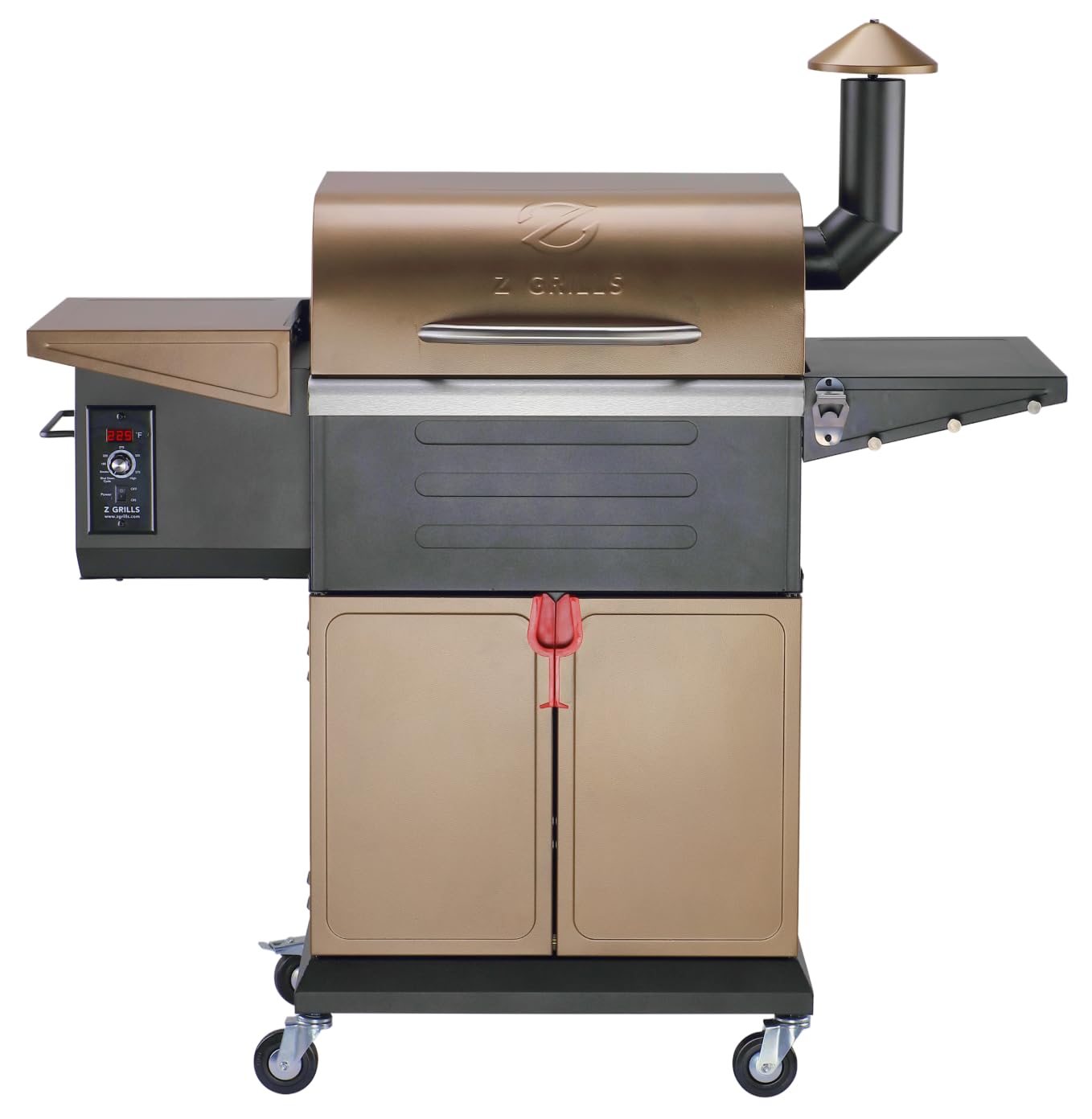
Z Grills 600D
Key Features
- Storage: Side shelf and cabinet
- Controller: PID 3.0
- Cooking modes: 8-in-1
- Cooking space: 572 sq. in.
- Price: Budget
Z Grills sells the 600D for the kind of money that usually buys a smaller grill with a timer-based feed, and it comes with 572 square inches, a PID 3.0 controller, a side shelf with tool hooks, and a closed cabinet underneath that swallows a pellet bag, gloves, and a thermometer. The cabinet is the detail that makes it feel like a much pricier machine.
Temperature is where it surprised us. This is the steadiest of the full-size picks here: set 225°F and it sits there through a long cook without the sawtooth swings that show up on a couple of the more expensive machines on this list. For a smoker that is the whole ballgame, since steady heat is what turns a pork butt into pulled pork instead of an afternoon of fiddling with the dial.
Smoke is the compromise. It burns clean and light, which suits chicken and ribs and runs a little thin if you want the bark a stick burner gives you; a smoke tube closes most of that gap for the price of an accessory. Assembly is an evening with two people and a socket set, and the instructions are clear enough that it moves quickly.
Pros
- 572 sq. in. for the least money here
- PID 3.0 holds a set temperature
- Side shelf and closed storage cabinet
Cons
- Control boards and augers have failed within months
We reach for the 600D when the budget is real and the cook is long: it holds temperature better than anything else here at its end of the price range.
Best for First-Time Pellet Cooks
Traeger Pro 22
Key Features
- Meat probes: 2 included
- Cooking space: 572 sq. in.
- Hopper capacity: 18 lb
- Max temperature: 450°F
- Price: Midrange
Traeger has been building the Pro 22 since 2014, and that long run is the point: this is the pellet grill most people have actually cooked on, with parts, recipes, and troubleshooting a search away. It is a 572-square-inch 6-in-1, covering grill, smoke, bake, roast, braise, and barbecue, with two wired meat probes and a digital controller that asks almost nothing of you.
It is also the least intimidating machine here for a first-timer. No app, no pairing, no account: a dial, a display, and a lid. Cooking on it feels like using an oven, which is why we hand this one to anyone who has never touched a pellet smoker and wants dinner to be the experiment, not the equipment.
Temperature is the argument against it. Settling 10 to 20 degrees off the set point is normal, and swings to 50 degrees show up often enough that a separate grate thermometer earns its keep; the controller is an older generation than the PID boards on the Z Grills models, and the ceiling is 450°F, so it smokes far better than it sears. In wind, expect to chase the number.
What you get for the patience is a machine that handles the long stuff. Eighteen pounds of pellets will run an overnight cook without a refill, and the smoke ring it leaves on a pork shoulder is the reason people keep these things for a decade.
Pros
- Oven-simple controls for beginners
- 18 lb. hopper covers an overnight cook
- Two meat probes in the box
Cons
- Dented panels and broken hinges in transit
- No Wi-Fi or app monitoring
For a first pellet smoker, this is the one we point to: a dial, a lid, and two probes, with no app to fight.
Best for Winter Smoking
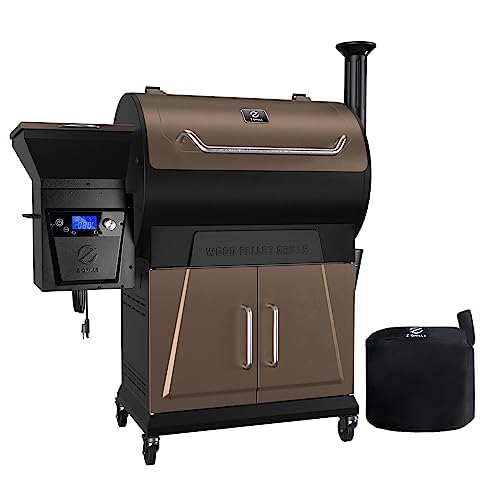
Z Grills 700D6
Key Features
- Hopper: Up to 28 hours of cooking
- Meat probes: 2 included
- Cooking space: 697 sq. in.
- Temperature range: 180°F to 450°F
- Price: Midrange
The dual-wall insulated base is what you pay for over the 600D, and in cold weather it earns the difference: insulation holds the cook chamber at temperature with less pellet feed, so a January brisket is not a fight with wind and a falling number. If your smoking season runs through the winter, this is the one to look at.
The rest of the package is built for long cooks. There are 697 square inches, a 180°F to 450°F range under PID 3.0 control, two meat probes with a large LCD, a hopper Z Grills rates for up to 28 hours of continuous cooking, and a cleanout that empties the auger so you can switch from hickory to apple without burning through what is left.
Quality is where it is strongest: the parts fit, the panels line up, and assembly is a two-person hour with instructions that match the hardware. Two things to know before you commit. The ash that collects in the base wants a shop vacuum rather than a brush, and the 120-pound frame takes on a permanent address once it is built. Neither bothers anyone treating this as a smoker that can grill.
Pros
- Dual-wall base holds heat in cold
- Hopper rated for up to 28 hours
- Two probes and a large LCD
Cons
- 450°F maximum rules out hard searing
We like the insulated 700D6 for winter smoking: it holds heat when the temperature drops, and the hopper runs for hours.
Best for App-Guided Cooks
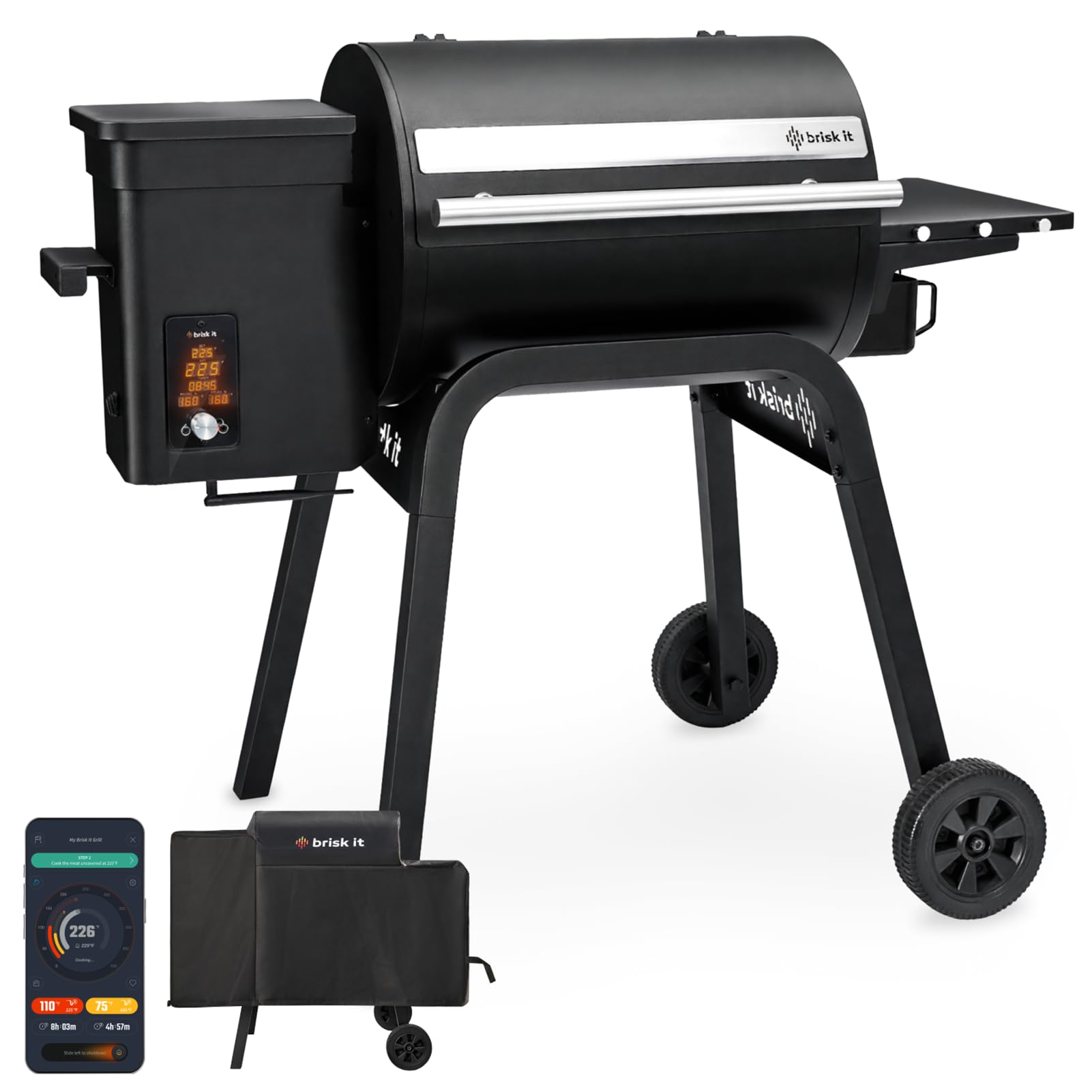
Brisk It Zelos-450
Key Features
- Connectivity: Wi-Fi and app
- Cooking space: 450 sq. in.
- Hopper capacity: 12 lb
- Temperature range: 180°F to 500°F
- Price: Budget
An A.I. grill invites skepticism, so here is what the Zelos-450 actually does: it connects over Wi-Fi, pushes a recipe to the controller step by step, watches the probe, and adjusts as the cook moves along. You can also ignore all of it, set 225°F, and walk away like any other pellet smoker.
The app is the reason to buy this one, and it is better than we expected. A recipe loads to the grill, the phone tells you when to flip, and you can drop the temperature from the far end of the yard. The account requirement is real and the connection is not bulletproof, so on a long cook we run a standalone probe alarm alongside the app instead of trusting one screen.
The hardware is honest for the money: 450 square inches, 180°F to 500°F, a 12-pound hopper, and a cover and meat probe in the box. Where it slips is heat. The steel is thin and the controller is not as settled as the ones on the Z Grills or the Woodridge, so wind and a cold evening show up in the number. Shelter it, cook weeknight ribs and chicken, and it is a lot of grill for the price.
Pros
- Wi-Fi app with guided recipes
- 500°F ceiling for a hot finish
- Cover and meat probe included
Cons
- Temperature drifts in wind and cold
We recommend it for guided, app-driven cooks and a 500°F ceiling at an entry price, with the controller as the gamble.
Best for Sear and Smoke
Pit Boss 500 FB2
Key Features
- Weight: 136.6 lb
- Cooking space: 518 sq. in.
- Hopper capacity: 5 lb
- Temperature range: 180°F to 500°F
- Price: Budget
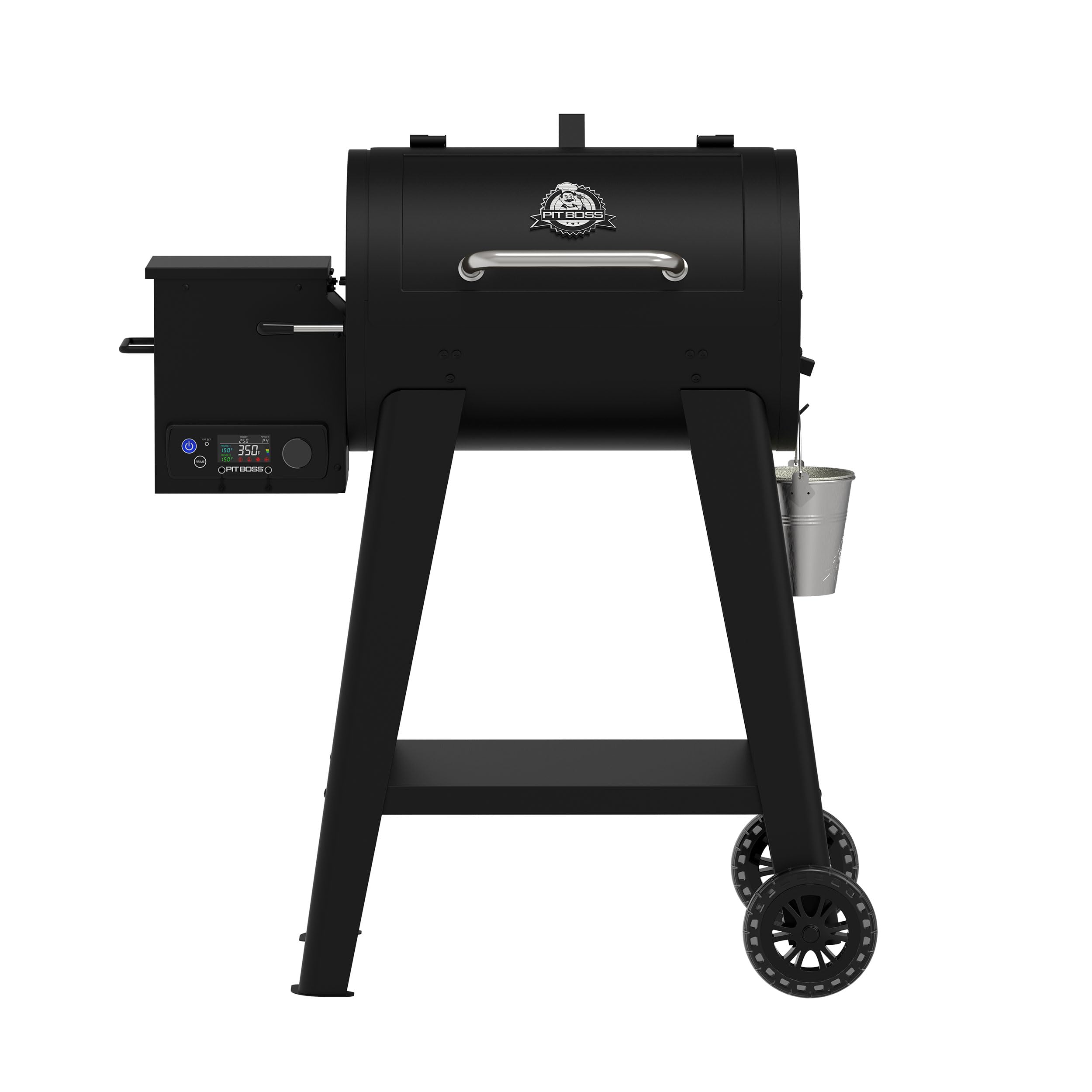
Pull the Flame Broiler lever and a plate slides open over the fire pot, putting food directly over flame and taking the grill to 1,000°F. Nothing else here does that; the rest rely on a hot grate and stop at 500°F or below. It is what turns a pellet smoker into something that can finish a steak properly instead of just cooking it.
The rest of the spec sheet is sensible: 518 square inches, 180°F to 500°F with 5°F increments, a meat probe, and a solid bottom shelf that holds a pellet bucket and tools without sagging under them.
Five pounds is the catch. That hopper is small enough that a pork butt needs topping off mid-cook, and an overnight brisket means filling it before bed, where a bigger hopper would not need a second thought. Check the box before you build, too: grates have arrived missing and panels dented, and at 136.6 pounds a return is a chore.
Pros
- Direct-flame searing up to 1,000°F
- 518 sq. in. with a solid bottom shelf
- 5°F temperature increments and a probe
Cons
- 5-pound hopper needs refilling mid-cook
We recommend it when a real flame sear matters more than hopper size, because nothing else here sears like the Flame Broiler.
Best for Camping and Tailgating
Pit Boss 150
Key Features
- Weight: 43 lb
- Cooking space: 256 sq. in.
- Hopper capacity: 7 lb
- Temperature range: 180°F to 500°F
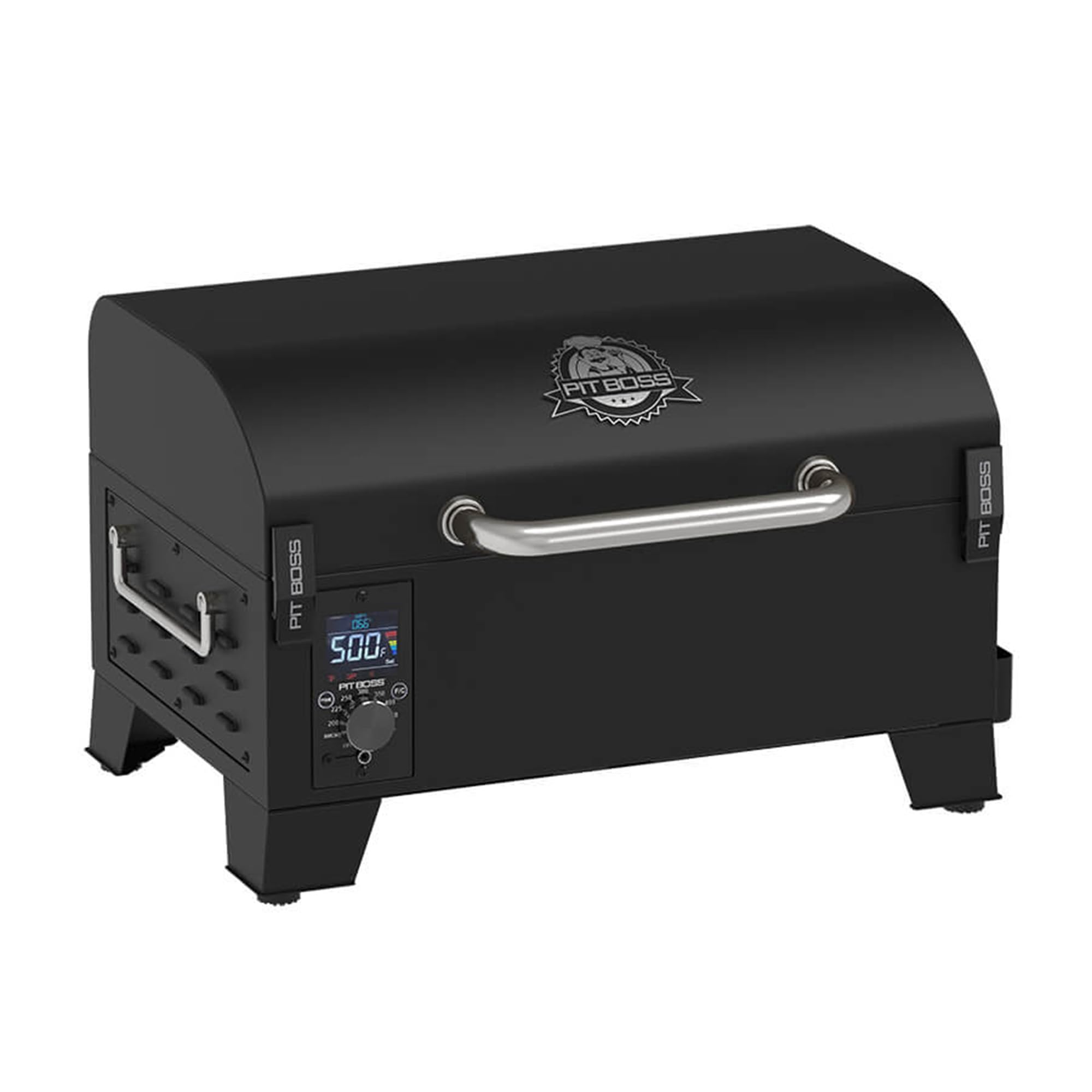
Latch the lid, grab both handles, and the 150 goes into a truck bed or a trailer: 43 pounds, 256 square inches, and a 7-pound hopper. Automatic start and cool-down cycles mean you are not babysitting a fire at a campsite, and it carries a 5-year warranty.
For two people it is not a compromise. Two racks of ribs fit, or a brisket if you trim it, and it runs the same 180°F to 500°F range as the full-size grills from a picnic table. Nothing about the cook feels miniature; it just asks you to think in smaller cuts and plan the crowd accordingly.
Temperature is where it wobbles: 10 to 20 degrees off the set point is common enough to check with your own probe, and a few units never climb past 180°F. It also runs on a cord, so plan an outlet or a small generator if the site does not have one.
Watch the lid gasket. It can come apart in the first few cooks, and a replacement seal is an easy fix that keeps the smoke where you want it. As a portable smoker this has no competition in this group, and the 43 pounds are why it rides along while the full-size units stay home.
Pros
- 43 lb. and latch-locked for travel
- Same 180-500°F range as full-size picks
- Auto start and cool-down cycles
Cons
- 256 sq. in. feeds two, not a crowd
- Lid gasket can fail in the first cooks
We take this one seriously as a portable: a real 180-500°F pellet cook in 43 pounds, as long as your guest list is two.
How We Tested Pellet Smokers, From Midnight Pork Butt to Weeknight Chicken
We started by rounding up every pellet grill a normal person might actually buy, then narrowing by controller type, cooking area, hopper size, and whether one person could move it. Seven made it to the patio, from a compact tailgate model to a full-size WiFi rig.
Assembly came first. I built each one alone with only the tools in the box, timing the job, noting where the diagrams lost me, and deciding whether a second set of hands was genuinely needed. After the burn-in, I set every smoker to 225°F and let it run an hour with a calibrated probe at grate level, logging how far the real temperature drifted from the number on the panel and how fast it recovered after I opened the lid. Then I took each one to its top setting to see whether it would actually sear.
Most of the cooking happened the way it does at home: pork butts on at midnight and pulled the next afternoon, chicken thighs on a Tuesday, steaks reverse-seared, a pan of cornbread to test the baking modes. I watched the smoke itself, too, thin and blue versus thick and white, and whether the flavor still held up on day-three leftovers. One cook ran on a cold, windy afternoon to see how a thin barrel held heat, and I checked every built-in meat probe against an instant-read in the thickest part of the meat.
On the WiFi models I started cooks from the kitchen and monitored from down the block, watching for dropped connections, laggy readouts, and alarms that never fired. I weighed pellets before and after long cooks to get a real burn rate, and left each smoker out under its cover through rain to check the grates for rust, the paint for bubbling, and the wheels for wobble.
How to Choose a Pellet Smoker
Two numbers decide most pellet-smoker purchases, and most shoppers only check the first one: how much grate you get, and how long the hopper feeds it.
Cooking Space and Hopper Size
Square inches translate roughly to servings. A 256-square-inch tabletop pellet grill like the Pit Boss 150 handles two racks of ribs for two people, 518 to 572 square inches covers a family cookout, and 860 square inches is a party smoker that fits six pork butts. Buy for the cook you make most weeks, not the one you host twice a year.
The hopper is the number that gets skipped. Five pounds on a 518-square-inch grill like the Pit Boss 500 means refilling during a pork butt, while an 18-pound hopper or one rated at 28 hours covers an overnight brisket. If your cooks run past six hours, weigh feed capacity as heavily as grate area.
Controllers and the Real Grate Temperature
A PID controller adjusts pellet feed and airflow continuously to hold a set temperature; older timed-feed boards cycle on and off and wander more. That is why two grills set to 225°F behave like different machines, and why the controller matters more than the number of cooking modes in the menu.
The controller reads its own probe, not your brisket, so the setting is not the grate temperature. Run the grill empty at 250°F for an hour with a third-party thermometer clipped at grate level before you trust it on a long cook, then note the offset and set around it.
Insulation, Weather, and Placement
Steel thickness and insulation decide how hard the controller has to work in wind and cold. A dual-wall base like the one on the Z Grills 700D6 holds heat with less pellet burn; a single-wall barrel loses it and swings. In a cold climate that is worth more than an extra mode or two.
Placement matters nearly as much. A corner against a wall or the windy edge of a deck creates draft and hot spots. Set the grill on a level, sheltered surface out of the prevailing wind, and follow the manual’s clearance to siding, railings, and anything combustible.
What Wi-Fi and App Control Buy You
App control is monitoring and convenience: a probe reading in your pocket, an alert when dinner hits temperature, the ability to change a set point from the house. It is not better temperature accuracy, because the app only reports what the controller already does. The Traeger Woodridge and the Brisk It Zelos-450 live or die on their controllers, not their screens.
Buy it if you cook overnight or want step-by-step guidance. Skip it if you are happy walking outside with a thermometer. Our order of spending is grate area first, hopper second, app last.
Frequently Asked Questions
Do pellet smokers need electricity?
Yes. The auger that moves pellets, the fan that feeds the fire, and the controller that runs both are electric, so the grill needs an outdoor outlet within cord reach. If you plan to cook where there is no power, add a small generator to the budget before you buy.
How often should you clean a pellet smoker?
Empty the grease after every cook and scrape the grates while they are still hot. Ash is the part people let slide: vacuum the fire pot and the base every few long cooks, because once ash piles past the pot’s lip the auger works harder and the temperature gets erratic. A shop vacuum and ten minutes covers it.
Can you sear on a pellet smoker?
Only near the top of its range. A grill that reaches 500°F puts a decent crust on a steak over a hot grate, and the Pit Boss 500’s Flame Broiler goes further by opening direct flame under the food. On a 450°F machine, smoke the steak first and finish the sear in a cast-iron pan.
Final Verdict
The Traeger Woodridge is the pellet smoker we point most people to, because it does the two jobs that matter, holding a low temperature overnight and finishing at 500°F, with app monitoring and room for a crowd. The Z Grills 600D is the value answer: less grate, no app, the steadiest temperature record in this group, and far less money.
Cook through the winter and the insulated Z Grills 700D6 is worth the step up. If the smoker travels, the Pit Boss 150 is the one that goes in the trailer.