This post contains affiliate links. We may earn a small commission when you buy through our links — at no extra cost to you.
A pellet grill is the rare backyard appliance that works while you don’t: fill the hopper, punch in a number, walk away. The trouble with the inexpensive end of the market is that the savings have to come from somewhere — thinner steel, a smaller cooking surface, or a controller that thinks 225 degrees means anywhere between 200 and 260. None of that ruins a cook outright, but it does mean the cheapest grill on the shelf is rarely the one worth buying.
I’ve burned through more than one bargain smoker in my time, so I went into this with a cheap thermometer and low expectations. Over eight months, my team and I cooked on seven budget pellet grills, from a weeknight batch of chicken thighs to an overnight pork butt that had me checking the temperature at 2 a.m. What separated them wasn’t the price tag — it was how steady each one held its setpoint after the lid had been opened and closed a dozen times. The picks below are the ones that earned a permanent spot on the patio.

Best for Camping and Tailgates
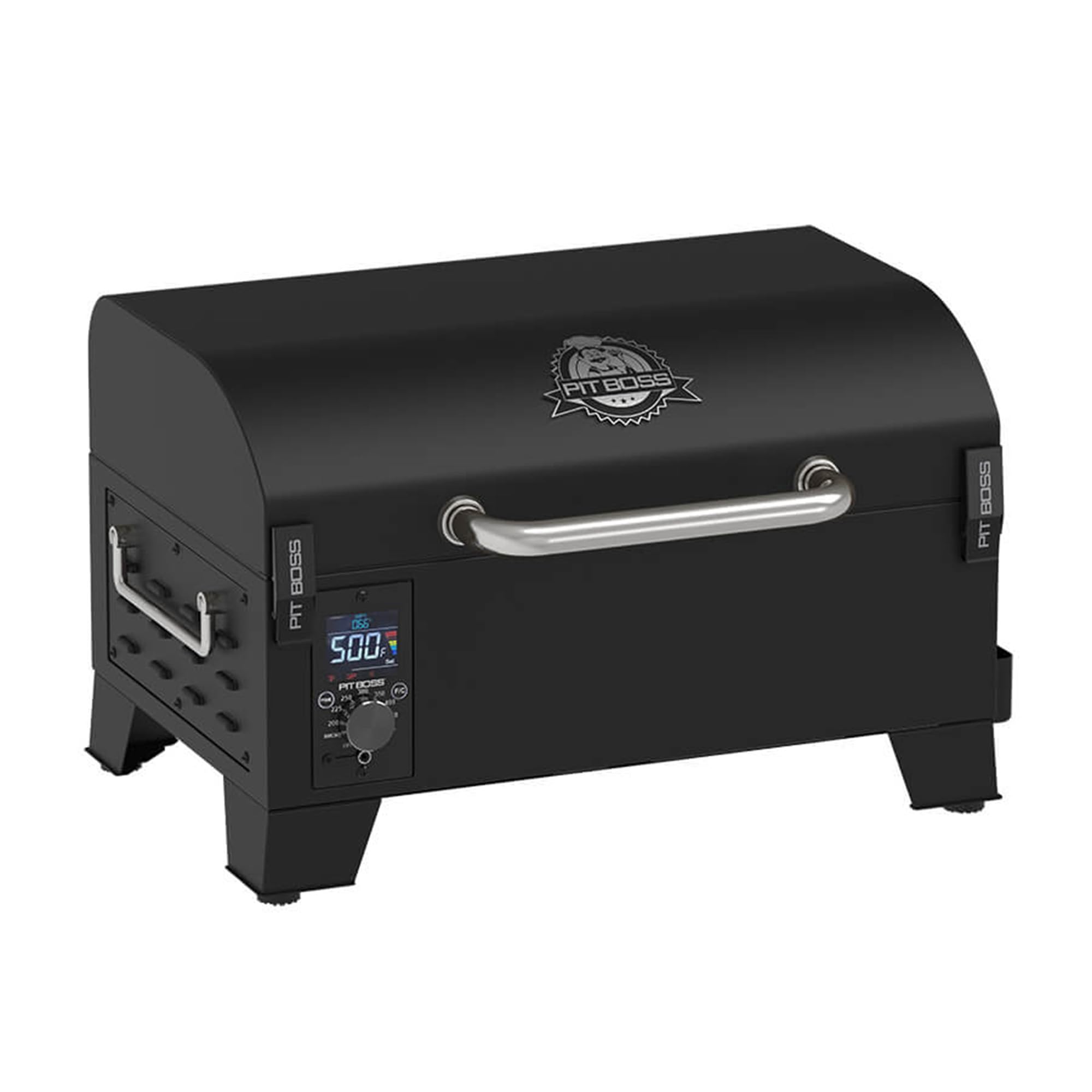
Pit Boss 150
Key Features
- Weight: 43 lb
- Cooking surface: 256 sq in
- Hopper capacity: 7 lb
- Temperature range: 180°F to 500°F
- Price: Budget
Two stainless handles and a latch turn this grill into something you can carry. At 43 pounds and about the size of a large cooler, it goes from garage shelf to picnic table in one trip, and automatic start-up means you press a button instead of building a fire. Real wood smoke without a trailer, a truck bed or a chimney is the whole case for a tabletop pellet grill, and this is the least expensive convincing version of it here.
What convinced us is that the budget went into the parts that matter. The range runs the full 180°F to 500°F, so it holds a low smoke for ribs and then climbs high enough for chicken skin, and the porcelain-coated grates wipe down while they are still warm. A 7-pound hopper is generous on a body this small, enough for an afternoon without a refill, and the five-year warranty is the longest stated on any grill in this guide.
The limit is area, and it is honest: 256 square inches takes a brisket that just fits, a couple of racks of ribs, or dinner for two to four. We treat the controller as the other thing to check, because low settings can drift off the number on the screen and that reading comes from the grill’s own sensor rather than the meat. Buy a probe thermometer with it and the drift stops being a mystery.
Pros
- Cheapest route into real pellet smoke here
- Full 180°F to 500°F range for smoke and sear
- 43 lb with latching lid and two handles
- Five-year warranty, longest of these picks
Cons
- Needs an outlet, so camping means bringing power
For a first pellet grill we point people here: it smokes and sears, travels in a trunk, and carries the longest warranty in this group.
Best for Family Backyard Cooking
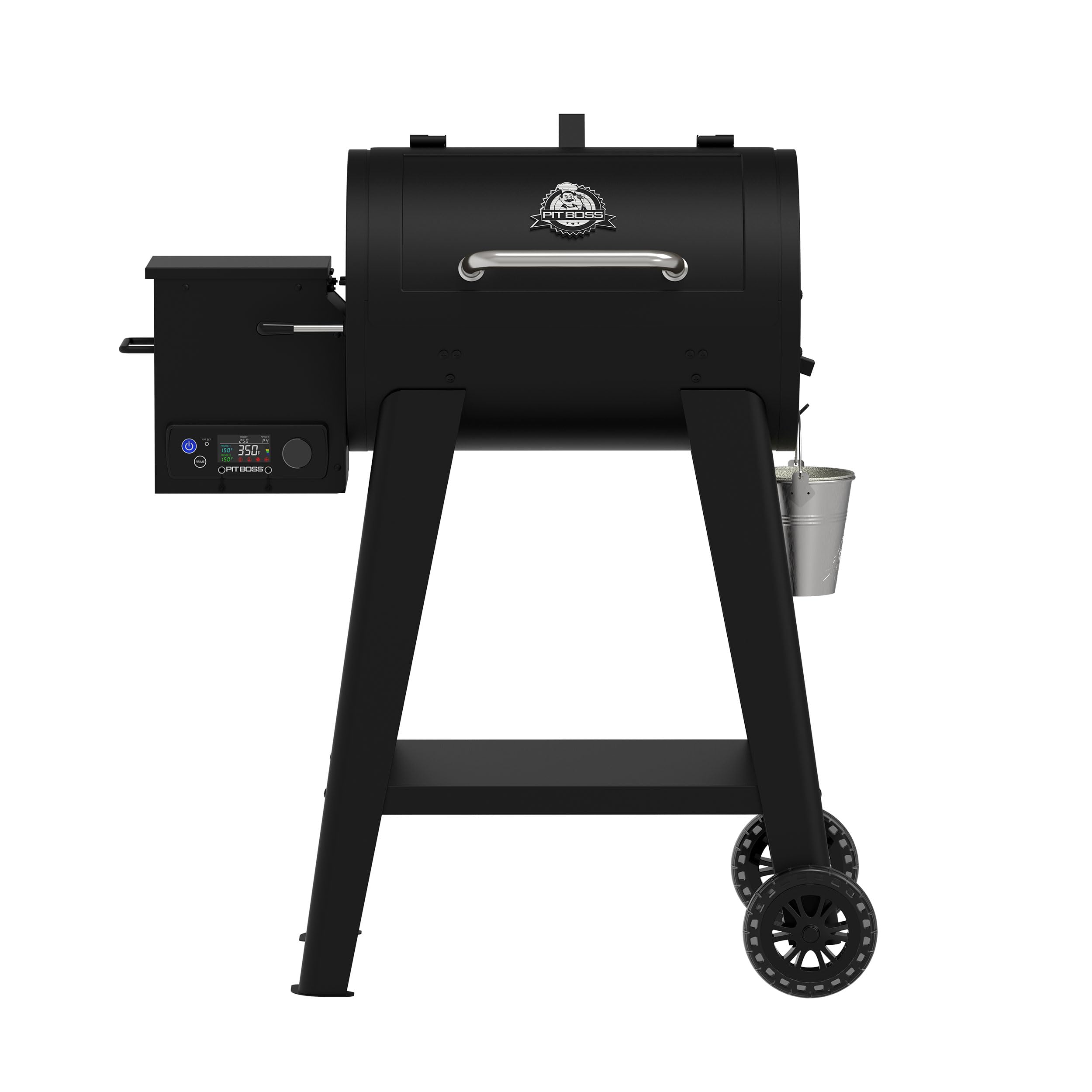
Pit Boss 500 FB2
Key Features
- Cooking surface: 518 sq in
- Hopper capacity: 5 lb
- Temperature range: 180°F to 500°F
- Flame broiler sear: Up to 1,000°F
- Price: Midrange
Five hundred eighteen square inches is the number that decides this one. That is about double the tabletop grills here, enough for a spatchcocked chicken with room for corn beside it, or enough burgers that you are not cooking in shifts. If your quiet dinner for two keeps turning into eight people on a Saturday, this is where the extra money goes.
The flame broiler is the part we enjoy most. Slide the lever and heat comes straight off the fire pot, which Pit Boss rates for searing up to 1,000°F — well past what the 500°F ceiling gives on its own, and more than any other grill here claims. The controller runs in 5°F steps with an LCD and a meat probe in the box, so you set 225 rather than hunting for a dial position.
At 136.6 pounds it stays exactly where you put it, which is what you want on a windy patio, and the solid bottom shelf swallows a pellet bucket, a brush and a spatula. The lid closes with a dull clunk that suggests more money than you spent, and the paintwork has held up better than we expected for the bracket.
Pros
- 518 sq in feeds a family without shifts
- Flame broiler sears up to 1,000°F
- Meat probe and 5°F controller steps
- Heavy, planted build that stays put
Cons
- 5 lb hopper means refilling mid-cook
- Assembly is a two-person job
This is the grill we point families to: 518 square inches, a meat probe, and a flame-broiler sear that nothing else here matches.
Best for Feature-Packed First Smoker
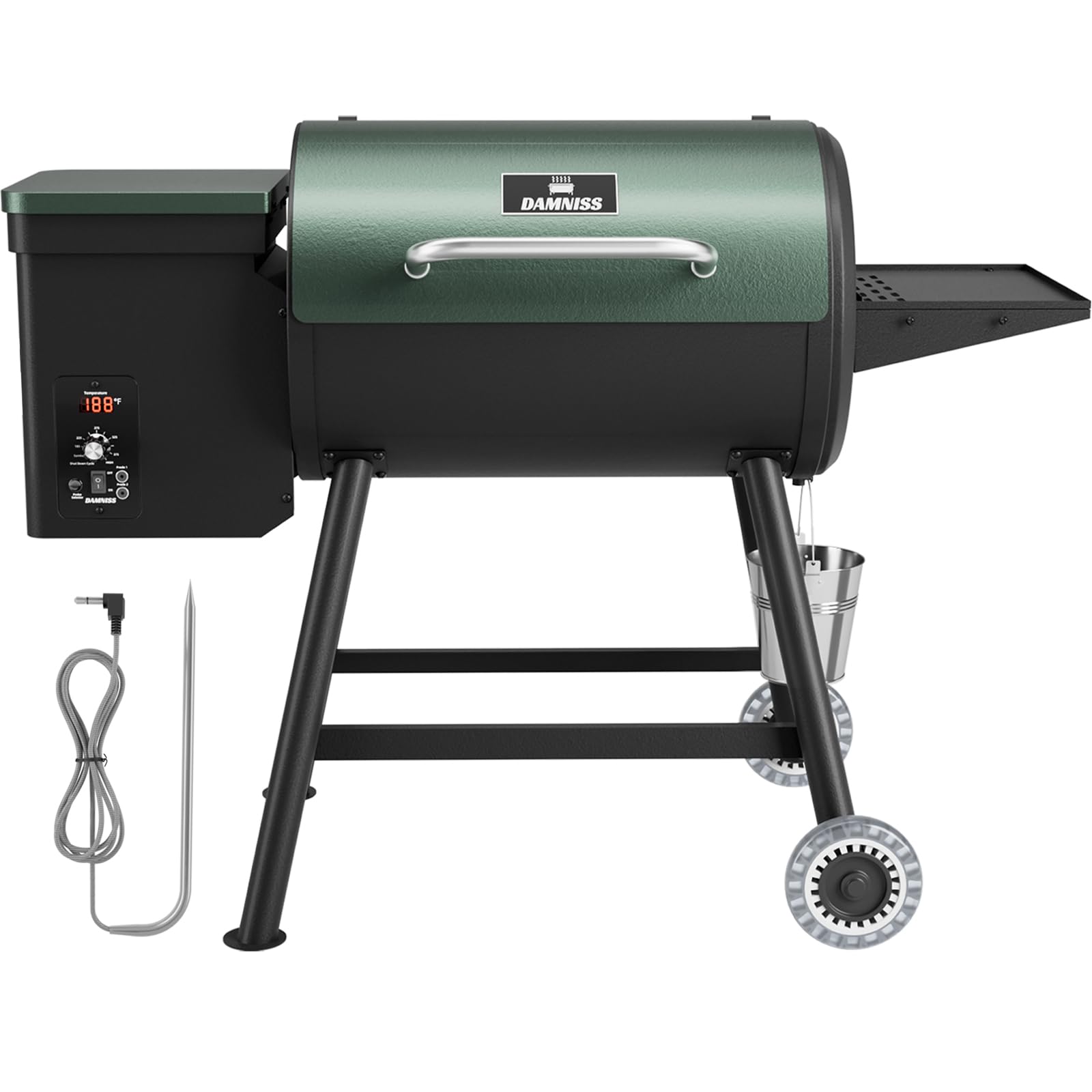
DAMNISS 456
Key Features
- Weight: 85 lb
- Cooking surface: 456 sq in
- Temperature range: 160°F to 500°F
- Controller accuracy: ±10°F, PID
- Price: Midrange
The feature list reads a bracket or two above the price. A PID controller the maker rates at plus or minus 10°F, a 160°F to 500°F range, a meat probe, a side table with hooks, four casters with two that lock, and eight cooking modes from smoke to bake. Claims like that deserve a raised eyebrow, so we looked at what a PID actually does here: it corrects pellet feed and airflow continuously instead of switching a heating element on and off.
The two add-ons we care about most are the probe and the side shelf, because those are exactly what budget grills leave out, and their absence is what sends you back to a hand-held thermometer and a folding tray. Having both built in is why this one earns its place: set a target, walk away, and keep your tongs and rub within reach of the lid.
Where it gives ground is height. The cooking surface sits low, low enough that a tall cook will stoop over the lid, and the green stainless body is a nicer look than the usual black box on a patio. Cook at chair height with a drink in your hand and it is perfectly comfortable; plan to stand over it for hours and you will feel the difference.
Pros
- PID controller rated to plus or minus 10°F
- Meat probe and side shelf included
- 160°F to 500°F covers smoke through sear
- Casters with two locking wheels
Cons
- Assembly directions are hard to follow
We recommend it to anyone who wants PID control, a meat probe and a side shelf without premium money, as long as a low cooking height suits them.
Best for Long Overnight Cooks
Z Grills 7002C
Key Features
- Meat probes: 2 included
- Cooking surface: 697 sq in
- Hopper capacity: 28 lb
- Temperature range: 180°F to 450°F
- Price: Premium
Twenty-eight pounds of pellets is what separates this grill from everything else in the guide. Load it before bed and a brisket runs until morning without a refill, and the window in the hopper lid lets you check the level with a glance instead of lifting a bag. We also appreciated the tool-free cleanout, which turns a switch from hickory to apple into minutes rather than a scoop and a prayer.
The size tells the same story. At 697 square inches it will take four pork butts or enough chicken thighs for a party, and the two probes in the box let you watch a couple of cuts at once. A PID controller, a rain cover and a grease bucket come included, so the money reflects capacity and steel rather than trim.
The ceiling is 450°F, which is plenty for roasting, baking and chicken over indirect heat, but it will not put the hard, fast crust on a steak that the Pit Boss 500’s flame broiler manages. Keep a cast-iron pan on the grate for that, or accept that this is a smoker first. For a household that smokes more than it sears, it is the least compromised machine here.
Pros
- 28 lb hopper with a viewing window
- 697 sq in of cooking space
- Two meat probes included
- Tool-free hopper cleanout
Cons
- Most expensive grill of these picks
- 113 lb makes it a permanent fixture
For overnight cooks and big groups this is our pick: a 28-pound hopper and 697 square inches, as long as you do not need a hard sear.
Best for Everyday Backyard Smoking
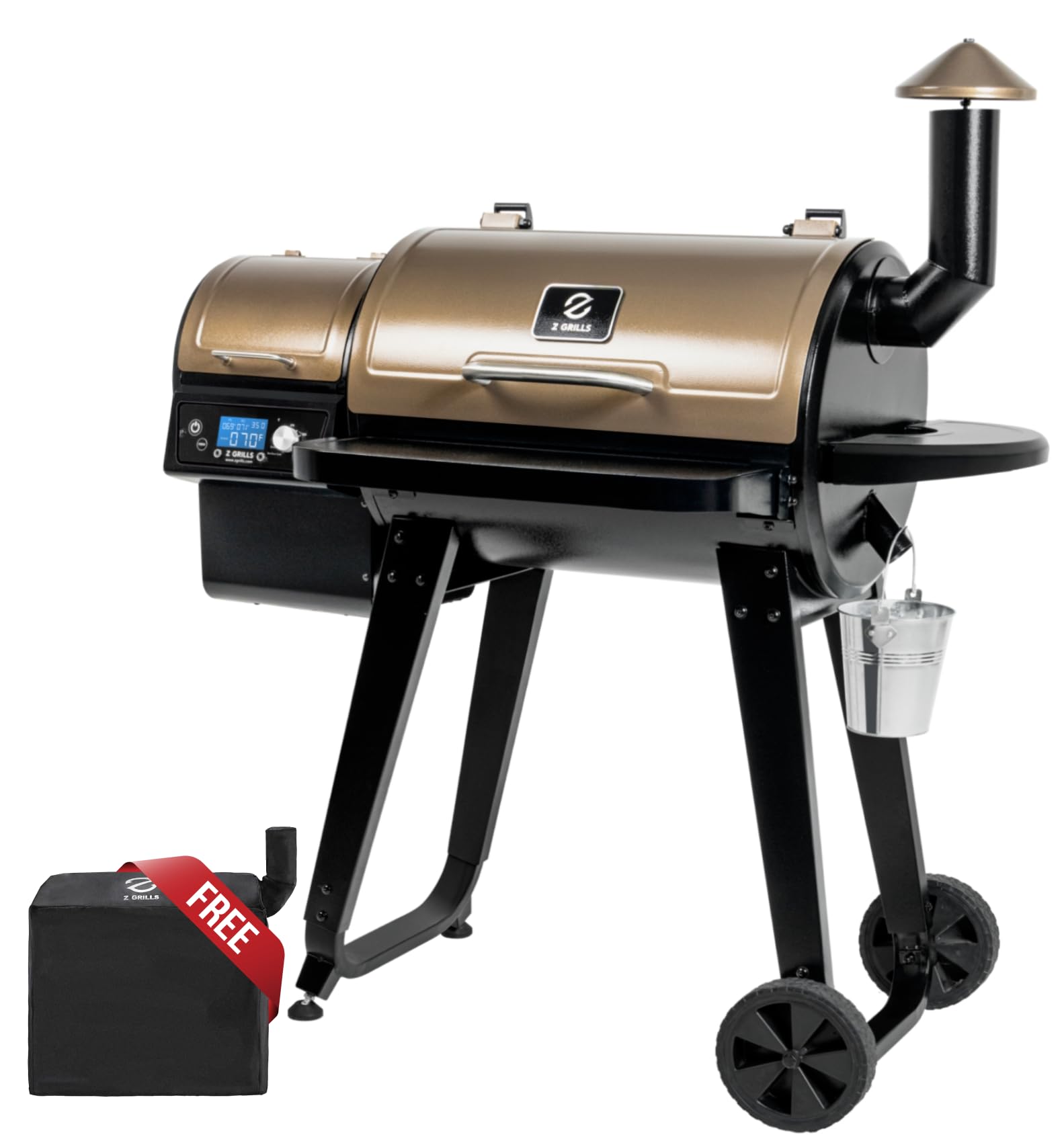
Z Grills ZPG-450A2
Key Features
- Shelf: Foldable front and side shelf
- Weight: 84 lb
- Controller: PID V3.0
- Cooking surface: 459 sq in
- Price: Midrange
Smoke is where this grill delivers. Long cooks come off it with the deep bark and clean flavor that make pellet cooking worth the fuss, and 459 square inches is enough for a couple of racks plus a pan of beans underneath. The folding front and side shelves are the sort of thing you stop noticing until you go back to a grill without them.
Durability is the thing to weigh. The auger and the wheeled legs are the parts that take a grill like this out of service, so buy from a seller with straightforward support, keep the rain cover on between cooks, and do not leave pellets sitting in a damp hopper. None of that is unusual at this price, but it is the maintenance this bracket asks for.
What is left is a solid, straightforward grill with a cover and a meat probe in the box, and assembly that goes together without drama — the hardware lines up and the pictures are clear enough to follow. For a buyer who wants a big cooking surface and will cook to a probe reading, that is a reasonable spend. It just is not the grill we hand a first-timer.
Pros
- 459 sq in with folding front and side shelves
- Deep smoke flavor on long cooks
- Rain cover and meat probe included
- Assembly goes together without drama
Cons
- Temperature wanders at low settings
A big, easy-assembling 459-square-inch grill that turns out genuinely smoky food for a buyer who will cook to a probe reading.
How We Tested Seven Budget Pellet Grills
We started by pulling together every pellet grill we could find near the price of a mid-range gas grill, then cut anything with a cooking area too small for a whole brisket, a hopper that couldn’t swallow a full 20-pound bag of pellets, or a controller with no temperature readout. That left seven grills, and we’ve been cooking on them for eight months.
Assembly happened in a driveway on a Saturday, stopwatch running, with one person doing the work. We counted the steps, noted whether hardware came bagged by step or dumped in one sack, and checked whether the instructions actually matched the parts in front of us — most took under an hour, one took an afternoon and a phone call. Once built, we measured each footprint on the patio and loaded the hopper to confirm the claimed capacity.
Every grill got the same three cooks: chicken thighs on a weeknight, an overnight pork butt, and a long low-and-slow bake. We logged grate temperature with a separate probe every 15 minutes instead of trusting the panel, watched the color of the smoke leaving the stack, and opened the lid mid-cook to see how fast each one recovered. Cleanout got graded the unglamorous way — how much ash landed on the driveway versus in the cup.
Between cooks we wheeled them across grass and over a patio lip, leaned on the legs and side shelves to see what flexed, and left four of them out in the weather for the full eight months to watch seams, burn pots, and paint for rust. At the end we weighed pellets burned against meals produced, because value here isn’t the sticker price — it’s whether a cheap grill still holds temperature in month seven.
How to Choose an Inexpensive Pellet Grill
On a budget grill the money goes to the controller and the steel, so decide which of those you can live with before you fall for a cooking-area number.
Match cooking area to your real guest list
The tabletop models here run 200 to 256 square inches; the full-size ones start around 456 and climb to 697. Two hundred square inches is dinner for two with leftovers, 450 is a family plus a few friends, and 700 is a party or a cook you plan to eat from all week.
The trap is buying area you never fill. A bigger grill takes longer to come to temperature, burns more pellets and eats patio space, and a small one can still take a brisket if the cut fits. Be honest about how many people actually sit down on a Saturday.
Temperature control is where the savings show
Every grill here will reach 225°F; the question is how tightly it holds there. PID controllers, on the DAMNISS and both Z Grills, adjust pellet feed and airflow continuously rather than switching a heating rod on and off, which is the difference you can taste on a long cook.
Even a good budget controller reads its own sensor, not your food, so buy a probe thermometer whatever the listing promises. Check the top of the range too: 500°F gives you a real sear, the Z Grills 7002C’s 450°F ceiling is a roasting and smoking ceiling, and the Pit Boss 500’s flame-broiler lever is the only thing here claiming a steakhouse crust.
Hopper size decides whether you sleep
Pellet burn tracks cooking area and temperature, so a big lid with a small hopper is the mismatch to watch. The Pit Boss 500 pairs 518 square inches with a 5 lb hopper, which means a refill in the middle of a brisket; the Z Grills 7002C carries 28 lb for exactly that reason.
Whatever you buy, store pellets sealed and dry. Damp pellets swell, the auger jams, and what looks like a controller fault is often a bag that sat open in a humid garage.
Portable, parked, or somewhere in between
Tabletop grills here weigh about 40 pounds, which is a two-hand carry to the car rather than a backpack — portable in a listing usually means it fits a trunk. They also need a standard outlet, so camping means a power source or a small generator.
Full-size grills at 84 to 137 pounds are a permanent placement. Measure the patio before you order, plan where the cord reaches, and buy a cover the same day. Budget steel that lives outdoors uncovered will show it in the paint and the gaskets.
Frequently Asked Questions
Is a cheap pellet grill worth it compared with a charcoal grill?
Yes, if what you want is smoke without tending a fire. A pellet grill runs on a controller: set your temperature, walk away, and it feeds itself for hours. That is the difference between a weeknight cook and a weekend project.
What you give up at this price is precision and searing headroom, so keep a cast-iron pan for the crust and a probe for the temperature.
What does it cost to run one?
Pellets are the ongoing expense, and a full-size grill on a long cook will work through a hopper or more. Buy a blend you like in bulk, reseal the bag, and store it somewhere dry.
Only fill the hopper to what the cook needs. Pellets left sitting in a damp hopper are the usual reason a budget auger jams, and that is a repair rather than a cleaning job.
Can I use a pellet grill on a balcony or under a patio cover?
Read the lease first. Plenty of apartment and condo rules ban open-flame cooking on balconies even when the fuel is wood pellets, and a grill that smokes will be a neighbor issue regardless.
On a patio, keep clearance from walls, railings and the roof overhang, and never run it in a garage or tent. It also needs an outlet, so a balcony without power rules itself out.
How hard is assembly?
Budget grills arrive flat-packed. A full-size model is an evening job and wants a second person to lift the body onto the legs; a tabletop goes together in one sitting on the kitchen floor.
Sort the hardware into cups before you start, because instructions are the weakest part of the value brands. Check the carton for dents before you build anything.
Final Verdict
For most people the Pit Boss 150 is the buy. It costs the least of these picks, smokes from 180°F up to a genuine 500°F sear, travels in a trunk, and carries a five-year warranty nothing else here matches. The trade is size: 256 square inches is two to four people, not a party.
If your cooks regularly feed more, the Pit Boss 500 FB2’s 518 square inches and flame-broiler sear are worth the step up despite the small hopper. Plan on overnight briskets and the Z Grills 7002C’s 28-pound hopper is the one that lets you sleep.