This post contains affiliate links. We may earn a small commission when you buy through our links — at no extra cost to you.
Electric and pellet smokers promise effortless smoke flavor, but thousands of reviews tell a different story: temperature swings, control board failures, and a light smoke that disappoints purists. Charcoal smokers deliver deeper flavor and mechanical simplicity, yet they demand a steeper learning curve and constant attention to vents.
The real choice isn’t between brands—it’s between convenience and authenticity. A set-and-forget electric can produce great results, but only if you accept occasional temperature drift and a shorter lifespan. A charcoal bullet smoker needs more hands-on work, but it rewards you with consistent smoke rings and decades of reliable use.
This guide cuts through the marketing to help you decide which trade-offs you’re actually willing to live with. Whether you’re a beginner looking for an easy start or a weekend warrior chasing competition-level bark, the right smoker is the one that matches your expectations—not the one with the flashiest feature list.


Best for Small Groups
Weber Smokey Mountain 14in
Weber’s Smokey Mountain 14-inch sets the benchmark for how a charcoal smoker should perform: consistent low temperatures, minimal fiddling, and thick smoke flavor that rivals offsets far above its price range. The vertical bullet design concentrates heat and smoke around the food, and the porcelain-enameled steel body retains heat without the rust concerns of thinner metal smokers. For anyone who wants to move beyond electric convenience to genuine charcoal results, this is the reference point.
Once you dial in the vent settings — typically the top vent wide open and bottom vents around 25% open — the smoker holds 225–250°F for hours without attention. The charcoal ring and water pan work together to buffer temperature spikes, making this one of the few sub-$300 smokers where you can start a brisket at midnight and wake up to steady temps. The water pan also adds humidity, which helps bark formation and keeps meat moist during long cooks.
This smoker suits the enthusiast who values flavor over capacity. If your typical cook involves two racks of ribs, a single pork shoulder, or a few chickens, the 14-inch model’s two 14.5-inch grates provide enough space for meals for 2–4 people. For larger gatherings, the 18-inch or 22-inch versions address that need — but they also add bulk and cost. The charcoal-fueled design requires learning vent management, so it’s less convenient than an electric or gas smoker, but the payoff in smoke ring and bark makes it worthwhile for those willing to invest a few cooks in practice.
The primary limitation is physical — the cooking area is small. A single large pork shoulder fills both grates, and you cannot fit multiple briskets. If you entertain frequently or feed a family of six, that’s a boundary worth respecting. The door may also let a wisp of smoke escape initially; a quick bend or a gasket kit resolves it, but it’s a minor fit-and-finish note out of the box. Neither issue undermines the core performance for its intended small-group use.
Pros
- Sturdy porcelain-enameled steel body that resists rust and holds up for years of use.
- Stable temperature control once vent settings are learned — holds 225°F for hours without adjustment.
- Produces deep smoke flavor and bark that competes with offset smokers at a fraction of the price.
- Straightforward assembly and simple charcoal-and-water operation with no electronics to fail.
Cons
- If you regularly cook for more than 4 people, the 14-inch grates will require staggered cooks or multiple batches — consider the larger models.
- A small amount of smoke may seep from the door on first use; bending the door or adding a gasket stops it easily.
For the dedicated backyard smoker who wants a simple, durable tool that produces exceptional results, the Weber Smokey Mountain 14-inch is the right choice. If you cook for a crowd, size up.
Best for Set and Forget
EAST OAK 30in Electric
The EAST OAK 30-inch electric smoker delivers set-and-forget convenience with thoughtful extras like a built-in meat probe and side chip loader – features often missing from similarly priced electrics. Where the popular Masterbuilt electrics have a noted history of control panel and heating element troubles, this unit has fewer such reports. The digital controls are simple to program, and the side loader lets you add wood chips without opening the main door, which saves heat and smoke during a long cook.
This smoker suits buyers who prioritize ease over smoke intensity. Temperature accuracy is not its strength: set it for 225°F and actual temps may swing 15–40°F depending on ambient conditions. That’s typical for electric smokers, but it means you’ll need a separate thermometer if you’re cooking something like brisket that demands a tight window. For ribs, chicken, or pulled pork where a 25°F swing doesn’t ruin the result, this smoker is a capable tool. It’s not for precision smoking, but for reliable, low-effort barbecue it hits the mark.
Smoke output can be inconsistent from one cook to the next. Some units produce a steady stream of thin blue smoke; others may take 30 minutes to start smoking or produce very little. This is a tradeoff of electric designs that rely on a heating element to smolder chips rather than direct flame. If you’re after deep, campfire-level smoke flavor, consider a charcoal bullet smoker – but if you’re willing to accept lighter smoke in exchange for not babysitting a fire, this smoker delivers.
Pros
- Easy to use with simple digital controls and minimal assembly – just plug in and set the temperature.
- Build quality that produces consistently good results across a variety of meats.
- Great value for the features – integrated meat probe and side chip loader at a mid-range price.
Cons
- Temperature readings can differ from set point by 30–40°F, enough to affect precision-dependent cooks.
- Smoke output varies between units – some produce heavy smoke quickly, others may struggle to generate visible smoke.
If set-and-forget convenience and consistent results matter more than precise temperature control or heavy smoke, this electric smoker delivers better value and fewer reliability concerns than the Masterbuilt alternatives.
Best for Portable Kamado
Char-Griller AKORN Jr.
The AKORN Jr. covers the full cooking spectrum from low-and-slow smoking at 200°F to high-heat searing at 700°F, thanks to triple-wall steel insulation that holds temperature with minimal adjustment. Unlike traditional bullet smokers, this kamado design traps heat and moisture, making it equally capable of smoking ribs and searing steaks in one session.
Temperature control is straightforward once you learn the dual-vent system. Many sessions see consistent heat for 6–8 hours without touching the vents, making it feasible for overnight smokes or hands-off cooks. The compact footprint fits small balconies and fits easily in a car trunk for tailgating.
This is the right fit for small households or tailgaters who want kamado flavor without the cost or weight of ceramic eggs. The 155 sq in cooking area handles a few racks of ribs or a small brisket. However, shipping damage is possible — inspect the box and grill promptly upon delivery, and be prepared to handle potential dents that are cosmetic but do not affect performance.
Pros
- Offers kamado-style cooking performance at a fraction of the price of ceramic kamados.
- Triple-wall insulation maintains steady temperatures across the full 200–700°F range.
- Solid steel construction provides even heat distribution and consistent results.
Cons
- Thin steel body is susceptible to dents from impacts.
- Handles may loosen or break under heavy use.
- Units may arrive with cosmetic dents from shipping — not a product defect but worth noting.
The AKORN Jr. is the best entry point for experimenting with kamado grilling on a budget. Treat the metal with care, and it will reward you with smoke-ring-worthy results.
Best for Beginners Large Space
Traeger Pro 34 Pellet
The Traeger Pro 34 packs 884 square inches of cooking space into a pellet grill that starts with a button press – no charcoal lighting or vent management required. This is the entry-level full-size option from the brand best known for popularizing pellet smoking, and it delivers the wood-fired flavor that draws many first-timers to the category.
Temperature consistency can vary between units, with some owners reporting fluctuations that drift well above or below the set point. Electronic components such as the control board have also been noted to fail in a minority of cases. Shipping damage is another variable – dented bodies are possible if packaging takes a hit during transit.
This grill suits the beginner who values convenience over precision and wants room to smoke large cuts for a crowd. If you need tight temperature control for all-day brisket cooks, the Ironwood model or a charcoal bullet like the Weber Smokey Mountain may be a better fit. The tradeoff here is that set-and-forget pellet ease comes with occasional temperature drama – something a patient cook can work around, but a perfectionist will find frustrating.
Pros
- Huge 884 sq in cooking surface fits multiple racks of ribs or a whole brisket
- Automatic pellet ignition and auger feed make it simple to start and run
- Wood-pellet combustion produces a mild smoke character that works well for pork and poultry
- Steel body and powder-coated finish hold up well in outdoor conditions with basic care
Cons
- Units may arrive with dents in the body, requiring inspection at delivery
- Some units have reported control board or auger issues within the first year
- The controller can allow grate temperature to drift 150–320°F during longer cooks – a tradeoff for the convenience
For beginners who want big capacity and don’t plan to cook low-and-slow for competitions, the Pro 34 delivers solid value. Those who need steady 225°F for brisket should compare against the Ironwood.
Best for Large Capacity Offset
Dyna-Glo DGO1890BDC-D
With 1,890 square inches of cooking area spread across six shelves, the Dyna-Glo can handle whole hogs or multiple briskets at once – a capacity that dwarfs smaller charcoal smokers like the Weber Smokey Mountain. This vertical offset design is the go-to for backyard pitmasters who need to feed a crowd without spending a premium on a large offset cooker. The assembly process is easy enough for a single afternoon, and once the unit is set up, the basic functionality holds up for consistent smoke production.
But the Dyna-Glo is not a set-and-forget smoker. Thin-gauge metal and factory gaps make temperature management an active task – adding gasket tape is nearly essential for steady low-and-slow cooks. The firebox is noticeably smaller than the main chamber, so longer sessions (over 6 hours) require fuel refills every couple of hours. Durability is a secondary concern: the metal can warp under high heat, and paint may peel over time. This smoker is best suited for hobbyists who enjoy tinkering and don’t mind investing extra time and money into modifications.
For its price tier, the Dyna-Glo delivers more square footage per dollar than any offset in its class. That value is real, but only if you accept the upfront work. Buyers who want a turnkey experience should look at pellet or electric models; those who want to learn the craft of offset smoking on a budget will find this a rewarding platform.
Pros
- Massive cooking area – enough for whole pigs or multiple briskets at once.
- Strong value for a large offset smoker, especially compared to similar-sized options.
- Assembly is straightforward, and after sealing air leaks, the smoker performs well.
Cons
- Some units arrive with dents or missing hardware – inspect upon delivery.
- Frequent refueling is needed for long smokes because the firebox is small relative to the main chamber.
- Thin metal and air gaps make temperature regulation a challenge; adding gaskets helps.
The Dyna-Glo is the budget offset for serious volume cooks – bring gaskets, a charcoal basket, and a willingness to dial in your technique.
Best for Compact Multi-Function
Ninja Woodfire Pro XL
Key Features
- Fuel: Electric + wood pellets
- Cooking Area: 180 sq in
- Price: $$
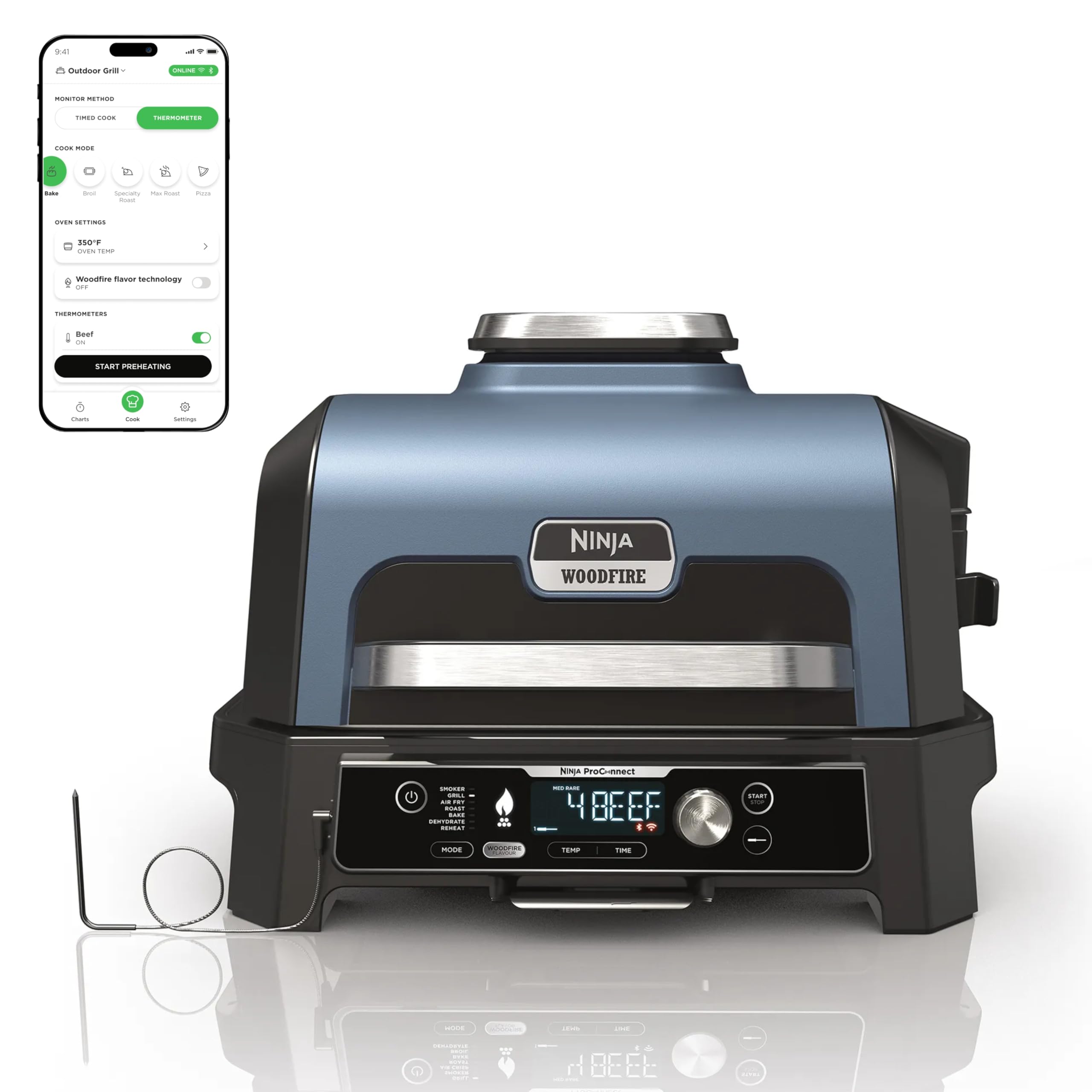
The Ninja Woodfire Pro Connect XL delivers restaurant-quality results across seven cooking modes, using electricity and wood pellets to produce a charcoal-like taste. Its app integration allows precise temperature control and monitoring from your phone, making set-and-forget cooking genuinely straightforward.
In practice, the 180-square-inch grate handles a couple of steaks or a small brisket comfortably, but batch cooking for more than two people requires multiple rounds. Smoke output is lighter than what you’d get from a traditional offset or bullet smoker — expect a gentle wood flavor rather than a heavy bark. The Bluetooth app can drop connection mid-session, which means checking temps directly on the unit may be necessary at times.
This is the right cooker for apartment dwellers, small households, or anyone who wants one appliance that can grill, smoke, air fry, bake, and more. The lighter smoke profile and compact size won’t satisfy those chasing deep competition-style bark or cooking for large gatherings. Set it on a balcony or patio, load the pellet hopper, and let the app handle the rest.
Pros
- Multi-function cooking (grill, smoke, air fry, bake, reheat, dehydrate, broil) from a single unit
- Easy to use and clean with intuitive app, quick heating, and removable parts
- Food comes out consistently well-cooked, with real wood-pellet smoke flavor
Cons
- Small cooking area (180 sq in) limits batch sizes — fits only a few items at once
- Bluetooth connectivity can drop intermittently, requiring direct interaction with the unit
- Smoke flavor is milder than offsets — those after a deep, heavy bark may be disappointed
Best suited for apartment dwellers or small households who want one versatile outdoor cooker that grills, smokes, and air fries — not for those needing a dedicated smoker for large batches or heavy smoke flavor.
Best for Beginner Bullet Smoker
Char-Broil Bullet 16in

The Char-Broil Bullet Charcoal Smoker 16” gives you the core charcoal smoking experience at a cost well below the Weber Smokey Mountain. Its porcelain-coated steel body holds up well against rust, and the classic bullet design maintains 225–250°F with minimal vent adjustments – fine for beginners smoking small batches. Where it falls short is capacity: 388 square inches fits a rack of ribs and a few sausages, not a full brisket and pork shoulder together. The door handle can become loose after a few uses, a minor annoyance that doesn’t affect cooking but points to a lower build refinement compared to the Weber. If you’re a single person or couple who smokes occasionally and wants to avoid the electric smoker price, this is a sensible starting point.
Pros
- Holds 225–250°F with simple vent management.
- Easy to assemble and use – great for first-time smokers.
- Porcelain-coated steel body resists rust and looks good after years.
Cons
- Door handle can become loose after repeated use – a minor hardware issue.
- Small cooking area (388 sq in) suits individuals or couples, not large gatherings.
A sensible entry point for budget-conscious beginners who smoke small loads and accept minor hardware quirks.
Best for Roaster and Grill
Char-Broil Big Easy 3-in-1

The Big Easy delivers on its promise as a fast roaster and grill – whole birds come out evenly browned and juicy, and burgers or steaks cook quickly without hot spots. The TRU-Infrared technology keeps temperatures steady, and cleanup is simple with the removable drip pan. However, the lowest operating temperature hovers around 275°F, which is too high for traditional smoking of brisket or ribs at 225°F. Assembly can be tricky due to vague instructions, and the thin metal body may dent over time.
Pros
- Roasts whole turkeys and chicken evenly with consistent browning and juicy results
- Simple knob controls and fast preheating make it straightforward to operate
- Adds a light smoke flavor when using wood chips, enhancing roasted meats
Cons
- For traditional low-and-slow barbecue, the temperature rarely drops below 275°F, limiting use to faster cooks
- Assembly instructions can be unclear, making setup take longer than expected
Best for someone who wants a fast outdoor roaster with light smoke flavor, not for dedicated brisket or rib smoking at low temperatures.
Best for Budget Propane Smoker
Dyna-Glo DGY784BDP

The Dyna-Glo DGY784BDP delivers good value for a propane smoker with four adjustable racks and easy assembly. Temperature control, however, is hands-on: you’ll adjust vents to manage heat, and the thin metal body can warp if pushed past its limits. A minority of units also have ignition hiccups. This smoker suits budget shoppers who are comfortable monitoring the cooking process and don’t mind occasional tweaks—it’s not a set-and-forget device.
Pros
- Generous 784 sq in cooking area at a budget-friendly price.
- Simple assembly out of the box.
- Solid smoke flavor and even cooking from those who dial in the vents.
Cons
- Thin metal body may warp during extended high-heat use.
- Keeping the temperature steady means frequent vent tweaks; not a hands-off experience.
Best for budget-conscious smokers who enjoy actively managing the fire—not for those seeking convenience.
Best for Premium Pellet Tech
Traeger Ironwood 885

The Ironwood 885’s D2 controller keeps temperatures within a narrow range even during winter, and the Super Smoke mode adds a noticeable boost in wood-fired flavor over standard pellet grills. The double-wall insulation and sturdy build contribute to a premium feel. However, for buyers chasing the deep smoke ring of a charcoal offset, this pellet grill will come up short – the smoke character is lighter, and the WiFi connectivity can be finicky with mesh networks. At a premium price, it’s a capable option for pellet enthusiasts who value precision over intensity, but not the right choice for smoke purists on a budget.
Pros
- D2 controller holds temperature steady in cold weather
- WiFi and app control add convenience; Super Smoke mode boosts flavor
- Double-wall insulation and premium build quality
Cons
- WiFi connection may drop or struggle on mesh network setups
- Smoke flavor intensity is lighter than what offsets deliver – even in Super Smoke mode
For pellet grill fans who want precise temperature control and app convenience without chasing the deepest smoke ring, the Ironwood 885 is a solid pick – just be prepared for the premium price and occasional WiFi quirks.
Best for Entry-Level Electric
Masterbuilt 30in Electric

The Masterbuilt is straightforward to assemble and operate, making it an appealing entry point for those new to electric smoking. When it’s working, it produces consistent results and the four racks offer decent capacity for occasional cooks. Temperature swings of 10–50°F can occur during longer sessions, and some units may require repair or replacement of the control panel or heating element within months. For a small premium, a model with a side chip loader and built-in meat probe provides more predictable set-and-forget performance without these concerns.
Pros
- Easy to assemble and operate – ideal for beginners getting into electric smoking.
- Good value for occasional use – affordable entry into electric smoking.
- Produces consistent results with stable temperatures when working.
Cons
- Temperature fluctuations of 10–50°F can occur during long smokes – manageable for casual cooks but less suited for precise low-and-slow.
- Control panel or heating element issues may arise early in ownership, potentially requiring repair or replacement.
If you’re on a tight budget and comfortable with the possibility of early repairs, this smoker gets you started at the lowest cost. Otherwise, consider spending a bit more for a model with a better long-term track record.
How to Choose
The single most important factor is deciding how much hands-on time you want to invest versus how intense you want the smoke flavor to be.
Fuel Type
Electric and pellet smokers offer push-button convenience but produce lighter smoke because they burn wood at a lower, more controlled temperature. Charcoal and offset smokers generate the heavy, campfire-like smoke that traditional BBQ enthusiasts crave, but they require you to manage airflow and fuel throughout the cook.
Your choice affects more than flavor: electric controllers are the most common failure point, while a simple charcoal bullet smoker has no electronics to break. If you want the closest thing to a guaranteed working smoker after five years, mechanical is the safer bet.
Cooking Area
Cooking area determines how much meat you can fit at once. For a family of four, 700–900 square inches is enough for a brisket or a couple of racks of ribs. Offset smokers often claim huge numbers, but their firebox takes up space and the actual usable area is smaller.
If you entertain regularly, prioritize models with multiple racks and at least 800 sq in. For occasional use, a compact unit under 400 sq in is sufficient and takes up less patio space.
Temperature Control Accuracy
Most smokers advertise a temperature range, but real-world stability varies widely. Electric and pellet models typically drift 15–40°F from the set point due to cheap thermostats or controller calibration. Charcoal smokers rely on vent adjustments—once you learn the settings for your climate, they hold steady within 10°F.
The trade-off is obvious: electric gives you a digital readout that lies, while charcoal gives you a manual dial that you can learn to trust. For long cooks like brisket, a charcoal smoker with a reliable vent system (like the Weber Smokey Mountain) will be more predictable than many budget electrics.
Build Quality
Thin sheet metal (20–22 gauge) is common in budget smokers under $250. It warps under heat, rusts quickly if left uncovered, and leaks smoke through gaps. Look for porcelain-enameled steel or at least 16-gauge steel if you want a smoker that lasts more than a few years.
Avoid anything with exposed welds that are painted over—they will rust first. Double-wall insulation (like on kamados) retains heat better and reduces fuel consumption. A heavy unit is a sign of better material, but also harder to move.
Ease of Cleaning and Maintenance
Grease and ash management is the most underrated practical concern. Electric smokers typically have a water pan and a tray that collects drips, making cleanup straightforward. Pellet grills require vacuuming ash from the fire pot every few uses. Offset smokers have a firebox that needs ash removal after each cook, and the main chamber must be scraped of grease.
Consider how often you’ll truly want to deep-clean. Units with removable ash pans, grease drains, and dishwasher-safe grates save you significant time. If you smoke once a month, the extra cleaning of an offset is manageable; for weekly use, a smoker with a simple ash disposal system is worth the higher price.
FAQ
Why does my electric smoker temperature swing 30–40 degrees even when set to 225?
Most electric smokers use a simple bimetal thermostat that cycles the heating element on and off, causing temperature swings. This is normal for budget models. Adding a heat sink like a water pan or fire bricks can dampen swings by 10–15°F. If the swings are extreme (over 50°F), the controller may be defective.
Can I use a pellet smoker to get a good smoke ring on brisket?
Pellet grills produce a cleaner, less smoky fire than charcoal or offsets, which means a thinner smoke ring. To get a strong ring, you need high humidity and early cold smoke—pellet grills don’t generate enough smoke in the first few hours. For consistent rings, stick with charcoal or propane smokers.
How often do I need to add wood chips or pellets during a long smoke?
In an electric smoker, wood chips usually need refilling every 45–90 minutes depending on the model and temperature. Pellet grills have a hopper that can last 6–20 hours depending on size and cooking temp. For charcoal smokers, you add wood chunks with each new charcoal load, typically every 1–2 hours.
Are cheap offset smokers worth buying if I’m willing to mod them?
Yes, if you enjoy tinkering and have the tools. Many budget offsets (under $200) can produce excellent results after adding high-temperature gasket tape, sealing leaks, and using an extra thermometer. However, the thin metal will still warp and rust faster than a premium offset. Count on replacing it within 2–3 years with regular use.