This post contains affiliate links. We may earn a small commission when you buy through our links — at no extra cost to you.
A sleek microwave with inverter technology and smart sensors sounds like a great upgrade—until it stops working nine months in. Star ratings on countertop microwaves often hide a significant number of early failures, especially among models packed with features.
This guide cuts through that noise to show you which microwaves actually hold up over time and which trade-offs you can live with. Capacity, wattage, and heating technology matter, but longevity is the metric most buyers overlook.
Whether you need a budget-friendly backup or a large-capacity workhorse, the right choice comes down to matching your daily habits with proven durability.


Best for General Home Use
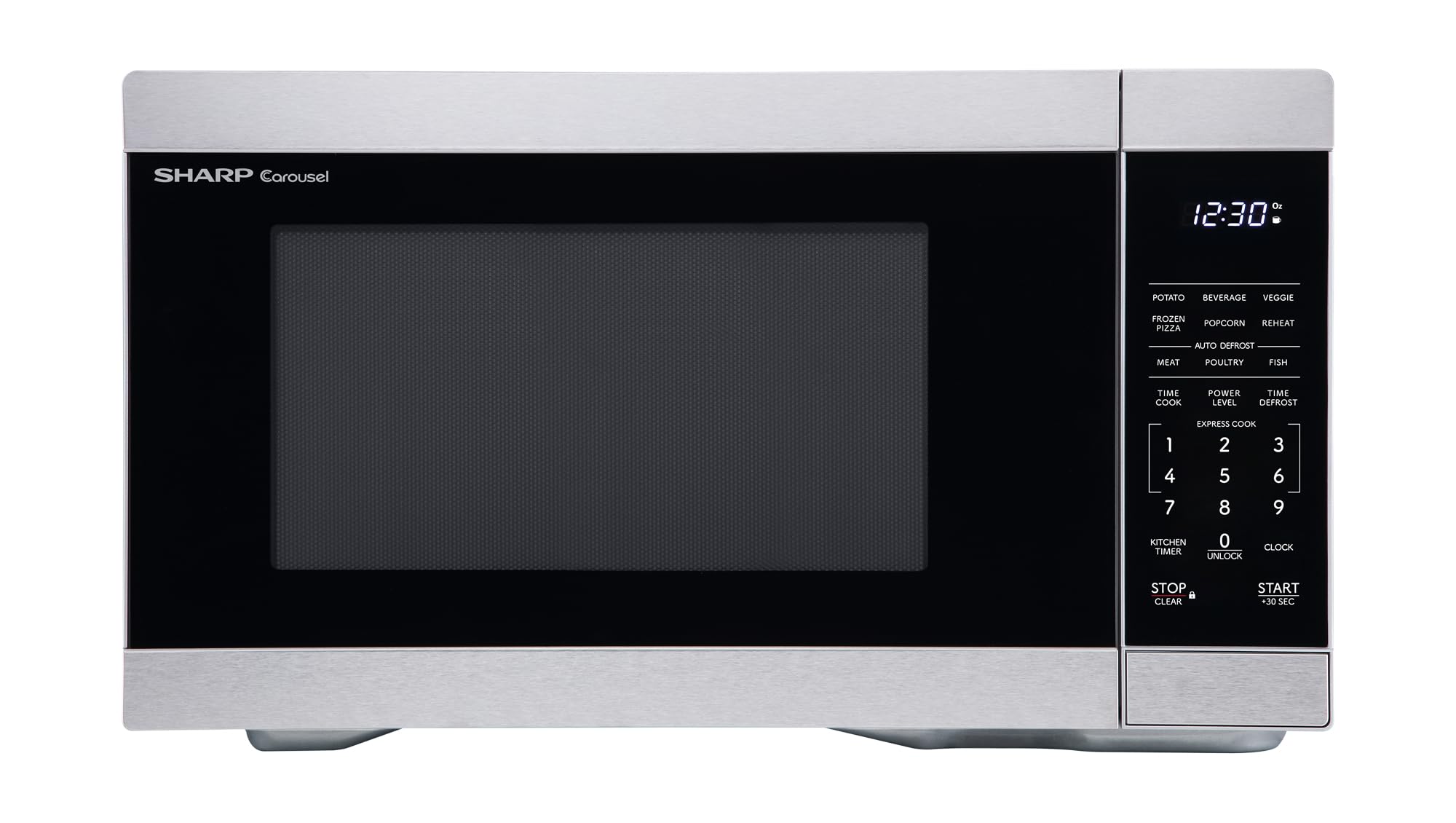
Sharp 1.1 cu ft 1000W
Key Features
- Capacity: 1.1 cu ft
- Wattage: 1000W
- Inverter Type: Traditional
- Sensor Cooking: No
- Price: $$
Sharp’s 1.1 cu ft 1000W microwave stands apart because it delivers the kind of build quality that keeps working year after year without drama. The cabinet feels solid, the door hinges are secure, and the stainless steel finish resists fingerprints better than most. While other models chase smart features or higher wattage, Sharp focused on the basics that actually matter for daily reheating and defrosting.
The carousel turntable (12.4 inches) accommodates a standard dinner plate easily, and the 1000W output handles leftovers, frozen meals, and popcorn without uneven hot spots. Presets for Orville Redenbacher popcorn and auto-cook functions are straightforward — no guessing which button to press. The control panel is about as simple as it gets: a dial and a few tactile buttons, with clear labeling that doesn’t require a manual.
This microwave is best for home buyers who want a reliable, no-surprises appliance that will sit on the counter for years. It lacks inverter technology, so delicate defrosting of items like fish or cream-based sauces requires a bit more attention — standard weight/time defrost works fine for most frozen foods. Anyone who regularly defrosts large cuts of meat or bakes inside the microwave should look at inverter models, but for everyday reheating and basic defrosting, the tradeoff is minimal.
The two areas where some users find compromises are noise and the child lock. In a very quiet kitchen, the fan and magnetron hum is audible — about what you’d expect from a 1000W unit in this price tier, not disruptive but present. The child lock requires holding the Stop button for three seconds to deactivate; once you learn the sequence it becomes second nature, but first-time use can feel slightly unintuitive.
Pros
- Sturdy construction and materials that feel built to last
- Compact enough for tight counters yet still holds a dinner plate
- Simple interface with physical buttons and a dial — no menu diving
- Stainless steel exterior resists smudges and looks clean on any counter
Cons
- Fan and cooking noise may be noticeable in silent kitchens
- Child lock deactivation sequence (hold Stop for 3 seconds) can be mildly inconvenient until memorized
If you want a countertop microwave that quietly does its job without reliability headaches, this Sharp is the one to buy. The lack of inverter and moderate noise are fair tradeoffs for the build quality and simplicity that most households will appreciate.
Best for Large Families
Toshiba ML-EM62P 2.2 cu ft
Key Features
- Capacity: 2.2 cu ft
- Wattage: 1200W
- Inverter Type: Inverter
- Sensor Cooking: Yes
- Price: $$$
The Toshiba ML-EM62P stands out for its 2.2 cu ft capacity, the largest among countertop models reviewed. The 1200W power and built-in humidity sensor handle everything from reheating leftovers to defrosting whole chickens with minimal input.
The spacious interior easily accommodates a 16-inch pizza dish or a large casserole, making it practical for batch cooking. The control panel is logically laid out with dedicated buttons for auto menus and defrost. One trade-off: the unit can generate a noticeable vibrating rattle during operation, particularly on lighter surfaces.
This microwave is best suited for large households or anyone who regularly entertains and needs maximum interior space. However, some reports indicate the unit may stop heating after several months of daily use. For this reason, we recommend factoring in the cost of an extended warranty to cover potential early failures.
Pros
- Spacious interior fits a 16-inch pizza and whole chicken comfortably.
- 1200W heating power delivers quick, even results.
- Humidity sensor adjusts cook time automatically for consistent outcomes.
- Easy-to-use control panel with clear, labeled buttons.
Cons
- In quiet kitchens, the microwave may produce a vibrating rattle during operation.
- With a 24.4-inch width, this microwave demands a large countertop area — verify fit before buying.
For large families that need maximum interior space and are willing to invest in extended coverage, the Toshiba delivers capacity no other model matches.
Best for Budget Buyers
Black+Decker Digital 0.9 cu ft
Key Features
- Capacity: 0.9 cu ft
- Wattage: 900W
- Inverter Type: Traditional
- Sensor Cooking: No
- Price: $$
At under $110, this Black+Decker microwave delivers the essentials without the markup of premium models. The 900-watt output handles reheating leftovers and defrosting small portions with a simple push-button interface and a clear digital display. Its stainless steel finish blends into most kitchens, and the child lock adds a layer of safety for shared spaces.
Where this unit separates itself from more durable alternatives is the tradeoff in longevity. Some units may stop working after a few months of use, and the door hinge or handle can loosen over time. For someone heating a lunch or warming a cup of coffee a few times a week — exactly the intended use — this risk is manageable. In a busy family kitchen running multiple cycles daily, the odds of an early issue go up considerably.
The operation is straightforward but not subtle: the fan and turntable motor produce a noticeable hum that stands out in a quiet dorm room or open-plan office. In a typical household kitchen with other appliances running, the noise fades into the background. The 10.6-inch turntable fits a standard dinner plate, and the 0.9 cu ft cavity is large enough for a frozen entrée or a small casserole dish.
Pros
- Simple one-touch controls and clear display make everyday heating effortless.
- Budget-friendly price for a name-brand microwave with essential features.
- Stainless steel exterior keeps the counter looking clean and modern.
Cons
- Loud enough during cooking to be noticeable in quiet rooms — fine in a typical kitchen.
- Some units may stop working or develop door issues after several months of use.
An affordable microwave that gets the job done for light, occasional use — if your daily routine involves more than reheating a single portion, consider a model with a stronger durability record.
Best for Even Heating
Panasonic NN-SN686S 1.2 cu ft
Key Features
- Capacity: 1.2 cu ft
- Wattage: 1200W
- Inverter Type: Inverter
- Sensor Cooking: Yes
- Price: $$$
Panasonic’s inverter technology sets this microwave apart from standard models by delivering exceptionally even heating and defrosting — a noticeable improvement over the value inverter option in the category. The 1200W output heats food quickly, and the Genius Sensor takes the guesswork out of reheating. Its stainless steel finish blends well with modern kitchens.
This premium-priced microwave is best for cooks who place a high priority on heating consistency and defrost quality. Noise may be noticeable in quiet kitchen environments, and some units have required service within the first year. Those who need whisper-quiet operation or expect a decade-long lifespan will want to consider the top pick instead.
Pros
- Exceptional heating performance – even and fast
- Easy to use with intuitive menu
- Sleek stainless steel design
Cons
- Humming and beeping are audible during operation
- Some units may experience issues within the first year
For cooks who value even heating above all else, the Panasonic is a strong choice — just be prepared for noise and a possible early replacement.
Best for Multi-Function
GE 4-in-1 1.0 cu ft
Key Features
- Capacity: 1.0 cu ft
- Wattage: 1050W
- Inverter Type: Traditional
- Sensor Cooking: No
- Price: $$$
The GE 4-in-1 combines air frying, convection baking, and broiling in a single microwave-sized unit, freeing up counter space for those who’d otherwise use separate appliances. Its 1050-watt output handles standard reheating and defrosting without issue, while the crisper pan and convection fan bring browning and even cooking to the table. Build quality feels solid for a multi-purpose machine, and operation is quieter than many comparable models.
This unit suits dorm residents and small‑apartment dwellers who want one appliance to cover heating, baking, and crisping without dedicating room to an air fryer or toaster oven. That said, some units may develop mechanical issues early in their life—turntable motors, door latches, or electronic controls can be points of concern. An extended warranty is a sensible investment, and buyers should accept that long-term reliability is less certain than with a standard microwave of similar build quality.
Pros
- Combines air fry, convection, and broil in one footprint — reduces countertop clutter.
- Noticeably quieter operation than many countertop microwaves.
- Solid construction gives a premium feel for a multi-purpose unit.
Cons
- Child lock activates automatically and can be inconvenient during short cooking tasks.
- Turntable motor and door latch may wear out faster than expected with regular use.
- Some units experience mechanical issues early on — extended warranty provides a safety net.
Great for those who need an all-in-one cooking appliance and are willing to budget for an extended warranty to cover potential early mechanical concerns.
Best for Value Inverter
Toshiba ML-EM45PIT 1.6 cu ft
Key Features
- Capacity: 1.6 cu ft
- Wattage: 1250W
- Inverter Type: Inverter
- Sensor Cooking: Yes
- Price: $$
Inverter technology and a smart sensor at a mid-range price make this Toshiba the most accessible way to get consistent heating and precise defrosting without stepping up to premium-priced competitors. The 1250W output and 1.6 cu ft interior handle large casserole dishes and frozen meals efficiently.
This microwave suits shoppers who want inverter’s even warming and are comfortable with the possibility that a small number of units may need service within the first year — an extended warranty is a practical addition. The audible operation fits busy kitchens better than quiet open-concept spaces.
The smart sensor reduces guesswork by automatically adjusting cook times for common reheating tasks, and the black stainless finish resists smudges while blending with modern appliances.
Pros
- Inverter technology delivers even heating and gentle defrosting without hot spots.
- Smart sensor adjusts cooking time automatically for consistent results.
- Black stainless finish resists fingerprints and looks premium on any countertop.
Cons
- In quiet rooms, the fan and inverter hum are more noticeable than on some alternatives.
A practical entry point to inverter cooking for those who value even heating over whisper-quiet operation.
Best for Compact Spaces
Sharp 0.9 cu ft 900W
Key Features
- Capacity: 0.9 cu ft
- Wattage: 900W
- Inverter Type: Traditional
- Sensor Cooking: No
- Price: $$
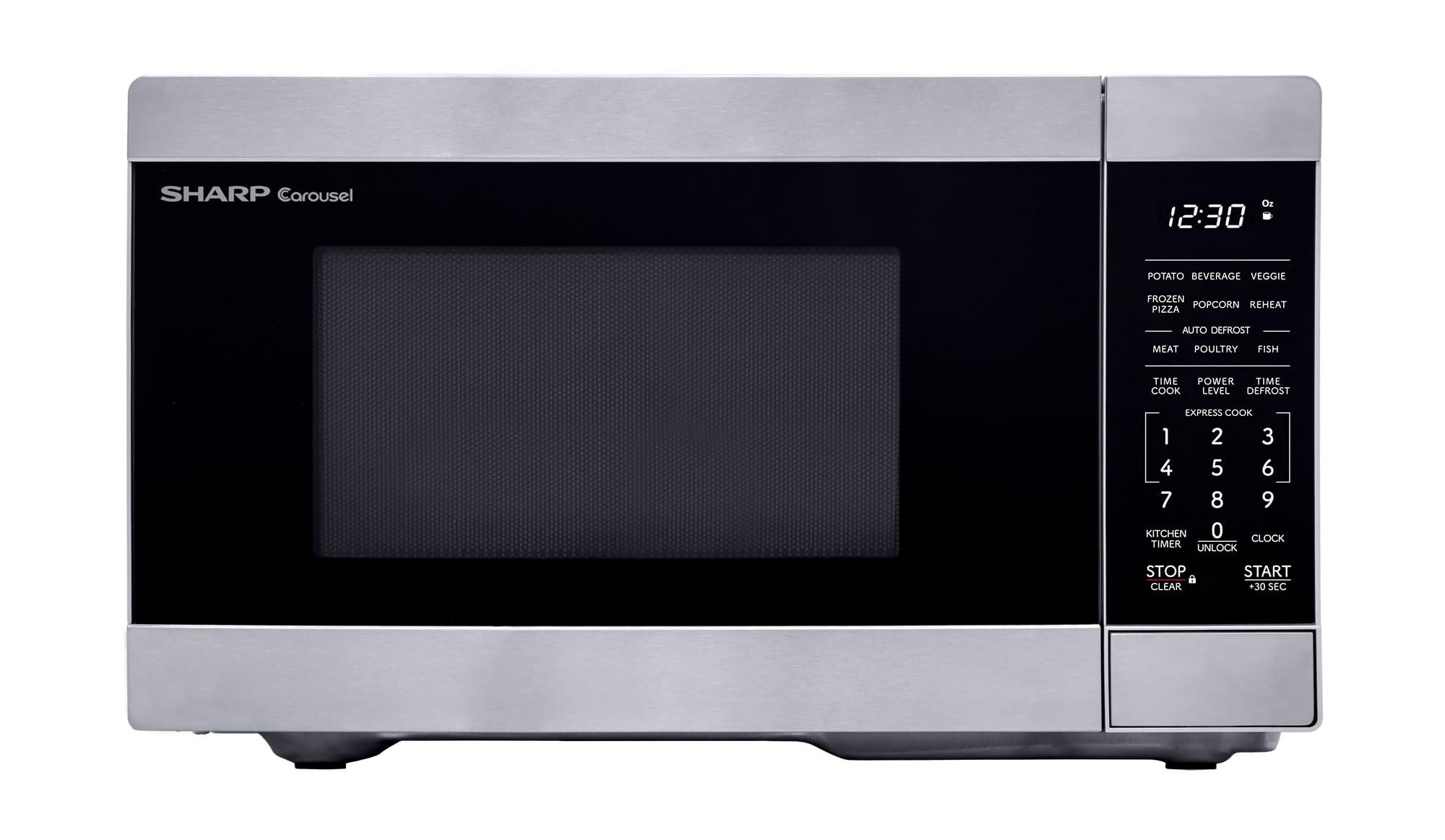
This microwave delivers even heating and a compact footprint that fits easily in a dorm, RV, or small kitchen. The 900-watt output means larger portions will need a bit more time compared to higher-wattage models, but for reheating single servings and defrosting small items, it handles the job without complaint. The operation noise may be noticeable in a quiet room – less of an issue in an active kitchen. Sharp’s build quality carries over here, with few durability concerns reported. However, the 0.9 cu ft capacity limits it to small plates and bowls, making it unsuitable for family-sized casseroles or multiple dishes at once. If you need a secondary microwave or your space is truly limited, this is a practical choice.
Pros
- Compact footprint fits on tight countertops – ideal for dorms, RVs, or as a secondary unit.
- Even heating and solid construction at a mid-range price.
- Good value – offers solid performance without overspending.
Cons
- In a quiet kitchen or bedroom, the humming noise may be present.
- Heating larger portions takes longer than higher-wattage microwaves.
A smart pick for anyone who prioritizes small footprint and reliability over speed and capacity – works best for singles, couples, or as a backup.
Breville Compact Wave 0.9 Cu Ft
Breville Compact Wave 0.9 cu ft

The Breville Compact Wave delivers genuinely quiet operation thanks to its soft-close door and low-noise magnetron – a rare combination in this category. The polished stainless steel build and intuitive control dial add a premium feel that most countertop microwaves lack. However, unit-to-unit consistency is inconsistent: some examples stop working within days or months of purchase, and the soft-close mechanism can develop alignment issues over time. This microwave fits best when silence and design matter more than long-term certainty.
Pros
- Very quiet operation with a soft-close door
- Intuitive control dial makes setting time and power easy
Cons
- Some units may stop working prematurely, within days or months of purchase
- Soft-close door mechanism can develop alignment problems over time
Best suited for those who prioritize whisper-quiet operation in a small kitchen and are willing to accept potential early-life issues.
Best for Smart Features
GE Profile 1.1 cu ft Wi-Fi
Key Features
- Capacity: 1.1 cu ft
- Wattage: 800W
- Inverter Type: Traditional
- Sensor Cooking: Yes
- Price: $$$$
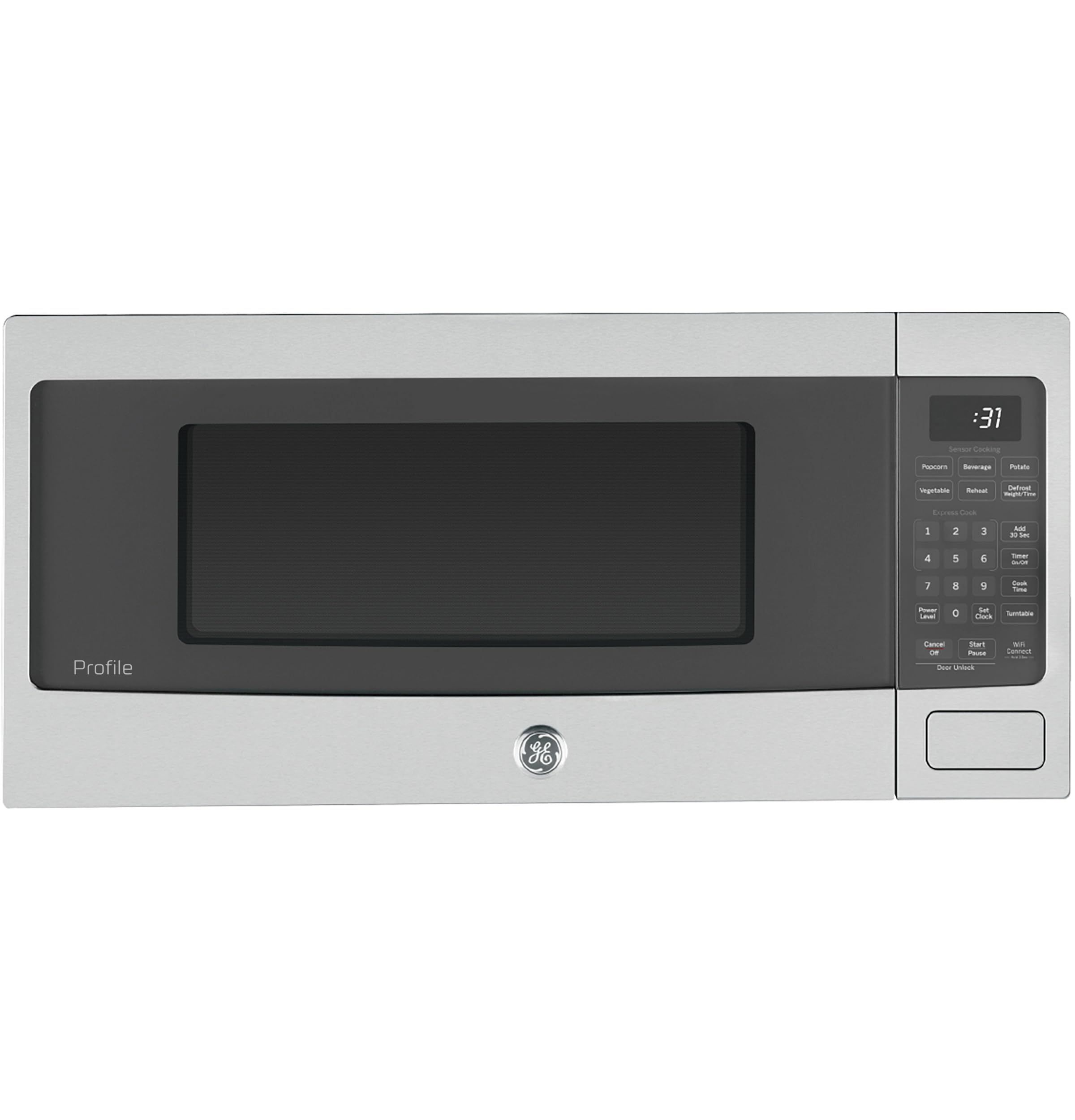
The GE Profile brings scan-to-cook convenience and Wi-Fi app control to the countertop, letting you adjust settings or start a cycle from your phone. Those features are genuinely innovative, but the 800W output means meals take longer than with standard 1000W+ models – reheating a large casserole will test your patience. The premium price and a child lock that can be finicky to disable further narrow the appeal. This is a niche pick for early adopters who prioritize smart-home integration over raw speed or budget value.
Pros
- Scan-to-cook reads barcodes to automatically set optimal cook times.
- Wi-Fi enables remote start, notifications, and voice control via app.
- Quieter operation than previous GE models, according to repeat buyers.
Cons
- For large casseroles or dense leftovers, 800W output means noticeably longer heating times.
- In households with young children, the child lock may require some practice to disable.
Best for tech enthusiasts who want app-controlled convenience and are willing to accept slower cooking and a premium price.
How to Choose
The most important factor in choosing a countertop microwave is not the star rating but the real-world reliability track record.
Capacity
Capacity determines how large a dish you can fit. A 0.7 cu ft model handles a dinner plate, while 2.2 cu ft fits a 16-inch pizza or a whole chicken.
Smaller units are easier to place under cabinets, but larger ones require more counter space. Match capacity to your typical cooking load.
Wattage
Wattage directly affects heating speed. A 700W microwave takes about 25% longer to heat food than a 1200W model. For most households, 900–1000W is sufficient.
Higher wattage also tends to heat more evenly, but it can be harder to find defrost settings that don’t start cooking edges. Inverter technology helps here.
Inverter vs. Traditional
Inverter microwaves use variable power levels instead of cycling the magnetron on and off. This results in more consistent heating, especially for defrosting and delicate foods like chocolate.
Traditional microwaves are cheaper but can produce hot spots. The trade-off is that inverter models often cost $50–100 more and may not always offer better reliability.
Sensor Cooking
Sensor cooking uses a humidity sensor to automatically adjust cook time and power. It’s convenient for reheating leftovers or frozen meals without guessing.
The downside is that sensors can be inconsistent, sometimes undercooking or overcooking. Manual settings remain the most reliable method for precise results.
Reliability Track Record
Durability complaints are the single most common reason for buyer regret. Many models that look great on day one develop issues within the first year.
Focus on models with a low proportion of negative durability mentions in reviews—often a better indicator than overall star rating. Extended warranties can offset risk for larger purchases.
FAQ
Why does my countertop microwave stop working after a year?
Most failures result from a faulty magnetron, door switch, or control board. These components fail due to poor build quality, voltage spikes, or accumulated wear. Look for models with a robust reliability track record and consider an extended warranty for higher-priced units.
How do I disable the child lock on a Black+Decker microwave?
On most Black+Decker models, press and hold the ‘Stop/Cancel’ button for 3 seconds until the lock icon disappears. Some newer models require pressing ‘Child Lock’ then holding ‘Stop’ – check the manual. The process is simple once you know the sequence.
Is inverter microwave technology worth the extra cost?
Yes if you frequently defrost meat or heat delicate foods like sauces and chocolate. Inverter technology provides even, low-power heating without hot spots. For basic reheating and popcorn, traditional microwaves work just as well and cost less.
Which countertop microwaves are the quietest?
The quietest options are typically those with soft-close doors and low-noise operation, such as the Breville Compact Wave. Sharp models also tend to be quieter than average. Avoid budget units that are often loud due to cheaper fan motors and transformers.