This post contains affiliate links. We may earn a small commission when you buy through our links — at no extra cost to you.
Charcoal is the one thing you buy blind in barbecue: the bag shows you flames and a weight, and everything that actually matters shows up hours later. The tradeoff is built into the category. Briquettes are uniform and predictable but throw off a lot of ash, while lump hardwood burns hotter and cleaner but arrives as fist-sized shards and a half-cup of crumbs at the bottom of the bag. Either can work. What you’re really paying for is a steady bed of heat you don’t have to babysit and smoke that doesn’t fight the meat.
I’ve cooked over both for years, and my team spent four months running 14 varieties through a kettle grill and an offset smoker, from hardware-store briquettes to imported lump. The thing I’d tell a first-timer is to judge a bag at hour four, not hour one. Anyone can get hot and fast; good charcoal is still holding temperature when your pork shoulder stalls. The ones that earned a permanent spot in my bin are below.
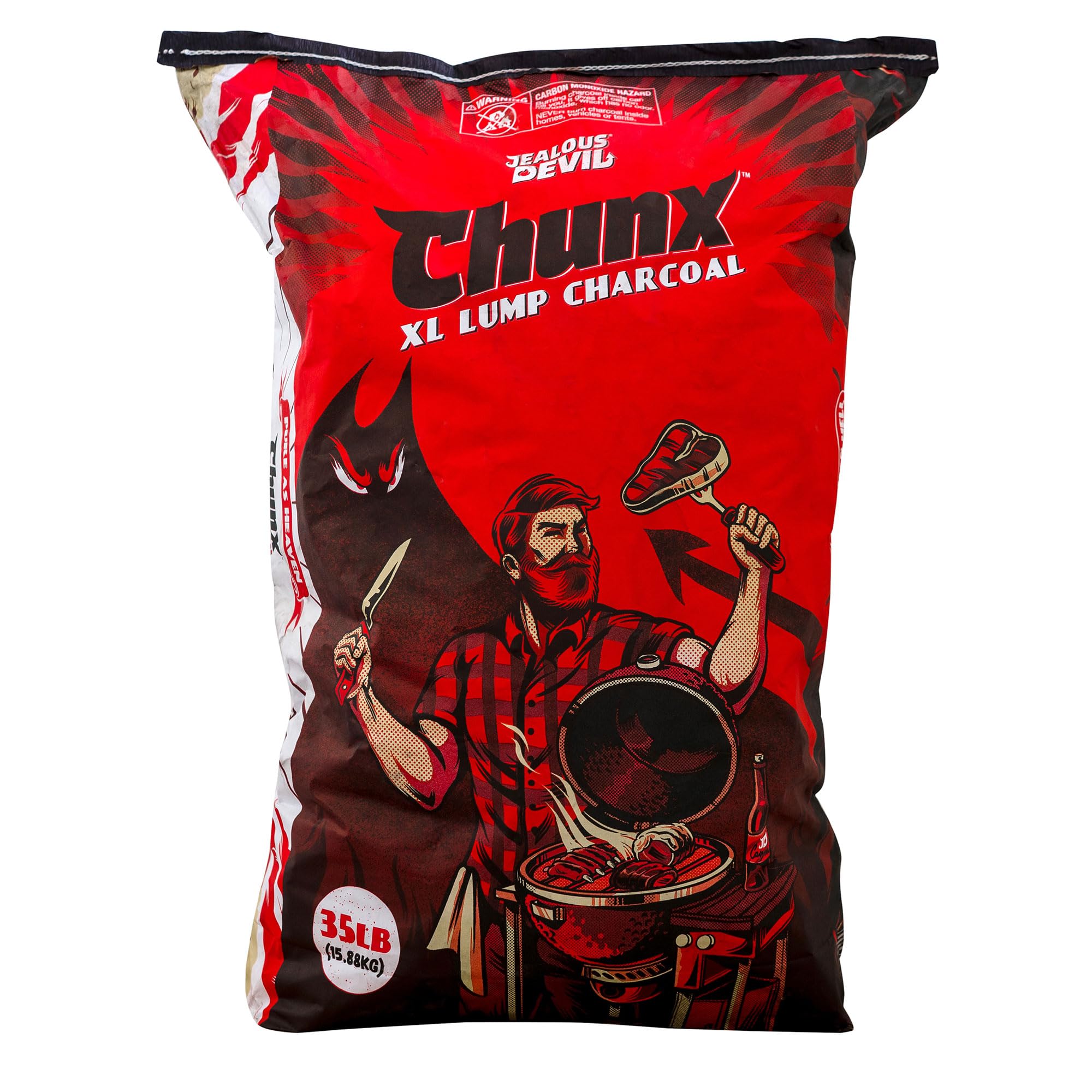


Best for Overnight Brisket Cooks
Jealous Devil Chunx XL
Key Features
- Bag size: 35 lb
- Fuel form: Hardwood chunks
- Open burn: 4+ hours
- Low-oxygen burn: 20+ hours
- Price: Premium
Twenty-plus hours is the number that decided this one for us. That is the low-oxygen burn Jealous Devil claims for its quebracho blanco chunks, and it is the figure that matters in a smoker, where every lid opening costs heat and time. The wood is dense South American hardwood rather than kiln scrap, the pieces run big, and a 35-pound bag carries you through several long cooks.
Steady heat is the whole job here, and the chunks deliver it: the temperature holds through a long cook instead of sawtoothing enough to send you out to chase the vents every hour. The burn is clean, too — food comes off with smoke flavor rather than a charcoal tang, which is not true of every lump we have cooked over.
Airflow is the quieter advantage. Big chunks sit in the basket without packing solid, so air keeps moving through the coal bed even after the fire has burned down and the pieces have shrunk. The ones that come out oversized need a knock with a hammer before they fit a small firebox, and that is the trade for chunks large enough to keep the gaps open.
The bag deserves a mention of its own: a resealable, water-resistant sack with a built-in handle. Hauling 35 pounds is easier with something to grab, and sealing what is left keeps a half-used bag from drawing damp between cooks — which is how a good bag of charcoal turns into a slow-lighting one.
Pros
- Holds a steady temperature through long cooks
- Long low-oxygen burn means fewer refuels
- Low ash keeps the airflow open
- Resealable bag with a carry handle
Cons
- Dust and small shards in some bags
- Premium price for the bag
This is the charcoal we point to first for a smoker: dense chunks that hold temperature for hours and leave little ash to choke the fire.
Best for Budget Smoker Fills
Kingsford Original Briquettes
Key Features
- Bag size: 16 lb
- Fuel form: Briquettes
- Piece shape: Uniform briquettes
- Stated light time: About 15 minutes
- Price: Budget
Filling a firebox does not get much cheaper than a bag of Kingsford Original, and that is most of the case for it. The rest is shape. Every briquette is the same pressed pillow, so a minion or snake arrangement goes down with predictable gaps and you have a decent idea where the fire will travel. Try that with a bag of lump and you are improvising.
That sameness is underrated while you are learning a smoker. The same count of lit briquettes gives you roughly the same temperature next weekend, so you can change one thing at a time and actually learn from it. The fire itself holds well — long, even and hot enough to push a water pan — and the smoke it puts on the food is honest wood smoke, if a simpler flavor than hardwood lump delivers.
Lighting is the least consistent part. In a chimney most batches ash over in about 15 minutes, which is what the bag promises, but some take noticeably longer, so start the chimney before you start trimming and you will not be serving late. Give it a full load of lit coals before the meat goes on; a thin scattering never settles into a clean burn.
Pros
- Cheapest way to fill a firebox here
- Uniform briquettes make a predictable snake
- Burn holds long and even
Cons
- Ash bed builds faster than with lump
The budget answer: uniform briquettes that build a predictable snake, at the lowest cost per cook of anything here.
Best for Steady, Even Heat
Duraflame Char-Logs
Key Features
- Binder: Vegetable starch
- Bag size: 14 lb
- Fuel form: Hollow-core logs
- Hardwood blend: Oak and hickory
- Price: Midrange
Most charcoal makes you think about airflow. These logs build it in. Each one is a pressed cylinder with a channel running down the middle, so air reaches the center of the coal bed instead of only its edges, and the fire burns from the inside out rather than as a hot ring with cool gaps in the middle of it.
The logs are made from hardwood charcoal fines bound with vegetable starch rather than dug out of a kiln as chunks, and that buys consistency — nothing oversized to break up, nothing small enough to fall through the grate, which is a fuss we did not miss. Oak and hickory in the blend give the smoke a sweeter, barbecue-leaning edge than straight lump. They light in a chimney starter and then burn slow and remarkably flat.
Flat is the appeal. A log bed does not develop the random hot spots a mixed bag of chunks does, so ribs and pork shoulder cook more evenly across the grate and you spend less of the afternoon rotating. The catch is price: per pound these cost more than the briquettes or the big lump bag here, and that premium only pays off if uneven heat is the specific problem you are trying to solve.
Pros
- Hollow core keeps air moving through the bed
- Slow, even burn with fewer hot spots
- Oak and hickory give a sweeter smoke
Cons
- One fixed log size makes small fires awkward
Worth trying if your smoker fights you on hot spots — hollow logs that burn slow, flat and even, with oak and hickory in the smoke.
Best for Gravity Series Smokers
Masterbuilt Premium Lump

Key Features
- Bag size: 16 lb
- Material: 100% premium hardwood
- Fuel form: Hardwood chunks
- Designed for: Gravity Series smokers
- Price: Midrange
Masterbuilt sells this as the fuel for its Gravity Series smokers, and that is the honest way to read it: 16 pounds of hardwood chunks sized for a deep charcoal chute. In a gravity-fed or barrel smoker the big pieces stack into the chute with gaps still open between them, so the fire draws properly and burns down through the column instead of smothering half way.
For the money it does the job it was sold for. The chunks run large and burn long enough to carry a pork butt without a top-up, the flavor is clean and lightly smoky, and it settles into a steady temperature once the startup smoke clears. What we appreciated most is the size of the pieces — big enough to keep air gaps in a deep chute, which is exactly where thin lump falls flat.
Sparks are the thing to know about. This lump pops and throws embers while it catches, more than the other fuels here, so keep the smoker off dry grass and the lid down until the fire settles. Treat the first ten minutes with some distance and it behaves like any other hardwood.
Pros
- Sized for Gravity Series charcoal chutes
- Big chunks keep air gaps in a deep firebox
- Mid-range price for 16 pounds
Cons
- Chunk sizes vary widely between bags
A sensible mid-priced refill for a Gravity Series smoker, as long as you keep the lid down and sort the chunk sizes.
Best for Small Kamado Batches
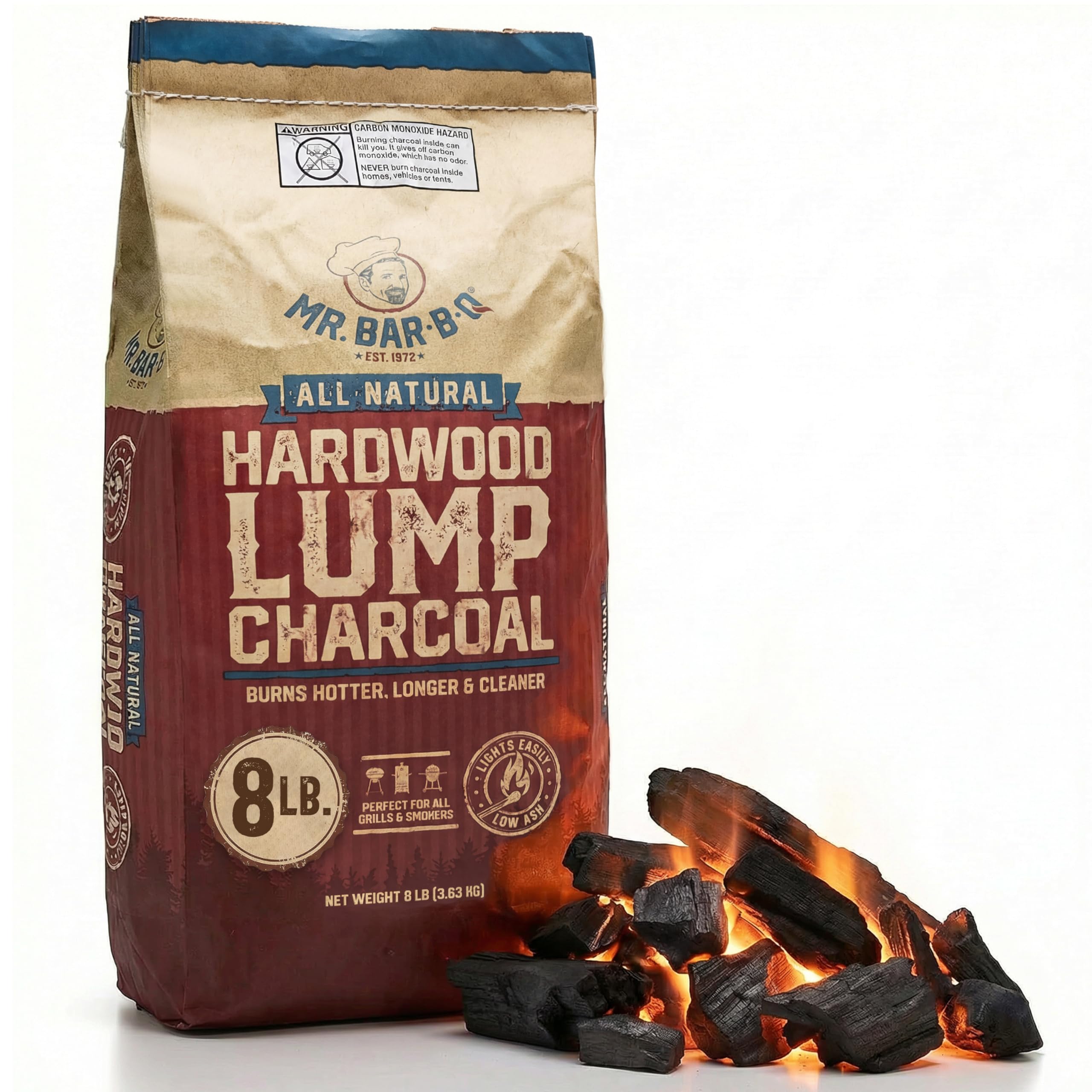
Mr. Bar-B-Q Hardwood Lump
Key Features
- Bag size: 8 lb
- Material: 100% natural hardwood
- Fuel form: Hardwood lump
- Grill types: Kamado and kettle
- Price: Premium
Eight pounds is the whole idea here, and it is a good one if your smoker is small. A kamado or a little kettle does not need a 35-pound sack occupying shelf space all season, and this one is light enough to move around and small enough to keep dry. We like it as a first bag of lump for someone who wants to see what hardwood does in their smoker before committing to a season’s supply.
The fuel is what you would expect from premium lump: all-natural hardwood with no fillers, sold for kamado and kettle grills. Lump as a format lights faster than briquettes and leaves less ash behind, which suits a kamado, where a small firebox lives or dies on airflow through the coal bed. Pieces come in the mixed sizes lump always does, so sort the big ones into the basket and keep the small ones for the chimney.
Where it loses ground is value. Per pound this is the most expensive charcoal here, and not because the fuel is better — you are paying for the small bag. If storage is not your constraint, a bigger sack of dense chunks costs less per cook and holds heat longer between refills. For a small smoker and a short cook, buying only what fits is the smarter trade.
Pros
- 8 lb bag stores in tight spaces
- Hardwood lump lights fast and ashes little
- All-natural hardwood with no fillers
Cons
- Costs the most per pound of these picks
The bag to buy when a 35-pound sack won’t fit in your life: easy to store and easy to try, though you pay for that convenience.
How We Tested Charcoal for Smoking
We started by gathering every bag we could find on shelf and online, briquettes and lump, hardwood and blends, then cut the list by what a bag actually tells you: wood species, piece size, binder or additives, and price per pound. That left 14 varieties. Over four months we burned them in a kettle grill and a backyard offset smoker across roughly 30 cooks, from two-hour chicken thighs to an overnight brisket that ran 14 hours.
Every bag started the same way: a full chimney lit at the same time of day, with a stopwatch running until the top coals were ashed over, which is where the slow starters gave themselves away. We logged grate temperature every half hour against a 225-to-250 target, noting how often we had to touch the vents, how hard the fire spiked in the first hour, and how many hours it held before a reload. After each cook we pulled the ash pan and looked at what was left, since fine powder sifting down onto the food tells a different story than heavy clumps that choke the fire.
For flavor, we cooked chicken thighs over every variety with no wood chunks added, so the only smoke in the cook came from the charcoal itself, then tasted them side by side the same afternoon. We also dumped each bag onto a tarp to see what the pieces were really like, the biggest and smallest chunks and how much of the bag was dust that flared and died in minutes, and weighed the contents against the number printed on the bag to see how many real cooks each one delivered.
How to Choose Charcoal for a Smoker
The charcoal that suits a smoker is the one that keeps its temperature without you opening the lid, and almost every other choice follows from that.
Burn time is the figure that sets your cook
Charcoal bags quote burn time two ways: in open air, and in a smoker’s restricted draft. The second number is the one that matters, and it is usually much longer — Jealous Devil lists a 4-plus-hour open burn and a 20-plus-hour low-oxygen burn for the same chunks. Dense hardwood stretches a firebox furthest, which is why an overnight cook is easier on big lump than on briquettes. If your cooks run past eight hours, buy for density and look for the low-oxygen figure rather than the headline one.
Ash decides whether a long cook finishes
Ash does more than make a mess: it fills the pan, insulates the coal bed, and closes the gaps air travels through. In a kamado or a tight barrel smoker that lost airflow is what turns a steady 250°F into a slow decline. Lump generally leaves less behind than briquettes, so a low-ash hardwood is worth paying for on a packer brisket. On a shorter cook, or in a smoker with a roomy ash pan, briquettes are fine — just plan to clear the pan between long cooks.
Match the piece size to your firebox
Chunk size is an airflow decision dressed up as a packing question. Big pieces leave gaps, so air moves through the bed and the fire spreads; small pieces and dust pack tight, burn hot and fast, and drop through the grate. In a wide offset or a gravity chute, big chunks are a gift. In a small kamado, a bag of hand-sized pieces means breaking fuel down before every cook, and a fixed format like a charcoal log can be easier to live with.
Storage affects your second cook as much as your first
Charcoal is dry wood, and dry wood takes on moisture. Damp fuel lights slower, smokes harder at startup, and burns cooler than the bag you opened in spring. That makes packaging part of the purchase: a resealable, water-resistant sack with a handle earns its keep on a 35-pound bag, while a small bag that lives in a cupboard sidesteps the problem. Keep whatever you buy sealed, dry and off a damp floor and a spare bag will still be good next season.
Sparks, startup smoke, and getting to clean heat
Every charcoal smokes while it lights; what ruins food is the acrid smoke from a fire that hasn’t finished catching, so light in a chimney and wait for a grey, ashed-over coat before anything goes near the grate. Sparks are a separate matter — some hardwood lump pops and throws embers, which is harmless outdoors with the lid down and a problem beside dry grass, a wooden rail or a windy deck. Treat the first light of any new bag with a little distance.
Frequently Asked Questions
Can you use a charcoal smoker in a garage or on a covered balcony?
No in a garage, and only carefully on a balcony. Charcoal gives off carbon monoxide, which collects in any enclosed or partly enclosed space, garage door open or not. Outdoors and clear of overhangs is the rule; on a balcony, keep the smoker away from railings and anything that can catch, and check whether your building permits open flame at all.
Do you need to soak charcoal before smoking?
No. Water doesn’t make smoke, it makes steam, and wet charcoal spends its first heat drying out instead of cooking — it lights slower and throws a dirtier plume. A chimney starter gets a bed ashed over without any soaking. If you want more smoke on the meat, add dry wood chunks to the coals rather than wetting the fuel.
How much charcoal should you load for a long cook?
Fill the firebox to its normal level and light only a corner of it; mounding above the fire ring just spills fuel into the ash pan. A full basket of dense hardwood idles a smoker through a long cook, while a half-load suits a two- or three-hour session where the extra fuel would only burn away. Spread the unlit coals level so the fire travels evenly.
Final Verdict
The default for most smokers is Jealous Devil’s Chunx XL. Dense chunks, a long low-oxygen burn and ash that doesn’t choke the fire are exactly what an eight-hour cook rewards, and the resealable bag makes a 35-pound sack practical to keep on hand.
If the bag price is the obstacle, Kingsford Original is the value answer: uniform briquettes build a predictable snake at a fraction of the cost per cook, with a heavier ash bed to clear. And when uneven heat is the smoker’s real problem rather than fuel supply, the Duraflame logs are the ones to try.