This post contains affiliate links. We may earn a small commission when you buy through our links — at no extra cost to you.
The right food processor turns onions into dinner in seconds, works pie dough without warm hands, and shreds cheese before the pasta water boils. The wrong one stalls on chickpeas, leaks at the base, or hides a blade assembly that is miserable to scrub. I have had both kinds on my counter, and the difference is rarely one headline number. It is whether the machine feels steady under a full bowl and whether cleanup makes you reach for it again tomorrow.
Over six months, my team and I put a dozen food processors through that evening rush and quieter weekend projects—hummus, slaw, nut butter, pie dough—and the keepers shared traits. Power matters, but so does a motor that doesn’t bog down. Blade design and bowl shape affect chopping more than wattage alone, and a sturdy base beats a drawer of attachments. We weighed value by how often we reached for each machine, not sticker price, and noted which blades stayed sharp through nuts and hard cheese. The picks below are the ones we’d keep plugged in.


Best for Most Home Kitchens
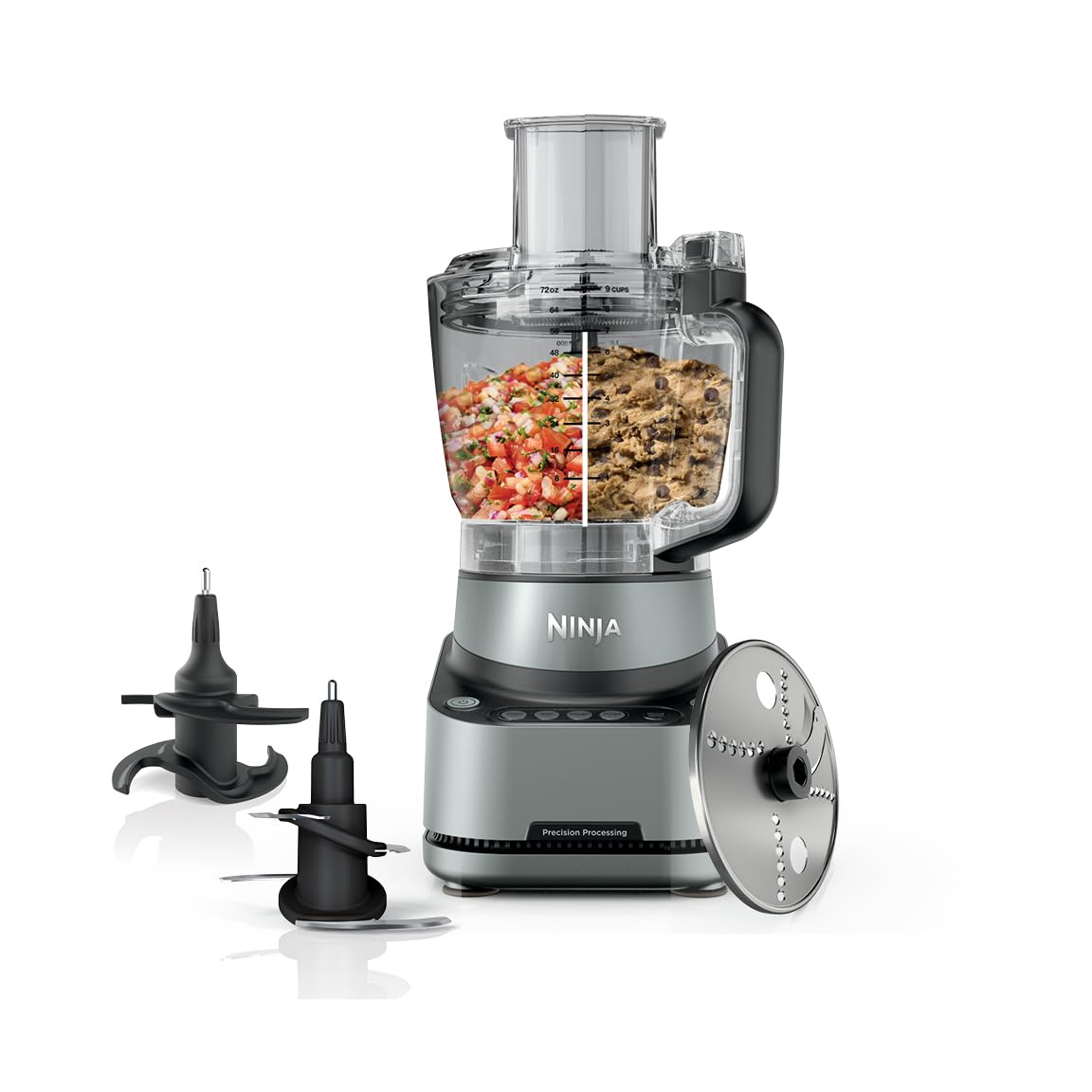
Ninja PrecisionPro BZ601
Key Features
- Motor: 1000 peak watts
- Controls: 3 speeds, 4 Auto-iQ presets
- Bowl capacity: 9 cups
- Blades and discs: Chopping blade, dough blade, reversible slicing/shredding disc
- Price: Midrange
Nine cups is the number that won us over. The PrecisionPro is big enough for a double batch of salsa or a round of pie dough and small enough to leave out on the counter, and it does that at a midrange price. The four Auto-iQ programs do the counting for you — press chop and the machine runs and stops on its own — which is exactly the hand-holding a first food processor should offer.
Everything you need to actually cook is in the box: a chopping blade, a dough blade and a reversible disc that slices on one side and shreds on the other. We used the dough blade more than we expected; pizza and pie dough come together without hauling out the stand mixer. Three speeds sit alongside the presets, so you can still take manual control when a recipe wants short pulses.
Cleaning is a three-piece job, and the bowl, lid and blades all come apart for the dishwasher. The lid is the part to baby: that plastic assembly is where these machines fail first, so hand-wash it despite the dishwasher-safe label and store the blades in the bowl instead of loose in a drawer.
Where it falls short of the bigger machines is sheer volume. A 12- or 14-cup bowl takes a whole batch of dough or several pounds of potatoes in one go; this one needs two rounds. Most weeknights, two rounds is fine.
Pros
- Nine-cup bowl suits everyday batches
- Presets run and stop on their own
- Dough blade and slice/shred disc included
- Parts come apart for dishwasher cleaning
Cons
- Stands 16 inches tall under cabinets
We recommend it to almost anyone: nine cups, four one-touch programs and a dough blade at a midrange price make it the easiest machine here to live with.
Best for Big Batches, Dough
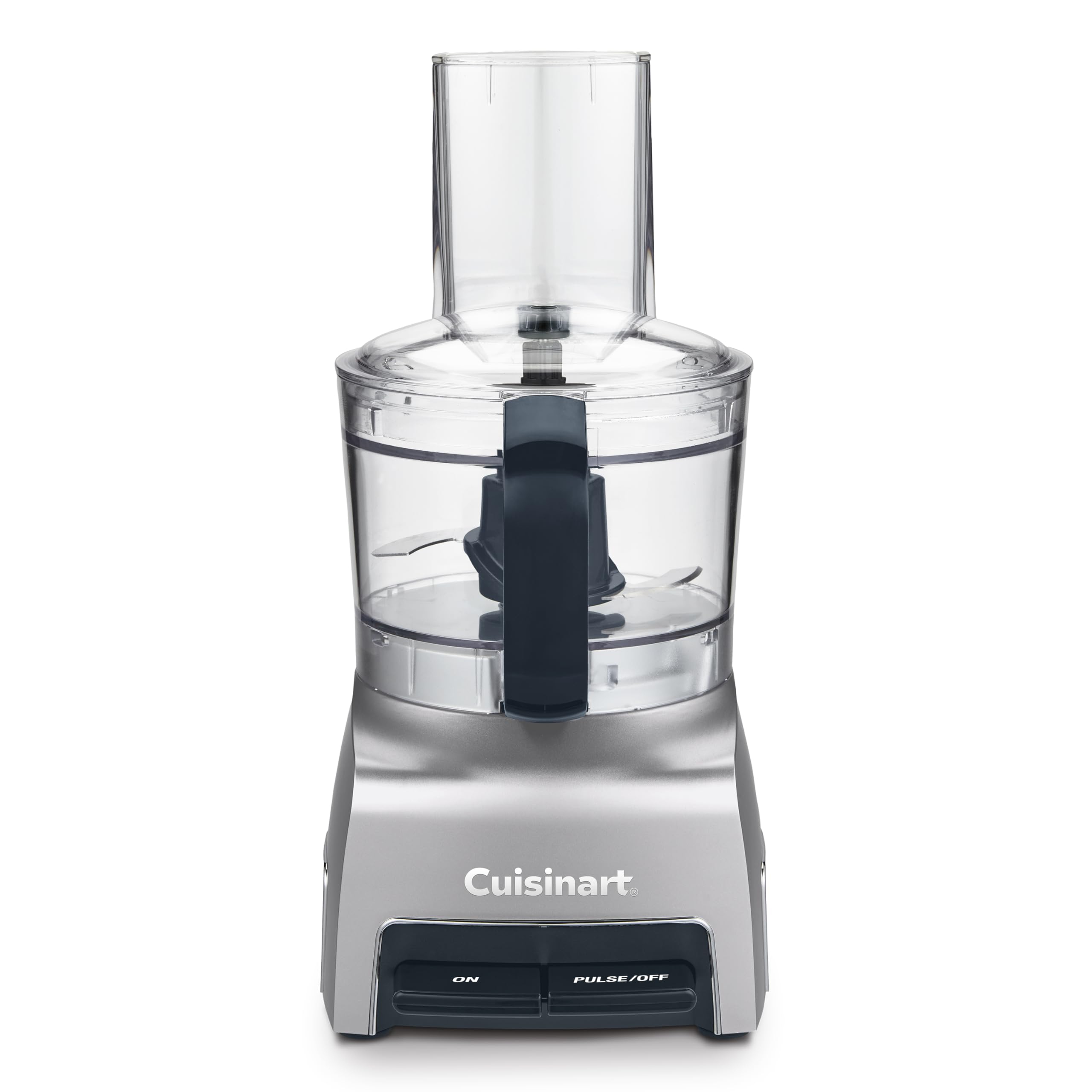
Cuisinart DFP-14BCNY 14-Cup
Key Features
- Motor: 720 watts
- Warranty: 3 years, 5 years on motor
- Bowl capacity: 14 cups
- Blades and discs: Chopping blade, 4mm slicing disc, medium shredding disc
- Price: Premium
Eighteen pounds of appliance is a commitment, and the 14-cup Cuisinart is built to sit in one spot and stay there. That weight and the wide base are why it doesn’t walk across the counter while it works through a stiff batch of dough, and the extra-large feed tube takes whole tomatoes and potatoes once the small pusher is out.
We think it is the best big-batch machine here. The 720 watts are rated continuous rather than peak, the control is two buttons — on and pulse, nothing to program — and it runs quietly enough that you can hold a conversation beside it. For volume cooking, several pounds of potatoes, a double batch of pizza dough, a big bowl of hummus, this is the one we reach for.
The trade is parts. The plastic work bowl and lid are what age on these machines, so treat the bowl as the fragile half: don’t jam the pusher, don’t stack anything on top of it, and let the five-year motor warranty carry the expensive half of the risk. The discs are fixed, too — a 4mm slice is the slice you get, which is fine for cucumbers and less so for anything you want thicker.
Pros
- Continuous 720-watt motor, not a peak figure
- Three-year warranty, five on the motor
- Extra-large feed tube takes whole produce
Cons
- One speed plus pulse, no presets
- Slicing and shredding discs are not adjustable
Buy this one if you cook in volume: 14 cups, a quiet 720-watt continuous motor and a five-year motor warranty make it the machine we trust with big batches of dough.
Best for Whole Ingredients
Ninja Professional XL NF701
Key Features
- Motor: 1200 peak watts
- Controls: 7 speeds, 4 Auto-iQ presets
- Feed chute: XL with 3-part pusher
- Bowl capacity: 12 cups
- Price: Premium
A three-part feed chute is the kind of feature you skim past in a listing and then notice every time you cook. The XL chute on this Ninja takes whole ingredients, so you spend far less time knifing things down to a size the machine will accept before it can start working.
Underneath that you get a 12-cup bowl, a 1200-peak-watt motor, seven speeds and the four Auto-iQ programs Ninja builds across this range, plus a reversible disc that shreds fine or coarse and a dough blade. The 12-cup bowl is what stops coleslaw for a crowd from turning into two rounds of work.
What decides it for us is the chute plus the power: this is the machine for big weekend cooking, and it handles that without straining. What it isn’t is the sensible default. At 17.5 inches tall it fills the space under an upper cabinet, and the bowl is more capacity than a two-person kitchen uses most weeks. If you cook for a crowd a few times a month rather than every night, the 9-cup Ninja does the same job for less.
Pros
- XL three-part chute cuts pre-cutting
- 1200 peak watts and seven speeds
- Reversible disc shreds fine or coarse
Cons
- Peak wattage rating, not continuous power
Our pick for whole ingredients and big weekend batches — the 12-cup bowl and three-part feed chute cut real prep time, as long as you have the counter height.
Best for Small Kitchens
Cuisinart FP-5 5-Cup
Key Features
- Disc: Reversible fine and medium shredding
- Motor: 300 watts
- Dimensions: 7.9"D x 5.91"W x 13.31"H
- Bowl capacity: 5 cups
- Price: Midrange
This is the one that stays on the counter in a small kitchen. At 5.9 inches wide and 13.3 inches tall it fits under a cabinet where the big machines don’t, and the cord winds into the base instead of trailing across the worktop.
The useful trick is storage: the chopping blade, the disc and the cord all nest inside the bowl, so the whole appliance is one object on the shelf rather than four. The reversible disc gives fine and medium shredding, the wide-mouth feed tube takes a block of cheese, and 300 watts is plenty for onions, herbs, breadcrumbs and a batch of hummus.
Where it stops is volume — five cups is a side dish, not a stockpot — and the bowl and lid are noticeably lighter plastic than the 14-cup machine’s, so load it sensibly rather than cramming it to the line. Three years of warranty on a machine this size is more cover than most small appliances get.
Pros
- Fits a short counter at 5.9 inches wide
- Blade, disc and cord store inside the bowl
- Reversible disc for fine and medium shredding
Cons
- No dough blade or kneading
- 300 watts is modest for dense mixtures
For a small kitchen and small batches, this is where we point you: five cups, parts that store inside the bowl, and a footprint that fits a short counter.
Best for Chopping Only
Savorfuze FP500

Key Features
- Motor: 500 watts max
- Speeds: 2, low and high
- Weight: 4.8 lb
- Work bowls: 8-cup glass and 8-cup stainless steel
- Price: Budget
Two bowls is the whole idea here. One is glass, one is stainless steel, and each has its own set of bi-level blades, so raw meat and vegetables never share a bowl — the thing most people end up doing badly with a single-bowl chopper.
We think that is genuinely useful in a house where one person grinds meat for a filling and another makes a dip. The 500-watt motor runs two speeds, the base is only 8.2 inches tall so it tucks under a shelf, and the non-slip mats keep it from skating across the counter. At under five pounds it is also the easiest machine here to lift out of a cupboard.
What it doesn’t do is the rest of a processor’s job: there are no discs and no dough blade, so a sliced cucumber or a loaf of bread still needs another tool. The press-and-hold buttons also mean you stand there for the whole job, which is fine for a twenty-second chop and less fine for a long puree. If the motor cuts out, the overheat protection has tripped; give it a few minutes and it comes back.
Pros
- Glass and steel bowls keep meat separate
- Eight-cup capacity in an 8.2-inch body
- Two speeds plus non-slip mats
Cons
- Two speeds, both press-and-hold, no presets
For someone who chops and grinds far more than they slice or shred, this is a compact, affordable way to keep raw meat and vegetables in separate bowls.
How We Tested Food Processors
We began by gathering more than 30 current models, comparing bowl capacity, wattage, included blades, and price, then narrowed that list to 12 that represented the range a home cook is likely to shop. Every machine went into the same kitchen for six months, not a lab bench. It lived beside the cutting board and got used for weeknight dinners, weekend baking, and the occasional party-sized batch of hummus.
During the first weeks, we ran each processor through a coarse onion chop, a smooth hummus, a block of shredded cheese, and a batch of pie dough. We pulsed onions until the pieces looked even, then checked for whole chunks riding up the sides. We loaded chickpeas and sweet potato to see whether the motor strained, stalled, or made the base walk across the counter. We timed assembly from box to running and counted how often we had to check the manual.
Cleaning was timed after sticky dough and hummus, with a ten-minute wait before hand-washing so we could see where food trapped under the blade, in the lid gasket, or around the base. We inspected blades for nicks after chopping nuts and hard cheese, and checked whether they still seated firmly. Over six months, we tracked leaks, cracked lids, burnt smells, and any batch that came out uneven. Value got the final say: we compared what each machine could do against what it cost, not just the sticker.
How to Choose a Food Processor
Two decisions do most of the work before you compare a single specification: how much food you process in one go, and whether you need discs and a dough blade or just a sharp blade in a bowl.
Bowl size decides more than any other number
The bowls in this group run from 5 to 14 cups, and the right one is set by your usual batch rather than your biggest-ever batch. Nine cups handles most households: a pile of onions, a tray of roasted vegetables, a round of pizza dough. Move up to 11 or 14 if you cook in volume and knead regularly; drop to five if most days mean a shallot and a handful of herbs.
The trap is assuming a bigger bowl is more capable everywhere. A single onion in a 14-cup bowl sits below the blade and gets shoved around instead of chopped, and a heavy machine that lives in a cupboard rarely comes out for small jobs. Height matters too: these run from 8 to 17.5 inches, and most kitchens leave about 18 inches between the counter and the upper cabinets.
What the wattage figure actually tells you
Wattage is the number sellers lead with, and it isn’t comparable across brands as printed. Some list a continuous rating, like the 720 watts on the 14-cup Cuisinart; others list peak wattage, the brief surge a motor can manage, like the 1000 and 1200 on the two Ninjas. For chopping, slicing and shredding, every machine here has enough power.
The difference shows up in sustained work: dough, nut butter, long purees, where the motor runs for minutes rather than seconds. If those are on your list, weigh the continuous figure and the warranty more heavily than the peak number, and give a lighter machine smaller batches rather than longer runs.
Blades, discs and the feed tube set the menu
An S-blade chops, minces and purees; the discs do what a blade can’t. A slicing disc gives you uniform cucumber and potato rounds, a shredding disc handles cheese and carrots, and reversible discs cover two textures on one piece of metal. The dough blade is the fourth piece and the one buyers forget: without it, bread and pastry are off the menu however powerful the motor is.
The feed tube decides how much knife work happens before the machine starts. A wide chute takes a whole onion or a block of cheese; a narrow one means quartering everything first. If you prep in bulk, that difference is worth more than another 200 watts.
Cleaning, storage and where it lives
Count the parts before you buy. Every machine here means washing a bowl, a lid, a blade and often a disc, and the ones that store their parts inside the bowl are the ones that don’t end up banished to a cupboard. The 5-cup Cuisinart nests everything, which is how it survives on a short counter.
On dishwasher claims, read the manual rather than the badge: lids and their plastic hubs are often top-rack or hand-wash only, and the lid is the part that fails first on these machines. Then measure the space where it will live — under a cabinet, inside one, or on a shelf — and weigh that against the machine’s height and heft before you commit.
Frequently Asked Questions
Can a food processor knead bread dough?
Yes, if it includes a dough blade. Both Ninjas here come with one, and so does the 14-cup Cuisinart, which is rated for kneading. Use the dough blade rather than the chopping blade, keep the batch within what the bowl comfortably holds, and run it in short bursts until the dough gathers into a ball. Stop if the base starts to feel hot.
Do I still need one if I already have a blender and a mini chopper?
They cover different jobs. A blender is for liquid, and a three-cup chopper handles a handful of herbs or nuts but has no discs, so it can’t slice a cucumber or shred a block of cheese. If those tasks come up weekly, a 5-cup machine with a reversible disc is the smallest thing that covers them. If they don’t, the chopper you own is enough.
How do I get an even chop instead of onion mush?
Pulse rather than run. Give the blade one-second bursts and look between them, because the gap between diced and pureed is shorter than you expect. Stop while the pieces still look slightly larger than you want, and scrape the bowl down between bursts so the top layer works its way under the blade.
How long should a food processor last?
The warranty is the clearest signal of what the maker expects. Both Ninjas carry a one-year limited warranty; the 14-cup Cuisinart carries three years on the unit and five on the motor. The parts that fail first are plastic — work bowls and lids — so check that the cover includes them, and hand-wash the lid to help it get there.
Final Verdict
Start with the Ninja PrecisionPro. Nine cups is the size most kitchens actually use, the four programs make it forgiving for a first processor, and the dough blade and reversible disc mean you don’t need a second appliance for pastry or coleslaw. It is our default recommendation.
Choose the 14-cup Cuisinart instead if you batch-cook and knead — the continuous motor, the quiet running and the five-year motor warranty are worth the premium for real volume. And if counter space is the constraint, the 5-cup Cuisinart chops, shreds and stores itself in a footprint the others can’t match.