This post contains affiliate links. We may earn a small commission when you buy through our links — at no extra cost to you.
Many mini food processors promise quick chopping but deliver uneven mush or cracked plastic after a few uses. The frustration is real – especially when a $40 gadget fails mid-recipe.
The difference between success and onion puree often comes down to pulse control and build quality. Some models excel at value, others at precision; the right pick depends on how often you chop hard vegetables versus soft herbs.
This guide focuses on the ones that avoid the most common frustrations: inconsistent results and fragile bowls. Look for effective blade design paired with reliable materials – that combination is rarer than the price tags suggest.
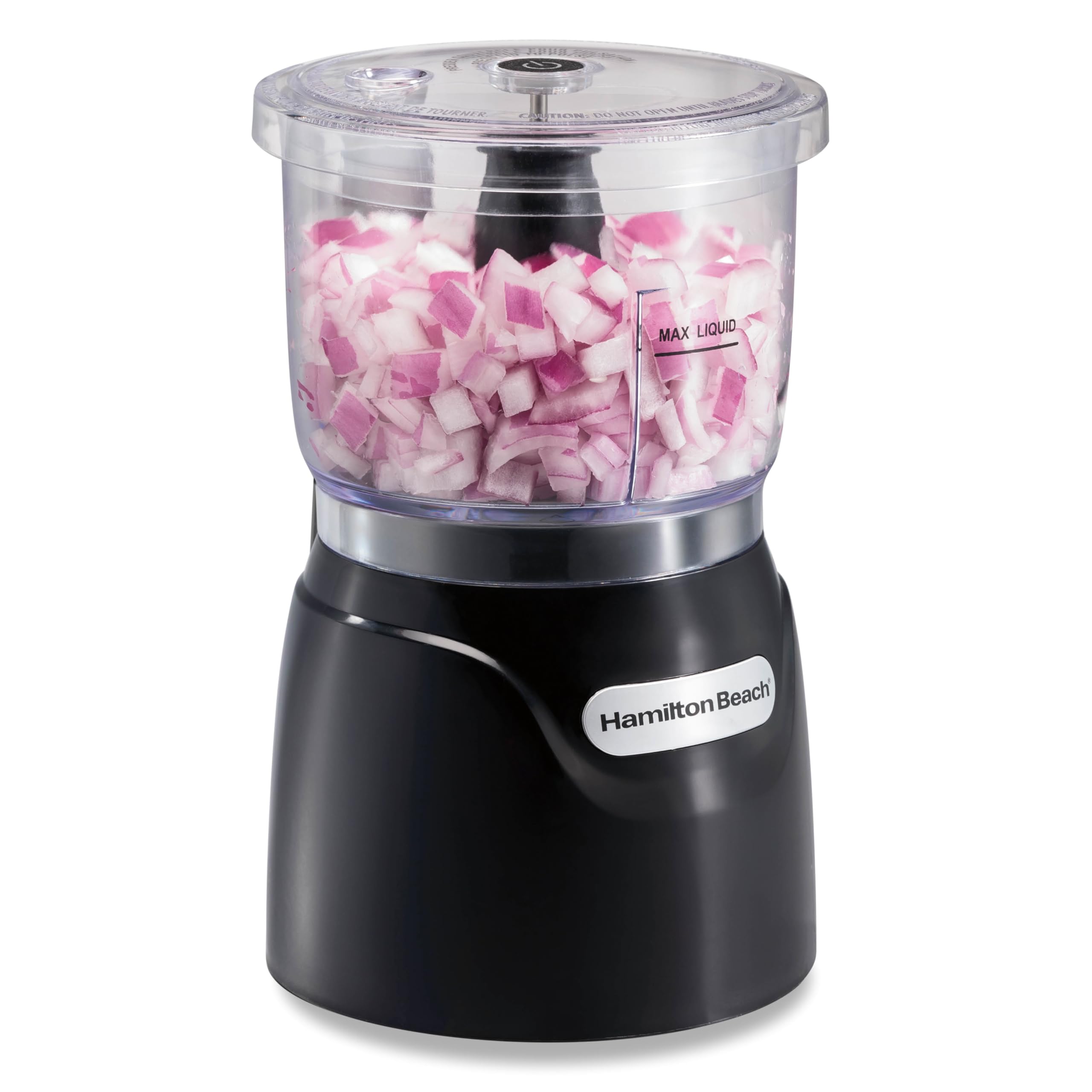


Best for Daily Vegetable Chopping
Hamilton Beach 3-Cup Chopper
The Hamilton Beach 3-Cup Chopper shifts the conversation from price to performance by offering a 350-watt motor and a simple stack-and-press design that eliminates the twisting and locking common in pricier models. Assembly is intuitive, and the stainless steel blade handles onions, carrots, nuts, and herbs with noticeable speed. For someone who needs a countertop helper for daily prep without the bulk of a full-size processor, this is the most cost-effective entry point available.
Pulse control is the main lever for texture. Hold the press too long and the contents turn from coarse dice to near-puree – a trait that suits salsa, pesto, or baby food but frustrates anyone chasing uniform chunks. The blade’s oil dispenser add-on is a thoughtful touch, though it sees limited use in most kitchens. Cleaning is straightforward: the removable bowl and lid are dishwasher safe, and the blade rinses clean under a tap with minimal food sticking.
This chopper fits the shopper who wants function over frills: budget-conscious cooks, dorm residents, or anyone with limited counter space. The noise level is noticeable – think a typical electric blender – so it won’t disappear in a quiet apartment, but for a tool used in short bursts it’s a reasonable trade-off. The lid and bowl are made of durable plastic that has held up well in testing, though like any compact unit, repeated drops or hard impacts can cause cracking over time.
Pros
- Assembly is tool-free with a stack-and-press lid that locks onto the bowl.
- 350W motor chops onions, nuts, and hard vegetables in seconds.
- Bowl and lid are dishwasher safe – cleanup takes minimal effort.
- Price is among the lowest in the category for this capacity and power.
- Stainless steel blade stays sharp through moderate daily use.
Cons
- Holding the pulse button more than a few seconds quickly reduces chunks to purée.
- Motor hum is audible during operation – noticeable in quiet kitchens.
- Plastic components may develop hairline cracks under heavy impact or long-term use.
For anyone who needs a reliable, no-switch mini chopper for daily vegetable prep and doesn’t mind pulsing with intention, this is the best budget pick on the market.
Best for Daily High-Performance
Ninja Express Chop
Key Features
- Capacity: 2 cups
- Wattage: 200W
- Speeds: 1 (pulse)
- Price: Mid-Range
The Ninja Express Chop delivers the most consistent chopping in this group, with a 200W motor that powers through herbs, nuts, and soft veggies without leaving uneven chunks. Its pulse-only operation gives direct control, so you stop exactly when the texture is right — no guessing. Where the top pick wins on value and capacity, the Ninja edges ahead on precision, though its 2-cup bowl means you may need to work in batches for larger batches of salsa or coleslaw.
This chopper suits the home cook who makes daily small-batch dressings, dips, or minced garlic and wants reliable, repeatable results from a compact countertop appliance. The stainless steel blunt-edge blade does the work quickly, and the simple one-button pulse design leaves little to learn. That said, the 2-cup limit is real: if you regularly prep for four or more, the batch processing will slow you down. Also, food can get trapped under the power head, so rinsing it promptly after use helps keep cleanup easy.
Build quality is solid for the mid-range price — the bowl feels sturdy, and the base stays planted during use. The blunt blade is safe to handle and wash, but it does require a bit of scraping to fully dislodge sticky ingredients like peanut butter. Overall, the trade-off for top-tier chopping consistency is smaller capacity and a slightly fussier cleaning step compared to simpler designs.
Pros
- Even, consistent chopping across soft and hard ingredients
- Fast pulse action gives precise control over texture
- Simple design with few parts for quick cleaning and storage
- Highest owner satisfaction among mini choppers in this price tier
Cons
- 2-cup capacity may require batch processing for meals serving more than two
- Food can get trapped under the power head lid, requiring prompt rinsing
If chopping precision matters more than capacity or lowest price, the Ninja Express Chop delivers the most consistent results in this segment — batch processing and a quick post-use rinse are the trade-offs.
Best for Small Batch Herbs
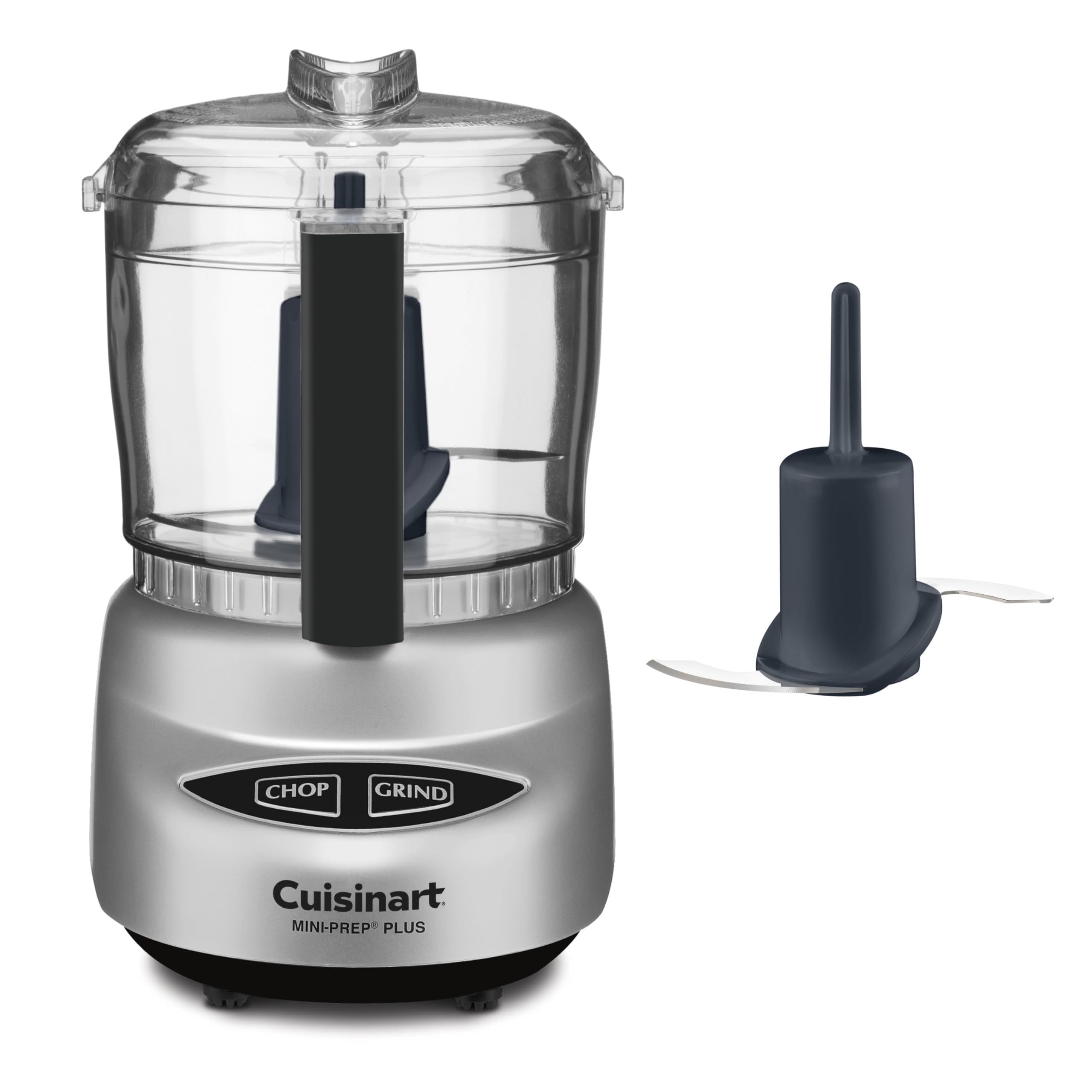
Cuisinart Mini-Prep Plus
Key Features
- Capacity: 3 cups (24 oz)
- Wattage: 250W
- Speeds: 1
- Price: Mid-Range
The Cuisinart Mini-Prep Plus delivers reliable chopping for herbs, garlic, and small batches thanks to its reversible stainless steel blade that handles both mincing and light grating. This is a compact, no-frills tool that does one thing well: turning a handful of ingredients into uniform pieces without needing a full-size processor.
In practice, the blade’s reach is limited to the bottom third of the 3-cup bowl, meaning larger amounts require manual stirring between pulses. The motor is audible — noticeably louder than newer compact choppers — which may be distracting in a quiet kitchen. For quick jobs like chopping an onion or grinding nuts, it finishes fast enough that the noise is brief.
This machine suits home cooks who want a dependable mini chopper for occasional light tasks and trust the Cuisinart name for consistent results. The plastic lid can crack after months of use in some units, and the noise level is higher than some alternatives, so it works best for those who won’t rely on it daily or demand whisper-quiet operation.
Pros
- Compact footprint fits easily on small counters for quick tasks.
- Reversible blade grinds and chops without swapping parts.
- Dishwasher-safe parts make cleanup simple.
- Effective chopping for herbs, nuts, and garlic in small batches.
Cons
- Plastic lid can develop cracks over extended use in some units.
- Chopping action only reaches the bottom third of the bowl, limiting effective capacity.
- Noise level is higher than newer models, noticeable in quiet kitchens.
A capable mini chopper for those who value Cuisinart’s consistent results and reversible blade, but potential lid cracking and noise make it best for light, occasional use rather than daily heavy chopping.
Best for Meat Veg Separation
TWOMEOW 4-Cup
The TWOMEOW 4-Cup stands apart by including two processing bowls — one for meat, one for vegetables. This design prevents cross-contamination and avoids the need to wash a single bowl between tasks. The 200W motor drives dual S-shaped blades that chop onions, garlic, and herbs with consistent results in seconds.
Each bowl holds 4 cups, sized for small-batch prep. The non-slip base keeps the unit steady during use, and the two-speed control gives flexibility for different textures — pulse for chunky, continuous for finer mincing. Cleaning is straightforward: the bowls and lid are removable, though the sharp blades need careful hand washing.
This chopper is best for home cooks who frequently switch between meat and vegetable prep and want dedicated bowls without buying two machines. The sharp blades are a consideration for those who prefer dishwasher-safe parts or have limited dexterity. If you need a single-bowl processor with a simpler routine, the top pick offers a more straightforward approach.
Pros
- Two separate bowls prevent flavor transfer between meat and vegetables.
- 200W motor handles tough ingredients quickly.
- Non-slip base and removable parts make cleaning simple.
Cons
- Extremely sharp blades require careful hand washing — not dishwasher safe.
A smart choice for cooks who want to keep meat and veg prep separate without sacrificing counter space or budget.
Best for Style Speed Control
KitchenAid 3.5-Cup Chopper

Key Features
- Capacity: 3.5 cups
- Wattage: 240W
- Speeds: 2 + pulse
- Price: Premium
This KitchenAid brings a 240W motor and two speeds to small-batch chopping, giving more texture control than most compact models. Its ice blue finish and small footprint make it a countertop standout. However, the lid locking mechanism can be finicky to engage, and some units have shown motor or part wear after limited use. For cooks who value brand design and occasional use, the trade-off may be acceptable, but the Cuisinart alternative offers more consistent build for a similar premium price.
Pros
- Handles nuts and tough ingredients with ease given its size.
- Two speeds plus pulse allow better texture control for different tasks.
- Attractive design and compact footprint suit kitchen countertops well.
Cons
- Assembling the lid requires extra pressure to engage the lock – a minor hassle when in a hurry.
- Under frequent use, some units have experienced motor or part wear sooner than expected.
For home cooks who prioritize kitchen aesthetics and only need occasional chopping, the KitchenAid’s design and speed control offer appeal – provided you’re willing to work with its locking quirk and accept possible durability variance.
Best for Occasional Garlic Mincing
Black+Decker 1.5-Cup

Key Features
- Capacity: 1.5 cups
- Wattage: 150W
- Speeds: 1 (one-touch pulse)
- Price: Budget
At this price point, the Black+Decker 1.5-cup handles herbs, garlic, and soft vegetables with acceptable results. Its compact size tucks into a drawer, and the bowl rinses clean quickly. The trade-off comes when the task shifts to harder ingredients — carrots, nuts, or dense root vegetables — where the 150W motor can bog down or leave uneven chunks. The plastic lid and bowl have been noted to crack under the stress of frequent use or over-packing, so this unit suits someone who needs a tiny helper for a single, soft item once a week and is comfortable with a shorter service life.
Pros
- Very low price for an electric chopper
- Compact size fits in small kitchens
- Quick to rinse after use
Cons
- For frequent use, the plastic bowl may crack over time
- Motor can stall when processing hard vegetables or nuts
If your chopping needs are limited to garlic, herbs, or the occasional soft onion, this is the cheapest tool for the job — just don’t expect it to last through regular use with harder produce.
Best for Soft Ingredient Chopping
Proctor Silex 1.5-Cup

Key Features
- Capacity: 1.5 cups
- Wattage: 70W
- Speeds: 1 (pulse)
- Price: Budget
The Proctor Silex handles onions, garlic, and salsa without fuss, and its compact size fits neatly in a cluttered cabinet. But the 70W motor isn’t built for hard vegetables like carrots or nuts—those tasks will stall or produce uneven results. The plastic bowl and lid can develop hairline cracks under regular use, so this is best reserved for occasional light-duty chopping rather than daily prep.
Pros
- Very affordable and takes up minimal counter space.
- Pulse switch makes short work of soft ingredients like onions and salsa.
- Washes up quickly by hand without food getting stuck.
Cons
- Low-power motor can struggle with hard items like carrots or almonds.
- Plastic lid and bowl may develop cracks over time with normal use.
The Proctor Silex works for someone who needs an occasional herb chopper and is willing to accept its limited power and plastic fragility.
How to Choose
The cheapest mini food processors often use thin plastic that cracks, so prioritize models with robust construction over the lowest price.
Capacity
A 3-cup bowl handles most small-batch tasks without overfilling. Larger capacities (4 cups) let you process more at once but can lead to uneven chopping if the bowl isn’t filled to the right level.
Overfilling pushes ingredients above the blade reach, producing large chunks alongside puree. Stick to three-quarters full for best results.
Wattage
Wattage determines how well the motor handles hard ingredients like carrots, nuts, or ice. A 200W motor is the minimum for consistent performance; 350W models breeze through tough jobs.
Lower wattage (70–150W) is fine for soft herbs and garlic but will stall or overheat on dense foods. If you chop hard vegetables regularly, don’t go below 200W.
Ease of Cleaning
Dishwasher-safe parts save time, but plastic bowls and lids can warp under high heat. Hand washing extends their life. Look for models with removable blades that are easy to rinse without sticking the motor base.
Some choppers have crevices under the power head that trap food – a simple design with fewer seams cleans faster.
Durability of Plastic Parts
The bowl and lid are the first points of failure. Thin, brittle plastic cracks under stress from locking mechanisms or accidental drops. Models with thicker, reinforced plastic or metal gearing last longer.
Even sturdy units benefit from gentle handling: avoid over-tightening the lid and never run the motor with a cracked bowl.
Number of Speeds
A single speed with a pulse function gives basic control – enough for most tasks if you pulse carefully. Two speeds offer better texture management: low for coarse chopping, high for pureeing.
The real key is pulse control. Holding the button down too long turns onions to mush, regardless of speed options. Short bursts and checking progress prevent over-processing.
FAQ
Why does my mini food processor turn onions into mush?
Over-processing is the main culprit. Use short pulses (2–3 seconds each) and check after each burst. If your model tends to puree, fill the bowl no more than half full and stop as soon as the pieces are small.
How do I chop nuts evenly without turning them into nut butter?
Use cold nuts straight from the fridge – they are less likely to release oils. Pulse in very short bursts (1–2 seconds) and stop when pieces reach your desired size. Avoid filling the bowl more than halfway.
Can I use a mini food processor to make baby food?
Yes, for soft, cooked vegetables and fruits. Steam or boil until tender, then pulse until smooth. Avoid raw tough ingredients like carrots or apples – they require a higher-power motor. A 3-cup capacity is sufficient for single servings.
What is the best mini food processor for chopping garlic and herbs?
A model with a reversible blade or sharp stainless steel blade works best. The Cuisinart Mini-Prep Plus and Ninja Express Chop both deliver consistent mincing. Use short pulses and scrape down the sides as needed.