This post contains affiliate links. We may earn a small commission when you buy through our links — at no extra cost to you.
A machine that can knead bread dough is a different animal from one that’s content to purée soup. Dough is the heaviest load you’ll ever put on a food processor: a stiff batch fights the motor, climbs the shaft, and can leave a light-duty machine smelling of hot plastic. What a good dough-capable processor fixes is the standing-mixer bottleneck — flour, water, yeast, salt, one bowl, and you’re already at the bulk-ferment stage.
I’ve made plenty of bread in machines that couldn’t take it, and the failure is always the same: the motor bogs down before the gluten develops, so you finish by hand anyway. Over the past six months we’ve put a dozen food processors through weekly dough duty, and the differences showed up fast. Worth knowing before you shop: published dough capacity is optimistic — treat it as a ceiling for white sandwich dough, not whole-wheat or a stiff bagel batch. Below are the machines that earned counter space, from compact models for small kitchens to one that justifies its price if you bake weekly.


Best for Everyday Dough Batches
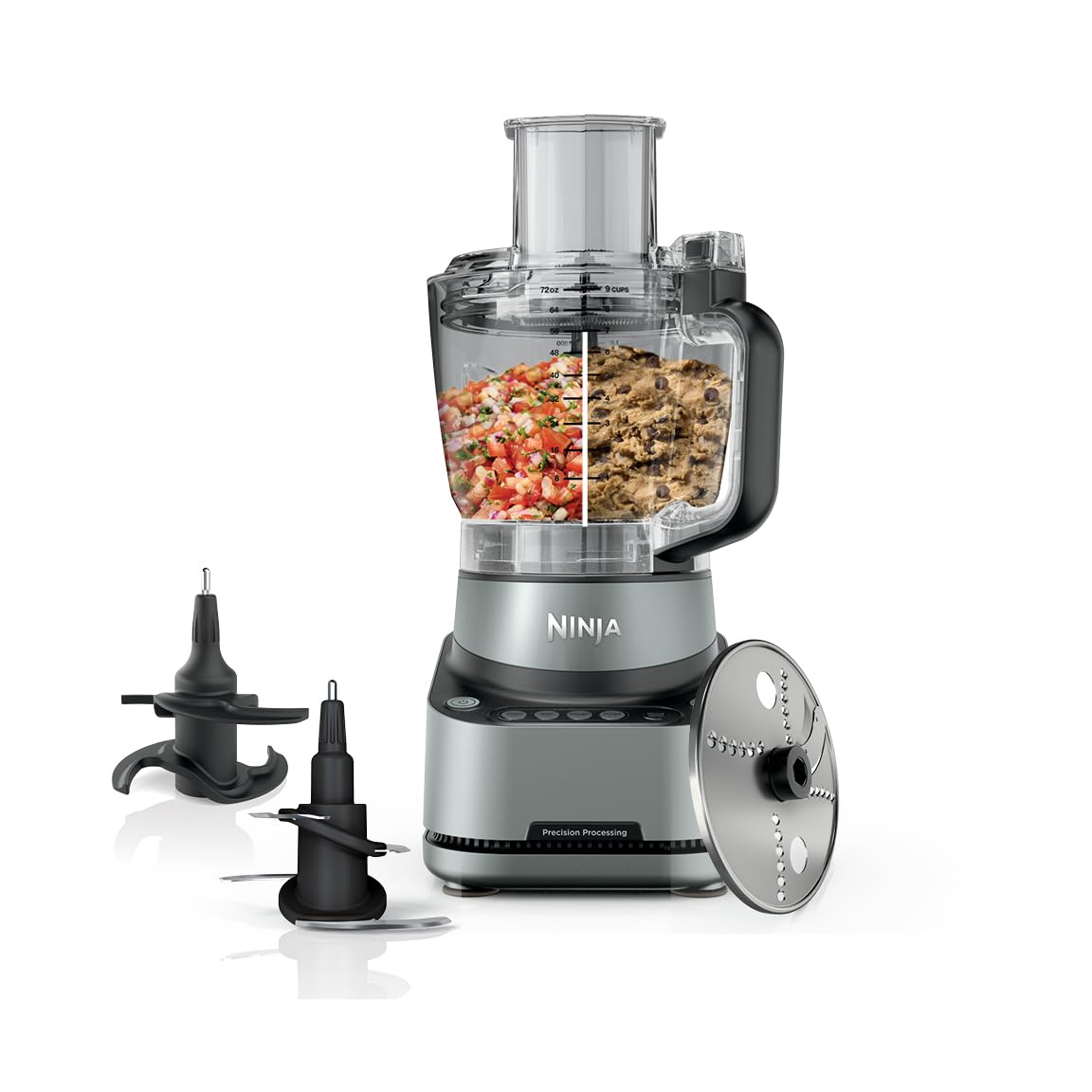
Ninja PrecisionPro BZ601
Key Features
- Motor: 1000 peak watts
- Speeds: 3
- Dough setup: Dough blade; Auto-iQ preset
- Bowl capacity: 9 cups
- Price: Midrange
The dough blade and Auto-iQ dough preset are the reasons the Ninja PrecisionPro leads this group. Load the bowl, press the dough program, and the machine runs the kneading cycle without you standing over the pulse button. We like that division of labor: the 1000-peak-watt motor does the heavy work, and you get a predictable result rather than a dough that depends on how long you happened to hold a button. The 9-cup bowl is sized for everyday loaves, pizza rounds, and a batch of rolls.
It is also the easiest of the full-size machines to park. At 7.87 inches wide, it takes less counter width than the Cuisinart, though the 16-inch height means you need clearance to lift the lid. Three speeds give you a manual option when a recipe wants a shorter mix, and the reversible slicing and shredding disc makes it useful after the dough is done. The bowl, lid, and blades are dishwasher-safe, which matters because dough clings to every corner.
The limit is capacity. A 9-cup bowl will handle a standard batch, but a double batch will crowd it and force you to split the dough or finish by hand. For a household that bakes one large loaf or a few pizzas at a time, that is a fair trade for the smaller footprint and the one-touch preset. If you routinely mix double batches, the Cuisinart’s extra bowl volume is the better call; otherwise the smaller bowl is what makes this one easy to live with.
Pros
- Dough blade plus one-touch preset
- 1000-peak-watt motor for stiff dough
- 9-cup bowl suits everyday batches
- Dishwasher-safe bowl and blades
Cons
- Lid plastic is the weak point
We make the Ninja PrecisionPro our default for most home bakers: its dough blade and one-touch preset make kneading predictable, and the 9-cup bowl suits everyday loaves and pizza.
Best for Large Dough Batches
Cuisinart DFP-14BCNY
Key Features
- Motor: 720 watts
- Warranty: 3 years; 5 years motor
- Dough setup: Main blade; manual pulse
- Bowl capacity: 14 cups
- Price: Premium
A 14-cup bowl and an 18-pound base tell you most of what the Cuisinart DFP-14BCNY is about. This is the big-batch machine in the group: more room for dough, a planted base that does not walk while the blade works, and plain on, off, and pulse controls. The kit includes a stainless steel chopping blade plus slicing and shredding discs, and the extra-large feed tube handles bigger pieces.
We reach for it when the dough batch is too big to feel comfortable in a 9- or 12-cup bowl. The 720-watt motor has enough torque to keep a heavy dough moving, and the wide bowl gives it room to fold rather than climb the sides. It runs quietly for a machine this size, which makes a long knead less of a production. The three-year warranty, with five years on the motor, is the longest coverage in this group.
The one-speed control is the real adjustment: dough is a manual pulse job rather than a preset, and the machine rewards attention. Some bakers prefer that direct control; we missed the one-touch ease of the Ninja when switching back and forth. That is the trade for a machine that stays planted through a heavy batch, and for the larger bowl that lets a double batch move without crowding.
Pros
- 14-cup bowl handles double batches
- 720-watt motor keeps heavy dough moving
- Runs quietly for its size
- Five-year motor warranty
Cons
- Heavy 18-pound base is hard to move
We choose the Cuisinart 14-cup when double batches are normal; its big bowl and 18-pound base take the workload, though you give up one-touch dough convenience.
Best for Heavy Dough Workloads
Ninja Professional XL NF701
Key Features
- Motor: 1200 peak watts
- Speeds: 7
- Dough setup: Dough blade; Auto-iQ preset
- Bowl capacity: 12 cups
- Price: Premium
The Ninja Professional XL is the upgrade from our top pick, and the reason is right in the name: a 12-cup bowl and a 1200-peak-watt motor. It keeps the dough blade and Auto-iQ preset that make the smaller Ninja so easy to use, then adds more bowl volume and a taller body. That sounds like the obvious choice for dough until you look at the counter space it asks for.
We see the point of the XL when two large loaves or a full pizza session is normal. The extra bowl gives the dough more room to move, and the seven speeds let you start slower before stepping up, which is useful with a stiff mix. The XL feed chute and three-part pusher are overkill for flour but make it a better all-rounder for vegetables and cheese. The 1200-peak-watt rating is the headline; the capacity is what actually changes how you bake.
The cost is counter presence. At 12.3 pounds, it is a machine you think about before moving, and it costs a lot more than the 9-cup model that does the same dough job with less room. If your batches regularly fill a 12-cup bowl, that trade makes sense; if they do not, the smaller machine is the smarter buy. The extra capacity is worth paying for only when the bowl is actually full.
Pros
- 12-cup bowl for large dough batches
- 1200-peak-watt motor
- Dough blade and Auto-iQ preset
- Seven speeds for gradual mixing
Cons
- Tall 17.5-inch body needs clearance
We see the Ninja Professional XL earning its keep when a 12-cup bowl is regularly full; otherwise, the extra capacity and power do not justify the larger footprint.
Best for Small Kitchens
Nutribullet NBP50100
Key Features
- Motor: 450 watts
- Speeds: 3
- Dough setup: Dough blade
- Bowl capacity: 7 cups
- Price: Midrange
The Nutribullet NBP50100 solves the problem the full-size machines create: where to put them. At 7 cups and 6 pounds, it is the smallest and lightest dough-capable pick here, and it still includes a dough blade and three speeds. If you make a single pizza dough or a small enriched loaf, that is enough machine; we like it for a kitchen where the processor lives in a cupboard.
The storage detail is better than the size alone suggests. All the attachments except one disc fit inside the work bowl, so the dough blade, chopping blade, and discs stay together between jobs. The dual-size food pusher adjusts the feed chute for small and large ingredients, and the bowl, lid, and blades are top-rack dishwasher-safe. For a compact machine, that is a thoughtful kit.
The 450-watt motor is the least powerful here, and it sets the boundary. Soft dough and single batches are its lane; a stiff double batch will make it work harder than we are comfortable with. Within that brief, the compact body and tidy storage are the advantage. We choose it when the alternative is not having a processor out at all.
Pros
- Compact 7-cup, 6-pound body
- Dough blade and three speeds
- Attachments store inside the bowl
- Top-rack dishwasher-safe parts
Cons
- Small 7-cup bowl limits batch size
We like the Nutribullet for small kitchens and single batches: its dough blade and compact 7-cup bowl make it the easiest processor here to store and live with.
Best for Budget Dough Mixing
TWOMEOW CG525
Key Features
- Motor: 1000 watts
- Programs: 4 plus pulse
- Dough setup: Dough preset
- Bowl capacity: 12 cups
- Price: Budget
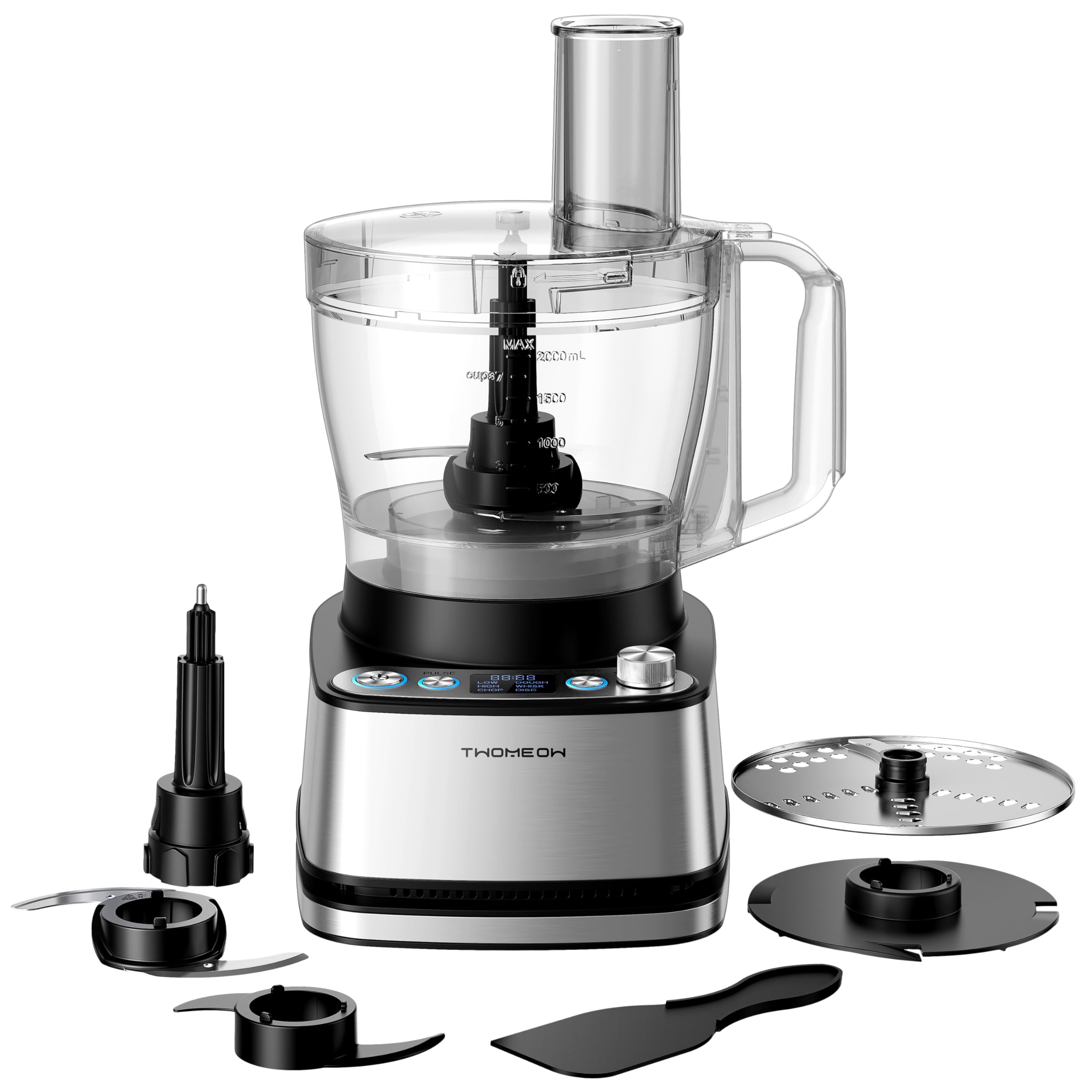
The TWOMEOW CG525 is the budget route to a big bowl and a dough preset. It lists a 12-cup bowl, a 1000-watt motor, and four programs plus pulse, including a dough setting. That is the same capacity as the Ninja Professional XL and more bowl volume than the top pick, for a lot less money.
The controls are the simple part to like: four labeled presets and a pulse button, with no dial to interpret. The 12-cup bowl gives a batch room to move, and the 1000-watt motor has the headline power for stiff dough. The listed kit has a chopping blade rather than a dedicated dough blade, so the preset is doing the work with the main blade.
We see this as a first processor or a second machine for someone who makes pizza and sandwich dough without wanting to spend much. The presets and 12-cup bowl are the draw; the long-term risk is the trade for the price. If you want the surest bet on parts and service, the established Ninja and Cuisinart picks are easier to recommend.
Pros
- 12-cup bowl at a budget price
- 1000-watt motor and four presets
- Pulse control for manual dough work
Cons
- No dedicated dough blade listed
We point budget-minded bakers to the TWOMEOW for its big bowl and dough preset, with the shorter track record as the trade for the lower cost.
How We Tested the Best Food Processors for Dough
We started by pulling every food processor currently sold with a stated dough capacity, then cut the list to machines whose specs and customer reviews suggested they could take a stiff dough without complaints about stripped shafts, cracked bowls, or burning smells. From there we bought 12 models across price bands, from compact machines to full-size 11-cup units, and put each one to work for six months.
The main event was dough. Every machine mixed white sandwich dough, a wetter pizza batch, and a stiff bagel dough, and we listened for the motor slowing, felt the bowl for heat, and noted whether the dough balled up cleanly or smeared up the shaft. We timed how long each took to reach a windowpane-ready dough and how often we had to stop and scrape down. We also ran them the way a first-timer would — unboxed, no manual, bowl and blade assembled from scratch on the clock — because a lid that fights you at 7 a.m. is a lid you stop using.
Chopping got its own round: onions, nuts, and a batch of pesto in each machine, checking whether the pieces came out even or the bottom turned to paste. For cleaning we let dough sit for 20 minutes before washing by hand and in the dishwasher, paying attention to the hub, the lid seal, and the corners of the bowl. Size and weight were measured against an actual cabinet shelf and counter, then each machine stayed stored there for a week to see if it earned the space. Every unit logged at least 30 dough batches, so durability and value got judged over months rather than on day one.
How to Choose a Food Processor for Dough
The best dough machine is not the one with the highest wattage on the box; it is the one with a dough blade or program, a base that stays planted, and a bowl sized to the batch you actually make.
Match the bowl to the batch
Dough needs room to move, and bowl capacity is the quickest way to judge that. A 7-cup machine is fine for a single pizza dough or a small enriched loaf; a 9- to 12-cup bowl covers most one-loaf and two-pizza batches; a 14-cup bowl is the safer choice for double batches. Bowl size is not a quality ranking. A large bowl can leave a small batch spinning under the blade, so choose the capacity closest to what you actually mix.
Prioritize the dough blade and controls
A dedicated dough blade or a dough program is more useful than a higher wattage number. The blunt dough blade folds and stretches; a preset runs a timed cycle so you are not guessing with the pulse button. The Ninja models here pair both; the Cuisinart relies on its main blade and manual pulsing. Peak wattage is not a like-for-like torque rating, so treat it as a ceiling rather than a promise. Look for a low or pulse setting you can use at the start of a stiff mix.
Leave room for a stable base
Kneading puts side load on the machine, so a heavy base and feet that grip the counter matter. The 18-pound Cuisinart is the most planted machine here; the 6-pound Nutribullet is the easiest to move but the most likely to shift if you push a stiff dough. Height is the other constraint: these machines run from about 15.75 to 17.5 inches tall, so measure the gap under your upper cabinets before you choose a permanent spot.
Plan for cleaning and the long haul
Sticky dough gets into the lid, feed tube, and around the blade, so easy disassembly is not a minor detail. Dishwasher-safe bowls and blades help, but check the lid’s care instructions before you send it through a hot cycle; plastic lids are the recurring weak point in this category. Warranty coverage separates the picks: the Cuisinart carries three years on the unit and five on the motor, while several others list one year or none. A longer motor warranty is worth more than an extra attachment you rarely use.
Frequently Asked Questions
Can a food processor knead bread dough, or do I still need a stand mixer?
For a standard yeasted bread or pizza dough, a full-size processor with a dough blade or dough program can do the kneading. Use short pulses and let the dough rest if the motor starts to labor. A stand mixer is still the better tool for very stiff, low-hydration dough or frequent double batches, because it keeps the motor cooler and gives you more control.
Why does my dough get warm in the food processor?
The blade works the dough hard, and heat builds quickly in a sealed bowl. Chill your water, pulse in short bursts, and stop to let the dough rest before it starts to feel sticky or slick. If the bowl feels warm to the touch, give it a few minutes before the next burst; overworked dough loses structure.
Can I make pie pastry in the same machine?
Yes, and a food processor is quicker than a pastry cutter for many cooks. Keep the butter cold and cubed, pulse just until the mixture looks like coarse crumbs, then add water a spoonful at a time. Stop before the dough forms a ball; it will finish coming together when you press it into a disc.
Final Verdict
For most home bakers, the Ninja PrecisionPro is the one we point to. Its dough blade and one-touch preset make kneading predictable, and the 9-cup bowl matches the everyday loaf or pizza session without turning the counter into a production line.
If you routinely mix double batches, the Cuisinart 14-cup is the better buy: more bowl room, a heavier base, and the longest motor warranty here. Small kitchens should look at the 7-cup Nutribullet instead, provided the batches stay small.