This post contains affiliate links. We may earn a small commission when you buy through our links — at no extra cost to you.
The espresso machine under $500 market is crowded with machines that promise café-quality shots but often deliver tepid coffee and a short lifespan. Many buyers end up frustrated by reliability issues within the first year, especially with budget semi-automatics.
That doesn’t mean you have to overspend to get consistent results. The real differentiators are temperature stability, build quality, and real-world durability — not the number of bars on the pump. This guide focuses on machines that balance these factors, so you can enjoy rich espresso without replacing your machine annually.
Whether you prioritize pod convenience or the ritual of grinding and tamping, the right machine exists under $500. The key is knowing which trade-offs to accept — and which to avoid.


Best for Budget Home Baristas
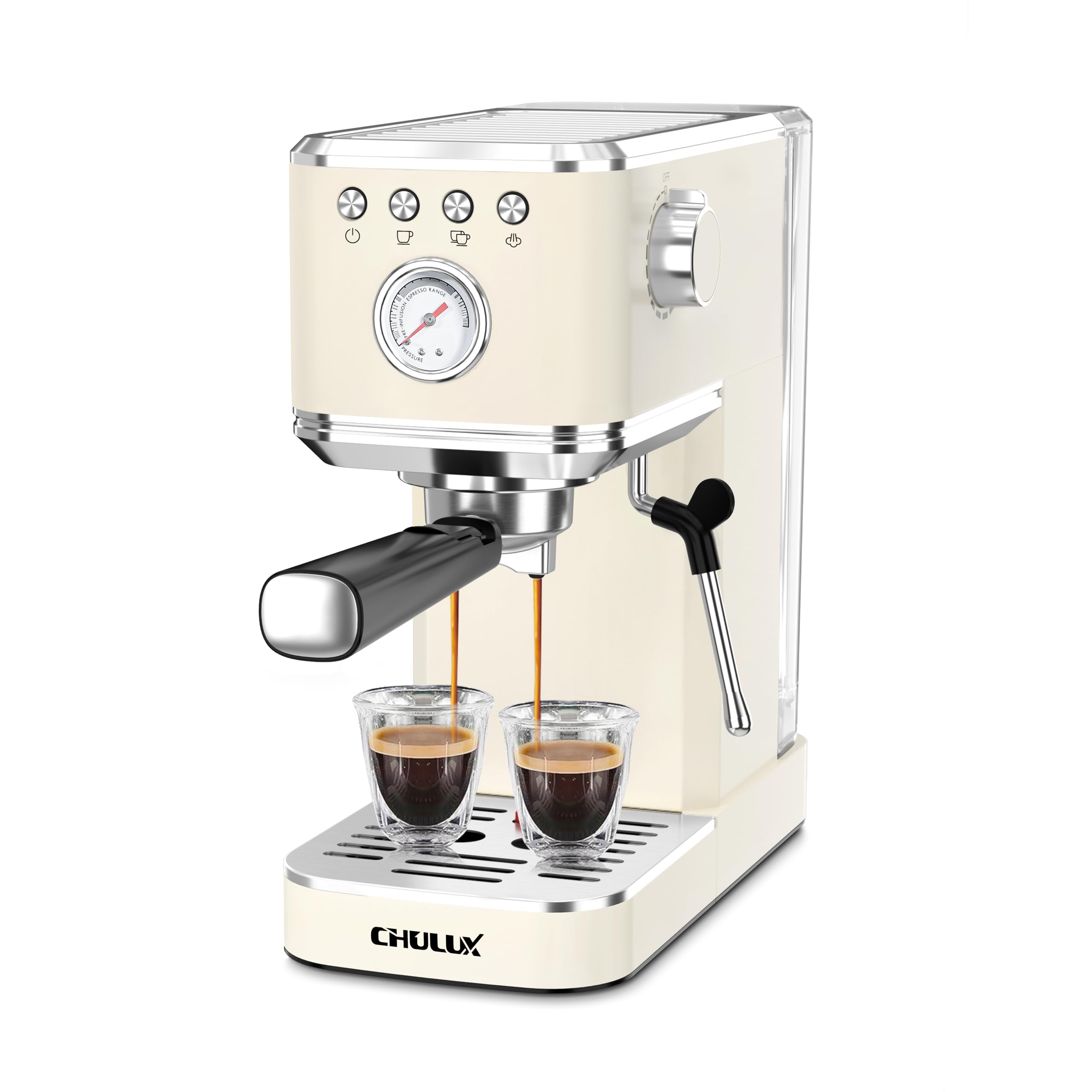
CHULUX Slim Espresso
Key Features
- Pump Pressure: 20 bar
- Type: Semi-auto
- Steam Wand: Manual
- Reliability: 23% negative
- Price: $
The CHULUX Slim pulls espresso shots with a thick, golden crema that rivals café quality—something unusual at this price point. The 20‑bar pump heats up quickly, and the steam wand produces silky milk foam for lattes and cappuccinos. Setup takes minutes, and the compact footprint (5.5 inches wide) fits easily on cramped countertops.
This machine is built for budget‑minded beginners and home baristas who want real espresso without the complexity or cost of higher‑end models. The 40‑oz water tank is sufficient for a few drinks daily, and the semi‑automatic operation keeps things simple. A small number of units may have steam wand or pump defects, so inspecting the machine upon arrival is wise. Those expecting heavy‑duty build quality or commercial features should look at pricier alternatives.
Pros
- Produces rich espresso with thick crema at a budget price.
- Simple to set up and operate, ideal for beginners.
- Heats rapidly and runs quietly during use.
Cons
- Steam wand or pump may have defects in a small number of units.
- Plastic construction and lightweight feel won’t match $400+ machines.
For under $100, the CHULUX Slim delivers reliable espresso with minimal fuss — a smart pick for anyone starting out or working with limited space.
Best for Capsule Enthusiasts
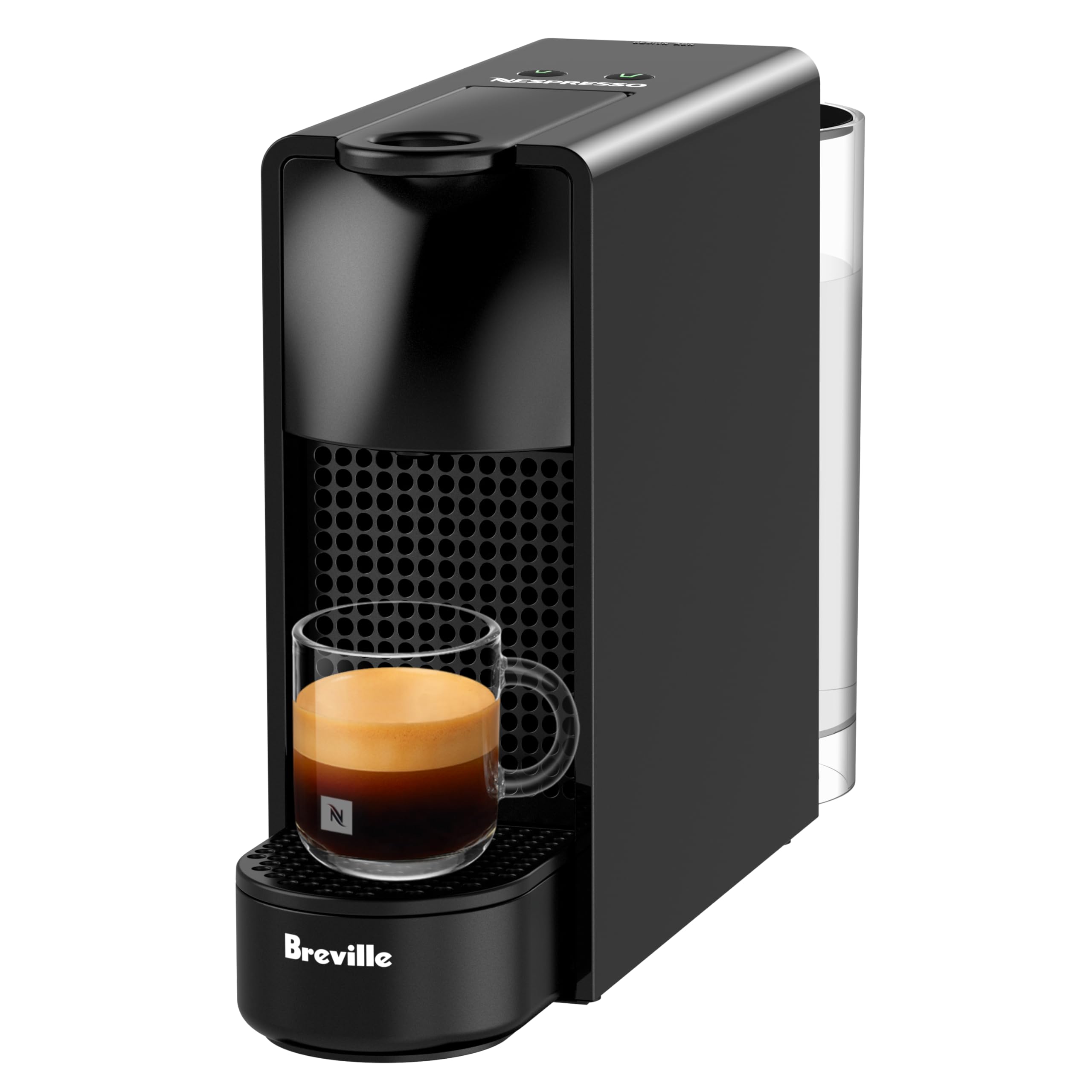
Nespresso Essenza Mini
Key Features
- Pump Pressure: 19 bar
- Type: Capsule (Original)
- Steam Wand: No
- Reliability: 29% negative
- Price: $$
The Nespresso Essenza Mini delivers the brand’s signature shot quality in a footprint smaller than a loaf of bread, heating up in 25 seconds. It’s ideal for capsule enthusiasts who prioritize consistency and counter space and want zero hassle. The tradeoff: there’s no built-in milk frother, so lattes and cappuccinos require a separate device. For those who want both coffee and espresso, other capsule systems offer more cup size variety.
Pros
- Consistent espresso quality shot after shot.
- Compact design saves counter space.
- Extremely easy operation with two buttons.
Cons
- No built-in milk frother; separate device needed for lattes and cappuccinos.
- Durability over extended use can vary between units.
This is the right pick for anyone who wants a dedicated espresso machine with no learning curve and a tiny footprint, as long as milk frothing isn’t a priority.
Best for Cost-Conscious Baristas
CASABREWS 3700 Essential
Key Features
- Pump Pressure: 20 bar
- Type: Semi-auto
- Steam Wand: Manual
- Reliability: 35% negative
- Price: $
The CASABREWS 3700 packs the largest water tank in its price class at 43.9 ounces, so refills are less frequent. It uses a 20-bar pump and a steam wand to turn ground coffee into espresso with noticeable crema, and the controls are simple enough for a first-time owner to get a drink within minutes.
This machine is aimed at budget-driven home baristas who want a big water tank and don’t mind accepting some unit-to-unit variance. Long-term durability can be hit-or-miss — a minority of owners see issues within months — and the steam wand’s temperature may fluctuate, making microfoam less predictable. If capacity and low price matter more than guaranteed longevity, the 3700 delivers.
Pros
- Creates thick crema and full-flavored espresso from ground coffee.
- Simple setup and straightforward daily operation.
- Large 43.9 oz water tank reduces refill frequency.
Cons
- Steam wand temperature can vary, affecting milk texture consistency.
- Long-term durability may vary between units; some experience issues within months.
The 3700 is a solid value for buyers who prioritize a large tank and low upfront cost and are comfortable with possible durability variance.
Best for Tech-Savvy Baristas
CASABREWS Ultra
Key Features
- Pump Pressure: 20 bar
- Type: Semi-auto
- Steam Wand: Manual
- Price: $$
The CASABREWS Ultra stands out with its adjustable brewing temperature via LCD, giving home baristas precise control over extraction. The 20-bar pump and steam wand support latte art, and the 73 oz water tank reduces refills. The LCD interface makes temperature adjustments straightforward, and the steam wand, while slower than some dedicated frothers, produces microfoam adequate for latte art. This machine suits tech-savvy users who prioritize customization over the lower price of the simpler 3700 model. One tradeoff: even at the highest temperature setting, some drinkers may find the espresso not piping hot.
Pros
- Adjustable temperature produces rich, customized espresso shots.
- Clear LCD display simplifies navigation and temperature settings.
- Feature set offers solid value compared to pricier machines.
Cons
- Steam wand froths at a slower pace than dedicated milk frothers.
- Coffee temperature may be too low for drinkers who prefer piping hot espresso.
This machine is best for home baristas who want temperature control and a large water tank, and can work around the moderate coffee temperature.
Best for Espresso Hobbyists
Gaggia Classic Evo Pro
Key Features
- Pump Pressure: 9 bar
- Type: Semi-auto
- Steam Wand: Manual
- Reliability: 48% negative
- Price: $$$
The Gaggia Classic Evo Pro brings a 58mm commercial portafilter and real 9-bar pressure to home kitchens — specs typically found on machines costing twice as much. Its build quality and moddable design appeal to coffee enthusiasts who want to dial in shots and maintain their own gear. This is not a plug-and-play appliance; the learning curve is steep and requires practice to pull rich, authentic shots. It suits someone willing to invest time in technique, not someone expecting instant results.
Pros
- Delivers authentic, rich espresso shots when dialed in correctly
- Sturdy commercial-grade frame and parts that can be serviced and modified
Cons
- For those expecting a flawless out-of-box experience, some units may have minor issues that need attention
The Gaggia Classic Evo Pro is for espresso enthusiasts who see the machine as a platform to master — it rewards patience and technique with café-quality results.
Best for Value-Conscious Baristas
atatix Espresso
Key Features
- Pump Pressure: 20 bar
- Type: Semi-auto
- Steam Wand: Manual
- Price: $$
The atatix Espresso Machine brings NTC temperature regulation and manual extraction to the mid-range, letting you dial in shot timing and water volume. The 44 oz tank reduces refill frequency, and the 20 bar pump produces a thick crema. This semi-auto appeals to home baristas who want fine control without jumping to a prosumer price point.
It suits those who prioritize adjustable shot parameters over absolute convenience. The brew temperature can run lower than some expect — preheating your cup helps. The machine is also on the noisier side, so it works best in kitchens rather than open-plan living areas.
Pros
- Produces espresso with a rich, lasting crema
- Cleaning and daily use are uncomplicated
- Offers strong feature set for the price
Cons
- Pump noise is noticeable in a quiet kitchen — fine for busier spaces
A capable semi-auto for baristas who want temperature control and a larger water tank, as long as noise and slightly cooler espresso aren’t dealbreakers.
Best for Budget Beginners
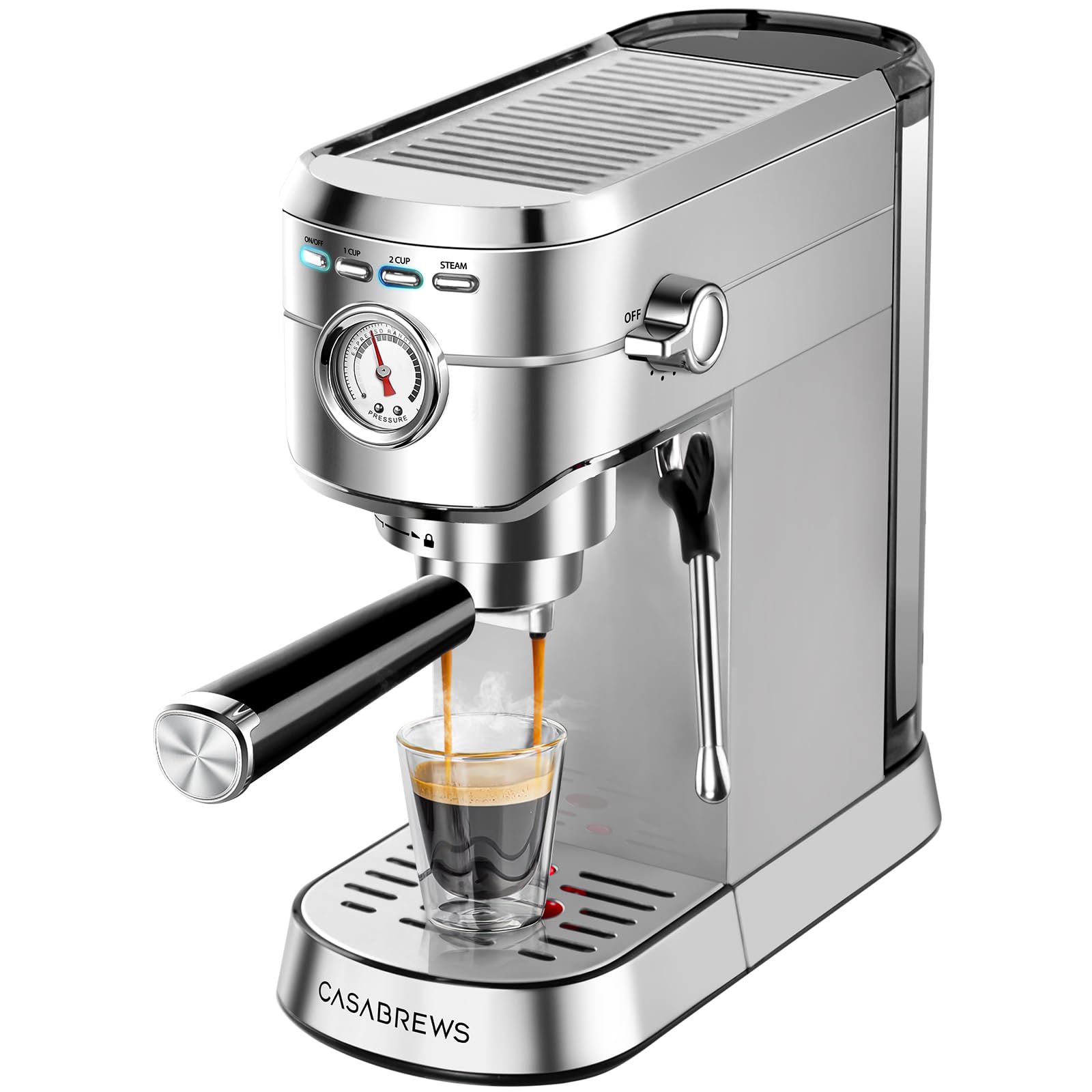
CASABREWS CM5418
Key Features
- Pump Pressure: 20 bar
- Type: Semi-auto
- Steam Wand: Manual
- Price: $
The CASABREWS CM5418 pulls solid espresso with decent crema for a budget machine, and the simple controls make it easy to learn on. However, quality control can be spotty — some units have steam wand performance that drops off or minor operational quirks. It’s essentially a side-grade to the top pick, sharing similar capabilities without a standout feature to justify choosing it over that more proven option.
Pros
- Produces espresso with good crema for the price
- Simple operation and cleaning process
Cons
- Steam wand performance may be inconsistent between units
Best for budget-conscious beginners who want a low-cost way to start learning espresso, provided they are comfortable with possible unit variance.
Best for Variety Drinkers
Nespresso Vertuo

Key Features
- Type: Capsule (Vertuo)
- Steam Wand: No
- Reliability: 44% negative
- Price: $$
This machine delivers rich-tasting coffee and espresso from simple capsules, with push-button operation and quick heat-up. However, the brew temperature may be lukewarm for some, and long-term durability under regular use has occasional issues. It suits those who value drink variety over piping-hot coffee or long-term reliability.
Pros
- Five cup sizes from single espresso to 8 oz coffee — one capsule system handles it all.
- Push-button operation with 25-second heat-up for quick brews.
Cons
- Coffee may not be hot enough for those who prefer steaming-hot brews.
Best for buyers who want a single machine for both coffee and espresso and are willing to accept occasional lukewarm brews and potential durability tradeoffs.
Best for Solid Budget Build
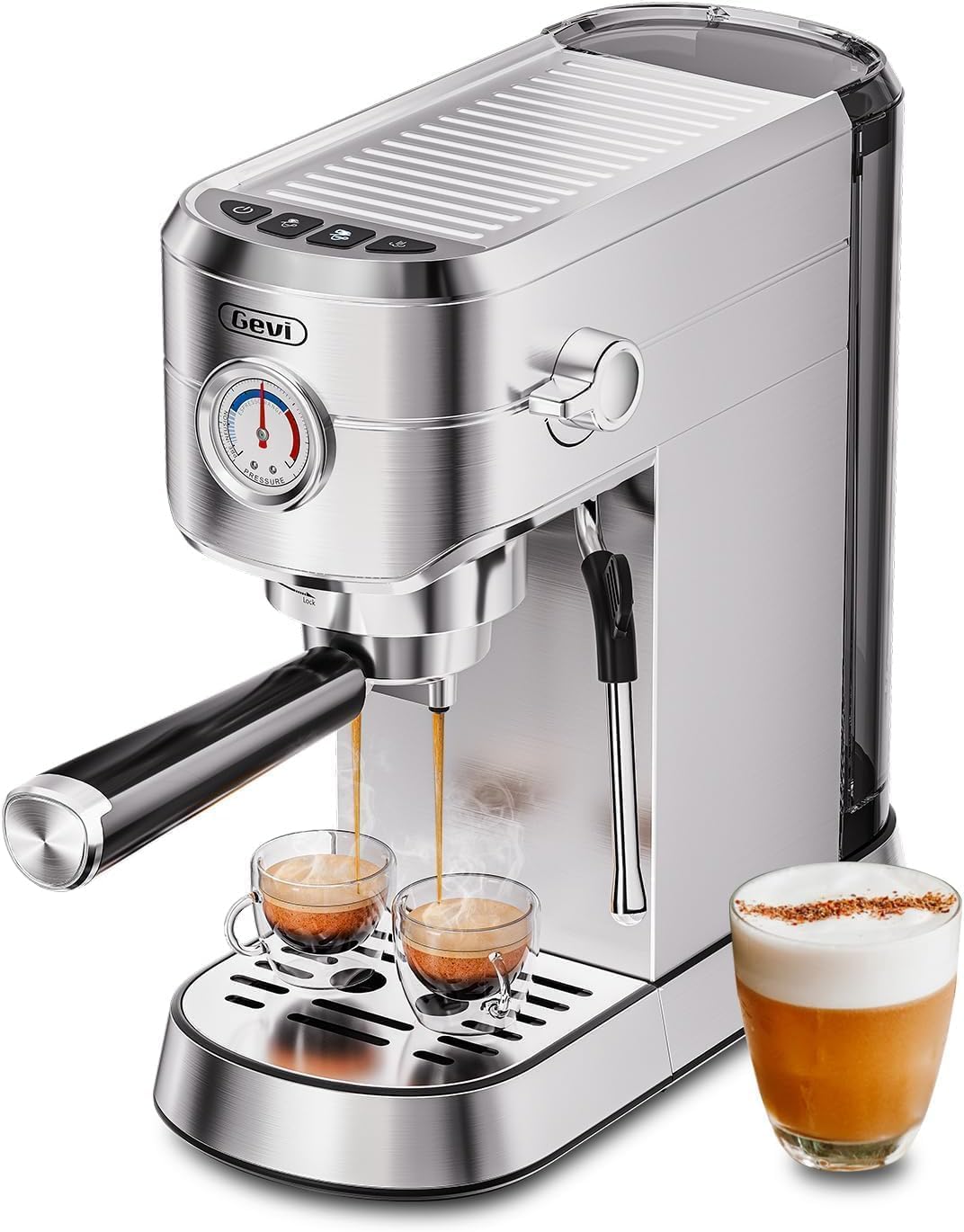
Gevi 20 Bar Espresso
Key Features
- Pump Pressure: 20 bar
- Type: Semi-auto
- Steam Wand: Manual
- Price: $
This machine offers a stainless steel build, pre-infusion, and a pressure gauge at a low cost. The steam wand can be finicky to clean and the pump noise may be noticeable in quiet kitchens. It suits beginners who want these features and can accept these trade-offs.
Pros
- Stainless steel body with pre-infusion and pressure gauge
- Good entry-level option for new home baristas
Cons
- Steam wand requires regular cleaning and pump noise may be noticeable in quiet spaces
Best for home baristas who prioritize build quality and pre-infusion over noise and steam wand convenience.
Best for Lavazza Fans
Lavazza Classy Mini

Key Features
- Type: Capsule (Lavazza Blue)
- Steam Wand: No
- Reliability: 52% negative
- Price: $
The Lavazza Classy Mini produces rich, consistent espresso from Lavazza Blue capsules and fits into the tightest counter spaces. However, the machine is loud during operation – noticeable in quiet kitchens – and some units develop leaks or stop working over time. For Lavazza loyalists who value taste and size above all else and can accept these tradeoffs, it delivers; but anyone expecting a quiet or long-term daily driver should look elsewhere.
Pros
- Rich espresso quality with Lavazza Blue pods – authentic crema and flavor.
- Ultra-compact footprint fits even the smallest counter spaces.
Cons
- Operation noise is loud enough to be disruptive in quiet rooms.
Best for dedicated Lavazza pod fans who prioritize taste and size over quiet operation and long-term durability.
Best for Occasional Use
Neretva 20 Bar

Key Features
- Pump Pressure: 20 bar
- Type: Semi-auto
- Steam Wand: Manual
- Reliability: 41% negative
- Price: $
The stainless steel body and LED display give this machine a polished look, and it produces decent crema for the price. However, brew temperature can vary, and some units may develop issues over time — suited for infrequent use rather than daily driving. Trails the CHULUX and CASABREWS in reliability and heat consistency.
Pros
- Compact stainless steel design with LED display at a budget price.
- Produces espresso shots with good crema for the cost.
Cons
- Brew temperature can be inconsistent, occasionally yielding lukewarm coffee.
Worth considering if you value aesthetics and occasional espresso on a tight budget, but look elsewhere for daily reliability.
Best for Entry-Level Learners
De’Longhi Stilosa

Key Features
- Pump Pressure: 15 bar
- Type: Manual
- Steam Wand: Manual
- Reliability: 74% negative
- Price: $
This machine offers a low-cost entry to espresso with a steam wand and tamper included. It’s easy to use and clean, but brew temperature can be too low for some, and longevity may be a concern under regular use.
Pros
- Great value for a first espresso machine
- Simple to use and clean
Cons
- Brew temperature may not be hot enough for some drinks
Best for budget-conscious occasional users who are willing to accept possible temperature and longevity tradeoffs.
Best for Super Budget
IMUSA 4-Cup Espresso Maker

Key Features
- Pump Pressure: Steam-driven
- Type: Semi-auto (steam)
- Steam Wand: Manual
- Reliability: 83% negative
- Price: $
Costs less than a month of café lattes and is simple to operate, producing acceptable espresso and frothed milk for the price. The trade-off is limited build durability — some units may only last a few months — making this a fit for occasional experimentation rather than daily use.
Pros
- Excellent value for money
- Simple and easy to use
Cons
- Limited build durability; may not withstand regular use
A low-cost entry point for someone who wants to try espresso without commitment, but expect to replace the machine within a year.
How to Choose
The most overlooked factor when buying an espresso machine under $500 is real-world durability, not the number of bars on the pump.
Pump Pressure
Pump pressure is often marketed as a sign of quality, but the extraction sweet spot for espresso is around 9 bars. Most machines with 15 or 20 bar pumps use an overpressure valve to regulate down, so higher numbers don’t automatically mean better shots. What matters is consistency: a stable 9-bar extraction from a well-regulated pump produces better crema than a fluctuating 20-bar claim.
Machine Type: Capsule vs. Ground Coffee
Capsule machines offer unmatched convenience and consistency — you press a button and get a repeatable shot every time. The trade-off is pod cost and limited customization. Semi-automatic machines let you choose your own beans and dial in grind size and dose, but require practice and cleaning. For most home baristas under $500, a semi-auto gives better long-term value if you’re willing to learn.
Capsule machines lock you into proprietary pods that can cost $0.50–$1.00 per shot, adding up quickly if you drink multiple cups daily. Semi-autos cost more upfront but break even after a few months of regular use.
Steam Wand Quality
A manual steam wand on a budget machine often lacks the power and swivel range of commercial models. You’ll need to learn proper technique to create microfoam rather than bubbly froth. Some machines have automatic frothers that simplify milk steaming but produce less textured foam. For latte art or silky cappuccinos, a manual wand with a separate steam boiler is preferable, but on machines under $500, the wand typically shares the thermoblock, limiting steaming time.
Reliability and Longevity
The single biggest pain point in this price range is machines failing within the first year. Buyer reports show that models priced under $100 have failure rates over 70%, while machines in the $100–$150 range significantly improve those odds. Look for reviews that mention durability over several months, and consider brands with a track record of serviceable parts — like Gaggia’s commercial-grade components.
Temperature Consistency
Lukewarm espresso is one of the most common complaints across budget machines. This happens when the thermoblock or boiler can’t maintain stable brew temperature, especially during back-to-back shots. Machines with PID temperature control or larger thermoblocks are more likely to deliver hot, consistent espresso. If you drink straight espresso or small milk drinks, temperature stability matters more than pump pressure.
FAQ
Why is my espresso not hot enough?
Many budget espresso machines use small thermoblocks that struggle to maintain temperature, especially when pulling consecutive shots. Preheating your cup and running a blank shot through the group head before brewing can raise the temperature by 5–10°F. If lukewarm coffee is a frequent issue, look for machines with PID temperature control or a larger boiler — they hold heat more consistently.
How long do budget espresso machines last?
Based on thousands of user reports, machines under $100 often fail within 6–12 months due to pump or seal issues. Stepping up to the $100–$150 range roughly doubles the average lifespan to 2–3 years. Models with commercial-grade components, like the Gaggia Classic, can last a decade with proper maintenance.
Can I use ground coffee in a Nespresso machine?
No. Nespresso machines are designed for single-use capsules — they cannot accept loose ground coffee. If you want the flexibility to use your own beans, choose a semi-automatic espresso machine instead.
Does a 20-bar pump make better espresso than a 15-bar pump?
Not directly. Espresso extraction happens at 9 bars of pressure. Higher-rated pumps (15 or 20 bar) include an overpressure valve that reduces output to 9 bars. The actual difference in cup quality depends on how well the pressure is regulated — a stable 9-bar system from a 15-bar pump can outperform an inconsistent 20-bar pump. Focus on reviews of shot consistency rather than the advertised pressure number.