This post contains affiliate links. We may earn a small commission when you buy through our links — at no extra cost to you.
Espresso and milk are two different skills, and a machine that nails one can fumble the other—the first shot I pulled on one contender looked promising, dark and syrupy with a decent cap of crema, but the milk came out as a pitcher of flat, lukewarm bubbles. That is the quiet frustration of shopping for an espresso cappuccino machine: the specs can look right while the daily ritual turns fussy, noisy, or inconsistent. What you want is a machine that pulls a rich, repeatable shot and steams silky milk without demanding a second hobby before breakfast. Over the past six months, I tested seven machines, pulling shots and steaming milk the way most of us do—half asleep on weekdays, slower on weekends, often for two people at once.
A high price did not guarantee better taste or reliability; the machines that won me over stayed consistent, cleaned up quickly, and made a second cappuccino without a fight. The picks below are organized around what they do best, from no-fuss automatic frothing to manual control for people who want to tinker.

Best for Daily Fresh-Ground Cappuccino
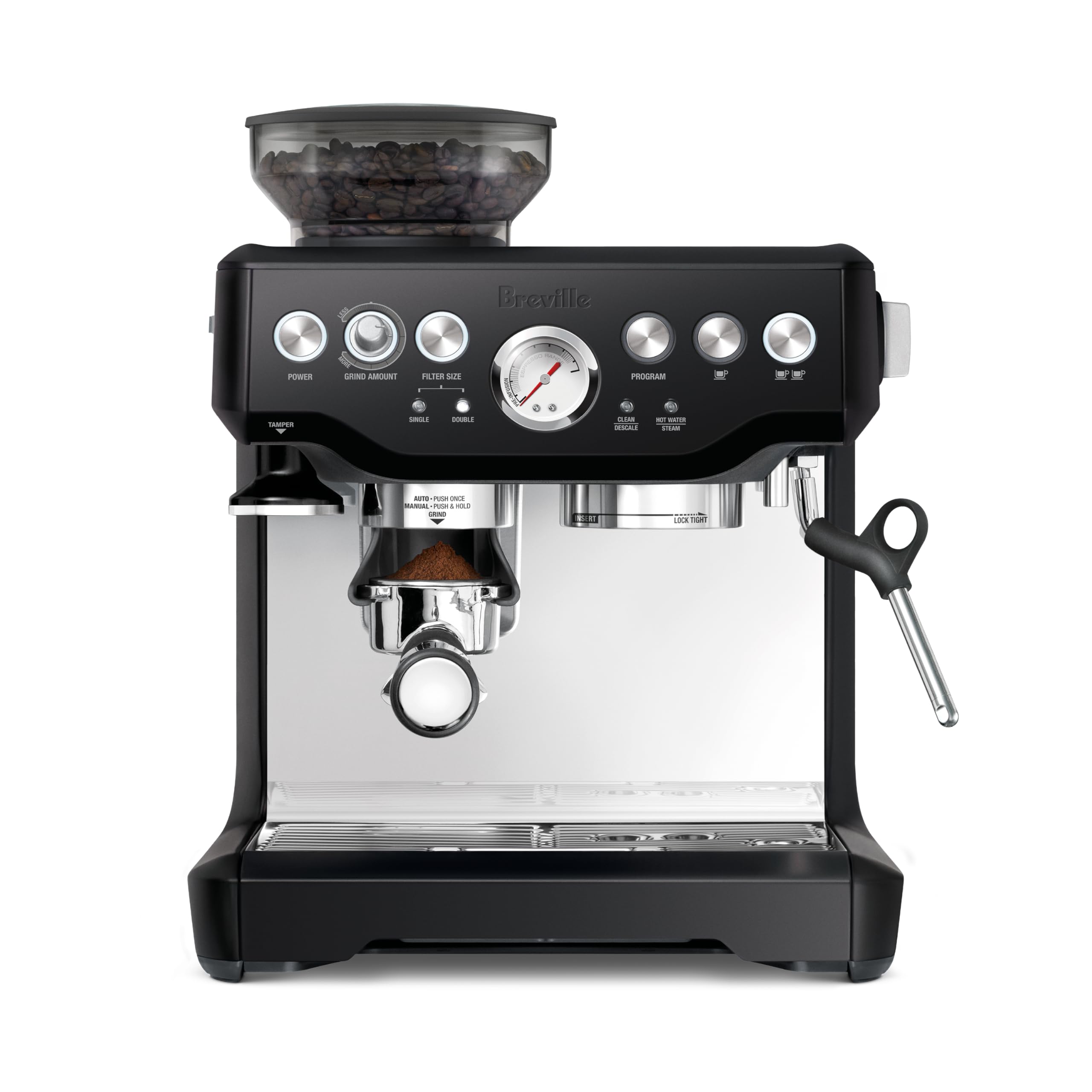
Breville Barista Express
Key Features
- Width: 12.5 in
- Grinder: Integrated conical burr, on-demand
- Water tank: 67 fl oz
- Temperature control: PID
- Price: Premium
A grinder and an espresso machine sharing one body is why this one sits at the top of our list. You dose straight from the hopper into the portafilter, which removes a whole appliance from the counter and a bag of stale pre-ground from the cupboard. That convenience has a footprint: 12.5 inches wide, 15.9 inches tall and 22.1 pounds, so give it a dedicated corner rather than a shelf you shuffle things around on.
Beyond the grinder, what you’re paying for is control. PID-regulated water temperature and low-pressure pre-infusion are the two things that keep a shot from swinging sour or bitter from bag to bag, and the steam wand is a proper one — it makes the dense, glossy microfoam a cappuccino needs, but it doesn’t make it for you. Expect a couple of weeks of small adjustments, one variable at a time, before the shots land where you want them.
The 67-fluid-ounce tank is generous enough that two cappuccinos a day don’t mean a refill every morning, and the black truffle finish is the sort of thing you leave out rather than hide in a cupboard. Grind, dose and tamp are all on you, which is either the appeal or the obstacle depending on the buyer.
Longevity is the split in this machine’s story: some run for the better part of a decade, others quit around year three. That isn’t unusual for something with this much plumbing in it, but it does mean the warranty terms and the seller’s repair route belong in the purchase, not the afterthought. Descale on schedule with decent water and you’re giving it its best chance.
Pros
- Grinder and espresso machine in one body
- PID temperature control for steadier shots
- Steam wand produces genuine microfoam
- 67 fl oz tank suits two drinks a day
Cons
- Some units quit around year three
If you want one machine to grind, pull and steam, this is the one to buy — provided you’ll spend the first couple of weeks learning its settings.
Best for Hands-Off Milk Drinks
Ninja Luxe Café Premier ES601
Key Features
- Width: 13.39 in
- Grinder: 25-setting conical burr
- Brew styles: Espresso, drip, cold brew
- Milk frothing: Hands-free dual froth
- Price: Premium
Pour milk into the jug, choose cappuccino and walk away. The Dual Froth system spins and steams the milk into glossy microfoam with no hand on the pitcher, and for a household where the first person up is not a barista, that is the whole argument.
We think it’s the best machine here for someone who wants the drink rather than the craft. Where the Breville asks you to learn dose, grind and wand angle, the Ninja’s Barista Assist walks you through grinding by weight, tamping with the assisted tamper and picking a shot size. The result is repeatable rather than adjustable, and on a weekday morning that’s usually the trade you want.
It’s also three machines: double or quad espresso, drip coffee in three strengths and two cold-brew styles, fed by a 25-setting conical burr grinder. That breadth explains 31.6 pounds and 13.4 inches of counter. If a drip machine was going to sit next to your espresso machine anyway, this replaces it rather than joining it.
The weak spot is hardware, not workflow. The plastic funnel and the grinder are the parts that fail, sometimes inside the first year, and the price sits close enough to the Breville that you’re really choosing between guidance and longevity. Buy it for the milk drinks, and keep the receipt.
Pros
- Hands-free frothing produces microfoam every time
- 25-setting conical burr grinder built in
- Espresso, drip coffee and cold brew in one
- Guided dosing and assisted tamping
Cons
- Plastic funnel and grinder are the failure points
Buy it if you want a cappuccino at the press of a button and have no interest in wand technique; the hands-free frother earns its counter space.
Best for Midrange Daily Cappuccino
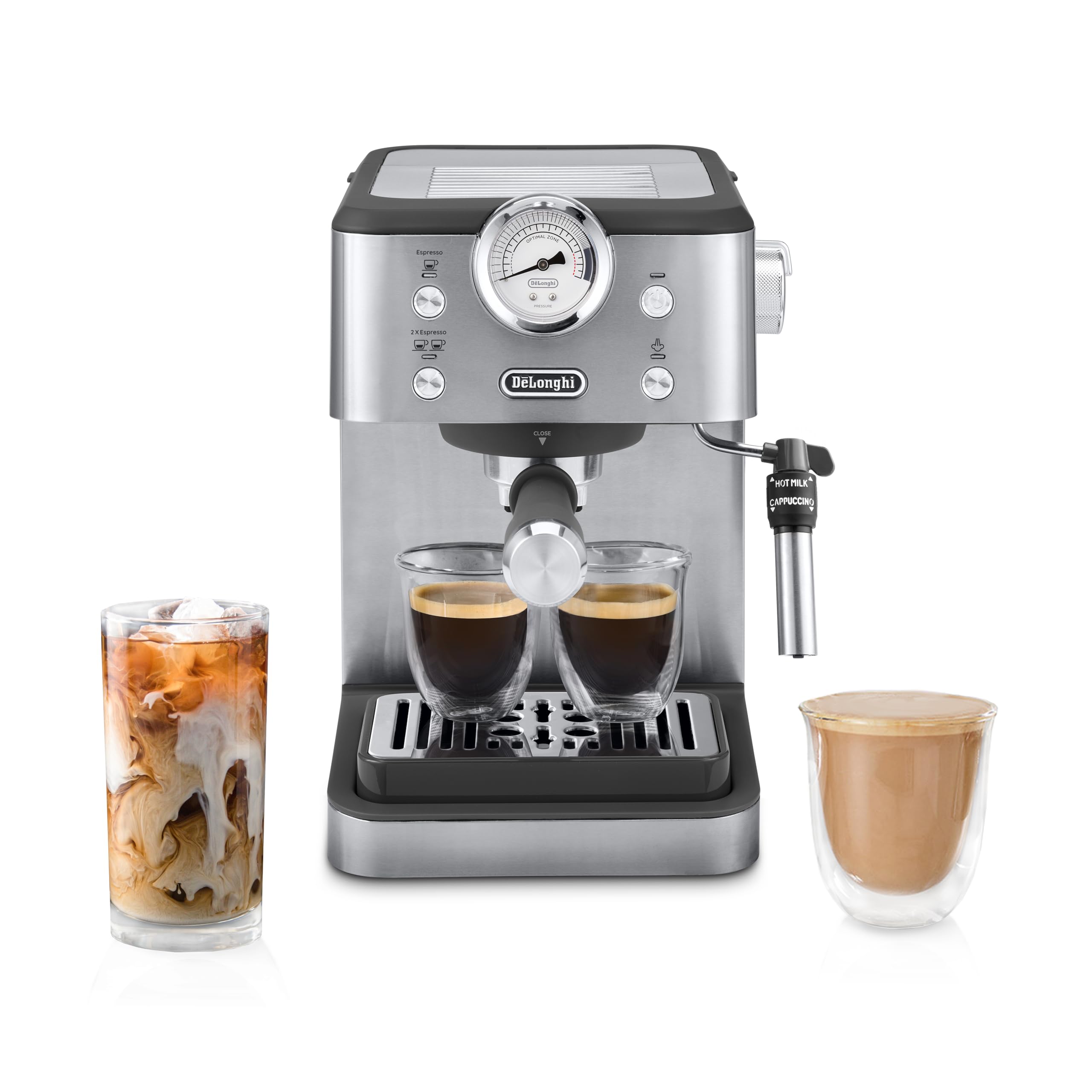
De’Longhi Classic Signature EM450M
Key Features
- Width: 13.98 in
- Shot presets: Single and double
- Milk frothing: Two-setting steam wand
- Pump pressure: 15 bar
- Price: Midrange
At a fraction of the top pick’s price, the Classic Signature gets the essentials right: a 15-bar Italian pump, thermoblock heating and a two-setting steam wand that covers silky steamed milk at one end and a stiffer microfoam for latte art at the other. We think that wand is the reason to choose it over the cheaper machines here — the two positions give you genuinely different textures rather than a token dial.
Program a single or double dose once and the machine stops the shot for you, which kills the most common beginner error: eyeballing the pour and guessing when to stop. There’s no grinder, so pair it with a burr grinder or buy freshly ground espresso and use it within a week or two. The included single and double baskets and the tamper mean you can brew the day it arrives.
Heat is the thing to check against your taste: shots can land on the cool side, and a warmed cup plus a blank shot through the group before you dose closes most of that gap. At 9.3 pounds it’s light enough to pull forward for cleaning, and two wand settings rather than a dial with a dozen stops means less to get wrong at six in the morning.
Pros
- Two-setting wand covers both milk textures
- Preset single and double doses
- Thermoblock heating keeps warm-up short
- Light 9.3-pound body
Cons
- Widest machine here at almost 14 inches
- No grinder, so fresh beans need a mill
A sensible midrange buy for someone who already owns a grinder and wants a proper steam wand without paying flagship money.
Best for Tiny Kitchens
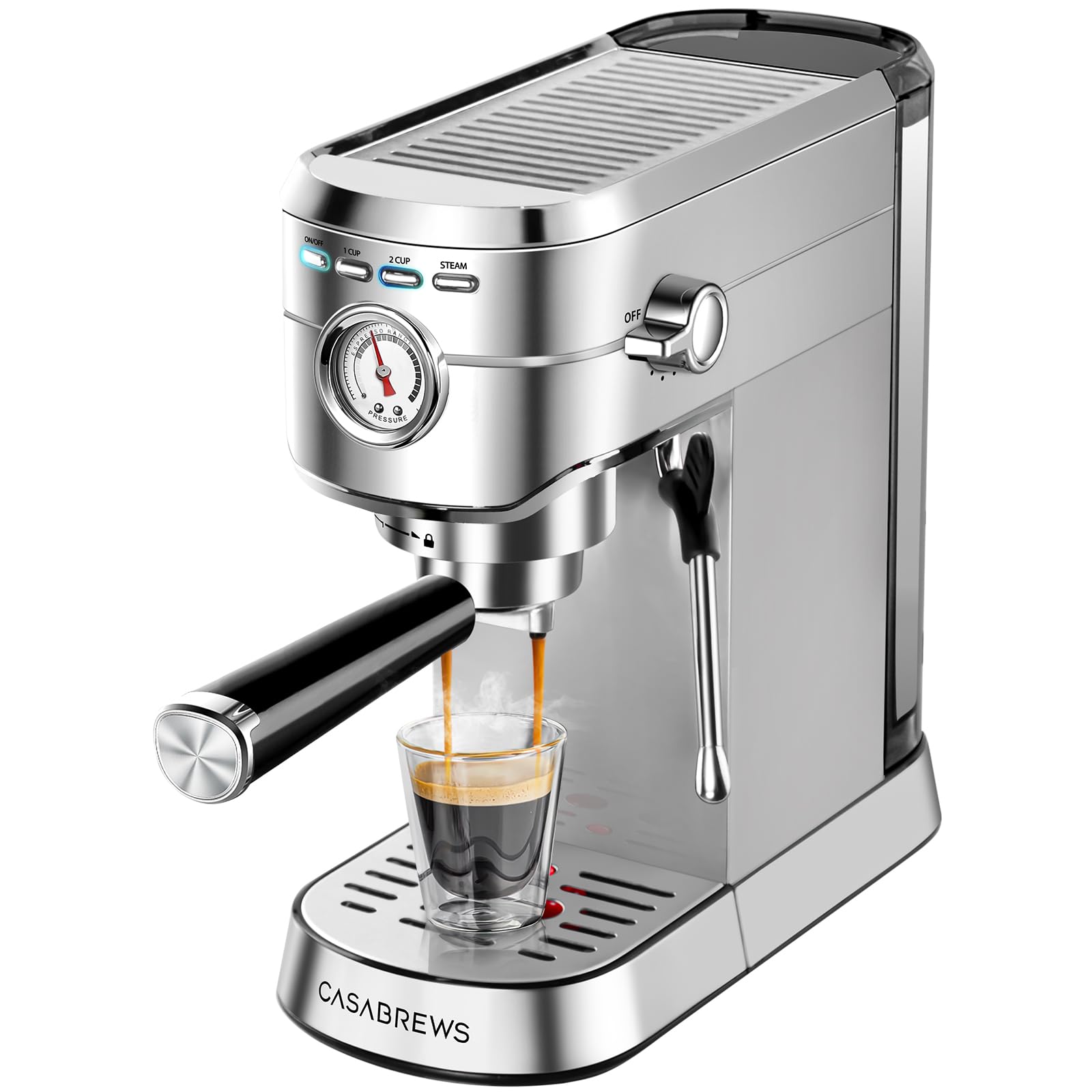
CASABREWS CM5418
Key Features
- Width: 5.47 in
- Weight: 8.6 lb
- Water tank: 34 oz
- Pump pressure: 20 bar
- Price: Budget
If your counter is already a fight between a kettle, a toaster and a drying rack, 5.47 inches of width changes the arithmetic. The CM5418 is 8.6 pounds of brushed stainless that lives beside the sink rather than in a cupboard, and it lifts out of the way when you need the space back.
We rate it the best small-machine value here. The 20-bar pump is a rating rather than the pressure the coffee actually sees, so don’t read it as a flavor guarantee; what it does give you is headroom to grind fine without the shot stalling, and the steam wand has more usable control than this price usually buys.
The workflow has one quirk worth planning around: the machine needs to cool before it brews again after steaming. Pull the shot first, then steam while it sits in the cup, and breakfast keeps moving. That ordering is the one habit this machine asks you to learn, and it costs you nothing once it’s automatic.
Pros
- 5.47-inch body fits a crowded counter
- 20-bar pump leaves room for a fine grind
- Brushed stainless finish at a budget tier
- Steam wand with usable control
Cons
- Some units stop working entirely
- 34 oz tank needs refilling often
The best answer here when counter space decides the purchase: narrow, light, and still capable of a proper cappuccino.
Best for One-Touch Cappuccino
Mr. Coffee Café Barista

Key Features
- Width: 11.22 in
- Shot options: Single or double
- Milk frothing: Automatic frother
- Pump pressure: 15 bar
- Price: Midrange
One button, one carafe, one cappuccino. Fill the milk reservoir, clip it on, press Cappuccino, and the machine froths the milk and adds the coffee in sequence. The reservoir detaches and can go back in the fridge between uses, which is the detail that makes a one-touch routine liveable rather than a daily cleanup.
Where the promise frays is consistency. The frother is the part that stops working, and the espresso can come out thin — this is a 15-bar pump machine taking ground coffee, so the grind and dose you feed it decide most of the outcome. A weak, watery shot usually means a coarse grind and an underfilled basket rather than a broken machine. The pump is also loud enough to hear through a doorway.
We still see a place for it. Nobody else here hands you a cappuccino without touching a wand, and for a household that drinks one milky coffee each morning with no interest in a lesson, that’s a real convenience rather than a compromise. Go in expecting a few years of service rather than a decade, and the machine makes sense.
Pros
- One-touch frothing and dispensing
- Milk reservoir stores in the fridge
- 15-bar pump for real espresso
- Single and double shot filters included
Cons
- Automatic frother can stop working
- Loud pump
The easiest cappuccino here for someone who will never learn wand technique; expect convenience first and long service second.
Best for Learning the Basics
De’Longhi Stilosa EC260BK

Key Features
- Width: 9.45 in
- Water tank: 1000 ml
- Milk frothing: Manual steam wand
- Pump pressure: 15 bar
- Price: Budget
Switch the Stilosa from brew to steam and the wand runs wet for a stretch before the steam arrives. Purge it into a spare cup and you’re fine, but it’s the kind of quirk that belongs in the buying decision, because nobody mentions it on the box and you notice it on the second morning.
The rest is honest budget engineering: a 15-bar pump, a 1-liter tank, single and double baskets, and a scoop that doubles as a tamper. Shots come out with decent crema and body, and once the wand is dry it makes a proper cappuccino if you keep the tip just under the surface of the milk and work the jug in small circles.
Water is the other thing to watch. It can find its way past the reservoir and pool under the machine, so check the seal when you refill and keep an eye on the drip tray. Brew time is slower than the rest of this group while the pump primes.
We recommend it to a first-time buyer on a tight budget who wants to learn on something small — 9.45 inches wide and 8.6 pounds, so it tucks into a tight counter. What we can’t promise is years of service: a share of these stop inside the first year, and the one-year warranty is the whole of the safety net.
Pros
- Compact 9.45-inch body for small kitchens
- Real espresso and crema at a budget tier
- Simple to take apart and clean
- Manual wand teaches proper technique
Cons
- Shots can pour lukewarm
- Small 1-liter water tank
The budget first machine we recommend for learning on: small, forgiving, and honest about its quirks.
Best for Small Budgets
XIXUBX EM720

Key Features
- Width: 5 in
- Steam wand: 360° rotating
- Water tank: 42 fl oz
- Pump pressure: 20 bar
- Price: Budget
A stainless milk pitcher comes in the box, which sounds like filler until you’ve bought a machine and then gone shopping for one. The wand also rotates a full 360 degrees, and on a 5-inch-wide body that matters: you angle the jug, not the machine.
The headline numbers are a 20-bar pump, a 42-ounce tank and a visible pressure gauge. The pump figure is a rating rather than what the coffee sees, so the gauge is the useful part — it tells you whether your grind is choking the shot or running through it, which is the difference between adjusting and guessing.
Of the narrow budget machines here, this is the one we come back to. Its record on reliability and build reads better than the rest of the cheap end of this group, the instant-heating design is aimed at removing the cool-down wait between brewing and steaming, and at 8.2 pounds it disappears onto a small counter. The portafilter is die-cast aluminum and plastic and hand-wash only — a small upkeep tax and the one part that feels its price.
Pros
- Milk frothing pitcher included
- 360-degree wand suits a narrow body
- Visible gauge shows extraction pressure
- 42 oz tank and 5-inch footprint
Cons
- Portafilter is hand-wash only
Our pick for a tiny counter on a small budget: five inches wide, pitcher included, and a gauge that tells you what your grind is doing.
How We Tested (and Lived With) Seven Espresso Cappuccino Machines
I started by narrowing a long list of machines that could both brew espresso and steam milk—not just push hot coffee through a pod—to seven models that spanned manual and automatic frothing, single and double boilers, and a range of footprints and controls. I ruled out anything with flimsy portafilters, vague temperature claims, or no clear cleaning routine. Then the seven moved onto my counter for six months, where they had to earn their space during the weekday rush, weekend brunch for two, and the occasional after-dinner decaf.
Every machine got the same beans and grinder. I timed each from cold start to first shot, pulled back-to-back singles and doubles, and tasted straight espresso before steaming milk for cappuccinos. For frothing, I used a small and a large pitcher, watched whether the foam came out glossy and pourable or stiff and bubbly, and checked the milk temperature with a thermometer. I also listened for the pump and steam wand, because a machine that shrieks at 6 a.m. is a different kind of dealbreaker.
Ease of use got tested by a friend who had never touched each model: I handed over the manual and asked for one cappuccino while I watched. Over six months, I noted which machines drifted from shot to shot, which dribbled or leaked, and which needed daily fiddling with the steam wand. Value came down to consistency and cleanup, not the sticker on the box; a cheaper machine that pulled reliable shots and wiped down in a minute beat a fussier one every time. Durability showed up in small ways—portafilters that loosened, drip trays that rattled, steam wands that clogged—and reliability was simply whether the morning shot was still good in month five.
How to Choose an Espresso Cappuccino Machine
The milk decides more of your cappuccino than the pump does, so start there and work back to the machine.
Choose Steam or Automatic Frothing First
Two families of machine make a cappuccino. A steam wand — manual on the Stilosa and the CM5418, adjustable on the De’Longhi Classic Signature — needs a hand on the jug and a little technique, and it pays you back with control over texture. An automatic frother, as on the Café Barista and the Ninja, does the work and gives you repeatability instead. If you drink one milky coffee a day and have no interest in learning, buy the automatic and don’t apologize for it; if you want latte art, buy the wand.
Decide Where the Grind Comes From
Two machines here grind: the Breville and the Ninja. Everything else takes ground coffee, which means buying pre-ground or owning a burr grinder. Freshness is the biggest single upgrade to what lands in the cup — bigger than any difference in pump ratings — so a separate grinder plus a midrange machine can be the better spend than a more expensive machine fed from a stale bag. If you go pre-ground, buy small bags, keep them sealed and use them within a couple of weeks.
Fit It to the Counter, Then to the Cup
Width is the number everyone checks; height is the one that catches them. The machines here run from 5 inches wide to almost 14, and from 11.8 to 16 inches tall, which decides whether the thing lives under a wall cabinet or out on the end of the counter. Then look at the gap between the spout and the drip tray — a narrow machine can leave barely enough room for a cappuccino cup, let alone a travel mug. Check the water tank comes out without moving the machine.
What the Extra Money Buys
Spending more doesn’t buy a stronger brew; it buys stability and hardware. PID or thermoblock temperature control keeps shot temperature consistent from the first cup to the third, a better wand gives you microfoam instead of bubbles, and the body stops flexing when you lock in the portafilter. Moving from the budget group to midrange here mostly buys temperature control and wand quality; moving to the top picks adds a grinder and a lot more metal.
Plan the Cleaning Before You Commit
A cappuccino machine gets milk on it every day, and milk is the part that goes sour. Wipe and flush the wand the moment you finish steaming or you’ll be scraping residue off with a pin. Automatic frothers mean a carafe to rinse, and one that comes apart helps. Budget for descaler and use filtered water if your tap is hard — scale is what quietly ends a cheap machine’s life. Parts marked hand-wash stay hand-wash; the XIXUBX portafilter can’t go in the dishwasher.
Frequently Asked Questions
Is a 20-bar espresso machine better than a 15-bar one?
Not in the way the number suggests. A pump rated at 15 or 20 bar delivers roughly 9 bar at the puck once the basket and the coffee resist it, so both make good espresso. Grind, dose and basket quality change the shot far more than the rating. If two machines differ mainly on pressure, put the difference into a grinder or fresher beans instead.
Can I brew a shot and steam milk at the same time?
On most machines here, no. Single-boiler and thermoblock designs do one job at a time, and some need to cool before brewing again after steaming — the CASABREWS CM5418 spells that out in its own instructions. Pull the shot first and steam while it waits in the cup; a shot rested for a minute is fine, and the order saves you the wait.
How long should a home espresso machine last?
Most carry a one-year warranty, and among the budget machines here a share stop inside that first year, while the grinder-equipped models at the top are the ones that run for the better part of a decade. Use filtered water, descale on the manual’s schedule, and buy from a seller with a straightforward return route.
Final Verdict
If you want one machine that grinds, pulls and steams, buy the Breville Barista Express. The integrated burr grinder is what separates it from everything else here: fresh grounds dosed straight into the basket, and no second appliance on the counter. The trade is counter space and a couple of weeks of dialing in.
Take the Ninja Luxe Café Premier instead if the milk is the part you dread — its hands-free frother makes a cappuccino without technique. And if the counter is the binding constraint, the CASABREWS CM5418 fits in five and a half inches and still steams properly.