This post contains affiliate links. We may earn a small commission when you buy through our links — at no extra cost to you.
Lump charcoal gives you a hotter, cleaner fire than briquettes, but the bag is a gamble: one cook it’s fist-sized clusters, the next it’s dust, pebbles, and a lot of shaking. That inconsistency is exactly what separates a bag you’ll rebuy from one that makes you fight the fire all evening. The right bag gives you predictable heat, enough burn time for a full cook, clean flavor, and a manageable ash pile without half the bag falling through the grate.
My team and I spent four months burning through 14 bags, from weeknight burgers to long weekend sessions, and the differences were obvious once we started paying attention. Bags that looked generous often hid a pile of dust at the bottom, while smaller, dense pieces sometimes held temperature better than a few showpiece chunks. The best ones earned it on burn quality, not just peak heat. The picks below are the bags that held up from first light to last coal.



Best for All-Around Grilling
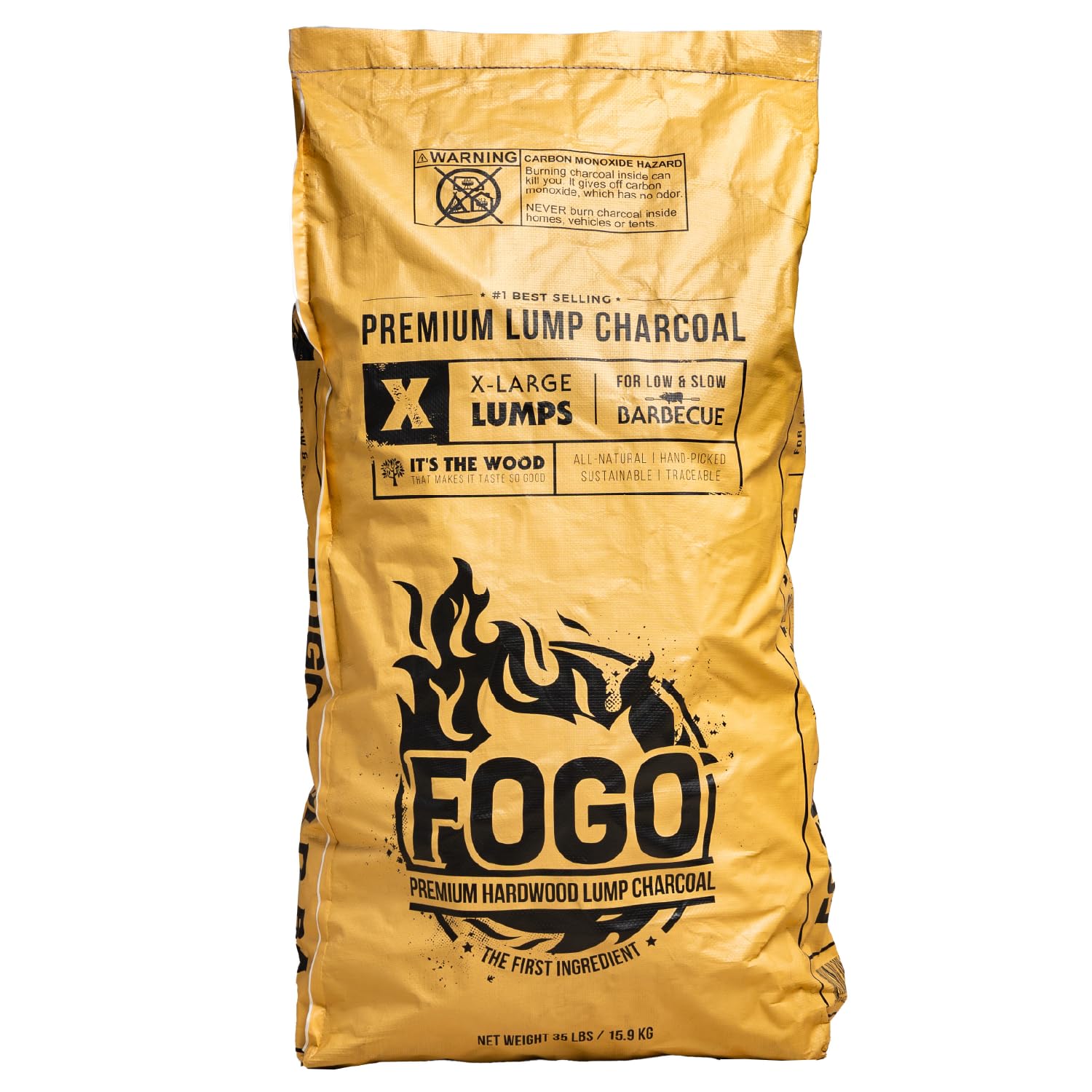
FOGO Super Premium
Key Features
- Bag size: 35 lb
- Hardwood: Central American hardwood
- Lighting time: About 15 minutes
- Large-piece mix: About 80% large pieces
- Price: Midrange
About 80% of FOGO’s bag arrives as large pieces, and that is the first thing we look for in lump charcoal. Big lumps leave air gaps, light without collapsing into a pile of chips, and keep a fire alive through a long cook. That mix is why this 35-pound bag is our top pick for anyone who wants one charcoal for both weeknight burgers and a weekend pork shoulder. The Central American hardwood gives off a mild, clean smoke that stays in the background of the food rather than painting over it.
The burn is steady and long. We noticed the fire holds temperature without constant fiddling, which matters most in a kamado or a kettle where you are trying to cook with the lid down. It also lights quickly for a dense lump; the bag claims about 15 minutes, and that feels right for a chimney starter. The pieces are dry and hard, not crumbly, so you are not sifting a bag of dust before every cook.
Low dust and ash are the quiet advantages. A clean bag means less time cleaning out the firebox and less fine grit drifting onto the food. We also like that FOGO uses tree trimmings and timber marked for removal; it is a small thing, but it makes the bag easier to feel good about. The trade-off is lump size: some pieces are too big for a small kettle or a tabletop grill, so break them down with a hammer or the back of a hatchet.
If you only fire up a small grill a few times a season, a smaller bag makes more sense. For everyone else, this is the bag we reach for first. The large pieces and clean burn are what keep us coming back.
Pros
- About 80% large, dense pieces
- Long, even burn for smoking
- Low dust and ash
- Mild, clean hardwood smoke
Cons
- Large 35-pound bag needs dry storage
We recommend FOGO as the default bag for mixed grilling and smoking, because its large lumps burn long, clean, and with little dust.
Best for High-Heat Bulk Cooks
Jealous Devil Chunx XL
Key Features
- Pack size: 2 x 35 pounds
- Open-air burn: Over 4 hours
- Spark behavior: No popping or sparking
- Max temperature: Above 1,100°F
- Price: Premium
A heat claim above 1,100 degrees and a 70-pound two-pack make Jealous Devil’s Chunx XL the opposite of a starter bag. This is charcoal for someone who cooks a lot, wants a fire that can sear a steak or hold a brisket, and has a dry place to store the second bag. The lumps are dense South American hardwood, and the bag is built around long, hot burns rather than quick weeknight convenience.
For a large kamado or a serious kettle setup, we think this is the strongest high-heat option in this group. The pieces are big and consistent enough to stack a deep fire, and the claim of over four hours of open-air burn or twenty hours in a low-oxygen cooker lines up with what we want from a bag at this level. It also resists popping and sparking, which we appreciate when the grill sits near a wooden deck or dry grass.
The bulk is the catch. Two 35-pound bags are a storage project, and the second bag will sit for a while unless you cook often. The payoff is a summer of high-heat cooking without reordering. If that sounds like too much charcoal, the 10-pound Jealous Devil bag is the easier entry point.
Pros
- Above 1,100°F heat potential
- Long burn in open air or low oxygen
- Low sparking and popping
Cons
- Premium cost for a two-bag purchase
- Dusty pieces settle at the bottom
We recommend the Chunx XL two-pack for big kamados and frequent high-heat cooks, where its long burn and low sparking pay off.
Best for Long, Even Cooks
Rockwood Lump Charcoal
Key Features
- Sourcing: Missouri hardwoods
- Pack size: 3 x 20 pounds
- Total weight: 60 lb
- Hardwood blend: Oak, hickory, and cherry
- Price: Premium
Three 20-pound bags arrive at once, and the blend inside is oak, hickory, and cherry. That mix is the appeal: it gives you the fullness of hickory without the heavy smoke some single-wood bags bring, and the cherry rounds it out. The charcoal is made from Missouri hardwoods, and the bags are recyclable, which makes the bulk purchase a little easier to live with.
We like Rockwood for long, even cooks. The pieces light cleanly, come up to temperature smoothly, and hold a steady fire without the temperature wandering. In a kamado, that makes it a good match for ribs, pork butt, or a chicken you want to cook with the lid down. It is not as aggressive as Jealous Devil on a hot sear, but it is more predictable, and predictable is what a long cook needs.
The bag is not all big blocks. You will find small chips mixed in, so shake the bag and sort the pieces before a long session; the chips are fine for a quick burger fire, but they burn out fast. That is the main thing to know before you commit to the three-bag pack.
Pros
- Oak, hickory, and cherry blend
- Steady, even heat for long cooks
- Bulk three-bag supply
Cons
- Three 20-pound bags take up storage space
We recommend Rockwood when you want a steady, mild-burning blend and do not mind buying three bags at a time.
Best for Kamado Low-And-Slow
Kamado Joe Big Block XL
Key Features
- Reuse: Up to three times
- Bag size: 20 lb
- Burn time: Up to 18 hours
- Hardwood blend: Guayacan, Guayaibi, Mistal, White Quebracho
Kamado Joe’s Big Block XL makes two big promises on the bag: an 18-hour burn and the ability to reuse the same lump up to three times. Those are the numbers to care about if you own a kamado and cook low and slow, because they speak to how much fuel you need to load and how far it will stretch. The charcoal is a blend of dense South American hardwoods, and the pieces are sized for a deep firebox.
The heat is easy to control, and the fire comes up cleanly. A full basket can run a long smoke without constant refilling, and the leftover lumps can be knocked free of ash and used again. That reusability is a real convenience in a ceramic cooker, where a hot fire is slow to build and you want to get the most from each load.
For kamado owners, we think this is a natural fit. It holds temperature well, produces a mild smoke, and has the kind of big-block sizing that keeps air moving through a deep bed of coals. It is also widely used, which means the learning curve is short: load it, light a small area, and bring the temperature up slowly.
The case for Big Block is specific: it is a kamado charcoal, not an all-purpose bag. If your cooker is a ceramic kamado and you want a long, stable fire, it belongs on your shortlist. If you are buying for a kettle or a mixed set of grills, the top pick is the easier place to start.
Pros
- Claimed 18-hour burn
- Reusable up to three times
- Dense hardwood blend for kamados
Cons
- Inconsistent lump size between bags
We recommend Big Block XL for kamado owners who want a long, controllable fire from a familiar name.
Best for Quick, Hot Sears
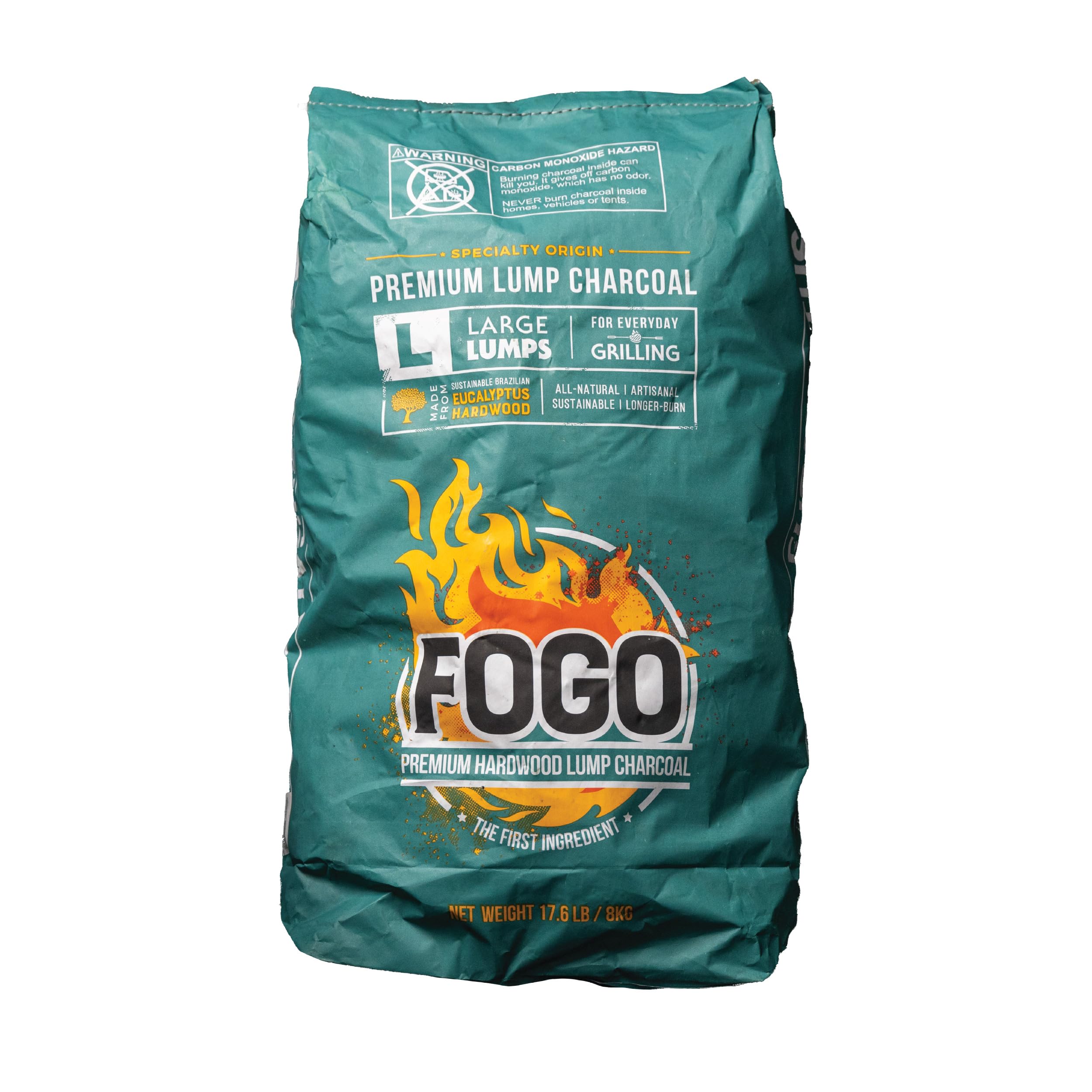
FOGO Brazilian Blend
Key Features
- Bag size: 17.6 lb
- Hardwood: Brazilian hardwoods
- Lighting time: About 15 minutes
- Flavor profile: Mild, smoky
Dense Brazilian hardwood is built for heat, and that is exactly how we use this bag. It comes up fast, throws a hot fire, and gives a mild, steakhouse-style smoke that works well on burgers, steaks, chicken, and vegetables. The pieces are hand-picked and large, so a little goes a long way in a kettle or kamado.
The 17.6-pound bag is a more manageable size than FOGO’s 35-pound Super Premium, and it is a good fit for someone who wants a premium charcoal without dedicating a shelf to it. The lumps light quickly and burn clean, and the flavor stays light enough that it does not overwhelm a simple weeknight dinner. We also appreciate the sustainable sourcing, which is consistent across FOGO’s line.
The chunks are uneven, and some are large enough to need breaking down for a small grill. We keep this bag for hot-and-fast work, where that size is an advantage rather than a hassle. For searing and weeknight grilling, we think its heat and mild smoke are among the best in this group.
Pros
- Fast, high heat for searing
- Mild steakhouse-style smoke
- Manageable 17.6-pound bag
Cons
- Not suited to low-and-slow cooks
We recommend the Brazilian Blend for hot, fast grilling and searing, where its dense chunks and mild smoke shine.
Best for Small-Batch Grilling
Jealous Devil 10-Pound
Key Features
- Bag size: 10 lb
- Open-air burn: 4+ hours
- Low-oxygen burn: 20+ hours
- Max temperature: Over 1,170°F
- Price: Premium
The 10-pound bag is the point here. Jealous Devil’s Chunx XL is sold in huge two-bag lots, but this smaller bag gives you the same dense South American hardwood without turning your garage into a charcoal depot. It is easy to carry, easy to store, and sized for a kettle, a small kamado, or a balcony grill.
The performance claims are serious: temperatures above 1,170 degrees, more than four hours of open-air burn, and more than twenty hours in a low-oxygen cooker. The bag also promises no sparking or popping and low ash. That is a lot of performance packed into a small bag, and it makes the 10-pound size feel less like a compromise.
For a small household, the size is a real convenience. You can keep the bag sealed and dry, use it over a few cooks, and not worry about the second half going stale. The pieces are still large and dense, so you get the same slow, steady burn in a smaller package.
For a small grill or a first taste of Jealous Devil, we think the smaller format is the right swap. It keeps the fire simple, stores without a dedicated charcoal corner, and lets you finish a bag before it goes stale. If you cook for a crowd every weekend, the 70-pound two-pack is the better fit.
Pros
- High heat with low ash
- No popping or sparking claim
- Easy to store and carry
Cons
- Costs more per pound than bulk bags
- Runs out quickly on long cooks
We recommend the 10-pound Jealous Devil bag for small grills and small households that still want a hot, clean-burning fire.
Best for Occasional Grilling
365 Whole Foods Lump
The Whole Foods bag is hickory and oak in an 8-pound sack, which makes it the smallest option in this group. That is not a drawback if you grill a few times a month and do not want a half-used bag of charcoal taking up space. The blend is all natural hardwood, and the pieces are meant to light without chemical starters.
The bag promises a quick light and a hotter burn than standard briquettes. We like that combination for a simple weeknight dinner: fewer starters, less waiting, and a fire that is ready for burgers or chicken. The hickory and oak give it a familiar smoke profile that works across most foods without getting in the way.
The 8-pound size is easy to store and easy to carry, and it is a sensible way to try lump charcoal if you have been using briquettes. It is also a good fit for a small kettle or a portable grill, where a 35-pound bag would be overkill.
For occasional grilling, we think the small format and simple hardwood blend are the right trade. If you want one bag for long sessions, look at FOGO or Rockwood instead. It is a starter bag in the best sense: simple, compact, and easy to finish before it goes stale.
Pros
- Hickory and oak blend
- Small 8-pound bag stores easily
- Lights without chemical starters
Cons
- Small bag limits long cooks
We recommend the Whole Foods bag for occasional grillers who want a small, natural hardwood option without a storage commitment.
Best for Kamado Loyalists
Big Green Egg Lump

Key Features
- Bag size: 17.6 lb
- Hardwood: Oak and hickory
- Sourcing: FSC-certified forests
- Lighting time: About 10 minutes
- Price: Premium
Big Green Egg’s lump is oak and hickory from FSC-certified forests, and that sourcing is the first thing we notice. It is a premium bag for someone who already owns a Big Green Egg or another ceramic kamado and wants a charcoal that matches the cooker’s clean-burning, low-and-slow style. The bag claims a ten-minute light, which is quick for dense hardwood and useful when you want to get dinner started without a long chimney session.
The 17.6-pound bag is a manageable size for a kamado, and the oak-hickory blend gives a familiar smoke that works with beef, pork, and poultry. The pieces are sized for a deep firebox, and the charcoal is meant to burn cleanly enough that you are not fighting ash halfway through a cook. We like it as a brand-matched option: if you already trust the Big Green Egg system, this is the fuel that fits it.
The catch is that this is a specialist bag. For a kamado owner who wants a simple, clean fuel and trusts the Big Green Egg name, that is a reasonable trade. For a kettle cook who wants the most charcoal for the money, FOGO or Rockwood is the better buy.
Pros
- FSC-certified oak and hickory
- Quick ten-minute light claim
- Good fit for kamado cookers
Cons
- Premium price for a modest bag
We recommend Big Green Egg’s oak and hickory lump for kamado owners who value certified sourcing and a quick light.
How We Tested 14 Bags of Lump Charcoal
We started by building a shortlist from bag weights, listed piece sizes, price per bag, and the kinds of complaints that show up repeatedly in reviews: dust at the bottom, inconsistent chunks, and bags that burn out before dinner is done. From that list, we bought 14 bags and tested them over four months in a kettle grill and a kamado-style cooker. Some cooks were fast weeknight burgers; others were low-and-slow chicken and ribs, plus a few high-heat searing sessions that pushed the coals hard.
Each bag got the same opening routine: we weighed it, poured it out onto a tray, and sorted the contents into large clusters, medium pieces, pebbles, and dust. That gave us a read on piece size, cluster size, quantity, and how much usable charcoal we were actually getting for the bag. We also noted how much fell through the grate before the fire even started.
During cooks, we timed how long the chimney took to reach gray ash, watched how quickly the fire climbed to searing heat, and tracked how long it held a steady lid temperature before we needed to add more. We stirred the coals mid-cook to see whether pieces stayed intact or crumbled, and we checked the ash left behind, whether it was a light dusting or a bed that choked airflow. Flavor was judged on plain chicken and vegetables, looking for clean smoke rather than acrid or oily notes. At the end, we compared usable charcoal against the bag’s stated weight, since that is where value and quantity often part ways.
How to Choose Lump Charcoal
The right lump charcoal is the one that matches the way you cook, not the one with the biggest bag or the loudest label.
Start With How Often You Cook
Bag size is the first practical decision, and we treat it as a storage decision as much as a cooking one. An 8- or 10-pound bag suits a small grill and a few cooks a month; a 35-, 60-, or 70-pound buy makes sense only if you have dry storage and will work through it. Charcoal can absorb moisture, so a giant bag that sits open in a damp garage is not a bargain. If you are curious about a brand, start small. The Whole Foods 8-pound bag and the 10-pound Jealous Devil are easier entry points than a two-bag bulk buy; FOGO’s 35-pound bag is the sweet spot for a household that grills most weeks.
Judge the Lump Mix, Not the Word Jumbo
Lump charcoal is graded by size, but the bag is rarely uniform. Large pieces stack with air between them and burn steadily; small chips and dust burn hot and fast, then clog the grate. A bag advertised as jumbo can still contain chips, and a bag with huge blocks may need breaking down for a small kettle. Shake the bag before you fill a chimney, sort the big pieces for long cooks, and keep the chips for a quick fire. FOGO’s 80% large-piece claim and Jealous Devil’s big-block bags are the kind of sizing to look for; a mixed bag is not automatically bad, but you should know what you are buying.
Choose the Wood for Flavor and Fire Behavior
Hardwood blend matters as much as the bag. Oak and hickory give a familiar barbecue smoke; cherry and other fruitwoods are milder and sweeter; dense South American hardwoods burn hot and clean. A strong hickory bag can overpower fish and vegetables, while a mild blend is easier to use across the week. The Brazilian FOGO bag is a good example of a wood built for hot, fast cooking rather than an overnight smoke. If you want one bag for everything, start with a mild hardwood blend and add a stronger wood when the recipe calls for it.
Decide Between Long Burn and High Heat
Lump charcoal can do both, but not equally. Dense, large pieces are what you want for a low-and-slow brisket; they hold temperature and keep air moving through the firebox. Smaller or less dense pieces come up fast and are better for burgers, steaks, and pizza. The mistake is buying a high-heat bag for an overnight cook, or a long-burn bag for a quick sear and then fighting a slow fire. Kamado Joe’s 18-hour claim and Jealous Devil’s 1,100-degree claim describe different strengths; match the bag to the cook, not the other way around.
Plan for Ash, Dust, and Sparks
Lump charcoal leaves less ash than briquettes, but it still makes dust, and some bags spark while they light. Empty the bag outdoors, keep the fine dust out of the chimney, and clear dry leaves or paper from the area around the grill. A spark that lands on a wooden deck is a real risk, not a cosmetic annoyance. If you cook on a deck, choose a bag that resists popping, keep a spray bottle nearby, and never leave a fresh fire unattended. Ash should cool completely before it goes in the trash.
Frequently Asked Questions
Is lump charcoal better than briquettes?
Lump charcoal is pure hardwood, so it lights quickly, burns hot, and leaves less ash. Briquettes are uniform and easier to control for a long, steady fire, but they contain binders and produce more ash. For hot-and-fast grilling and a cleaner smoke profile, lump is the better fit. For a predictable overnight cook in a basic kettle, briquettes can still be the simpler tool.
How should I store an open bag of lump charcoal?
Keep it dry and sealed. Leave the charcoal in its original bag, fold the top over, and stand the bag inside a lidded plastic bin or a clean metal can with the lid on. Avoid a damp garage floor or a leaky shed; charcoal that has soaked up moisture is hard to light and burns poorly. Use the oldest bag first and keep a small bag for the shoulder season so you are not opening a giant bag for one cook.
Can I add charcoal to a hot grill?
Yes, but add it to one side and give it time to catch before you close the lid. Use long tongs, keep your face back, and do not dump a fresh chimney over food that is already cooking. For a long smoke, start with more charcoal than you think you need and add a few lumps at the edge when the temperature starts to fall. If the fire is already hot, add unlit charcoal rather than more lit coals; it will come up gradually.
Do I need a chimney starter for lump charcoal?
A chimney starter is the cleanest way to light lump. Fill it loosely, use two fire cubes or a sheet of newspaper underneath, and wait until the top lumps are gray at the edges before you pour them out. Lighter fluid can leave a taste and is unnecessary with dry lump. A small propane torch also works, but a chimney gives you a more even start and keeps the fire contained.
Final Verdict
FOGO Super Premium is the bag we point most people to. It has the size mix, burn time, and low dust that make lump charcoal easy to live with, and it works in a kettle, kamado, or gravity-fed grill without asking you to change how you cook. For a kamado owner who wants a long, brand-matched burn, Kamado Joe Big Block XL is the alternative; for small grills and small households, the 10-pound Jealous Devil is the easier commitment. The common thread is fit: buy the bag that matches your cooker and your cooking rhythm, not the biggest sack on the shelf.