This post contains affiliate links. We may earn a small commission when you buy through our links — at no extra cost to you.
Most bread machines marketed as “sourdough” simply reuse a basic dough cycle with a longer timer. That mismatch leaves you with dense, under-proofed loaves and wasted starter. The real difference is a dedicated program that manages the longer bulk ferment and proofing stages automatically.
Choosing between a budget machine with a true sourdough program and a premium model without one is the core trade-off. Budget options often cut corners on build quality, while expensive machines may skip the programming you actually need. This guide focuses on models that deliver the fermentation control sourdough demands.
Prioritizing the right program saves you from guessing timers and wrestling with dense crumb. You get consistent results on a schedule that fits your life — not the machine’s.


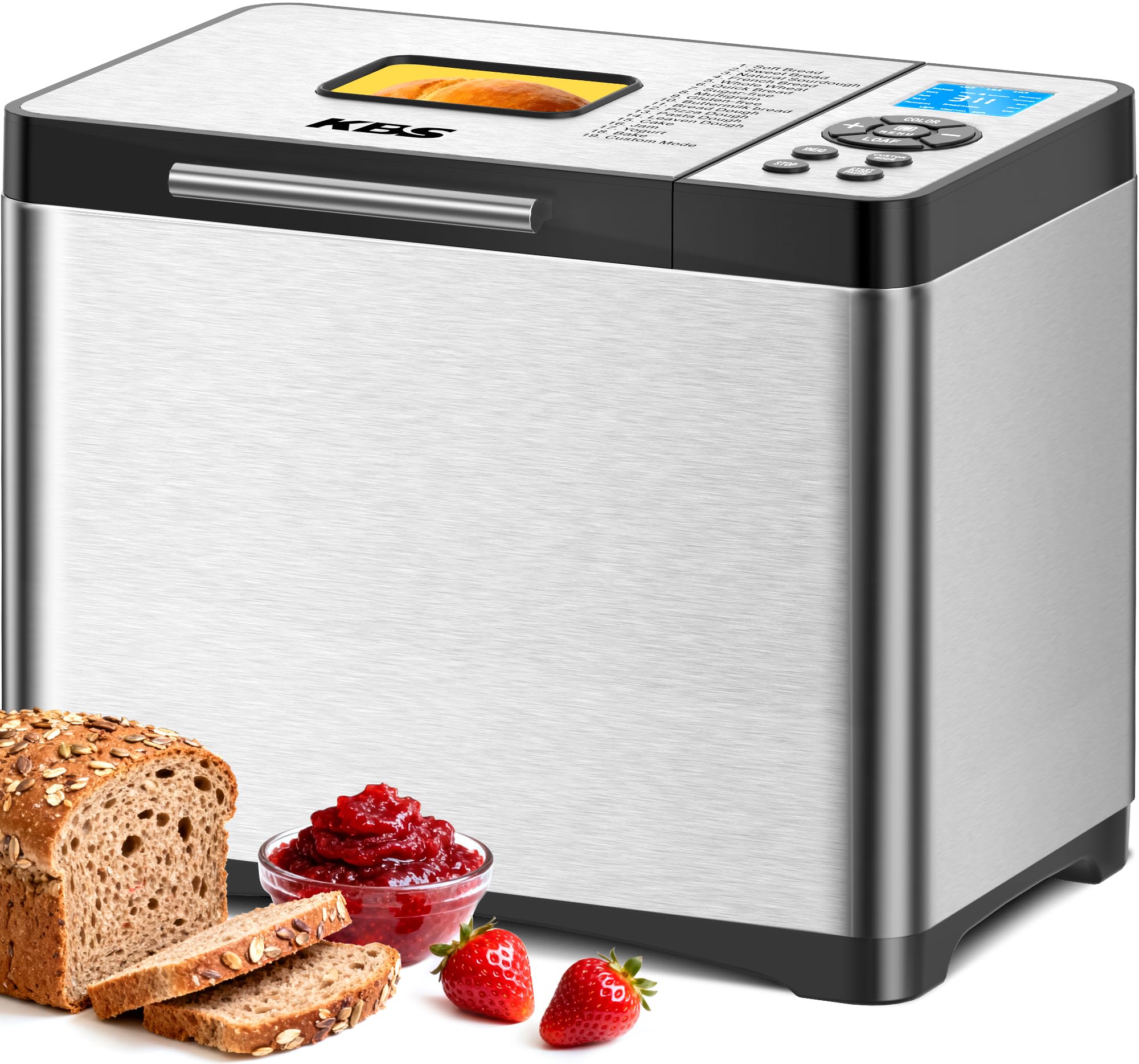
Best for Sourdough on Budget
KitchenArm 29-in-1
Key Features
- Sourdough Program: Dedicated
- Capacity: 2 lb
- Heating: Standard
- Timer: 15h
- Price: Budget
The KitchenArm 29-in-1 delivers on its sourdough promise with a dedicated program that handles long fermentation and produces loaves with a good crumb and crust. Performance is consistent loaf after loaf, and the machine handles whole wheat and gluten-free blends without complaint. The 15‑hour timer gives plenty of flexibility for overnight bulk ferments, and the homemade cycle lets experienced bakers tweak every stage from kneading to baking.
Ease of use stands out even for first‑time bread makers. The control panel is laid out logically, and the included recipes provide a solid starting point. The homemade cycle is the real draw for sourdough bakers: you can adjust proofing time, crust color, and even the baking temperature, turning the machine into a programmable fermentation chamber. This flexibility, combined with the dedicated sourdough program, means you get a true sourdough workflow without paying for a premium badge.
This machine is best for sourdough enthusiasts who want a dedicated program without spending $300+, and for beginners who want a clear path to good sourdough with minimal guesswork. The tradeoff is a plastic‑heavy construction that feels lighter and less substantial than premium alternatives, but that doesn’t affect bread quality. If you need loaves larger than 2 pounds or insist on a metal‑dense build, look elsewhere. For everyone else, the KitchenArm offers outstanding value, especially given its rare combination of a sourdough program and a fully adjustable homemade cycle.
Pros
- Consistent loaf quality with repeatable results batch after batch.
- User-friendly interface that beginners can master quickly.
- Dedicated sourdough program plus fully adjustable homemade cycle for custom recipes.
- Comes with a collection of recipes that help you get started without guessing.
Cons
- Plastic components in the build mean the machine feels lighter and less substantial than premium-priced alternatives.
- Maximum loaf size of 2 pounds may not be enough for large households or those who prefer to bake multiple loaves at once.
For bakers who prioritize a real sourdough program over premium materials, the KitchenArm delivers the best value in its price class — no compromises on the features that matter.
Best for Sourdough Purists
Zojirushi Supreme 2lb
Key Features
- Sourdough Program: Dedicated starter
- Capacity: 2 lb
- Timer: Yes
- Price: Premium
The Zojirushi Home Bakery Supreme is the only model from this manufacturer that includes a dedicated sourdough starter program, a feature that simplifies the process of building and maintaining a starter. The machine delivers consistent loaf quality across many bakes, with a satisfying crust and even crumb structure that matches what you’d expect from a brand known for bread-making performance.
This machine suits sourdough purists who want a dedicated starter function and prefer the familiarity of a Zojirushi. The premium price is a significant step up from the top pick, and durability may vary — some owners have noted cracking or functional issues over time. Cleaning is straightforward, and the bread pan releases loaves with minimal effort.
The paddle design leaves two small holes in the bottom of each loaf, a minor visual tradeoff that doesn’t affect taste or texture. With 10 programs and a 2 lb capacity, the Home Bakery Supreme covers a wide range of bread styles, but the higher cost and occasional unit variance mean it’s best approached as a deliberate purchase for those who value the dedicated sourdough program above all else.
Pros
- Dedicated sourdough starter program unique to this Zojirushi model
- Consistent loaf quality across many bakes
- Easy to use and clean with removable bread pan
Cons
- Premium-priced compared to machines with similar feature sets
- Durability may vary; some units can develop cracking or stop functioning over time
For sourdough bakers who want a dedicated starter program under the Zojirushi name, this machine delivers — but be prepared for the premium cost and the possibility of unit-to-unit variation.
Best for Budget Sourdough
KBS 19-in-1
Key Features
- Sourdough Program: Dedicated
- Capacity: 2 lb
- Timer: 15h
- Build & Pan: Ceramic pan
- Price: Mid-Range
The KBS 19-in-1 stands out by offering a true sourdough program in a cost-effective machine. That matters in this category, where several bread makers only offer a dough or ferment cycle and leave the timing work to you.
Bread quality is the main reason to consider it: the machine can turn out flavorful loaves, handles 2 lb batches, and includes enough preset programs to cover gluten-free, standard sandwich bread, and sourdough-style baking. The 15-hour timer also gives you more room to plan around longer fermentation schedules.
This fits budget sourdough bakers who want dedicated functionality more than a polished control experience. The poorly translated instructions and possible non-stick coating chipping are real boundaries, so it suits someone comfortable learning by trial and error and checking the pan over time.
Pros
- Dedicated sourdough program supports longer, less manual bread-making routines.
- Loaves come out flavorful and satisfying once recipes are dialed in.
- Strong baking performance for a mid-range machine.
- Ceramic non-stick pan and 2 lb capacity add useful everyday flexibility.
Cons
- Setup takes patience, since the manual can be hard to follow.
- The pan coating may chip, so careful cleaning and inspection matter.
- Long-term operation can vary between machines under heavier baking routines.
Choose the KBS 19-in-1 if sourdough programming is the priority and you are comfortable managing a learning curve. It is less appealing for buyers who want a more polished machine with fewer maintenance concerns.
Best for Budget Bakers
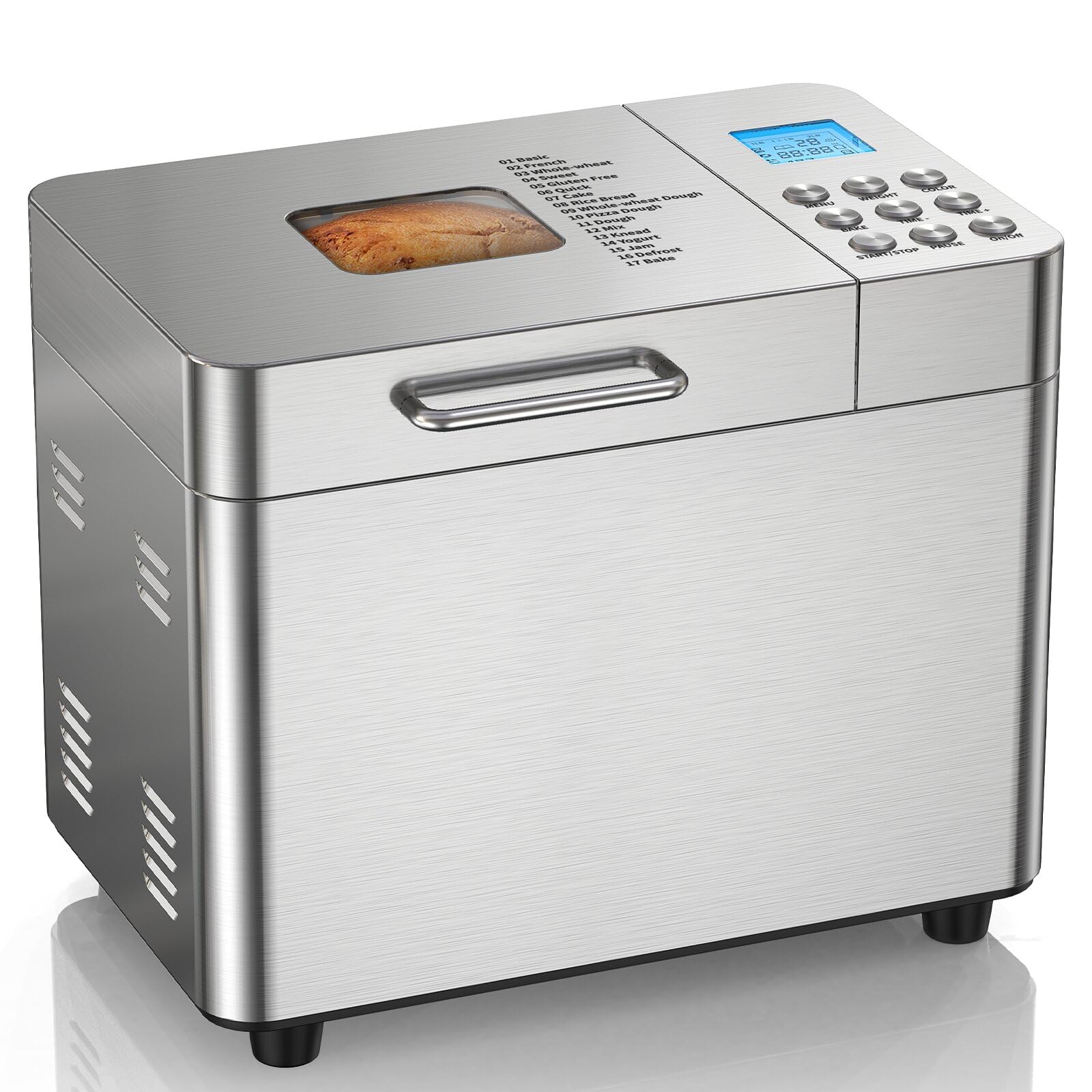
OSIPOTO 17-in-1
Key Features
- Sourdough Program: No
- Capacity: 2 lb
- Timer: 15h
- Build & Pan: Non-stick
- Price: Budget
The OSIPOTO 2LB Bread Maker produces consistently good-tasting loaves with very low noise and easy cleanup, making it a solid pick for beginners or anyone focused on basic bread. However, it lacks a dedicated sourdough program—the preset cycles are optimized for commercial yeast, not sourdough starters—so fermentation control is limited. For general bakers seeking value and simplicity, this machine works well; sourdough enthusiasts will need a model with a dedicated program.
Pros
- Produces consistent, well-tasted loaves
- Very quiet operation
- Simple to use and clean
Cons
- No dedicated sourdough program; preset cycles are not designed for sourdough starters
- Customization of fermentation time and temperature is limited compared to machines with dedicated sourdough settings
This is a capable machine for bakers who stick to standard bread recipes and value quiet operation. If sourdough is your priority, look at the top pick with a true sourdough program.
Best for Beginners
Cuisinart CBK-110NAS

Key Features
- Sourdough Program: No
- Capacity: 2 lb
- Build & Pan: Nonstick
- Price: Mid-Range
This machine gets you baking with minimal fuss: the control panel is intuitive, the footprint is small enough to leave on the counter, and the loaves come out with good texture and taste. That ease of use makes it a natural fit for anyone new to bread making or anyone who just wants a straightforward, space-saving appliance for basic white or whole wheat loaves. The tradeoff is that there is no dedicated sourdough program, so you cannot rely on automated long fermentation. Additionally, build consistency varies — some units may develop issues with rubber feet or lid attachment after moderate use, so this is better suited as an entry-level tool than a long-term investment.
Pros
- Simple controls and clear instructions make first loaves easy.
- Compact size fits easily on most countertops.
Cons
- No sourdough program — long fermentation must be done manually.
- Build quality can vary; rubber feet and lid may come loose over time in some units.
Best for beginners or occasional bakers who make standard bread and need a compact, low-hassle machine — skip it if you want a dedicated sourdough cycle or plan to use it daily for years.
Best for Extreme Budget Buyers
Elite Gourmet 19-in-1

Key Features
- Sourdough Program: No
- Capacity: 2 lb
- Timer: 15h
- Build & Pan: Non-stick
- Price: Budget
This entry-level machine delivers acceptable results for white and whole wheat bread at an entry-level price. Its 19 presets cover gluten-free, dough, and jam, and operation is straightforward. However, there is no sourdough program, and the machine cannot handle the extended fermentation a sourdough starter requires. Additionally, some units have been known to stop working within months, and the instruction manual can be incomplete or poorly translated. For occasional use making simple loaves, it is a cost-effective option, but sourdough bakers must look elsewhere.
Pros
- Remarkably low price for a machine with 19 presets including gluten-free and jam cycles.
- Easy to operate with a clear display and simple controls, good for beginners.
- Produces well-textured loaves for basic recipes, satisfying casual bakers.
Cons
- Functionality may stop working after a few months; some units cease mid-cycle.
- Instruction manual can be missing or poorly translated, increasing the learning curve.
A no-frills bread maker for occasional basic loaves on a tight budget, but skip it if you need sourdough capability or long-term durability.
Best for Premium Quality
Zojirushi Virtuoso Plus

Key Features
- Sourdough Program: No
- Capacity: 2 lb
- Heating: Dual heaters
- Price: Premium
Dual heaters and double kneading blades produce consistently high-quality loaves with even browning and texture. The machine is straightforward to operate and clean, and the build quality holds up over years of use. However, the limited program selection includes no dedicated sourdough cycle, so anyone needing long controlled fermentation for sourdough will have to improvise manually. The high price further narrows this machine to buyers who value loaf perfection and durability above all else, not those seeking a specific sourdough program.
Pros
- Dual heaters and double kneading blades produce consistent, high-quality loaves.
- Simple operation and easy cleanup after each use.
- Sturdy construction that holds up over years of regular use.
Cons
- No dedicated sourdough program, so fermentation timing must be manually managed.
- Premium pricing that may not justify the lack of specialized programs.
Best for bakers who prioritize loaf quality and machine longevity over specialized sourdough features — not the right choice if a dedicated sourdough program is essential.
Best for Program Variety
Neretva 20-in-1

Key Features
- Sourdough Program: No
- Capacity: 2 lb
- Heating: Dual heaters
- Timer: 15h
- Build & Pan: Ceramic pan
- Price: Budget
The Neretva offers 20 programs including a ferment cycle and a customizable homemade cycle, giving sourdough enthusiasts room to experiment at a budget price. Dual heaters and a ceramic pan contribute to appealing crust and crumb. However, it lacks a dedicated sourdough program — the ferment and homemade cycles require manual timing and recipe adjustment. For those who want a straightforward one-button sourdough loaf, this machine requires more hands-on involvement. That said, tinkerers who enjoy iterative baking will find the flexibility appealing.
Pros
- Produces loaves with appealing taste and crust thanks to dual heaters and ceramic pan.
- Offers 20 programs including ferment and homemade cycles for custom recipes.
- Simple controls once programs are understood suit frequent bakers.
Cons
- Some units may stop functioning after a period of use.
- The user manual is confusing and lacks clarity during initial setup.
Best for budget-conscious tinkerers who want many program options and are comfortable checking online resources to work around the manual’s shortcomings.
How to Choose
The single most important factor is whether the machine has a dedicated sourdough program, not just a longer dough cycle — it controls bulk fermentation, proofing, and baking temperatures automatically.
Dedicated Sourdough Program
A true sourdough program adds extended rise and proofing stages that a basic dough cycle skips. Without it, you must manually interrupt the cycle or guess timings, often resulting in a dense, under-risen loaf.
This is the difference between set-it-and-forget-it convenience and constant babysitting. Models with a customizable homemade cycle can mimic a sourdough program, but the presets save trial and error.
Loaf Capacity
Capacity ranges from 1 lb to 3.3 lb. A 2 lb machine suits most households; larger capacities need longer mixing cycles that may overwork a sourdough starter if not timed correctly.
Consider your weekly consumption and counter space. A 3.3 lb machine can handle large batches but often sacrifices build quality to keep the price low.
Heating Technology
Dual heaters provide more even browning and a taller rise by distributing heat from top and bottom. Single-element machines may leave the sides pale or the bottom over-baked.
For sourdough, even heat is critical because the long proofing already creates a wetter dough; uneven baking can cause collapse or a gummy interior.
Timer and Delay Features
A 13-15 hour timer lets you load ingredients at night and wake to fresh bread. However, some models disable the delay timer on the sourdough program because the starter can degrade over long idle periods.
Check the manual: if delay is blocked on sourdough mode, you lose that convenience. A machine that allows delay ensures you can plan around your schedule.
Build Quality and Pan Material
Ceramic non-stick pans release loaves more easily and resist scratching longer than standard non-stick. But cheap ceramic coatings can chip within months, exposing bare metal.
A heavy, well-fitted pan and solid paddle engagement reduce the chance of the paddle sticking in the loaf. Look for user reports on pan durability after 50+ uses.
FAQ
Does a bread machine sourdough program actually work?
Yes, when the program includes separate bulk fermentation and proofing stages — not just a longer basic dough cycle. Machines like the KitchenArm and KBS models have this, and users report consistent results. Without that, you’ll need to manually intervene to get a proper sourdough crumb.
Can I use a regular bread machine for sourdough without a dedicated program?
You can, but you’ll need to manually stop the machine after the first knead and let it rise for hours, then restart for shaping and final proof. It’s doable but inconvenient and less reliable. A dedicated program removes that guesswork.
Why does my bread machine sourdough come out dense?
Density usually means insufficient fermentation time or incorrect hydration. A dedicated sourdough program extends the bulk rise to 4-6 hours; basic dough cycles stop at 1-2 hours. Also, high-hydration doughs may need a stiffer consistency for the paddle to mix properly.
How long does the sourdough cycle take in a bread machine?
Typically 4 to 6 hours total, including a long first rise of 2-3 hours, a shorter second rise, and baking. Some models allow you to adjust the proofing time within the custom cycle, giving you flexibility depending on your starter’s activity.