This post contains affiliate links. We may earn a small commission when you buy through our links — at no extra cost to you.
Many forged knives under $50 look the part—hand-hammered textures, Japanese-sounding names, and Damascus patterns that seem like a steal. But buyers quickly discover rust spots on the blade or a pattern that’s laser-etched, not folded steel.
This guide focuses on forged knives that earn their keep in a home kitchen. We’ve separated the ones that hold an edge without chipping, handle moisture without staining, and offer real construction for the price—so you can buy with confidence, not guesswork.


Best for Versatile Home Chef
Babish Clef 7.5"
Key Features
- Blade Steel: 1.4116 German Steel
- Construction: Forged
- Handle: ABS/Steel
- Price: $
The Clef’s 1.4116 German steel blade arrives sharp and holds its edge through daily vegetable prep, slicing, and light protein work. Its hybrid cleaver-chef shape gives you height for knuckle clearance and a slight curve for rocking cuts — a forged design that avoids the brittleness of harder steels at this price.
Balance is handle-forward, which shifts the pivot point back and can make delicate tip work feel less precise. The triangular handle itself is comfortable for most grips, but if you rely on a pinched blade hold for fine dicing, the weighting may take a few sessions to adjust. Surface rust or micro-chips can appear on units that aren’t dried immediately after washing or that encounter hard bones and frozen foods. These aren’t signs of a defective knife — they’re the maintenance boundary for budget-friendly forged steel.
This knife fits home cooks who want a single, versatile forged blade for everyday kitchen tasks and appreciate a taller profile for scooping ingredients. It isn’t for professional chefs demanding pristine edge retention through long shifts, nor for heavy outdoor use. If you can accept a quick towel-dry ritual and avoid hard seeds and bones, the Clef rewards you with sharpness and durability that far exceed its price tier.
Pros
- Sharp out of the box and holds its edge through regular home use.
- Forged 1.4116 German steel offers durability at a budget-friendly price.
- Triangular handle stays comfortable during long meal-prep sessions.
Cons
- Handle-heavy balance may feel less agile for precise tip work.
- Blade can develop rust spots or micro-chips if not dried immediately after washing.
For home cooks who want a do-it-all forged knife without premium-level care demands, the Babish Clef delivers sharpness and value that justify the occasional maintenance tradeoff.
Best for Entry-Level Home
Farberware Edgekeeper 8"
Key Features
- Blade Steel: High Carbon Stainless
- Construction: Forged
- Handle: Plastic/Steel
- Price: $
Razor-sharp out of the box and maintains its edge via the self-sharpening sheath. The forged construction and comfortable ergonomic grip make this a value standout. Unlike the top-pick Babish with its hybrid cleaver-chef design, this Farberware sticks to a traditional chef knife profile at an even lower price. Best for entry-level cooks and gift buyers on a tight budget who want forged performance without sharpening routines. Long-term durability under heavy daily use has not been established, so it fits lighter home cooking rather than daily commercial-style chopping.
Pros
- Razor sharp and stays sharp thanks to self-sharpening sheath
- Amazing value for a forged knife
- Comfortable ergonomic grip
Cons
- Long-term durability under heavy daily use has not been established
For entry-level cooks on a budget, this forged knife delivers sharp performance without sharpening maintenance — though its long-term lifespan is less proven than costlier options.
Best for Premium Sharpness Seeker
Shun Classic 8"
Key Features
- Blade Steel: VG-MAX Damascus
- Construction: Forged
- Handle: Pakkawood
- Price: $$$
The Shun Classic 8" Chef’s Knife is built around VG-MAX Damascus steel, delivering a razor-sharp edge that stays keen longer than most forged knives. The 68-layer Damascus pattern and lightweight balanced feel make it a pleasure to use for precision cuts. However, the sharpness comes with a tradeoff: when cutting through hard foods like squash or bone, the blade can chip. This makes it ideal for cooks who mostly handle soft produce and meat, and who value edge retention and aesthetics over the ability to handle heavy chopping.
Pros
- Edge stays sharp through extended use without frequent honing.
- Eye-catching layered steel pattern that looks like a work of art.
- Lightweight and well-balanced for fatigue-free slicing.
Cons
- For home cooks who don’t demand heirloom-level sharpness, the premium cost can feel harder to justify.
A beautiful, razor-sharp knife for cooks who avoid hard foods and value edge retention – treat it with care and it performs beautifully.
Best for Full Knife Set
McCook 20pc Set
Key Features
- Blade Steel: High Carbon Stainless
- Construction: Forged
- Handle: Stainless Steel
- Price: $$
The 20-piece McCook set includes 8 knives, shears, a honing rod, and a block with built-in sharpener — a comprehensive solution for any kitchen task. The forged blades arrive sharp and maintain their edge through regular use, while the hammered stainless steel handles add visual appeal. The tradeoff: the German steel can develop rust if left damp, and occasional units show blade scratches from factory handling. This set works best for home cooks who want a full block at a mid-range price and are willing to hand-dry and oil knives after each use.
Pros
- Complete 20-piece set covers every kitchen need from chef’s knife to steak knives.
- Sharp blades hold edge well for everyday slicing and dicing.
Cons
- Some units arrive with scratched blades out of the box.
- Knives can rust if not dried and oiled after each wash.
This set delivers variety and convenience for home cooks on a budget, but the rust risk means it suits users who are meticulous about knife maintenance.
Best for Outdoor Rugged Use
XYJ Serbian Chef 6.7"
Key Features
- Blade Steel: High Carbon Steel
- Construction: Forged
- Handle: Wood
- Price: $
With a heavy 1.3-pound forged blade and leather sheath, the XYJ Serbian Chef Knife is built for outdoor cooking where weight and durability matter, not for daily kitchen slicing. It’s noticeably sharper than most budget stainless knives out of the box, and the old-world aesthetics suit a camp cook’s kit.
The catch is maintenance: the high-carbon steel rusts quickly if not dried and oiled after each use, and blade chipping has been reported in some cases. This knife works best for campers and thrifty shoppers who want a forged knife at low cost and are willing to invest the care it demands.
Pros
- Ready to use out of the box with a sharp edge.
- Cost-effective entry into forged construction.
- Old-world styling adds character to a campsite kitchen.
Cons
- Requires thorough drying and oiling after each use to prevent rust.
- Blade cracking or chipping possible under normal use due to QC variance.
A sharp, affordable forged knife for outdoor use, but only if you’re prepared for regular upkeep and accept some QC risk.
Best for Damascus Style Fans
Sunnecko Damascus 8"
Key Features
- Blade Steel: VG10 Damascus
- Construction: Forged
- Handle: ABS
- Price: $$
The Sunnecko 8-inch brings a sharp VG10 core wrapped in 67 layers of Damascus-style steel at roughly half the price of premium Japanese knives. The blade requires conscientious drying to avoid rust, and the pattern is likely laser-etched rather than true folded – a trade-off that suits cooks who prioritize budget and aesthetics over metallurgical authenticity.
This knife appeals to new home cooks wanting an eye-catching blade without the premium spend, or gift buyers looking for a presentation piece. Purists expecting genuine folded steel should look elsewhere, but for the price, the combination of VG10 sharpness and visual flair covers a lot of ground.
Pros
- Razor-sharp VG10 core slices through vegetables and boneless meat with ease.
- Eye-catching Damascus pattern makes the knife a standout in any kitchen.
Cons
- Blade can develop rust spots if not dried and oiled after washing.
For cooks who appreciate the Damascus look and VG10 performance at a mid-range price, this knife delivers – provided they maintain it diligently.
Best for Budget Home Cooks
imarku Japanese 8"

Key Features
- Blade Steel: High Carbon Stainless
- Construction: Forged
- Handle: Pakkawood
- Price: $
The imarku delivers very sharp performance right from the box and holds its edge well, with a comfortable Pakkawood handle that looks high-quality. However, the handle can crack under heavy use and rust may appear over time, so this knife suits lighter kitchen chores rather than daily heavy chopping. It’s a capable starter forged knife for home cooks on a budget, but durability concerns keep it from competing with more robust options like the Babish or Farberware.
Pros
- Very sharp out of box, holds edge well
- Comfortable ergonomic handle with attractive Pakkawood finish
Cons
- Handle may crack under heavy use, and blade breakage is possible in extreme cases
Best suited for occasional home use or as an inexpensive intro to forged knives — not for daily heavy chopping or users who want years of worry-free service.
Best for Diligent Caretakers
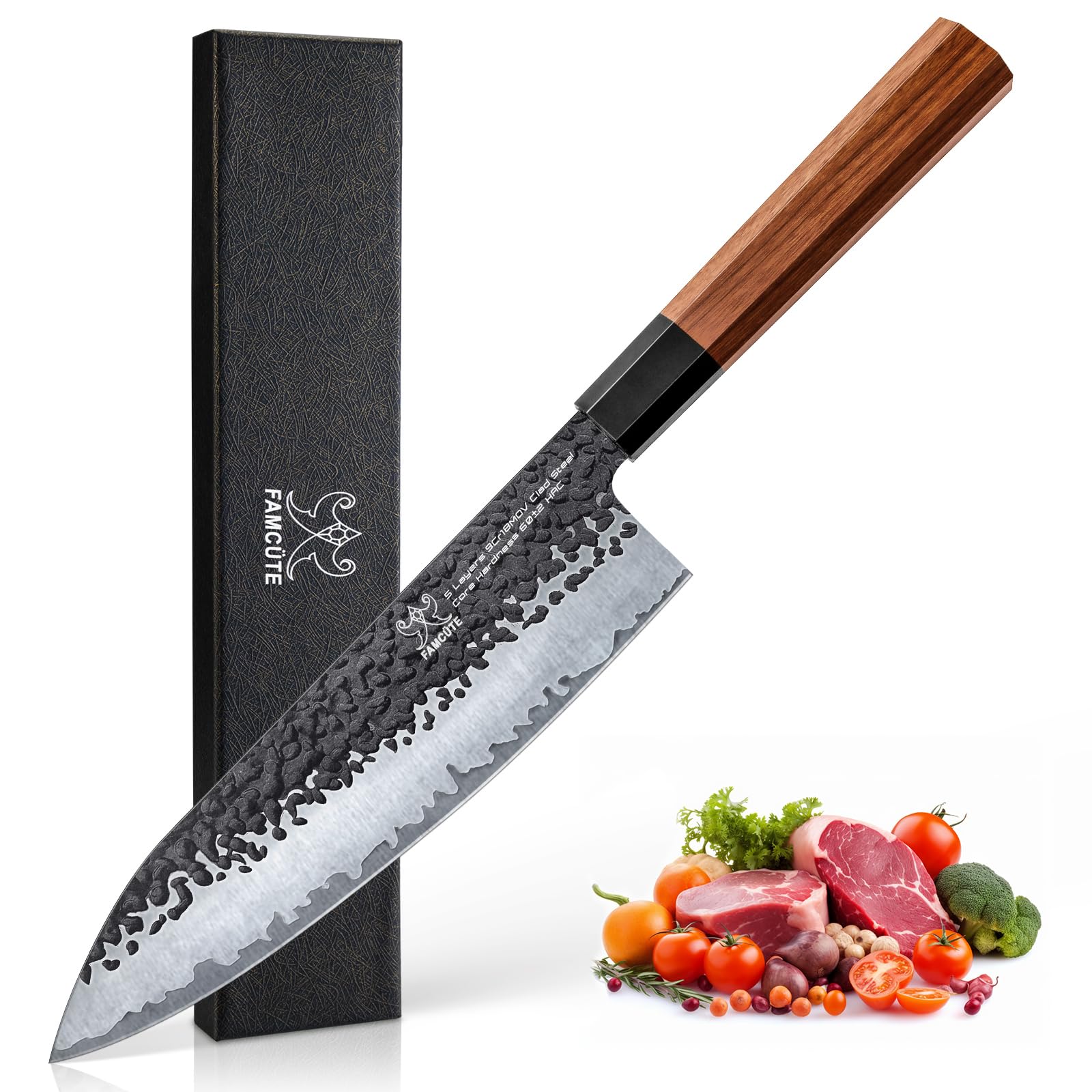
FAMCÜTE Japanese 8"
Key Features
- Blade Steel: 9CR18MOV
- Construction: Forged
- Handle: Rosewood
- Price: $
This forged knife arrives with a razor-like edge and eye-catching layered construction, all at a very accessible price. However, the high-carbon steel can develop rust if not dried and oiled immediately after each use—a commitment that makes it less convenient than the more versatile Babish Clef.
Pros
- Extremely sharp 9Cr18MoV steel right out of the box
- Exceptional value for a hand-forged blade with rosewood handle
Cons
- Requires immediate hand-drying and oiling after every wash to prevent rust
Best for buyers who will hand-dry and oil after every use—the sharpness and value are hard to beat at this price.
Best for Outdoor Camping Use
Huusk Cleaver 6.3"

Key Features
- Blade Steel: Alloy Steel
- Construction: Forged
- Handle: Oak
- Price: $
This cleaver’s thick alloy steel blade is built for chopping through meat and bone, making it a solid choice for outdoor cooking and camping. Sharpness varies between units, so buyers may need to sharpen it out of the box.
Pros
- Solid build with good weight
- Attractive rustic design
Cons
- When used for heavy bone chopping, some units may experience blade folding or breakage.
Best for campers who need a heavy chopper and are comfortable sharpening the blade and checking for defects before use.
Best for Camping Boning Knife
Huusk Boning 5.75"

Key Features
- Blade Steel: 7Cr15Mov
- Construction: Forged
- Handle: Wood
- Price: $
A slim forged boning blade at a budget price for precision trimming. The blade may arrive less sharp than expected, requiring a pass on the stones before first use. This suits campers who carry a sharpener and want a lightweight, forged option for processing game.
Pros
- Solid build with balanced weight suits precision trimming.
- Budget-friendly price for a forged boning knife.
Cons
- Blade can arrive dull; sharpening is needed before first use.
Fits campers who can sharpen on the go and want a low-cost forged boning knife for trimming meat.
Best for Compact Bbq Set
Topfeel 3PC Set

Key Features
- Blade Steel: High Carbon Stainless
- Construction: Forged
- Handle: Rosewood
- Price: $
This three-piece forged set brings attractive rosewood handles and solid cutting performance for compact tasks. However, the blades top out at 7 inches and no sheaths are provided, making it a better fit for camping or BBQ than a primary kitchen kit.
Pros
- Sharp forged blades with good balance for heavy cutting tasks.
- Attractive rosewood handles and eye-catching design.
Cons
- In a home kitchen, the 6.5-7 inch blades may feel short for larger tasks.
Best for campers and BBQ enthusiasts who need a lightweight, portable forged set — not for replacing full-size kitchen knives.
Best for Tsuchime Finish Fans
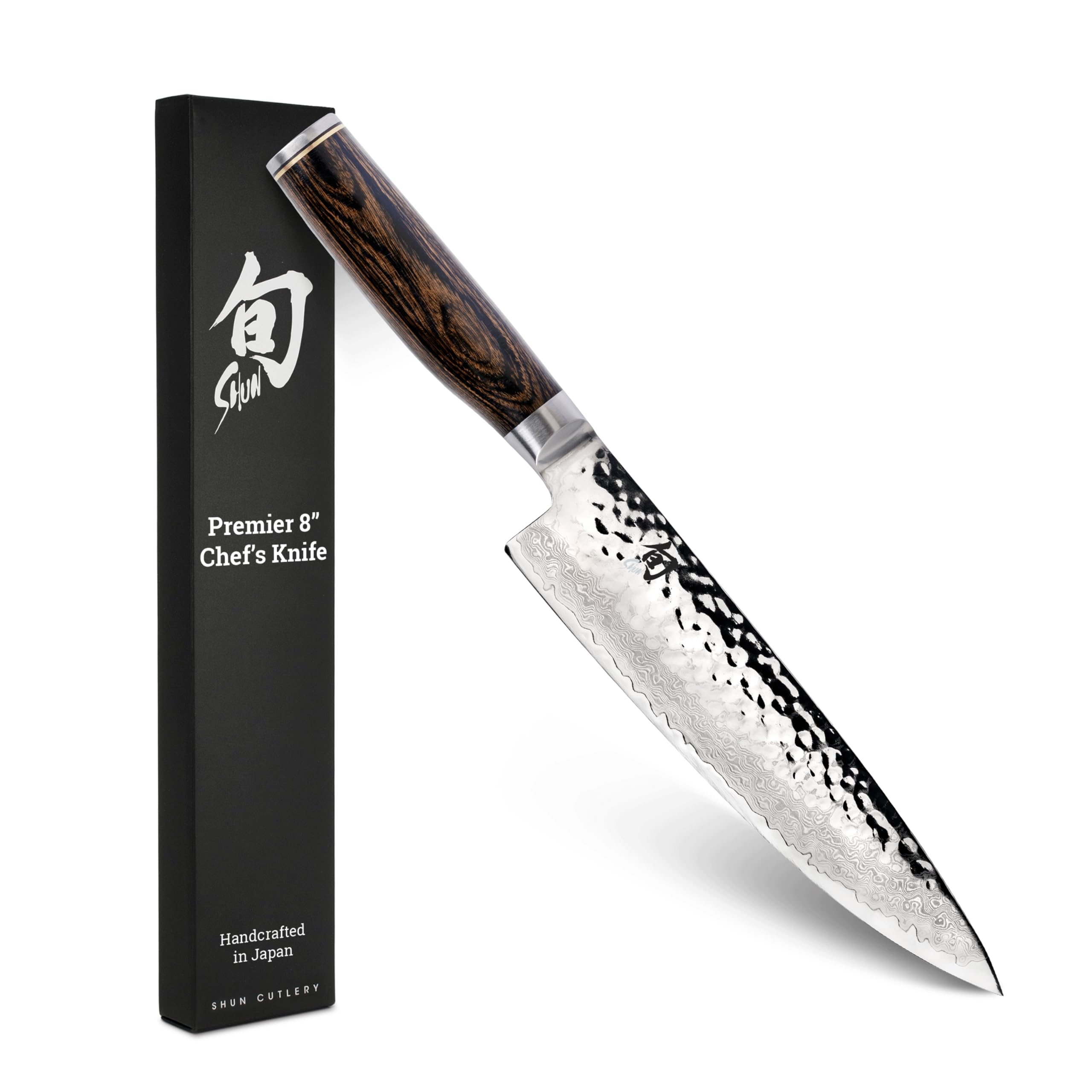
Shun Premier 8"
Key Features
- Blade Steel: VG-MAX Damascus
- Construction: Forged
- Handle: Pakkawood
- Price: $$$$
The hammered tsuchime finish on this forged chef’s knife helps food release during slicing, and the VG-MAX core retains its edge for extended use. However, the blade can chip when used on hard items like bones or dense squash, and the price sits about $30 above the functionally identical Shun Classic — making it a prettier but less practical choice for most buyers.
Pros
- VG-MAX core delivers lasting sharpness through daily prep.
- Hammered tsuchime surface reduces food adhesion during slicing.
Cons
- When cutting through bones or dense vegetables, the thin edge can chip — best reserved for soft produce and protein.
A good fit for collectors who value the tsuchime aesthetic and are willing to pay extra for looks while handling the blade with care.
How to Choose
Choosing a forged knife means balancing edge retention, maintenance, and price—and the steel type dictates most of that trade-off.
Blade Steel and Hardness
The steel type determines how sharp the knife gets, how long it stays sharp, and how easy it is to sharpen. High-carbon stainless steels (like 1.4116 or VG-10) offer a good balance of edge retention and corrosion resistance, while softer alloy steels are easier to sharpen but dull faster.
Hardness ratings (HRC 58–62) matter: harder steel (HRC 60+) holds an edge longer but is more brittle and prone to chipping if twisted or used on bones. Softer steel (HRC 56–58) is tougher but needs frequent honing.
For most home cooks, a steel in the HRC 58–60 range strikes the right balance—sharp enough for precision work, tough enough for daily use.
Construction
Forged knives are shaped from a single piece of heated steel, then hammered and ground. This process creates a denser blade with a better grain structure than stamped knives, which are pressed from a sheet. Forged blades tend to be heavier, better balanced, and more durable over time.
The trade-off is price: genuine forging adds cost. Many budget knives claim to be forged but are actually stamped with a false bolster—check for a full tang and visible hammer marks near the bolster.
Handle Material and Ergonomics
Handle material affects grip, comfort, and maintenance. Pakkawood (resin-impregnated wood) offers a warm, non-slip feel but can crack if left wet. ABS and stainless steel handles are more durable and dishwasher-safe, but can feel slippery when greasy.
Ergonomics vary by hand size—a contoured handle with a full tang provides the best control. Avoid handles that are too thick or slick if you chop for extended periods.
Edge Retention
Edge retention depends on steel hardness and geometry. A blade with a hard core (e.g., VG-10) will stay sharp for weeks of normal use, while softer steels need sharpening after a few heavy prep sessions. The trade-off: harder steel takes longer to sharpen and can chip.
For busy cooks, a knife that holds an edge for a month with occasional honing is ideal. Professionals often prefer softer steel that sharpens quickly in seconds.
Corrosion Resistance
Stainless steel doesn’t mean rust-proof. High-carbon stainless resists rust better than carbon steel, but any blade will corrode if left wet, placed in a dishwasher, or stored in a damp block. Patina-forming carbon steels require immediate drying and oiling after each use.
If you live in a humid environment or prefer low maintenance, choose a high-carbon stainless (like 9Cr18MoV) and always hand-dry immediately.
FAQ
Why does my forged kitchen knife rust even though it’s stainless steel?
Stainless steel contains chromium that forms a protective layer, but that layer can be disrupted by acidic foods, salt, or prolonged moisture. If the knife isn’t dried immediately after washing, the chromium layer breaks down and rust spots form. Forged stainless blades are especially prone because the forging process can expose carbon in the steel. Always hand-dry and occasionally oil the blade.
Can a forged chef knife be used to cut through chicken bones?
Only if the knife is specifically designed for it, like a cleaver or heavy-duty butcher knife. Most forged chef knives (especially those with high hardness HRC 60+) are brittle and will chip or crack when striking bone. Use a dedicated bone cleaver or a softer steel knife for that task.
How do I tell if a Damascus pattern is real or laser-etched?
Real Damascus is created by forge-welding multiple steel layers, then etching the blade with acid to reveal the pattern. The pattern will be slightly three-dimensional and consistent across the blade. Laser-etched patterns are flat, often only on one side, and may wear off with sharpening. Check the edge: real Damascus shows the layered pattern on the bevel, while etched ones have a uniform edge.
What does HRC 62 mean for a kitchen knife?
HRC (Rockwell Hardness) 62 means the steel is very hard—comparable to quality Japanese knives. This allows a razor-sharp edge that stays sharp for a long time, but the blade is also more brittle. Avoid using it on bones, frozen foods, or hard squash, as it can chip. For most home cooks, HRC 58–60 is a safer range.