This post contains affiliate links. We may earn a small commission when you buy through our links — at no extra cost to you.
A stand mixer that whips cream beautifully can still strain and overheat when kneading a stiff sourdough. The difference comes down to motor power and build quality—specs that often get buried under glossy marketing.
The trade-off is clear: planetary mixers offer unmatched versatility but often use plastic gears that wear down under heavy dough, while dedicated spiral or bottom-drive designs prioritize torque and quiet operation at the cost of attachment options.
The picks below focus on reliable bread performance—quiet operation, metal internal components, and bowl capacities that actually fit double batches. Choose based on how often you bake and whether you need one mixer for everything or a dough specialist.


Best for Large Batch Bread
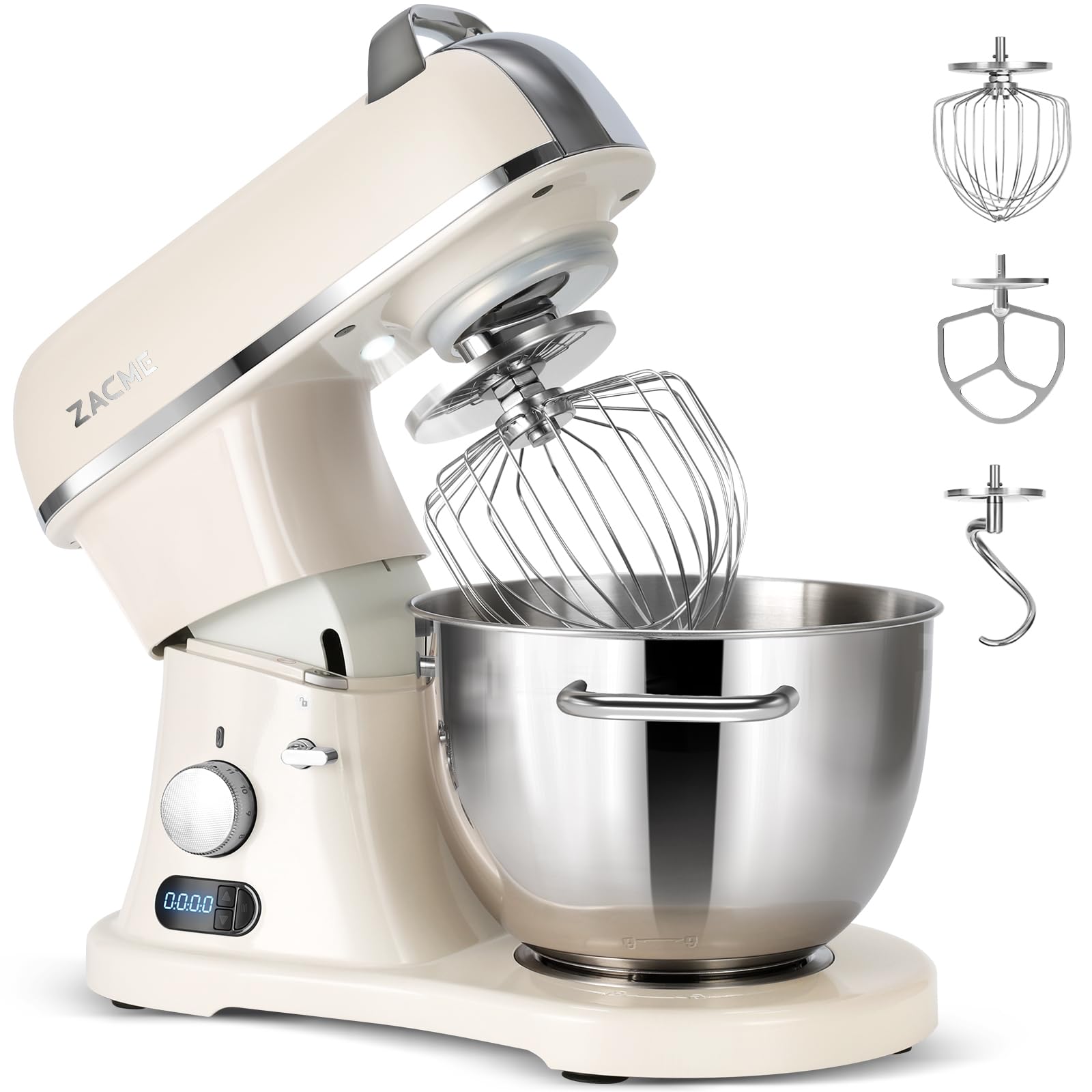
ZACME 8.4QT Commercial
Key Features
- Wattage: 800 W
- Bowl Capacity: 8.4 qt
- Build Material: Die-cast aluminum
- Attachments: Limited ecosystem
- Price: $$
The ZACME 8.4QT Commercial Stand Mixer delivers 800 watts of DC motor torque that cuts through stiff bread doughs without hesitation. At 48 dBA in low gear, it runs quieter than most household mixers — you can hold a conversation or keep a podcast running while it kneads. This combination of power and peace is rare at any price, let alone the mid-range bracket this mixer occupies.
Build quality matches the performance claims. The die-cast aluminum body and metal gears give it a solid feel that resists walking even during heavy kneading. Owners who push it with weekly double batches of sourdough or whole-wheat doughs report no motor strain or gear slippage — the sort of durability that justifies a commercial-grade NSF/ANSI certification.
This mixer is built for bakers who routinely mix 4–6 loaves of bread at once and need a machine that won’t overheat or walk across the counter. The 8.4-quart stainless steel bowl handles large batches comfortably, and the 11 speeds give fine control for everything from whipping cream to heavy kneading. If your baking stays mostly on the sweet side — cookies, cakes, occasional single loaves — a lighter, cheaper mixer would suffice.
The one real boundary is the attachment ecosystem. Unlike KitchenAid’s extensive lineup of pasta rollers, meat grinders, and spiralizers, ZACME offers a narrower set of add-ons. If you envision expanding into pasta making or grinding your own meat, you’ll need to check compatibility before committing — or plan to keep a separate appliance for those tasks.
Pros
- Exceptionally quiet operation for a mixer this powerful — easy to run without dominating the room.
- Metal gears and die-cast aluminum construction deliver a solid, long-lasting feel.
- 800W DC motor plows through stiff bread doughs without slowing or overheating.
- Large 8.4-quart bowl handles batch sizes that would crowd a standard 5-quart mixer.
Cons
- Attachment selection is limited compared to KitchenAid; if you need a pasta maker or meat grinder, verify compatibility first.
For bakers who regularly work with stiff doughs in large volumes and want a machine that stays quiet under load, the ZACME delivers commercial-grade power and durability at a price that undercuts many premium competitors.
Best for Frequent Bread Baking
Bosch Universal Plus
Key Features
- Wattage: 500 W
- Bowl Capacity: 6.5 qt
- Mixing Type: Belt-driven
- Build Material: Plastic/metal
- Attachments: Basic attachments
- Price: $$
The Bosch Universal Plus pairs a 500W belt-driven motor with a 6.5 qt bowl that can knead up to 14 loaves in a single batch. Its bottom-drive design makes adding ingredients mid-mix straightforward — no lifting the bowl or scraping sides. Where the top pick (ZACME) offers quieter, metal-gear construction, the Bosch trades those advantages for easy ingredient access and the ability to handle stiff doughs without labor.
This mixer suits bakers who routinely make multiple loaves of sourdough or other stiff doughs and value being able to add flour or water while the machine runs. The plastic whip drive is a known vulnerability — it may require replacement under heavy use, so buyers should treat it as a consumable part. The motor hum is present in quiet environments, less of an issue in busy kitchens or for users who don’t mind moderate noise.
Belt-driven operation provides smooth, consistent kneading even with dense doughs, and the large capacity reduces batch times. The included dough hook and NutriMill extender expand bread-making options. Occasional users should note that the whip drive is best reserved for lighter tasks to prolong its life.
Pros
- Handles stiff doughs and large batches without strain
- Large 6.5 qt bowl accommodates multiple loaves at once
- Bottom-drive design lets you add ingredients mid-mix easily
- Belt-driven motor delivers consistent kneading for sourdough
Cons
- Motor hum may be noticeable in a quiet kitchen
- Plastic whip drive can fail under heavy use and may need replacement
Best for bread bakers who prioritize capacity and bottom-drive convenience over quiet operation — and are comfortable with the whip drive as a consumable item.
Best for Versatile All-Rounder
KitchenAid Artisan 5
Key Features
- Wattage: 325 W
- Bowl Capacity: 5 qt
- Mixing Type: Planetary
- Build Material: Die-cast metal
- Attachments: 10+ compatible
- Price: $$
The Artisan’s die-cast metal construction and 10+ compatible attachments set a benchmark for versatility — from pasta making to meat grinding. Where the ZACME delivers 800W of quiet torque for heavy dough, the KitchenAid’s 325W motor is best suited to cookies, cakes, and light doughs.
This mixer fits home bakers who value aesthetic variety and attachment options over bread-dough stamina. For those who bake bread weekly with stiff dough, the plastic internal gears and motor may experience wear over time. Occasional single loaves are fine, but frequent heavy mixing is better handled by a higher-power machine.
The pouring shield and tilt-head design simplify ingredient additions, and the 5-quart bowl handles standard recipes without crowding. KitchenAid’s broad color selection makes it a countertop fixture for many kitchens.
Pros
- Solid die-cast metal construction with a reputation for lasting through years of general baking.
- Over 10 compatible attachments expand functionality to pasta, meat grinding, and more.
- Handles light-to-medium doughs, batters, and whipped creams with ease.
- Available in a wide range of colors to match any kitchen decor.
Cons
- In some cases, the plastic internal gears can wear when used regularly for stiff bread dough.
- The 325W motor may struggle with double batches or very stiff doughs, requiring longer mixing or rest periods.
- Tilt-head design can make bowl access with the pouring shield attached slightly less convenient for adding ingredients mid-mix.
Choose the Artisan if your baking leans toward cookies, cakes, and occasional bread — its attachment ecosystem and build quality shine in that role. For weekly stiff dough, a higher-powered mixer like ZACME is a better fit.
Best for Dough Perfection
Ooni Halo Pro
Key Features
- Wattage: 650 W
- Bowl Capacity: 7.3 qt
- Mixing Type: Spiral
- Attachments: Limited
- Price: $$$
The Ooni Halo Pro uses a spiral mixing design where the bowl rotates against a stationary hook, kneading dough more evenly than traditional tilt-head mixers. This action develops gluten without overheating the dough, which is especially valuable for artisan breads and pizza where temperature control matters. The 58 speed settings give precise adjustments from gentle folding to high-speed kneading, and a built-in timer helps repeat recipes consistently.
This mixer suits home bakers who make bread or pizza several times a week and want dough that feels professionally mixed. The 7.3-quart bowl handles batches up to 2–3 loaves, and the 650W motor powers through stiff sourdough without strain. Tech-oriented users will appreciate the digital speed display and timer. The tradeoff is a high-pitched motor sound during operation – in a quiet kitchen it can be present, though less noticeable with ambient noise like an oven or radio. Also, the attachment ecosystem is limited to what comes in the box; if you need pasta rollers or meat grinders, look elsewhere.
Pros
- Rotating bowl and spiral hook produce dough with even gluten development and minimal heat buildup.
- Solid build with metal components and a sleek charcoal finish that stays planted during heavy kneading.
- 650W motor handles stiff bread and pizza doughs repeatedly without bogging down.
Cons
- In a quiet home kitchen, the high-pitched motor sound may be distracting – less of an issue in a busy space or when the oven fan is running.
For dough perfectionists who mix bread or pizza multiple times a week, the Ooni Halo Pro delivers exceptional gluten development and precise speed control, though its noise profile and limited attachments make it a specialized tool rather than a general-purpose mixer.
Best for Sourdough Specialist
Ankarsrum Original
Key Features
- Wattage: 600 W
- Bowl Capacity: 7.4 qt
- Mixing Type: Rolling action
- Build Material: Plastic/metal
- Attachments: Basic package
- Price: $$$
The Ankarsrum Mixer uses a base-mounted belt-driven motor and a unique rolling mechanism that massages dough rather than beating it. This method builds gluten strands without raising dough temperature, a clear advantage for sourdough and high-hydration breads where overheating can kill fermentation. The 600W motor handles up to 4–5 loaves per batch quietly, and the 7-year motor warranty signals confidence in the design.
This mixer is built for committed bread bakers who routinely work with large batches of stiff dough. The unconventional layout – bowl rotates around a stationary roller – requires a short adjustment period; those accustomed to planetary mixers may find the action unfamiliar. The bowl and some plastic components (whisk gears) have been noted to crack under stress, so care is needed with heavy use. The price typically exceeds $600, and the attachment line-up is leaner than KitchenAid’s, making it less suitable for multi-purpose bakers.
In daily use, the dough hook (roller) does an excellent job of incorporating ingredients without splattering, and the timer function adds convenience. However, the plastic whisk attachment is best reserved for lighter tasks like eggs or cream – for bread, the dough hook is the star. The bowl’s relatively narrow shape makes scraping easy, but its plastic construction has been reported to crack if dropped or mishandled.
Pros
- Kneads up to 4–5 loaves of stiff dough per batch without overheating
- Rolling action strengthens gluten gently, preserving yeast activity
- 600W motor runs quietly even during extended kneading
- 7-year motor warranty supports long-term use
Cons
- Limited attachment ecosystem – no pasta roller or meat grinder
- Premium pricing (typically $600+) narrows audience to serious bakers
- Plastic bowl and whisk gears can crack under heavy use or if mishandled
The Ankarsrum rewards dedicated bread bakers with superior dough quality and large capacity, but its high cost and plastic weak points make it a specialist tool rather than a general-purpose mixer.
Best for General Baking Value
Cuisinart Precision Pro

Key Features
- Wattage: 500 W
- Bowl Capacity: 5.5 qt
- Mixing Type: Planetary
- Build Material: Die-cast metal
- Attachments: Standard 3-piece
- Price: $$
The Cuisinart Precision Pro offers a robust die-cast metal body and 500W motor that handle cakes, cookies, and occasional bread with ease. For frequent bread baking, however, the dough hook’s coverage can leave unmixed flour at the bowl bottom, needing manual scraping, and the whisk attachment may bend under heavy use. These quirks keep it from matching top picks for dedicated bread bakers, but for general bakers who want a solid mixer at a competitive price, it is a capable choice.
Pros
- Die-cast metal construction at a mid-range price
- Simple to use and clean after baking sessions
- Sufficient power for most cookie and cake recipes
Cons
- Whisk attachment can bend or snap when used for heavy doughs
- Dough hook may fail to scrape sides and bottom, requiring manual scraping for thorough mixing
Best for bakers who mostly make cookies and cakes and want a durable metal mixer, but are willing to scrape the bowl when making bread dough.
Best for Budget Occasional
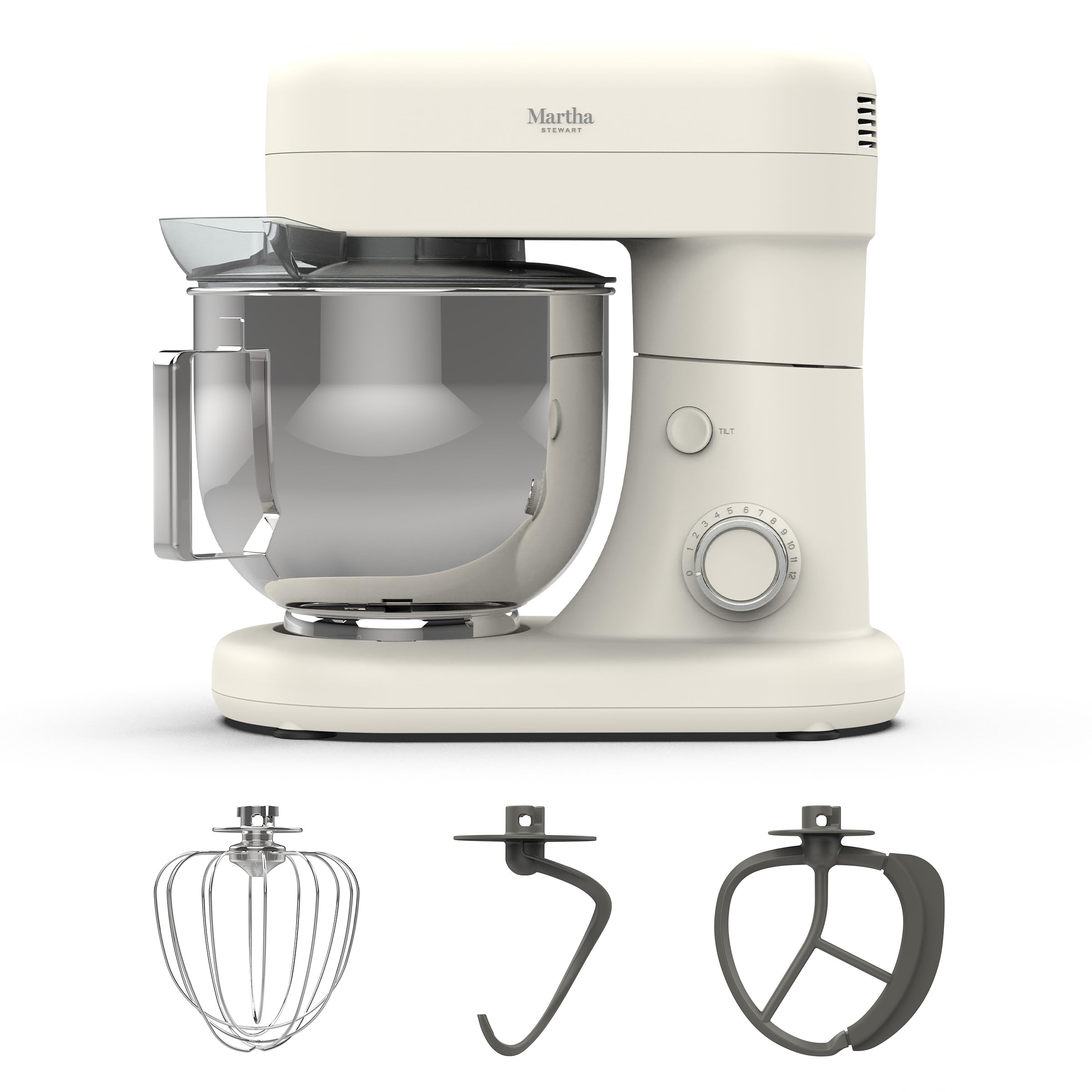
Martha Stewart 5.3
Key Features
- Wattage: 660 W
- Bowl Capacity: 5.3 qt
- Mixing Type: Planetary
- Build Material: Stainless steel
- Attachments: Standard
- Price: $
The Martha Stewart Tilt-Head Stand Mixer pairs a 660W motor with a 5.3 qt stainless steel bowl at a budget-friendly price, making it an attractive option for bakers who don’t need a daily workhorse. Early feedback points to easy cleanup, smooth operation, and a clean countertop look. However, this model is not intended for frequent stiff doughs or very large batches — the motor may struggle with dense bread, and long-term durability for that use case hasn’t been verified. It suits occasional bakers who want decent power for cakes and cookies, with the option to try bread now and then, rather than those who knead multiple loaves weekly.
Pros
- Very affordable for a 660W motor in this capacity class
- Easy to clean and maintain after use
- Sleek design that blends well with kitchen decor
Cons
- Not suited for frequent stiff bread doughs or large batches that exceed moderate loads
- Long-term durability for heavy kneading has not been established, making it a gamble for serious bread bakers
A reasonable pick for budget-conscious bakers who make mostly cakes and cookies, and want to occasionally experiment with bread — not a proven workhorse for frequent stiff doughs.
Best for Smart Features
GE Profile Smart 7

Key Features
- Wattage: 540 W
- Bowl Capacity: 7 qt
- Attachments: Standard
- Price: $$$
The GE Profile Smart Stand Mixer brings a brushless DC motor and 7-quart capacity that meet the demands of stiff bread doughs, along with a built-in scale and Auto Sense that adjusts mixing speed based on weight. These smart features offer precise ingredient measurement and potential for hands-off operation. However, early user feedback points to occasional inconsistencies in dough mixing and some reliability concerns that have not been fully resolved through firmware updates. For a premium-priced product, this level of uncertainty makes it a better fit for tech-savvy bakers open to troubleshooting than for those who need a dependable bread workhorse out of the box.
Pros
- Built-in scale and Auto Sense automate ingredient measurement and speed adjustment for consistent results.
- 7-quart stainless steel bowl handles large batches of dough for multiple loaves.
- Brushless DC motor provides sufficient torque for tough bread doughs without overheating.
Cons
- Smart features require initial app setup and may not respond reliably to all dough consistencies.
- Occasional motor hesitation has been noted when kneading dense doughs, raising durability questions.
This mixer suits early adopters who value smart integration and are willing to monitor firmware updates; for bread bakers prioritizing proven consistency, consider the top pick instead.
How to Choose
Wattage is the #1 predictor of bread dough satisfaction—aim for at least 500W to avoid stalling and overheating.
Motor Wattage
Motor power directly determines how easily a mixer kneads stiff dough. Under 500W, the machine may strain, overheat, or stall after a few loaves. 500W and above handles weekly baking sessions without drama.
Higher wattage used to mean more noise, but modern DC motors (like ZACME’s) run quietly. The trade-off is weight—powerful motors need a heavier base to stay put.
Bowl Capacity
Nominal bowl size is misleading: a 5-quart bowl may only hold 3 cups of flour when fitted with a dough hook. For double batches (two loaves), look for 6.5 quarts or more.
Spiral and bottom-drive mixers use bowl space more efficiently because the hook doesn’t sweep the entire bowl. Planetary mixers often require smaller batches to avoid overflow.
Mixing Mechanism
Planetary mixers (like KitchenAid) orbit the attachment around the bowl. They are versatile but need manual scraping to incorporate edge ingredients. Spiral mixers rotate the bowl while the hook stays fixed, kneading more evenly without overheating the dough.
Bottom-drive mixers (Bosch) let you add ingredients while mixing, a convenience for bulk baking. Your choice depends on whether you value dough quality (spiral) or ease of use (bottom-drive).
Build Material
Metal gears and die-cast housings are essential for long-term durability. Plastic components—especially whip drives and gear casings—are the most common failure points, even in premium brands.
A mixer with all-metal internals costs more upfront but avoids replacement costs within the first two years. For bread bakers, this is where the budget should go.
Attachments and Versatility
If you want a pasta maker, meat grinder, or spiralizer, KitchenAid’s ecosystem is unmatched. Most other brands offer only a basic whisk, paddle, and dough hook.
Specialized bread mixers (Ooni, Ankarsrum) sacrifice attachment options for superior dough performance. Decide whether you need one machine for everything or a dedicated bread tool.
FAQ
Why does my stand mixer struggle with bread dough?
Most consumer mixers are designed for light batters and creams. Bread dough requires consistent torque at low speed. If your mixer has a motor under 500W or plastic internal gears, it will overheat or stall. Look for at least 500W and all-metal gears.
Is a 300W mixer enough for bread dough?
No. 300W is insufficient for regular stiff dough kneading. Even 350W models struggle and may fail after a few loaves. For weekly bread baking, choose 500W or higher to avoid frustration.
What is the difference between spiral and planetary mixing for bread?
Spiral mixers rotate the bowl while the hook stays fixed, kneading dough more efficiently and without overheating. Planetary mixers move the attachment in an orbit but leave dough stuck to the bowl sides. For bread-only use, spiral is superior. For versatility, planetary wins.
Can a KitchenAid Artisan handle double batches of bread?
The Artisan’s 325W motor and plastic gears are not rated for heavy dough. It may handle a single loaf occasionally, but double batches risk overheating and gear wear. Choose a higher-wattage model with metal gears for frequent double batches.
How do I avoid breaking plastic parts in my stand mixer?
Always knead dough on low to medium speed—never high. Don’t exceed the mixer’s recommended flour capacity. If your mixer has a plastic whip drive (like Bosch), consider it a consumable part. For long-term reliability, choose a model with all-metal internal components.