This post contains affiliate links. We may earn a small commission when you buy through our links — at no extra cost to you.
Anyone who has opened a knife block after a few months only to find rust spots knows the disappointment. Many sets claim to be dishwasher safe, but the reality is that moisture causes corrosion, even on stainless steel. The result is dull blades and wasted money.
The smartest investment in your kitchen isn’t a 15-piece set – it’s a single, high-quality chef’s knife that holds its edge and fits your hand. The best brands combine sharp steel with practical design, but only if you treat them right. This guide cuts through the marketing to focus on knives that actually perform under real kitchen conditions.
Whether you are a beginner or a seasoned cook, knowing which features matter – blade hardness, handle material, construction method – saves you from buying twice. The right knife makes prep faster and more enjoyable, without demanding a second mortgage.


Best for Budget-Conscious Cooks
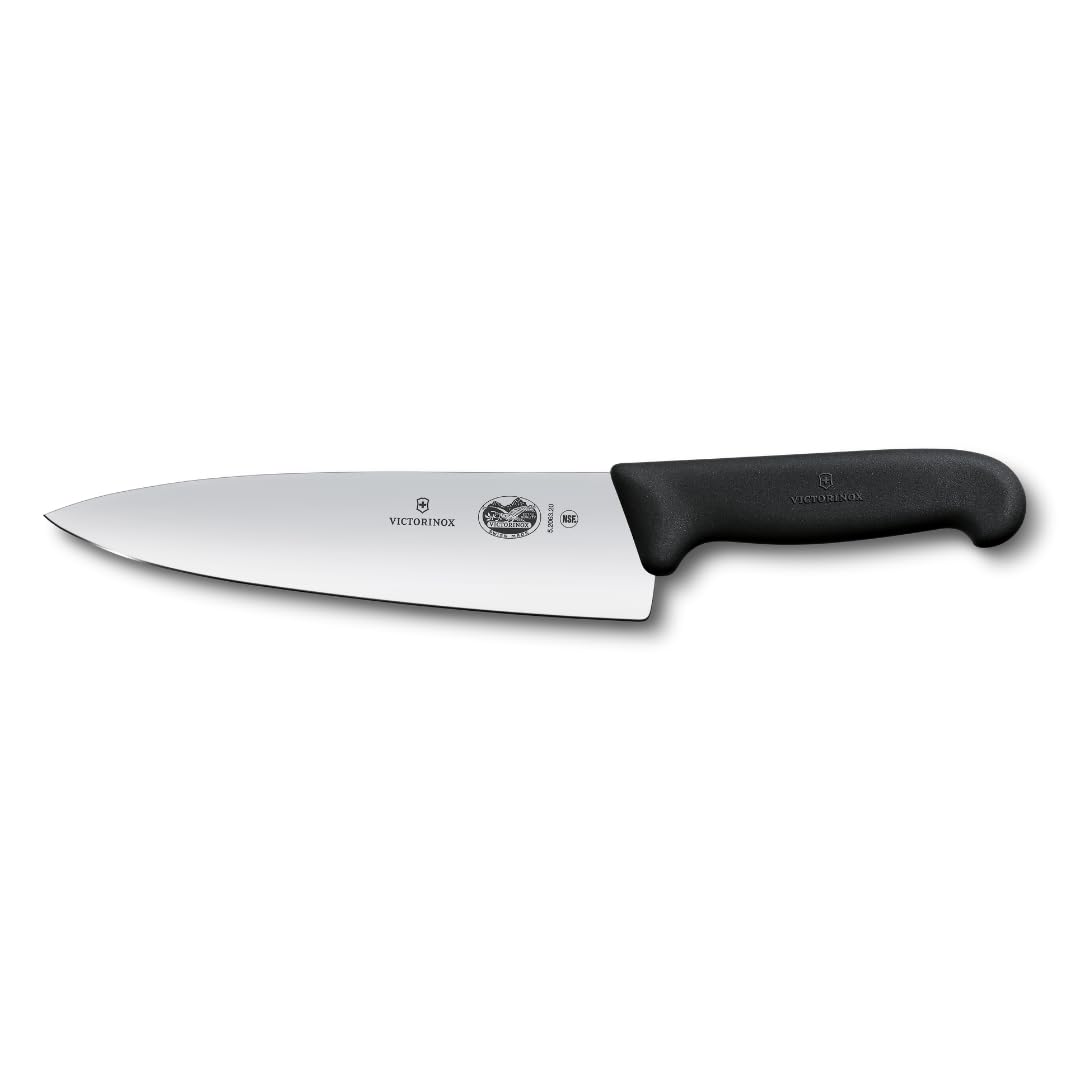
Victorinox Fibrox Pro 8"
Key Features
- Blade Material & Hardness: High Carbon Stainless
- Construction: Stamped
- Handle & Ergonomics: TPE non-slip
- Price: $
The Victorinox Fibrox Pro arrives exceptionally sharp — many home cooks find it slices through bell peppers and raw chicken with minimal pressure. The high-carbon stainless steel holds its edge longer than typical budget knives, reducing sharpening frequency significantly.
The stamped blade is noticeably lighter than forged alternatives, making it quick and nimble for slicing, dicing, and mincing. That same lightness means it lacks the momentum to power through hard squash or thick carrots without extra effort — a tradeoff that matters only for those who regularly process dense produce.
This knife suits home cooks who want professional-grade sharpness without spending hundreds. Beginners will appreciate the secure non-slip handle and forgiving weight. If you routinely chop through bones or frozen vegetables, a heavier forged knife would be a better fit — but for everyday vegetable prep and soft proteins, this is the most practical choice.
Pros
- Out-of-box sharpness that cuts through meat like butter, with edge retention that lasts through weeks of daily prep.
- Non-slip TPE handle stays grippy even when wet, reducing hand fatigue during long cutting sessions.
- Exceptional value — delivers performance comparable to knives priced three to five times higher.
Cons
- Thin stamped blade may flex slightly when cutting through hard-skinned squash or dense root vegetables.
- Lack of heft means less momentum for heavy chopping tasks, requiring more effort than a forged knife.
For most home cooks, this is the only chef’s knife you need — just don’t expect it to muscle through butternut squash the way a forged knife would.
Best for Serious Home Cooks
WÜSTHOF Classic 8"
Key Features
- Blade Material & Hardness: High Carbon SS HRC58
- Construction: Forged
- Handle & Ergonomics: Synthetic polypropylene
- Price: $$$
Wüsthof’s Classic 8″ Chef’s Knife sets the standard for forged German blades. Its full-tang construction and precise balance give it a solid, confidence-inspiring feel that lighter stamped knives can’t match. Compared to those alternatives, this knife feels more controlled when working through dense squash or chopping herbs. The edge holds up through heavy prep sessions and responds well to a honing rod or stone.
This knife is for home cooks who view kitchen tools as lifetime purchases. The premium cost reflects materials and craftsmanship that should outlast decades of use. The synthetic handle offers a secure grip even when wet, and the 8‑inch blade length is versatile for most kitchen tasks. Those on a tighter budget or who prefer a lighter, more agile blade will find better options elsewhere — but for cooks seeking a heavy, durable workhorse, the Wüsthof Classic delivers.
Pros
- Forged from a single block of high-carbon stainless steel — delivers a heft and balance that makes chopping and slicing feel effortless.
- Well-balanced weight distribution reduces fatigue during long cooking sessions.
- Retains its edge for months with regular honing; sharpens easily on a steel or stone when needed.
Cons
- Heavier weight (about 8 oz) may feel cumbersome for cooks accustomed to lightweight Japanese blades.
- Premium pricing puts it out of reach for budget-minded shoppers — better seen as a long-term investment.
For cooks who value a robust, heavy knife that will last a lifetime, the Wüsthof Classic is a worthy investment — just be prepared to pay for it.
Best for Lightweight Enthusiasts
Global G-2 8"
Key Features
- Blade Material & Hardness: Moly/Vanadium Stainless
- Construction: Stamped
- Handle & Ergonomics: Cryo SS dimpled
- Price: $$$
The Global G-2 cuts with an out-of-the-box sharpness that few German knives match. Its stamped one-piece construction keeps weight low and balance centered, reducing wrist fatigue during long prep sessions. Unlike hefty forged knives from traditional German makers, this blade glides through vegetables and boneless meats without effort. The dimpled metal handle and sleek profile are instantly recognizable on any countertop.
This knife suits home cooks with smaller-to-average hands who value swift, precise cuts. The slim metal handle can feel thin or slippery for larger palms — those with big hands may prefer a contoured, thicker grip. Hand-washing is mandatory; the blade is not dishwasher safe, so a quick dry after use keeps it in top shape.
Pros
- Razor-sharp edge retains its bite through weeks of daily use – sharpest out of the box among knives we tested.
- Ultra-light build minimizes hand fatigue over long cooking sessions.
- Striking one-piece design with dimpled grip provides secure hold when hands are dry.
Cons
- Metal handle may feel slippery when wet and is too slim for larger hands.
For home cooks who want a lightweight, laser-sharp knife and don’t mind hand-washing, the G-2 delivers professional performance at a price that undercuts many forged alternatives.
Best for Vegetable Lovers
HOSHANHO Nakiri 7"
Key Features
- Blade Material & Hardness: 10Cr15CoMoV HRC60
- Construction: Forged
- Handle & Ergonomics: Pakkawood
- Price: $$
The HOSHANHO Nakiri brings forged construction and a 15° edge that glides through vegetables with minimal effort. The Pakkawood handle provides a secure grip and balanced feel, making it a pleasure to use for extended prep sessions. This is a dedicated vegetable knife that outperforms many all-purpose chef’s knives on soft and hard produce alike.
This knife is best for home cooks who prioritize vegetable work—slicing, dicing, and chopping—and value Japanese knife geometry and high hardness. Keep in mind the flat, tip-less profile means it cannot pierce meat or perform intricate cuts; it’s a specialist tool, not a generalist. The high-hardness edge also requires care: avoid bones and hard squash to prevent chipping.
Pros
- Razor-like 15° edge cuts through vegetables with almost no resistance.
- Comfortable Pakkawood handle with good grip and balanced weight.
- Exceptional value for a purpose-built vegetable slicer—outperforms pricier alternatives.
Cons
- Nakiri shape has no tip, so it cannot pierce meat or make detailed cuts.
- High-hardness blade is brittle and can chip if used on bones or hard squash.
For home cooks who mainly prep vegetables and want a razor-sharp, purpose-built slicer, this nakiri delivers impressive performance at a mid-range price.
Best for Budget Set Shoppers
Astercook 13-Pc Set
Key Features
- Blade Material & Hardness: High Carbon Stainless
- Construction: Forged
- Handle & Ergonomics: Plastic
- Price: $
The Astercook 13-piece set cuts well immediately, with a sharpness that surprises at this price point. For under $20, you get six knives, shears, and blade guards — a complete kit that rivals more expensive entry-level sets in initial performance. The bright color options and included blade covers make storage easy and safe.
This set suits budget-conscious shoppers who need functional knives for occasional cooking, camping, or a dorm kitchen — places where loss or damage is acceptable. Compared to the block-and-sharpener sets in the same price range, the Astercook focuses on delivering sharp blades rather than gimmicks. The tradeoff: stainless steel that can develop rust spots if left wet, so immediate hand drying is necessary. Not a set for daily heavy meal prep.
Pros
- Very sharp from the box with good cutting performance for the price
- Attractive color options and blade covers for safe storage
- Incredible value at under $20 for a full set
Cons
- In a kitchen where knives aren’t dried immediately, rust can develop over time — less of a concern if you hand dry promptly
For occasional use, camping, or a dorm kitchen, this set delivers remarkable sharpness and value — just be prepared to hand dry after each wash.
Best for Effortless Maintenance
Ninja NeverDull 12-Pc
Key Features
- Blade Material & Hardness: German Stainless Steel
- Construction: Forged
- Price: $$$
The built-in NeverDull sharpener is the standout feature of this 12-piece set — a simple pull through the block restores a blade to razor sharpness in seconds. This eliminates the need for separate sharpening stones or professional services, a convenience that typical knife sets lack. The set includes six steak knives and a pair of shears, all made from forged German stainless steel with a sleek, modern aesthetic.
This system suits home cooks who want a single, hassle-free solution to keep knives sharp. The sharpener’s effectiveness means you won’t sacrifice performance for convenience. However, the scissors have been known to break under routine use, and some owners have reported chipped blade edges — neither issue is universal, but they are worth noting for heavy users. The dishwasher-safe label is convenient, but hand drying will help preserve the blades’ longevity.
Pros
- Built-in sharpener restores edges in seconds without extra tools.
- Knives maintain sharpness over time, cutting through ingredients with ease.
- Modern design with a low-profile block that looks good on countertops.
Cons
- Scissors may break under normal use.
- Some knife blades have chipped edges during regular cutting tasks.
The Ninja NeverDull set is a smart choice for anyone who prioritizes edge retention convenience over absolute durability — the sharpener works, but the scissors and occasional chip are tradeoffs to accept.
Best for Value German Forged
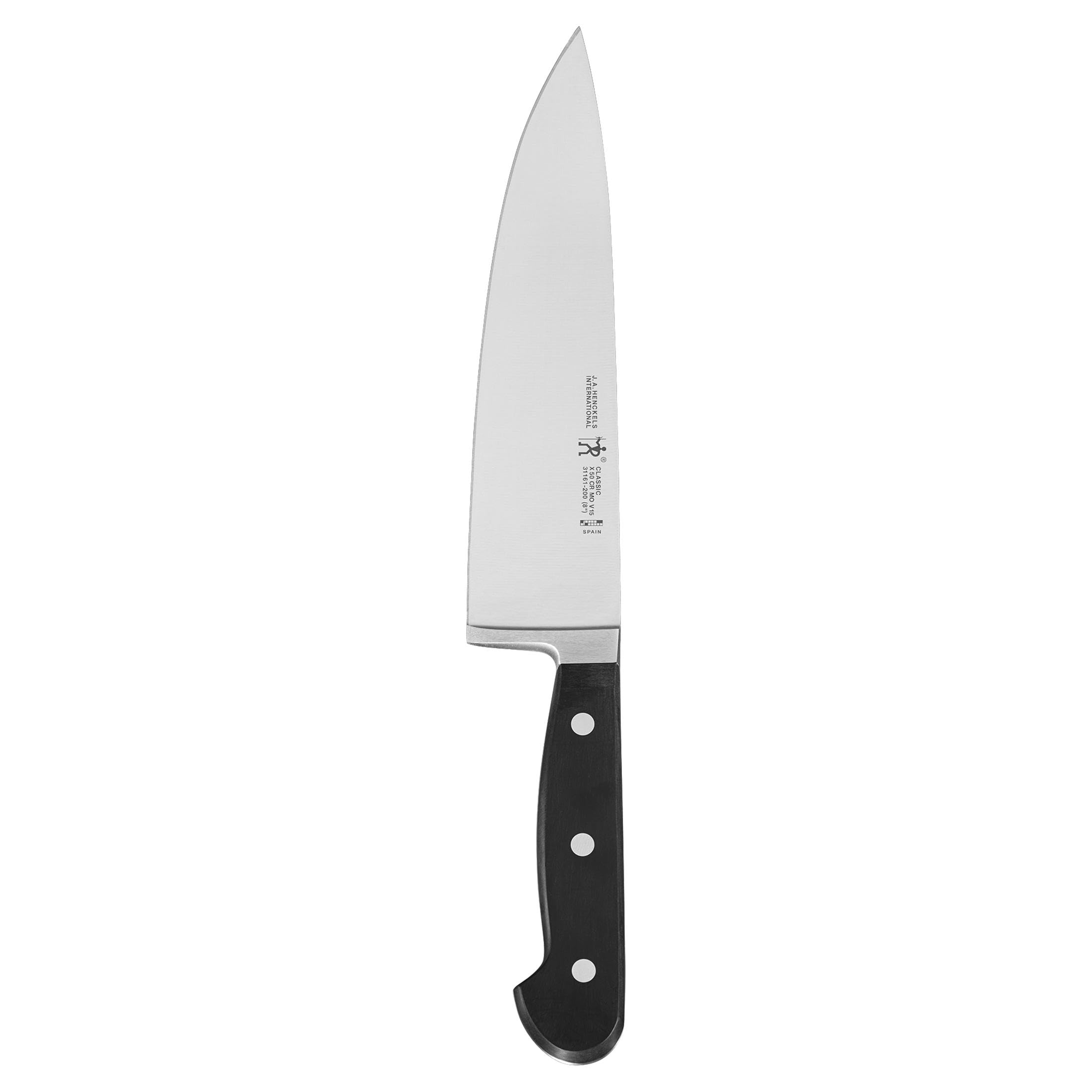
HENCKELS Classic 8"
Key Features
- Blade Material & Hardness: Stainless Steel
- Construction: Fully Forged
- Handle & Ergonomics: Composite polypropylene
- Price: $$
This forged 8-inch chef’s knife delivers the heft and balance expected from a German blade at roughly half the cost of a premium counterpart. The composite handle feels secure, and the overall weight suits extended prep without fatigue.
Best suited for cooks who don’t mind a quick initial sharpening and commit to hand washing only. The edge can arrive less than razor-sharp, and the dishwasher-safe claim doesn’t hold up – rust has been noted after a single wash. For those who treat it as a hand-wash-only tool, the knife performs well and holds an edge reasonably well.
Pros
- Forged German construction provides solid balance and cutting confidence.
- Sharp edge and reasonable edge retention for a mid-priced knife.
- Lightweight yet sturdy – easy to handle during long prep sessions.
Cons
- Rust can develop if placed in the dishwasher despite the manufacturer’s safe claim.
- Some units arrive with a dull edge requiring immediate honing or sharpening.
A cost-effective entry into forged German steel for the cook who will sharpen and hand wash – not the safest bet for a grab-and-go kitchen.
Best for Premium Collectors
Shun Classic 8"

Key Features
- Blade Material & Hardness: VG‑MAX Damascus
- Construction: Forged
- Handle & Ergonomics: D-shaped Pakkawood
- Price: $$$
The Shun Classic 8-inch chef’s knife delivers razor-sharp cuts and a stunning Damascus pattern that makes it a display piece in any kitchen. Its VG-MAX core holds an edge far longer than typical stainless steel, ideal for precise slicing of vegetables, boneless meats, and fish. The D-shaped Pakkawood handle fits naturally in hand, and the 68-layer cladding creates a balanced feel. However, the hard blade is brittle: it can chip if used on bones, frozen foods, or hard squash. This knife is best suited for enthusiasts who prioritize sharpness and beauty over durability, and who are willing to hand-wash and avoid tough cutting tasks.
Pros
- Razor-sharp VG-MAX core with exceptional edge retention for precise slicing
- Beautiful 68-layer Damascus pattern and hammered finish – a work of art
Cons
- Hard and brittle blade can chip when used on bones, frozen items, or hard squash
A top-tier choice for knife enthusiasts who want a precision slicer and are willing to avoid heavy-duty tasks like cutting through bones or frozen foods.
Best for Budget Japanese Style
imarku Japanese Chef 8"

Key Features
- Blade Material & Hardness: High Carbon SS HRC56-58
- Construction: Forged
- Handle & Ergonomics: Pakkawood
- Price: $
The imarku delivers outstanding edge sharpness and a premium look for under $40, making it an appealing entry into Japanese-style knives. The forged high-carbon stainless steel blade glides through meats and vegetables, and the Pakkawood handle feels well-balanced in hand. However, that handle is sensitive to moisture — owners who run it through the dishwasher or leave it wet may see cracking develop over time. This places the knife squarely with home cooks willing to hand wash, dry, and occasionally oil the wood. For those wanting the no-fuss durability of a stamped Victorinox or a one-piece metal handle like the iconic Global, the imarku’s maintenance needs become a clear tradeoff.
Pros
- Very sharp out of the box with good edge retention
- Comfortable, ergonomic Pakkawood handle with good balance
Cons
- Pakkawood handle can crack or splinter if exposed to moisture repeatedly
Best for home cooks who want Japanese-style cutting performance and looks without the high cost, and who are comfortable with hand washing and periodic handle maintenance.
Best for Budget Block Set
McCook 15-Pc Block Set

Key Features
- Blade Material & Hardness: Stainless Steel
- Construction: Stamped
- Price: $$
The McCook set offers a practical built-in sharpener that keeps blades sharp with minimal effort, and includes a solid range of knives for everyday tasks. However, the stainless steel blades may rust if not dried immediately after washing, and the rubberwood block can crack over time. This set suits buyers who are willing to hand-dry each knife and want a complete block with a self-sharpening feature at a mid-range price.
Pros
- Built-in sharpener keeps blades razor-sharp with minimal effort
- Good selection of knives for most tasks, including steak knives
Cons
- Knives may develop rust if not dried promptly; hand-washing and immediate drying required
- Rubberwood block can crack or split over time
A viable option for users who prioritize a self-sharpening block and complete set over long-term durability and minimal maintenance.
Best for Style-Conscious Cooks
Cuisinart 15-Pc Forged

Key Features
- Blade Material & Hardness: High Carbon Stainless
- Construction: Forged
- Handle & Ergonomics: SS triple rivet
- Price: $$
The Cuisinart 15-Piece set stands out with its full forged construction and attractive white handles – a combination that looks as good as it cuts. The blades arrive sharp and hold that edge through routine use. However, the handles, particularly on the steak knives, can develop cracks over time, and the stainless steel blades require immediate drying to prevent rust spots. This makes the set a better fit for someone who values kitchen aesthetics and is committed to hand-washing and drying each piece carefully, rather than for daily heavy use.
Pros
- Sharp out of the box with good edge retention
- Stylish white handles and wood block complement modern kitchens
Cons
- Blades may develop rust if not dried immediately after washing
- Handles, especially on steak knives, can crack with regular use
Best for buyers who prioritize kitchen aesthetics and are willing to commit to hand-washing and drying each piece meticulously.
Best for Entry-Level Shun
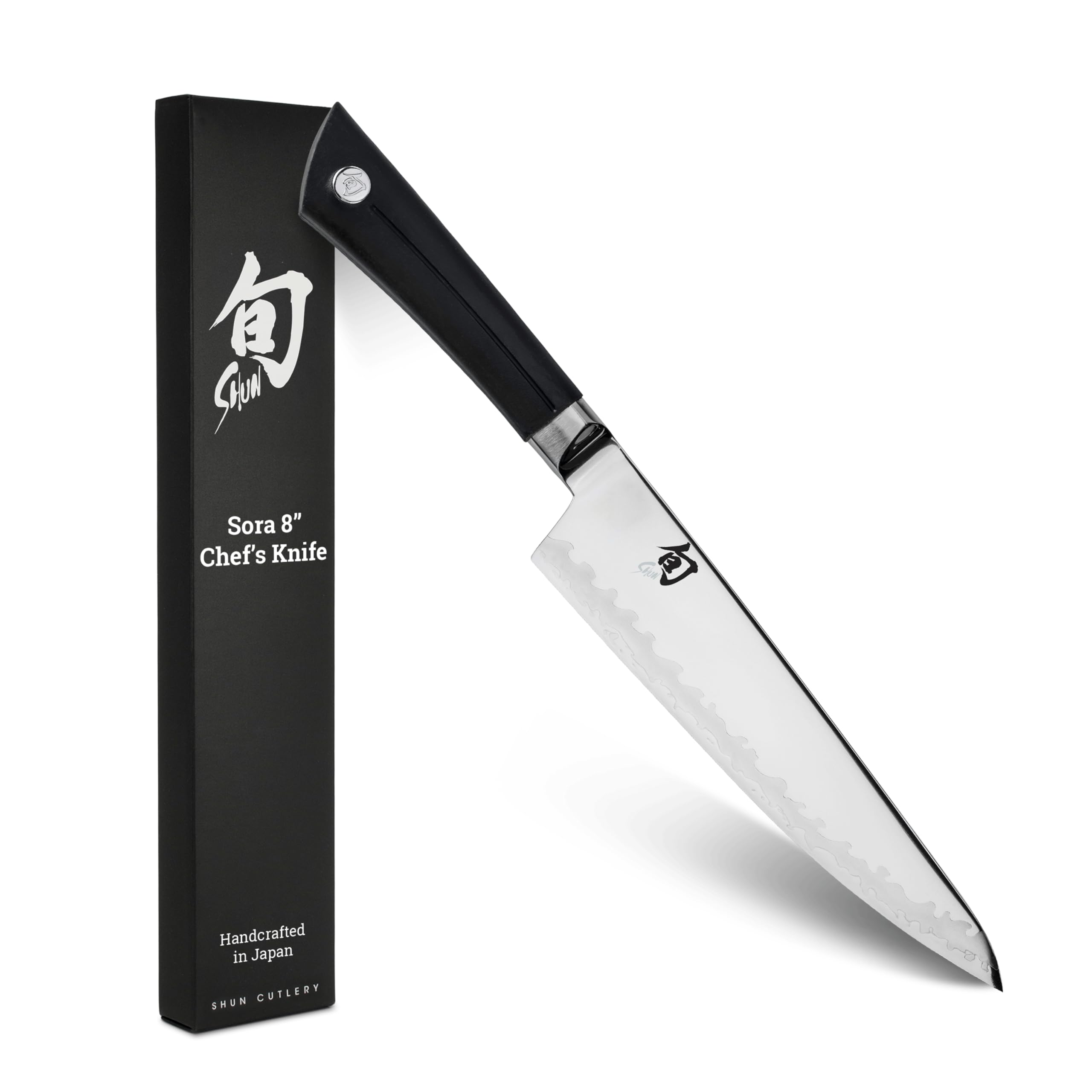
Shun Sora 8"
Key Features
- Blade Material & Hardness: VG10 core, 420J
- Construction: Forged
- Handle & Ergonomics: PP/TPE polymer
- Price: $$
The Shun Sora 8" Chef’s Knife delivers a forged San Mai blade with a VG10 core at a much lower price than the Classic or Premier lines. The polymer handle keeps weight down and provides a secure grip even when wet. The tradeoff is the same hard, chippy steel found in other Shuns—this knife is best reserved for slicing vegetables and boneless proteins, not for cracking bones or frozen ingredients. If you already hand-wash and baby your knives, the Sora is a smart way to step into Japanese cutlery without the premium outlay.
Pros
- Entry-level price for a forged Shun knife with San Mai construction
- Lightweight and well-balanced with a textured, comfortable polymer handle
Cons
- The hard VG10 steel can chip if used on hard ingredients or bones
Best for home cooks who primarily slice and dice soft produce and want a taste of Shun quality without spending for the Classic or Premier.
How to Choose
No matter what the label says, every kitchen knife will rust if left wet – hand drying is non-negotiable.
Blade Material and Hardness
Harder steel (HRC 60+) holds an edge longer but is brittle and chips on bones or frozen food. Softer steel (HRC 56-58) is tougher and easier to sharpen, but dulls faster. For home cooks, HRC 58 is a good balance – you get decent edge life without fragility.
Construction Type
Forged knives are cut from a single piece of steel, often heavier and more balanced. Stamped knives are cut from a roll of steel, lighter and more affordable. For most home cooks, a good stamped knife like Victorinox performs just as well as a forged one for a fraction of the cost.
Handle Material and Ergonomics
Handles come in wood, plastic, synthetic, or metal. Wood (Pakkawood) looks great but needs to be kept dry. Synthetic handles like TPE or polypropylene are grippy when wet and require less care. Metal handles (Global) are sleek but can be slippery for larger hands. Your grip comfort is as important as blade quality.
Edge Retention and Ease of Sharpening
Harder steels hold an edge for months but are harder to sharpen – you’ll need a whetstone or diamond sharpener. Softer steels dull quicker but can be restored with a honing steel in seconds. If you don’t want to sharpen often, choose a knife with high HRC; if you prefer easy maintenance, a softer steel is more forgiving.
Rust Resistance and Care
Stainless steel is not stain-proof – high-carbon content means it can rust. Even knives labeled ‘dishwasher safe’ will develop rust if left in the dishwasher’s moisture. Hand wash with mild soap and dry immediately. A quick towel dry after each use prevents spotting and corrosion.
FAQ
Why do my kitchen knives rust even though they are dishwasher safe?
Dishwasher detergent is caustic and the high heat and moisture accelerate corrosion on the blade edge. The ‘dishwasher safe’ label means the handle can withstand the heat, not that the blade is rust-proof. Always hand wash and dry immediately to prevent rust.
Can I use a Japanese chef’s knife to cut bones?
Japanese knives are hardened to HRC 60+ for extreme sharpness, but that makes them brittle. Cutting bones, frozen food, or hard squash can chip the blade. Use a German-style or softer steel knife for heavy tasks. Reserve Japanese knives for slicing vegetables and boneless proteins.
Is a forged knife better than a stamped knife?
Forged knives are heavier and have a full tang, which some prefer for balance and durability. Stamped knives are lighter and more affordable, and many home cooks find them just as effective. The choice comes down to weight preference and budget, not inherent superiority.
How often should I sharpen my kitchen knives?
Hone the blade with a steel before each use to realign the edge. For sharpening (removing metal), do it every few months depending on use. If you use a knife daily, sharpen every 2-3 months. With harder steel, you can go longer; with softer steel, more often.