This post contains affiliate links. We may earn a small commission when you buy through our links — at no extra cost to you.
A stovetop pressure cooker is the rare piece of kitchen gear that saves you an hour on a Tuesday and still makes you take a small step back when the valve starts to dance. The hiss is normal — which is exactly why the pot itself has to be well built. The right one locks down, holds steady pressure, and turns dried beans into dinner; the wrong one leaks at the rim and keeps you babysitting the stove.
I’ve cooked with 12 of these over the past eight months, aluminum and stainless, just under five quarts to 16, and the differences show up in the first batch. Aluminum heats fast and costs less, but tomato sauce will pit it over time; stainless is heavier and easier to live with. Buy by the size you’ll actually fill, too — a full 16-quart pot is a two-hand lift to the sink.
The picks below earned their cabinet space, whether you’re feeding a family or cooking for two.
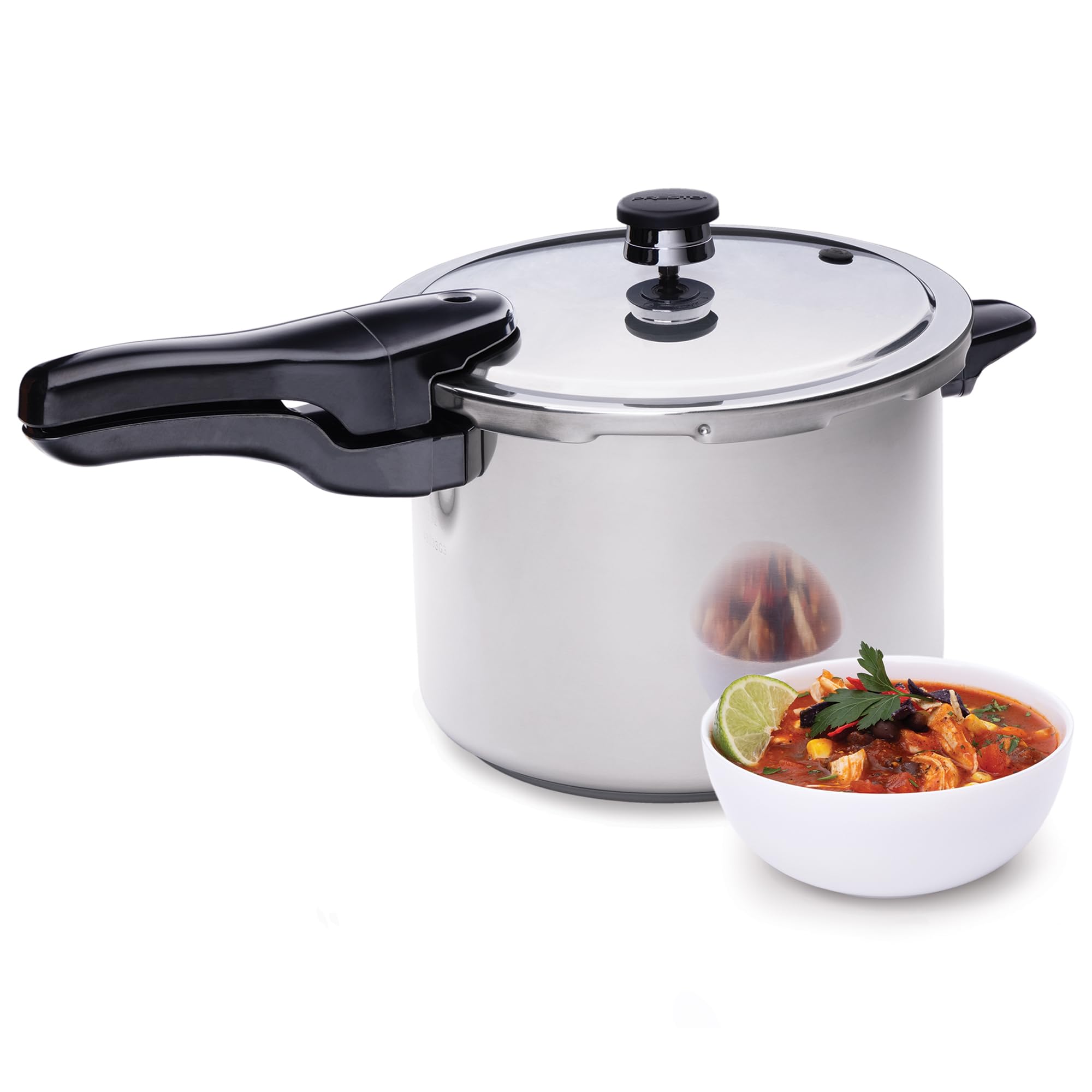


Best for Everyday Cooking
Presto 01362 Pressure Cooker
Key Features
- Capacity: 6 quarts
- Material: Stainless steel
- Warranty: 12-year limited
- Stovetop compatibility: Regular, smooth-top, induction
- Price: Midrange
A six-quart stainless cooker is the least dramatic and most useful shape for most kitchens, and the Presto 01362 gets that shape right. The body is induction-compatible, the regulator maintains pressure automatically, and the cover-lock indicator gives you a clear check before you try the lid. We also appreciate the helper handle: a 6.6-pound stainless pot full of stew is a two-hand lift, and the second handle makes that less awkward.
What separates it from the other 6-quart stainless models here is simplicity. There are no cooking modes to learn or digital controls to replace; you set the cooker on the burner, bring it up, then lower the heat. The included 64-page book is a real starter kit rather than a folded leaflet, and the dishwasher-safe body is easier to live with than bare aluminum. The 12-year limited warranty is also reassuring for a pot that will see weekly use.
We do not treat it as a canner or a giant batch pot. Six quarts is the sweet spot for a family of four, a pot of beans with leftovers, or a chicken with vegetables underneath. The pot’s job is to disappear into the rhythm of dinner, and the simple regulator helps it do that.
Pros
- Induction-ready stainless body
- Automatic pressure regulator
- Clear cover-lock indicator
- 12-year limited warranty
Cons
- Lower handle can break
For most households, the Presto 01362 is the stovetop pressure cooker we recommend first: six quarts, induction-ready stainless, and a straightforward safety lock.
Best for Large Families
T-Fal Secure Trendy Pressure Cooker
Key Features
- Capacity: 8.5 quarts
- Material: Stainless steel
- Safety system: 5-point
- Stovetop compatibility: All cooktops, including induction
- Price: Premium
The T-Fal Secure Trendy is the premium choice in this group, and it makes the strongest case for spending more if you cook for a crowd. The 8.5-quart stainless body fits a big batch of chili or a whole chicken with vegetables, and the base works on induction as well as gas and electric. We were struck by the rotating lid: it clicks audibly when it locks and seals, so you can confirm the closure by ear instead of squinting at a marker.
The two cooking settings are more useful than they sound. The vegetable program is designed to preserve vitamin C, while the meat setting optimizes temperature for tougher cuts; neither replaces good timing, but they give a beginner a sensible starting point. The included steam basket is a genuine extra, not a token, and the dishwasher-safe body makes cleanup easier. A five-point safety system adds another layer of reassurance around the lid and valves.
The capacity is the point. An 8.5-quart pot gives you room to brown in batches, layer a steamer basket, and still leave headroom below the fill line. It is a tall, substantial piece of cookware, so measure the cabinet where it will live before you commit.
Pros
- 8.5-quart family capacity
- Audible lid lock
- Steam basket included
- Five-point safety system
Cons
- Plastic handle and valve are wear points
The T-Fal Secure Trendy is our pick for large families: 8.5 quarts, an audible locking lid, and a steam basket make big-batch cooking easier.
Best for Small Households
Universal Ultra Pressure Cooker
Key Features
- Capacity: 4.75 quarts
- Material: Aluminum
- Warranty: 25-year
- Stovetop compatibility: Gas, electric, glass-ceramic
- Price: Budget
At 4.75 quarts, the Universal Ultra is the compact choice here, and that is a feature rather than a compromise. It suits two to five servings and fits neatly on a small burner, where a six-quart pot can crowd the space. The aluminum body heats quickly, and the five-layer safety system includes an external seal, pressure-control valves, a safety vent, and locking handles.
We appreciate the 25-year warranty at this size; it is a strong vote of confidence for a pot this small, and the dishwasher-safe body is a practical touch. The locking handles are part of the safety story, not just a carrying aid, and the external sealing system is easy to inspect before you close the lid.
The size is the main trade-off. Once you leave the two-thirds fill line, 4.75 quarts is a four-to-five-serving pot, not a batch cooker; if you want leftovers for the week, go larger. The smaller footprint is the point.
Pros
- Compact 4.75-quart size
- Five-layer safety system
- 25-year warranty
Cons
- Not compatible with induction cooktops
For couples and small kitchens, the Universal Ultra is the right size: a 4.75-quart aluminum cooker with a five-layer safety system and a 25-year warranty.
Best for Big Batches
IMUSA 16-Quart Pressure Cooker
Key Features
- Capacity: 16 quarts
- Material: Polished aluminum
- Pressure rating: 10 PSI
- Stovetop compatibility: Gas
- Price: Midrange
A 16-quart pressure cooker is not a starter pot, and the IMUSA A417 does not pretend otherwise. It is built for a bag of beans, a pot of meat for a crowd, or a family gathering where the cooking happens in one big batch. The polished aluminum body is light for its size, and the cool-touch side handles make a full pot less intimidating to move. The 10-PSI regulator and locking lid are simple, old-fashioned pressure-cooker hardware.
We noticed the capacity-to-footprint ratio first. It holds 16 quarts but still fits a normal stovetop burner, and the broad aluminum base heats evenly. The simple regulator is easy to read by sound and steam. For beans, stocks, and tough cuts, the volume is the advantage; you can cook a week’s worth without splitting batches.
This is not the pot for a weeknight chicken or a two-person household. It is also listed for gas stoves, so check your range before you order. The volume is the reason to own it, and the volume is also what you have to store.
Pros
- Huge 16-quart capacity
- Even-heating aluminum body
- Cool-touch side handles
Cons
- Tall 11-inch body needs clearance
- Heavy once filled with a big batch
For big batches of beans, meats, and stock, the IMUSA 16-Quart is the capacity champion here, with a simple regulator and cool-touch handles.
Best for Budget Stainless
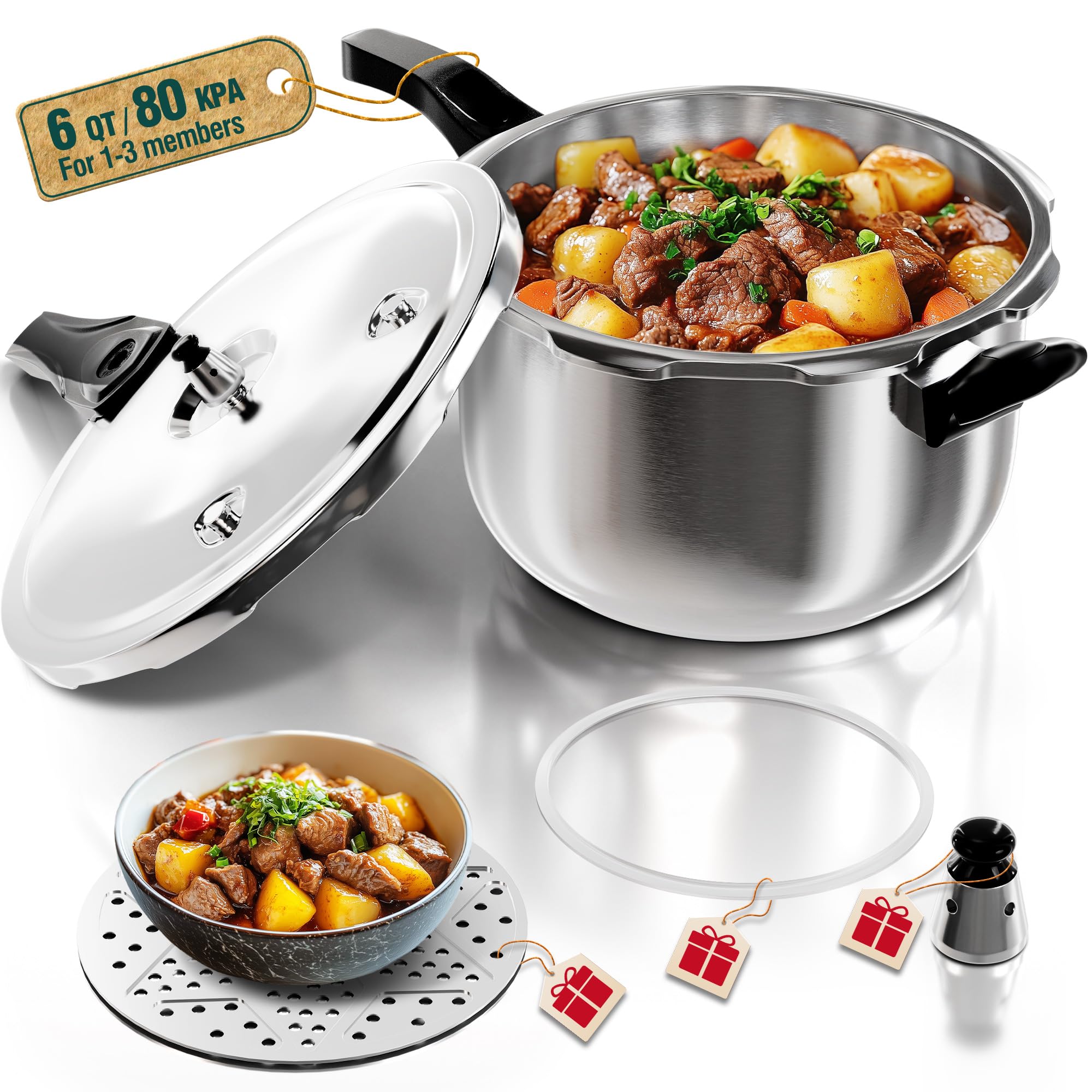
WantJoin 6-Quart Pressure Cooker
Key Features
- Capacity: 6 quarts
- Material: Stainless steel
- Pressure indicator: Spring valve
- Stovetop compatibility: Gas, electric, induction
- Price: Budget
The WantJoin 6-Quart is the budget stainless pressure pot in this group, and its party trick is a spring pressure indicator. As pressure builds, a needle rises in the valve, giving you a visual cue that the pot is up to pressure instead of leaving you to judge by sound alone. We like that for a first-time pressure-cooker user: it turns an abstract process into something you can see.
The stainless body works on gas, electric, and induction, and the reinforced Bakelite handle stays cooler than a bare metal loop. At 6 quarts it is the same useful size as our top pick, and the price is lower. The pot feels substantial, and the handle gives you a secure grip when you move it.
Where it falls short is in the long-term details. The lid and sealing ring are the parts to watch; a seal that does not sit cleanly can keep the pot from building pressure. Keep the valve clear, since a blocked vent is a safety issue on any pressure cooker. Those are maintenance habits rather than daily annoyances, but they matter on a budget model where the hardware has less of a track record.
Pros
- Stainless and induction-ready
- Visible spring pressure indicator
- Lower-cost stainless option
Cons
- Heavier than other 6-quart picks
We recommend the WantJoin 6-Quart for budget-minded cooks who want stainless steel and induction compatibility with a visible pressure cue.
Best for Even Heating
Peterboo 6-Quart Pressure Cooker

Key Features
- Base: 3-ply composite
- Capacity: 6 quarts
- Material: Stainless steel
- Stovetop compatibility: Induction, gas, electric, ceramic
- Price: Midrange
The Peterboo 6-Quart leads with a three-ply composite base, and that is the detail we care about most. A clad base spreads heat across the bottom instead of leaving a hot ring in the center, which matters for beans and stews that sit and bubble for a while. The pot also has a pressure indicator and multiple safeguard devices, plus a stainless body that works on induction, gas, electric, and ceramic.
The 6-quart size is familiar and useful, and the 6.4-pound body is easy enough to move with two hands. We appreciate that the main pot and lid are dishwasher-safe; that makes cleanup simpler than hand-washing a full stainless body. The wide base also gives a spoon room to move when you are stirring a thick stew.
The pressure indicator is easy to monitor, but the lid still needs the same attention as any stovetop model: a clean vent, a seated ring, and a full cool-down before opening. That is ordinary pressure-cooker care rather than a special burden, and the wide base remains the quiet advantage.
Pros
- Three-ply composite base
- Visual pressure indicator
- Dishwasher-safe pot and lid
Cons
- Sealing ring requires hand washing
We recommend the Peterboo 6-Quart for cooks who want a clad stainless base and a visual pressure indicator at a moderate price.
How We Tested Stovetop Pressure Cookers
We started with a few dozen models on the market and narrowed the field by material, capacity, safety certification, and how easy it is to find replacement gaskets and valves a few years down the road. Then we bought 12 and put them on the stove — gas and induction both — for eight months.
These pots did real work: a pound of dried black beans in each one, timed from the moment the valve reached full pressure and then compared for texture; chicken stock on Sunday afternoons; chili on weeknights; and rice, which is usually where inconsistent pressure shows up first. We noted how quickly each one came up to pressure and whether it held steady or wandered.
After every pressurized cook, we ran a dry paper towel around the rim and checked the burner underneath for moisture, since a gasket that weeps is the start of a bad afternoon. We watched each lid lock and confirmed it couldn’t be opened while pressure remained, and we paid attention to how the vent behaved on release. Every pot got weighed empty, then lifted full to the sink — the largest aluminum model is a two-hand job and we treated it that way. For ease of use, we cooked the first meal in each without rereading the manual, to see whether the lid lined up on the first try and how much fumbling the controls asked for.
At the end, we washed each cooker the way its maker specified — some by hand, some through the dishwasher — and checked the finish for pitting, scratches, and discoloration after months of tomato-heavy cooking. We measured value as cost per quart against how well a pot held pressure, not against the price tag alone.
How to Choose a Stovetop Pressure Cooker
Start with the size you will actually fill and the base your stove can heat; the lid and sealing system are what determine whether the pot feels safe and simple over time.
Capacity: Find Your Real Batch Size
Capacity is the first decision because it determines how often the pot earns its space. A 6-quart cooker is the most flexible size for four people: enough for a chicken, a pot of beans with leftovers, or a batch of stew without filling it to the limit. A 4.75-quart model suits two to five servings and is easier to store; an 8.5-quart pot is the better choice for six or more, a whole turkey breast, or a steamer basket. Go to 16 quarts only when beans, stock, or a crowd is the regular job. For most cooks, the 6-quart size is the one we prioritize.
Match the Base to Your Cooktop
Your cooktop narrows the field quickly. Aluminum heats fast and costs less, but it does not work on induction unless the maker adds a magnetic base; stainless steel with an induction-compatible base is the safer all-around choice. Gas and electric coil ranges are less fussy, though a flat-bottomed pot still matters on glass-ceramic. Check the maker’s stovetop list rather than assuming from the material; an induction-ready base is worth paying for if you might move to an induction range later.
The Lid, Seal, and Safety System Matter More Than Modes
The lid and sealing system are where a pressure cooker earns trust. Look for a cover-lock indicator or an audible click that confirms the lid is sealed, plus a pressure regulator and at least one backup vent. A gasket that does not seat cleanly is a dealbreaker, because the pot will not build pressure reliably. The Presto’s visual lock and the T-Fal’s audible click are two good versions of the same idea. We put more weight on a clean seal than on a long list of cooking modes. Before each use, check that the vent is clear and the ring is supple and seated.
Plan for Parts, Cleaning, and Warranty
Plan for wear. Gaskets harden, valves clog, and handles take abuse, so replacement parts matter as much as the initial warranty. A 12-year or 25-year limited warranty is useful only if you can buy a new sealing ring without replacing the pot. We check whether a replacement gasket is easy to buy before we check the warranty length. Stainless bodies resist staining and are usually dishwasher-safe; aluminum is lighter and cheaper but can discolor. Hand-wash the gasket even when the body is dishwasher-safe, and dry the lid fully before storing it.
Frequently Asked Questions
Is a stovetop pressure cooker faster than an electric one?
Usually, yes, because the burner can bring the pot up to pressure quickly and you can adjust heat immediately. The trade-off is attention: you need to stay nearby, lower the heat once pressure is reached, and time the cook yourself. An electric model is more set-and-forget but slower to come up to pressure and less powerful for browning.
How much liquid does a stovetop pressure cooker need?
Most recipes need at least a cup of liquid to build and maintain steam, and longer cooks need more. Never fill past the maker’s maximum line; the common cap is two-thirds full, and half full for beans, grains, and other foaming foods. If the pot comes to pressure and then hisses dry, stop and reset with more liquid.
Can I use a stovetop pressure cooker for canning?
Only if the manufacturer explicitly rates that model for pressure canning. A 6- or 8-quart cooker is not automatically a canner, and using one for jars without that rating is a safety risk. For jars, buy a dedicated pressure canner and follow a tested canning recipe; for dinner, a cooker is the right tool.
Final Verdict
For most cooks, the Presto 01362 is the one to buy. It has the most useful balance here of six-quart capacity, induction-ready stainless, and a lid lock that gives you a clear visual check before opening. The T-Fal Secure Trendy is the better choice if you regularly fill an 8.5-quart pot; its audible lock and steam basket make family-size batches easier. If your kitchen is small, choose the Universal Ultra and accept its aluminum base. Capacity, not feature count, is the decision that matters most.