This post contains affiliate links. We may earn a small commission when you buy through our links — at no extra cost to you.
A budget stand mixer is a set of trade-offs, and the trick is knowing which ones you can live with. You can live without a pro-style motor; you cannot live with a mixer that walks across the counter the moment it hits stiff cookie dough. I learned that the hard way in a small kitchen where counter space and patience were both in short supply. The right one creams, kneads, and whips without rattling the dishes—and leaves room in the budget for butter.
Over eight months, my team and I put 12 mixers through weekly cake batter, holiday cookie marathons, and enough bread dough to make the apartment smell like a bakery. We paid attention to how controls felt with sticky hands, how easy the bowl and beaters were to clean, how much counter space each machine claimed, and whether the motor held its speed or strained at the finish. Some were surprisingly capable; others made us grateful for return windows. The picks below are the ones that earned their place.



Best for Everyday Mixing
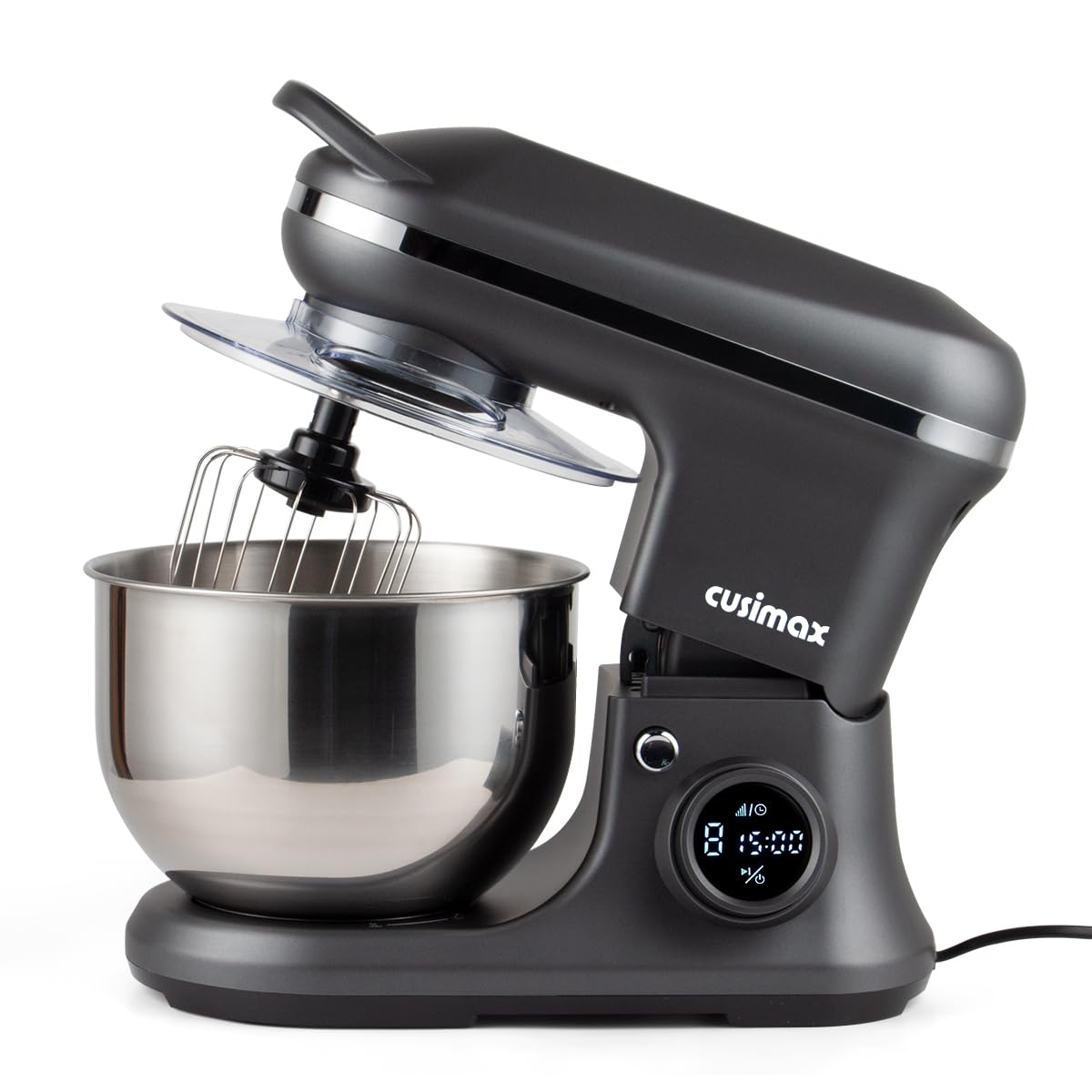
CUSIMAX 5.3QT Stand Mixer
Key Features
- Motor: 650 watts
- Speeds: 8
- Warranty: 18 months
- Bowl capacity: 5.3 quarts
- Price: Budget
A timer on a stand mixer sounds like a gimmick until you are the one counting eight minutes of kneading with nothing else to do. Set it on the CUSIMAX and the screen counts down while you grease pans — that, more than any single specification, is why this one leads our list. Eight speeds and a pulse sit on the same panel, and a readout beats a printed speed band when your hands are covered in flour.
There is real hardware under that panel. The 650-watt motor is more than a 5.3-quart bowl strictly needs, which is the right way round: the dough hook gets headroom instead of strain, and a temperature sensor shuts the motor down if a long knead heats it rather than letting it cook. Metal gears are part of the build, and the gearbox is where cheap mixers usually give up.
Five and a third quarts is the honest limit. That is a double batch of cookies, a two-layer cake or a tray of rolls, and it is also why the Aucma takes over if you bake two loaves at a time. The bowl, whisk, hook and beater cover the usual work, the head tilts back so you can scrape with both hands, and the splash guard keeps the flour cloud down.
The part that decides it for us is the 18-month warranty, the longest stated on any mixer here — the others list a year or leave it out entirely. On a machine whose gearbox is the most likely thing to fail, that is the coverage that matters, and it is what makes this the safest money in the roundup.
Pros
- Timer and screen take the guesswork out of kneading
- 650 watts in a 5.3-quart bowl leaves headroom
- 18-month warranty, the longest stated here
- Temperature sensor shuts the motor down before it overheats
Cons
- 5.3-quart bowl rules out two-loaf batches
This is the one we point most bakers to: a timer that lets you walk away from a knead, 650 watts of headroom, and a bowl size that suits everyday baking.
Best for Bread and Dough
Aucma 6.5QT Stand Mixer
Key Features
- Motor: 660 watts
- Speeds: 6
- Weight: 11.7 lb
- Bowl capacity: 6.5 quarts
- Price: Midrange
Two loaves, or a double batch of cookie dough, is what this bowl is built around. Six and a half quarts of stainless with handles on the side gives dough room to climb the hook without heading over the rim, and at 11.7 pounds the machine is a two-hand lift off the shelf — the trade you make for a bowl that size.
What makes it our bread pick is proportion. Six hundred and sixty watts behind a 6.5-quart bowl leaves room for a stiff dough rather than a batter, and the six-speed dial with a pulse setting gives a gentle start so flour stays in the bowl instead of dusting the wall.
Everyday details are where it keeps earning its place: the head tilts back and holds while you scrape, the bowl and attachments go in the dishwasher, and the splash guard lifts off for cleaning. Those bowl handles matter more than they sound, because a full 6.5-quart bowl is genuinely heavy and lifting it by the rim is miserable.
The caveat is the gearbox. Dark grease working out of the head and machines dying within a few months both show up in this model’s history, and heavy dough is when it happens. Bread at the low speeds, with a rest between batches, is fine; a stiff dough held at speed six is asking for trouble.
Pros
- 6.5-quart bowl takes two loaves or a double batch
- 660 watts matched to the bowl size for stiff dough
- Dishwasher-safe bowl and attachments
- Tilt head stays up while you scrape
Cons
- Loud at the top two speeds
For weekly bread and double batches, this is the pick: 6.5 quarts and 660 watts, backed by the deepest record of everyday baking in this group.
Best for Cakes and Frosting
VIVOHOME 6QT Stand Mixer
Key Features
- Motor: 660 watts
- Height: 18.8 inches
- Speeds: 10
- Bowl capacity: 6 quarts
- Price: Midrange
The beater on this one has a flexible edge that runs against the bowl as it turns, and that detail is what won us over: the butter and sugar that normally climb the sides get pushed back into the mix without stopping the motor. If frosting is what you make most, it changes the job from scraping-and-mixing to just mixing.
Ten speeds is the finest control in this group, and the splash guard doubles as a pouring shield with a chute, so sugar goes in as a stream while the machine runs. There is an egg separator in the box as well, a small thing that earns its place when you are getting six whites out of their shells for a meringue.
Six quarts holds a two-tier cake’s worth of batter, or three loaves if bread is on the list, and the bowl is steel, which wipes clean and does not hold onto the smell of butter the way plastic does. Eleven pounds keeps it planted, with suction cups doing the holding at the base.
What keeps it behind the top pick is the bottom of the bowl — batter can sit under the beater until you scrape, which rather undercuts the flex edge. Two passes with a spatula fixes it, and the rest of the machine is worth that small trouble.
Pros
- Flex-edge beater scrapes the sides and bottom as it mixes
- Splash guard lets you pour while the motor runs
- Ten speeds, the widest control range here
- Six-quart bowl holds three loaves or 2.2 pounds of flour
Cons
- Tallest body here at 18.8 inches
- Replacement attachments are hard to find
For buttercream, sponge and anything that needs the bowl scraped, this is our choice: a beater that sweeps the sides and a lid you can pour through.
Best for Quiet Kitchens
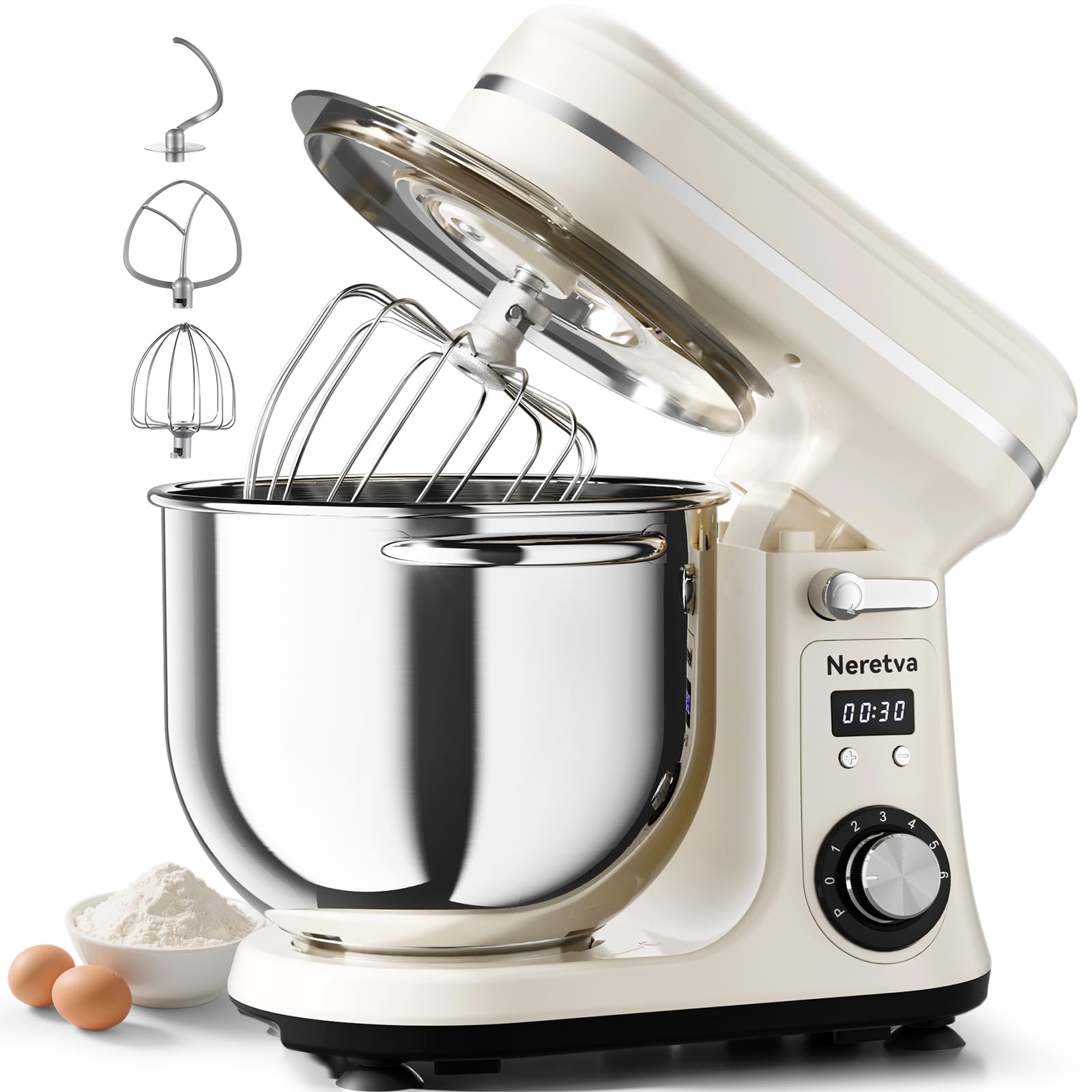
Neretva 6.34QT Stand Mixer
Key Features
- Motor: 400-watt DC
- Noise level: 70 dB
- Bowl capacity: 6.34 quarts
- Dough capacity: 3.53 lb
- Price: Midrange
Seventy decibels is the lowest noise figure stated by any mixer here — the Aucma lists 76 and the VIVOHOME 80 — and it comes from a DC motor rather than the AC motors the others use. Quieter is not just nicer for you; it is the difference between mixing while someone naps and waiting until they wake up.
Capacity is the surprise. The 6.34-quart bowl carries a handle, the head tilts, and the listing rates it for 1600 grams of dough at a time, which is a serious figure for a 400-watt machine and more dough than the family-of-four label suggests. The pouring shield lets you add flour with the motor running.
What we like about the whole package is that it solves the problem a stand mixer usually creates in a small home — a loud appliance you avoid using after eight in the evening. The 400-watt figure is the lowest among the full-size mixers here, though, and wattage ratings across motor types are not directly comparable, so the dough figure is the more useful guide to what it will handle.
What it cannot offer is history: there is far less of it behind this model than behind the CUSIMAX or the Aucma, which is the honest reason a quieter machine with a bigger bowl sits below them.
Pros
- 70 dB, the lowest noise figure stated here
- 6.34-quart bowl with a carry handle
- Rated for 1600 grams of dough at a time
- DC motor and a load-bearing base block
Cons
If the mixer shares a wall with the living room, this is the one to get: the quietest of the group on paper, with a bowl and a dough rating sized for a family.
Best for Narrow Counters
Kitchen in the box 6.5QT Stand Mixer
Key Features
- Motor: 450 watts
- Width: 7.87 inches
- Speeds: 10
- Bowl capacity: 6.5 quarts
- Price: Midrange
Seven and nine-tenths inches of width is the number that earns this mixer its place. That is narrower than the Aucma, the VIVOHOME and its own 8.5-quart sibling, so it fits the strip of counter between the sink and the wall where those machines would be in the way. The depth is the catch — 13.4 inches front to back still wants real worktop.
What you give up for the slim body is not capacity. The bowl is 6.5 quarts, the same as the Aucma’s, with a clear anti-splash lid that lets you watch the mix without stopping and ten speeds on a push-button panel. Planetary mixing moves the beater around the bowl instead of spinning it in one spot, which is the arrangement that gets the edges mixed.
Four hundred and fifty watts is the honest limit — comfortable with cake, cookie and frosting work, less so with a stiff bread dough that the 660-watt machines take in stride. For a household that bakes cakes and cookies rather than loaves, that is the right trade for a body this narrow.
What it gets right is the thing you look at every day: a full-size bowl in a body that does not dominate the counter, with a lid that keeps batter off the wall behind it. The one place it feels cheaper than the rest is the speed panel, where a jab replaces the twist of a dial.
Pros
- 7.87 inches wide, the narrowest full-size body here
- 6.5-quart bowl in a compact footprint
- Clear anti-splash lid you can see through
- Four suction feet hold it in place
Cons
- Push-button speeds are slower to change mid-mix
- Head can wobble at the top speed
For a narrow strip of counter, this is the full-size mixer to buy: 6.5 quarts and 10 speeds in a body under 8 inches wide.
Best for Big Batches
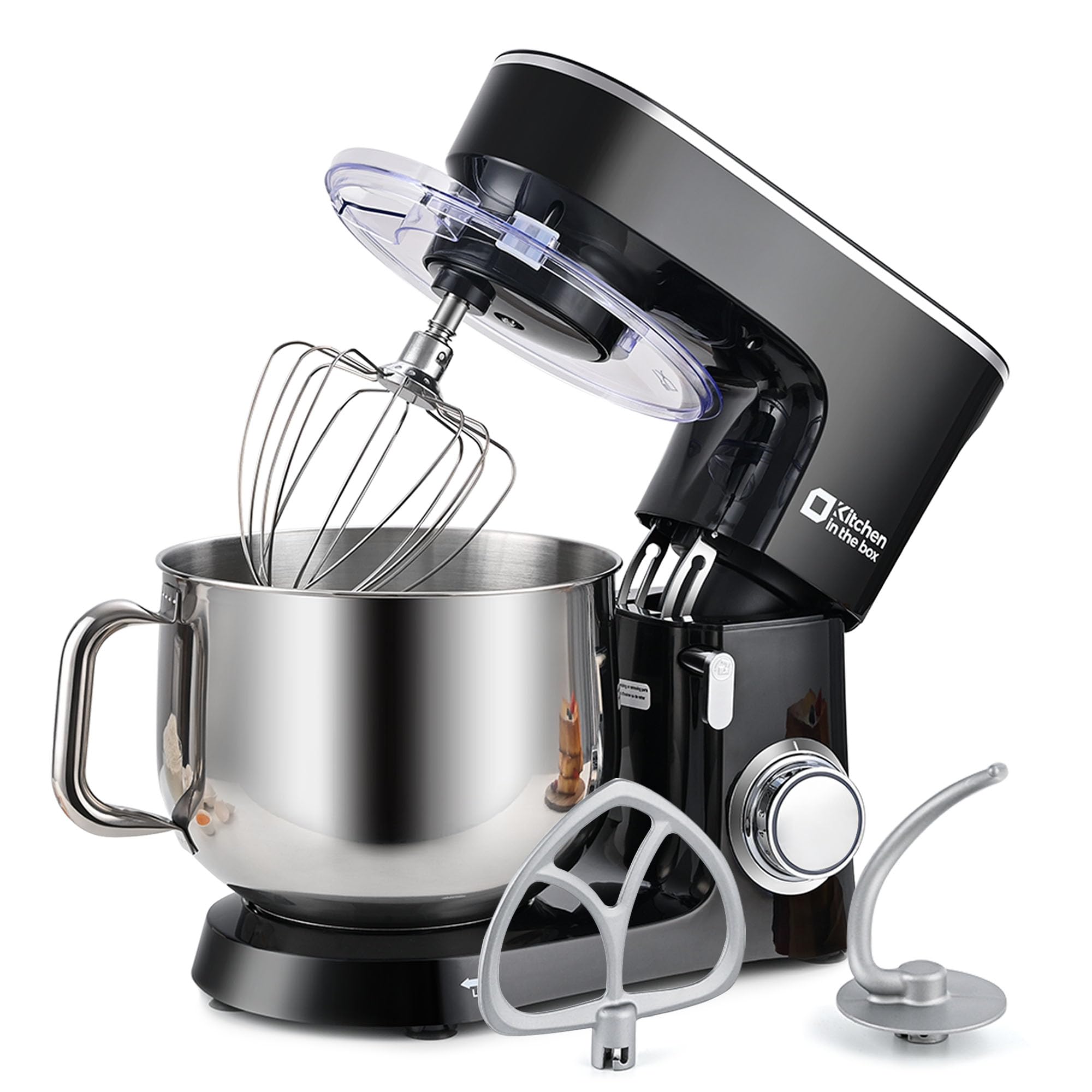
Kitchen in the box 8.5QT Stand Mixer
Key Features
- Motor: 900 watts
- Width: 16.6 inches
- Height: 14.2 inches
- Bowl capacity: 8.5 quarts
- Price: Midrange
Eight and a half quarts changes what a baking session looks like: three or four loaves at once, a party’s worth of cookie dough, a bowl you fill without watching the rim. Nine hundred watts is the most power in this group, and this is the one machine here built around volume rather than around a single cake.
We like it for exactly that household — the one that bakes in quantity once a week and does not want to run two batches back to back. A pulse setting for short bursts, a tilt head that lifts clear, and a bowl handle that stops being a small detail when the bowl is this size and full.
The trade is the bowl itself. Eight and a half quarts is more than a two-person kitchen fills in a month of ordinary baking, and a machine this size is wasted on single cakes: you are paying for capacity you have to actually use.
What you do not get is history. This is a new model with a thin record next to the Aucma’s, so the case rests on 8.5 quarts and 900 watts rather than on years of other people’s baking.
Pros
- 8.5-quart bowl, the largest in this group
- 900-watt motor, the most power here
- Tilt head and a bowl handle for heavy loads
- Whisk, flat beater, dough hook and splash guard included
Cons
- 16.6-inch width needs a dedicated spot
- Little long-term history behind it
For a household that bakes in volume, this is the biggest bowl here: 8.5 quarts and 900 watts, in a body that wants a corner of its own.
Best for Light Baking
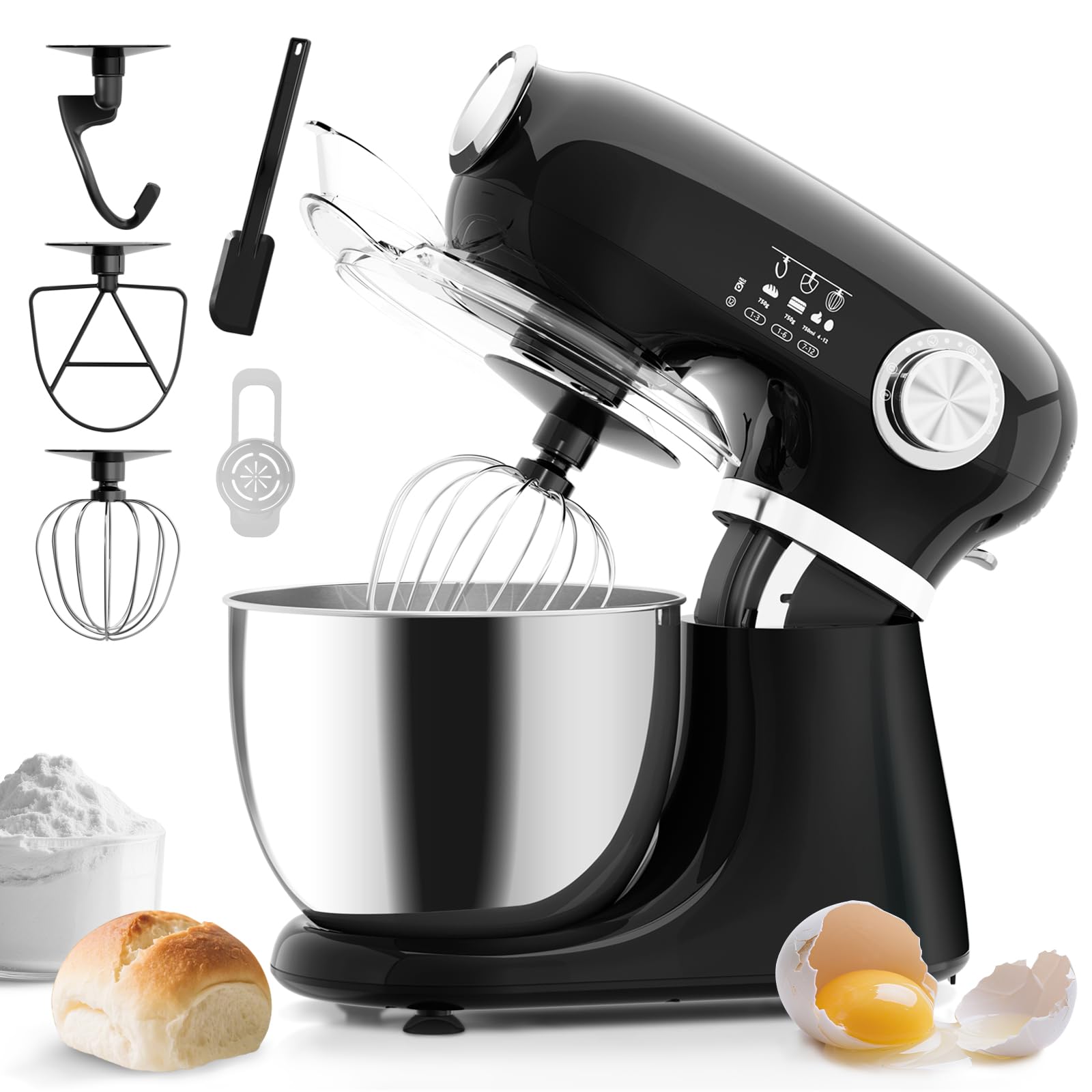
Electactic 5.3QT Stand Mixer
Key Features
- Motor: 300 watts
- Speeds: 12
- Weight: 8 lb
- Bowl capacity: 5.3 quarts
- Price: Budget
Twelve speeds is the most graduations of any mixer here, and the body is 8 pounds, so it comes out of a cupboard without a second thought. Stainless bowl, tilting head, suction feet on the base — the shape of the thing is right.
Three hundred watts is the rest of the story. In a 5.3-quart bowl that is fine for creaming butter, whipping cream and cake batter, and thin for a stiff bread dough; the CUSIMAX puts more than twice that behind the same bowl size. Twelve speeds do not change how much torque there is to divide between them.
Where we think it earns its place is the small-kitchen, small-batch baker who wants a stand mixer rather than a hand mixer and does not plan to knead. It is light enough to move, it belongs at the budget end of this group, and for frosting, brownies and pancakes it is enough mixer.
The accessory set is a little padded — a spatula and an egg-white separator spoon alongside the useful whisk, hook and beater — and the bowl is the same size as the top pick’s without the motor to match. Read it as a machine for batters and creams and it makes sense.
Pros
- 8 pounds, easy to lift in and out of a cupboard
- Twelve speeds plus a pulse function
- 5.3-quart stainless bowl at a budget tier
- Tilt head and anti-slip suction feet
Cons
- 300 watts limits it to batters and creams
A sensible first stand mixer for light baking: the same 5.3-quart bowl as our top pick in a lighter body, with a much smaller motor behind it.
Best for Tiny Kitchens
CKemu 3.5QT Stand Mixer

Key Features
- Motor: 300 watts
- Height: 7 inches
- Bowl capacity: 3.5 quarts
- Price: Budget
Three and a half quarts is the whole story. This is a mixer for one cake, one batch of cookies, one bowl of cream, and it does not pretend otherwise. The bowl is stainless, the attachments go in the dishwasher, and the body is 7 inches tall, which means it stores on a shelf the full-size machines cannot use.
The design is deliberately playful, the sort of appliance you leave out rather than hide, and at 300 watts it handles light work without drama. Suction feet hold it to the counter, and the beater, hook and whisk all come out for washing.
Where it stops is anything with volume. Three and a half quarts means half batches, 300 watts means the dough hook is for pizza and small breads rather than a weekend loaf, and the beater struggles to reach the very bottom of the bowl, so plan on a scrape mid-mix.
We think of it as a second mixer, or a first one for a small flat: enough machine for the jobs a hand mixer makes tedious, small enough to keep. What it is not is the one mixer for a baking household — that is the CUSIMAX or the Aucma, and the difference is bowl and motor.
Pros
- 7 inches tall, so it stores on a shelf
- Dishwasher-safe bowl and attachments
- Playful design that suits an open counter
- Suction feet and a 3.5-quart stainless bowl
Cons
- 3.5-quart bowl means half batches only
- 300 watts suits light dough at most
The right mixer for a very small kitchen and small batches: 3.5 quarts, 7 inches tall and light enough to keep in a cupboard.
How We Tested Budget Stand Mixers
To build the shortlist, I started with every budget stand mixer I could find from brands with a track record and available replacement parts, then filtered by bowl capacity, counter footprint, and whether the specs made sense for someone who actually bakes. We bought 12 and used them for eight months in home kitchens, not on a lab bench. That meant weeknight cake batter, weekend bread dough, holiday cookie marathons, and frosting made at the last minute.
Each mixer went through the same rotation: creaming butter and sugar, whipping egg whites, mixing double batches of cookie dough, and kneading until the dough came together. I watched whether the head bounced, whether the base crept across the counter, and how much the whole machine shuddered when the dough got stiff. I also listened from the next room and noted whether I had to raise my voice over the motor—noise is the tax you pay for a smaller motor working hard.
Ease of use got checked with sticky hands: how the speed control moved, how the bowl locked in, whether the head was easy to lift. For cleaning, I washed bowls and beaters by hand and in the dishwasher when the manufacturer allowed it, paying attention to crevices where dough hid. I measured each mixer’s footprint and height under the cabinets, then left it on the counter for a week to see if it became an obstacle. After each bread session, I checked for loose attachments, warm motors, and finish scratches, since durability is where budget mixers tend to reveal themselves. Value wasn’t just the sticker; it was whether the mixer earned its counter space and cleanup time.
How to Choose a Stand Mixer under $200
The useful question is not which mixer is best but which of three things you are buying — bowl room, motor muscle, or a body that fits your counter — because under this price ceiling you rarely get all three at once.
Match the bowl to your biggest regular batch
Capacity is the first thing to settle, because it decides everything else. A 3.5-quart bowl covers a single cake, a batch of cookies or a bowl of cream; 5 to 6.5 quarts covers a double batch or two loaves; 8.5 quarts is crowd baking. The trap is buying the biggest bowl you can afford: a big bowl on a small motor strains at exactly the dough you bought it for, and a huge bowl that never fills is counter space gone. Choose for the batch you make most weeks, not the one you make at Christmas.
Read wattage with the bowl beside it
Wattage on its own tells you very little, and the number only means something next to bowl size. A 650-watt motor in a 5.3-quart bowl has headroom; 300 watts in the same bowl is a batter machine. In this group the bread-capable mixers run 660 to 900 watts in 6- to 8.5-quart bowls, and the light-duty ones run 300 to 450. Motor type muddies it further — 400 watts of DC motor is not the same animal as 400 watts of AC — so when a maker states a dough rating in grams, trust that figure over the wattage.
Measure the counter, including the clearance above it
Footprints here run from 7.9 inches of width to 16.6, so measure the strip of counter you have before anything else. Most of these are tilt-head machines, which open by swinging the motor up and back, so the number that matters is the body height plus the clearance above it. A tall mixer pulled forward is fine; a tall mixer under a low cabinet is one you have to drag out every time you bake. Note your width and your headroom, then match the machine to them.
Stability and noise are what you live with
Suction feet and a heavy base are what stop a mixer walking across the counter when dough stiffens, and it is where light bodies lose. Noise is the other daily cost: stated figures in this group run from 70 to 80 dB, and the gap between them is the difference between mixing while someone naps and waiting until they wake. Neither number tends to appear in the headline specs, and both decide whether the machine gets used or stays in the cupboard.
Check the attachments and whether they can be replaced
A bowl and beaters that go in the dishwasher save a daily chore, and a beater with a flexible edge saves the stopping and starting that makes frosting tedious. Check what comes in the box before you buy, then check whether the whisk and dough hook can be ordered separately later: a broken whisk on a model with no spares turns a working mixer into a very large paperweight. That single question separates a repairable machine from a disposable one.
Frequently Asked Questions
Is a stand mixer worth it if I already have a hand mixer?
For creaming butter, kneading dough and anything that runs several minutes, yes — the mixer works while both your hands are free, and it is built for longer runs than a hand mixer’s motor. If you bake once a month and mostly whip cream, a hand mixer covers it. If you bake most weekends, the stand mixer is the one that actually gets used.
How long should a stand mixer under $200 last?
Several years of ordinary use is realistic, and the gearbox is the part that decides. Two habits stretch it: keep stiff dough on the lowest speeds, and give the motor a minute between kneading batches instead of running three in a row.
Register the warranty the day the box arrives. One mixer here lists 18 months, most list a year or less, and a receipt is what makes a claim possible.
Can one of these mixers knead bread every week?
Yes, for one or two loaves. Run the dough hook on the two lowest speeds for the ten minutes before the first rise, stop if the head starts bouncing, and stay under the bowl’s dough rating — the Neretva’s 1600-gram figure is the only stated limit in this group. Weekly bread is the hardest work a budget mixer does, which is why the 660-watt machines are the safer long-term bet.
Final Verdict
The CUSIMAX is what we tell most people to buy. A 5.3-quart bowl covers everyday cakes, cookies and frosting, 650 watts with a thermal cutout gives headroom that a 300-watt machine cannot, and the timer turns a long knead into something you can walk away from.
If two loaves a week is your normal, the Aucma’s 6.5-quart bowl is worth the step up. If the mixer lives against a shared wall, the Neretva’s 70 dB is the trade to make, even with a smaller motor.