This post contains affiliate links. We may earn a small commission when you buy through our links — at no extra cost to you.
Many indoor grill and sandwich press listings boast "4-serving capacity" or "sears like outdoor," but the reality often falls short—burned bread, cramped cooking, or uneven heat. The gap between marketing and actual performance is a recurring theme across popular models.
The key is matching the appliance to how you actually cook. A fixed-heat press works for occasional panini, but if you regularly grill chicken or thick-cut vegetables, adjustable temperature and removable plates make a difference. Cooking surface size matters more than any "servings" number.
This guide cuts through the claims to focus on real-world use: which models handle thin bread without burning, which ones cook thick meats through, and which are easy to clean after. The result is a pick that fits your kitchen habits, not the box copy.


Best for Family Versatility
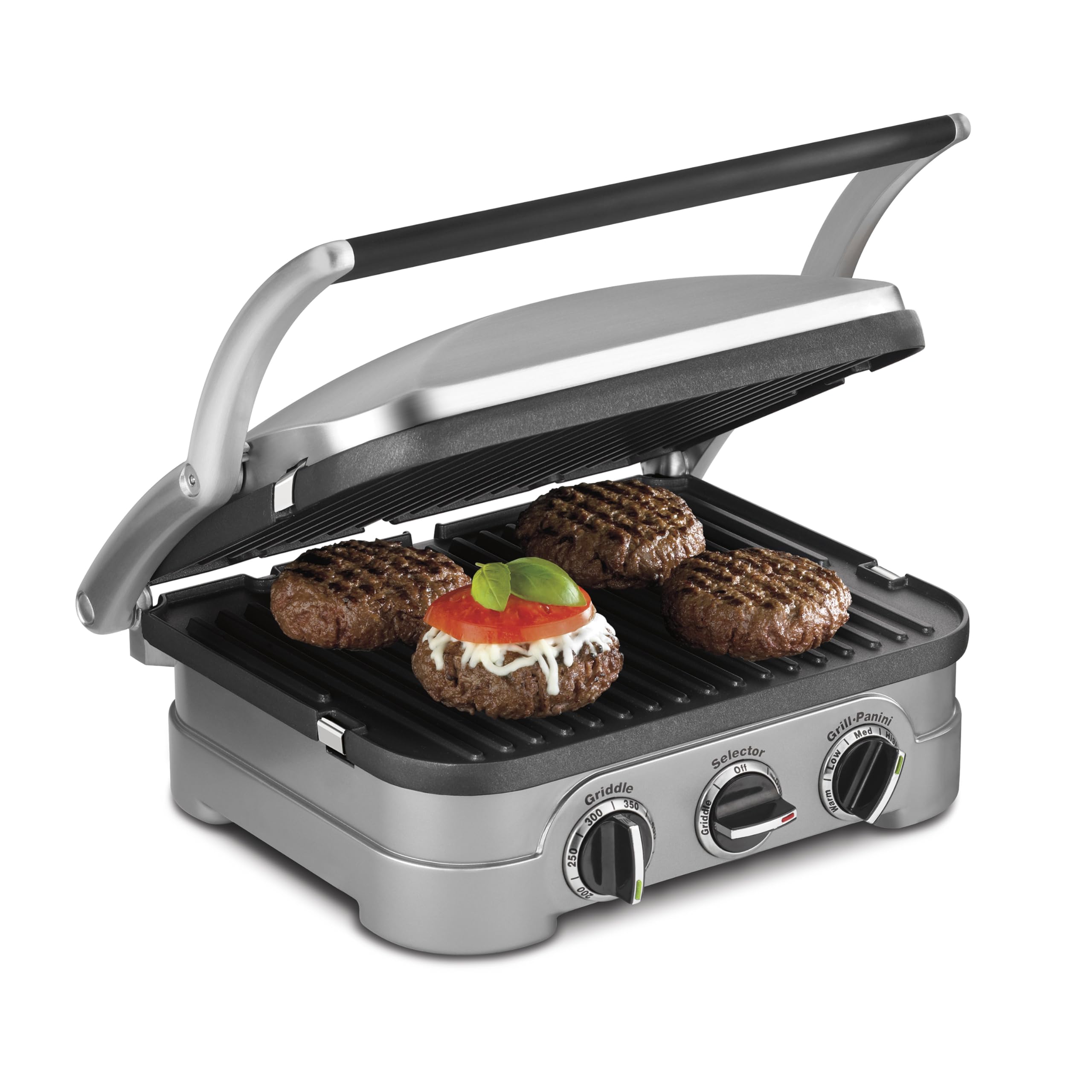
Cuisinart Griddler GR4NNAS
Key Features
- Wattage: 1500W
- Plates Removable: Yes
- Temp Control: Variable
- Surface Area: 240 sq in
- Modes: 5
- Price: $$
The Cuisinart Griddler GR4NNAS delivers five distinct cooking modes – contact grill, panini press, full grill, full griddle, and a half-grill half-griddle split – from a single countertop unit. Dual independent temperature controls let you set each plate from warm to 425°F, and the reversible nonstick plates lift out for dishwasher cleaning. The included scraping tool handles stuck-on bits without scrubbing.
The top plate tends to run slightly cooler than the bottom, so thick cuts of meat or large sandwiches may need manual rotation or extra time for even cooking. This is less noticeable with panini, thin vegetables, or burger patties. The 240-square-inch flat surface fits meals for 2–4 people, though grilling four burgers requires cooking in batches.
The Griddler suits households that want one appliance for grilling, griddling, and pressing sandwiches without juggling multiple gadgets. The heat variance matters most if you regularly cook thick steaks or chicken breasts – lighter users or panini enthusiasts will find it a minor tradeoff. At 11.5 pounds and roughly 13.5 x 11.5 inches, buyers with tight counter space should measure before buying.
Controls are labeled clearly with temperature dials and indicator lights – no complex menus. The floating hinge adjusts to sandwich thickness, and the locking lid stores upright to keep the counter clear when not in use. Build quality feels sturdy enough for regular weekly cooking.
Pros
- Five cooking modes – contact grill, panini press, full grill, full griddle, and half grill/half griddle – handle multiple meal types from one appliance.
- Removable, dishwasher-safe plates with a scraping tool make cleanup quick.
- Controls are clearly marked and respond predictably – simple operation for any skill level.
- Sturdy construction holds up well with regular use.
Cons
- Heat distribution between top and bottom plates can be uneven – the top plate may run cooler, requiring food rotation for even cooking.
- At 11.5 lbs, the unit occupies significant counter space and is not easily moved for storage.
For most households, the Cuisinart Griddler GR4NNAS offers the best balance of cooking modes, build quality, and cleanup convenience at a mid-range price – just plan around the top-plate heat variance for thicker foods.
Best for Budget Singles
George Foreman GRP1060B
Key Features
- Wattage: 1800W
- Plates Removable: Yes
- Temp Control: Fixed
- Surface Area: 60 sq in
- Modes: 1
- Price: $
The George Foreman GRP1060B heats up quickly and features removable plates that can go in the dishwasher, making post-cooking cleanup much simpler than with fixed-plate models. Its 1800-watt element reaches cooking temperature in about five minutes, cutting total cook time compared to stovetop methods.
The cooking surface is roughly 60 square inches, which comfortably handles two chicken breasts or a pair of panini sandwiches. For anyone cooking for one or two, that’s plenty of space. The lack of any temperature adjustment means the grill runs at a single fixed heat — acceptable for burgers, boneless chicken, and pressed sandwiches, but less suited for fish fillets or foods that need a gentle touch.
This model is a natural upgrade for anyone moving from an older George Foreman grill with non-removable plates. The floating hinge accommodates thick sandwiches or a small roast, and the removable drip tray catches grease for easy disposal. It stores upright to save counter space.
Pros
- Dishwasher-safe removable plates for easy cleanup after cooking.
- Heats up rapidly and cooks food about twice as fast as stovetop methods.
- Consistent performance backed by a long history of user satisfaction.
Cons
- Single fixed heat setting limits control for delicate foods or precise browning.
- Compact cooking surface fits 1–2 servings; advertised 4-serving capacity is overstated.
If you cook for yourself or a partner and value quick cleanup over temperature precision, this grill-panini combo delivers dependable results at a low price.
Best for Panini Lovers
Breville Panini Duo BSG520XL
Key Features
- Wattage: 1500W
- Plates Removable: Yes
- Temp Control: Fixed
- Modes: 1
- Price: $$
The Breville Panini Duo concentrates on one task – pressing and toasting sandwiches – and executes it with consistency. Its floating hinge adjusts to bread thickness, and the flat non-stick plates produce even browning across the surface without hot spots. The 1500-watt heating element brings the cooking surface to temperature quickly, so the wait between sandwiches is short.
This press suits panini enthusiasts who make several sandwiches a week and want a compact appliance that stores upright with a cord wrap. However, it lacks an on/off switch – you must unplug the unit to turn it off – and the single high heat setting can scorch thin or soft breads if left unattended. These tradeoffs are manageable for anyone who monitors cooking and establishes a plug-unplug routine, but they disqualify the Duo for multitaskers who want temperature control or a safety switch.
Cleaning is straightforward: the non-stick plates pop out and go into the dishwasher, and the exterior wipes down easily. That convenience, combined with the reliable toast quality, makes the Duo a sensible mid-range option for households where panini, not grilling, is the daily priority.
Pros
- Produces evenly browned, perfectly toasted panini every time.
- Heats up and cooks quickly, ready in minutes.
- Removable plates are dishwasher safe for easy cleanup.
Cons
- Single high heat setting may burn thin or delicate breads if not watched.
- No on/off switch requires unplugging to power down, which is inconvenient and a safety consideration.
The Breville Panini Duo is a focused tool for sandwich lovers who want consistent results and easy cleaning, as long as they accept the plug-unplug routine and careful bread selection.
Best for Serious Cooks
Breville Smart Grill BGR820XL
Key Features
- Wattage: 1800W
- Plates Removable: Yes
- Temp Control: Variable
- Surface Area: 260 sq in
- Modes: 3
- Price: $$$$
The Breville Smart Grill stands out with dual heating elements that let you set independent temperatures for top and bottom plates, a feature rare in this category. Combined with a spacious 260 sq in cooking surface (when opened flat), it handles steaks, burgers, and vegetables with grill marks that rival outdoor cooking. The included ribbed and flat plates swap easily, covering contact grill, open BBQ, and panini modes. Where the Cuisinart Griddler offers more cooking modes at a lower price, the Smart Grill prioritises grilling performance and temperature accuracy.
This grill targets serious home cooks who grill frequently and demand consistent results. The 19.4 lb weight and luxury price tag mean it stays on the counter and serves a dedicated role — not for occasional panini or cramped kitchens. If your priority is searing and precise temperature control for meats and vegetables, this delivers; if you need a lightweight sandwich press for daily use, a simpler model fits better.
Pros
- Heavy-duty construction that holds up to frequent grilling sessions.
- Consistent heat distribution across the whole cooking surface.
- Removable, dishwasher-safe plates and grease tray simplify cleanup.
Cons
- Premium price may not justify itself for occasional or basic grilling needs.
- Heavy 19.4 lb design requires permanent counter space and makes storage difficult.
A premium indoor grill for cooks who value temperature precision and large capacity over budget and portability — best left on the counter for frequent use.
Best for Compact Kitchens
Hamilton Beach 25460MNA
Key Features
- Wattage: 1400W
- Plates Removable: No
- Temp Control: Fixed
- Surface Area: 80 sq in
- Modes: 1
- Price: $
The Hamilton Beach press distinguishes itself with a lightweight build and an upright storage design that tucks away easily in cramped kitchens. A floating hinge automatically adjusts to thick panini or thin wraps, and the 1400-watt element brings the surface to temperature in just a few minutes. The 8×10-inch plate handles two sandwiches at once, and a green indicator light makes it simple to know when to start pressing.
It’s built for budget-conscious buyers, college students, or anyone who only reaches for a press a few times a month. The trade-off is a single fixed temperature setting and non-removable plates. You can’t dial back the heat for delicate breads, so thinner slices may char if left too long. Cleaning requires wiping the grooved surface by hand — no dishwasher shortcut. For 1-2 people making hearty panini or quick grilled chicken, these limitations are minor annoyances at this price. If you want adjustable temperatures for a variety of foods or removable plates you can soak, a step-up model will suit you better.
Pros
- Great value for the price, delivering consistent grill and press performance.
- Simple to use with a floating hinge that adapts to various sandwich thicknesses.
- Heats up quickly and cooks sandwiches evenly in about 2-3 minutes.
Cons
- No temperature control — the fixed heat level may char delicate breads.
- Non-removable plates require careful hand cleaning; food can get trapped in the grooves.
For dorm rooms, small apartments, and anyone who wants a simple press without a permanent counter footprint, this affordable Hamilton Beach handles occasional panini and grill jobs with no fuss.
Best for Large Families
Cuisinart Elite Griddler GR-300NAS
Key Features
- Wattage: 1800W
- Plates Removable: Yes
- Temp Control: Variable
- Surface Area: 240 sq in
- Modes: 6
- Price: $$$
The Elite Griddler adds a sixth cooking mode and a dedicated sear function that reaches 500°F, stepping beyond the standard Griddler’s already broad capabilities. While the standard model remains the top pick for its proven track record and value, this Elite version targets those who need higher heat for crusty sears and the flexibility of a ‘top melt’ mode.
This is best for home cooks who frequently prepare thick steaks, burgers, or vegetables and want the option to finish with a cheese melt on the top plate. The independent temperature controls allow precise heat management for both surfaces. However, the larger footprint and 19.6-pound weight demand dedicated counter space. A notable minority of buyers have encountered durability issues such as cracked plates or component failures after moderate use, and heat distribution between top and bottom plates can be uneven. These factors make this a strong choice for enthusiasts willing to monitor cooking and accept some unit-to-unit variance.
Pros
- Six cooking modes plus a 500°F sear function for high-heat searing.
- Removable, dishwasher-safe plates simplify cleanup after cooking.
- Solid construction with a heavy-duty feel.
Cons
- Temperature variance between top and bottom plates can be noticeable when cooking thick items.
- Some units have developed issues such as cracked plates or component failures after moderate use.
For cooks who prioritize searing power and the extra mode over budget savings, this Elite Griddler delivers — as long as you’re prepared to manage occasional heat inconsistencies and durability quirks.
Best for Tech Cooks
All-Clad AutoSense XL

Key Features
- Wattage: 1800W
- Plates Removable: Yes
- Temp Control: Variable
- Modes: 5
- Price: $$$$
All-Clad’s AutoSense XL uses sensor-based cooking that adjusts time according to food thickness, simplifying the process for steaks, sandwiches, and vegetables. The large cooking surface handles up to eight servings, and the removable, dishwasher-safe plates make cleanup easy. However, the sensor can occasionally over- or under-cook, so manual mode with four temperature levels offers a workaround for precision. The premium price tag combined with mixed accuracy feedback makes this a riskier choice than more established electric grills with simpler controls.
Pros
- AutoSense adjusts cooking time based on food thickness for consistent results.
- Clear indicators and multiple programs make operation simple.
- Heats up quickly and cooks steaks and sandwiches evenly.
Cons
- Sensor can over- or under-cook; manual mode is needed for precise results.
- Premium price may not match the value for cooks who prefer manual control.
Best for tech-oriented cooks who want a large-capacity grill and are willing to monitor cooking manually to compensate for sensor quirks.
Best for Student Budget
Chefman RJ02-180-4

Key Features
- Wattage: 1000W
- Plates Removable: No
- Temp Control: Fixed
- Modes: 2
- Price: $
The Chefman Panini Press & Grill delivers on its budget promise: a compact, lightweight unit with a floating hinge for pressing sandwiches and an open flat grill option. The price is the main draw, making it accessible for temporary living situations or student kitchens. However, the non-removable plates require careful hand-cleaning around the grooves, and the fixed heat setting demands active monitoring to prevent burning — there’s no temperature control. These limitations make it best for infrequent use where convenience is secondary to cost.
Pros
- Very affordable price for basic panini and grilling tasks.
- Compact and lightweight, easy to tuck away in small kitchens.
Cons
- Cleaning is tedious — grease and crumbs get trapped in the non-removable grooved plates.
- No temperature adjustment means the fixed heat may burn bread if not watched closely.
This press fits occasional use by budget-conscious individuals who can dedicate time to hand-cleaning and stay near the appliance during cooking — not for those wanting set-it-and-forget-it convenience.
Norpro Cast Iron Panini Press
Norpro Cast Iron Panini Press

For anyone who already owns a 10-inch skillet or grill pan, the Norpro Cast Iron Panini Press is a low-cost way to add pressing capability. Its heavy weight applies steady pressure for even browning on panini and smash burgers. However, this is not a standalone appliance—it requires a separate pan and manual operation. The plastic handle knob is prone to breaking over time, and cast iron demands hand washing and thorough drying to prevent rust. These limitations make it best for those comfortable with cast iron care and who don’t mind replacing the handle if needed.
Pros
- Provides steady pressure for panini and smash burgers without electricity.
- Weighs enough to press thick sandwiches and meat patties effectively.
- Fits standard 10-inch pans, working with most stovetop setups.
Cons
- Cast iron requires hand washing and immediate drying to avoid rust.
- The plastic handle knob is prone to breaking with regular use.
Best for those who already own a compatible stovetop pan and are comfortable with cast iron care—this press adds pressing capability at a budget price.
How to Choose
The most common mistake is believing the listed serving size — actual cooking area often serves half as many people as advertised.
Wattage
Higher wattage (1400–1800W) heats faster and recovers heat quicker when you press cold food. A lower wattage unit (1000W) may struggle to maintain temperature for thick meats, leading to longer cook times and less browning.
For occasional panini only, 1400W is sufficient; for frequent grilling of chicken or steak, 1800W delivers better results.
Plates Removable
Plates that snap out for dishwasher cleaning save time and prevent baked-on residue. Non-removable plates require careful hand-cleaning with a sponge, and grooves trap bits of cheese or marinade.
Over time, fixed plates develop stains and odor that are hard to remove. If you cook often, removable plates are worth the extra cost.
Temperature Control
A fixed heat setting works for thin sandwiches but will burn delicate breads or undercook thick fillings. Variable temperature lets you dial in low heat for melting cheese or high heat for searing meat.
If you plan to cook a variety of foods (veggies, steaks, panini), temperature control is non-negotiable.
Cooking Surface Area
Actual cooking area is often smaller than the advertised serving count. A 60 sq in surface fits one large sandwich or two small patties. A 240 sq in open flat surface can cook four burgers or multiple chicken breasts at once.
Measure your typical meal size and compare to the plate dimensions, not the serving claims.
Number of Cooking Modes
More modes (contact grill, open flat, half grill/half griddle) increase versatility. A single-mode press is limited to panini; a 5-in-1 can sear steaks, cook pancakes, or toast sandwiches.
But extra modes add weight and complexity. Pick the number that matches your cooking variety.
FAQ
How do I clean a panini press with non-removable plates?
Unplug the press and wipe it with a damp cloth while still warm. For stuck bits, use a wooden scraper or a paste of baking soda and water. Avoid abrasive pads that scratch the nonstick coating. If you make paninis frequently, a model with removable plates is worth the investment.
Can an indoor grill really sear a steak like an outdoor grill?
An indoor grill can sear thin cuts like burgers or chicken breasts, but it won’t replicate a 500°F charcoal or gas grill. The top plate reduces moisture, and max temp rarely exceeds 450°F. For a good crust on steaks, use a cast iron pan on the stove instead. If you want outdoor-style searing indoors, look for a grill with a dedicated sear function like the Cuisinart Elite’s 500°F mode.
What wattage do I need for an indoor grill to cook thick meats?
For thick meats (1-inch steaks or chicken breasts), an 1800W grill provides faster heat recovery and more consistent cooking. Lower wattage units (1000–1400W) may drop temperature when you load food, leading to steaming rather than searing. If you cook thick cuts regularly, prioritize wattage over price.
Why does my panini press burn the bread before the cheese melts?
Burning the bread before the cheese melts usually means the heat is too high or the bread is too thick. Try preheating for only 2 minutes, pressing gently, and using a lower heat setting if available. A floating hinge that adjusts to sandwich thickness also helps avoid crushing. If your press has fixed heat, toast the bread separately first.