This post contains affiliate links. We may earn a small commission when you buy through our links — at no extra cost to you.
Many electric skillets look like good options for frying chicken until you realize the oil barely covers the pieces. The difference between a 2-inch pan and a 3-inch pan is the difference between spattering oil and a stable, crispy fry. Depth is the most overlooked spec in this category.
Heat distribution and coating durability also matter, but they are secondary if you cannot safely submerge a drumstick. Budget models often market themselves as deep when they are barely 2.5 inches. This guide focuses on skillets that give you real oil clearance, reliable temperature control, and surfaces that last through multiple frying sessions.
If you are frying for a couple, a 12-inch round with 3-inch sides works. For feeding six, a deep rectangular pan gives you room to work without crowding. The right skillet keeps the oil where it belongs and the chicken crisp.



Best for Small Families
Presto 07117
Key Features
- Depth: 3 in
- Wattage: 1250W
- Temp Range: ~200–400°F
- Nonstick Type: PTFE-free ceramic
- Capacity: 12 in round
- Price: $
The Presto 07117 avoids the lid-shattering risks that plague some foldaway models while delivering the kind of temperature consistency that makes frying chicken straightforward. Its 12-inch round cooking surface, with three-inch sidewalls, holds enough oil for shallow frying without splashing, and the automatic control lets you dial in 200–400°F without fuss.
Cooks report that chicken comes out evenly browned and crisp, and the PTFE-free ceramic nonstick holds up through multiple washes in the dishwasher. The 1250-watt heating element brings oil up to temperature quickly and maintains it across the pan, though a slight hot spot near the center can occur — noticeable only when cooking a full batch of pancakes at once.
This skillet is best suited for small families or couples who fry chicken or cook daily meals in batches of four servings or fewer. The compact 12-inch surface means you’ll do two rounds for a larger group, but the payoff is a counter-friendly footprint and no safety concerns from a glass lid that cracks under heat cycling, as seen in competing models.
At a price point well under competitors with similar ratings, the Presto delivers performance that rivals skillets costing twice as much. The trade-off is that it won’t handle a whole bird or feed six people in one go; for households that cook for two to four, the consistency and durability make it an easy daily driver.
Pros
- Heats evenly for consistent browning of chicken and pancakes.
- Nonstick surface cleans easily and survives dishwasher cycles.
- Build quality stands out among budget-priced electric skillets.
- Low price for the performance level – no compromises found in everyday use.
Cons
- Minor hot spots can appear near the center during very full loads.
If your kitchen sees small-to-medium meals and you want an electric skillet that simply works without safety scares, the Presto 07117 is the most straightforward buy at this price.
Best for Home Cooks
Elite Gourmet EG2615
Key Features
- Depth: 4 in
- Wattage: 1500W
- Temp Range: 200–400°F
- Nonstick Type: PFAS-free ceramic
- Capacity: 12.5 qt
- Price: $$
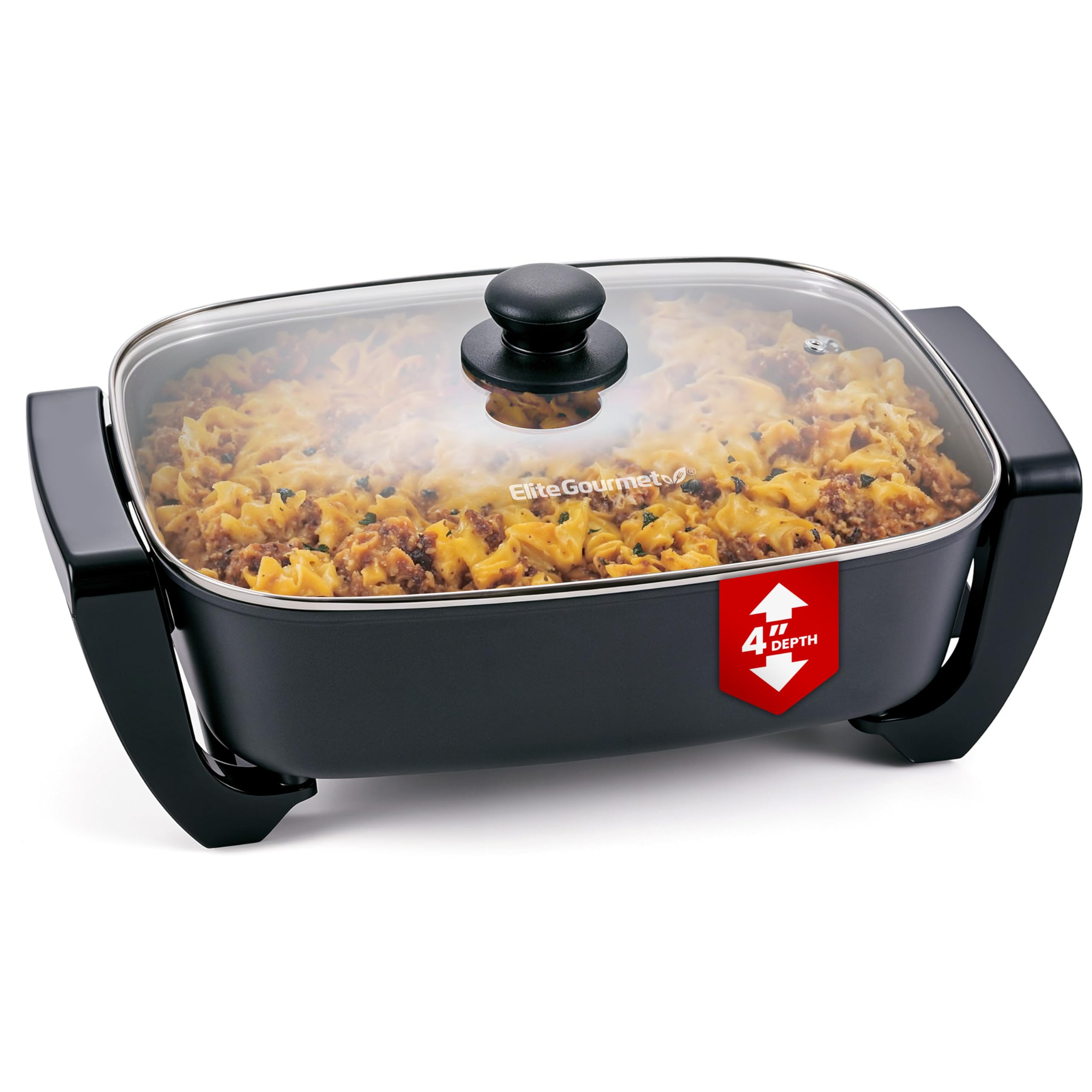
Elite Gourmet’s EG2615 stands out with its 4-inch depth – the most generous in this roundup – giving you room to submerge chicken pieces in oil without the spill risks typical of shallower skillets. At 12.5 quarts, the pan holds enough for a family-sized batch, and the 1500W heater brings oil to frying temperature with little fuss. The ceramic nonstick surface makes post-fry cleanup simple, a practical advantage when dealing with residual oil and breading. Compared to the larger honeycomb alternative, the Elite’s deeper walls are a better fit for submerged frying, and the 4-inch height also makes it easier to stir without splashing.
This depth-first design suits home cooks who want a dedicated pan for fried chicken and one-pot meals where oil clearance matters. The heating element heats evenly across the center, but some hot spots can occur at the far edges – less problematic when the pan is full of oil because the liquid circulates. Where the tradeoff shows is longevity: the ceramic coating has been reported to lose its nonstick properties after about a year under daily heavy use, so it’s best matched to weekly cooking rather than a constant workhorse.
Pros
- Deep 4-inch sidewalls allow oil clearance for submerged frying without overflow.
- Ceramic nonstick surface wipes clean easily and is dishwasher-safe.
- 1500W heating produces consistent browning on fried chicken and stir-fried vegetables.
Cons
- Heat can develop hot spots near the corners, noticeable when cooking delicate items like eggs.
- Nonstick coating may peel after a year of regular heavy use.
For chicken frying that demands depth, the Elite Gourmet delivers. Just keep the coating’s lifespan in mind if you cook daily.
Best for Large Families
Elite Gourmet EG-6203
Key Features
- Depth: 3.15 in
- Wattage: 1500W
- Temp Range: 200–400°F
- Nonstick Type: Honeycomb marbleized
- Capacity: 10.5 qt
- Price: $$
The Elite Gourmet EG-6203 pairs a 16×13-inch cooking surface with 3.15 inches of depth — enough to shallow-fry chicken for six to eight people without crowding. Its honeycomb marbleized nonstick surface releases food easily during early uses, and the 1500-watt heating element brings oil to temperature in reasonable time. The pan and removable probe are dishwasher-safe, which simplifies cleanup after big meals.
This skillet suits cooks who prioritize large batch capacity over perfectly even heat or long-term nonstick durability. The connector probe’s fit can vary between units; checking that it’s fully seated before each use helps avoid unexpected power cuts. For occasional large gatherings — a few fried chicken dinners per season — the EG-6203’s generous volume and easy cleaning make it a practical mid-range choice. Those frying weekly may want a model with more durable coating or a sear function.
Pros
- Generous 16×13-inch surface and 3.15-inch depth fit whole chicken halves or drumsticks for a crowd.
- Dishwasher-safe pan and probe make post-fry cleanup fast.
- Cast aluminum base feels sturdy for the price point.
Cons
- Center of the cooking surface runs hotter than the edges; rotating pieces during frying helps even browning.
- Nonstick coating may lose release properties after several months of regular high-heat use.
For those who fry chicken in large batches a few times a year, the EG-6203 delivers the capacity and depth without the premium price — just expect to rotate pieces and keep an eye on the probe fit.
Best for Foodies Who Want
Zojirushi EP-PBC10
Key Features
- Depth: 3.5 in
- Wattage: 1250W
- Temp Range: 176–430°F
- Nonstick Type: Titanium-ceramic
- Capacity: ~8 qt
- Price: $$$
The Zojirushi EP-PBC10 stands apart with a detachable pan that can be used directly on a stovetop or in the oven, giving it a level of flexibility rare among electric skillets. The 1250-watt element brings oil up to temperature quickly and maintains steady heat across the cooking surface, which matters when you’re aiming for consistent browning on chicken pieces.
This skillet suits cooks who want a single multi-purpose pan for hot pot, sukiyaki, or oven-baked dishes without committing to a dedicated fryer. For chicken frying, the pan depth is adequate for shallow frying (about 3.5 inches), but the titanium-ceramic nonstick coating may degrade faster with repeated high-heat use—something to consider if you plan weekly frying sessions. The detachable pan simplifies cleanup, though the base unit remains on the counter.
Build quality is precisely what you expect from the brand: solid construction with very few complaints. The temperature range (176–430°F) covers the sweet spot for pan-frying chicken, but the premium price for the cooking surface area means you’re paying for the engineering and stovetop compatibility rather than sheer capacity.
Pros
- Removable pan works on stovetop and in oven, expanding cooking options beyond countertop use.
- Heats up quickly and holds temperature steadily across the cooking surface.
- Solid build quality with few construction complaints reported.
Cons
- Premium price for the cooking surface area—larger skillets are available at lower cost.
- With high-heat frying, the nonstick coating may wear faster than with gentler cooking methods.
A well-built, adaptable skillet for stovetop-to-oven cooking, but chicken frying calls for a coating that can handle high heat—best for occasional use rather than frequent frying sessions.
Best for Budget-Conscious Users
BELLA Make & Take
Key Features
- Depth: 3 in
- Wattage: 1200W
- Temp Range: Up to 400°F
- Nonstick Type: Ceramic
- Capacity: 12 in square
- Price: $
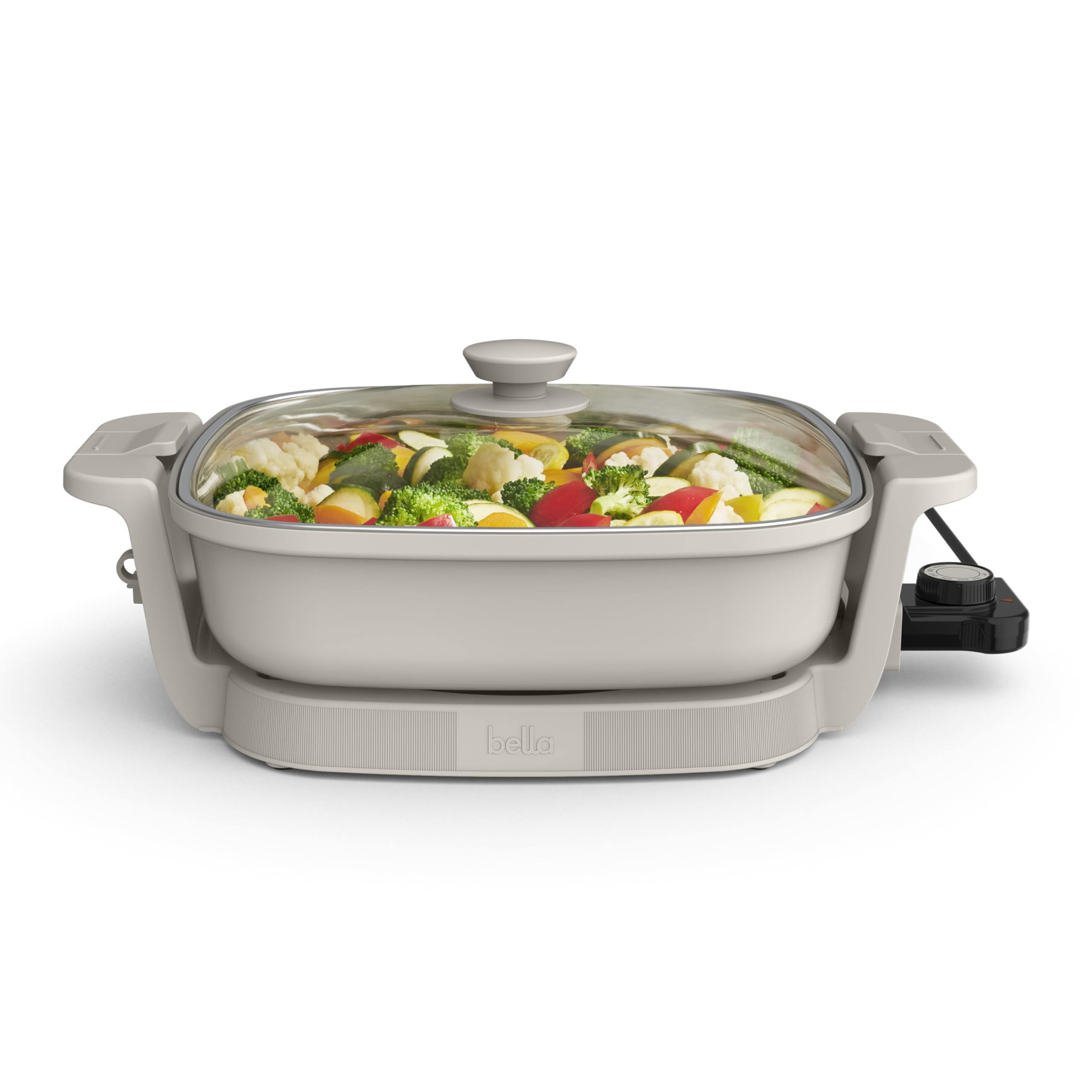
The BELLA Make & Take’s inverted lid locks onto the side of the skillet, reducing its stored depth to roughly the pan itself — a genuine space-saving trick for cramped cabinets. At 12 inches square and 3 inches deep, it holds enough for a small batch of pancakes or grilled cheese. Where it stumbles is heat distribution: a burnt ring forms directly above the heating element, creating hot spots that scorch foods requiring steady medium-high heat.
This skillet suits cooks who use it occasionally for low-heat dishes and need storage flexibility. The ceramic nonstick coating can peel when exposed to higher temperatures over time, and the temperature dial may lose accuracy after a few months. For anyone planning to fry chicken or cook at sustained medium-high heat, the uneven hot spots make consistent results difficult — that task is better left to models with more uniform heating elements.
Pros
- Nonstick surface wipes clean and pan is dishwasher safe.
- Inverted lid locks for side storage, saving cabinet space.
- Good cooking performance for pancakes, eggs, and lighter frying.
Cons
- A burnt ring from the heating element creates hot spots that scorch food at medium-high heat.
- Ceramic nonstick may peel or stick when used at higher temperatures for extended periods.
- Temperature control dial can lose accuracy or spin freely after a few months of use.
Best for small-kitchen owners who cook low-heat meals occasionally and value shelf space over uniform heating.
Best for Budget Shoppers
Elite Gourmet EG2212

Key Features
- Depth: 2.15 in
- Wattage: 1200W
- Temp Range: 250–450°F
- Nonstick Type: PFAS-free ceramic
- Capacity: ~6 qt
- Price: $
At $35, the Elite Gourmet EG2212 is the most budget-friendly electric skillet with a PFAS-free ceramic surface. Its 12-inch square design heats quickly and cleans easily, making it a practical choice for small-batch breakfast cooking. However, the shallow 2.15-inch depth is inadequate for frying chicken — even shallow frying risks oil spillover. Additionally, the circular heating element can create hot spots, and the ceramic coating may show wear over time. This skillet suits eggs and pancakes well, but not the chicken frying you’re likely seeking.
Pros
- Very affordable skillet with consistent cooking results.
- Lightweight and easy to clean; ceramic surface resists sticking.
- 12-inch square surface heats quickly for small-batch meals.
Cons
- Heat may concentrate in the center, causing scorching on some foods.
- Nonstick coating can degrade over time; lid knob breakage has been reported.
For budget-minded cooks who primarily make eggs, pancakes, and light sautéing, this skillet offers solid performance at a rock-bottom price — just not for chicken frying.
Best for Budget Buyers
Blue Diamond 7QT

Key Features
- Depth: 2.5 in
- Temp Range: Low to high
- Nonstick Type: Diamond-infused ceramic
- Capacity: 7 qt
- Price: $
The Blue Diamond 7QT electric skillet offers a large 7-quart capacity at a budget-friendly price, making it a practical option for feeding a family during occasional gatherings. Its nonstick surface cleans easily and heats evenly at first. However, the legs and handle supports may break after a few uses, and the coating can peel over time. Heat distribution may develop hot spots after extended use. These durability limitations mean it’s best suited for buyers who need a large pan for infrequent cooking rather than daily frying.
Pros
- Extra-large 7-quart capacity fits family-sized batches of fried chicken.
- Nonstick ceramic surface cleans easily after cooking.
- Heats up quickly and cooks evenly for the price point.
Cons
- Heat distribution may develop a center hot spot after extended use.
- Legs and handle supports may break after a few uses, and coating can peel over time.
This skillet works well for occasional large gatherings where budget is a priority, but those who need a durable pan for regular chicken frying should consider models with a stronger track record.
Best for Budget Families
George Foreman SK1215BC

Key Features
- Depth: 2.5 in
- Wattage: 1500W
- Temp Range: Up to 400°F
- Nonstick Type: Traditional PTFE
- Capacity: 12×15 in
- Price: $$
This skillet’s large surface and easy-to-clean nonstick coating handle family-sized batches of fried chicken, pancakes, and eggs without fuss. The depth is sufficient for shallow frying, and the removable probe makes temperature control simple. However, the heating element can create hot spots — one side may cook faster than the other — and over time the nonstick coating may peel or handles may crack. That makes it a reasonable buy for households that fry occasionally and value quick cleanup over consistent results, but not for daily use or precision cooking.
Pros
- Nonstick surface and removable probe make cleanup quick — wipe down or sink wash with minimal effort.
- Large rectangular surface fits family meals like fried chicken, pancakes, and scrambled eggs with room to spare.
Cons
- Heat may be noticeably hotter on one side, requiring pan rotation for even browning in larger batches.
- Nonstick coating may peel and handles or plug casing can crack after extended use — a tradeoff at this price point.
For budget-focused families who fry chicken once or twice a week and prioritize easy cleaning over perfectly even heat, this skillet delivers without breaking the bank.
Best for Serious Home Cooks
All-Clad ECSK-7Q

Key Features
- Depth: 3.5 in
- Wattage: 1800W
- Temp Range: Up to 450°F
- Nonstick Type: PTFE coating
- Capacity: 7 qt
- Price: $$$
The All-Clad ECSK-7Q uses bonded stainless steel for even heat distribution and can go from stovetop to oven up to 600°F – a rare feature among electric skillets. Its nonstick coating releases food cleanly and washes easily. However, the temperature dial may not hold a steady setting during long frying sessions, and some units have been noted to cease heating within the first year. Given the premium price, these shortcomings make it better suited for occasional braising or roasting rather than frequent chicken frying.
Pros
- Bonded stainless steel construction provides even heat distribution and oven-safe versatility.
- Nonstick surface releases food easily and simplifies cleanup.
Cons
- Temperature control may drift during extended frying, requiring manual adjustments.
- Some units have been reported to lose power within the first year of use.
A premium option for home cooks who value oven-safe construction and are willing to accept temperature variability for occasional braising or roasting, rather than frequent chicken frying.
Best for Japanese Hot Pot
Zojirushi EP-RAC50

Key Features
- Depth: 3 in
- Wattage: 1350W
- Temp Range: Low to high
- Nonstick Type: Titanium-ceramic
- Capacity: 15×17.5 in
- Price: $$$
The Zojirushi Gourmet d’Expert sets itself apart by including two pans—a flat griddle plate and a 3-inch deep pan—allowing you to switch from frying chicken to boiling broth or steaming vegetables at the table. The 1350-watt heating element distributes heat evenly across the 15-by-17.5-inch surface, with no cold spots during cooking. However, the unit takes longer to reach frying temperature than most skillets in this class, and its bulky size demands substantial counter space. Combined with a premium price, this makes it a capable but niche choice: ideal if you want a tabletop hot pot/griddle experience and have room to store it, but less practical as a dedicated chicken-frying skillet where quicker heat-up and smaller footprint matter more.
Pros
- Two included pans—flat griddle and deep dish—cover grilling, boiling, steaming, and frying.
- Even heat across the large surface with no cold spots noted during use.
Cons
- When you need to start cooking quickly, the preheat period is longer than typical electric skillets.
- In a kitchen with limited counter space, the large footprint can be inconvenient for daily storage and use.
For home cooks who want a hot pot/griddle combo tabletop unit and have the counter space to spare, this is a durable, even-heating option—but if chicken frying is your primary need, a simpler, faster-heating skillet will serve you better.
How to Choose
The depth of your electric skillet determines how much oil you can safely use for frying chicken, and most home cooks underestimate how much clearance they need.
Pan Depth
A 2-inch depth barely covers a standard drumstick, leading to uneven cooking and oil spatter. For shallow frying, aim for at least 3 inches. The extra inch allows you to submerge pieces without overflow and reduces temperature drops when adding cold chicken.
Deeper pans also trap moisture better, creating steam that helps cook the interior before the exterior burns. If you plan to fry whole chicken pieces, a 3.5- to 4-inch depth gives you the most forgiving oil clearance.
Wattage
Wattage directly affects how quickly the skillet recovers temperature after you add chicken. A 1200W model can maintain heat for small batches, but dropping in several cold thighs will cause a noticeable temperature dip that leads to greasy, soggy coating.
1500W skillets recover faster and are better for batch frying. Lower wattage units often require waiting between batches for the oil to come back to temperature, slowing down the whole process.
Temperature Control Range
Frying chicken typically requires a consistent 350°F to 375°F. A skillet that only reaches 400°F max gives you a narrow window. Models with a wider range (200–450°F) let you sear and then lower the heat to finish cooking without burning.
More important than the range is whether the thermostat holds steady. Some skillets drift 20–30°F during use, forcing you to constantly adjust the dial. A simple analog control with a clear temperature marker is often more reliable than a digital one without feedback.
Nonstick Type
Traditional PTFE nonstick (Teflon) is durable for high-heat frying but can degrade if overheated above 500°F. Ceramic coatings are PFAS-free and heat up quickly, but they tend to wear faster when used for frequent deep frying because the oil and high temperatures accelerate micro-cracking.
Reinforced surfaces like honeycomb or diamond-infused ceramic offer better scratch resistance and longevity. For occasional frying, standard ceramic is fine; for weekly use, look for a coating that explicitly mentions high-heat stability.
Capacity
Capacity is measured in quarts or surface dimensions. A 12-inch round skillet fits 2–4 chicken pieces at a time. A 16×13-inch rectangular pan can hold 6–8 pieces, ideal for feeding a family or meal prepping.
Larger capacities require more oil to reach the right depth, which increases cost and cleanup time. Match the pan size to your typical batch size: a huge skillet for two people wastes oil and energy.
FAQ
How deep does an electric skillet need to be to fry chicken?
For shallow frying (oil halfway up the chicken), you need at least 3 inches of pan depth. A 2-inch skillet will crowd the oil and cause splatter. For deep frying where pieces are fully submerged, 3.5 to 4 inches is ideal. Always check the depth before buying, as many budget models fall short.
Why does my electric skillet heat unevenly and how can I fix it?
Uneven heat is usually caused by a single heating element that only covers the center. You can rotate the pan during cooking or use a diffuser plate if the base is flat. But the best fix is to choose a skillet with a larger heating element or a cast-aluminum base that spreads heat more evenly. If hot spots are severe, consider replacing the skillet.
Is ceramic nonstick better than Teflon for an electric skillet used for frying?
Ceramic is PFAS-free and safer if overheated, but it wears faster under high-heat frying. Teflon (PTFE) is more durable for frequent frying but can release fumes if heated above 500°F. For occasional chicken frying, ceramic is fine. For weekly use, a reinforced ceramic or traditional nonstick with honeycomb pattern will last longer.
Can I put an electric skillet with a removable probe in the dishwasher?
Most models allow the pan only (without the temperature probe) in the dishwasher. The probe contains electronics and must be hand-wiped. Always double-check the manual: some ceramic coatings are not dishwasher-safe. For easiest care, a quick hand wash with a soft sponge preserves the nonstick surface longer.