This post contains affiliate links. We may earn a small commission when you buy through our links — at no extra cost to you.
Cast iron cookware promises legendary durability, but many beginners find their first pan stubbornly sticks to eggs and requires more care than expected. The key is understanding that "pre-seasoned" is a starting point, not a finish line.
Some skillets make this learning curve shorter with smoother surfaces or better factory seasoning. Others add weight and handling challenges that complicate everyday use.
This guide focuses on the skillets that minimize friction—literally and figuratively—so you spend more time cooking and less time troubleshooting.


Best for Beginners on Budget
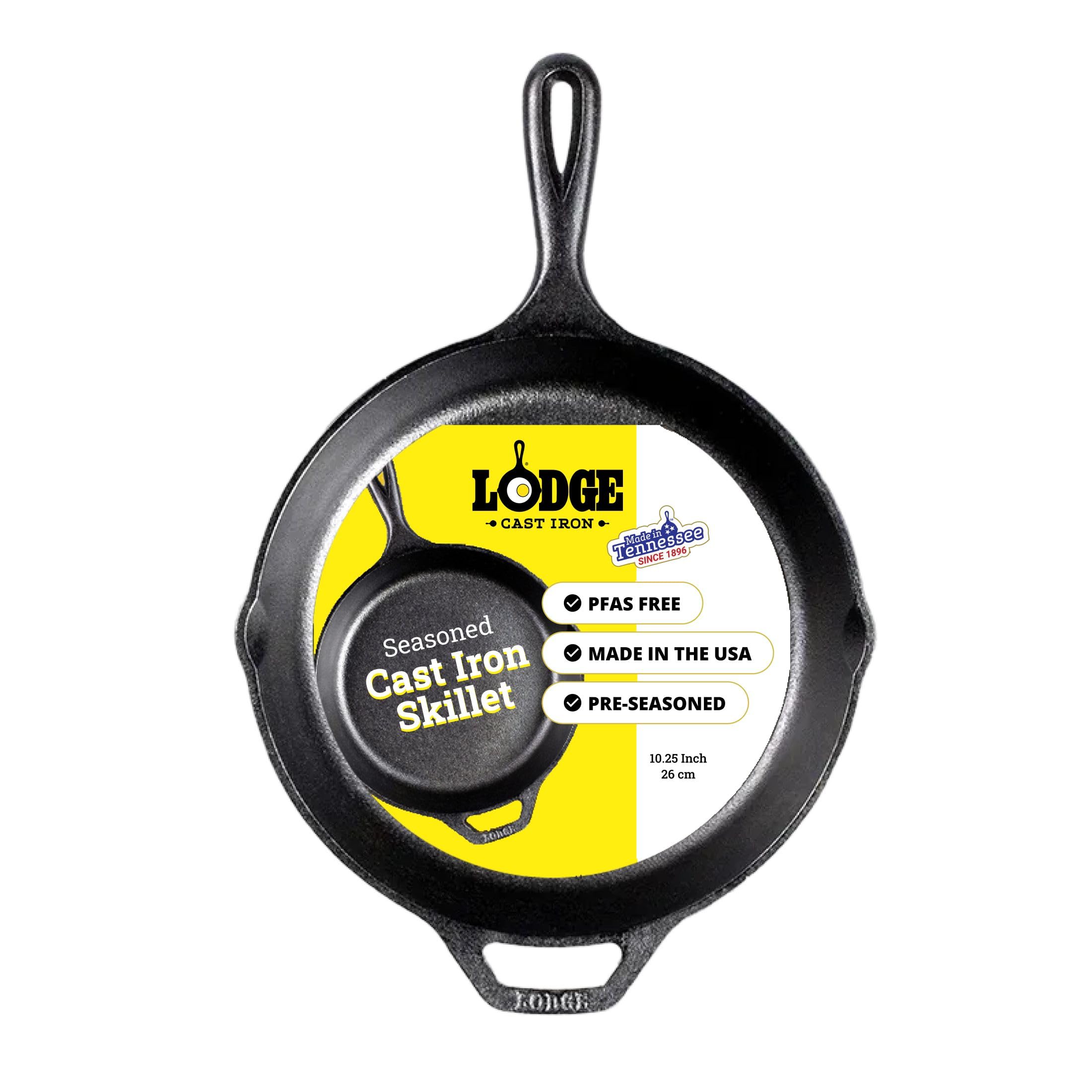
Lodge 10.25" Skillet
Key Features
- Size: 10.25 inches
- Weight: 5.35 lbs
- Oven Safe: 500°F
- Pre-seasoned: Yes
- Price: Budget
The Lodge 10.25-inch skillet offers the most value you’ll find in cast iron – a pre-seasoned pan that’s ready to cook out of the box, yet forgiving enough to learn on. Its heavy-gauge construction distributes heat evenly and retains it for consistent sears, bakes, and more. At this price, it’s hard to find a pan that gives the same return on investment.
The main tradeoffs are weight and non-stick performance. At 5.35 lbs, the skillet can be heavy for one-handed use – a typical limitation of cast iron. The factory pre-seasoning provides a decent start, but food may stick until you build up a more seasoned layer over several uses. This is normal for bare cast iron and improves with each cook.
This skillet is best suited for beginners who want an affordable, durable pan that will last. It also works well for campers and outdoor cooks who need a single piece of cookware that handles direct heat. If you’re looking for a lightweight pan or immediate non-stick like Teflon, this isn’t the right fit. But if you’re willing to learn the basics of cast iron care, this pan will reward you with years of reliable cooking.
Pros
- Cast iron construction that holds up for decades – even with beginner mistakes.
- Cost-effective entry price – delivers performance without breaking the bank.
- Works on stovetop, oven, grill, and campfire – adapts to different cooking environments.
- Cleans up easily once seasoned – a quick wipe and rinse does the job.
Cons
- At 5.35 lbs, lifting or maneuvering with one hand can be a strain – better suited for two-handed handling.
- Food may stick for the first few uses until a natural seasoning layer builds – patience required.
For anyone entering cast iron, the Lodge 10.25” is the clear starting point – lowest risk, highest reward.
Best for Large Skillet Beginners
Cuisinel 12" Skillet
Key Features
- Size: 12 inches
- Weight: 8.44 lbs
- Oven Safe: 600°F
- Pre-seasoned: Yes
- Price: Mid-Range
The Cuisinel stands out by giving first-time cast iron buyers a roomier 12-inch pan without moving into premium pricing. The assist handle matters here: a larger cast iron skillet is awkward to move one-handed, and the second grip makes oven transfers and stovetop repositioning more manageable.
Cooking performance is strongest for searing, frying, and family-size portions where the wider surface can actually be used. The pre-seasoned finish gives you a starting point, not a fully slick cooking surface, so this suits buyers willing to build seasoning as they cook.
This is best for beginners who already know they want a 12-inch pan rather than the easier-to-store top pick. At 8.44 lbs, it asks more from your wrist and storage setup, but the helper handle and silicone holder soften that tradeoff.
Pros
- Sturdy build feels ready for searing, frying, and oven use.
- Mid-range price delivers strong value for a larger cast iron skillet.
- Wide cooking surface gives families more room than smaller beginner pans.
Cons
- The factory seasoning may need building before delicate foods release cleanly.
- At 8.44 lbs, lifting and storage require more strength than smaller skillets.
Choose this over a smaller beginner skillet if cooking space matters more than easy handling. It rewards basic cast iron care, but it is not the lightest entry point.
Best for Smooth Surface Beginners
Greater Goods 12"
Key Features
- Size: 12 inches
- Weight: 7.8 lbs
- Oven Safe: Yes
- Pre-seasoned: Yes
- Price: Mid-Range
The Greater Goods 12-inch skillet’s smooth milled cooking surface reduces food sticking and simplifies cleanup compared to the textured finish of the top pick Lodge. This gives it a near-non-stick feel after seasoning, making it a strong choice for beginners who want a slicker pan without spending over $100.
This pan is a good fit for first-time cast iron users willing to invest extra care in building and maintaining seasoning. The factory pre-seasoning (flaxseed oil) can flake, and rust may appear if the pan isn’t dried thoroughly after washing. Those who prefer a no-fuss, out-of-the-box seasoning routine will be better served by the Lodge.
Pros
- Smooth milled surface reduces sticking and makes cleaning easier
- Great value for a premium-style smooth skillet
- Good non-stick performance after seasoning is built up
Cons
- Factory seasoning can flake off or rust may develop if the pan is not kept dry
- Seasoning degradation or rust may appear after months of use depending on care
For cooks who want a smooth cooking surface without a premium price, this skillet delivers — provided you’re prepared to season it yourself and keep it dry.
Best for Deep Frying Beginners
Lodge Deep 3qt Skillet
Key Features
- Size: 10.25 inches (deep)
- Weight: 6.1 lbs
- Oven Safe: Yes
- Pre-seasoned: Yes
- Price: Mid-Range
Deep sides give this 10.25-inch skillet more capacity than standard cast iron pans, allowing you to fry chicken or braise vegetables with less splatter. The 3-quart depth also makes it easier to cook larger batches without overflow, and the pre-seasoned surface handles high heat and oven use without issue.
This skillet suits home cooks who want extra versatility for frying and one-pot meals, but it’s noticeably heavier than a standard 10.25-inch skillet at 6.1 pounds empty. First-time cast iron users should be prepared for the weight – when full, lifting or pouring requires two hands, and the deep sides make flipping or tossing impractical.
Pros
- Build quality handles high-heat frying and oven use without warping
- Deep sides reduce oil splatter and allow larger batches for frying and braising
- Pre-seasoned surface works well for deep frying and searing chicken
Cons
- Weight of 6.1 lbs becomes challenging when skillet is full; not suitable for flipping or tossing food
- Cast iron requires thorough drying after washing – rust can form if moisture sits on the surface
If you regularly fry or braise and want a single pan that handles deeper batches without upgrading to a Dutch oven, this deep skillet delivers. Just be ready for the weight.
Best for Premium Enamel Lovers
Le Creuset 11.75" Enameled
Key Features
- Size: 11.75 inches
- Weight: 6.8 lbs
- Oven Safe: 500°F
- Pre-seasoned: Not required
- Price: Luxury
The Le Creuset Signature Skillet skips the seasoning ritual entirely — its enameled surface is ready to cook right out of the box. The Marseille blue finish is a centerpiece piece, and cleanup is as simple as a wipe or a cycle in the dishwasher. Unlike the more affordable pre-seasoned Lodge, this pan never needs oil maintenance, making it immediately approachable for cooks who prioritize aesthetics and convenience.
This skillet is best suited for the cook who values kitchen beauty and low-maintenance cleaning over budget-friendly pricing. The enamel does not behave like traditional non-stick — food can adhere even with oil, and the coating may chip if mishandled. For a first-time cast iron user looking for a reliable daily driver, the premium price and sticking behavior make this a luxury splurge rather than a practical starter.
Pros
- Iconic design and vivid color that stands out in any kitchen.
- Enamel wipes clean easily and resists staining from acidic foods.
- Heats evenly across the surface and holds temperature well on any cooktop.
Cons
- For a beginner on a budget, the investment is steep compared to functional alternatives.
- Food adheres to the enamel surface even when oil is used, which can frustrate tasks like frying eggs.
A beautiful skillet that works well for slow, oil-rich cooking — beginners seeking non-stick ease should consider the more forgiving pre-seasoned options.
Best for Budget 12-Inch Users
Utopia 12" Skillet

Key Features
- Size: 12 inches
- Weight: 7.6 lbs
- Oven Safe: 450°F
- Pre-seasoned: Yes
- Price: Budget
This skillet offers solid build quality and a large cooking surface at a price that undercuts most competitors. It cooks steak, chicken, and vegetables effectively. However, the pre-seasoning is often insufficient, requiring additional treatment. Some units have shown cracking or rust. It’s a good value for those who can accept these tradeoffs, but first-time users should look at more consistent alternatives.
Pros
- Solid construction for a budget-friendly price
- Cost-effective option for a large cast iron skillet
Cons
- Pre-seasoning may require additional treatment for best non-stick performance
- In some cases, units arrive with casting defects or develop rust
A reasonable choice if you’re on a tight budget and willing to reseason, but steer toward a more consistent brand if you want a ready-to-use skillet.
Best for Premium Usa-Made
Stargazer 12"

Key Features
- Size: 12 inches
- Weight: 6.5 lbs
- Oven Safe: Yes
- Pre-seasoned: Yes
- Price: Premium
The Stargazer’s milled cooking surface is noticeably smoother than typical cast iron, reducing initial sticking. The stay-cool handle and flared rim add thoughtful touches. However, at a premium price, this skillet demands patience with seasoning to maintain non-stick performance — a tradeoff that suits serious cooks more than first-time users seeking a plug-and-play pan.
Pros
- Smooth cooking surface reduces sticking and eases cleanup.
- Stay-cool handle and flared rim enhance usability and aesthetics.
Cons
- For budget-conscious buyers, the premium price is a significant investment compared to entry-level options.
- Non-stick performance requires careful seasoning and may not be immediate for newcomers.
This skillet shines for dedicated home cooks who value smooth surface and design details and are willing to invest time in seasoning – not for the casual beginner seeking an affordable, low-maintenance pan.
Best for Ergonomic Design
Lodge Chef 12"

Key Features
- Size: 12 inches
- Weight: 5 lbs
- Oven Safe: Yes
- Pre-seasoned: Yes
- Price: Mid-Range
The Lodge Chef Collection 12-inch skillet adds ergonomic handles, pour spouts, and spatula-friendly sides that make pouring and handling easier than typical cast iron pans. However, non-stick performance can be inconsistent, and some units arrive with chipping or cracking defects — issues more common than with the standard Lodge 10.25-inch skillet. For first-time buyers who need a forgiving pan, the top pick offers greater value and reliability.
Pros
- Ergonomic handles and pour spouts simplify pouring and handling.
- 12-inch size with spatula-friendly sides suits eggs and two-person meals.
Cons
- Non-stick performance may require additional seasoning to prevent sticking.
- Some units arrive with chipping or cracking defects affecting durability.
Best for cooks who value ergonomic features over reliability; the standard Lodge skillet is a safer choice for most beginners.
Best for Single-Serving Cooks
Crock-Pot 8" Enameled

Key Features
- Size: 8 inches
- Weight: 3.7 lbs
- Oven Safe: 500°F
- Pre-seasoned: Not required
- Price: Budget
This 8-inch enameled skillet delivers a vibrant, easy-to-clean surface ideal for cooking single servings like eggs or a side dish. Its compact size, however, is well outside the 10-12 inch range most first-time cast iron users need. Additionally, food tends to stick despite the enamel coating, and the enamel can chip, particularly around the handle. It’s a budget-friendly option for someone who already owns a larger skillet and wants a small, decorative pan for light use.
Pros
- Good build quality for an enameled budget skillet
- Easy to clean enamel surface compared to raw cast iron
Cons
- Food tends to stick despite the enamel coating
- Enamel can chip off, especially on handles
This skillet fits only if you need a small, colorful pan for eggs or sides and accept that sticking and chipping may occur – not for a beginner’s primary skillet.
How to Choose
The most important thing to know: pre-seasoned doesn’t mean non-stick – you’ll need to build up seasoning over time, but some pans start closer to that goal.
Size: 10 vs 12 Inches
A 10-inch skillet is lighter (usually under 6 lbs) and easier to maneuver one-handed, while 12-inch pans offer more cooking surface for larger meals. The trade-off: every extra inch adds significant weight—a 12-inch pan can weigh 8 lbs or more, making it harder to lift and flip.
For beginners, a 10-inch skillet is often the smarter starting point because it reduces fatigue and is more forgiving when learning to manage heat and oil. If you routinely cook for 3+ people, a 12-inch may be worth the extra heft.
Weight and Handle Design
Cast iron is heavy by nature, but handle design directly affects how manageable that weight feels. A helper handle (opposite the main handle) lets you lift with two hands, and a silicone grip cover improves comfort. Some pans also have longer handles that shift the balance.
If you have wrist or strength limitations, look for a pan with a helper handle or a lighter model (under 6 lbs). The extra ergonomics can make the difference between a pan you use daily and one that stays in the cupboard.
Pre-Seasoning Quality
Factory pre-seasoning varies widely—some pans arrive ready to cook eggs, others need multiple rounds of oven seasoning to become non-stick. The seasoning is a layer of polymerized oil, and a thin or uneven coating means food sticks more initially.
A few brands (like Lodge) apply a reliable base layer that improves with use, while budget options often cut corners. Plan on frying bacon or cornbread for the first few uses to build your own seasoning, regardless of the pan.
Cooking Surface Smoothness
Traditional cast iron has a pebbled texture from the sand-casting process, which can grab food and make cleaning harder. Milled or polished surfaces are smoother, reducing sticking and allowing easier release—similar to vintage pans.
If you prize easy cleanup and are willing to pay a little more, a milled skillet (like Greater Goods or Stargazer) provides a noticeably slicker experience. The trade-off is that these pans may need more careful initial seasoning to protect the smooth surface.
Durability and Rust Resistance
Raw cast iron can rust if not dried properly, but it lasts indefinitely with basic care. Enameled cast iron (like Le Creuset) is rust-proof but the enamel can chip if dropped or overheated, which ruins the pan.
For beginners, raw cast iron is more forgiving of accidents and easier to restore. Enamel is best for those who want a low-maintenance surface and are careful with handling—but chipping risks mean it’s not a lifetime pan.
FAQ
Why does my pre-seasoned cast iron skillet still stick?
Factory pre-seasoning is a thin base layer—it’s not the same as a well-developed seasoning you build over time. To reduce sticking, preheat the pan gradually, use enough oil (or butter), and cook foods like bacon or cornbread first. Avoid high heat for delicate foods until the seasoning matures.
How to properly clean and maintain a cast iron skillet for beginners?
After cooking, rinse with hot water and scrub with a non-metal brush or chainmail scrubber. Avoid soap if possible, but a drop of mild soap is okay in a pinch. Dry thoroughly on the stove, then rub a thin layer of vegetable oil over the inside. Store in a dry place.
Is a 10-inch or 12-inch cast iron skillet better for a beginner?
A 10-inch skillet is lighter (typically under 6 lbs) and easier to handle, making it the better choice for first-time users. It provides enough space for most meals and is less likely to overwhelm. Start with a 10-inch and add a 12-inch later if you frequently cook for three or more people.
Can you use soap on a cast iron skillet?
Yes, a small amount of mild dish soap is safe on modern cast iron—it won’t damage seasoning that’s fully polymerized. However, for everyday cleaning, hot water and a stiff brush are enough. Reserve soap only for sticky residue or when the pan feels greasy.