This post contains affiliate links. We may earn a small commission when you buy through our links — at no extra cost to you.
Beverage coolers look simple – plug in, add drinks, enjoy cold beer. But after sifting through thousands of user experiences, a pattern emerges: many electric units run louder than expected, and portable ice chests rarely hold ice as long as the box claims. The difference between a fridge that hums along peacefully and one that keeps you awake often comes down to two specs: compressor vs. thermoelectric cooling and decibel ratings.
Compressor fridges can reach near-freezing temperatures but generate a steady hum; thermoelectric models are silent but can’t cool below about 42°F. Portable ice chests, meanwhile, advertise impressive ice retention numbers that only hold up in perfect conditions. The result is that many buyers end up with a cooler that either doesn’t get cold enough or annoys everyone in the room.
This guide cuts through the noise – literally. Each pick was chosen for its ability to deliver on its core promise, whether that’s 34°F drinks in a quiet home bar or day-long ice in a tailgate cooler. If you know where you’ll use it and how cold you need it, the right choice becomes clear.


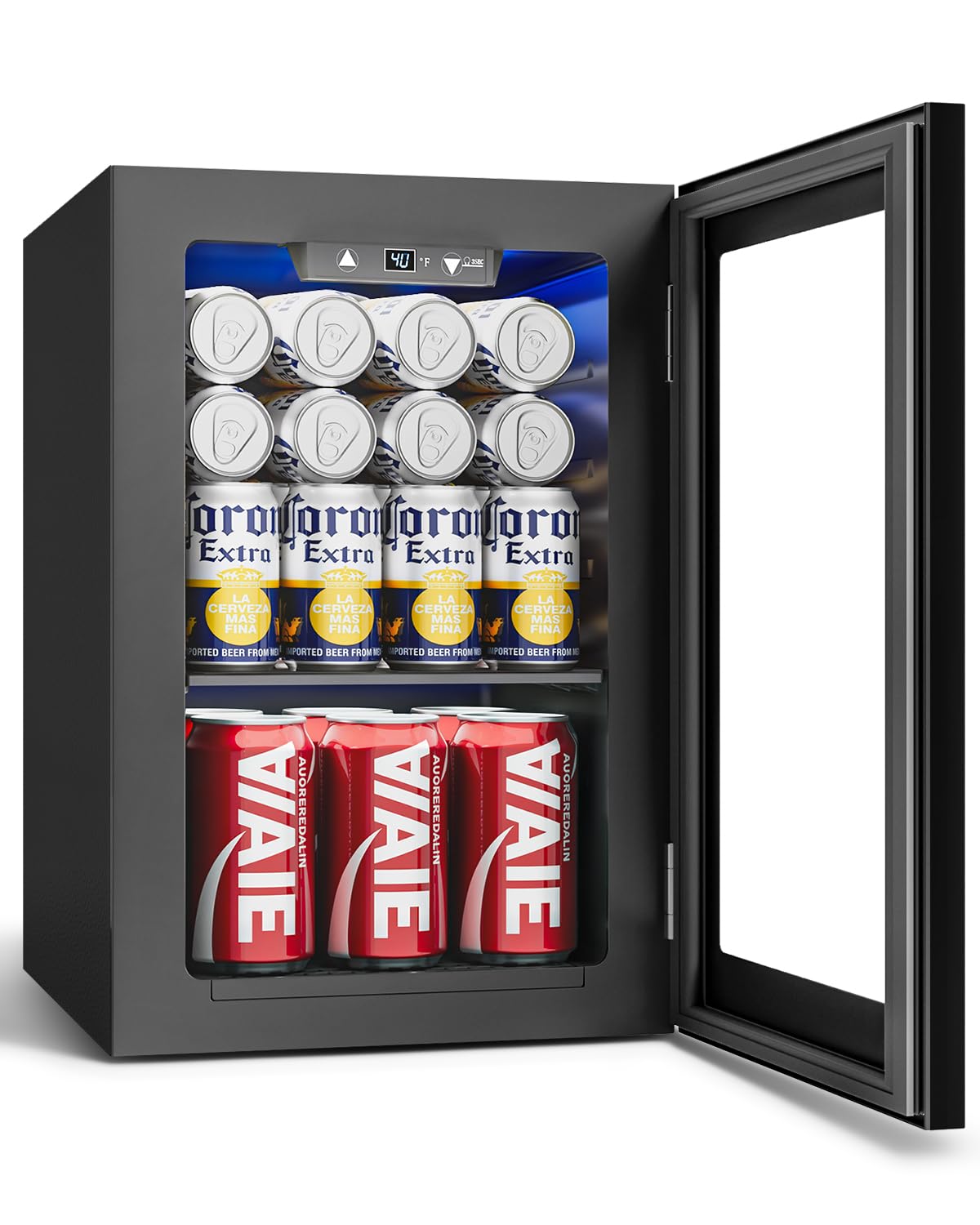

Best for Quiet Home Bar
hOmeLabs 120 Can
Key Features
- Cooling Method: Compressor
- Capacity: 120 cans
- Temperature Range: 34–64°F
- Size/Dimensions: 3.2 cu ft
- Price: $$$
The compressor operates quietly enough to go unnoticed in a living room or bedroom, and the digital thermostat maintains a steady temperature that keeps drinks cold without wide fluctuations.
The tempered glass door and stainless steel frame give it a polished look that blends into a home bar or kitchen cabinetry. Inside, adjustable shelves accommodate standard cans, bottles, and taller containers up to the 120-can capacity.
This fridge suits anyone who values low noise and consistent cooling over the lowest possible price. The door hinge direction may not be reversible, so check your space before buying. A small number of units may not reach temperatures below 42°F – if near-freezing drinks are essential, test your unit early and consider a different model.
Compared to budget-friendly alternatives, the higher price buys noticeably quieter operation and fewer temperature surprises. For those who can stretch their budget, it reduces the risk of dealing with a humming compressor or variable cooling.
Pros
- Quiet compressor for noise-sensitive spaces
- Digital controls maintain steady, cold temperatures
- Glass door and metal frame give a premium, finished look
- Large capacity with adjustable shelving for varied containers
Cons
- Door hinge direction may not be reversible, limiting placement flexibility
- Premium price may be a hurdle for budget-conscious buyers
If a quiet, consistent beverage fridge for a home bar or kitchen is a priority, this model delivers without the noise and temperature guesswork of cheaper alternatives.
Best for Home Bar
EUHOMY 130 Can Fridge
Key Features
- Cooling Method: Compressor
- Capacity: 130 cans
- Temperature Range: 34–64°F
- Size/Dimensions: 3.2 cu ft
- Price: $$
The EUHOMY 130 Can Fridge matches the capacity and glass-door look of the top pick for roughly $110 less. Its adjustable shelves and reversible door make fitting a mix of cans, bottles, and taller containers straightforward, and the stainless steel frame gives it a polished look that works in a home bar or kitchen.
This fridge suits buyers who want a large beverage cooler on a budget and won’t mind a noticeable compressor hum in quieter spaces. The double-layer UV glass door shows off drinks while protecting them from light, and the digital thermostat lets you set the temperature between 34°F and 64°F. That said, some units may have trouble holding a steady temperature, and the compressor noise — rated at 36 dB — becomes more apparent in bedrooms, offices, or other quiet rooms. For a home bar, garage, or den where background hum is acceptable, those tradeoffs are manageable.
Pros
- Spacious interior with adjustable shelves fits a variety of bottle and can sizes.
- Glass door and stainless steel frame give it a sleek, modern look.
- Competitive price for the capacity — one of the best values in the 130-can class.
Cons
- A small number of units have reported error codes or loss of cooling after extended use.
- Temperature consistency can vary between units; some may not hold the set temperature evenly.
- In a quiet bedroom or office, the compressor hum and occasional rattling will be audible — less noticeable in a living room or garage.
For home bars and casual entertainment spaces where a low hum won’t bother anyone, the EUHOMY delivers a huge capacity and good looks at a noticeably lower price than quieter alternatives.
Best for Camping & Road Trips
EUHOMY 12V 19 Qt
Key Features
- Cooling Method: Compressor
- Capacity: 19 quarts
- Temperature Range: –4°F to 68°F
- Size/Dimensions: 21.4 lbs
- Price: $$
The EUHOMY 19 Quart hits 32°F in about 15 minutes and can be controlled via a smartphone app for temperature adjustments and battery protection settings. It draws so little power that you can leave it plugged into a car auxiliary port overnight without draining the starter battery — something that sets it apart from thermoelectric coolers and most budget ice chests.
This fridge is purpose-built for campers, overlanders, van dwellers, and truck drivers who need cold food and drinks on the go. The compressor hum registers around 42 dB — noticeable in a quiet tent or truck cab at night, but fine in a moving vehicle or when background noise is present. If you need silent operation near a sleeping area, a thermoelectric cooler or a home-style mini fridge would be a better fit.
Pros
- Cools from ambient to near-freezing in about 15 minutes
- Works with 12V/24V DC, 100-240V AC, and solar — no dedicated outlet needed
- Lightweight at 21.4 lbs and anti-shock design for bumpy roads
- Costs far less than comparable compressor fridges with similar capacity
Cons
- Temperature may drift a few degrees from the set point — fine for drinks and food, but not for precise storage
- Compressor hum (42 dB) will be audible in a quiet vehicle or tent at night — less bothersome during daytime use
If you need a portable fridge that chills fast, runs off your car battery, and won’t break the bank, the EUHOMY 19 Quart is a solid match — just keep it out of the sleeping area.
Best for Large Parties
Igloo Party Bar 125 Qt
Key Features
- Cooling Method: Passive ice
- Capacity: 125 quarts
- Size/Dimensions: 125 qt
- Price: $$
With 125 quarts of capacity, this cooler is one of the most cost-effective ways to supply a large gathering with cold drinks. The mid-range price undercuts many competitors of similar size, and extras like the bottle opener and drink dividers add party convenience.
This cooler is best for tailgates, backyard parties, and event organizers who need bulk cooling for a single day. The hinges and latches can break, and the lid may not seal tightly — that’s an expected tradeoff at this price. Ice retention is shorter than the advertised 5-day claim, so plan for day-long use rather than extended trips.
For those willing to replace the hinges, the cooler can become more dependable. Most users find it keeps contents cold through an afternoon event, which aligns with its intended role as a party-focused ice chest.
Pros
- Holds enough drinks and ice for a large party — 125 quarts fits dozens of cans and plenty of ice.
- Priced well below many coolers with comparable capacity, offering strong value for the size.
- Stays cold through a full day of tailgating for most users.
- Built-in bottle opener and drink dividers make party service easier.
Cons
- Lid hinges and latches can break, leading to a poor seal.
- Ice retention may not match the advertised 5-day claim — best for single-day events.
For parties where volume is the priority and a few quirks are acceptable, the Igloo Party Bar offers huge capacity at a low price — just factor in potential hinge work.
Best for Small Spaces
Feelfunn 24 Can
Key Features
- Cooling Method: Compressor
- Capacity: 24 cans
- Temperature Range: 40–61°F
- Size/Dimensions: 0.6 cu ft
- Price: $
At just 0.6 cubic feet, this is the most compact compressor fridge available – small enough to sit on a desk or gaming station while holding 24 cans. Unlike thermoelectric coolers that struggle to reach low temperatures, the compressor here chills drinks to 40°F in short order.
Because the compressor hum is noticeable in quiet rooms, this fridge suits a kitchen corner, home office, or gaming desk – not a bedroom where silence matters. It’s a solid fit for anyone wanting a cold drink within arm’s reach without paying a premium for a larger unit.
At its budget-friendly price, the Feelfunn delivers compressor cooling that larger fridges offer, but in a footprint that fits where nothing else will. The interior LED light and removable shelf add convenience without driving up cost.
Pros
- Compact enough to fit on desks, nightstands, and narrow shelves.
- Gets drinks cold quickly and maintains temperature well for its size.
- Affordable price for a compressor mini fridge.
Cons
- In a quiet bedroom or study, the compressor hum will be present – less of an issue in a living room or kitchen.
If space is at a premium and a little background hum is acceptable, this is the most affordable way to keep a six-pack cold within reach.
Best for Narrow Built-In
Velieta 15" 127 Can
Key Features
- Cooling Method: Compressor
- Capacity: 127 cans
- Temperature Range: 34–64°F
- Size/Dimensions: 3.53 cu ft
- Price: $$$
The 15-inch wide stainless steel French door design fits where standard 24-inch fridges won’t, and the front-vent system allows true built-in installation without sacrificing clearance. With a 127-can capacity and compressor cooling that reaches set temperature quickly, this fridge performs well for everyday beverage storage.
When the unit arrives undamaged, the build quality and finish are impressive — the stainless steel doors feel solid and leveling is easy. Some units, however, may show cosmetic dents or scratches from transit, so careful inspection is advised. The compressor hum is present in operation; in a kitchen or bar it blends in, but sensitive ears will notice it in quieter rooms.
This fridge suits homeowners maximizing beverage storage in a narrow under-counter slot — a home bar island or office break room works well. It’s less ideal for bedrooms or any ultra-quiet environment where mechanical noise is unwanted. The doors are not reversible, so plan installation accordingly.
Pros
- Premium stainless steel French door design elevates the look of any built-in space
- Cools beverages quickly and holds temperature consistently over months of use
- Competitive pricing for a 15-inch built-in fridge with 127-can capacity
Cons
- Units may arrive with cosmetic dents or scratches from shipping, requiring inspection and possible return
- Compressor hum can be audible in very quiet rooms, less of an issue in kitchens or bars
If fitting a large beverage capacity into a narrow built-in opening without paying premium prices is your goal, the Velieta delivers — just factor in shipping inspection and a modest compressor sound.
Best for Home Bar
Icyglee 126 Can

Key Features
- Cooling Method: Compressor
- Capacity: 126 cans
- Temperature Range: 34–64°F
- Size/Dimensions: 3.2 cu ft
- Price: $$
The Icyglee 126 Can beverage fridge delivers solid build quality and an attractive glass door with soft blue lighting. Compressor hum may be noticeable in quiet spaces, making it better suited for kitchens or home bars than bedrooms. A slightly higher incidence of noise reports keeps it from the top tier, but it offers similar specs at a mid-range price.
Pros
- Solid build quality and consistent cooling performance.
- Modern glass-door design with soft blue interior lighting.
- 126-can capacity and reversible hinge at a mid-range price.
Cons
- In a quiet bedroom, the compressor hum will be present – less of an issue in a kitchen or home bar.
Best suited for a home bar or kitchen counter where a low hum is acceptable – not ideal for ultra-quiet bedrooms.
Best for Backyard Parties
VINGLI Rolling Cooler

Key Features
- Cooling Method: Passive ice
- Capacity: 80 quarts
- Size/Dimensions: 80 qt
- Price: $
The VINGLI rolling ice chest combines an attractive cart design with tool-free assembly and smooth mobility, making it a convenient addition to backyard barbecues and poolside gatherings. Its two-sided lid and built-in bottle opener add party-friendly touches. However, some units arrive with dents or scratches, and ice retention falls short of the advertised 48 hours—especially in hot weather. This cooler works well for day trips and occasional use where style and ease of transport are priorities, but not for extended outings or heavy-duty demands.
Pros
- Attractive design that looks more expensive than it is
- Tool-free assembly under 10 minutes
- Easy to roll with locking casters, ideal for moving around a party
Cons
- Cosmetic damage such as dents or scratches may appear upon arrival
- Ice melts faster than claimed, especially in warm outdoor conditions
Best for backyard parties and casual events where portability and looks matter more than durability or long ice retention.
Best for Budget Camping
Coleman 52 Qt Classic

Key Features
- Cooling Method: Passive ice
- Capacity: 52 quarts
- Size/Dimensions: 52 qt
- Price: $
This 52-quart cooler is lightweight and easy to carry, with enough insulation to keep drinks cold through a full day outing. The lid lacks a stay-open mechanism and can be inconvenient when loading or serving. This cooler works best for short trips, tailgates, and picnics where you don’t need ice to last beyond a day or two.
Pros
- Cost-effective for a 52-quart cooler
- Lightweight with comfortable handles for easy carrying
Cons
- Ice may not last the claimed five days in hot conditions — expect 1-2 days of reliable cooling
- Hinge and drain seals can develop leaks over time, especially with rough handling
Buy this for budget-friendly day trips and occasional tailgates where you’re okay with manual lid handling and topping off ice — not for extended off-grid use.
Best for High-End Built-In
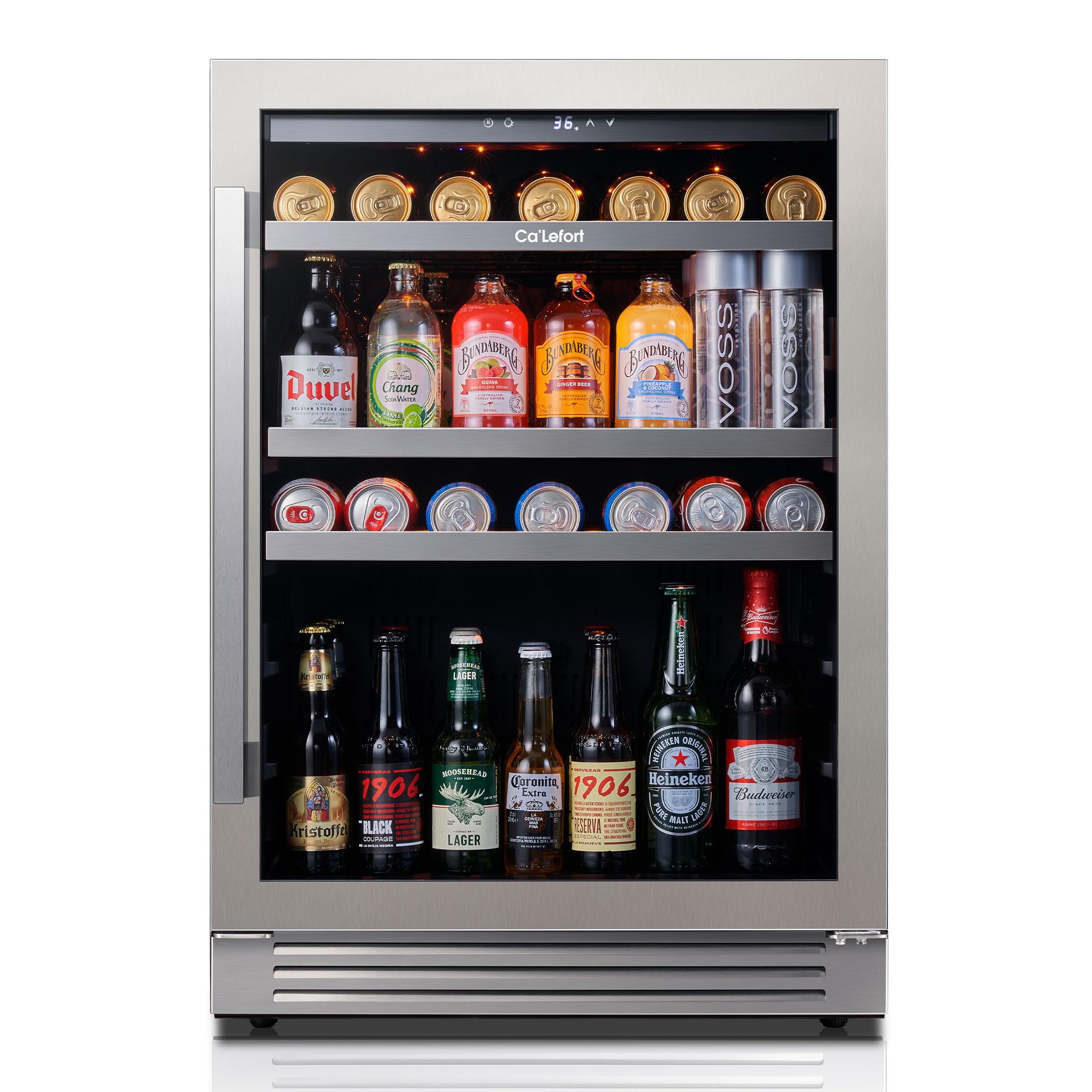
Ca’Lefort 24" 180 Can
Key Features
- Cooling Method: Compressor
- Capacity: 180 cans
- Temperature Range: 34–54°F
- Size/Dimensions: 5.65 cu ft
- Price: $$$$
The Ca’Lefort 24 Inch Beverage Refrigerator delivers a premium build and striking appearance with three LED color options, making it a visual centerpiece for a custom kitchen or bar. Its 180-can capacity fits standard under-counter dimensions without sacrificing storage. However, the door is fixed right-hinged and cannot be reversed, which limits placement options in many layouts. The premium price also places it well above similarly sized alternatives, and with fewer reviews available, long-term reliability data is less established than more widely reviewed models.
Pros
- Solid construction and premium materials throughout
- Attractive design with customizable LED lighting in three colors
- Large 180-can capacity in a standard 24-inch under-counter footprint
Cons
- Door swing is fixed right-handed and cannot be reversed, limiting installation flexibility
- In very quiet rooms, the compressor hum may be noticeable – less of an issue in active kitchens or bars
Best suited for buyers who can accommodate the right-swing door and prioritize showpiece aesthetics over value – otherwise, explore alternatives with reversible doors and a larger review base.
How to Choose
The most important decision is whether you need a compressor (for near-freezing drinks) or a portable ice chest (for temporary cooling) – the wrong choice means wasted money.
Cooling Method: Compressor vs. Thermoelectric vs. Ice
Compressor fridges use a motor and refrigerant to pull temperatures down to 34°F, which means truly cold drinks. The trade-off is a steady hum – typically 36–42 dB – that may be noticeable in quiet rooms. Thermoelectric coolers use a Peltier plate, run silently, but rarely drop below 42°F, making them useless for icy bottles.
Passive ice chests rely on insulation and ice packs. They require no power, but ice life depends heavily on ambient temperature, opening frequency, and insulation quality. If you need drinks cold for more than 24 hours in summer, a compressor fridge or a rotomolded cooler is a better bet.
Capacity: Cans vs. Quarts
Capacity is often quoted in cans or quarts, but real-world fit varies. A 120-can fridge may hold 80 if you use tall bottles or wide cans. For ice chests, quarts translate roughly to cans: 1 quart holds about one 12-oz can with ice. But take marketing numbers with a grain of salt – they assume perfect packing and no ice.
Measure your typical drink sizes and leave room for ice if using a passive cooler. For electric fridges, shelves that adjust to accommodate wine bottles or 2-liter soda make a big difference.
Temperature Range and Precision
Compressor fridges advertise ranges like 34–64°F, but not all units hit the low end consistently. Some budget compressors struggle below 42°F, while premium ones hold within 2 degrees of set point. Thermoelectric models are even less precise – their cooling ability drops as room temperature rises above 80°F.
If you want drinks near freezing (32–36°F), look for a compressor with a digital control and positive reviews mentioning low-temperature performance. For wine storage, 45–55°F is fine; for soda or beer, colder is better.
Noise Level
Noise is the top surprise for electric fridge buyers. Compressor units typically produce 36–42 dB of hum and occasional clicking. That’s about as loud as a library, but in a bedroom it can be disruptive. Thermoelectric models are silent, but they can’t chill well.
Check decibel ratings if the cooler will sit in a bedroom, office, or living room. If noise is a deal-breaker, look for models with user-reported ‘quiet’ or ‘silent’ even if the official dB isn’t listed. Acoustic insulation or rubber feet can reduce vibration noise.
Size and Installation
Electric fridges come in freestanding and built-in options. Built-in models require front ventilation and often have fixed door hinges – measure your cutout carefully. Freestanding units need a few inches of clearance on the sides and back for heat dissipation.
Portable coolers add wheels and a handle for mobility, but larger ones can be heavy when loaded. For under-counter installation, check depth and whether the door can be reversed. A 15-inch wide fridge fits where standard 18-inch models won’t.
FAQ
Why does my mini fridge not get cold enough?
Most likely it’s a thermoelectric model or a budget compressor that can’t reliably hit low temperatures. Thermoelectric coolers struggle when room temp exceeds 80°F. For compressor fridges, check that the condenser isn’t clogged with dust and that the unit has proper ventilation. If it’s still not cooling below 42°F after 24 hours, the unit may be defective or poorly designed for that temperature range.
Can I use a thermoelectric beverage cooler in a garage or outdoor space?
No – thermoelectric coolers rely on ambient air to dissipate heat, so they perform poorly in hot environments. In a garage that reaches 90°F, a thermoelectric fridge may only cool to 60–70°F, far from cold drinks. A compressor fridge or a passive ice chest is a better choice for unconditioned spaces.
How do I reverse the door swing on my beverage refrigerator?
Many models include a reversible hinge kit and instructions. Look for a small hole on the opposite side of the door for the hinge pin, and swap the handle to the other side. Some units require removing the door and flipping the hinge bracket. Check your manual or YouTube for model-specific steps – not all fridges are reversible, so verify before buying.
Why does my portable cooler not hold ice as long as advertised?
Advertised ice retention (e.g., 5 days) is measured under ideal lab conditions – pre-chilled cooler, full ice, minimal opening, low ambient temperature. In real-world summer use, expect 1–2 days for budget coolers and 2–3 days for higher-end models with thick insulation. Pre-chilling the cooler and using block ice instead of cubes extends life.