This post contains affiliate links. We may earn a small commission when you buy through our links — at no extra cost to you.
Cast iron has a reputation problem. The pitch is unbeatable — a pan that sears like a grill, slides from burner to oven, and gets slicker every year — but the fine print about rust and stuck eggs scares people off before they ever heat one up. What a good skillet fixes is choice: one pan for Sunday cornbread, a weeknight steak, and Saturday eggs. Size is the first decision: 8 inches is a personal pan, 10 the daily workhorse, 12 the one you want when you cook for four.
I’ve cooked on cast iron for years, and my team and I have now spent nine months with 12 skillets — bare, preseasoned, and smooth-milled — on gas, electric, and a slow rental coil. Factory seasoning was all over the map: a few arrived nearly nonstick, while others needed a month of bacon before eggs stopped tearing. Weight mattered just as much, since a heavy pan holds heat beautifully and is a misery to lift one-handed when it’s full, and the picks below balance the two differently depending on who’s cooking.



Best for Everyday Searing
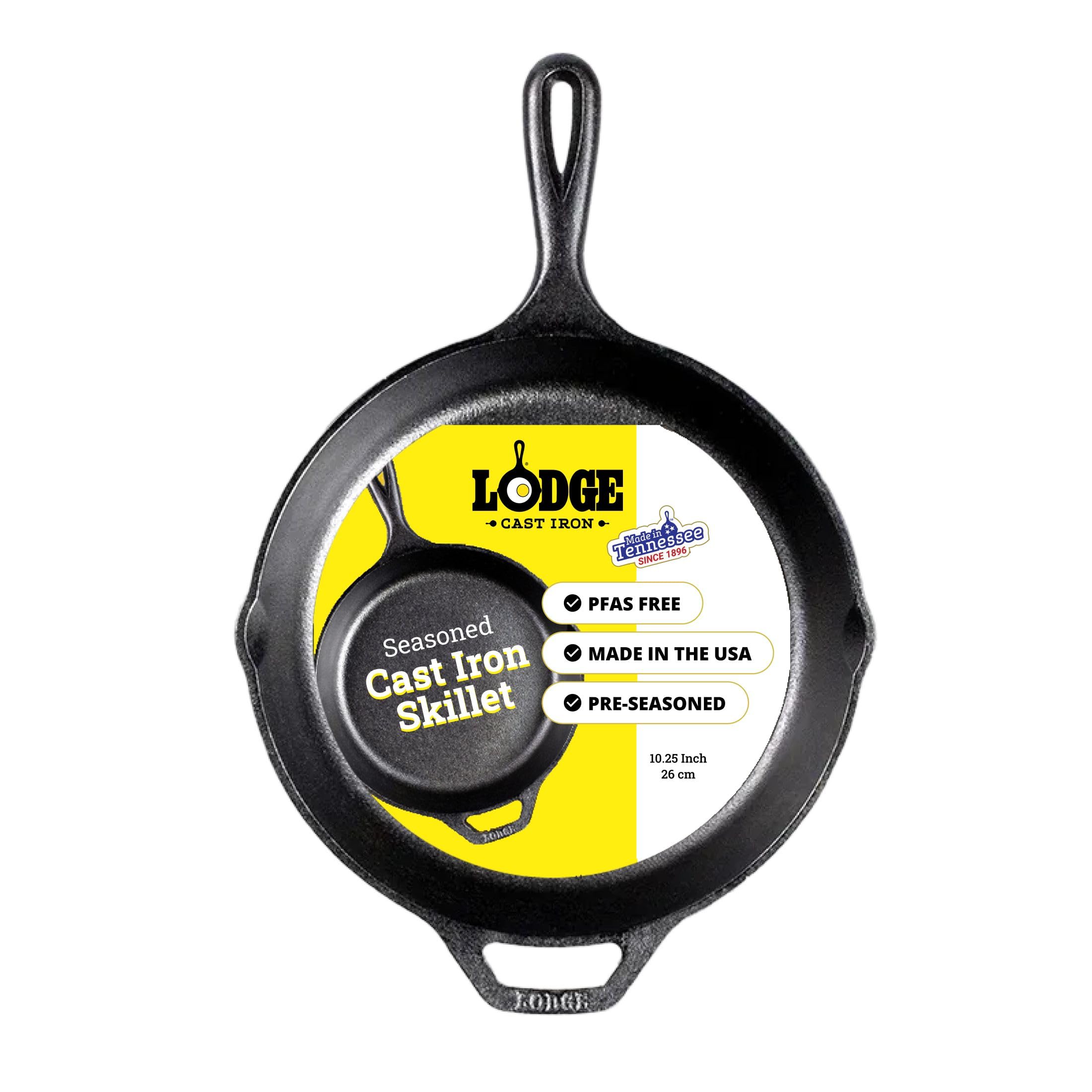
Lodge 10.25-Inch Skillet
Key Features
- Weight: 5.4 lb
- Cooktop: Gas, electric, induction
- Diameter: 10.25 inches
- Oven safe to: 500 °F
- Price: Budget
One of the least expensive skillets in this group does nearly everything the most expensive one does, and the 10.25-inch Lodge makes that case better than anything else here. It heats evenly over an ordinary burner, holds that heat when a cold steak lands on it, and moves from the stovetop into a 500 °F oven without a second thought. At 5.4 pounds it stays a one-hand pan for most adults.
The factory seasoning is the part worth understanding before you buy. The pan arrives oiled and ready to cook, but pre-seasoned means a rust barrier and a head start, not a non-stick surface — our first rounds of eggs left a patch behind, and a few weeks of bacon and cornbread later they slid out clean. That is the normal arc for bare iron, and every bare pan on this list follows it.
What we noticed in daily use is how little there is to think about. The teardrop handle balances well on a low flame, the pour spouts on either side actually pour instead of running fat down the outside, and the cooking surface takes a metal spatula without complaint. It is also the pan that forgives neglect: scrub it, dry it, oil it, and it comes back.
Ignore the capacity figure on the listing, by the way — a skillet is sized by diameter, and 10.25 inches is the useful middle: wide enough for two steaks or a whole cut-up chicken, narrow enough to sit inside a standard burner ring so the rim is not cold. Cook for four and the 12-inch Cuisinel gives you more surface plus a lid. Want a smoother cooking surface from week one and the Backcountry is the upgrade. For a first skillet, or a fifth, we keep reaching for this one.
Pros
- Sears and browns as well as any pick here
- 5.4 pounds stays manageable one-handed
- Oven safe to 500 °F and induction compatible
- Costs less than most of this group
Cons
- Bare handle gets hot in the oven and under a broiler
Our pick for almost everyone: it sears like iron costing far more, fits an ordinary burner, and leaves room in the budget for a second size.
Best for Smooth-Surface Cooking
Backcountry Iron 12-Inch
Key Features
- Weight: 7 lb
- Surface: Smoother than leading brands
- Capacity: 3.75 quarts
- Diameter: 12.25 inches
- Price: Midrange
Most cast iron arrives with a sand-cast texture you can feel under a fingertip, a pebbled surface the seasoning has to fill before food stops catching. Backcountry Iron’s 12-inch pan is noticeably smoother out of the box, closer to the old machined skillets than to the as-cast Lodge, and that one difference changes the first month of ownership more than any other feature here.
We noticed it most with eggs and fish, where a rough pan tears the surface before a crust can set. The 12.25-inch cooking surface holds four burgers at once, the 7-pound body keeps heat steady through a flip, and the pre-seasoning took a wipe of oil evenly from the first wash.
The warranty is the detail that gives us pause — 90 days is short for a pan built to outlast its owner, and it is the thinnest coverage in this group. That is a paperwork limit rather than a cooking one, and a well-tended skillet rarely calls on it. What the extra money buys is a surface that behaves like a broken-in pan from the first week instead of the tenth.
Pros
- Smoother cooking surface than as-cast iron
- 12.25-inch surface for family batches
- 7 pounds holds heat through a flip
- Pre-seasoned with a proprietary oil blend
Cons
- Priced well above the Lodge without a lid
Buy this if you want a machined-smooth cooking surface without hunting vintage iron, and you can live with the price and a short warranty.
Best for Family-Size Braising
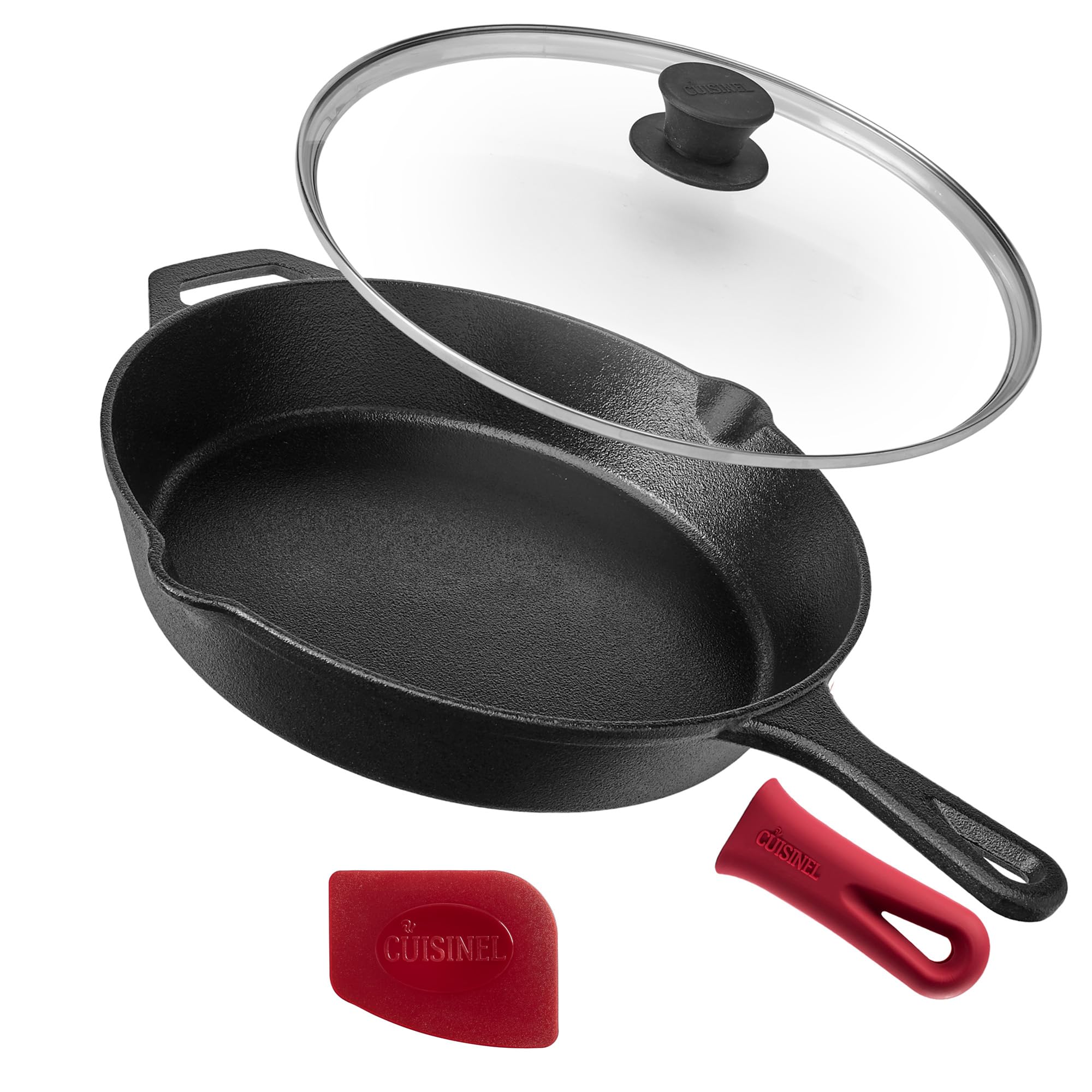
Cuisinel 12-Inch with Lid
Key Features
- Cooktop: Gas, electric, induction, glass top
- Capacity: 3 quarts
- Diameter: 12 inches
- Includes: Tempered glass lid and silicone handle holder
- Price: Midrange
No other skillet here comes with a lid, and that turns out to be the feature worth paying for. A 12-inch pan with a tempered glass lid takes a dish from sear to braise without dirtying a second pot: brown the chicken, add liquid, set the lid on, and slide the whole thing into the oven. We did short ribs and a skillet pizza in it and both were better for staying put.
At 12 inches and 3 quarts it is a family pan, and the second handle on the far side is what makes it carryable when it is full — a loaded lift becomes a two-hand job instead of a wrist one. The silicone sleeve for the long handle is a small, welcome inclusion; it slips on for basting and off for the oven. Heat has been even on gas and on induction, and the pan itself goes under the broiler or over coals like any other iron here.
The glass is the part to think about. It is tempered and handles oven heat, but a lid that slides off the counter is a lid you replace, and this pan is heavy enough that a one-handed carry with the lid on is optimistic. We treat it as a stovetop pan that happens to have a lid rather than a Dutch oven, and it has suited us that way.
Pros
- Glass lid turns a sear into a braise
- Second handle steadies a full 12-inch pan
- Silicone handle holder included
- Gas, electric, induction, oven, grill, and fire
Cons
- Handle can break away under a full pan
Buy this if you braise, simmer, or want one pan that goes from sear to oven to table with a lid on it — the lid earns the money.
Best for Enamel Convenience
Le Creuset 11.75-Inch Enameled
Key Features
- Weight: 6.8 lb
- Capacity: 2.38 quarts
- Cleaning: Dishwasher safe
- Diameter: 11.75 inches
- Price: Premium
Enamel changes the deal. There is no seasoning to build, no oiling after washing, and no reason to keep tomatoes or wine out of the pan, which is most of what makes bare iron fussy. The 11.75-inch Signature is the pan we reach for when a dish starts as a sear and finishes as a sauce in the same vessel.
It is 6.8 pounds with two handles, so a loaded lift is a two-hand job rather than a gamble, and the satin black interior is not a non-stick coating — eggs will catch if you rush them. Give it butter and a medium flame and they release. Heat is the pleasant surprise: the enamel spreads it so effectively that we cook most things at medium and rarely push the burner higher.
Here is the honest accounting. You are paying Le Creuset money for convenience and a finish you will want on the table, and the convenience is real — ours has been through the dishwasher repeatedly and has come out the same colour. What you are not paying for is a better sear: this browns as well as the Lodge, not better. If pan sauces and easy cleanup are not worth the premium to you, the Lodge does the same searing for a fraction of the cost.
Pros
- No seasoning and no oiling after washing
- Acidic sauces and wine are fine
- Dishwasher safe enamel
- Even heat without going above medium
Cons
- Enamel can chip, and chips are permanent
Worth it if you want cast iron’s heat without its maintenance: no seasoning, acidic sauces are fine, and it can go in the dishwasher.
Best for Eggs and Sauces
Lodge Chef Collection 8-Inch
Key Features
- Weight: 3.1 lb
- Cooktop: Gas, electric, induction
- Diameter: 8 inches
- Seasoning: Natural vegetable oil
- Price: Budget
An 8-inch skillet will not cook dinner for two, and the Chef Collection does not pretend otherwise. What it does is fry two eggs in a lake of butter, bloom a spice blend, build a roux, and sear a single pork chop properly — in a pan that weighs 3.1 pounds and leaves most of the burner free.
The Chef Collection details are what make it pleasant rather than merely small. The walls are shallow and sloped, so a spatula gets under an egg instead of chasing it around the rim, and the pour spouts on either side are generous enough to tip off fat without a funnel. We found the handle more comfortable one-handed than the classic Lodge teardrop, which is the entire point of a pan this size.
Small skillets are also the ones that get used most. Ours has stayed on the stove since it arrived — garlic, a fried egg, a smash burger that fits the base exactly — and at 3.1 pounds it is the one that goes in the camp box instead of staying home.
Pros
- 3.1 pounds lifts easily in one hand
- Sloped walls make spatula work simple
- Generous pour spouts on both sides
- The least expensive pick here
Cons
- Too small to sear for two people
The egg pan: 8 inches, 3.1 pounds, light enough to lift with one hand while you spoon butter over the top. Buy it as a second skillet.
Best for Big-Batch Searing
Amazon Basics 15-Inch

Key Features
- Weight: 11.5 lb
- Capacity: 5.9 quarts
- Diameter: 15 inches
- Oven safe to: 500 °F
- Price: Midrange
Fifteen inches and 11.5 pounds is not a skillet you flip with your wrist — it is a slab of iron with flared edges and a 5.9-quart capacity that turns a whole dinner into a single layer. We used it for a frittata for six and for skillet pizza, and the appeal is obvious the moment you stop crowding a smaller pan.
The pre-seasoning behaves like the rest of the budget iron here: adequate for searing, better after a few months of fat. The oven is where this pan makes the most sense — 500 °F, no plastic anywhere on the handle, and enough room for a frittata to set flat without a wobble.
Call it a specialist. For four chops at once, a sheet-pan-style dinner, or a pizza big enough to feed a table, it does something none of the 10- and 12-inch pans can. As an only skillet it is a lot of iron to lift every night.
Pros
- 15-inch surface sears a family batch at once
- Oven safe to 500 °F with no plastic parts
- 5.9-quart capacity for one-pan dinners
Cons
- 11.5 pounds needs two hands and a mitt
- Outer edge runs cooler on a standard burner
Buy it for pizza, frittata, and searing four chops at once; 11.5 pounds across 15 inches is more pan than most kitchens need.
How We Tested the Best Cast Iron Skillets
We started with a shortlist of every skillet we could find in a standard size, from 8 to 15 inches, and compared spec sheets on cooking-surface diameter, overall weight, handle length, helper handles, pour spouts, and whether the pan shipped bare or preseasoned. Anything sold mainly as decor, anything with a nonstick coating baked on, and anything so heavy we couldn’t lift it one-handed went back on the shelf. Twelve skillets made the cut, and testing ran nine months.
Those pans cooked in three home kitchens and on a camp stove: steaks and pork chops seared on weeknights, cornbread on Sundays, and a week of fried eggs in each one with no added fat after the third cook. We weighed every skillet empty on a kitchen scale, then loaded with two pounds of potatoes, and carried it from stove to counter one-handed to see which ones made us set it down.
Heat distribution got the flour test — a thin dusting across a dry pan over medium flame, watching which spots browned first and which stayed pale. For cleaning, we timed how long a burned-on fond took to release with a sponge, then with a chain-mail scrubber. Rust resistance got the harshest treatment: every pan was washed, given a quick towel dry, and left in the drying rack still damp overnight, and one budget skillet went through a full dishwasher cycle on purpose so we could see what happened by morning. We also logged whether each factory seasoning came even or patchy, whether it flaked after the first high-heat sear, and whether handles loosened over nine months of daily knocks. Value came down to what was actually in the box: a helper handle, a smooth-milled surface, spouts that poured cleanly.
How to Choose a Cast Iron Skillet
Your skillet is decided by three things before any feature list matters: how much food you cook at once, how much weight you will lift nightly, and whether you want to maintain bare iron or pay for enamel.
Match the pan to your burner, not just your family
Diameter is only half the decision; the burner underneath it is the other half. A 12-inch pan on an 8-inch coil gets a hot center and a rim that never catches up, so food at the edge steams while the middle scorches. Measure your largest burner before you size up.
For two people, 10 to 10.25 inches sits comfortably on a normal ring and sears two steaks. For four, a 12-inch pan earns its extra weight. A 15-inch pan wants a big ring or a finish in the oven, and an 8-inch pan is for eggs, sauces, and single portions — though it will still be the pan you reach for most.
Bare iron or enamel is a maintenance decision
Both are cast iron and both sear well; they differ in what happens after dinner. Bare iron wants drying on the stove and a thin wipe of oil, and a young seasoning will not enjoy a long simmer of tomatoes or wine. It also costs the least and can be rehabilitated after neglect.
Enamel, which is what the Le Creuset brings, needs none of that: acidic sauces are fine, the dishwasher is fine, and there is no oiling ritual. What it cannot do is recover from a chip. If you cook pan sauces weekly, enamel justifies the premium; if you want one pan for everything and do not mind the ritual, bare iron wins on value.
Weight and handles decide how often it leaves the shelf
A 15-inch skillet weighs 11.5 pounds, the 10.25-inch Lodge is 5.4, and the 8-inch Chef Collection is 3.1. That spread decides whether a pan gets used on a Tuesday. Above roughly 10 inches, look for a helper handle on the far side — the Cuisinel has one, and it turns a loaded lift into a two-hand job instead of a wrist one.
Above 6 pounds, assume you plate with two hands and a mitt whatever the handle looks like. If lifting is a real concern, choose a smaller diameter or the enameled pan rather than telling yourself you will get used to it.
What a smooth surface and a lid actually change
Two features are worth paying for, and neither is cosmetic. A smoother cooking surface, the Backcountry Iron’s selling point, releases eggs and fish before the seasoning is fully built, which shortens the frustrating first month. A lid turns the same pan into a braiser: the Cuisinel’s tempered glass lets you sear, add liquid, and finish in the oven without dirtying a second pot.
What no factory surface gives you is non-stick. Pre-seasoned means oiled, and eggs will catch until the seasoning fills in — expect weeks of cooking, not days.
Frequently Asked Questions
Can I wash a cast iron skillet with soap?
Yes. Modern dish soap is mild enough that a minute of it will not strip a polymerized seasoning; the no-soap rule dates from the days of lye-based soap, which really would have. Use a brush or a nylon scraper on stuck bits, and skip the soak.
What matters is what happens next: never leave the pan wet in the sink, because that is where rust starts.
Does cast iron work on induction cooktops?
Yes — bare cast iron is magnetic, which is exactly what induction needs, and every bare pan here lists induction compatibility. The enameled Le Creuset is rated for all cooktops too.
The thing to check is flatness. A base that has warped will spin on a glass surface and heat unevenly, so set the pan on the counter and press a corner before you commit.
Can I use metal utensils on cast iron?
Yes, and a flat-edged metal spatula is the tool we reach for most. It gets under a crust without tearing it and scrapes the fond loose for a pan sauce.
On a new pan it also knocks down the high spots in the factory seasoning, which is a slow help rather than a harm. Keep the cleaver and the fork for other jobs.
Final Verdict
The 10.25-inch Lodge is the skillet we point most people to, and nothing here displaces it: even heat on an ordinary burner, a manageable 5.4 pounds, 500 °F in the oven, and enough money left over to add a second pan later.
Spend more only for a reason. The Backcountry Iron if the sandy surface of new iron bothers you, the Cuisinel if you braise and want a lid in the deal, the Le Creuset if you would rather never season anything again. And the 8-inch Chef Collection when eggs matter more than dinner.