This post contains affiliate links. We may earn a small commission when you buy through our links — at no extra cost to you.
A fish fillet knife’s blade flexibility is the single biggest factor in how cleanly you separate meat from skin and bone. Too stiff and you tear delicate panfish; too flexible and you lose control on a thick salmon fillet. Yet most product listings barely mention this spec.
The market is flooded with knives ranging from $15 workhorses to $100 luxury models, but the real divide isn’t price—it’s whether the blade matches the fish you actually clean. A knife that excels on trout will frustrate you on walleye, and vice versa.
This guide breaks down the trade-off between stiffness and flex, then matches each recommended knife to a specific use case. By the end you’ll know exactly which blade shape, handle material, and steel type suits your routine—whether you clean one fish a month or fifty.
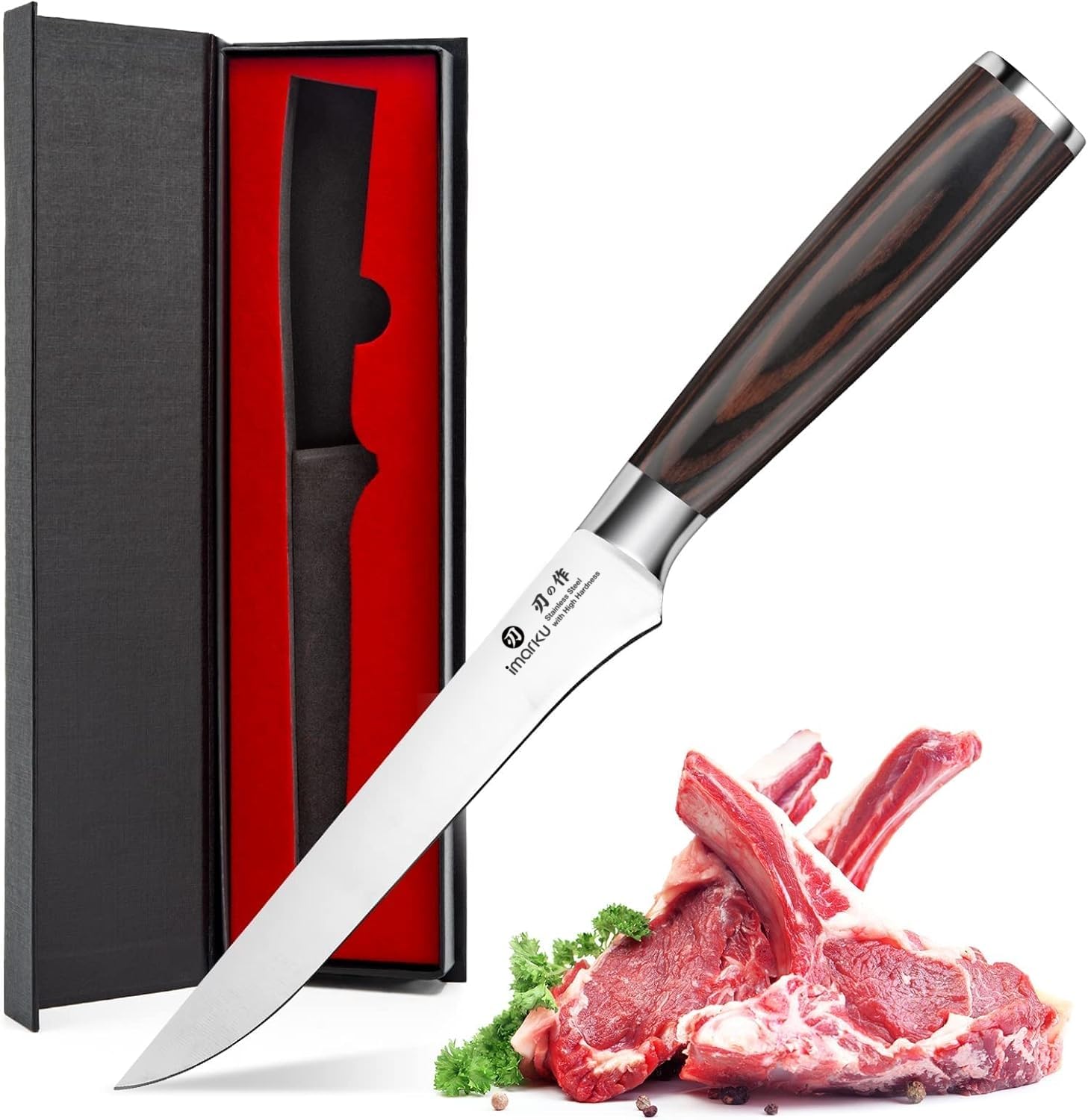


Best for Versatile Home Cook
imarku 6" Fillet Knife
Key Features
- Blade Length: 6.8 in
- Blade Flexibility: Stiff
- Steel Type: German 1.4116, 56 HRC
- Handle Material: Pakkawood
- Price: Budget
Out of the box, this knife cuts through salmon skin and pin bones with minimal resistance, and the edge lasts through several batches before any noticeable dulling. The German stainless steel (56 HRC) and full tang construction give it a balanced, solid feel that punches well above its price point.
Home cooks and weekend anglers will appreciate how the Pakkawood handle stays secure even with wet hands, and the 6.8-inch blade provides enough reach for large fillets while remaining nimble for trimming fat and sinew. It handles boning chicken thighs and cutting vegetables just as comfortably — a genuine all-rounder in the kitchen.
This knife shines for anyone who processes larger fish like salmon, trout, or catfish and wants a single tool for boning, trimming, and general meat prep. Beginners will find the sharpness and balance forgiving, while experienced cooks will value the edge retention. The blade is stiffer than traditional fillet knives — if you regularly clean panfish like crappie where extreme flexibility is needed to follow the backbone, a more flexible option would serve you better.
Pros
- Razor-sharp out of the box with lasting edge retention across multiple uses
- Solid, well-balanced build that feels premium for the price
- Comfortable, ergonomic handle that fits a range of hand sizes
- Cuts through meat, fish, and vegetables with equal ease — a genuine multi-tasker
Cons
- The blade is stiffer than most fillet knives, making delicate panfish work less controlled
- Under heavy lateral stress or prying, the blade can chip or snap — treat it as a boning knife, not a crowbar
For home cooks and anglers processing salmon-sized fish, the imarku delivers professional-grade sharpness and build without the premium price.
Best for Panfish, Trout
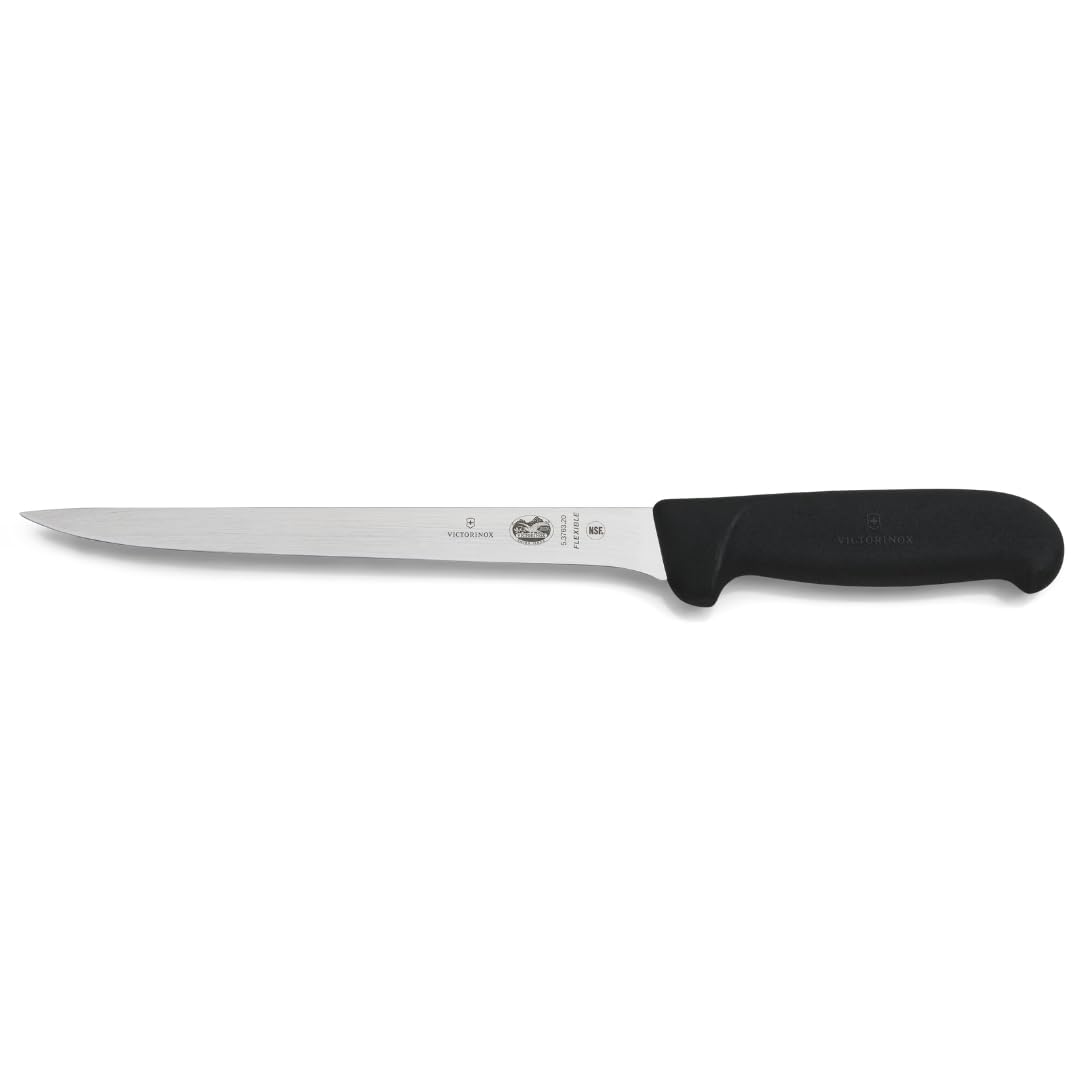
Victorinox Fibrox 8"
Key Features
- Blade Length: 8 in
- Blade Flexibility: Very flexible
- Steel Type: Stainless steel
- Handle Material: Thermoplastic rubber
- Price: Mid-Range
The Victorinox Fibrox 8-inch fillet knife delivers one of the most flexible blades on the market, allowing it to follow the natural curves of a fish fillet without tearing the flesh. Lightweight and well-balanced, it reduces hand fatigue during extended cleaning sessions. The Fibrox handle stays grippy even when wet, a clear advantage over smoother plastic handles found on some competitors. Unlike the premium trigger-grip model in this lineup, the Fibrox prioritizes blade flexibility above all.
This knife is built for serious anglers targeting panfish, trout, and other delicate catches where a stiff blade would ruin the fillet. Kitchen cooks who need precision for skinning and deboning thin fish will appreciate the control. However, the thin steel is not meant for cutting through bones or prying — save that task for a dedicated boning knife. Those who prefer a heavier, more substantial feel in hand should consider a forged alternative.
Pros
- Exceptional blade flexibility follows fish contours without tearing.
- Holds an edge well and sharpens easily with standard tools.
- Non-slip Fibrox handle stays secure when wet or fish-slimed.
Cons
- When used to pry apart fish cavities or cut through small bones, the thin blade may flex excessively — designed strictly for flesh.
- The handle looks and feels utilitarian rather than premium; its function outweighs appearance for most anglers.
For anglers who need precise, flexible filleting for panfish and trout, the Victorinox Fibrox delivers professional-grade performance at a price that leaves room for a sharpening rod.
Best for Wet, Boat Use
BUBBA 7" Tapered Flex
Key Features
- Blade Length: 7 in
- Blade Flexibility: Tapered flex
- Steel Type: 8Cr13MoV
- Handle Material: Rubberized grip
- Price: Premium
The BUBBA’s rubberized trigger grip is its standout feature — it stays firmly in hand even when coated in fish slime and water. The 7-inch blade offers a tapered flex that handles small to medium fish with precision, though it isn’t as limber as the most flexible fillet knives on the market. You pay a premium for this grip security and overall build quality rather than premium blade steel; the 8Cr13MoV steel holds an edge well for its class but won’t match higher-end alloys.
This knife is built for serious anglers who process fish on boats or in wet conditions — those who prioritize a secure, non-slip handle above all else. The tradeoff is clear: you’re paying for grip technology and durable construction, not cutting-edge steel metallurgy. For buyers who need to keep hold of their knife in slippery environments and want a fillet knife that lasts season after season, the BUBBA delivers where others fall short.
Pros
- Secure trigger grip stays non-slip when wet or slimy
- Blade flexibility matches small to medium fish filleting well
- Durable blade holds a sharp edge through heavy use
Cons
- Premium price reflects grip design and build, not blade steel quality
- Sheath fit can be tight, making re-sheathing require extra care
For anglers who work in wet, slippery conditions and need a secure grip above all else, the BUBBA delivers where others don’t — just accept the premium for what it is.
Best for High-Volume Cleaning
WORKPRO Electric Fillet
Key Features
- Blade Length: 8 / 10 in
- Steel Type: Stainless steel
- Handle Material: Non-slip grip
- Price: Premium
The WORKPRO electric fillet knife removes the manual effort from cleaning fish, with two batteries that each run about an hour and swap without downtime. The set includes an 8-inch flexible blade for smaller fish and a 10-inch stiff blade for larger cuts, plus a sturdy carry case. The battery charger can be finicky – insertion and removal may require careful alignment – and the motor noise is present, so it’s less ideal for quiet campsites.
This electric option suits anglers who process large catches (salmon, walleye) and want speed over control. It also helps those with hand fatigue who prefer power-assisted cutting. For occasional users or traditionalists who value precision, a manual knife remains the better fit.
Pros
- Two batteries provide continuous runtime – swap and keep going.
- Sharp blades slice through fish skin and flesh with little resistance.
- Speeds up cleaning large batches of fish significantly.
Cons
- Motor noise is louder than a manual knife – may carry in quiet outdoor spaces.
- Battery charger has a tight fit – inserting and removing the battery can be finicky.
For anglers who clean dozens of fish per trip, the WORKPRO electric fillet knife saves time and reduces hand fatigue – just account for the charger’s quirks and the motor hum.
Best for Large Fish, Budget
Mercer Millennia 8.5"
Key Features
- Blade Length: 8.5 in
- Blade Flexibility: Flexible
- Steel Type: High carbon Japanese
- Handle Material: Santoprene
- Price: Budget
The Mercer Millennia combines Japanese high-carbon steel with a flexible, lightweight blade that performs well above its price point. At 4.6 ounces, it feels nimble in hand, and the stamped construction keeps the cost low without sacrificing edge retention or sharpness. Compared to the Dexter commercial workhorse, the Mercer offers noticeably more flex for following fish contours during skinning and deboning, though it lacks the Dexter’s stiff backbone for heavier tasks.
This knife suits home cooks and anglers who regularly clean larger fish like salmon, pike, or striped bass. The 8.5" blade offers the reach and sweep needed for long fillets, but it becomes unwieldy on panfish such as trout or crappie. The Santoprene handle provides a comfortable, non-slip grip when dry, but may lose traction when coated in oil or fish slime — a quick rinse restores control.
Pros
- Holds a sharp edge and is easy to touch up with a steel or ceramic rod.
- Professional-level performance at a fraction of the cost of forged knives.
- Ergonomic textured handle fits comfortably and provides good control.
Cons
- 8.5" blade can feel cumbersome when filleting small fish like trout or crappie.
- Santoprene handle may become slippery when hands are oily or greasy.
For anglers who target larger fish and want Japanese steel performance without the premium price, the Mercer Millennia is a capable, lightweight fillet knife that only falls short on panfish and when hands are slick.
Best for Boning, Trimming
SHAN ZU 7" Fillet Knife
Key Features
- Blade Length: 7 in
- Blade Flexibility: Stiff
- Steel Type: German 1.4116, 55-57 HRC
- Handle Material: Pakkawood
- Price: Budget
Solid forged construction and a substantial 209-gram feel set this knife apart at its price point. The German 1.4116 stainless steel (55-57 HRC) is ground to a razor edge that holds well through multiple fish and meat prep sessions. Where most budget fillet knives feel hollow or flexible to a fault, this one has the heft and stiffness of a proper boning blade.
This knife suits home cooks who need one sturdy tool for breaking down chicken, trimming steaks, and filleting larger fish like salmon. The stiffness that helps with bone work is a drawback when you need to follow the delicate contours of small panfish – for trout or crappie, a more flexible blade will give cleaner results. If your primary task is deboning and portioning rather than intricate fillet work, the SHAN ZU delivers forged quality without the premium price.
Pros
- Full-tang forged construction with a solid, balanced feel in hand
- Razor sharp out of the box with good edge retention for its price tier
- Cost-effective alternative to knives costing twice as much
Cons
- Stiffer than traditional fillet knives; best for boning and trimming rather than delicate fish work
- Occasional unit-to-unit variance in factory edge – some may need a quick touch-up
If you need a budget-friendly forged knife that handles heavy boning and trimming with authority, this is a smart buy – just don’t expect it to flex around fish spines like a traditional fillet knife.
Best for High-Volume Pro
Dexter-Russell 8" Fillet

Key Features
- Blade Length: 8 in
- Blade Flexibility: Stiff
- Steel Type: 400 series high-carbon
- Handle Material: Polypropylene
- Price: Budget
The Dexter-Russell 8-inch fillet knife uses stamped high-carbon steel that takes and holds a decent edge with minimal effort. Its blade stiffness works as an advantage when cleaning larger fish — cuts through meat cleanly. The lightweight polypropylene handle keeps fatigue low during long sessions. For the price, this knife delivers commercial-level utility without the premium cost.
Pros
- Delivers professional-level cutting performance at a budget-friendly price.
- Holds a sharp edge and is simple to maintain with a honing steel.
Cons
- Blade is relatively rigid, making it less suitable for small, delicate panfish.
- The polypropylene handle can become slippery when oily or wet.
Best suited for budget-conscious anglers who clean dozens of larger fish and don’t mind a basic handle — less ideal for panfish specialists.
Best for Knife Enthusiasts
Dalstrong Gladiator 7"

Key Features
- Blade Length: 7 in
- Blade Flexibility: Flexible
- Steel Type: German high carbon, 56+ HRC
- Handle Material: G10 Garolite
- Price: Luxury
The Dalstrong Gladiator 7" stands apart with its full-tang G10 handle, two sheaths (leather and polymore), and a fit-and-finish that feels more like a collectible than a working knife. On fish and meat it slices cleanly thanks to a flexible blade and a factory edge that starts razor-sharp. The tradeoff is edge retention that can fall short of other $100 knives – some owners note the blade dulls sooner than expected – and occasional handle-rivet fitment that leaves a slight wobble. For the angler or home cook who prefers a showpiece that also performs, this is a deliberate compromise: the build quality and packaging justify the premium, but the edge life does not match the price tag.
Pros
- Full-tang G10 handle provides a comfortable, solid grip
- Includes both a leather sheath and a polymore sheath for travel and storage
- Flexible blade follows fish contours well for filleting tasks
Cons
- Edge retention can fall short of similarly priced knives – may need more frequent touch-ups
- Handle-rivet fitment may show slight wobble in some units
For knife collectors and enthusiasts who want a visually impressive fillet knife with premium materials, the Dalstrong delivers – but plan to sharpen it more often than you would with other $100 options.
Best for Precision Boning
SHAN ZU Powder Steel 7"

Key Features
- Blade Length: 7 in
- Blade Flexibility: Stiff
- Steel Type: Japanese powder, 63 HRC
- Handle Material: Pakkawood
- Price: Budget
This 7-inch knife uses Japanese powder steel hardened to 63 HRC, holding a razor edge longer than most budget options. Its stiffness suits precise work like trimming silver skin or boning, but the hard steel can chip if twisted against bone. The handle feels slightly bulky, lacking the ergonomic curve of dedicated fillet knives. For these reasons, it fits best as a specialized tool for cutting enthusiasts who already own a flexible fillet knife and want extreme hardness at a low price.
Pros
- Extreme sharpness from 63 HRC powder steel stays keen for extended cutting sessions.
- Budget-friendly entry into Japanese powder steel performance, offering premium edge retention without the premium cost.
Cons
- Handle shape feels bulky and unbalanced, reducing comfort during prolonged use.
Ideal for home cooks who want a high-hardness knife for boning and trimming without spending much, but only if they strictly avoid bone contact.
Best for Panfish Specialists
Rapala Superflex 4"

Key Features
- Blade Length: 4 in
- Blade Flexibility: Very flexible
- Steel Type: Stainless steel
- Handle Material: Birch wood
- Price: Mid-Range
The blade’s superflex design lets it follow the contours of small trout and crappie for clean fillets. However, the 4-inch length is too short for salmon or walleye, and the stainless steel edge may need sharpening after a few fish. The birchwood handle can split if moisture sits on it. For anglers who stick to panfish and want a compact, agile knife, this fills a narrow niche.
Pros
- Extreme blade flexibility follows fish contours for clean fillets on small species.
- Classic design with wood handle and leather sheath looks great in any kit.
Cons
- 4-inch blade limits use to panfish and trout; too short for larger fish.
- Edge loses sharpness relatively quickly, requiring frequent touch-ups.
Best for trout and panfish specialists who need extreme flexibility for delicate work and don’t mind frequent sharpening.
Best for Wet Grip, Budget
KastKing Speed Demon 7"

Key Features
- Blade Length: 7 in
- Blade Flexibility: Flexible
- Steel Type: G4116 German
- Handle Material: Super Polymer Grip
- Price: Budget
The KastKing Speed Demon Pro delivers a confident hold on slippery fish thanks to its Super Polymer grip, and the blade flexes enough to follow the contours of most freshwater catches. This makes it a practical choice for budget-minded anglers. However, the blade edge may not be consistent straight from the factory; some owners find they need to sharpen it before the first use. That tradeoff is acceptable for the price, especially for those who prioritize grip and flexibility over out-of-box perfection.
Pros
- Non-slip grip stays secure when wet
- Good value for a dedicated fillet knife under $25
Cons
- Handle material can develop mold if stored without drying
Best for anglers on a budget who need a secure wet grip and are willing to check the blade’s edge before first use.
How to Choose
The wrong flexibility wastes meat and time—choose your knife by the fish you clean most often.
Blade Length
Blade length should match the size of fish you process. A 6- to 8-inch blade is the most versatile range: short enough to maneuver around panfish ribs, long enough for a single salmon fillet stroke.
A 4-inch blade (like the Rapala Superflex) is purpose-built for trout but forces multiple cuts on larger fish, increasing the chance of tearing. An 8.5-inch blade gives you reach but can feel cumbersome on crappie or bluegill.
Blade Flexibility
Flexibility determines how closely the blade follows the fish’s spine and skin. A flexible blade (like the Victorinox Fibrox) bends to stay in contact with curved bones, critical for panfish where waste is low. A stiff blade is better for larger fish like salmon, where you need to push through thicker flesh without the edge wobbling.
Steel Type and Hardness
Steel hardness (HRC) directly affects edge retention and brittleness. German 1.4116 at 55-57 HRC is tough and easy to sharpen but dulls faster. Japanese powder steel at 63 HRC holds an edge longer but chips if you hit a bone—it’s a trade-off between maintenance and durability.
Heat treatment matters more than steel origin. A well-executed 1.4116 blade can outperform a poorly treated “super steel.” For most users, 56-58 HRC offers the best balance of edge life and forgiving sharpening.
Handle Material and Grip
Handle grip is the difference between a secure cut and a slipped knife. Rubberized or textured polymer (Fibrox, BUBBA, Speed Demon) stays tacky even when wet and slimy. Wood handles (Pakkawood, birch) look premium but require drying after every use to avoid cracking and can become slippery.
In boat or dock conditions, prioritize a handle with a finger guard or trigger grip. In a kitchen environment, a smooth Pakkawood handle is fine if you keep a towel nearby.
Ease of Sharpening
Harder steel holds an edge longer but is harder to sharpen at home—diamond stones are needed for 60+ HRC blades. Softer steel (like Dexter-Russell’s 400 series) can be touched up with a steel rod in seconds but needs frequent passes.
If you don’t own a sharpening system, choose a knife under 58 HRC or one known for easy honing (Victorinox, Mercer). A dull flexible blade is more dangerous than a dull stiff one because it requires extra force.
FAQ
How flexible should a fish fillet knife be for panfish like crappie?
Very flexible – the blade should bend easily under light finger pressure. Panfish have fine rib bones and thin skin, so a stiff blade will tear the fillet. Look for knives described as ‘superflex’ or with a narrow, thin-ground edge like the Victorinox Fibrox or Rapala Superflex. A flexible knife follows the spine and leaves more meat on the fillet.
Can I use a boning knife for filleting fish, or do I need a dedicated fillet knife?
A boning knife (stiff, narrow blade) works for larger fish like salmon but is not ideal for panfish or trout. Boning knives are designed to cut through cartilage and bone, not to flex along a curved spine. For best results on small to medium fish, use a dedicated fillet knife with noticeable flexibility. For large fish and general meat prep, a stiff boning knife like the imarku is versatile enough.
Why does my new fillet knife rust after one use in saltwater?
Most budget to mid-range fillet knives use stainless steel that is stain-resistant, not rust-proof. Saltwater accelerates corrosion, especially on the edge and bolster. After saltwater use, rinse the knife with fresh water, dry immediately, and apply a light coat of mineral oil. Avoid leaving it in a leather sheath while damp. If you fish in saltwater regularly, consider a blade with a corrosion-resistant coating or a high-chromium steel.
What’s the best way to sharpen a flexible fillet knife without ruining the edge?
Use a hand-held sharpening rod (steel or ceramic) with light strokes at a 15–20 degree angle. Never use an electric sharpener on a flexible blade – the heat and aggressive abrasion can ruin the thin edge. For a very flexible knife, hone after every few fish to maintain the edge. If the blade becomes dull, use a fine-grit whetstone (3000–6000 grit) with slow, controlled passes.