This post contains affiliate links. We may earn a small commission when you buy through our links — at no extra cost to you.
The market for non-toxic coffee makers is full of claims — stainless steel this, BPA-free that — but the reality is that many brewers still introduce plastic somewhere in the water or brew path. A glass carafe with a plastic handle, an electric drip machine with a hidden reservoir: the contact points matter more than the label.
This guide cuts through the marketing to find brewers where no plastic touches your coffee. The trade-off for that purity is almost always manual operation — French presses, pour-overs, and stovetop percolators dominate because electric drip makers rarely offer all-metal interiors. Within that manual world, the biggest decision is between glass and insulated stainless steel: glass lets you watch the steep but risks breakage, steel keeps coffee hot for over an hour and survives drops.
Whether you need a rugged camping companion, a countertop showpiece, or a large-batch electric option, the picks below match a specific use case to a specific material promise. No smoke, no shortcuts.


Best for Plastic-Free Brewers
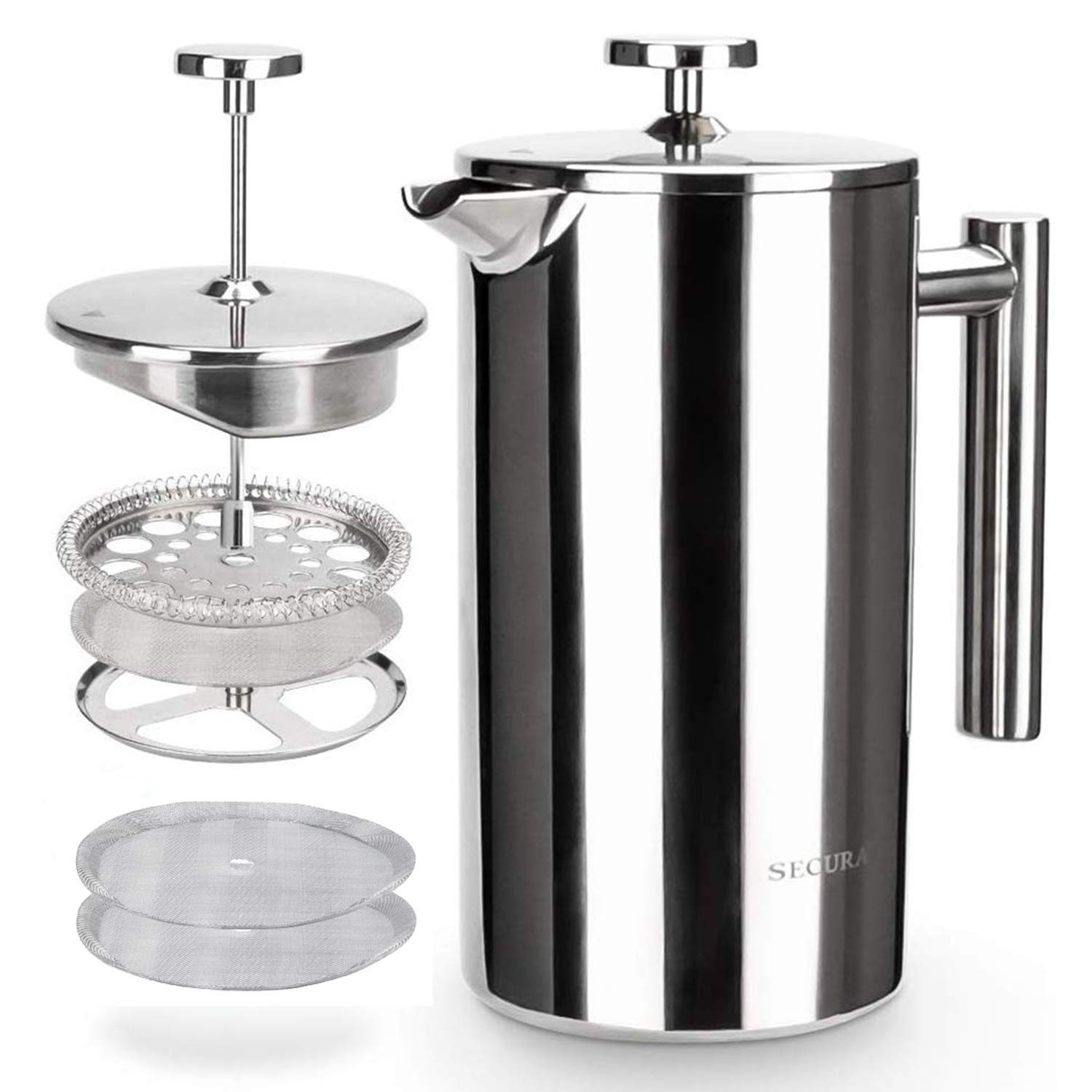
Secura 34oz French Press
Key Features
- Material: 304 stainless steel interior/exterior
- Filtration: Three-layered stainless steel
- Heat Retention: Double-walled insulation, hot 1 hr+
- Brewing Method: Manual French press
- Price: Budget
The Secura French Press is built entirely from 304 stainless steel — no plastic touches the coffee at any point. The double-walled insulation keeps coffee hot for over an hour, which is notable for a press in this price tier. It disassembles easily for hand washing or goes in the dishwasher. The 34oz capacity serves about four cups, and the 18/8 stainless interior is inert, preserving clean flavor. Unlike many budget presses, the plunger assembly uses a tight fit that minimizes bypass.
The all-metal construction means no risk of shattered glass, making it a practical choice for travel or daily use. It holds up well in backpacks and camp sites where glass would be a liability. Compared to plastic-lined presses, the stainless interior keeps the flavor clean without any metallic taste.
This press fits health-conscious buyers who want zero plastic in their brew path, campers needing an unbreakable carafe, or anyone making multiple cups that need to stay hot. The clear trade-off: if you prefer watching the brew rise through glass or need an electric automated brewer, this isn’t the right pick. Also, fine grounds can slip past if the two screens aren’t stacked correctly — a quick adjustment resolves that.
Pros
- All-metal construction ensures no plastic touches the coffee from start to finish.
- Double-walled insulation keeps coffee hot for over an hour without a warming plate.
- Durable stainless steel carafe is shatterproof, unlike glass alternatives.
Cons
For anyone seeking a stainless steel French press that avoids plastic entirely, the Secura delivers exceptional value with solid heat retention and easy cleanup.
Best for Large Batches
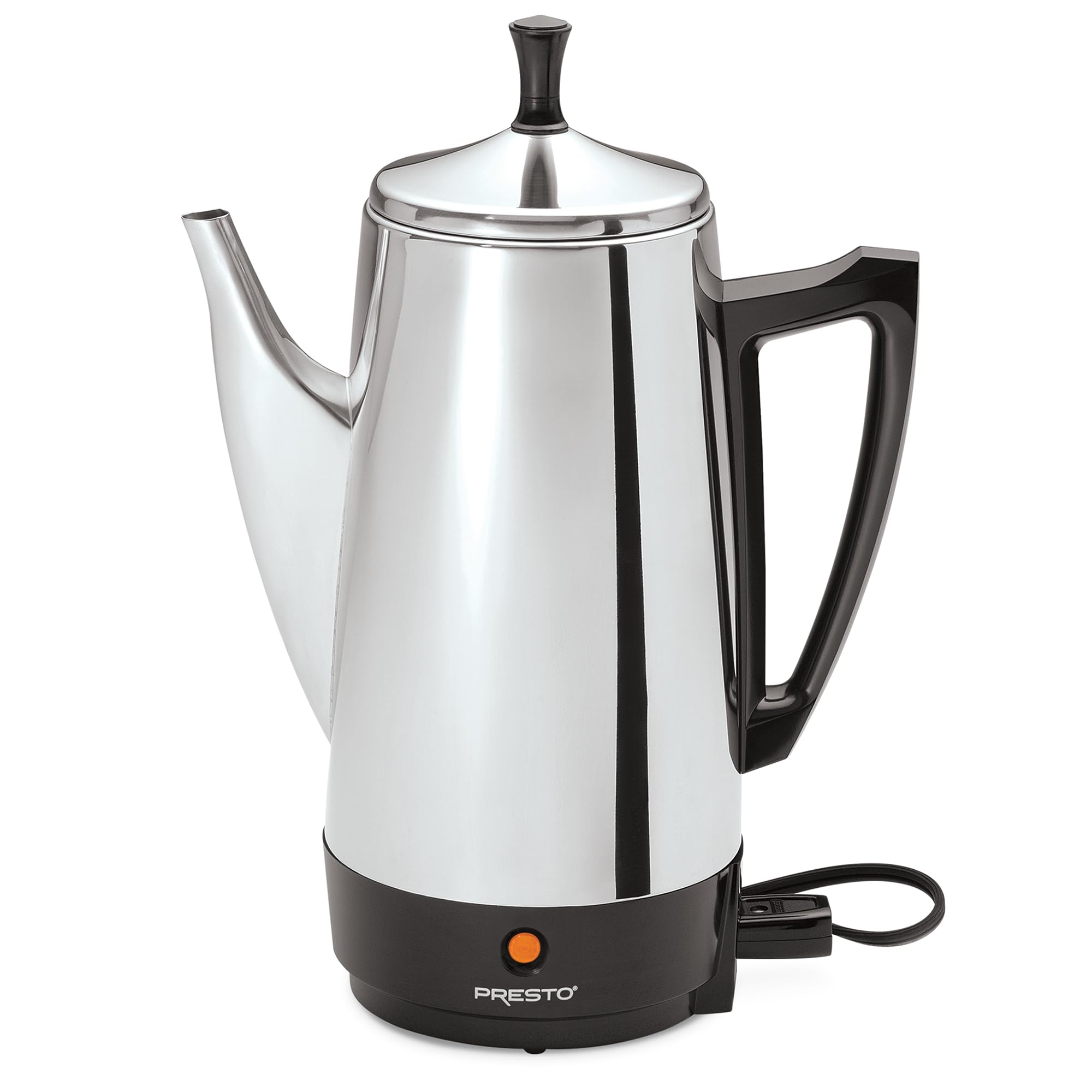
Presto 12-Cup Percolator
Key Features
- Material: Stainless steel all surfaces
- Filtration: Permanent metal basket
- Heat Retention: Automatic keep warm
- Brewing Method: Electric percolator
- Price: Mid-Range
An all-metal brew path from water chamber to carafe means zero plastic contact during brewing — a rarity in electric coffee makers. The Presto delivers piping hot coffee at a cup-a-minute pace and keeps it warm without scorching, thanks to automatic temperature control. This 12-cup capacity suits offices or big households that want electric convenience without compromising on material purity.
What sets this percolator apart is its fully stainless steel construction, but the lack of auto shut-off means you need to be present to unplug once brewing finishes. If left on the warming plate too long, the coffee can turn bitter. Best for buyers who prioritize a plastic-free brew path and don’t mind staying nearby during use — not for set-and-forget routines.
Pros
- Stainless steel throughout — no plastic touches the coffee from start to finish
- Coffee comes out piping hot and stays warm without a burnt taste
- Simple mechanism with few parts that can fail over time
Cons
- In a kitchen where you might get distracted, coffee left on the warming plate can turn over-extracted and bitter
- No automatic shut-off — you must unplug manually to prevent overheating, a notable safety consideration
If you want an electric coffee maker that keeps plastic out of the brew path and need large capacity, the Presto delivers — just be ready to babysit the plug.
Best for Flavor Purists
Chemex 8-Cup Classic
Key Features
- Material: Borosilicate glass
- Filtration: Proprietary paper filters
- Heat Retention: Glass loses heat quickly
- Brewing Method: Pour-over manual
- Price: Mid-Range
Borosilicate glass and a wood collar create a completely inert brew path, preserving the delicate oils and bright acidity of the coffee with zero chemical interference. This manual brewer extracts a clean, sweet cup that pour-over enthusiasts swear by, though it demands a gooseneck kettle and proprietary bonded filters to reach that level of clarity — a step up from basic glass presses like the affordable alternative in this set.
Best for coffee purists who treat brewing as a craft and want a countertop centerpiece that sparks conversation. The glass carafe is fragile — thermal shock or a knock can break it — and the ongoing cost of paper filters adds up. If you’re after a no-fuss morning brew or have kids around, this design demands more care than most.
Pros
- Delivers exceptionally clean, bright coffee with no bitterness or sediment
- Timeless design with wood collar adds personality to any kitchen counter
- Glass rinses clean easily and is dishwasher safe for simple upkeep
Cons
- Glass carafe can crack from thermal shock or an accidental bump – requires careful handling
- Needs proprietary paper filters (not included) and a gooseneck kettle for best results
A design classic for non-toxic brewing that delivers unrivaled flavor clarity — best for those who treat coffee as a deliberate ritual and are willing to handle fragile glass and filter expense.
Best for Camping Off-Grid
Farberware 12-Cup Percolator
Key Features
- Material: Stainless steel, glass knob
- Filtration: Permanent metal basket
- Heat Retention: Stovetop dependent
- Brewing Method: Stovetop percolator
- Price: Budget
This percolator’s stainless steel body and permanent filter deliver a bold, aromatic cup with zero plastic in the brew path — a deliberate tradeoff from the convenience of electric models. It runs on any heat source, from stove burner to campfire, making it a go-to for off-grid use or power outages.
Best for those who prioritize material purity over set-and-forget brewing. The glass knob can crack from heat shock, and percolation must be watched to avoid boiling dry — a reasonable compromise for campers or anyone wanting a non-electric, stovetop method.
Pros
- All-stainless construction with glass knob — no plastic contacts the coffee.
- Produces robust, full-bodied coffee with strong aroma, preferred by many over drip methods.
Cons
- Requires attention during brewing to avoid overflow or boiling dry, especially on high heat.
If you need a rugged, plastic-free coffee maker that works off-grid, this percolator delivers — just plan to stay nearby while it brews.
Best for Heat Retention
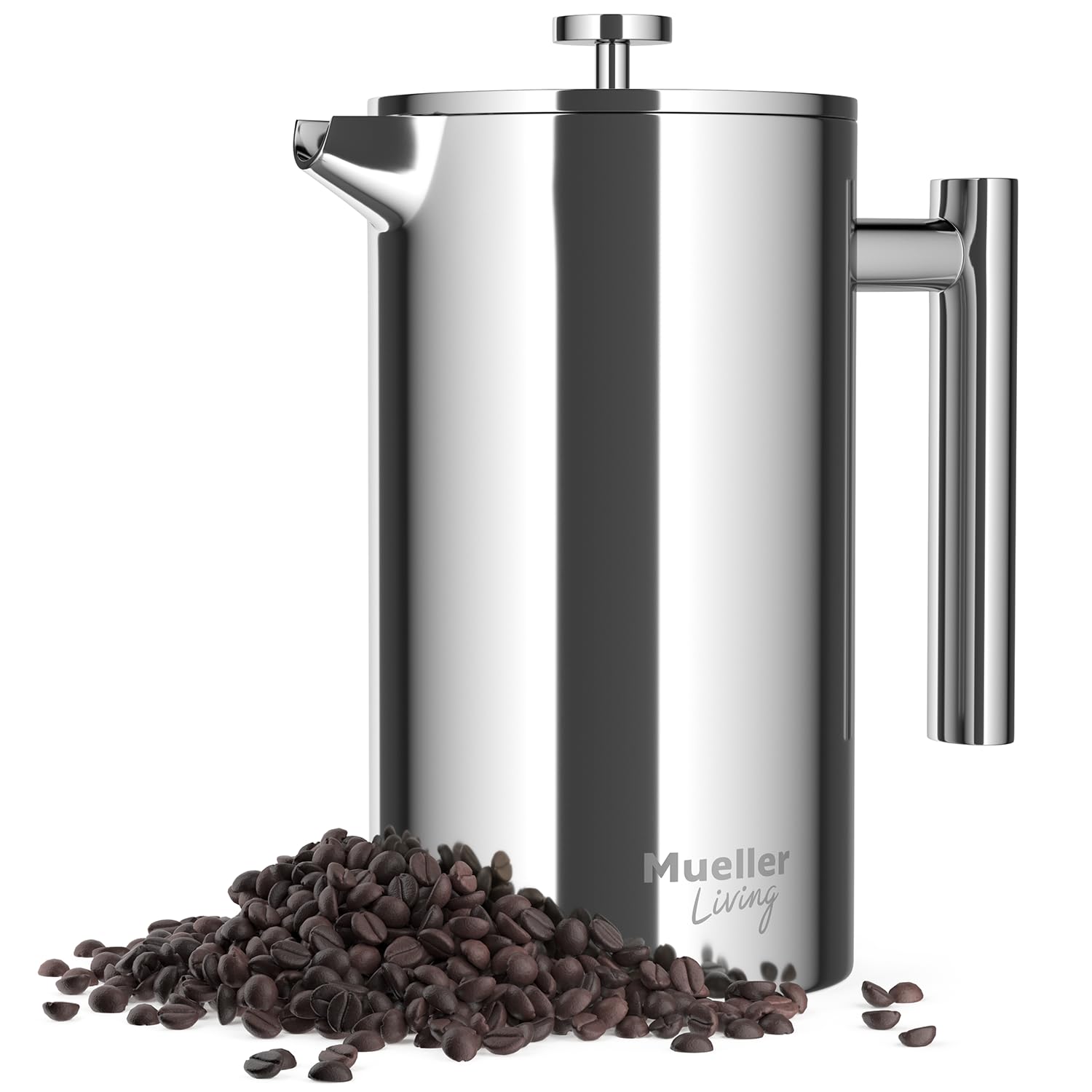
Mueller 34oz French Press
Key Features
- Material: Double-walled 304 stainless steel
- Filtration: 4-level filters
- Heat Retention: Superior insulation
- Brewing Method: Manual French press
- Price: Mid-Range
The Mueller Living French Press stands out for its heavy-gauge double-wall insulation that keeps coffee hot noticeably longer than thinner stainless steel alternatives. Its four-layer filter system also catches fine grounds effectively, producing a clean cup without sludge.
This makes it a strong fit for home users who brew multiple cups and sip over an hour, or anyone tired of replacing broken glass carafes. Its heat retention is the key advantage over the thinner, less expensive stainless steel French presses, though the price is higher and some units may develop plunger stiffness or detachment with heavy daily use.
Pros
- Keeps coffee hot for extended periods without reheating.
- No glass to break — the all-metal body withstands daily knocks.
- Four-layer filter system delivers clean, sludge-free coffee consistently.
Cons
- Plunger mechanism can become stiff or detach over time with heavy daily use.
For home brewers who prioritize heat retention over budget savings, the Mueller delivers temperature endurance that thinner stainless presses can’t match — worth the premium if you brew and sip over an hour.
Best for Budget Glass
Veken 34oz Glass French Press

Key Features
- Material: Boroglas carafe, steel frame
- Filtration: 4-layer stainless steel
- Heat Retention: Glass loses heat
- Brewing Method: Manual French press
- Price: Budget
For under $25, this Veken press delivers a completely plastic-free brew path — glass carafe and stainless steel frame. Coffee quality is smooth with minimal sludge. However, the glass carafe can crack from thermal shock or bumps, and the steel base requires thorough cleaning to prevent mold. Lacks the heat retention of double-walled steel options, but at this price, a practical choice for budget-minded non-toxic seekers.
Pros
- No plastic touches the coffee – pure glass and metal brew path.
- Elegant appearance with visible steeping process; included accessories add value.
Cons
- Glass carafe can crack from thermal shock or accidental bumps — requires careful handling.
Best for those on a budget who prioritize material purity over heat retention and don’t mind handling a breakable carafe.
Best for Portable Single
AeroPress Original

Key Features
- Material: BPA-free polypropylene
- Filtration: Paper micro-filters
- Brewing Method: Manual pressure
- Price: Budget
The AeroPress brews a smooth cup in under two minutes, with a compact shatterproof design ideal for travel and a pop-out puck that cleans in seconds. Its plastic construction, while BPA-free, does not satisfy strict non-toxic seekers, and it only makes one cup at a time.
Pros
- Exceptionally smooth, low-bitter coffee from micro-filtration and pressure.
- Pop-out coffee puck and rinse makes cleanup under 30 seconds.
Cons
- Plastic chamber (BPA-free) may deter those prioritizing non-toxic materials.
A smart choice for solo travelers or office use who value speed and portability over material purity.
How to Choose
The key to non-toxic coffee is ensuring no plastic touches the water or coffee at any point, which means closely inspecting the entire brew path — from reservoir to basket to spout.
Material: Full Stainless or Borosilicate Glass
The material of every component that contacts liquid matters. 304 stainless steel is non-reactive and durable, but many brewers skimp by using plastic for the lid, handle, or internal tube. Borosilicate glass is equally inert but prone to thermal shock — pouring boiling water into a cold glass carafe can cause cracks.
For total peace of mind, look for ‘304 stainless steel interior and exterior’ or borosilicate glass with a stainless steel frame. Avoid models that use plastic in the brew basket or water reservoir, even if the exterior is metal.
Filtration: Mesh vs Paper
Permanent stainless steel mesh filters eliminate paper waste and are the default in French presses and percolators. The trade-off is that fine coffee particles may slip through, especially with cheaper single-layer screens. Multi-layer filters (3–4 levels) catch more sludge.
Paper filters, like those used in Chemex and AeroPress, produce a cleaner cup with almost no sediment but create ongoing cost and waste. For non-toxic purposes, paper is safe as long as it’s unbleached, but the filter holder itself must be plastic-free — Chemex uses a wood collar and glass, which is fine.
Heat Retention: Insulated vs Single-Wall
Double-walled stainless steel French presses keep coffee hot for over an hour without a heating element. Single-wall glass or thin metal loses heat quickly — within 20 minutes coffee turns lukewarm. If you sip slowly or share a pot, insulated construction is a big quality-of-life upgrade.
Electric percolators use a heating plate to maintain temperature, but that can overcook the coffee if left on too long, creating bitterness. The best non-toxic electric option (Presto) lacks auto shut-off, so you must unplug it manually.
Brewing Method: Manual vs Electric
Manual brewers (French press, pour-over, stovetop percolator) dominate the non-toxic space because they can be built entirely from glass and metal without complex internal electronics that introduce plastic tubing or reservoirs. Electric drip machines almost always rely on plastic water paths.
The exception is the electric percolator, which uses a stainless steel basket and tube — the only fully metal automatic option currently available. The trade-off is a different flavor profile (stronger, more extracted) and the need to manually unplug to avoid overheating.
FAQ
Do stainless steel French presses have plastic in contact with the coffee?
Most fully stainless presses like Secura and Mueller have zero plastic in the brew path — only 304 stainless steel and food-grade silicone gaskets. However, some budget models use plastic lids or handles that can contact steam or drips. Check that all interior surfaces are metal.
What’s the best non-toxic coffee maker for a single cup without plastic pods?
For a truly plastic-free single cup, a stainless steel French press (like the Secura 34oz) works well — just brew less water. The AeroPress is BPA-free polypropylene, not metal, so it may not satisfy strict purists. A ceramic pour-over cone with paper filters is another all-glass option.
Why does my ‘non-toxic’ coffee maker still have a plastic smell?
A plastic-like odor often comes from the silicone gasket or rubber components, not the metal itself. Some silicone blends can absorb and release odors. Boiling a vinegar-water solution in the brewer and letting it sit for 15 minutes usually eliminates the smell.
Can I leave coffee in a stainless steel French press overnight?
Stainless steel is non-reactive, so it won’t leach flavors or metals into the coffee. However, leaving coffee to cool and steep for hours increases bitterness and over-extraction. It’s safe to drink but tastes worse — best to transfer to a thermos or drink within an hour.